Why are thestandards necessary?
The type of instruction we all had
when we were in school is no longer
good enough for our own children
because the work force has
changed & will continue to change.
The majority of the jobs our
children will have in the future
don’t even exist yet.
3.
The Common Why do we need content knowledge?
Core State
Standards
require science,
history/social
studies and
other content
knowledge be
taught for
students to have
more academic
background
knowledge and
thereby enhance
reading
comprehension.
4.
College & careerreadiness is a
concern in Kentucky.
According to 2010 ACT
data, Kentucky high
school juniors
– 49% met college readiness for English
– 35% met college ready expectations
for reading
– 15% met college readiness for science
– 22% met readiness for college-level
algebra
– 11% met all four areas (Reading,
English, Science, Math)
5.
Why does thismatter
for our K-5th graders?
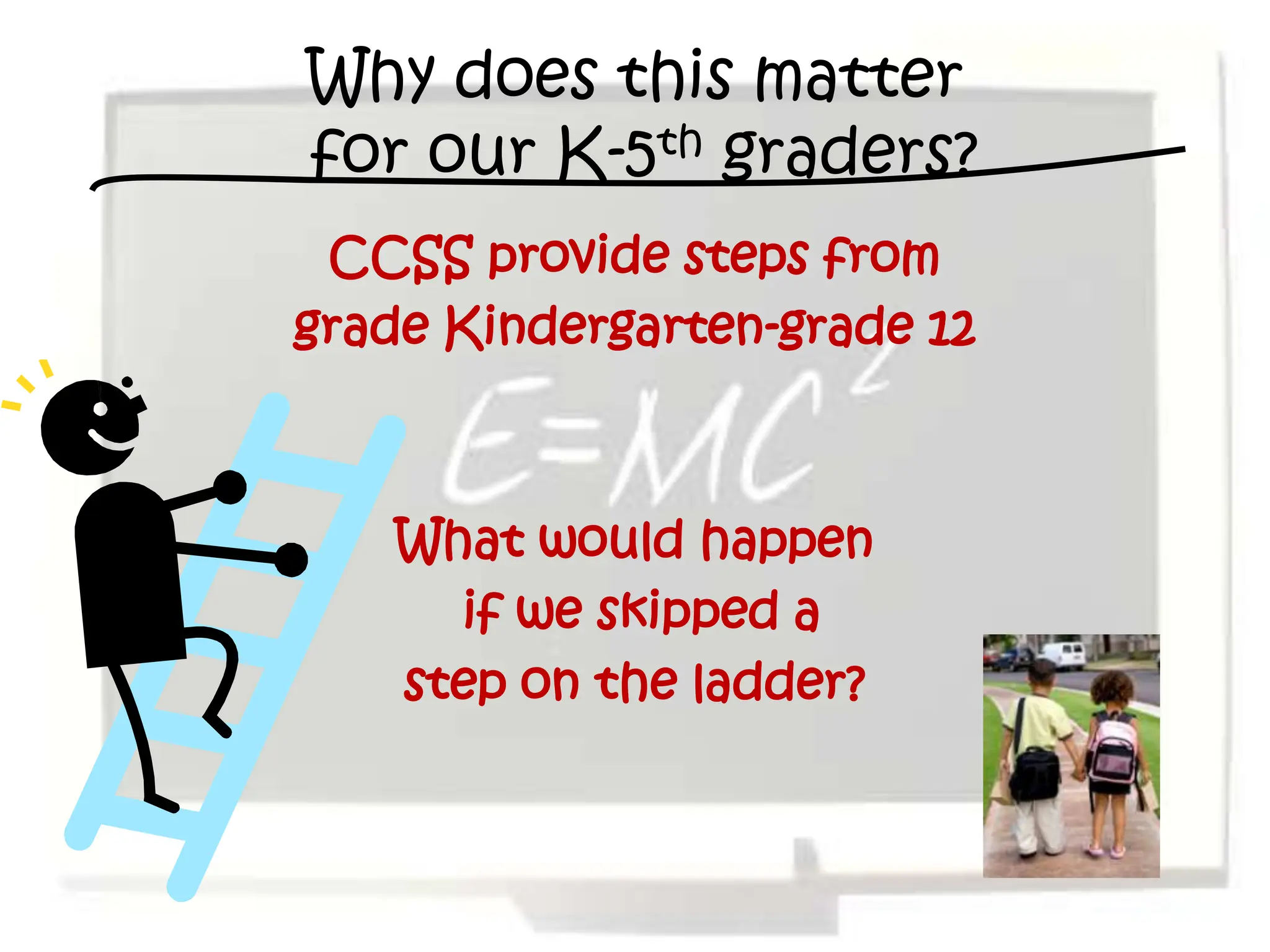
CCSS provide steps from
grade Kindergarten-grade 12
What would happen
if we skipped a
step on the ladder?
6.
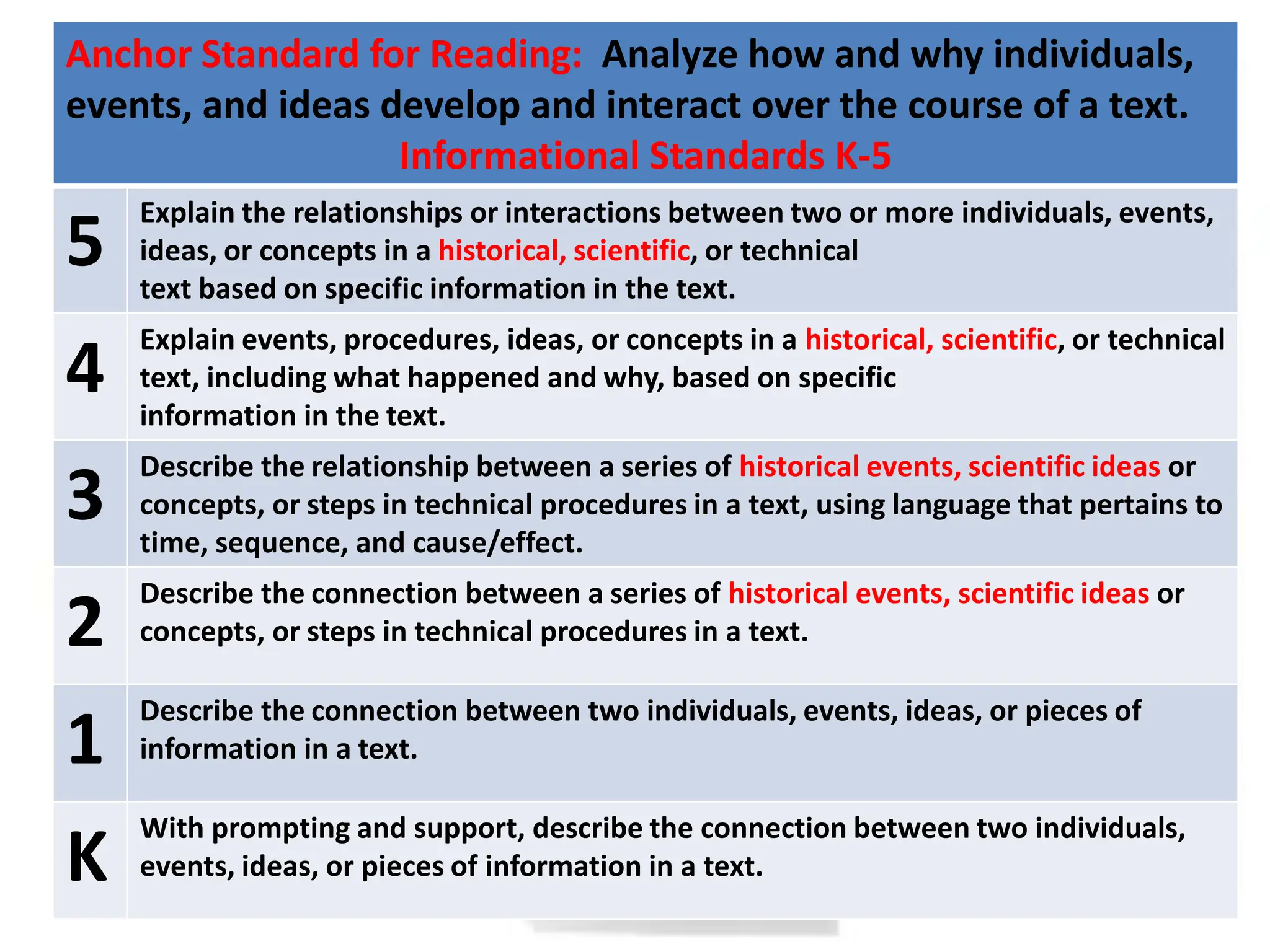
Anchor Standard forReading: Analyze how and why individuals,
events, and ideas develop and interact over the course of a text.
Informational Standards K-5
Explain the relationships or interactions between two or more individuals, events,
5 ideas, or concepts in a historical, scientific, or technical
text based on specific information in the text.
Explain events, procedures, ideas, or concepts in a historical, scientific, or technical
4 text, including what happened and why, based on specific
information in the text.
Describe the relationship between a series of historical events, scientific ideas or
3 concepts, or steps in technical procedures in a text, using language that pertains to
time, sequence, and cause/effect.
Describe the connection between a series of historical events, scientific ideas or
2 concepts, or steps in technical procedures in a text.
Describe the connection between two individuals, events, ideas, or pieces of
1 information in a text.
With prompting and support, describe the connection between two individuals,
K events, ideas, or pieces of information in a text.
7.
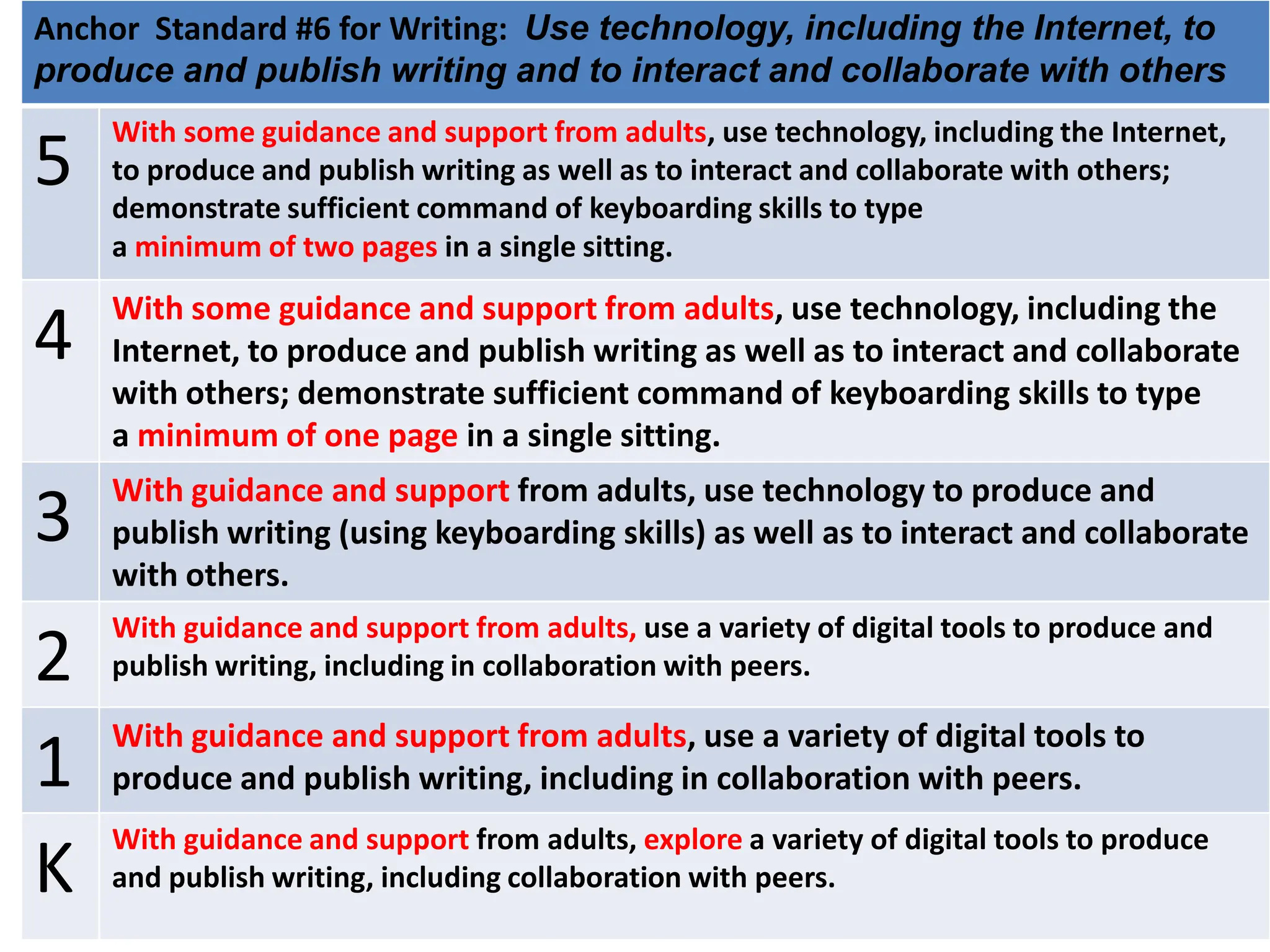
Anchor Standard #6for Writing: Use technology, including the Internet, to
produce and publish writing and to interact and collaborate with others
With some guidance and support from adults, use technology, including the Internet,
5 to produce and publish writing as well as to interact and collaborate with others;
demonstrate sufficient command of keyboarding skills to type
a minimum of two pages in a single sitting.
With some guidance and support from adults, use technology, including the
4 Internet, to produce and publish writing as well as to interact and collaborate
with others; demonstrate sufficient command of keyboarding skills to type
a minimum of one page in a single sitting.
With guidance and support from adults, use technology to produce and
3 publish writing (using keyboarding skills) as well as to interact and collaborate
with others.
With guidance and support from adults, use a variety of digital tools to produce and
2 publish writing, including in collaboration with peers.
With guidance and support from adults, use a variety of digital tools to
1 produce and publish writing, including in collaboration with peers.
With guidance and support from adults, explore a variety of digital tools to produce
K and publish writing, including collaboration with peers.
8.
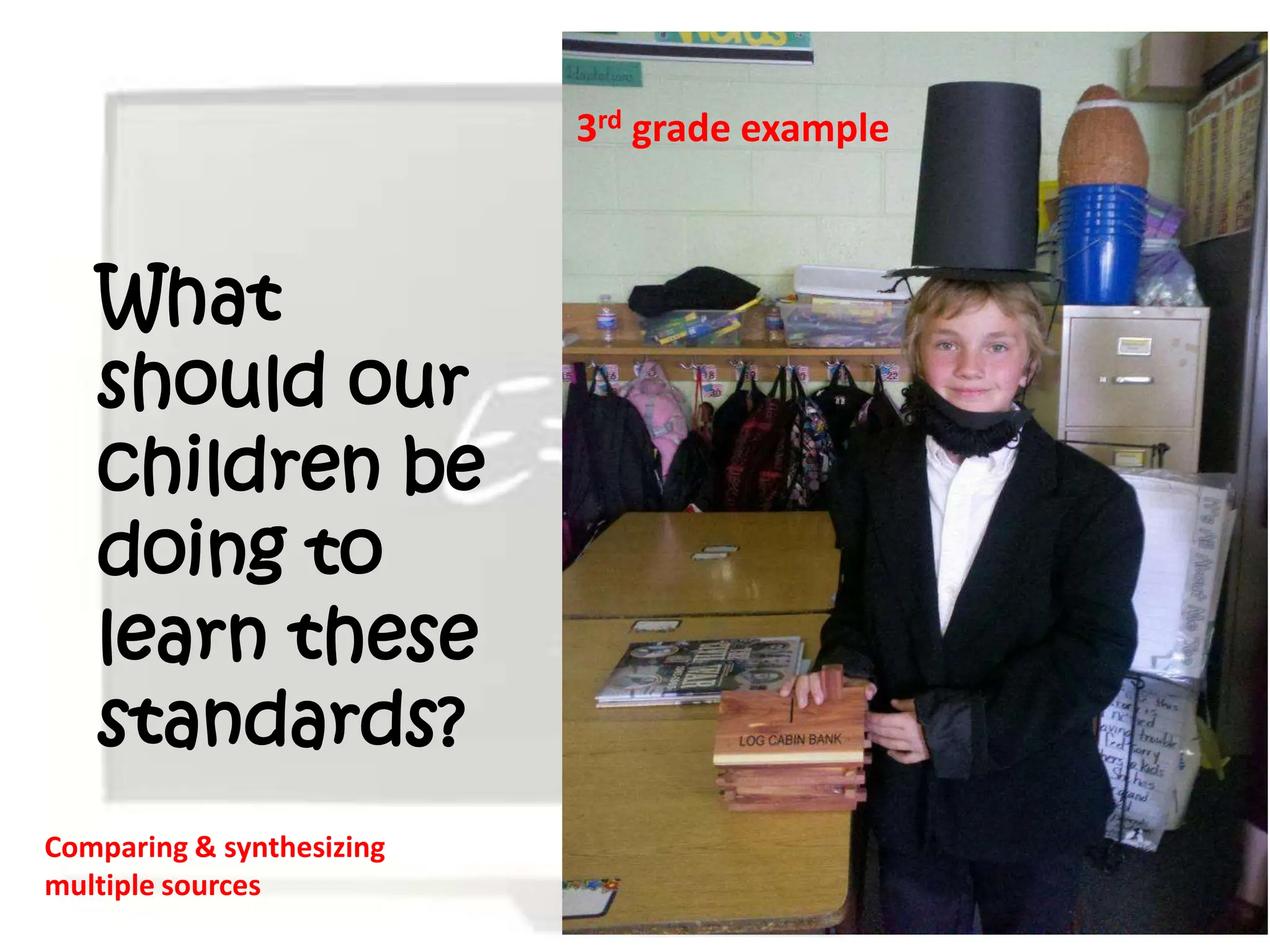
3rd grade example
What
should our
children be
doing to
learn these
standards?
Comparing & synthesizing
multiple sources
Take 60 secondsto talk with
another parent about the
opportunities your child has had to
read, think, research, speak and
discuss texts.
11.
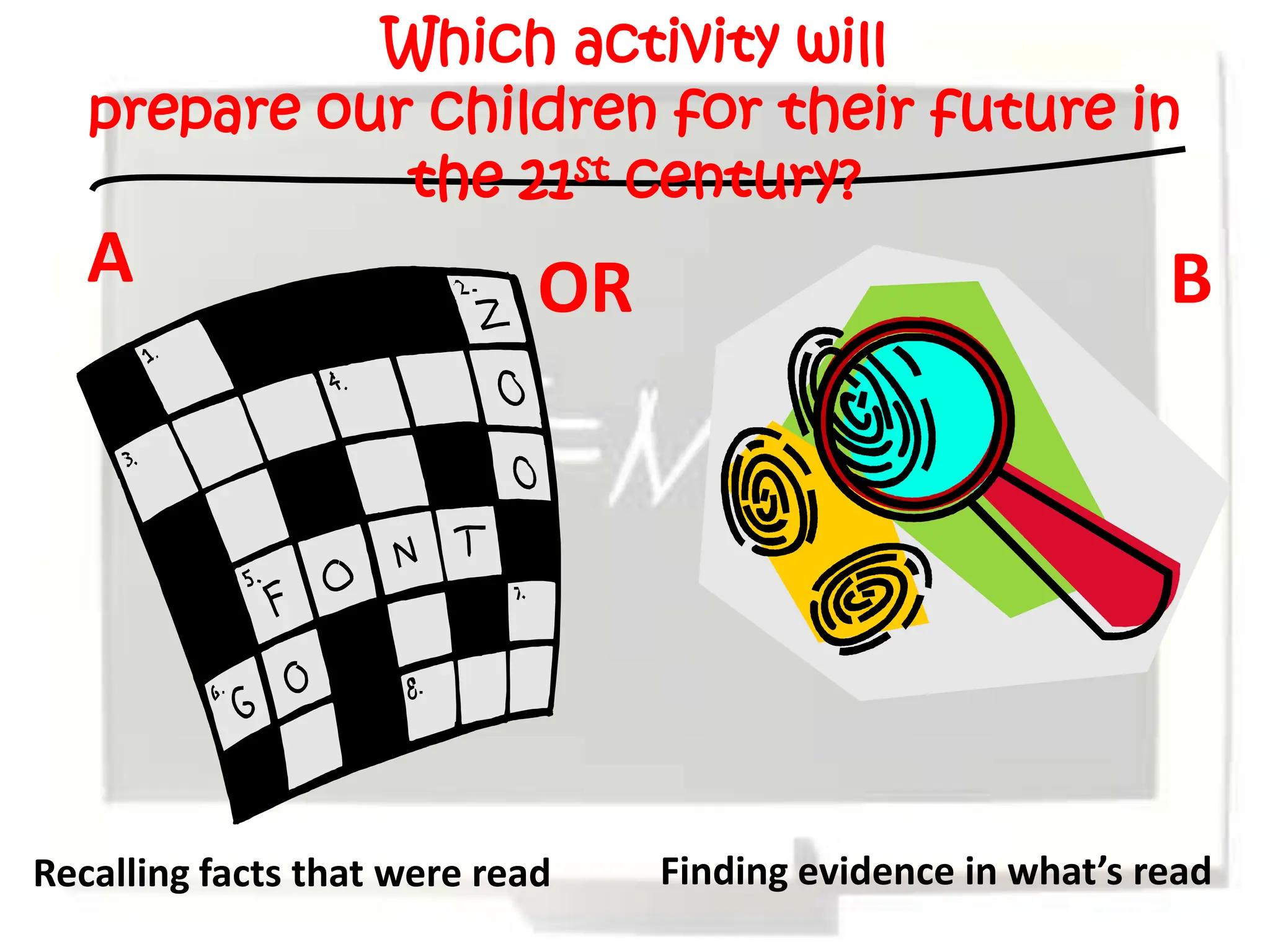
Which activity will
prepare our children for their future in
the 21st century?
A OR B
Recalling facts that were read Finding evidence in what’s read
12.
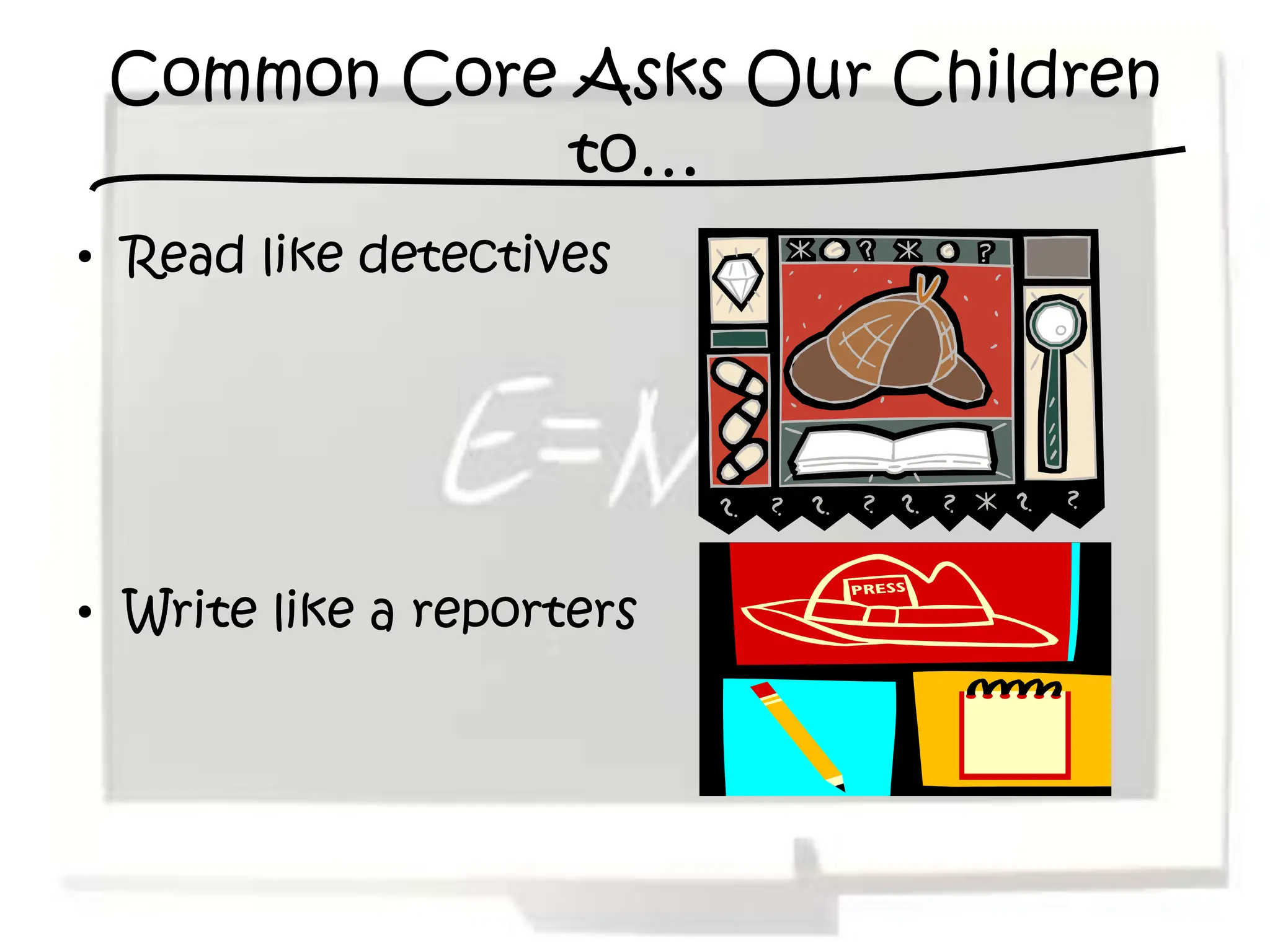
Common Core AsksOur Children
to…
• Read like detectives
• Write like a reporters
13.
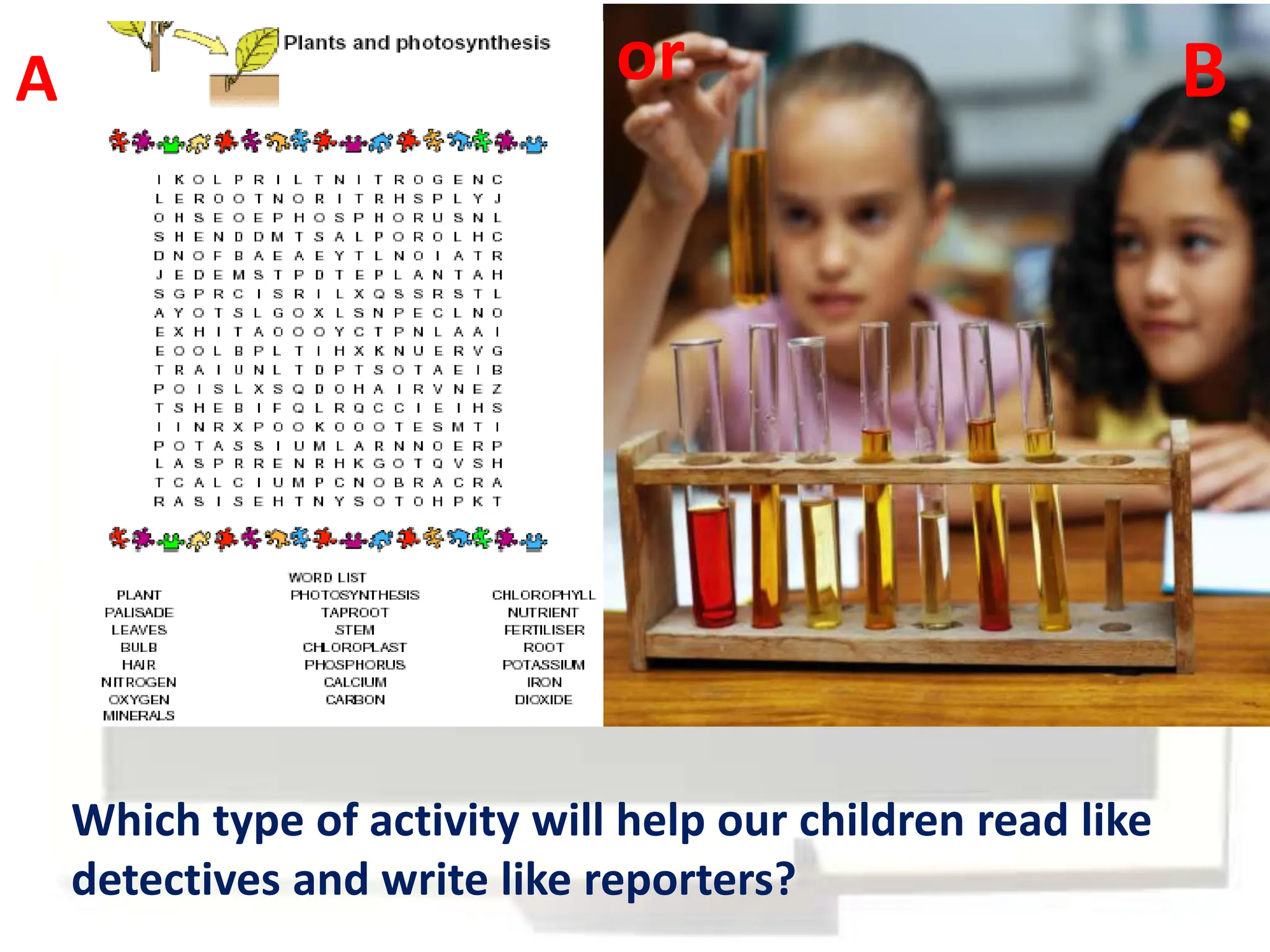
A or B
Which type of activity will help our children read like
detectives and write like reporters?
14.
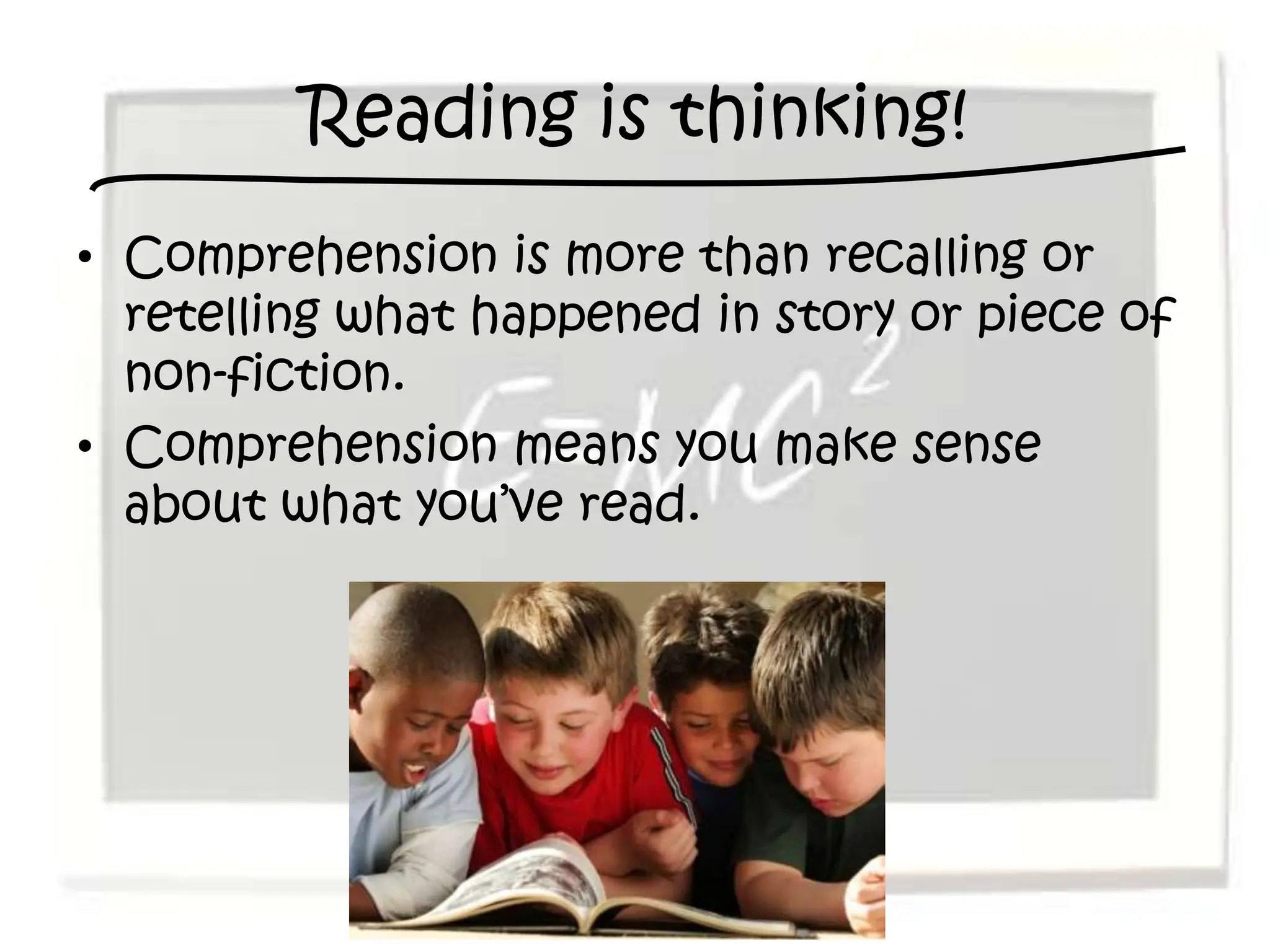
Reading is thinking!
•Comprehension is more than recalling or
retelling what happened in story or piece of
non-fiction.
• Comprehension means you make sense
about what you’ve read.
15.
What should our
childrenbe reading?
Stories Poems
Novels Plays
Myths Fables
Legends Newspapers
Magazines Blogs
Emails Images
Graphs Maps
16.
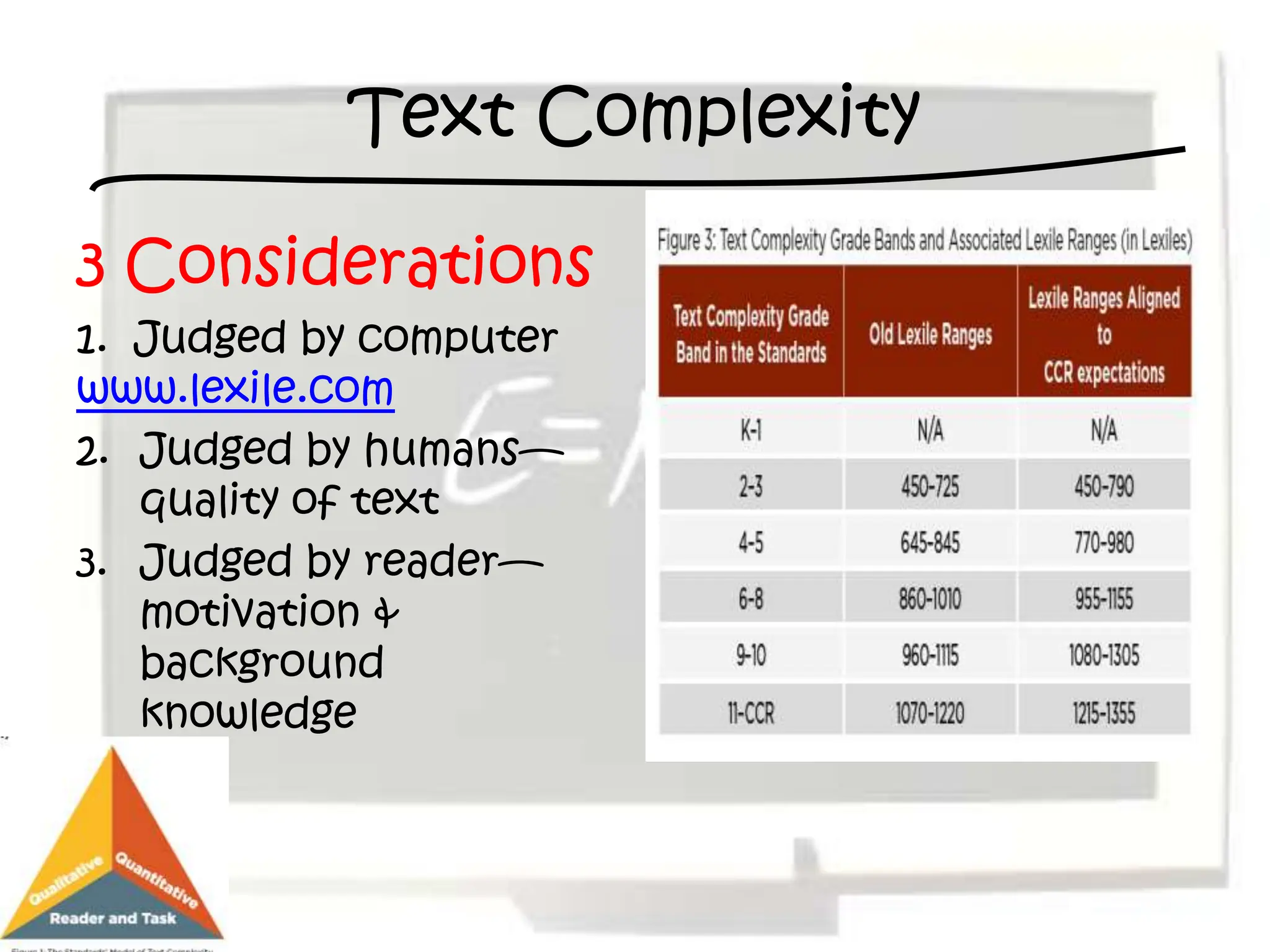
Text Complexity
3 Considerations
1.Judged by computer
www.lexile.com
2. Judged by humans—
quality of text
3. Judged by reader—
motivation &
background
knowledge
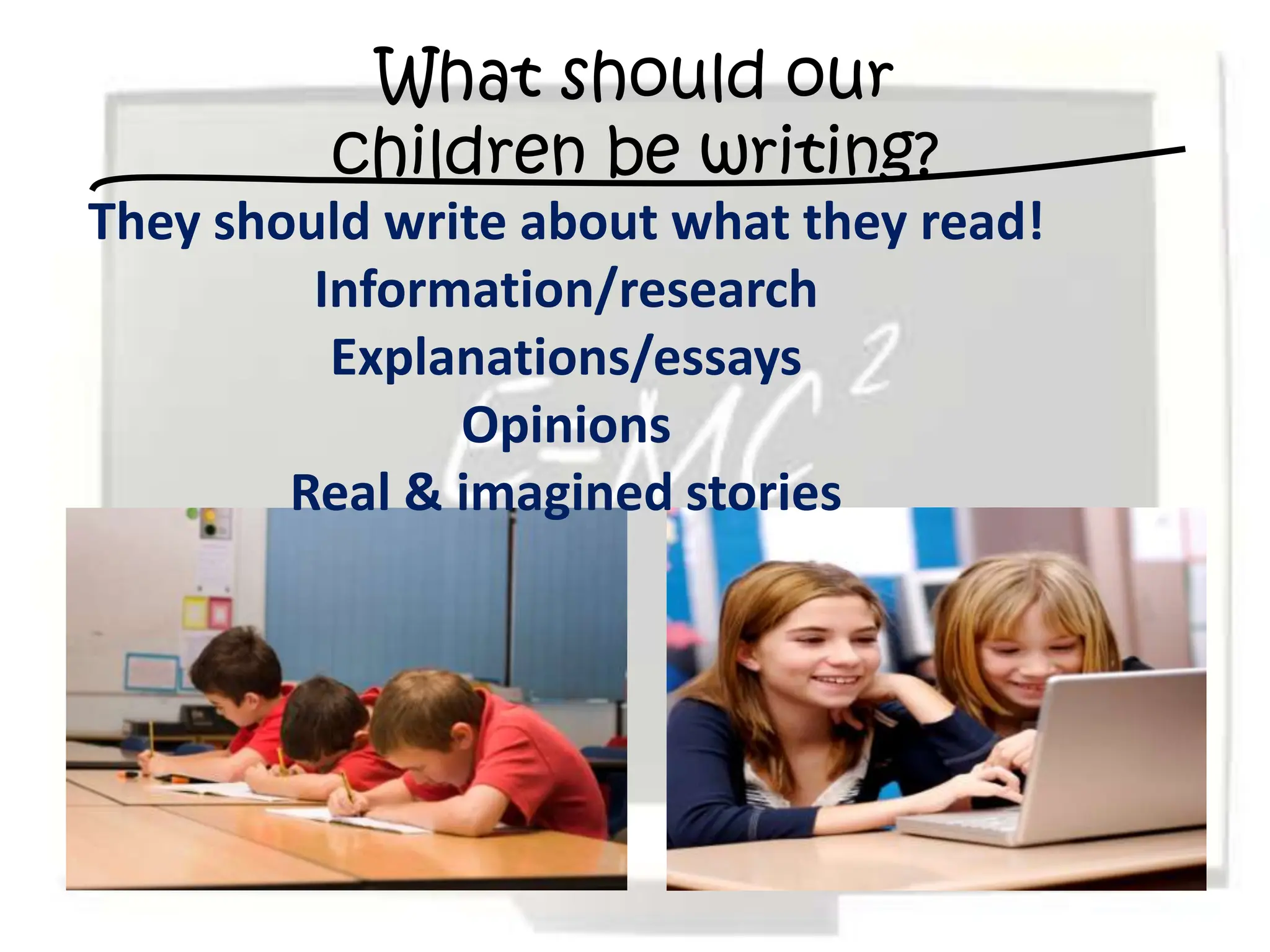
What should our
children be writing?
They should write about what they read!
Information/research
Explanations/essays
Opinions
Real & imagined stories
19.
What might homework
before & now look like
BEFORE COMMON CORE NOW
--Answering basic fact --Answering text
questions over a book dependent questions
that was read
--Studying words or
--Writing your spelling doing a word sort to
words in a random understand language
sentence better
--Copying a definition --Putting the dictionary
from a dictionary definition in your own
words (paraphrasing)
20.
What can wedo at home?
• Take a few minutes to look at the National
PTA grade-level guide for your child and
talk with another parent.
What questions do you have? Any surprises?
#2 Why Einstein on the cover of this slide?CCSS—an integrated method for teaching reading, writing, language & speaking and Listening. Our children, even the youngest need content, not just skills.
#5 Why do we need new standards?This means a student has a 50% chance of earning a B or a 75% chance of earning a C in the college-bearing class.
#7 Let’s look at the top anchor standard to see what our children will know and be able to do when they are considered College and Career ready. Now, let’s start with Kindergarten. Do any parents here have children in kindergarten? Okay..let’s see what happens in K and then move up the ladder. Any parents have a first grader? Second grader? Notice in second grade the specific mention in this informational standard—historical and scientific ideas. They need to be learning content in addition to reading and math that usually get the focus.
#9 This picture represents a perfect 3rd grade example which incorporates research and speaking to meet reading and speaking and listening standards. The child researched Abraham Lincoln and created a short presentation to share with the class what he learned.
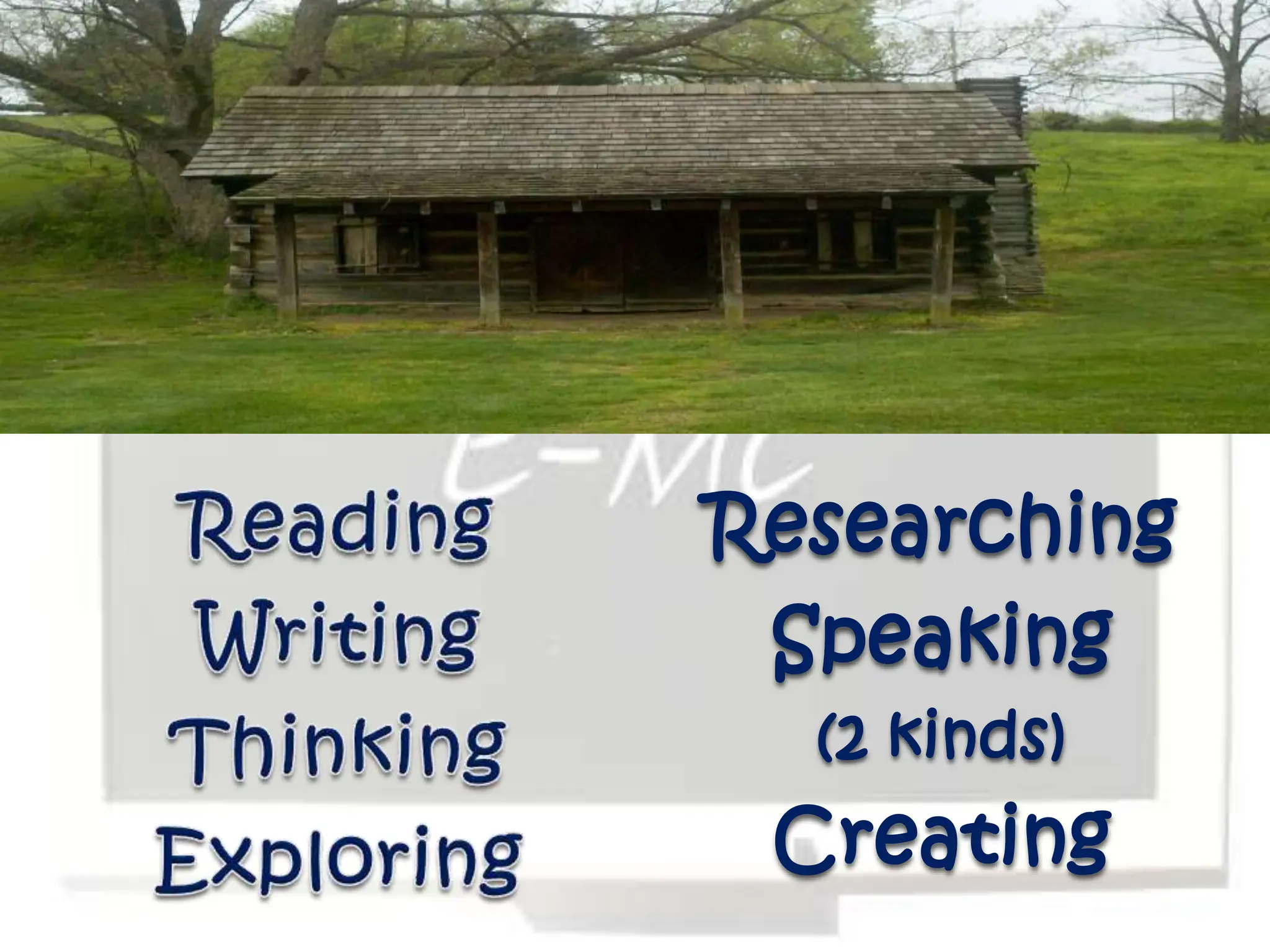
#10 Just as the child in the previous screen explored this Lincoln replica in central Kentucky, all of our children need the opportunity to build their own background knowledge and experience through exploration.
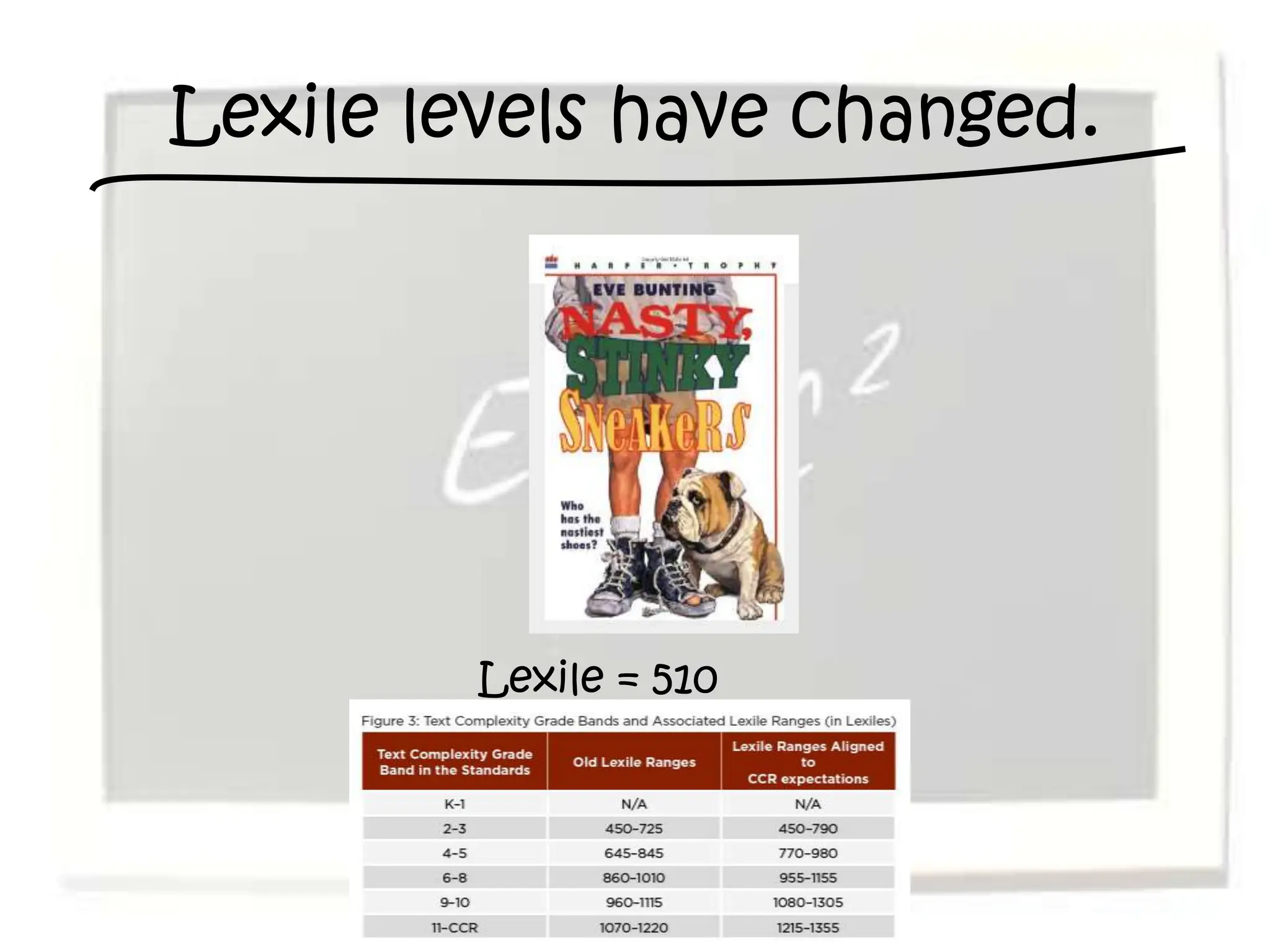
#18 So, if you had an older child read this book in the 4th grade, it would no longer be considered appropriate for 4th grade. It’s a second grade level book.
#20 This slide represents only slightadjustments (with major implications) to homework we typically see our children complete. Ideally, homework would be even better…