Sol ChúS

Loading...

Flash Player 9 (or above) is needed to view presentations.
We have detected that you do not have it on your computer. To install it, go here.

22 comments

Comments 1 - 10 of 22 previous next Post a comment

  • + AmitRanjan Amit Ranjan 2 years ago
    We will see that insiders do not have from inside the firm. The term insider encompasses may people ranging from a psychiatrist or a financial printer. ( Psychiatrist case is United States v. Willis. )
  • + AmitRanjan Amit Ranjan 2 years ago
    The European Council adopted the Directive on insider dealing and market manipulation (market abuse) on 3rd December 2002. The Directive is due to be implemented by Member States of its publication in the EU’s Official Journal.
  • + AmitRanjan Amit Ranjan 2 years ago
    However none of these views make sense.First, as Prof. Loss and Seligman noted, wage market already compensates hard worker and those who do not contribute to the company may also benefit from insider trading. Scienter is required to prove insider trading and investigations are difficult. Most of the illegal activity remains undetected. Maybe for equities trading you can say that the transaction anyway would occur. However for options for example, these information have crucial importance. You can not ignore them.Professors Loss and Seligman found that insider trading does not have any significant effect on market price and does not make prices smootherIt is very difficult and costly for companies to monitor and discipline insider trading.
  • + AmitRanjan Amit Ranjan 2 years ago
    The purpose of §16 has two aspects According to § 16(a) these insiders file an initial report showing their holdings of all the issuer’s equity securities and if changes occur in their holdings they file a report within the first ten days of that month with the SEC and with the exchanges on which the securities are listed. §16(b) whether P and S or S and P of the issuer’s equity securities. If the issuer does not do so within 60 days, any shareholder can bring a suit against the corporate insider on behalf of the issuer. Statute of limitations is two years after the profit is realized.However short-swing profits are recoverable regardless of whether the insider actually traded on the basis of confidential information oreven was in possession of any such information. Nonetheless, this conduct covered by §16(b) is not deemed to be unlawful and cannot cause any criminal liability or injunction of SEC.
  • + AmitRanjan Amit Ranjan 2 years ago
    Once bunu soyle **** §17(a) of the Securities Act and §10(b) of the Exchange Act are the general anti-fraud provisions applicable to insider cases. Although both §17(a) and Rule 10b-5 prohibit the same type of conduct, Rule 10b-5 has a broader scope. Rule 10b-5 applies to both purchases and sales of securities, whereas §17(a) applies only to sales.
  • + AmitRanjan Amit Ranjan 2 years ago
    unusually short and broad. There is no statutory definition of insider trading. It simply prohibits any person from doing any fraud in connection with any securities trading. The conduct should touch purchases and sales, so any decision to retain stock, although based on inside information, may not be considered under the scope of this Rule.The fraudulent act type is not specified in the rule and this interpretation is left to courts intentionally to provide flexibility in the application.
  • + AmitRanjan Amit Ranjan 2 years ago
    These are , as we will see, are complementing each other.
  • + AmitRanjan Amit Ranjan 2 years ago
    This fiduciary duty derives from common law where a company shareholder is a beneficiary of the insider’s fiduciary obligation.Corporate insiders breach a fiduciary duty only for a personal or economic benefit.Burada bu caselerden bahsetmek lazim.
  • + AmitRanjan Amit Ranjan 2 years ago
    The duty may arise from a fiduciary relationship or from a relationship of trust or confidence. The traditional theory and the misappropriation theory are complementary. The traditional theory targets a corporate insider’s breach of duty to shareholders with whom the insider transacts; the misappropriation theory prohibits trading on the basis of nonpublic information by a corporate “outsider” in breach of a duty owed to the source of the information.
  • + AmitRanjan Amit Ranjan 2 years ago
    The rule applies regardless of whether the security is exempt from 1933 or 1934 Act or not and regardless of whether the company is publicly or closely held. Use of instrumentalities of interstate commerce, such as phones, facsimiles, or the mails must be proved.A link between the fraud and the purchase or sale Transaction causation: in a face-to-face transaction between seller and purchaser the plaintiff’s reliance can be presumed from the materiality of the omissions. ‘fraud on the market’ theory for proving reliance, simply stating that the reliance requirement in a securities fraud action can be satisfied by a showing that the market price was affected by the misstatement or omission and the plaintiff’s injury is due to a purchase or sale at the then fraudulently induced market price. “loss causation” which provides the necessary connection between the challenged conduct and the plaintiff’s pecuniary loss. A plaintiff is required to prove that a defendant’s misstatement or misconduct was at least a “substantial factor” in causing a loss. As part of the Private Securities Litigation Reform Act of 1995. §21D(b)(4) of the 1934 Act now provides that loss causation is an element of a private law suit for securities fraud.

Comments 1 - 10 of 22 previous next

Post a comment
Embed Video
Edit your comment Cancel

Favorites, Groups & Events

Sol ChúS - Presentation Transcript

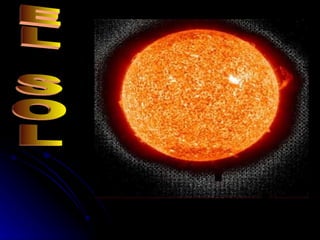
  1. EL SOL
  2. índice
    • Como es.
    • Partes del Sol.
    • Utilidades y peligros.
    • Ra el Dios del Sol.
    • Curiosidades.
    • Muerte del Sol.
  3. COMO ES
    • El Sol es la estrella que domina nuestro Sistema Solar, la vida en la tierra es gracias a la luz y el calor que transmite.
    • Su diámetro es de 1.400.000 km es 100 veces el de la Tierra.
    • Es una estrella de la vía Láctea.
  4. PARTES DEL SOL
    • El núcleo: Es el centro del sol allí la temperatura es de 15 millones de ºC.
    • La fotosfera: Es la superficie del Sol su temperatura es de 5.500º C.
    • También tiene la zona de radiación y la zona de convención.
  5.  
  6. UTILIDADES Y PELIGROS
    • El Sol nos da calor, energía que no contamina, luz …
    • Pero a veces si nos descuidamos nos hace quemaduras o provoca incendios.
  7. Ra el dios del sol
    • Para los egipcios Ra es el dios del Sol, el creador del universo.
    • Cuenta la leyenda que por el día viaja por el cielo y por la noche desciende al mundo subterráneo.
    • Se representa con una cabeza de halcón y cuerpo humano.
  8. CURIOSIDADES
    • La energía generada en el centro del Sol tarda un millón de años para alcanzar la superficie solar.
    • El Sol es una inmensa bola de gases incandescentes.
  9. MUERTE DEL SOL
    • Cuando se empiece agotar el combustible de hidrógeno, el Sol se convertirá en una estrella mas grande llamada “gigante roja”, se despojara de sus capas exteriores. Lo que quedara del sol será una estrella muy pequeña
    • llamada “enana blanca”.
  10. fin

+ matereslmateresl, 2 years ago

custom

846 views, 0 favs, 1 embeds more stats

More info about this document

© All Rights Reserved

Go to text version

  • Total Views 846
    • 814 on SlideShare
    • 32 from embeds
  • Comments 22
  • Favorites 0
  • Downloads 1
Most viewed embeds
  • 32 views on http://primaria3a.blogia.com

more

All embeds
  • 32 views on http://primaria3a.blogia.com

less

Flagged as inappropriate Flag as inappropriate
Flag as inappropriate

Select your reason for flagging this presentation as inappropriate. If needed, use the feedback form to let us know more details.

Cancel
File a copyright complaint
Having problems? Go to our helpdesk?

Categories