Basic Computer User Tips
Roger Samara
Key Points
• Keep Your Personal Information Safe and Secure
• Access Your Home Computer From Anywhere
• Do Everything Faster with Shortcuts
• Keep Your PC Free of Crap
• Know Where Your Files Are Being Saved
• Install All Software To The Default Location
• Take Computer Maintenance Seriously
• If You Need Antivirus – GET IT NOW!
• Set Up a Simple Backup System
• Shut Down The Right Way
Keep Your Personal Information Safe and
Secure
Unfortunately, the internet
isn’t always a safe place,
which means everyone
needs to make sure they’re
keeping their personal
information safe.
Make sure you use strong
password, remove personal
information from photos and
other files and never use
open public Wi-Fi networks
without protection.
Access Your Home Computer From
Anywhere
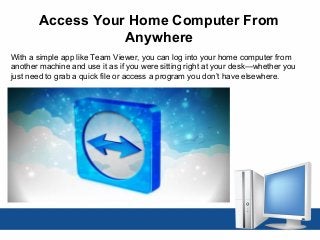
With a simple app like Team Viewer, you can log into your home computer from
another machine and use it as if you were sitting right at your desk—whether you
just need to grab a quick file or access a program you don’t have elsewhere.
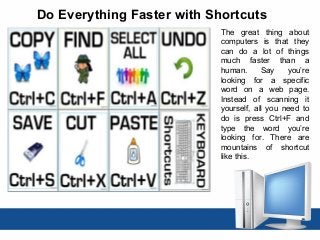
Do Everything Faster with Shortcuts
The great thing about
computers is that they
can do a lot of things
much faster than a
human. Say you’re
looking for a specific
word on a web page.
Instead of scanning it
yourself, all you need to
do is press Ctrl+F and
type the word you’re
looking for. There are
mountains of shortcut
like this.
Keep Your PC Free of Crap
You can keep your
PC neat and clean
by uninstall
unnecessary
programs and
software with no
use or that causing
problems or
consuming more
memory on disk.
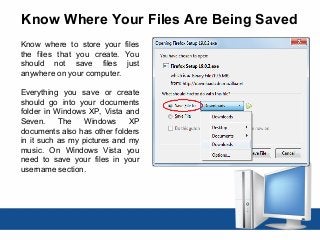
Know Where Your Files Are Being Saved
Know where to store your files
the files that you create. You
should not save files just
anywhere on your computer.
Everything you save or create
should go into your documents
folder in Windows XP, Vista and
Seven. The Windows XP
documents also has other folders
in it such as my pictures and my
music. On Windows Vista you
need to save your files in your
username section.
Install All Software To The Default Location
Install programs to the correct location on C: drive. This is an easy task, as all
program , by default, get installed in C:Program Files. Unfortunately sometimes
people presume they need to choose where to install a program and change the
default destination.
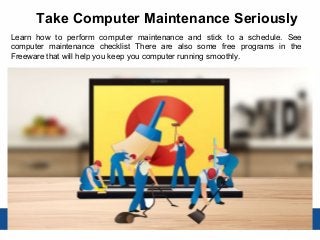
Take Computer Maintenance Seriously
Learn how to perform computer maintenance and stick to a schedule. See
computer maintenance checklist There are also some free programs in the
Freeware that will help you keep you computer running smoothly.
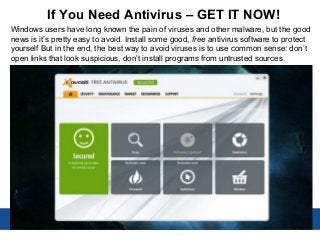
If You Need Antivirus – GET IT NOW!
Windows users have long known the pain of viruses and other malware, but the good
news is it’s pretty easy to avoid. Install some good, free antivirus software to protect
yourself But in the end, the best way to avoid viruses is to use common sense: don’t
open links that look suspicious, don’t install programs from untrusted sources.
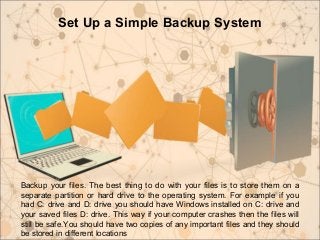
Set Up a Simple Backup System
Backup your files. The best thing to do with your files is to store them on a
separate partition or hard drive to the operating system. For example if you
had C: drive and D: drive you should have Windows installed on C: drive and
your saved files D: drive. This way if your computer crashes then the files will
still be safe.You should have two copies of any important files and they should
be stored in different locations
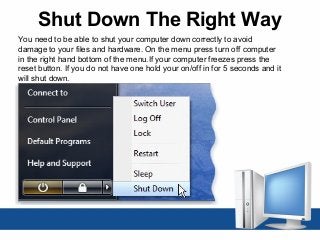
Shut Down The Right Way
You need to be able to shut your computer down correctly to avoid
damage to your files and hardware. On the menu press turn off computer
in the right hand bottom of the menu.If your computer freezes press the
reset button. If you do not have one hold your on/off in for 5 seconds and it
will shut down.
Roger Samara | Basic computer tips for Beginners

Roger Samara | Basic computer tips for Beginners

  • 1.
    Basic Computer UserTips Roger Samara
  • 2.
    Key Points • KeepYour Personal Information Safe and Secure • Access Your Home Computer From Anywhere • Do Everything Faster with Shortcuts • Keep Your PC Free of Crap • Know Where Your Files Are Being Saved • Install All Software To The Default Location • Take Computer Maintenance Seriously • If You Need Antivirus – GET IT NOW! • Set Up a Simple Backup System • Shut Down The Right Way
  • 3.
    Keep Your PersonalInformation Safe and Secure Unfortunately, the internet isn’t always a safe place, which means everyone needs to make sure they’re keeping their personal information safe. Make sure you use strong password, remove personal information from photos and other files and never use open public Wi-Fi networks without protection.
  • 4.
    Access Your HomeComputer From Anywhere With a simple app like Team Viewer, you can log into your home computer from another machine and use it as if you were sitting right at your desk—whether you just need to grab a quick file or access a program you don’t have elsewhere.
  • 5.
    Do Everything Fasterwith Shortcuts The great thing about computers is that they can do a lot of things much faster than a human. Say you’re looking for a specific word on a web page. Instead of scanning it yourself, all you need to do is press Ctrl+F and type the word you’re looking for. There are mountains of shortcut like this.
  • 6.
    Keep Your PCFree of Crap You can keep your PC neat and clean by uninstall unnecessary programs and software with no use or that causing problems or consuming more memory on disk.
  • 7.
    Know Where YourFiles Are Being Saved Know where to store your files the files that you create. You should not save files just anywhere on your computer. Everything you save or create should go into your documents folder in Windows XP, Vista and Seven. The Windows XP documents also has other folders in it such as my pictures and my music. On Windows Vista you need to save your files in your username section.
  • 8.
    Install All SoftwareTo The Default Location Install programs to the correct location on C: drive. This is an easy task, as all program , by default, get installed in C:Program Files. Unfortunately sometimes people presume they need to choose where to install a program and change the default destination.
  • 9.
    Take Computer MaintenanceSeriously Learn how to perform computer maintenance and stick to a schedule. See computer maintenance checklist There are also some free programs in the Freeware that will help you keep you computer running smoothly.
  • 10.
    If You NeedAntivirus – GET IT NOW! Windows users have long known the pain of viruses and other malware, but the good news is it’s pretty easy to avoid. Install some good, free antivirus software to protect yourself But in the end, the best way to avoid viruses is to use common sense: don’t open links that look suspicious, don’t install programs from untrusted sources.
  • 11.
    Set Up aSimple Backup System Backup your files. The best thing to do with your files is to store them on a separate partition or hard drive to the operating system. For example if you had C: drive and D: drive you should have Windows installed on C: drive and your saved files D: drive. This way if your computer crashes then the files will still be safe.You should have two copies of any important files and they should be stored in different locations
  • 12.
    Shut Down TheRight Way You need to be able to shut your computer down correctly to avoid damage to your files and hardware. On the menu press turn off computer in the right hand bottom of the menu.If your computer freezes press the reset button. If you do not have one hold your on/off in for 5 seconds and it will shut down.