What Makes Neil Critchley’s Leadership
Unique? A Deep Dive
When discussing top football managers, conversations often revolve around high-profile figures
like Pep Guardiola’s tactical genius, Jurgen Klopp’s infectious passion, or Jose Mourinho’s
psychological masterstrokes. Yet, behind the glamorous spotlight, there are many talented
coaches who play vital roles in shaping successful football teams without receiving widespread
recognition. One such figure is Neil Critchley, an astute and innovative leader whose approach
to football management sets him apart from his peers.
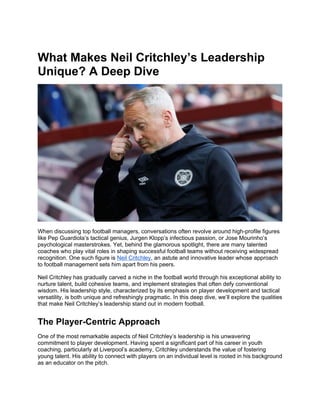
Neil Critchley has gradually carved a niche in the football world through his exceptional ability to
nurture talent, build cohesive teams, and implement strategies that often defy conventional
wisdom. His leadership style, characterized by its emphasis on player development and tactical
versatility, is both unique and refreshingly pragmatic. In this deep dive, we’ll explore the qualities
that make Neil Critchley’s leadership stand out in modern football.
The Player-Centric Approach
One of the most remarkable aspects of Neil Critchley’s leadership is his unwavering
commitment to player development. Having spent a significant part of his career in youth
coaching, particularly at Liverpool’s academy, Critchley understands the value of fostering
young talent. His ability to connect with players on an individual level is rooted in his background
as an educator on the pitch.
Unlike some managers who rigidly impose their tactics, Neil Critchley adapts his strategies to
best utilize his players’ strengths. This approach not only boosts player morale but also fosters a
strong sense of unity within the team. Whether coaching academy prospects or managing
senior professionals, Critchley’s leadership revolves around understanding his players’ needs
and motivating them to push beyond their limits.
This player-centric philosophy has been evident in his tenure at Blackpool, where he
successfully guided the club to promotion. Under his leadership, the squad not only improved
tactically but also grew more cohesive as a unit, showcasing his ability to blend youth with
experience seamlessly.
Tactical Flexibility: The Key to Success
Neil Critchley’s leadership also stands out for his tactical flexibility. In an era where many
managers stick to tried-and-tested formations, Critchley’s willingness to adapt sets him apart.
Whether employing a high-pressing system or a more conservative approach, his teams are
characterized by their ability to switch tactics fluidly during matches.
Critchley’s success lies not just in changing formations but in preparing his players for such
adaptability. His emphasis on training sessions designed to develop tactical intelligence allows
his squads to react effectively to different in-game scenarios. For instance, during his time at
Blackpool, his side often alternated between a 4-3-3 and a more compact 4-4-2, depending on
the opposition’s strengths and weaknesses.
This flexibility is not just a tactical choice but a reflection of Neil Critchley’s leadership ethos. By
encouraging his players to think critically about their roles and responsibilities on the pitch, he
empowers them to take ownership of their performance.
A Calm and Composed Demeanor
While some managers thrive on fiery motivation, Neil Critchley’s leadership is marked by
calmness and composure. He rarely displays the emotional extremes that characterize some of
his more famous counterparts. Instead, his demeanor on the touchline exudes confidence and
assurance, which naturally translates to the players.
Critchley’s ability to remain poised under pressure is a trait that his players often mention in
interviews. This calm leadership style is particularly beneficial during challenging matches or
high-stakes moments. It fosters a balanced environment where players can focus on their tasks
rather than succumbing to anxiety.
Such composure has been instrumental in Blackpool’s rise under his guidance. Whether dealing
with the rigors of a promotion campaign or navigating the challenges of the Championship,
Critchley’s level-headed approach ensures stability within the squad.
Communication: Building Trust and Respect
One of the most underrated aspects of Neil Critchley’s leadership is his exceptional
communication skills. He has a way of clearly conveying his vision while also valuing players’
feedback. This open line of communication helps create an atmosphere of mutual respect and
trust.
Critchley believes in involving players in tactical discussions, giving them a sense of ownership
over the game plan. This approach not only enhances tactical awareness but also builds a
deeper connection between the manager and his team. The players, feeling valued and heard,
are more likely to buy into his philosophy.
Furthermore, Neil Critchley’s leadership extends beyond the pitch. He often discusses the
importance of nurturing a positive culture within the club, where players feel supported both
professionally and personally. This holistic approach to leadership is integral to his success, as
it allows him to build resilient teams capable of withstanding challenges.
Leading with Humility and Integrity
Perhaps the most distinguishing feature of Neil Critchley’s leadership is his humility. Unlike
some coaches who seek the spotlight, Critchley remains grounded, attributing his successes to
teamwork and collective effort. This humility not only earns him respect from his players but also
fosters a sense of community within the squad.
Critchley’s willingness to admit mistakes and learn from them is also indicative of his growth
mindset. Whether reflecting on a loss or analyzing a victory, he maintains a balanced
perspective, emphasizing continuous improvement. This mindset resonates well with his
players, who appreciate his honest and transparent leadership style.
In addition, Neil Critchley’s commitment to integrity sets a high standard within his teams. His
ethical approach to football management ensures that his squads embody professionalism and
dedication, both on and off the field.
Conclusion: The Unassuming Architect of Success
Neil Critchley leadership may not dominate headlines like some of his contemporaries, but his
unique approach is steadily building a reputation in football circles. His emphasis on player
development, tactical flexibility, calm demeanor, effective communication, and humble
leadership make him a remarkable figure in modern management.
While top managers like Guardiola, Klopp, and Mourinho continue to capture the limelight, it is
important to acknowledge the contributions of understated yet highly effective leaders like Neil
Critchley. His journey serves as a reminder that success in football is not solely about grand
strategies or fiery motivation—it is also about building connections, fostering growth, and
leading with integrity.
As Neil Critchley continues to make his mark, his leadership style stands as an inspiring
blueprint for those aspiring to manage teams with empathy, intelligence, and a passion for
development.