Turning Setbacks into Success: Learning, Resilience, and Growth Strategies
Explore how failure can lead to success by learning from mistakes, building resilience, and applying lessons to future goals for personal and professional growth.
Introduction
This presentation exploreshow experiencing failure can serve as a
powerful catalyst for success. We will delve into the concepts of learning
from failure, building resilience, and turning setbacks into opportunities
for growth. Success is often built upon the foundation of lessons learned
through failure.
Understanding the natureof
failure
Failure is an inevitable part of life that everyone experiences. It often
feels uncomfortable and disheartening, but recognizing it as a natural
process can help individuals approach it differently. Viewing failure as
feedback rather than an endpoint allows individuals to reframe their
experiences constructively.
5.
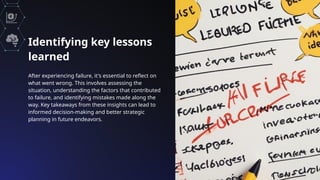
Identifying key lessons
learned
Afterexperiencing failure, it's essential to reflect on
what went wrong. This involves assessing the
situation, understanding the factors that contributed
to failure, and identifying mistakes made along the
way. Key takeaways from these insights can lead to
informed decision-making and better strategic
planning in future endeavors.
6.
Applying lessons tofuture
endeavors
Applying the lessons learned from past failures is crucial for future
success. This involves incorporating insights gained into planning and
decision-making processes. It’s important to create actionable steps
based on these insights, whether that means adjusting strategies,
setting new goals, or developing new skills. Embracing failure as a
stepping stone rather than a setback ultimately positions individuals for
greater achievements.
Cultivating a resilient
mindset
Aresilient mindset is essential for navigating life's
challenges. This mindset involves maintaining a
positive attitude in the face of adversity and viewing
difficulties as opportunities for learning and growth.
Building resilience requires practice, including
developing stress management techniques,
fostering optimism, and embracing challenges as
part of the learning process.
9.
Overcoming obstacles and
setbacks
Overcomingobstacles involves recognizing and confronting the
challenges that arise following a failure. It requires determination and a
proactive approach to problem-solving. Engaging support systems,
brainstorming alternative solutions, and maintaining perseverance is
vital to navigate these setbacks effectively. Sharing experiences with
others can also provide encouragement and new perspectives.
10.
Strategies for sustained
motivation
Sustainingmotivation after experiencing failure can be challenging but is
crucial for long-term success. Setting realistic, attainable goals helps
maintain focus and direction. Additionally, celebrating small victories,
seeking feedback, and surrounding oneself with supportive individuals
can foster motivation. Creating routines that incorporate both work and
rest helps maintain energy and enthusiasm.
11.
Conclusions
In conclusion, failurecan be a powerful teacher if approached with the
right mindset. By learning from setbacks, cultivating resilience, and
applying key lessons to future endeavors, individuals can turn failures
into stepping stones toward success. Embracing failure as an integral
part of the journey enhances personal and professional growth,
ultimately leading to greater achievements.
12.
CREDITS: This presentationtemplate was created by
Slidesgo, and includes icons, infographics & images by
Freepik
Thank you!
Do you have any questions?