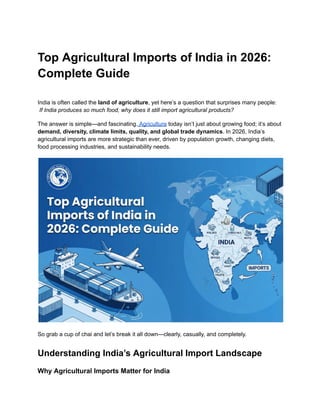
Discover the top agricultural imports of India in 2026, including edible oils, pulses, fruits, nuts, and spices. A complete guide to trends, suppliers, and future outlook.
Top Agricultural Importsof India in 2026:
Complete Guide
India is often called the land of agriculture, yet here’s a question that surprises many people:
If India produces so much food, why does it still import agricultural products?
The answer is simple—and fascinating. Agriculture today isn’t just about growing food; it’s about
demand, diversity, climate limits, quality, and global trade dynamics. In 2026, India’s
agricultural imports are more strategic than ever, driven by population growth, changing diets,
food processing industries, and sustainability needs.
So grab a cup of chai and let’s break it all down—clearly, casually, and completely.
Understanding India’s Agricultural Import Landscape
Why Agricultural Imports Matter for India
2.
Think of India’sagri-import system like a pressure valve. When domestic production can’t meet
demand—or quality expectations—imports balance the equation.
Key reasons include:
● Rising population and urban consumption
● Growing food processing sector
● Climate variability impacting yields
● Demand for specialty and premium products
● Price stabilization in domestic markets
Imports aren’t a weakness—they’re a smart trade strategy.
India’s Agricultural Import Trends in 2026
A Snapshot of the Current Scenario
In 2026, India continues to be:
● A net exporter of staples like rice and spices
● A major importer of oils, pulses, and specialty agri-products
This dual role keeps India competitive globally while meeting domestic needs.
1. Edible Oils: India’s Biggest Agricultural Import
Why India Imports So Much Edible Oil
Edible oil is the king of agri-imports. Despite government pushes for self-reliance, demand still
outpaces production.
Major reasons:
● Limited oilseed yield
3.
● High domesticconsumption
● Cost-effective global sourcing
Key Edible Oils Imported in 2026
● Palm Oil (largest share)
● Soybean Oil
● Sunflower Oil
Top suppliers:
● Indonesia
● Malaysia
● Argentina
● Ukraine
Palm oil alone is like the backbone of India’s cooking economy.
2. Pulses (Legumes): Filling the Protein Gap
Why Pulses Are Crucial Imports
Dal isn’t just food—it's an emotion in Indian households . But unpredictable monsoons and
acreage constraints make imports essential.
Major Pulses Imported by India
● Yellow peas
● Chickpeas
● Lentils
● Pigeon peas (tur/arhar)
4.
Top sourcing countries:
●Canada
● Myanmar
● Australia
● Mozambique
Imports help stabilize prices and ensure protein security.
3. Fresh Fruits: Feeding India’s Taste for Variety
Growing Demand for Imported Fruits
Ever noticed apples from New Zealand or kiwis from Italy at your local store? That’s no
coincidence.
Urban India wants:
● Year-round availability
● Premium quality
● Exotic varieties
Key Fruit Imports in 2026
● Apples
● Pears
● Kiwis
● Avocados
● Oranges
Major suppliers:
5.
● USA
● NewZealand
● Chile
● Iran
● Italy
4. Nuts and Dry Fruits: The Premium Segment
Why India Imports Nuts Despite Local Production
Nuts are like nutritional gold—dense, healthy, and always in demand.
Imported dry fruits include:
● Almonds
● Walnuts
● Pistachios
● Cashews (raw for processing)
Top exporters to India:
● USA (almonds)
● Iran (pistachios)
● Afghanistan (dry fruits)
● Tanzania & Ivory Coast (raw cashews)
5. Spices: Importing What India Can’t Grow
Isn’t India the Spice King?
6.
Absolutely! But evenkings import what they lack.
India imports:
● Cassia (Chinese cinnamon)
● Star anise
● Certain varieties of pepper
● Nutmeg and mace
These are used heavily in:
● Food processing
● Pharmaceuticals
● Essential oil extraction
6. Raw Cashew Nuts: Fueling the Processing Industry
Why Raw Cashews Are Imported
India is one of the world’s largest cashew processors, not necessarily producers.
Raw cashews are imported mainly from:
● Ivory Coast
● Ghana
● Benin
● Nigeria
They are then processed and re-exported, adding value and employment.
7. Coffee: Meeting the Premium Café Culture
Coffee Imports in a Tea-Loving Nation?
7.
Yes! With caféchains booming, India imports:
● Specialty coffee beans
● High-aroma blends
Imported mainly from:
● Vietnam
● Brazil
● Ethiopia
This supports the growing premium beverage market.
8. Cocoa and Cocoa Products
Chocolate Demand Is Rising
As chocolate consumption rises, cocoa imports follow.
India imports:
● Cocoa beans
● Cocoa butter
● Cocoa powder
Key suppliers:
● Ghana
● Ivory Coast
● Indonesia
8.
9. Sugar (OccasionalImports)
Why Sugar Imports Happen Despite Surplus
India usually exports sugar, but imports occur when:
● Domestic prices rise
● Ethanol diversion increases
● Climate affects output
These imports are policy-driven and seasonal.
10. Animal Feed and Feed Ingredients
Supporting India’s Livestock Sector
The dairy and poultry industries rely on:
● Soymeal
● Corn (limited imports)
● Alfalfa hay (premium cattle feed)
These imports support productivity and quality output.
11. Vegetable Seeds and Hybrid Seeds
Importing the Future of Farming
Seeds are like software for agriculture.
India imports:
● Hybrid vegetable seeds
9.
● High-yield cropvarieties
● Disease-resistant seeds
Major sources:
● Netherlands
● Israel
● USA
● Japan
12. Organic and Specialty Grains
The Health-Conscious Shift
With rising health awareness, imports include:
● Quinoa
● Chia seeds
● Flax seeds
● Specialty millets
These cater to niche but fast-growing markets.
13. Tea Imports: Quality Blending and Re-Exports
Why Import Tea When India Produces So Much?
Imported tea helps:
● Blend flavors
10.
● Maintain consistency
●Support re-export markets
Sources include:
● Kenya
● Sri Lanka
● Vietnam
14. Flowers and Floriculture Products
The Blooming Import Segment
India imports:
● Cut flowers
● Flower bulbs
● Ornamental plants
Used in:
● Events and weddings
● Hospitality
● Landscaping
15. Processed Agricultural Ingredients
Supporting the Food Processing Boom
Imports include:
● Starches
11.
● Food additives
●Natural gums
● Flavor extracts
These power India’s massive FMCG and food processing sectors.
Government Policies Impacting Agri Imports in 2026
Key Regulatory Factors
● Import duties adjusted to protect farmers
● Seasonal restrictions on pulses
● Quality and phytosanitary norms
● Free trade agreements (FTAs)
The goal? Balance farmer welfare and consumer affordability.
Challenges in Agricultural Imports
What Makes Agri Imports Tricky?
● Price volatility
● Currency fluctuations
● Global supply disruptions
● Climate change
● Geopolitical tensions
Importers must stay agile and informed.
Opportunities for Importers and Businesses
12.
Why 2026 Isa Big Year
If you’re in agri-trading, this is your moment.
Opportunities include:
● Value-added processing
● Organic and specialty products
● B2B sourcing
● Private labeling
● Export re-routing
Think of agri-imports as a gateway to global food business.
Future Outlook of India’s Agricultural Imports
What Lies Ahead?
By 2030, India is expected to:
● Reduce oilseed dependency gradually
● Increase specialty food imports
● Strengthen agri-tech integration
● Focus on sustainable sourcing
Imports won’t disappear—but they’ll evolve.
FAQs: Top Agricultural Imports of India in 2026
Q1. What is India’s largest agricultural import?
Edible oils, especially palm oil, remain the largest agri-import.
Q2. Does India import rice or wheat?
13.
No. India isa net exporter of both.
Q3. Which country exports the most agri-products to India?
Indonesia and Malaysia dominate due to palm oil exports.
Q4. Are agricultural imports increasing every year?
They fluctuate based on domestic production and global prices.
Q5. Is importing agricultural products profitable?
Yes, especially in oils, pulses, dry fruits, and specialty foods.
Conclusion: India’s Smart Balance Between Farm and
Foreign
India’s agricultural imports in 2026 tell a powerful story—not of dependency, but of adaptation.
Like a skilled chef sourcing the best ingredients from around the world, India imports what it
needs, when it needs it, to feed its people and fuel its economy.
From edible oils and pulses to premium fruits and seeds, agricultural imports are the silent
partners in India’s food security journey.