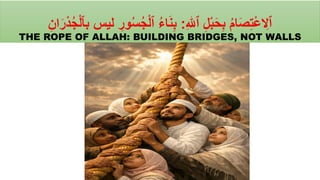
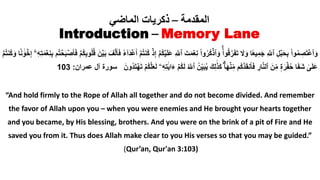
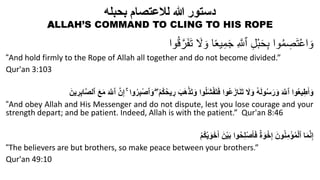
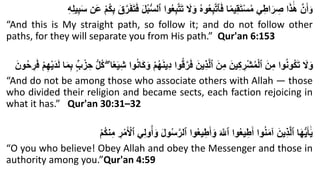
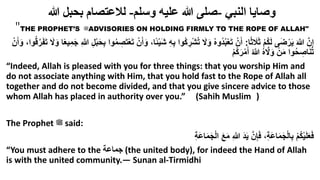
The concept of “The Rope of Allah” (حبل الله) is one of the most powerful symbols of unity in Islam. It is derived from the Qur’anic verse:
“And hold firmly to the Rope of Allah all together and do not become divided…”
(Surah Āl ʿImrān 3:103)
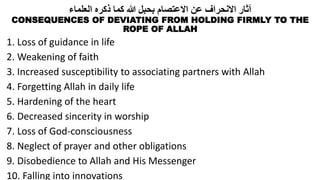
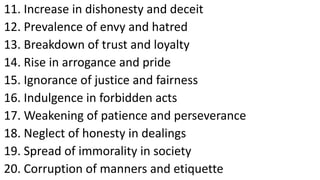
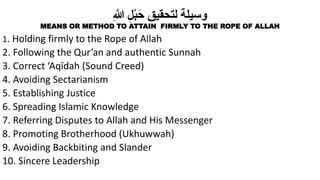
This verse calls Muslims to unity, cooperation, brotherhood, and collective strength. The message is clear: Islam is meant to build bridges, not walls. When Muslims hold firmly to the Rope of Allah, they strengthen unity; when they abandon it, division and weakness follow.
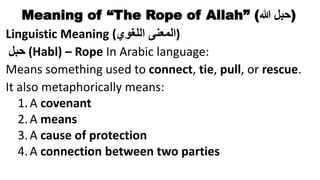
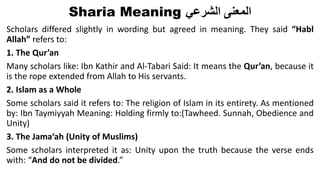
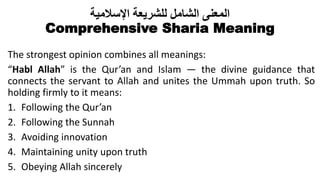
Scholars have interpreted “The Rope of Allah” in several complementary ways:
• The Qur’an
• The Sunnah of Muhammad
• Islam as a complete way of life
• The covenant between Allah and believers
• Unity upon truth
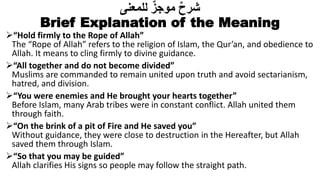
Ibn Masʿūd (رضي الله عنه) and other companions explained that the Rope of Allah refers primarily to the Qur’an, because it connects humanity to their Creator.
Thus, holding firmly to the Rope means:
• Following divine guidance
• Practicing authentic Islam
• Maintaining unity upon truth
This verse was revealed in a context where tribal conflicts existed between Aws and Khazraj in Madinah. Islam transformed former enemies into brothers.
Allah reminds them of their past hostility and how Islam united their hearts. Through faith, they moved from hatred to brotherhood.
This demonstrates that Islam’s mission is reconciliation and unity.
A. Bridge of Faith
Faith connects believers regardless of race, language, or nationality. Allah says:
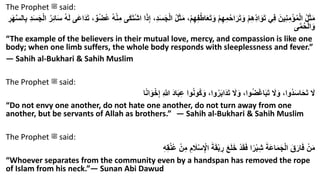
“Indeed the believers are brothers.”
Islam abolished tribal superiority and racial discrimination.
B. Bridge of Brotherhood
The Prophet ﷺ established brotherhood (Mu’ākhāh) between the Muhājirīn and the Anṣār in Madinah, creating social unity.
C. Bridge of Justice
Justice is a pillar of unity. Injustice creates walls of resentment. The Qur’an commands fairness even toward enemies.
D. Bridge of Mercy
The Prophet ﷺ was sent as a mercy to mankind. Mercy strengthens relationships and removes barriers.
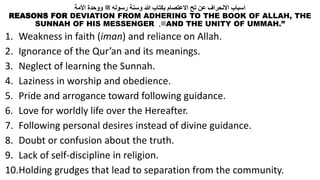
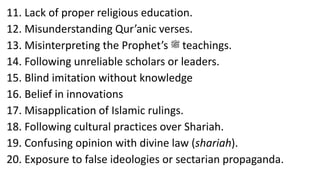
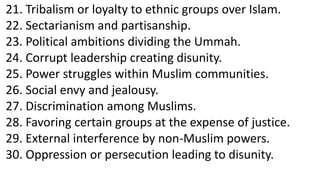
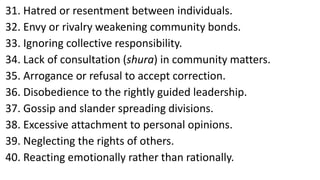
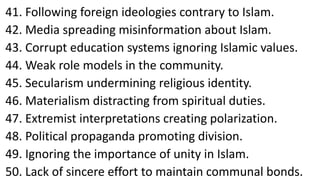
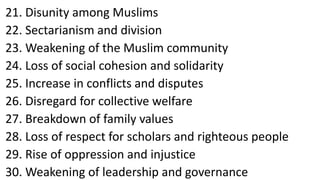
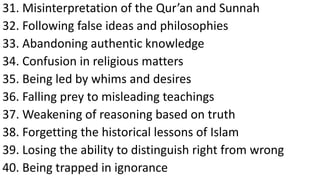
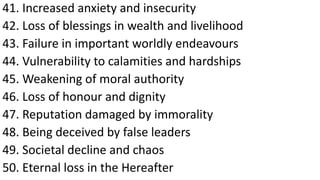
Despite the command for unity, several factors create division:
1. Sectarianism
2. Political rivalry
3. Tribalism
4. Cultural superiority
5. Misinterpretation of religion
6. Pride and arrogance
7. Social injustice
8. Ignorance
9. Extremism
10. Personal ego
Walls form when Muslims prioritize identity over truth and ego over unity.
Holding the Rope of Allah does not eliminate scholarly differences. The four major schools of jurisprudence:
• Ḥanafī
• Mālikī
• Shāfiʿī
• Ḥanbalī
Differ in certain rulings but remain united in creed and foundational principles.
Differences in jurisprudence are a mercy when based on evidence and respect.
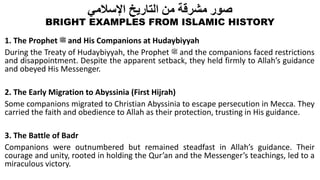
Muhammad demonstrated bridge-building through:
• Forgiving enemies at the conquest of Makkah
• Signing treaties like Ḥudaybiyyah
• Respecting non-Muslim neighbors
• Promoting reconciliation
He did not build walls of revenge; he built bridges of mercy.
The Qur’an is:
• A guide
• A light
• A criterion between truth and falsehood
• A unifying source
When Muslims return to the Qur’an since