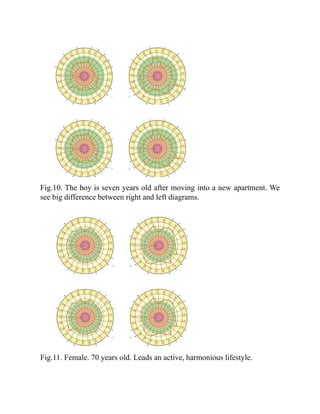
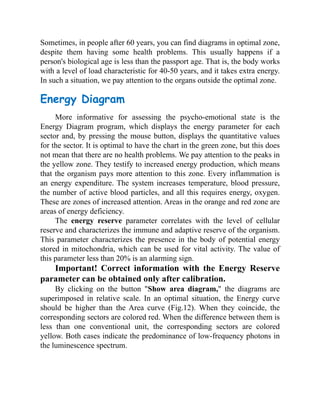
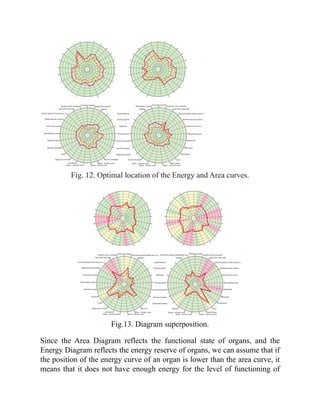
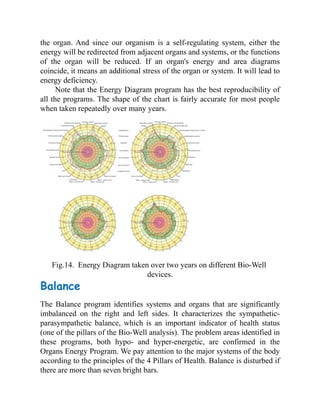
The Principles of Bio-Well Analysis
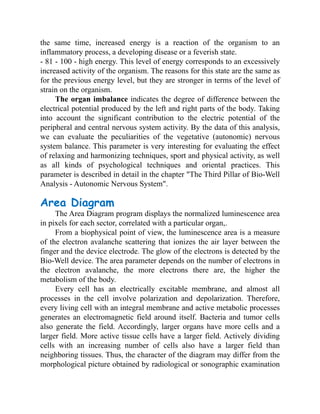
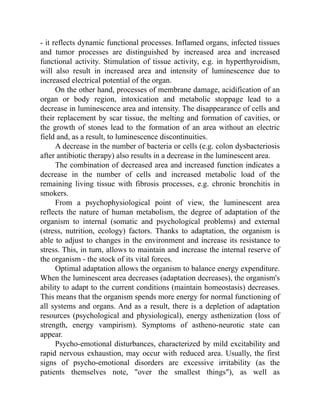
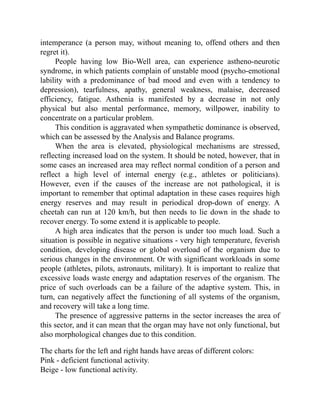
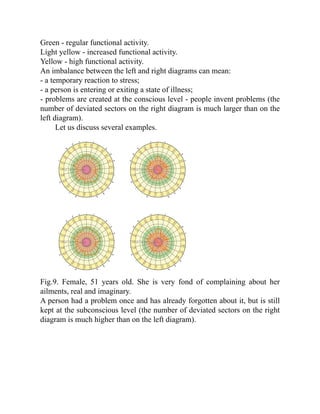
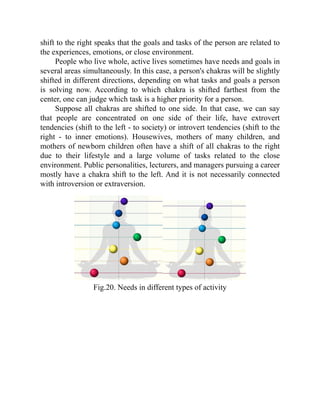
Dr. Konstantin Korotkov and Elena Yanovskaja
This book describes the principles and step-by-step technique of the Bio-
Well analysis of the human Biofield, which allows not only to make
conclusions about a person’s psychophysiological condition but also to
develop recommendations for improving health and well-being. The last
part of the book is an atlas of different cases with descriptions and
interpretations. All the materials are based on many years of research and
experience of doctors and medical professionals in different countries.
Photos by the author
Editor DARLENE
© 2024 Korotkov Konstantin
Contents
Preface 9
Introduction 9
PART I UNDERSTANDING THE PRINCIPLES 12
Four Pillars of Bio-Well Analysis 12
The First Pillar – Endocrine System 15
Circadian Rhythm of Life 23
The Second Pillar – Gastro Intestinal (GI) tract 27
Vitamins, minerals, supplements. 31
The Third Pillar -Autonomic Nervous System 34
Stress - World’s Number One Killer 39
What We’ve Been Told About Heart Disease is Wrong 47
PART 2. BIO-WELL 3.0 - A NEW STAGE OF TECHNOLOGY
DEVELOPMENT 50
Bio-Well calibration 52
Peculiarities of using different programs 52
Bio-Well data analysis 54
Analysis Program 55
Area Diagram 58
Energy Diagram 62
Balance 64
Organs and Systems Energy 64
Fingers 65
Analysis of Psychological Condition 66
Neurodynamic Program 66
Chakras 68
Bio-gram patterns 80
Bio-grams Types 83
Functional tests 90
Conditions to obtain correct data 91
Using filter 93
PART 3. BIO-WELL ACCESSORIES 94
Exploring the Energy of Space. Sputnik device 94
Air pressure (altitude) 96
Humidity 97
Fluid Research 111
Bio-Well glove 112
BioCor device 112
Bio-Well Element device 114
Bio-Well Mini device 117
Parameters of the Bio-grams 118
Scientific research with the Bio-Well device 122
Bio-Well in Medicine 125
Bio-Well in Sport 128128
Water and Material testing with Bio-Well 131131
Environmental Study 134134
The Energy of Pyramids 134134
Part 4. INTERPRETING BIO-WELL DATA 159159
People with different psychophysiological states 159159
Neurological diseases 171171
Oncology 178178
The danger of the electromagnetic environment 187187
Conclusion
…………………….……………………………………………………..198
Preface
This book is intended for those who have worked with Bio-Well, performed
more than a dozen analyses, and want to understand more deeply the
subtleties of analysis. That is why we do not give detailed descriptions of
the programs, there is an Instruction Manual for that. Certain points are
taken from the book "Energy of Health" 2017, but in any case, we
recommend reading both of these books. By 2024 we have added many new
programs and functions, so all the examples in the fourth part are based on
new material.
Introduction
The greatest use of a life is to spend it on something
that will outlast it.
William James
(American philosopher 1842-1910)
In 1995, our group developed the first GDV device. The term “Gas
Discharge Visualization Technique – GDV” we coined at the end of the last
century during our series of studies regarding the Kirlian effect. GDV
reflects the physical nature of the processes of registration of the glow
emitted by objects of different nature in electromagnetic fields of high
intensity. In recent years, the term “Electrophotonic Imaging–EPI” — more
harmonious to Western ears — has been introduced. Today, we have
improved qualities in our new lines of GDV devices. In this pursuit, several
times I have changed teams with whom I’ve shared the development and
distribution of GDV instruments. Following the rocket-like development of
computer technologies, to progress in this way is a natural evolutionary
process. You are doomed in today’s world, if you don’t progress—your toys
will be superseded by those of others and the public will immediately forget
you.
Ours is a modern world of cloud computing. Few people can imagine
their lives without a mobile phone and the internet. At some point, it
became clear to me that we should participate in this process. This key
understanding enabled me to create the Bio-Well device, which absorbed
the best ideas from GDV devices and opened up a whole range of new
possibilities.
First of all, the Bio-Well program is an opportunity to generate
constant software updates, and, with one click of the mouse, distribute
new updates to thousands of users. We are continually generating new
ideas which are periodically translated into new programs. In
particular, the Bio-Well program is now operating in 13 languages, and
the list is constantly expanding.
Secondly, it provides the possibility to calibrate devices, allowing all
devices in the world to obtain comparable parameters. For the older
GDV devices, this was not always possible, and led to a mass of
incorrectly recorded data. My many encounters in meetings with GDV
users convinced me to address this problem in the future instead of
pretending that all was okay.
Another flexible feature of the program is its ability to work on any
computer operating system – Windows, Mac or Linux. Sometimes this
poses a lot of challenges for developers, but we have successfully
overcome all difficulties. Currently, we are creating versions of Bio-
Well for tablets and mobile phones, and will have them available in the
foreseeable future..
The Bio-Well device allows independence instead of forced reliance on
only one particular type of computer. Users will now be able to reach
their accounts from anywhere. For example, data can be collected at
the workplace on Windows, then processed at home on a Mac.
There is instant exchange of results between Bio-Well users. Many
materials in this book are based on the results from our colleagues.
Finally, online access to any Bio-Well device allows us to support and
solve problems anywhere in the world. At the same time, your database
remains your own property, and we do not have access to your data.
Over the years of Bio-Well exploration, we have garnered rich experience
in Bio-gram interpretation due to the increasing possibilities for rapid data
exchange and a significant expansion in the range of users as compared to
previous versions of GDV devices. Doctors and specialists in different parts
of the world are continually gaining clinical data, and this can be used to
benefit joint discussions. This technology only became possible after the
implementation of the calibration via the Internet, which allows comparable
data to be obtained.
It is necessary to note two important points.
Primarily, the Bio-Well analysis is a part of the Integrative Medicine
line. The task of this line is not to treat symptoms of any medical problems,
but to prevent health abnormalities at an early stage by recommending the
necessary counter-measures to the patient to overcome possible problems.
As a rule, this requires a significant change in one’s attitude to life, the
nature of food supplementation, and regular physical activity. Not all people
are prepared for it, but those who follow the recommendations usually
make fairly rapid progress. So, the purpose of the Bio-Well analysis is not
just to generate a report, but to make insightful recommendations, which
may help improve the lifestyle and health of the patient.
Secondly, we emphasize that the effectiveness of the analysis is
about 80%, in 20% of cases, the information received does not correlate
with the actual state and does not allow for the formulation of any
conclusions. Such a result is estimated in medicine as very good.
Basically, it refers to complex issues, such as oncology and autoimmune
diseases. Only complicated mathematical algorithms based on clinical
data, allow us to formulate some conclusions in these cases. So one
should not worry if, in some cases, one’s Bio-Well analysis does not
reflect the true situation—human nature is very complicated and modern
science still does not fully understand its functioning.
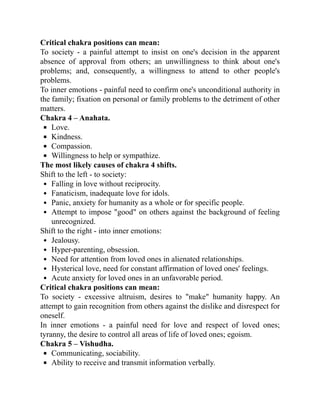
PART I. Understanding The
PrinciplesUnderstanding the principles
Four Pillars of Bio-Well Analysis
Life isn't about finding yourself.
Life is about creating yourself.
George Bernard Shaw (1856-1950)
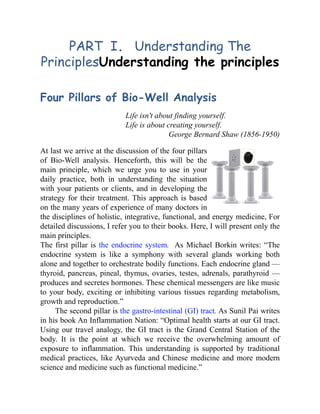
At last we arrive at the discussion of the four pillars
of Bio-Well analysis. Henceforth, this will be the
main principle, which we urge you to use in your
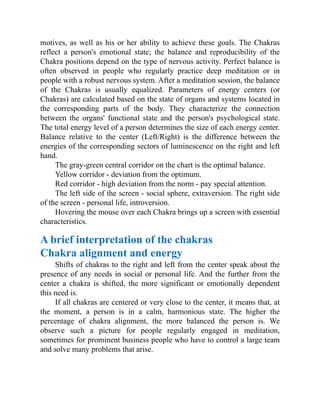
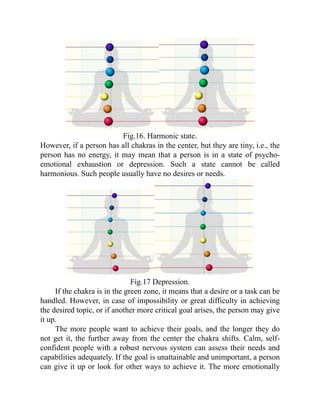
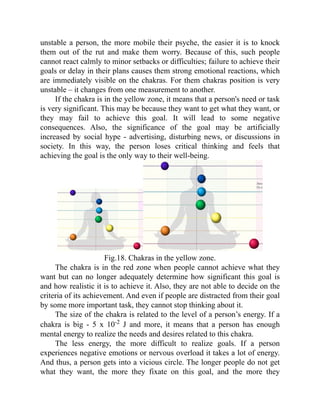
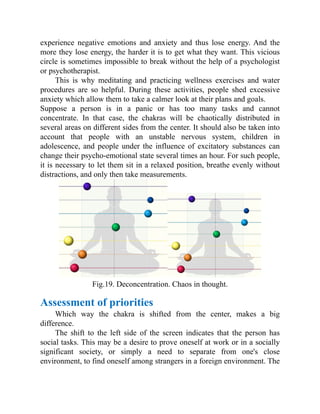
daily practice, both in understanding the situation
with your patients or clients, and in developing the
strategy for their treatment. This approach is based
on the many years of experience of many doctors in
the disciplines of holistic, integrative, functional, and energy medicine, For
detailed discussions, I refer you to their books. Here, I will present only the
main principles.
The first pillar is the endocrine system. As Michael Borkin writes: “The
endocrine system is like a symphony with several glands working both
alone and together to orchestrate bodily functions. Each endocrine gland —
thyroid, pancreas, pineal, thymus, ovaries, testes, adrenals, parathyroid —
produces and secretes hormones. These chemical messengers are like music
to your body, exciting or inhibiting various tissues regarding metabolism,
growth and reproduction.”
The second pillar is the gastro-intestinal (GI) tract. As Sunil Pai writes
in his book An Inflammation Nation: “Optimal health starts at our GI tract.
Using our travel analogy, the GI tract is the Grand Central Station of the
body. It is the point at which we receive the overwhelming amount of
exposure to inflammation. This understanding is supported by traditional
medical practices, like Ayurveda and Chinese medicine and more modern
science and medicine such as functional medicine.”
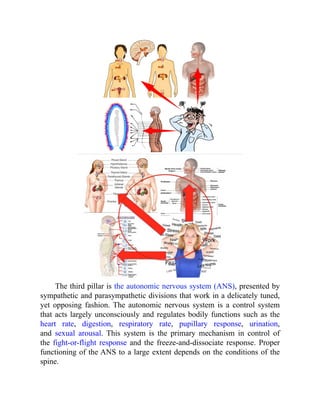
The third pillar is the autonomic nervous system (ANS), presented by
sympathetic and parasympathetic divisions that work in a delicately tuned,
yet opposing fashion. The autonomic nervous system is a control system
that acts largely unconsciously and regulates bodily functions such as the
heart rate, digestion, respiratory rate, pupillary response, urination,
and sexual arousal. This system is the primary mechanism in control of
the fight-or-flight response and the freeze-and-dissociate response. Proper
functioning of the ANS to a large extent depends on the conditions of the
spine.
And the fourth, but perhaps the most important pillar, is a person’s
level of emotions and stress. This level is like an orchestra conductor, who
hears every player, every tune, corrects any false tones and directs many
different musicians within his/her different characters to play in
synchronized harmony to create beautiful music. If the conductor’s
command is lost, all turns to chaos. I suggest you to watch classical movie
by Federico Fellini, Orchestra Rehearsal (Italian: Prova d’orchestra) where
this process is presented in dramatic visual form.
All these four systems – pillars – are interconnected and influence each
other. They are indivisible parts of the united system of the organism and
optimal health may be achieved only by attending to all of them as
integrative. The main difference between Western or conventional medicine
and Integrative medicine is in how they approach the patient. Western
medicine stands above the rest of the world when it comes to acute and
emergency care. For people with life-threatening illnesses, it would have
meant their death even a generation ago if not for Conventional medicine,
which has saved millions of lives. But for chronic diseases such as heart
disease, diabetes, obesity, arthritis, or depression, conventional medicine
has failed.
In the following chapters, we’ll discuss all these pillars one after
another. I ask you to keep in mind this four-quadrant picture as it will be a
mark in our further discussion of the Bio-Well cases.
One can ask: why did not you mention the cardio-vascular system
before, the number one killer of the modern civilization? The following
discussions will show that the deep reason for this illness, in most cases,
lies not with the condition of veins or the compartments of the heart, but
with our 4 pillars of health. So let us proceed step-by-step.
The First Pillar – Endocrine System
With Dr. Michael Borkin
The endocrine
system regulates the
body's major
continuous and
prolonged processes,
including
reproduction; growth and development;
cellular metabolism and energy; blood
balance of nutrients, electrolytes and
water; and the mobilization of body defenses against stressors (things that
cause wear and tear on the body's physical and mental resources). It is made
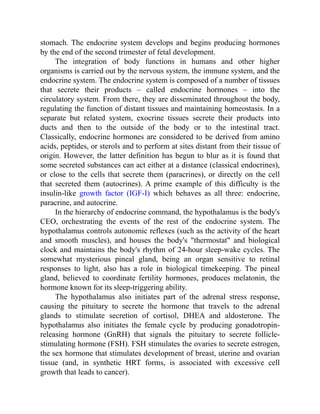
up of eight different glands located strategically throughout the body:
ovaries (in men, the testes)
adrenals
pancreatic islets
thyroid
parathyroid
pineal
pituitary
hypothalamus, which is also part of the nervous system.
Besides these major organs, the system includes pockets of hormone-
producing cells within the tissues in the small intestine, heart, kidneys and
stomach. The endocrine system develops and begins producing hormones
by the end of the second trimester of fetal development.
The integration of body functions in humans and other higher
organisms is carried out by the nervous system, the immune system, and the
endocrine system. The endocrine system is composed of a number of tissues
that secrete their products – called endocrine hormones – into the
circulatory system. From there, they are disseminated throughout the body,
regulating the function of distant tissues and maintaining homeostasis. In a
separate but related system, exocrine tissues secrete their products into
ducts and then to the outside of the body or to the intestinal tract.
Classically, endocrine hormones are considered to be derived from amino
acids, peptides, or sterols and to perform at sites distant from their tissue of
origin. However, the latter definition has begun to blur as it is found that
some secreted substances can act either at a distance (classical endocrines),
or close to the cells that secrete them (paracrines), or directly on the cell
that secreted them (autocrines). A prime example of this difficulty is the
insulin-like growth factor (IGF-I) which behaves as all three: endocrine,
paracrine, and autocrine.
In the hierarchy of endocrine command, the hypothalamus is the body's
CEO, orchestrating the events of the rest of the endocrine system. The
hypothalamus controls autonomic reflexes (such as the activity of the heart
and smooth muscles), and houses the body's "thermostat" and biological
clock and maintains the body's rhythm of 24-hour sleep-wake cycles. The
somewhat mysterious pineal gland, being an organ sensitive to retinal
responses to light, also has a role in biological timekeeping. The pineal
gland, believed to coordinate fertility hormones, produces melatonin, the
hormone known for its sleep-triggering ability.
The hypothalamus also initiates part of the adrenal stress response,
causing the pituitary to secrete the hormone that travels to the adrenal
glands to stimulate secretion of cortisol, DHEA and aldosterone. The
hypothalamus also initiates the female cycle by producing gonadotropin-
releasing hormone (GnRH) that signals the pituitary to secrete follicle-
stimulating hormone (FSH). FSH stimulates the ovaries to secrete estrogen,
the sex hormone that stimulates development of breast, uterine and ovarian
tissue (and, in synthetic HRT forms, is associated with excessive cell
growth that leads to cancer).
The conductor of the Endocrine system is the anterior pituitary gland,
nestled at the base of the brain. The hypothalamus sends special hormones
called releasing factors to the pituitary, instructing it how to manage the
other endocrine glands. Then, with its own set of directives, the anterior
pituitary gland guides your body's other glands and also releases prolactin, a
breast feeding and growth hormone.
Each endocrine gland plays a distinct role in your body. Since these
actions overlap, they affect one another as well. When one gland is overly-
or under-active, other glands feel the effect. The same goes for you. When
part of your endocrine system is sick, you most likely are too. Fatigue is the
one symptom that many endocrine disorders have in common. If you feel
very tired or can't seem to shake your fatigue, see your doctor. Once you've
discovered the source of your fatigue — whether endocrine related or not
— there are many natural remedies you can try under the guidance of a
professional.
Hormones are normally present in the plasma and interstitial tissue at
concentrations in the range of 10-7
M to 10-10
M. Because of these very low
physiological concentrations, sensitive protein receptors have evolved in
target tissues to sense the presence of very weak signals. Additionally,
systemic feedback mechanisms have evolved to regulate the production of
endocrine hormones.
Once a hormone is secreted by an endocrine tissue, it generally binds
to a specific plasma protein carrier with the entire complex being
disseminated to distant tissues. Plasma carrier proteins exist for all classes
of endocrine hormones. Carrier proteins for peptide hormones prevent
hormone destruction by plasma proteases. Carriers for steroid and thyroid
hormones allow these very hydrophobic substances to be present in the
plasma at concentrations several hundred-fold greater than their solubility
in water would permit.
The endocrine system is responsible for homeostasis, the body's ability
to maintain stable internal conditions, such as body temperature, regardless
of changing external conditions. Balance is crucial to all life processes. The
body functions within very specific margins. Being forced to function
outside of those margins can cause a whole series of negative events, even
death. The endocrine system also controls the processes of reproduction,
metabolism, growth and development.
When one goes through chronic or severe long-term stress, the
hypothalamus at first triggers an overproduction of the adrenal hormones
(especially cortisol and DHEA). This eventually leads to adrenal
insufficiency, a state in which the exhausted adrenals no longer respond
adequately. During times of stress or conditions of chronic adrenal hyper-
stimulation, progesterone is capable of being converted into the stress
hormone cortisol.
One very damaging adrenal dysfunction is excessive cortisol
production, which causes, among other serious problems, increased calcium
mobilization from the bones, leading to osteoporosis, or loss of bone
density. In a person with a healthy stress response, excessive levels of
cortisol are automatically buffered. Constant stress destroys this feedback
loop.
Hormonal imbalances compromise not only physical health but also
psychological health, manifesting as problems ranging from depression to
panic disorder. One way the body tries to compensate for imbalances
created and exacerbated by the demands of stress is to overproduce key
hormones. Another way it tries to compensate is by converting sex
hormones to stress hormones, thus further diminishing reproductive
functions and the enjoyment of sexual health.
It is helpful to learn about these hormonal interdependencies because
they allow one to see the bigger picture that the problems commonly
associated with menses or menopause are actually indicators of greater
endocrine imbalance. For many women, the next step in understanding the
bigger picture might be to look at digestive health — such as the possibility
of malabsorption syndrome or food allergies — and at nutritional
supplementation strategies (see discussions below) that help restore or
maintain hormonal balance.
One of the biggest reasons why hormonal imbalances are
misunderstood is because "modern" medicine disregards the way the human
body deals with its environment. Consider that the body's responses
basically have not changed for 50,000 years. We still respond to our
environment with the most primal of mechanisms: the "fight-or-flight"
mechanism, the release of adrenaline and other stress hormones. The stress
response, initiated in the hypothalamus and pituitary and regulated by the
adrenal glands, is responsible for redirecting energy and resources away
from the reproductive organs when we are under severe or chronic stress,
directing it instead to the muscles and organs that are necessary for survival.
This redirection is allowed to take place because, on the body's list of
priorities, survival comes first and reproduction comes last.
The reproductive system is the only body system whose functions are
biologically expendable. With this in mind, we see how the ability to
reproduce becomes a privilege in the body, not a right. Fertility, or the
ability to ovulate, is therefore a good indicator of the overall health of a
woman.
The fight-or-flight response can be a detriment as well as a lifesaving
response. In a modern environment, many things — ranging from allergic
reactions to being cut off while driving — can evoke this mechanism.
Throughout daily life, there are many hidden as well as overt sources of
stress. Most of the time, our response to stress ends without a literal "fight"
or some form of physical activity, as our ancestors would most likely have
engaged in. One of the problems with this is that adrenaline, unlike most
hormones, has no enzyme "switch" to turn it off. Once released, it must be
used or it remains active. As a result, we remain in a state of hyper-
stimulation with abnormal levels of adrenaline and cortisol, the primary
fight-or-flight hormones. Other hormone levels, such as the pancreatic
hormone glucagon, also become dysregulated. If hyper-stimulation persists,
we have difficulty inducing a relaxation response and we do not return to a
normal state.
The adrenal glands are the core of the endocrine stress response
system. They produce about 40 hormones responsible for many body
functions. The adrenals are the shock absorbers of the body. Two of their
most important hormones (adrenaline and cortisol) are responsible for the
fight/flight response. Adrenaline provides the first burst of energy in a crisis
situation. Cortisol assists in this phase and then continues working for hours
afterward. An analogy would be the firing of a gun: the initial trigger is
adrenaline; the projectile continuing until it reaches the target is cortisol.
Both are inseparable and both are extremely damaging when misused.
Over a period of time, if chronic stress continues, the body adapts to
adrenal hyper-stimulation, existing in a perpetual fight-or-flight mode. This
is called maladaptation, a process in which endocrine system organs begin
to break down. This process eventually reaches the point where the adrenals
become exhausted and cortisol levels drop. One example of what can result
from adrenal exhaustion is fibromyalgia, a condition that can arise when the
protective benefits of normal cortisol levels are lost.
The adrenals are usually first in the order of endocrine function
breakdown, followed by the insulin-producing portion of the pancreas,
thyroid, ovaries, parathyroid, pineal, pituitary and finally, the link to the
autonomic nervous system, the hypothalamus. The thymus gland, which
produces immune defense cells, is also affected in the endocrine breakdown
process. Each of these glands controls specific functions, and as each breaks
down, new symptoms appear. Symptoms are subtle at first. Then over the
years, as the body goes further into deficit, the symptoms will increase and
worsen.
The more stress is endured, the worse the hormonal problems become.
When the endocrine system is severely dysregulated, the hypothalamus is
affected. If the production of corticotrophin-releasing hormone (CRH)
becomes severely affected, the psychological symptoms can become
debilitating. Because CRH controls fear — through stimulating adrenal
secretion — an abnormal level of CRH can make it difficult to perform
routine chores or leave the house. The fear response in turn worsens
hormonal problems by further stressing the adrenals, which respond by
converting more sex hormones to stress hormones and becoming more
maladapted. What a vicious cycle.
The thyroid gland is also adversely affected by chronic stress. This
gland's roles include regulating calcium metabolism and glycolysis, the
breakdown of glucose for body energy fuel. Under normal conditions, the
fight-or-flight response causes the thyroid to increase glucose breakdown. In
conditions of chronic stress, however, the thyroid is continually over-
stimulated and eventually becomes depleted. Thyroid function is also
disrupted by excessive estrogen, but this can be prevented by adequate
progesterone levels.
With the Bio-Well analysis, we can often see disturbances in the thyroid
area. This is a very common symptom but in most cases, the real reason is
adrenal deficiency. So, if we see irregular patterns in the thyroid area, we
need to check the overall hormonal balance.
Hyperthyroidism (overactive thyroid functioning) and especially
hypothyroidism (low functioning) have become more common. The classic
symptoms of hypothyroidism include sluggishness, early morning fatigue,
cold extremities, lowered basal temperature and menstrual problems,
including scanty periods.
Adrenal and other hormonal gland dysfunctions can cause some of the
above symptoms and more, including cravings for sweets, weight gain,
allergies, heart palpitations, insomnia, depression, fatigue, poor memory,
foggy thinking, headaches, nervousness, inability to concentrate, recurrent
infections and glucose intolerance.
Typical Bio-grams of thyroid deregulation
The Gut-Thyroid Immune Connection
An important function of the gut is to host 70% of the immune tissues in the
body. This portion of the immune system is collectively referred to as
GALT, or gut-associated lymphoid tissue. The GALT comprises several
types of lymphoid tissue that store immune cells, such as T and B
lymphocytes that carry out attacks and produce antibodies against antigens
— those molecules recognized by the immune system as potential threats.
Problems occur when either of these protective functions of the gut is
compromised. When the intestinal barrier becomes permeable, (i.e. “leaky
gut syndrome”), larger protein molecules escape into the bloodstream.
Since these proteins do not belong outside of the gut, the body mounts an
immune reaction and attacks them. Studies show that these attacks play a
role in the development of autoimmune diseases like Hashimoto’s.
We also know that thyroid hormones strongly influence the tight junctions
in the stomach and small intestine. These tight junctions are closely
associated areas of two cells whose membranes join together to form the
impenetrable barrier of the gut. T3 and T4 have been shown to protect gut
mucosa lining from stress induced ulcer formation.
Likewise, thyroid release hormones (TRH) and thyroid stimulating
hormones (TSH) both influence the development of the GALT. T4 prevents
over-expression of intestinal intraepithelial lymphocytes (IEL) and in turn
causes inflammation of the gut.
One little known function of the gut bacteria is converting inactive form of
T4 into active form of thyroid hormone, T3. About 20% of T4 is converted
into T3 in the GI tract, in the form of T3 sulfate (T3S) and tridothyroacetic
acid (T3AC). The conversion of the T3S and T3AC into active T3 requires
an enzyme called sulfatase.
Where does intestinal sulfatase come from? You guessed it: healthy gut
bacteria. Intestinal dysbiosis, an imbalance between pathogenic and
beneficial bacteria in the gut, significantly reduces this conversion. This is
the reason why people with poor gut function may have thyroid symptoms,
but good lab results.
Inflammation in the gut also reduces T3 by raising cortisol. Cortisol
decreases active T3 levels while increasing inactive T3.
Studies also show that cell walls of intestinal bacteria called LPS negatively
effect thyroid metabolism in several ways:
Reduce thyroid hormone level;
Dull thyroid hormone receptor sites;
Increase amount of inactive T3;
Decrease TSH, and
Promote autoimmune thyroid deceases (ATS).
Constipation can impair hormone clearance and cause elevation in estrogen,
which in turn raises thyroid-binding globulin (TBG) levels and decreases
the amount of free thyroid hormones available to the body. On the other
hand, low thyroid function slows transit time, causing constipation and
increasing inflammation, malabsorption and infection.
Finally, a sluggish gal bladder interferes with proper liver detoxification and
prevents hormones from being cleared from the body, and hypothyroism
impairs GB function by reducing bile flow.
All of these connections make it clear that you can’t have a healthy gut
without a healthy thyroid, and you can’t have a healthy thyroid without a
healthy gut. To restore proper function of the thyroid-gut axis, both should
be addressed simultaneously.
Healing the gut is a huge topic that can’t be covered adequately in a few
short sentences. But the first step is always to figure out what’s causing the
gut’s dysfunction. Low thyroid is one possible cause, but often infection,
dysbiosis, food intolerance (especially gluten), stress and other factors play
an even more significant role. The second step is to address all these factors
and remove any potential triggers. The third step is to restore integrity of
the gut barrier. Fixing the gut is often the first, and most important step.
Circadian Rhythm of Life
You're only here for a short visit. Don't hurry, don't
worry. And be sure to smell the flowers along the
way.
Walter Hagen
American professional golfer (1892-1969)
Daily, humans exhibit physiological and behavioral rhythms with
nearly all body functions showing significant variations including sleep,
body temperature, plasma concentrations of cortisol and growth hormone,
and urinary excretion of potassium. These circadian rhythms are produced
by endogenous processes referred to as circadian oscillators which
coordinate and orchestrate molecular and physiological rhythms with
changes in the environment. The autonomic nervous system and endocrine
signals are the principal mediators of this internal rhythmicity.
A ‘master clock’ in our brain, called the “suprachiasmatic nucleus,”
controls our circadian rhythms. It uses signals, like light and darkness, to
determine when to release certain hormones and neurotransmitters that tell
us when to wake up and be active or when to retire and go to sleep. From
the beginning of time, people have awakened to morning light and fallen
asleep in evening darkness. That’s how we’re genetically programmed to
operate. We’re energized during the day and sleepy at night.
As the day progresses, our body temperature, which starts out low,
begins to rise, and so does our adrenalin, serotonin and overall metabolism.
By midday, it reaches its peak. Later in the afternoon, the body clock
reduces its output of active, energetic hormones. Body temperature begins
to fall, metabolism slows down, and we begin to unwind. As evening
progresses and light fades, the body clock signals the pineal gland to
convert serotonin into melatonin and we become lethargic. As melatonin
and other sleep hormones increase, our temperature continues to drop, and
we start thinking about withdrawing for the night and it becomes difficult to
stay awake. This is the best time to fall asleep. Body temperature continues
to drop as melatonin is released into the bloodstream. We fall asleep and
dream.
Melatonin continues to be released until the body clock perceives a
gradual increase of light. As dawn approaches, the production of melatonin
shuts down and the body clock begins the active cycle all over again, releasing
cortisol. As sunlight increases, the body clock begins producing adrenalin and
serotonin. And so begins another day.
Cortisol is an essential steroid hormone secreted by the adrenal gland
and, like many other physiological processes in the body, has a circadian
rhythm. Normal individuals, without disease of the hypothalamus—
pituitary— adrenal (HPA) axis, at midnight, have very low or undetectable
cortisol levels that build up overnight to peak first thing in the morning.
Cortisol levels then decline slowly throughout the day.
Salivary Cortisol Ranges, nmol/L
Cortisol 8AM 5.50 --- 24.80
Cortisol 12PM 3.80 --- 13.20
Cortisol 4PM 2.20 --- 9.40
Cortisol 8PM 1.60 --- 4.40
Cortisol 12AM 0.80 --- 3.30
Cortisol 4AM 1.10 --- 9.40
This data shows standard measurements of cortisol provide no clues to
the actual situation because the range of parameters is very wide. It’s not
the cortisol number at any the particular moment that’s important, but its
variation throughout the day.
Circadian rhythm is important for health. When your circadian rhythms
are properly regulated, you sleep well, you have energy in the mornings,
and your energy is constant throughout the day until it starts to gradually
diminish in the evening … and it reduces your risk of chronic disease! The
light-dark cycle is the most important signal to your circadian clock. This
means that one of the best ways to set your circadian clock is be exposed to
bright (ideally sunlight) during the day, but be in the dark at night. In fact,
sunlight exposure during the day is probably the single most important
thing you can do to support the normal production of melatonin in the
evening. The component of sunlight that informs your circadian clock that
it’s now daytime is blue light. You have photoreceptors in your eyes and
skin that are sensitive to blue light (the receptors in your eyes are much
more sensitive than your skin) and conveys this information to the brain.
How much time outside is enough? If it’s a sunny day, as little as 15
minutes (without sunglasses!). If it’s cloudy, 30 minutes to an hour is
better. And of course, the more the better. Equally important is for your
body to perceive it’s nighttime once the sun goes down. This means
avoiding blue light at night and sticking with red and yellow wavelengths of
light, while keeping the overall light level much dimmer. And of course,
you have to sleep in total darkness. If there are still lights around (or if you
travel to Northern hemisphere in summer, where there are sun 24 hours a
day) we recommend using eye bandage to guard you from light at night.
The same principles apply to avoid jet-lag. In a new place, go to bed by
9-10 pm, sleep in total darkness, wake up by 5-7 am and go outside to
accept morning light directly into your eyes. This will help your brain to
restore the proper cycle of melatonin production related to a new time zone.
By the way, morning air is more transparent and clean compared with
evening air, which allows a broader spectrum of light to reach your eyes in
the morning. At the same time, the best photos are taken at sunset, because
light scatters in air filled with particles and vapors plus a big part of UV and
blue spectrum is cut off. Morning light happens to be more beneficial for
the treatment of winter depression (Levy A. et al. Morning vs Evening
Light Treatment of Patients with Winter Depression. Arch Gen Psychiatry.
1998;55:890-896)
What is important is to have 7-10 hours of sleep every night (with most
people needing between 8 and 9). Do not restrict yourself in sleep time.
People who do not have enough sleep loose their ability to concentrate and
think properly. They loose the quality of life. One of the most insidious of
tortures is not to let people sleep. Loss of sleep produces loss of sanity.
Energy Circadian Rhythm
Circadian rhythm is present within every aspect of the body’s
functioning, and, of course, it is also present within the variations of our
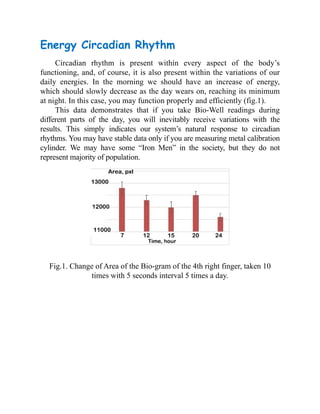
daily energies. In the morning we should have an increase of energy,
which should slowly decrease as the day wears on, reaching its minimum
at night. In this case, you may function properly and efficiently (fig.1).
This data demonstrates that if you take Bio-Well readings during
different parts of the day, you will inevitably receive variations with the
results. This simply indicates our system’s natural response to circadian
rhythms. You may have stable data only if you are measuring metal calibration
cylinder. We may have some “Iron Men” in the society, but they do not
represent majority of population.
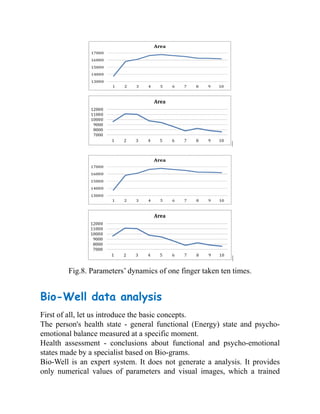
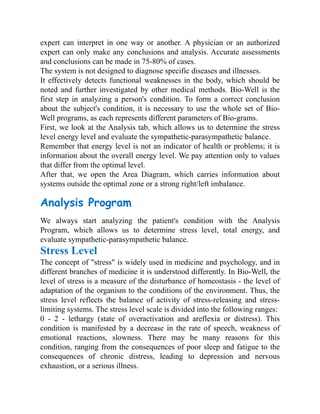
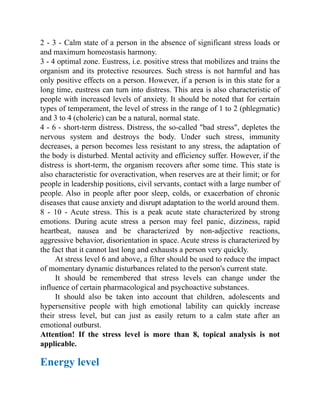
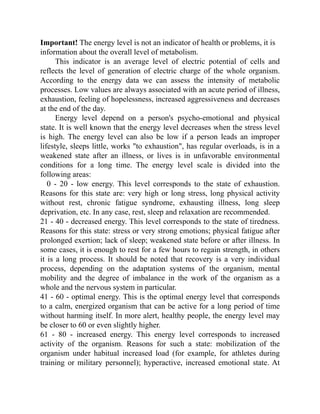
Fig.1. Change of Area of the Bio-gram of the 4th right finger, taken 10
times with 5 seconds interval 5 times a day.
The Second Pillar – Gastro Intestinal (GI)
tract
With extracts from Dr Sunil Pai and Dr Michael Galitzer books
There is no sincerer love than the love of food.
George Bernard Shaw
(1856-1950)
F
u
n
c
ti
o
n
a
lly, our GI tract begins at
our sinus and oral cavities, moves down to our
esophagus, into the stomach, into the small intestine,
then the large intestine, into the colon and finally out through the anus.
Although on a separate tract, the vagina is still part of this internal mucosal
system.
Modern medicine dissects the individual into a bunch of separate parts –
head and neck, stomach/GI tract, urinary tract – and suggests a separate
doctor for each part. When we forget this tube is part of an entire person,
we loose the holistic approach to medicine.
Different parts of the GI tract play different roles in the processing of
food, so they have different levels of alkaline of acid content. This level is
measured by the pH — the abbreviation for potential hydrogen. The pH of
any solution is the measure of its hydrogen-ion concentration. The higher
the pH reading, the more alkaline and oxygen rich the fluid is. The lower
the pH reading, the more acidic and oxygen deprived the fluid is. The pH
range is from 0 to 14, with 7.0 being neutral. Anything above 7.0 is
alkaline, anything below 7.0 is considered acidic. Human blood stays in the
very narrow pH margin, ranging right around 7.35 - 7.45. Anything below
or above this range indicates symptoms and disease. If blood pH moves to
much below 6.8 or above 7.8, cells stop functioning and the most dramatic
situations may occur. The ideal pH for blood is 7.4.
The pH in the human digestive tract varies greatly. The pH of saliva is
usually between 6.5 - 7.5. After we chew and swallow food, it next enters
the fundic or upper portion of the stomach which has a pH between 4.0 -
6.5. This is where "pre-digestion" occurs. The lower portion of the stomach
secretes hydrochloric acid and pepsin until it reaches a pH between 1.5 - 4.0
— very acidic! After food mixes with digestive juices, it enters the
duodenum (small intestine) where the pH changes to 7.0 - 8.5. This is where
90% of the absorption of nutrients takes place in the body. After this, the
waste products pass through the colon (pH 4.0 - 7.0) and out.
Mouth pH = 6.5 – 7.5;
Esophagus pH = 7.2 – 8.0 alkaline;
Stomach pH = 1.5 – 4.0 acidic;
Small intestine pH = 7.0 – 8.5 alkaline;
Large intestine pH = 4.0 – 7.0;
If you have a health problem, most likely you are acidic. Research
shows that unless the body's pH level is slightly alkaline, the body cannot
heal itself. So, no matter what type of modality you choose to use to take
care of your health problem, it won't be as effective until the pH level is
increased. If your body's pH is not balanced, you cannot effectively
assimilate vitamins, minerals and food supplements. Your body pH affects
everything. You may easily measure your pH level in the morning with
standard pH strips by urine. It is interesting – people who have fish tanks
are very accurate with pH level of water, otherwise fish die. Why is it we do
not usually take care about ourselves in the same way?
A low pH signals a lack of oxygen being delivered to organs and
systems – and this is a major reason for a multitude of health problems,
including cancer. The most efficient and effective way to increase your pH
level –is to intake appropriate food and water.
Many people have unpleasant GI symptoms such as heartburn, acid
reflux and gastritis. Here are a few reasons.
People overeat and consume larger portions than they need;
The food are high in fats and animal based proteins, which make them
more difficult to digest;
People do not eat enough raw vegetables and greens;
Some of the food are causing individual inflammatory or hidden
allergic reactions – which very often is difficult to define without
special analysis;
Different chemicals, additives, preservatives in food, as well as GMO
food have damaging effect on a human system.
You are what you eat.
A lot of health problems originate from the GI tract.
The GI tract is supported by liver, gallbladder and pancreas — all of
which play important roles in digestion. Each part of this system affects all
the other parts, and consequently, they all need to be considered together.
The GI tract is the home of the body’s enteric nervous system. Known
as the body’s “second brain.” it is located in the linings of the esophagus,
stomach, small intestine, and colon. The enteric nervous system is
brimming with neurotransmitter proteins that are produced by cells that are
identical to neurotransmitter-producing cells in the brain. The complex
collection of neurotransmitters in the “GI brain” enables it to act, learn, and
remember in much the same way the brain itself does. The GI brain is also
responsible for producing “gut feelings.”
An essential part of the digestive function is provided by probiotics –
helpful inhabitants of our microbiome. They are bacteria that live in our GI
tract and perform a variety of bodily functions. The total weight of
probiotics in the average person is approximately 3-4 pounds (1.3 – 1.8 kg).
Each of these probiotic species plays a specific role. Some probiotics
produce specific vitamins, excreting heavy metals and toxins; some absorb
various nutrients and provide immune protection; some have antimicrobial
action against infectious agents and help reduce inflammatory reactions.
Antibiotics, GI tract surgery, infections, stress, drugs, toxins and other
negative factors disrupt the probiotics – they die – and it takes a lot of time
and effort to restore their population.
The microbiome comprises the collective genome of these
microorganisms (bacteria, fungi, protozoa, and viruses) that live inside and
on the human body. Your body contains approximately ten times as many
microbial cells as human cells. More significantly, microbial genes can and
do influence the actions and functioning of human cells. The influence can
either be positive or negative, depending on the health, or lack thereof, of
the microbiome. This explains why upsets in your gut can frequently result
in diminished health elsewhere in your body.
GI tract is the command center where 80 percent of
your immune system resides.
The immune system resides in a location collectively called the gut-
associated lymphoid tissues or GALT. These are a group of hormones
secreted by enteroendocrine cells in the stomach, pancreas and small
intestines, which control various functions of the digestive organs. Later
studies showed that most of the gut peptides were found to play the role
of neurotransmitters and neuromodulators in the central and peripheral
nervous systems. Enteroendocrine cells do not form endocrine glands but are
spread throughout the digestive tract. They exert their autocrine and
paracrine actions to integrate all gastrointestinal functions.
Even more than this was shown by the latest research demonstrating
that many organs of the body take part in the endocrine regulation. These
include the skin, liver, spleen, bones and appendix. This is just one more
confirmation that our bodies function as whole systems. To divide our
understanding between different fragmented parts does not help us
appreciate an integrated whole.
Unfortunately, today more people than ever before suffer from some
degree of impaired gastrointestinal functioning. Consequently, they are
burdened with a wide range of other health issues. Poor gut health has been
linked with many serious health concerns such as various types of cancer,
impaired brain functioning, child disorders, heart disease, and many others.
That is why this pillar is so important in understanding health and finding
the ways to improve it.
Vitamins, minerals, supplements.
The only way to stay healthy
is to eat what you don't like,
drink what you don't like,
and do what you don't feel like doing.
Mark Twain
Nowadays it is not necessary to convince most people that vitamins and
microelements are needed to maintain the healthy body. But how to choose
the optimal set of preparations for yourself?
Michael Borkin, an American endocrinologist, has developed a method
of individual selection of supplements using the Bio-Well device. First, with
“Stress Test” program, we define the background level. This measurement
can be repeated several times to make sure that the person's condition is
stable. We recommend to take readings from the ring fingers – they are
connected with endocrine system. After that, the person takes a blister or a
box with supplements and presses it to the chest, while the readings are
taken from a finger of the free hand. Then the hands are switched and the
readings are taken from the finger of the other hand. This is repeated with
different supplements, up to 10 preparations at one time. All these data are
compared in the Bio-Well program and clearly show which preparations are
useful for a person - they reduce stress levels or increase energy, and which
are contraindicated, increase stress levels and decrease energy. Importantly,
you don't have to swallow the drug, or even take it out of the package. Your
body will subconsciously determine how suitable this substance is for you
and will signal the autonomic nervous system to slightly change the
sympathetic-parasympathetic balance. The entire study takes 10-15
minutes, and numerous experiments both in the US and elsewhere have
shown the effectiveness of this approach. Figures 8 and 9 show examples of
the resulting graphs.
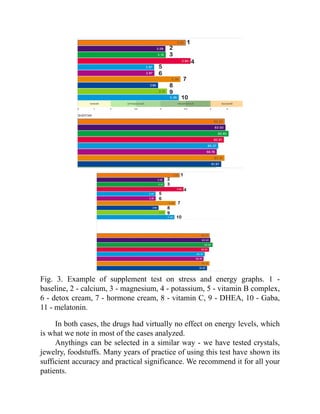
As we can see from the test in Fig. 2, supplements 3 and 8 are
contraindicated for this person, 4, 9 are neutral - they can be taken, while
2,5,6,7 showed very good effect.
Fig. 2. Example of supplement test on stress and energy graphs. 1 -
baseline, 2 - thyrodin, 3 - magnesium, 4 - potassium, 5 - vitamin B
complex, 6 - detox cream, 7 - tryptophan, 8 - hormone cream, 9 – Gaba.
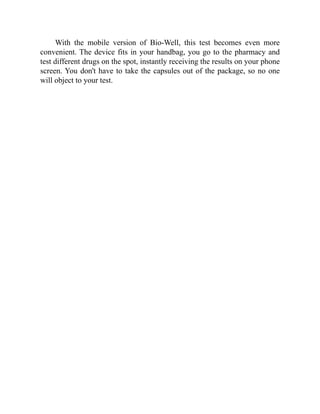
In the test in Fig.3, drugs 4,7,10 are neutral to the body, while the others
lead to lower stress levels, meaning it is a good choice for this person.
Fig. 3. Example of supplement test on stress and energy graphs. 1 -
baseline, 2 - calcium, 3 - magnesium, 4 - potassium, 5 - vitamin B complex,
6 - detox cream, 7 - hormone cream, 8 - vitamin C, 9 - DHEA, 10 - Gaba,
11 - melatonin.
In both cases, the drugs had virtually no effect on energy levels, which
is what we note in most of the cases analyzed.
Anythings can be selected in a similar way - we have tested crystals,
jewelry, foodstuffs. Many years of practice of using this test have shown its
sufficient accuracy and practical significance. We recommend it for all your
patients.
With the mobile version of Bio-Well, this test becomes even more
convenient. The device fits in your handbag, you go to the pharmacy and
test different drugs on the spot, instantly receiving the results on your phone
screen. You don't have to take the capsules out of the package, so no one
will object to your test.
The Third Pillar -Autonomic Nervous
System (ANS)
The chief function of the body is to carry the brain
around.
Thomas A. Edison (1847-1931)
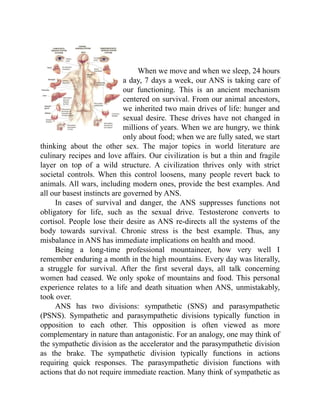
When we move and when we sleep, 24 hours
a day, 7 days a week, our ANS is taking care of
our functioning. This is an ancient mechanism
centered on survival. From our animal ancestors,
we inherited two main drives of life: hunger and
sexual desire. These drives have not changed in
millions of years. When we are hungry, we think
only about food; when we are fully sated, we start
thinking about the other sex. The major topics in world literature are
culinary recipes and love affairs. Our civilization is but a thin and fragile
layer on top of a wild structure. A civilization thrives only with strict
societal controls. When this control loosens, many people revert back to
animals. All wars, including modern ones, provide the best examples. And
all our basest instincts are governed by ANS.
In cases of survival and danger, the ANS suppresses functions not
obligatory for life, such as the sexual drive. Testosterone converts to
cortisol. People lose their desire as ANS re-directs all the systems of the
body towards survival. Chronic stress is the best example. Thus, any
misbalance in ANS has immediate implications on health and mood.
Being a long-time professional mountaineer, how very well I
remember enduring a month in the high mountains. Every day was literally,
a struggle for survival. After the first several days, all talk concerning
women had ceased. We only spoke of mountains and food. This personal
experience relates to a life and death situation when ANS, unmistakably,
took over.
ANS has two divisions: sympathetic (SNS) and parasympathetic
(PSNS). Sympathetic and parasympathetic divisions typically function in
opposition to each other. This opposition is often viewed as more
complementary in nature than antagonistic. For an analogy, one may think of
the sympathetic division as the accelerator and the parasympathetic division
as the brake. The sympathetic division typically functions in actions
requiring quick responses. The parasympathetic division functions with
actions that do not require immediate reaction. Many think of sympathetic as
"fight or flight" and parasympathetic as "rest and digest" or "feed and breed."
However, many instances of sympathetic and parasympathetic activity
cannot be ascribed to only "fight" or "rest" situations.
As an example, standing up from a reclining or sitting position would
entail an unsustainable drop in blood pressure if not for a compensatory
increase in the arterial sympathetic tonus. Another example entails the
constant second to second modulation of heart rate by sympathetic and
parasympathetic influences as a function of the respiratory cycles. More
generally, these two systems should be seen as permanently modulating
vital functions, in its usually antagonistic fashion, to achieve homeostasis.
Some functions of the SNS include diverting blood flow away from the
gastrointestinal tract and skin via vasoconstriction, enhancing blood flow
to skeletal muscles and the lungs, dilating the bronchioles of the lung
(allowing for greater oxygen exchange), and increasing the heart rate. In
contrast to the SNS, the PSNS typically functions by dilating the blood
vessels leading to the GI tract. This causes constriction of the pupil and
contraction of the ciliary muscle to the lens (to enable closer vision), and
stimulates salivary gland secretion in keeping with the rest and digest
functions.
(Source: https://www.boundless.com/physiology/).
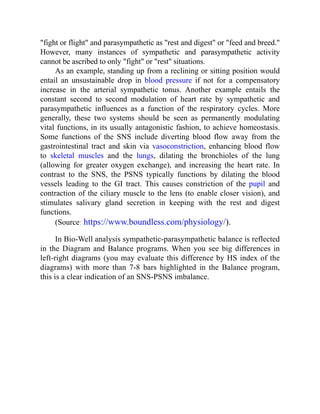
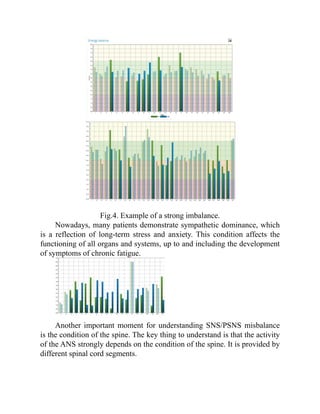
In Bio-Well analysis sympathetic-parasympathetic balance is reflected
in the Diagram and Balance programs. When you see big differences in
left-right diagrams (you may evaluate this difference by HS index of the
diagrams) with more than 7-8 bars highlighted in the Balance program,
this is a clear indication of an SNS-PSNS imbalance.
Fig.4. Example of a strong imbalance.
Nowadays, many patients demonstrate sympathetic dominance, which
is a reflection of long-term stress and anxiety. This condition affects the
functioning of all organs and systems, up to and including the development
of symptoms of chronic fatigue.
Another important moment for understanding SNS/PSNS misbalance
is the condition of the spine. The key thing to understand is that the activity
of the ANS strongly depends on the condition of the spine. It is provided by
different spinal cord segments.
As you understand from this list, healthy functioning of all organs and
systems depends on the condition of the spine, but a lot of people have an
improper relationship with this organ. Spinal disc problems are widely
misunderstood for a number of reasons. Medical professionals do not
always agree on the causes of pain related to the spinal disc, and patients
have a hard time understanding this complex — and often not well-
explained — medical topic.
On the back there are the so-called Zakharyin-Ged zones, in which
hypersensitivity appears when an organ is inflamed. The occurrence of
these zones is explained by the fact that pain excitations go from the
affected internal organ through autonomic nerve fibers in the spinal cord
and from there irradiate to the corresponding innervation zones. Ged has
established exact correlations between internal organs and radicular
cutaneous innervation, which allows, influencing these zones, to influence
the state of health. Osteopathy is a great help in this. We have conducted a
large cycle of research on the effects of osteopathy, where it was shown that
in 100% of cases after the session reduces the level of stress and optimizes
the parameters of the energy field. The condition of the spine is well
revealed by Bio-Well analysis. [Korotkov KG, Shakirov AM. Analysis of
the Influence of Osteopathic Procedures on the Psychophysiological State
of Patient. EC Orthopaedics. 2024].
The spine's condition is also affected by mental and behavioral
processes. It is a well-known fact that under negative and positive stress,
our subconscious mind (our "inner beast") reacts with micro-movements.
This is especially evident in a person's facial expressions and postures. The
higher self-control a person has, the less it is noticeable to the naked eye.
But if you make a video of a person in a moment of stress and then look at
the video in slow motion, these reactions can be seen in everyone. This is
not new; many articles have been written on this topic, and even TV series
and movies have been made. What is important is that such reactions have
been studied by science in great depth. The muscles of the face and back are
most of all involved in such responses.
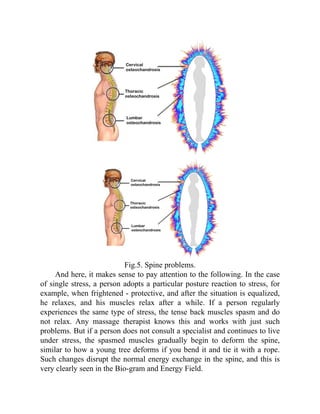
Fig.5. Spine problems.
And here, it makes sense to pay attention to the following. In the case
of single stress, a person adopts a particular posture reaction to stress, for
example, when frightened - protective, and after the situation is equalized,
he relaxes, and his muscles relax after a while. If a person regularly
experiences the same type of stress, the tense back muscles spasm and do
not relax. Any massage therapist knows this and works with just such
problems. But if a person does not consult a specialist and continues to live
under stress, the spasmed muscles gradually begin to deform the spine,
similar to how a young tree deforms if you bend it and tie it with a rope.
Such changes disrupt the normal energy exchange in the spine, and this is
very clearly seen in the Bio-gram and Energy Field.
One comment regarding the sympathetic prevalence as a possible
symptom of chronic stress. In this case the level of stress in the Analysis
may be normal, while the Balance program demonstrate sympathetic
dominance. It is because for the organism this is a habitual state, to which
the organism has adapted. As we are measuring physiological stress, it does
not register as abnormal.
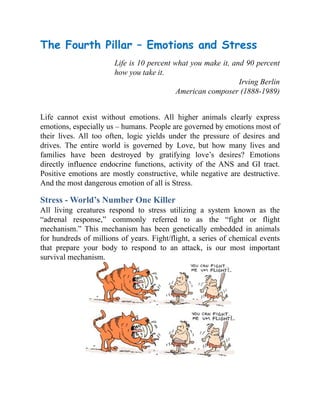
The Fourth Pillar – Emotions and Stress
Life is 10 percent what you make it, and 90 percent
how you take it.
Irving Berlin
American composer (1888-1989)
Life cannot exist without emotions. All higher animals clearly express
emotions, especially us – humans. People are governed by emotions most of
their lives. All too often, logic yields under the pressure of desires and
drives. The entire world is governed by Love, but how many lives and
families have been destroyed by gratifying love’s desires? Emotions
directly influence endocrine functions, activity of the ANS and GI tract.
Positive emotions are mostly constructive, while negative are destructive.
And the most dangerous emotion of all is Stress.
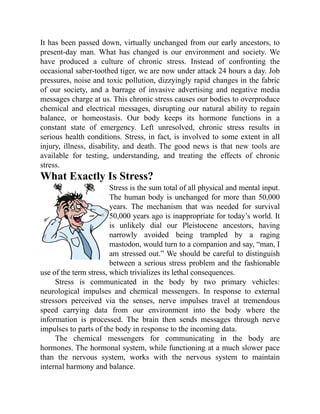
Stress - World’s Number One Killer
All living creatures respond to stress utilizing a system known as the
“adrenal response,” commonly referred to as the “fight or flight
mechanism.” This mechanism has been genetically embedded in animals
for hundreds of millions of years. Fight/flight, a series of chemical events
that prepare your body to respond to an attack, is our most important
survival mechanism.
It has been passed down, virtually unchanged from our early ancestors, to
present-day man. What has changed is our environment and society. We
have produced a culture of chronic stress. Instead of confronting the
occasional saber-toothed tiger, we are now under attack 24 hours a day. Job
pressures, noise and toxic pollution, dizzyingly rapid changes in the fabric
of our society, and a barrage of invasive advertising and negative media
messages charge at us. This chronic stress causes our bodies to overproduce
chemical and electrical messages, disrupting our natural ability to regain
balance, or homeostasis. Our body keeps its hormone functions in a
constant state of emergency. Left unresolved, chronic stress results in
serious health conditions. Stress, in fact, is involved to some extent in all
injury, illness, disability, and death. The good news is that new tools are
available for testing, understanding, and treating the effects of chronic
stress.
What Exactly Is Stress?
Stress is the sum total of all physical and mental input.
The human body is unchanged for more than 50,000
years. The mechanism that was needed for survival
50,000 years ago is inappropriate for today’s world. It
is unlikely dial our Pleistocene ancestors, having
narrowly avoided being trampled by a raging
mastodon, would turn to a companion and say, “man, I
am stressed out.” We should be careful to distinguish
between a serious stress problem and the fashionable
use of the term stress, which trivializes its lethal consequences.
Stress is communicated in the body by two primary vehicles:
neurological impulses and chemical messengers. In response to external
stressors perceived via the senses, nerve impulses travel at tremendous
speed carrying data from our environment into the body where the
information is processed. The brain then sends messages through nerve
impulses to parts of the body in response to the incoming data.
The chemical messengers for communicating in the body are
hormones. The hormonal system, while functioning at a much slower pace
than the nervous system, works with the nervous system to maintain
internal harmony and balance.
When the body perceives stress, nerve impulses and chemical
messengers immediately work together to respond. Stress activates
specialized cells in the cerebral cortex (where thought takes place), which
sends an impulse to the hypothalamus (the brain’s main stress control
center). The hypothalamus then stimulates the sympathetic nervous system
(SNS) and activates the survival mode (the fight/flight mechanism).
The heart starts to pound, the senses become acute, and the body
begins to sweat. Blood pressure increases as blood is directed to the brain
and major organs, the body’s survival centers. Hands and feet become cold
and clammy as blood is diverted away from the extremities and redirected
to the large muscles used for fighting or running.
After the crisis, the homeostasis mechanism kicks in, seeking to
recreate balance through the parasympathetic nervous system the function
of which is summarized as “rest and digest.”
Destructive Vs. Constructive Stress
Keep in mind that stress can be a constructive response (even a
lifesaving one) to a threatening event. But what we’re concerned with is
what happens when stress accumulates. We need to look at our stress
reaction and ask ourselves whether we’re responding to stress appropriately.
If we’ve lost our ability to adapt, we are experiencing destructive, or
maladaptive, stress.
When a healthy individual is subjected to prolong, chronic stress, the
adrenal glands initially increase hormone production (primarily cortisol) by
enlarging in size. The abnormally high cortisol levels actually interfere with
the adaptation process by preventing vasoconstriction (narrowing of the
blood vessels).
When cortisol levels increase, the body turns off the immune system
and growth and repair functions. (Why worry about the future when there is
a more immediate danger?) Other functions, such as reproductive
capabilities and tissue repair, also shut down or become diminished (thus,
stress kills sexual desire and prevents recovery from illness). The large
intestine can become paralyzed and the anal sphincter locked closed. As the
body’s ability to control inflammation decreases, and as digestion is
inhibited, allergic reactions can result in a swelling of the intestines. This
puts a person at risk for celiac disease, malabsorption syndrome, and a
multitude of opportunistic invaders such as Candida, parasites, and other
dangerous microorganisms.
If threshold stress continues and body reserves become depleted, the
adrenals begin to falter. They no longer produce the necessary levels of
stress hormones. If the stress continues, the adrenals become exhausted and
the body goes into a forced state of recuperation. The body is then likely to
convert sex hormones such as progesterone and testosterone to stress
hormones. Symptoms of this phase include fibromyalgia, heart arrhythmia,
increased urine flow, profuse sweating, night sweats, muscle spasms,
migraine, anxiety, depression, tension headaches, memory laps, stiff neck
and shoulders, asthma, irritable bowel, herpes outbreaks, psoriasis, eczema,
low back syndrome, sciatica, erectile dysfunction; amenorrhea, hot flashes,
hypertension, skin blotching, rashes, acne, and immune suppression.
In this phase, the body shifts all its systems into the survival mode. All
the body’s reserves are directed for the purpose of trying to maintain
homeostasis and all body energy is directed toward immediate survival.
When one is in the survival mode, all the senses increase and become
hypersensitive. This increases the volume of information entering the mind
and causes it to reach maximum saturation before the sleep mode can help
remove the stress, which it does by transferring date from active memory,
the conscious mind, to the subconscious mind.
When we experience this kind of “overload,” the body and mind
become temporarily detached and we feel spaced out. This is the result of
the body’s release of opioids that anesthetize us.
To identify stress you must first separate positive, from negative stress.
In a study, which utilized cortisol, the primary stress vhormone, olunteers
where subjected to positive and negative stress and measurements of
cortisol where taken immediately before and after the event. The study
reveled that a 5 minute exposure to a positive experience yielded a mild
increase in cortisol levels for a short duration of approximately 15 minutes.
A negative experience yielded a dramatic decrease in cortisol levels for a
period of six hours before it returned to normal levels. Every system reacts
to stress in its own way.
Most people can even feel where an emotional manifestation becomes a
physiological manifestation. Some feel it in their solar plexus, others
between their shoulder blades. What most don’t realize is that it can be
responsible for the pain in your foot as well as your head. The object,
therefore, is to develop a method in which stressful situations do not produce
the stress reaction in the body.
Understanding
Long-Term Stress
It is only when stress continues that it causes
damage. Experiencing long-term stress at
threshold levels even affects the way cells
develop and mature, causing premature cell
death. When a significant number of cells’
lives are compromised or shortened, the entire organism will suffer poor
health or sometimes a shortened life span.
While every system reacts to stress in its own way, most people aren’t
aware of when they’re experiencing destructive or long-term stress. We may
have felt an emotional stress manifest physiologically, say, in the solar
plexus or between the shoulder blades. But how many of us realize when
stress is responsible for sciatica or hot flashes?
Those of us who are suffering from long-term stress need help to
change our stress response and recover. While it usually takes several
months, complete recovery form adrenal exhaustion is possible. Whether or
not we’ve reached a state of extreme or long-term stress, what we all need
ultimately is a method of healthy adaptation-a method by which we prevent
stressful situations from producing a destructive stress reaction syndrome.
There are many ways to relieve the mind of stress and interrupt the
patterns set in neural pathways that are programmed to receive and send
stress messages. Hypnotherapy, visualization, hatha yoga, Tai Chi or Qi
Gong, and most meditation techniques are helpful in stopping habitual
mental patterns that engender stress reactions. Any activity that allows you to
relax your awareness instead of reacting to all stimulation will ultimately
give you some recovery time. That might mean walking in nature,
swimming, or a creative activity that is different from your normal routine
and is satisfying to you.
Individual counseling, group stress management classes, or workshops
can also help unearth the underlying messages that trigger stress responses.
Many maladaptive patterns are conditioned responses learned when we
were young, and which we believed were critical to acceptance and hence
survival on the planet. It is up to the individual to reduce exposure to new
stress and counter the damages done by accumulated stress. Sometimes
support helps us to accomplish this.
Dietary supplements are a vital, indispensable means of supporting the
adrenals and other body/mind activities.
Our modern world compels us to deal with our stress in ways that are
not genetically programmed; we have to take conscious action to avoid the
devastating effect that chronic stress has on our well-being. Keeping our
body in the emergency status of fight/flight is no more to conductive to our
Pleistocene ancestor to try to use our method of dealing with his
contemporary stressors by trying to reason with that saber-toothed tiger:
“Can we just sit down and talk about this?”
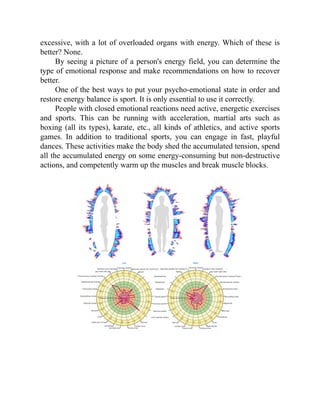
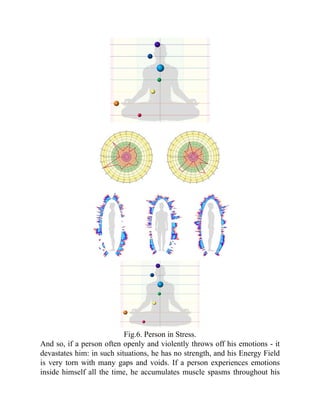
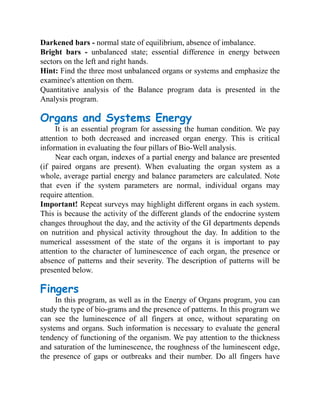
The level of physiological stress is well reflected in Bio-Well
programs. First of all, the Stress parameter, whose value of more than four
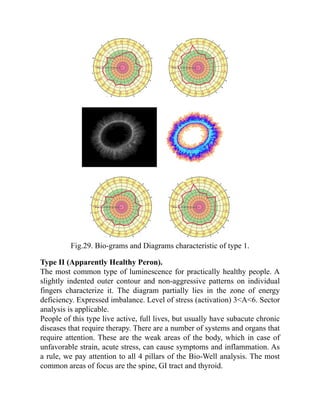
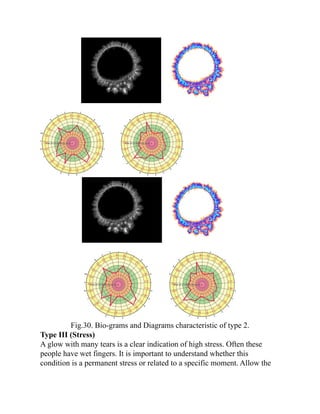
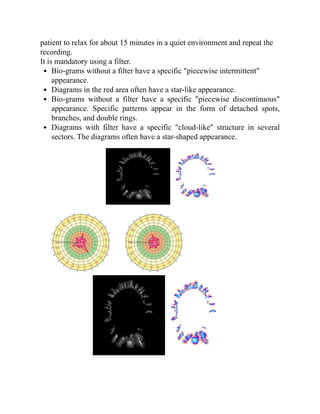
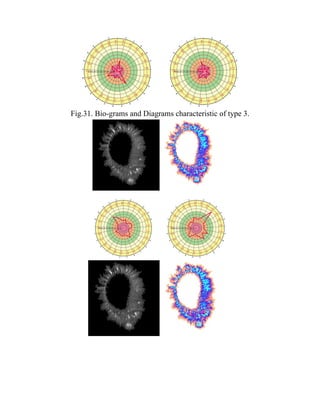
indicates a stressful state. The field picture is characterized by many
discontinuities, the diagram acquires a star-shaped character, and the
chakras tend to "fly apart" in different directions (Fig. 6).
Note that in the state of stress the picture of chakras is very variable,
which characterizes high lability of the nervous system. This is one of the
signs used in the "Psychodiagnostics" program, which will be discussed
further on.
The Bio-Well Filter should be used to assess the somatic state if there
is a stress pattern. There are two types of emotional reactions: open and
closed. In an open reaction, a person explodes and spills his emotions out,
while in a closed reaction, a person does not show his feelings. This does
not mean a person does not worry; they worry and how! But all emotions
are raging inside him.
And so, if a person often openly and violently throws off his emotions - it
devastates him: in such situations, he has no strength, and his Energy Field
is very torn with many gaps and voids. If a person experiences emotions
inside himself all the time, he accumulates muscle spasms throughout his
body; thus, the energy exchange is disturbed, and his energy field looks
excessive, with a lot of overloaded organs with energy. Which of these is
better? None.
By seeing a picture of a person's energy field, you can determine the
type of emotional response and make recommendations on how to recover
better.
One of the best ways to put your psycho-emotional state in order and
restore energy balance is sport. It is only essential to use it correctly.
People with closed emotional reactions need active, energetic exercises
and sports. This can be running with acceleration, martial arts such as
boxing (all its types), karate, etc., all kinds of athletics, and active sports
games. In addition to traditional sports, you can engage in fast, playful
dances. These activities make the body shed the accumulated tension, spend
all the accumulated energy on some energy-consuming but non-destructive
actions, and competently warm up the muscles and break muscle blocks.
Fig.6. Person in Stress.
And so, if a person often openly and violently throws off his emotions - it
devastates him: in such situations, he has no strength, and his Energy Field
is very torn with many gaps and voids. If a person experiences emotions
inside himself all the time, he accumulates muscle spasms throughout his
body; thus, the energy exchange is disturbed, and his energy field looks
excessive, with a lot of overloaded organs with energy. Which of these is
better? None.
By seeing a picture of a person's energy field, you can determine the
type of emotional response and make recommendations on how to recover
better.
One of the best ways to put your psycho-emotional state in order and
restore energy balance is sport. It is only essential to use it correctly.
People with closed emotional reactions need active, energetic exercises
and sports. This can be running with acceleration, martial arts such as
boxing (all its types), karate, etc., all kinds of athletics, and active sports
games. In addition to traditional sports, you can engage in fast, playful
dances. These activities make the body shed the accumulated tension, spend
all the accumulated energy on some energy-consuming but non-destructive
actions, and competently warm up the muscles and break muscle blocks.
People with an open emotional reaction also need sports, but here you
need restorative sports: swimming, walking, slow running, the health-
improving part of wushu, yoga, qigong, etc. Engaging in hippotherapy,
nature walks, fishing, mushroom picking, and ballroom dancing is also
possible. Any activity that energizes a person and saturates him spiritually
and physically without overloading him emotionally is suitable here.
And, of course, those and other groups will be beneficial classes aimed
at relaxation and harmonizing thoughts and feelings. After all, it is essential
to be able to dump emotions and restrain them; it is important not to do it in
excess. For this purpose, it is necessary to harmonize your inner world in
time to reduce the degree of emotions. Meditation, art therapy, and
breathing practices will help a lot.
Of course, it is recommended that such people regularly visit massage
therapists, osteopaths, and reflexologists. Each of these specialists, at their
level, will be able to remove accumulated blocks and clamps.
Massages for people with an open emotional reaction should be a soft,
saturating force, and for people with a closed emotional reaction - deep,
aimed at relaxing all muscle groups. It is essential to choose suitable aroma
oils for such massages; this will significantly enhance the effect of the
procedure.
What We’ve Been Told About Heart
Disease is Wrong
With extract from Dr. Michael Galitzer book
Ignorance is the curse of God; knowledge is the
wing wherewith we fly to heaven.
William Shakespeare
Heart disease remain world’s most prevalent health issue, with heart attack
continuing to be number one killer, and death by stroke ranking third. These
facts are proof that everything our medical system have been doing to
combat and prevent heart diseases is not working. Something is wrong in
the very idea of what causes heart problems.
Recent studies have found that a significant percentage of heart attacks occur
in the areas of the heart where blood flow is not diminished by blocked
arteries. Modern understanding shifted to the idea that in the vast majority of
cases, heart disease will not occur unless there is first a decrease in
parasympathetic activity. Typically, this decrease is followed by an increase
in sympathetic activity, in particularly under the effect of permanent stress.
This combination of events results in heart cells dramatically increasing their
production of lactic acid. Due to the increased acidity in the heart, the heart
cell walls become rigid, making them less able to contract, and leading to
edema and impaired function of the heart muscle itself, as well as heart cell
death, all of which are involved in causing heart attacks. In addition, the
swelling (edema) of heart tissues results in changes in pressure of the arteries
those run through the affected area of the heart. This increase in pressure, in
turn, is what causes vulnerable plaque in the arteries to rupture, further
blocking the arteries involved, and/or creating dangerous clots.
Directly related to this process of decreased parasympathetic activity is what
occurs in the endothelium, the very thin layer of cells that line your body’s
arteries. A healthy endothelium is necessary for proper blood flow and
overall cardiovascular function, especially in relation to the smooth vascular
muscle that makes up most of the blood vessel walls. The events associated
with decreased parasympathetic activity can all negatively impact
endothelium, resulting in one or more of three possible responses:
inflammation, oxidative stress (increased level of free radicals), and vascular
autoimmune dysfunction, all of which are linked to heart disease.
While surgical procedures can save lives during acute emergencies,
research have shown that their overall benefits are minimal. Recent findings
help to explain why. First, studies have found that a significant percentage
of heart attacks occur in the areas of the heart where blood flow is not
diminished by blocked arteries. Several research that evaluated the
effectiveness of angioplasty, stenosis and CABG, found that, although the
procedures can relieve symptoms of heart disease, they do not prevent
further heart attacks and that only high-risk patients (specifically patients
with blockage of the left coronary artery) whose lives are in acute danger
receive any benefit from bypass surgery in terms of their improved chance
of survival. One more proof of this concept is that many people having
heart problems are likely to experience what are known as “atypical
warning signs”. Such symptoms include pain in the back, neck or jaw,
nausea, vomiting, indigestion, and so on.
For example, although arteriosclerosis is a result of endothelium
dysfunction and has long been viewed as a significant risk factor for heart
diseases, the presence of arteriosclerosis by itself does not mean that
angina, heart attack, or other types of heart diseases will occur. So long as
parasympathetic activity is healthy, the autonomic function will override
atherosclerosis, aided by the collated blood vessels. That does not mean
that you can, or should, ignore atherosclerosis if it is present, any more than
you should ignore any other risk factors that have been linked to heart
disease. All such facts need to be addressed. But it is the activity of your
parasympathetic nervous system that is of paramount importance when it
comes to protecting your heart. So, it totally comes under the umbrella of
Four Pillars of Health. Another important topic concerning heart is the new
understanding of the heart functioning. As Professor B.M. Hedge writes: “It
was very uncomfortable to accept that the heart is a simple muscular pump,
which could pump blood through the enormous swimming pool of
capillaries of which there are 800 kilometers in just one kilogram of body
fat. We are lost in measuring the artifact, called arterial pressure, in a few
meters of the arteries or, for that matter, in the veins”. [J of Indian Academy
of Clinical Medicine 9, 3, 2008, 172-174]. It is an absurdity to believe that
such a little organ as the heart would pump blood all through the body. 90%
of the blood is in the venous capillaries at any one time, and the total
capillary surface area is approximately 3,000 miles! Standard Definition:
The Heart: a hollow muscular organ that receives blood from the veins and
propels it through the arteries. In humans the heart is located behind the
lower part of the breastbone, slightly to the left of center. Now a lot of
scientists came to conclusion that the Heart is not a pump as claimed in
academia. The Heart is a blood flow regulator, which controls the
imploding blood in our bodies via twin opposing vortices created within the
Heart. It is these vortices that are so important in how blood flows through
the heart. When a vortex forms within the flow of a liquid then that flow
speeds up and the subsequent increased flow rate helps to increase the
vortex effect which in turn accelerates the rate of flow. The vortex also
induces what is known as the Zeta Potential, which helps to separate and
disperse the blood cells. They expose maximum surface area within the
blood and are therefore able to hold and transport more oxygen and other
nutrients throughout the body. In the heart, pressure has no propulsive role,
the forward flow of the vortexing blood is dammed (stopped); its energy
transferred to increase the velocity in the vortex. In turn, the increased
vortex velocity induces a larger etheric force to further speed up (enliven
and strengthen) the blood. This is by no means the complete process of
blood propulsion, but it is certainly different from the flow of water in a
pump. [Marinelli R et.al. The heart is not a pump. Frontier Perspectives
1993;5:10-25].
I am sure that it is impossible to understand the functioning of the heart
without accepting the role of blood as structured liquid, playing an active
role in this process. We need to apply the concepts of Professor Gerald
Pollack presented in his book “The Fourth Stage of Water: Beyond Solid,
Liquid and Vapor” [Ebner and Sons Publisher, 2013]. Professor Pollack
demonstrated in precise experiments that interaction of liquid with the
capillary walls creates the electrical force that provides the movement of a
liquid. This allows blood to pass the tiny capillaries without resistance
transporting leucocytes of the size bigger than the diameter of capillaries.
Still the full description of the blood system functioning waits to be written.
Part 2. Bio-Well 3.0 - a new stage
of technology development
Fig.7. Bio-Well 3.0 with Sputnik.
A key indicator of the reliability and quality of any device is the stability
and reproducibility of results. When we designed Bio-Well 2.0, we wanted
to maximize the stability of the instrument. We have achieved this.
However, very high stability has a downside - the sensitivity of the
measurements decreases. Therefore, in developing Bio-Well 3.0, we aimed
to find a golden mean between the stability of the gas discharge and the
sensitivity of the measurements.
It takes time for the gas discharge to propagate across the surface of
the glass electrode. In the initial stages, only individual streamers are
visible. Gradually, they appear all around the perimeter of the object under
study. The whole process is very transient - it lasts about 20 ms. In the final
stage, no new streamers are formed and the gas discharge spreads over the
glass surface. Neighboring streamers merge and overlap. The image
becomes more uniform and smooth – details are lost.
If you photograph a gas discharge in the early stages of its
development, you will see streamers and discontinuities in the glow, while
if you photograph it at a later stage, the details will disappear.
During the development of Bio-Well 3.0, we took this into account
and introduced an adjustment to the discharge exposure time. Bio-Well 2.0
captures the discharge at a late stage and the images are very stable and
reproducible. With Bio-Well 3.0 we can choose the time of discharge
photography and a stable glow is observed from 15 ms. By default, all 3.0
devices set the time to 18 ms from the beginning of the discharge formation
- this value provides quite high stability, but the level of detail, i.e.
sensitivity, is higher than that of Bio-Well 2.0.
Many women who come for consultations have beautiful manicures
with long nails. In the case of Bio-Well 2.0, it was difficult to take pictures
of fingers with long nails while maintaining proper finger placement. In
Bio-Well 3.0, we did two things: we changed the angle of the glass in
relation to the finger, and we added a free space at the top for the nail to fit.
Now it's easy to take Bio-grams of women's fingers, even with long nails!
Another significant problem with the use of our instruments was the
dependence on the PC computer's connection to the power outlet
(grounding). In Bio-Well 3.0, we have made several changes to the
grounding and cabling system that minimize the dependence of instrument
readings on the above factor.
Also, many users of older Bio-Well1.0 and 2.0, had a problem with
the external lighting overlapping with the glow of the finger itself and
distorting the results. They had to re-scan their fingers several times or
cover the device with a dark cloth. In Bio-Well 3.0 we added another layer
of protective shutters and shifted the intersections of these shutters relative
to each other. Now it is practically impossible to see external light on the
obtained images, which greatly simplifies the work and improves the
quality of the obtained data.
Another new feature is the software activation of the fan. This is
especially important when scanning in the “Environment” mode.
Finally, the ability to calibrate without using a wire provides additional
convenience.
Bio-Well calibration
To obtain reliable, reproducible data, calibration should be performed in the
following cases:
1. When moving from one climate zone to another.
2. At full moon, new moon.
3. A significant change in weather conditions.
4. A change in the seasons of the year.
For Bio-Well 2 and 3, we recommend calibration every day.
The calibration process uses a specialized program that measures the device
parameters, compares them with the standard parameters, changes the
device settings step by step, and repeats the measurement.
We recommend to do calibration every day or once in several days.
Calibration Process
Wipe the optical lens with a dry cloth, remove the finger insert, and insert
the calibration one. For the Bio-Well 2 device, connect the wire to the
device's socket. Connect the instrument to the computer. Open the
Calibration mode and press Start. The program will adjust the instrument.
When the process is complete, remove the insert. The instrument is ready
for operation.
Peculiarities of using different programs
We always start with the Analysis program, which allows us to identify
stress levels, overall Energy, and balance.
Attention! If the stress level exceeds 8, topical diagnostics are not
applicable.
The following program is Area Diagram. It represents the area parameter
of the image in pixels for each sector. This parameter is proportional to the
number of photons per sector.
More informative is the Energy Diagram program, which represents the
energy parameter for each sector and displays the quantitative values for
that sector when you click the mouse button. It is optimal to find the
diagram in the green zone; however, this does not mean that there are no
health problems. We pay attention to the peaks of the diagram in the yellow
zone. They testify to increased energy production in this zone, meaning the
organism pays more attention to this zone. The point is that any
inflammation is an energy expenditure. The body raises temperature, blood
pressure, the number of active blood particles, and this is all Energy,
oxygen. The diagram emissions above the green zone characterize the zones
of increased Energy, which is associated with inflammation or the
possibility of its formation. All of these areas are areas of high Energy. The
energy reserve parameter correlates with the cellular reserve level and
characterizes the organism's immune and adaptation reserve.
The Balance program identifies systems and organs with significant
imbalances on the right and left sides. It characterizes the sympathetic-
parasympathetic balance, an important indicator of health (one of the pillars
of Bio-Well analysis).
The problem areas identified in these programs, hypo- and hyper-energetic,
are confirmed in the Organ Energy program. We pay attention to the
central systems of the body following the principles of the 4 Pillars of
Health. The orange and red zones are areas of energy deficiency.
We pay considerable attention to the Bio-grams of the fingers. What is
essential for us is the general appearance of an image, following the types
of Bio-grams discussed in this book, and the presence of deficiency in
individual sectors. Their degree of aggressiveness indicates the pathologic
nature of the inflammatory process.
One Finger program allows us to take sequential Bio-grams of a single
finger. In this way, we can check the reproducibility of a pattern in a
particular sector and see if it is a temporary functional reaction or evidence
of a pathological process.
On the other hand, the dynamics of the parameters of Bio-grams of one
finger characterize the organism's activity level or a particular meridian.
Rising dynamics indicate that the meridian is complete and the energy
transfer process is active. Declining dynamics show weakness of both
meridian and energy source (corresponding organ).
The given curves characterize these processes.
Fig.8. Parameters’ dynamics of one finger taken ten times.
Bio-Well data analysis
First of all, let us introduce the basic concepts.
The person's health state - general functional (Energy) state and psycho-
emotional balance measured at a specific moment.
Health assessment - conclusions about functional and psycho-emotional
states made by a specialist based on Bio-grams.
Bio-Well is an expert system. It does not generate a analysis. It provides
only numerical values of parameters and visual images, which a trained
expert can interpret in one way or another. A physician or an authorized
expert can only make any conclusions and analysis. Accurate assessments
and conclusions can be made in 75-80% of cases.
The system is not designed to diagnose specific diseases and illnesses.
It effectively detects functional weaknesses in the body, which should be
noted and further investigated by other medical methods. Bio-Well is the
first step in analyzing a person's condition. To form a correct conclusion
about the subject's condition, it is necessary to use the whole set of Bio-
Well programs, as each represents different parameters of Bio-grams.
First, we look at the Analysis tab, which allows us to determine the stress
level energy level and evaluate the sympathetic-parasympathetic balance.
Remember that energy level is not an indicator of health or problems; it is
information about the overall energy level. We pay attention only to values
that differ from the optimal level.
After that, we open the Area Diagram, which carries information about
systems outside the optimal zone or a strong right/left imbalance.
Analysis Program
We always start analyzing the patient's condition with the Analysis
Program, which allows us to determine stress level, total energy, and
evaluate sympathetic-parasympathetic balance.
Stress Level
The concept of "stress" is widely used in medicine and psychology, and in
different branches of medicine it is understood differently. In Bio-Well, the
level of stress is a measure of the disturbance of homeostasis - the level of
adaptation of the organism to the conditions of the environment. Thus, the
stress level reflects the balance of activity of stress-releasing and stress-
limiting systems. The stress level scale is divided into the following ranges:
0 - 2 - lethargy (state of overactivation and areflexia or distress). This
condition is manifested by a decrease in the rate of speech, weakness of
emotional reactions, slowness. There may be many reasons for this
condition, ranging from the consequences of poor sleep and fatigue to the
consequences of chronic distress, leading to depression and nervous
exhaustion, or a serious illness.
2 - 3 - Calm state of a person in the absence of significant stress loads or
and maximum homeostasis harmony.
3 - 4 optimal zone. Eustress, i.e. positive stress that mobilizes and trains the
organism and its protective resources. Such stress is not harmful and has
only positive effects on a person. However, if a person is in this state for a
long time, eustress can turn into distress. This area is also characteristic of
people with increased levels of anxiety. It should be noted that for certain
types of temperament, the level of stress in the range of 1 to 2 (phlegmatic)
and 3 to 4 (choleric) can be a natural, normal state.
4 - 6 - short-term distress. Distress, the so-called "bad stress", depletes the
nervous system and destroys the body. Under such stress, immunity
decreases, a person becomes less resistant to any stress, the adaptation of
the body is disturbed. Mental activity and efficiency suffer. However, if the
distress is short-term, the organism recovers after some time. This state is
also characteristic for overactivation, when reserves are at their limit; or for
people in leadership positions, civil servants, contact with a large number of
people. Also in people after poor sleep, colds, or exacerbation of chronic
diseases that cause anxiety and disrupt adaptation to the world around them.
8 - 10 - Acute stress. This is a peak acute state characterized by strong
emotions. During acute stress a person may feel panic, dizziness, rapid
heartbeat, nausea and be characterized by non-adjective reactions,
aggressive behavior, disorientation in space. Acute stress is characterized by
the fact that it cannot last long and exhausts a person very quickly.
At stress level 6 and above, a filter should be used to reduce the impact
of momentary dynamic disturbances related to the person's current state.
It should be remembered that stress levels can change under the
influence of certain pharmacological and psychoactive substances.
It should also be taken into account that children, adolescents and
hypersensitive people with high emotional lability can quickly increase
their stress level, but can just as easily return to a calm state after an
emotional outburst.
Attention! If the stress level is more than 8, topical analysis is not
applicable.
Energy level
Important! The energy level is not an indicator of health or problems, it is
information about the overall level of metabolism.
This indicator is an average level of electric potential of cells and
reflects the level of generation of electric charge of the whole organism.
According to the energy data we can assess the intensity of metabolic
processes. Low values are always associated with an acute period of illness,
exhaustion, feeling of hopelessness, increased aggressiveness and decreases
at the end of the day.
Energy level depend on a person's psycho-emotional and physical
state. It is well known that the energy level decreases when the stress level
is high. The energy level can also be low if a person leads an improper
lifestyle, sleeps little, works "to exhaustion", has regular overloads, is in a
weakened state after an illness, or lives is in unfavorable environmental
conditions for a long time. The energy level scale is divided into the
following areas:
0 - 20 - low energy. This level corresponds to the state of exhaustion.
Reasons for this state are: very high or long stress, long physical activity
without rest, chronic fatigue syndrome, exhausting illness, long sleep
deprivation, etc. In any case, rest, sleep and relaxation are recommended.
21 - 40 - decreased energy. This level corresponds to the state of tiredness.
Reasons for this state: stress or very strong emotions; physical fatigue after
prolonged exertion; lack of sleep; weakened state before or after illness. In
some cases, it is enough to rest for a few hours to regain strength, in others
it is a long process. It should be noted that recovery is a very individual
process, depending on the adaptation systems of the organism, mental
mobility and the degree of imbalance in the work of the organism as a
whole and the nervous system in particular.
41 - 60 - optimal energy. This is the optimal energy level that corresponds
to a calm, energized organism that can be active for a long period of time
without harming itself. In more alert, healthy people, the energy level may
be closer to 60 or even slightly higher.
61 - 80 - increased energy. This energy level corresponds to increased
activity of the organism. Reasons for such a state: mobilization of the
organism under habitual increased load (for example, for athletes during
training or military personnel); hyperactive, increased emotional state. At
the same time, increased energy is a reaction of the organism to an
inflammatory process, a developing disease or a feverish state.
- 81 - 100 - high energy. This level of energy corresponds to an excessively
increased activity of the organism. The reasons for this state are the same as
for the previous energy level, but they are stronger in terms of the level of
strain on the organism.
The organ imbalance indicates the degree of difference between the
electrical potential produced by the left and right parts of the body. Taking
into account the significant contribution to the electric potential of the
peripheral and central nervous system activity. By the data of this analysis,
we can evaluate the peculiarities of the vegetative (autonomic) nervous
system balance. This parameter is very interesting for evaluating the effect
of relaxing and harmonizing techniques, sport and physical activity, as well
as all kinds of psychological techniques and oriental practices. This
parameter is described in detail in the chapter "The Third Pillar of Bio-Well
Analysis - Autonomic Nervous System".
Area Diagram
The Area Diagram program displays the normalized luminescence area
in pixels for each sector, correlated with a particular organ,.
From a biophysical point of view, the luminescence area is a measure
of the electron avalanche scattering that ionizes the air layer between the
finger and the device electrode. The glow of the electrons is detected by the
Bio-Well device. The area parameter depends on the number of electrons in
the electron avalanche, the more electrons there are, the higher the
metabolism of the body.
Every cell has an electrically excitable membrane, and almost all
processes in the cell involve polarization and depolarization. Therefore,
every living cell with an integral membrane and active metabolic processes
generates an electromagnetic field around itself. Bacteria and tumor cells
also generate the field. Accordingly, larger organs have more cells and a
larger field. More active tissue cells have a larger field. Actively dividing
cells with an increasing number of cells also have a larger field than
neighboring tissues. Thus, the character of the diagram may differ from the
morphological picture obtained by radiological or sonographic examination
- it reflects dynamic functional processes. Inflamed organs, infected tissues
and tumor processes are distinguished by increased area and increased
functional activity. Stimulation of tissue activity, e.g. in hyperthyroidism,
will also result in increased area and intensity of luminescence due to
increased electrical potential of the organ.
On the other hand, processes of membrane damage, acidification of an
organ or body region, intoxication and metabolic stoppage lead to a
decrease in luminescence area and intensity. The disappearance of cells and
their replacement by scar tissue, the melting and formation of cavities, or
the growth of stones lead to the formation of an area without an electric
field and, as a result, to luminescence discontinuities.
A decrease in the number of bacteria or cells (e.g. colon dysbacteriosis
after antibiotic therapy) also results in a decrease in the luminescent area.
The combination of decreased area and increased function indicates a
decrease in the number of cells and increased metabolic load of the
remaining living tissue with fibrosis processes, e.g. chronic bronchitis in
smokers.
From a psychophysiological point of view, the luminescent area
reflects the nature of human metabolism, the degree of adaptation of the
organism to internal (somatic and psychological problems) and external
(stress, nutrition, ecology) factors. Thanks to adaptation, the organism is
able to adjust to changes in the environment and increase its resistance to
stress. This, in turn, allows to maintain and increase the internal reserve of
the organism - the stock of its vital forces.
Optimal adaptation allows the organism to balance energy expenditure.
When the luminescent area decreases (adaptation decreases), the organism's
ability to adapt to the current conditions (maintain homeostasis) decreases.
This means that the organism spends more energy for normal functioning of
all systems and organs. And as a result, there is a depletion of adaptation
resources (psychological and physiological), energy asthenization (loss of
strength, energy vampirism). Symptoms of astheno-neurotic state can
appear.
Psycho-emotional disturbances, characterized by mild excitability and
rapid nervous exhaustion, may occur with reduced area. Usually, the first
signs of psycho-emotional disorders are excessive irritability (as the
patients themselves note, "over the smallest things"), as well as
intemperance (a person may, without meaning to, offend others and then
regret it).
People having low Bio-Well area, can experience astheno-neurotic
syndrome, in which patients complain of unstable mood (psycho-emotional
lability with a predominance of bad mood and even with a tendency to
depression), tearfulness, apathy, general weakness, malaise, decreased
efficiency, fatigue. Asthenia is manifested by a decrease in not only
physical but also mental performance, memory, willpower, inability to
concentrate on a particular problem.
This condition is aggravated when sympathetic dominance is observed,
which can be assessed by the Analysis and Balance programs.
When the area is elevated, physiological mechanisms are stressed,
reflecting increased load on the system. It should be noted, however, that in
some cases an increased area may reflect normal condition of a person and
reflect a high level of internal energy (e.g., athletes or politicians).
However, even if the causes of the increase are not pathological, it is
important to remember that optimal adaptation in these cases requires high
energy reserves and may result in periodical drop-down of energy. A
cheetah can run at 120 km/h, but then needs to lie down in the shade to
recover energy. To some extend it is applicable to people.
A high area indicates that the person is under too much load. Such a
situation is possible in negative situations - very high temperature, feverish
condition, developing disease or global overload of the organism due to
serious changes in the environment. Or with significant workloads in some
people (athletes, pilots, astronauts, military). It is important to realize that
excessive loads waste energy and adaptation reserves of the organism. The
price of such overloads can be a failure of the adaptive system. This, in
turn, can negatively affect the functioning of all systems of the organism,
and recovery will take a long time.
The presence of aggressive patterns in the sector increases the area of
this sector, and it can mean that the organ may have not only functional, but
also morphological changes due to this condition.
The charts for the left and right hands have areas of different colors:
Pink - deficient functional activity.
Beige - low functional activity.
Green - regular functional activity.
Light yellow - increased functional activity.
Yellow - high functional activity.
An imbalance between the left and right diagrams can mean:
- a temporary reaction to stress;
- a person is entering or exiting a state of illness;
- problems are created at the conscious level - people invent problems (the
number of deviated sectors on the right diagram is much larger than on the
left diagram).
Let us discuss several examples.
Fig.9. Female, 51 years old. She is very fond of complaining about her
ailments, real and imaginary.
A person had a problem once and has already forgotten about it, but is still
kept at the subconscious level (the number of deviated sectors on the right
diagram is much higher than on the left diagram).
Fig.10. The boy is seven years old after moving into a new apartment. We
see big difference between right and left diagrams.
Fig.11. Female. 70 years old. Leads an active, harmonious lifestyle.
Sometimes, in people after 60 years, you can find diagrams in optimal zone,
despite them having some health problems. This usually happens if a
person's biological age is less than the passport age. That is, the body works
with a level of load characteristic for 40-50 years, and it takes extra energy.
In such a situation, we pay attention to the organs outside the optimal zone.
Energy Diagram
More informative for assessing the psycho-emotional state is the
Energy Diagram program, which displays the energy parameter for each
sector and, by pressing the mouse button, displays the quantitative values
for the sector. It is optimal to have the chart in the green zone, but this does
not mean that there are no health problems. We pay attention to the peaks in
the yellow zone. They testify to increased energy production, which means
that the organism pays more attention to this zone. Every inflammation is
an energy expenditure. The system increases temperature, blood pressure,
the number of active blood particles, and all this requires energy, oxygen.
These are zones of increased attention. Areas in the orange and red zone are
areas of energy deficiency.
The energy reserve parameter correlates with the level of cellular
reserve and characterizes the immune and adaptive reserve of the organism.
This parameter characterizes the presence in the body of potential energy
stored in mitochondria, which can be used for vital activity. The value of
this parameter less than 20% is an alarming sign.
Important! Correct information with the Energy Reserve
parameter can be obtained only after calibration.
By clicking on the button "Show area diagram," the diagrams are
superimposed in relative scale. In an optimal situation, the Energy curve
should be higher than the Area curve (Fig.12). When they coincide, the
corresponding sectors are colored red. When the difference between them is
less than one conventional unit, the corresponding sectors are colored
yellow. Both cases indicate the predominance of low-frequency photons in
the luminescence spectrum.
Fig. 12. Optimal location of the Energy and Area curves.
Fig.13. Diagram superposition.
Since the Area Diagram reflects the functional state of organs, and the
Energy Diagram reflects the energy reserve of organs, we can assume that if
the position of the energy curve of an organ is lower than the area curve, it
means that it does not have enough energy for the level of functioning of
the organ. And since our organism is a self-regulating system, either the
energy will be redirected from adjacent organs and systems, or the functions
of the organ will be reduced. If an organ's energy and area diagrams
coincide, it means an additional stress of the organ or system. It will lead to
energy deficiency.
Note that the Energy Diagram program has the best reproducibility of
all the programs. The shape of the chart is fairly accurate for most people
when taken repeatedly over many years.
Fig.14. Energy Diagram taken over two years on different Bio-Well
devices.
Balance
The Balance program identifies systems and organs that are significantly
imbalanced on the right and left sides. It characterizes the sympathetic-
parasympathetic balance, which is an important indicator of health status
(one of the pillars of the Bio-Well analysis). The problem areas identified in
these programs, both hypo- and hyper-energetic, are confirmed in the
Organs Energy Program. We pay attention to the major systems of the body
according to the principles of the 4 Pillars of Health. Balance is disturbed if
there are more than seven bright bars.
Darkened bars - normal state of equilibrium, absence of imbalance.
Bright bars - unbalanced state; essential difference in energy between
sectors on the left and right hands.
Hint: Find the three most unbalanced organs or systems and emphasize the
examinee's attention on them.
Quantitative analysis of the Balance program data is presented in the
Analysis program.
Organs and Systems Energy
It is an essential program for assessing the human condition. We pay
attention to both decreased and increased organ energy. This is critical
information in evaluating the four pillars of Bio-Well analysis.
Near each organ, indexes of a partial energy and balance are presented
(if paired organs are present). When evaluating the organ system as a
whole, average partial energy and balance parameters are calculated. Note
that even if the system parameters are normal, individual organs may
require attention.
Important! Repeat surveys may highlight different organs in each system.
This is because the activity of the different glands of the endocrine system
changes throughout the day, and the activity of the GI departments depends
on nutrition and physical activity throughout the day. In addition to the
numerical assessment of the state of the organs it is important to pay
attention to the character of luminescence of each organ, the presence or
absence of patterns and their severity. The description of patterns will be
presented below.
Fingers
In this program, as well as in the Energy of Organs program, you can
study the type of bio-grams and the presence of patterns. In this program we
can see the luminescence of all fingers at once, without separating on
systems and organs. Such information is necessary to evaluate the general
tendency of functioning of the organism. We pay attention to the thickness
and saturation of the luminescence, the roughness of the luminescent edge,
the presence of gaps or outbreaks and their number. Do all fingers have
approximately the same luminescence or are they very different from each
other.
Highly indented luminescence and a large number of gaps may indicate
the presence of psychosomatic abnormalities. A large number of
luminescence emissions may be associated with congestion or
inflammatory processes.
Unusual appearance of bio-grams should cause increased attention. In
this case, it is recommended to use filter to determine the influence of the
psycho-emotional state. Severe patterns in specific sectors are usually
associated with acute or chronic processes.
Important! If you observe strong abnormalities in the imaging of
individual fingers, shoot all ten fingers, then reshoot the specific finger
in “One Finger” program. Keep an eye on the correct finger placement.
The program allows you to calculate a large group of parameters
shown on the fingers tab. Optimal parameters for the whole finger and
individual sectors are also listed there. This information serves mainly for
statistical calculations. You can only use it if you are an experienced
statistician.
The Yin/Yang program can be effectively used by people familiar with
the basics of Traditional Chinese Medicine.
Analysis of Psychological Condition
An important indicator is the stress level; exceeding a value of more than
three indicates an increased level of anxiety.
Important! The device measures the physiological stress level, which
does not always coincide with a person's feelings - psychological stress.
More detailed conclusions can be made when analyzing the data of the
Chakra program.
Neurodynamic Program
We are all different and react differently to the external environment. Nobel
prize winner Ivan Pavlov was the first to pay attention to this; in 1927, he
introduced the concept of nervous system types based on the example of
dog behavior. This concept was extended to humans. He distinguished three
main properties of nervous processes (excitation and inhibition): strength,
the balance of excitation and inhibition processes, and their mobility (speed
of transition from one state to another). Four main types were singled out
(fig. 15).
Fig.15. Types of nervous system according to I.P. Pavlov.
This theory was relevant a hundred years ago, but it is now recognized
that the psychological characteristics of temperament in general is not
related to any one property of the nervous system, but to their combination,
ie to the type of nervous system. The fact is that the strength of nervous
processes is a parameter innate and unchanged, but temperament is affected
by many factors. Therefore, it is impossible to establish equality between
the property of the nervous system and temperament. The strength of
nervous processes is characterized by the ability to endure stress. Weak
nervous system is quickly fatigued, which is a protective reaction.
An important concept is also Emotional lability - mood swings and
strong responses for various, often insignificant reasons. It It manifests
itself in a rapid reversal of the polarity of emotions - from joy to sadness,
from tears to laughter, from fidgeting to carefree relaxation. Emotional
lability can be a symptom of a neuropsychic form of premenstrual
syndrome, as well as varying degrees of mental disorders - for example,
bipolar or mixed depression. These qualities are genetically predetermined
but can change throughout life with age or with specialized training and
mental coaching. One powerful method of strengthening the nervous
system is through exercise. At the same time emotional lability can be a
symptom of a neuropsychic form of premenstrual syndrome, as well as
varying degrees of mental disorders - for example, bipolar or mixed
depression.
A program has been developed with a group of psychologists to assess
these properties of the nervous system. The idea of the program is based on
estimating the variability of the Bio-Well parameters in three consecutive
measurements. The algorithm takes into account the variability of Chakra
and Balance parameters. The program forms a conclusion on several
properties of the nervous system and psychological characteristics of a
person:
- Stability of psychodynamics.
- Strength of the nervous system.
- Level of self-realization of the personality.
- Stability of social self-perception, comfort of the social environment.
- Conscious-subconscious balancee.
- Level of intellectual concentration.
- Level of dominance of excitation or inhibition processes.
To form a conclusion, it is necessary to measure ten fingers three times in
the Full Analysis mode with a break of 3-5 minutes and send it to
Comparison. If you have the program "Neurodynamic" installed, a separate
tab with the conclusion will be opened. You should request info@bio-
well.com or support@bio-well.com (USA) to get this program.
Chakras
The program's algorithm was once developed with a master of
Ayurvedic Medicine and, over several decades, has shown its practical
value. One of the indicators is that this program is actively used in India.
The Chakras program is unique in that it combines the concept of
traditional Ayurvedic medicine with the Western psychological approach to
determining a person's motives and goals. The association of each chakra
with certain organs and psychological characteristics of a person allows us
to consider this program as a tool to analyze a person's needs, goals and
motives, as well as his or her ability to achieve these goals. The Chakras
reflect a person's emotional state; the balance and reproducibility of the
Chakra positions depend on the type of nervous activity. Perfect balance is
often observed in people who regularly practice deep meditation or in
people with a robust nervous system. After a meditation session, the balance
of the Chakras is usually equalized. Parameters of energy centers (or
Chakras) are calculated based on the state of organs and systems located in
the corresponding parts of the body. They characterize the connection
between the organs' functional state and the person's psychological state.
The total energy level of a person determines the size of each energy center.
Balance relative to the center (Left/Right) is the difference between the
energies of the corresponding sectors of luminescence on the right and left
hand.
The gray-green central corridor on the chart is the optimal balance.
Yellow corridor - deviation from the optimum.
Red corridor - high deviation from the norm - pay special attention.
The left side of the screen - social sphere, extraversion. The right side
of the screen - personal life, introversion.
Hovering the mouse over each Chakra brings up a screen with essential
characteristics.
A brief interpretation of the chakras
Chakra alignment and energy
Shifts of chakras to the right and left from the center speak about the
presence of any needs in social or personal life. And the further from the
center a chakra is shifted, the more significant or emotionally dependent
this need is.
If all chakras are centered or very close to the center, it means that, at
the moment, a person is in a calm, harmonious state. The higher the
percentage of chakra alignment, the more balanced the person is. We
observe such a picture for people regularly engaged in meditation,
sometimes for prominent business people who have to control a large team
and solve many problems that arise.
Fig.16. Harmonic state.
However, if a person has all chakras in the center, but they are tiny, i.e., the
person has no energy, it may mean that a person is in a state of psycho-
emotional exhaustion or depression. Such a state cannot be called
harmonious. Such people usually have no desires or needs.
Fig.17 Depression.
If the chakra is in the green zone, it means that a desire or a task can be
handled. However, in case of impossibility or great difficulty in achieving
the desired topic, or if another more critical goal arises, the person may give
it up.
The more people want to achieve their goals, and the longer they do
not get it, the further away from the center the chakra shifts. Calm, self-
confident people with a robust nervous system can assess their needs and
capabilities adequately. If the goal is unattainable and unimportant, a person
can give it up or look for other ways to achieve it. The more emotionally
unstable a person, the more mobile their psyche, the easier it is to knock
them out of the rut and make them worry. Because of this, such people
cannot react calmly to minor setbacks or difficulties; failure to achieve their
goals or delay in their plans causes them strong emotional reactions, which
are immediately visible on the chakras. For them chakras position is very
unstable – it changes from one measurement to another.
If the chakra is in the yellow zone, it means that a person's need or task
is very significant. This may be because they want to get what they want, or
they may fail to achieve this goal. It will lead to some negative
consequences. Also, the significance of the goal may be artificially
increased by social hype - advertising, disturbing news, or discussions in
society. In this way, the person loses critical thinking and feels that
achieving the goal is the only way to their well-being.
Fig.18. Chakras in the yellow zone.
The chakra is in the red zone when people cannot achieve what they
want but can no longer adequately determine how significant this goal is
and how realistic it is to achieve it. Also, they are not able to decide on the
criteria of its achievement. And even if people are distracted from their goal
by some more important task, they cannot stop thinking about it.
The size of the chakra is related to the level of a person’s energy. If a
chakra is big - 5 x 10⁻²
J and more, it means that a person has enough
mental energy to realize the needs and desires related to this chakra.
The less energy, the more difficult to realize goals. If a person
experiences negative emotions or nervous overload it takes a lot of energy.
And thus, a person gets into a vicious circle. The longer people do not get
what they want, the more they fixate on this goal, and the more they
experience negative emotions and anxiety and thus lose energy. And the
more they lose energy, the harder it is to get what they want. This vicious
circle is sometimes impossible to break without the help of a psychologist
or psychotherapist.
This is why meditating and practicing wellness exercises and water
procedures are so helpful. During these activities, people shed excessive
anxiety which allow them to take a calmer look at their plans and goals.
Suppose a person is in a panic or has too many tasks and cannot
concentrate. In that case, the chakras will be chaotically distributed in
several areas on different sides from the center. It should also be taken into
account that people with an unstable nervous system, children in
adolescence, and people under the influence of excitatory substances can
change their psycho-emotional state several times an hour. For such people,
it is necessary to let them sit in a relaxed position, breathe evenly without
distractions, and only then take measurements.
Fig.19. Deconcentration. Chaos in thought.
Assessment of priorities
Which way the chakra is shifted from the center, makes a big
difference.
The shift to the left side of the screen indicates that the person has
social tasks. This may be a desire to prove oneself at work or in a socially
significant society, or simply a need to separate from one's close
environment, to find oneself among strangers in a foreign environment. The
shift to the right speaks that the goals and tasks of the person are related to
the experiences, emotions, or close environment.
People who live whole, active lives sometimes have needs and goals in
several areas simultaneously. In this case, a person's chakras will be slightly
shifted in different directions, depending on what tasks and goals a person
is solving now. According to which chakra is shifted farthest from the
center, one can judge which task is a higher priority for a person.
Suppose all chakras are shifted to one side. In that case, we can say
that people are concentrated on one side of their life, have extrovert
tendencies (shift to the left - to society) or introvert tendencies (shift to the
right - to inner emotions). Housewives, mothers of many children, and
mothers of newborn children often have a shift of all chakras to the right
due to their lifestyle and a large volume of tasks related to the close
environment. Public personalities, lecturers, and managers pursuing a career
mostly have a chakra shift to the left. And it is not necessarily connected
with introversion or extraversion.
Fig.20. Needs in different types of activity
Fig.21. Example of intro- and extraversion tendencies.
Psychological tasks and meanings of the chakras
Each chakra is associated with specific psychological properties and
qualities of a person. Accordingly, the activity of all chakras is required to
achieve goals and objectives. Thus, by the activity and shift of one or
another chakra, one can judge what goals and tasks a person is solving. The
shift of a chakra in a certain direction determines in what area people solve
their tasks. By how far it is shifted, what energy it has, and what other
chakras are shifted in the same direction, it is possible to determine how
successfully these tasks are realized and how a person realizes them.
Below are the basic psychological meanings of the chakras.
Chakra 1 – Muladhara.
Self-confidence, a sense of professionalism;
Leadership skills, such as the ability to organize people and lead them;
Ability to "hold a punch," i.e., to act in unfavorable conditions;
Sexuality as a consequence of self-confidence.
Depending on which direction and how much the first chakra is shifted, a
person needs to realize one of these qualities in society or close
surroundings.
The most probable causes of chakra 1 shifts.
Shift to the left - to society:
Insecurity, a desire to prove one's usefulness.
An attempt to place oneself as a leader or personality in a new, hostile
collective.
An attempt to salvage a crumbling reputation.
A strong desire to "conquer the world" to prove to others that you are
better than everyone else.
Shift to the right - into inner emotions:
A stage of growing up, of becoming a person.
Trying to establish new or defend old rules in the family.
The need to fix family life in times of trouble.
An acute need for complete, unconditional acceptance by loved ones.
The need for proof of recognition of one's exceptionalism from a sexual
partner.
Critical chakra positions can mean:
To society - a desire to impose oneself as the only leader and expert.
In the close environment - there is a painful need for loneliness or the desire
to be the central, leading figure in the family.
Chakra 2 – Swadhistana.
Energy exchange and energy storage.
Material creativity, including housekeeping, caring for children, and
business, if it involves working with hands.
Ability to organize one's space.
Sex and close relationships (hugging, touching, kissing, and
shaking hands) as energy exchange.
The most likely causes of chakra 2 shift.
Shift to the left - to society:
A desire to get energized by strangers ("vampirism").
Desire to leave to gain new impressions, to change the way of life
completely.
A strong need to organize the space at work to your liking.
Trying to establish a crumbling business.
Lack of creative work.
Shift to the right - into inner emotions:
A desire to be energized by loved ones ("domestic vampirism");
Hyper-parenting or complete immersion in the lives of loved ones, in
domestic life;
Acute dissatisfaction with their own living space, the desire for positive
changes;
Acute desire for unusual sensations during intimacy, depressing routine,
and detachment in relationships.
Critical chakra positions can mean:
To society - reluctance to return home because of problems in the family;
total absorption in work - "workaholism."
In inner emotions - energetic and psychological fatigue (exhaustion) from
society, as a consequence of the need for a safe space and a benevolent,
undemanding environment; fear of losing loved ones and the desire for
complete permanent control of someone or all family members with the
closest possible contact.
Chakra 3 – Manipura.
Willpower;
The ability to insist;
Ability to mentally "push through" the situation.
The most probable causes of chakra 3 shifts.
Shift to the left - to society:
Need for universal submission;
An attempt to regain power when losing control over others;
Violence over oneself - accomplishing tasks that need to be
accomplished despite a complete lack of desire to do so;
An urgent need to influence a situation that is beyond the person's
competence.
Shift to the right - into personal emotions:
Domestic tyranny.
Attempting to force loved ones to accept rules and demands in critical
circumstances unconditionally.
Self-violence under unfavorable conditions.
An urgent need to influence a situation that is beyond the individual's
competence.
Critical chakra positions can mean:
To society - a painful attempt to insist on one's decision in the apparent
absence of approval from others; an unwillingness to think about one's
problems; and, consequently, a willingness to attend to other people's
problems.
To inner emotions - painful need to confirm one's unconditional authority in
the family; fixation on personal or family problems to the detriment of other
matters.
Chakra 4 – Anahata.
Love.
Kindness.
Compassion.
Willingness to help or sympathize.
The most likely causes of chakra 4 shifts.
Shift to the left - to society:
Falling in love without reciprocity.
Fanaticism, inadequate love for idols.
Panic, anxiety for humanity as a whole or for specific people.
Attempt to impose "good" on others against the background of feeling
unrecognized.
Shift to the right - into inner emotions:
Jealousy.
Hyper-parenting, obsession.
Need for attention from loved ones in alienated relationships.
Hysterical love, need for constant affirmation of loved ones' feelings.
Acute anxiety for loved ones in an unfavorable period.
Critical chakra positions can mean:
To society - excessive altruism, desires to "make" humanity happy. An
attempt to gain recognition from others against the dislike and disrespect for
oneself.
In inner emotions - a painful need for love and respect of loved ones;
tyranny, the desire to control all areas of life of loved ones; egoism.
Chakra 5 – Vishudha.
Communicating, sociability.
Ability to receive and transmit information verbally.
Intangible creativity (singing, poetry, writing, public speaking,
journalism, psychology).
The most probable causes of chakra 5 shifts.
Shift to the left - to society:
Lack of communication.
An acute need to receive certain information.
The need to speak out after critical situations.
Need for recognition of creativity and human activity.
Shift to the right - to inner emotions:
Lack of communication with close people.
The acute need to talk only on topics of interest to the person.
The need to speak out after critical situations.
Fear of public speaking, fear of criticism, desire to communicate only
with "safe" people.
Critical positions of the chakras can mean:
To society - painful need for publicity or socializing; unwillingness to
communicate with loved ones and, consequently, excessive socializing.
Into inner emotions - fear of contact with the social environment, avoidance
of communication.
Chakra 6 – Adjna.
Intuition.
Ability to read and understand non-verbal signals.
Ability to receive information from your subconscious mind in dreams.
Ability to feel a sense of danger.
The most probable causes of chakra 6 shifts.
Shift to the left - to society:
Panic, fear of the unknown.
Neurotic states on the background of global unfavorable events.
An acute need to make an important decision without objective data.
Shift to the right - to inner emotions:
Fear of the unknown, punishment, inadequate reaction from loved ones.
Fear and anxiety for loved ones, fueled by the inability to get specific
information.
Fear, anxious thoughts about one's well-being or one's future.
Fear of making a mistake when making an important decision against
the background of hyper-responsibility for the family.
Critical positions of chakras in any direction say that people are possessed
by panic moods and fears, they cannot make a balanced, adequate decision.
Either people will look for an opportunity to remove responsibility for
making a decision, or because of lack of information, they will expect and
invent unknown danger and delay any actions. Depending in which way the
chakra is shifted, that is where they will wait for "danger" and "miraculous
rescue."
Chakra 7 – Sahasrara.
Ability to receive information in a non-verbal way (books, internet,
environment).
Ability to decipher and analyze the received information.
Religiousness.
The most probable causes of chakra 7 shifts.
Shift to the left - to society:
The need to receive information that, for some reason, is closed or not
internalized by the person.
Unwillingness to understand and accept information and replace it with
another body of knowledge.
Feeling of detachment, unwanted informational isolation from the
world. An attempt to "break the barrier".
Belief in God or other higher powers and desire to find a connection
with them.
Shift to the right - to inner emotions:
A desire to receive and work only with information that is interesting to
the person.
A fixation on receiving and analyzing some topic that is very interesting
to the person.
The need to receive and analyze information that significantly solves a
person's problems.
Belief in the Divine beginning of a person and desire to find it in
oneself.
Desire to "disconnect" from the world.
Critical chakra positions can signify a person's fixation on some
information or idea. Or the need to understand something unattainable.
Sometimes, people who need to digest or process a certain amount of
information quickly fall into such condition. Also, people who, for some
reason, do not want to understand or hear certain information. Depending
on what area the information is from and what they need it for, the chakra
will shift either to society or to the person's inner emotions.
This is a brief description of the information that can be gleaned from
the Chakra program. However, there is a sea of possibilities for the
practitioners who work with this program. Depending on which chakras are
shifted in a certain direction, one can assume precisely how a person will
achieve their goals. With the help of the Chakra program, it is possible to
determine a person's unconscious reactions and desires. The topic of chakra
interpretation is voluminous, diverse, very interesting, and deserves a
separate book.
When demonstrating Bio-Well programs to different specialists, many
have a negative attitude toward the Chakra program. This is especially true
for medical professionals and scientists. For such people, we have
introduced the "Nerve Centers" button. The screen that appears presents a
picture in the form of nerve centers, and for each center, a corresponding
description appears when pointing by the mouse.
Bio-gram patterns
We can define different types of patterns:
Glow emission outside the outer contour. It is evaluated in shape, size,
brightness, and position relative to the main luminescence (distant or
outgoing emission).
Emission is connected with the rest of the luminescence (actively running
acute process, including infectious or ischemic nature).
The shape of the emission, its size, and brightness characterize the activity
of the process: the more branched, brighter, and the larger the outline of the
emission, the more active and acute the process.
The bright, strongly branched, and large pattern is characteristic of an acute
process.
Fig. 22. Aggressive outgoing patterns.
Non-aggressive outgoing pattern - exacerbation of existing chronic
pathology.
Fig. 23. Non-aggressive outgoing pattern.
The outgoing pattern has no direct connection with the main luminescence
(characterizes a formed chronic pathological focus), usually an aggressive
pattern.
Figure 24. Aggressive pattern.
Important!: When scanning fingers, we recommend turning on the "Auto
Cleanup" button, automatically removing all noise outside the image
contour. Usually, this noise is related to the backlight. But if you're
exploring some special states of mind, like altered states of consciousness,
or mental anomalies, deactivate this button and rescan the fingers.
Deficiency Syndrome - is represented by so-called blocks, divided
into complete and incomplete blocks.
A complete block is a block with a rupture of the internal circuit.
Fig. 25 Full block.
Incomplete block - the gap is combined with minimal glow, both in area
and intensity.
Fig.26. Incomplete block with detached emissions.
Classification of patterns by aggressiveness:
Low-Aggressive Emissions
Patterns on the contour of the finger (non-aggressive). Corresponds to the
chronic processes — for example, hypofunction of the thyroid gland –
hypothyroidism.
Fig.27. Non-aggressive pattern.
Pattern + block. Signs of transferred loads on the organ with a decrease in
functional ability.
Aggressive pattern (drop symptom). Sign of hyperproliferative process,
nodule, or a cyst.
Fig.28. Aggressive pattern with internal noise.
Appearance of internal or external noise. Sign of endo- or exo-intoxication
(slags, energy debris).
Bio-grams Types
Type I (Healthy person)
They are characterized by intense luminescence smoothness of the external
contour. All parameters are in the optimal zone. Bio-grams without filter
have a small number of patterns. There are fewer than seven highlighted
bars on the Balance. Stress (activation) level 2<A<4.
This type is characteristic for people with optimal health, stable psyche and
no serious health deviations at the time of measurement.
Fig.29. Bio-grams and Diagrams characteristic of type 1.
Type II (Apparently Healthy Peron).
The most common type of luminescence for practically healthy people. A
slightly indented outer contour and non-aggressive patterns on individual
fingers characterize it. The diagram partially lies in the zone of energy
deficiency. Expressed imbalance. Level of stress (activation) 3<A<6. Sector
analysis is applicable.
People of this type live active, full lives, but usually have subacute chronic
diseases that require therapy. There are a number of systems and organs that
require attention. These are the weak areas of the body, which in case of
unfavorable strain, acute stress, can cause symptoms and inflammation. As
a rule, we pay attention to all 4 pillars of the Bio-Well analysis. The most
common areas of focus are the spine, GI tract and thyroid.
Fig.30. Bio-grams and Diagrams characteristic of type 2.
Type III (Stress)
A glow with many tears is a clear indication of high stress. Often these
people have wet fingers. It is important to understand whether this
condition is a permanent stress or related to a specific moment. Allow the
patient to relax for about 15 minutes in a quiet environment and repeat the
recording.
It is mandatory using a filter.
Bio-grams without a filter have a specific "piecewise intermittent"
appearance.
Diagrams in the red area often have a star-like appearance.
Bio-grams without a filter have a specific "piecewise discontinuous"
appearance. Specific patterns appear in the form of detached spots,
branches, and double rings.
Diagrams with filter have a specific "cloud-like" structure in several
sectors. The diagrams often have a star-shaped appearance.
Fig.31. Bio-grams and Diagrams characteristic of type 3.
Fig.32. Bio-grams and Diagrams of a person from fig.31 scanned with filter.
Type IV (polymorbid condition) or people with mental retardation
(PMR), including people with altered states of consciousness (ASC).
Bio-grams are characterized by "star-shaped" character of luminescence,
uneven contour or low level of luminescence with small gaps. This reflect
the energy exhaustion of the organism, which can be associated with
diseases, emergencies, polymorbid condition - the presence of a large
number of dysfunctions of various organs and systems. This type is often
characteristic of small children and elderly people.
Fig.33. Bio-grams and Diagrams characteristic of type 4.
We have a lot of experience in analyzing the condition of the PMR
group. Their bio-grams can differ significantly depending on the level of
brain function - from type 1 to specific images, which we call a separate
type. They are characterized by highly irregular structure, irregular shape,
and different types of images on different fingers. The diagram of the
butterfly type. The stress level is low, usually 3-4. These patients will be
analyzed in Chapter 4. The diagram very often of the butterfly type (fig.34,
35).
When registering such images, one should be extremely careful - there
are many people with unstable psyche, including those with serious mental
disorders, which do not manifest themselves in their outward appearance
and behavior. The behavior of such people can be unpredictable and
dangerous. (Recall cases of mass scannings in schools and on the streets).
Fig.34. Bio-grams and Diagrams characteristic of type 4
Fig.35. Bio-grams and Diagrams characteristic of type 4
Important! When recording such images, it is necessary to repeat the
measurement to ensure that the data is reproducible. Finger placement may
simply be incorrect.
In some cases we register Highly Aggressive Images - specific patterns in
the form of indented spots, branches, double rings. Such images
characterize the transition to the Altered State of Consciousness.
Fig.36 Pattern - branches.
.
Fig.37. Pattern - spots.
Fig.38. Pattern - rings.
Functional tests
Necessity of the tests
Through "physiological provocation" to simulate an unstable operation of
the system, which will allow the identification of its weak links.
Visualization of patterntic tendencies in Energy.
We are determining the nature of the response (hyperergic, normergic,
hypoergic).
Classification of tests
Respiratory test - deep, slow breathing ten times with a delay in
exhalation. First, we inhale, count to 4, then hold, count to 2, pause, exhale,
count to 4, and pause again for 2 counts. When we inhale, the diaphragm is
compressed and lowered, the abdominal muscles relax and the stomach
bulges. On exhalation, the diaphragm relaxes and lifts, the abdominal
muscles tense, and the abdomen is pulled inward and upward. Similar to the
pranayama exercise in yoga. There is a constriction of arterioles and as a