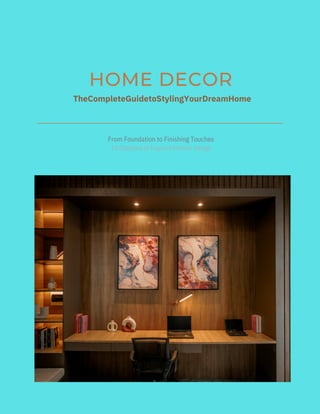
The Complete Guide to Home Decor: Styling Your Dream Home
Explore essential interior design principles including space planning, color theory, furniture selection, lighting, textiles, and wall art to create a personalized and harmonious living space.
Page 2
HOME DECOR— The Complete Guide
Table of Contents
01. Introduction to Home Decor
02. Understanding Your Space
03. Color Theory & Palettes
04. Furniture Selection & Arrangement
05. Lighting Design
06. Textiles & Soft Furnishings
07. Wall Decor & Art
08. Indoor Plants & Greenery
09. Storage & Organization
10. Kitchen & Dining Spaces
11. Bedroom & Bathroom Retreats
12. Seasonal Decor & Refreshes
—Setting the Foundation
—Measuring, Mapping & Planning
—Creating Mood with Color
— Form, Function & Flow
—Illuminating Every Corner
— Comfort, Texture & Warmth
—Framing Your Personal Story
— Bringing Nature Indoors
— Beauty Meets Practicality
— The Heart of the Home
— Your Personal Sanctuary
— Evolving Your Space Year-Round
3.
Page 3
HOME DECOR— The Complete Guide
CHAPTER 1
Introduction to Home Decor
Your home is a canvas. Here is where we begin painting it.
Popular Design Styles
Beforeyou begin shoppingor redesigning, understanding major design styles helps you communicate
your vision and make cohesive choices:
What Is Home Decor?
Homedecor is the art andscience of transforming a space into a reflection of the people who live in it. It
encompasses every element you see, touch, and feel inside your home — from the paint on your walls
to the cushions on your sofa.
Great home decor is never accidental. It balances aesthetics with practicality, personality with
proportion, and individuality with harmony.
Why Does Home Decor Matter?
•
•
•
•
It affectsyourmood, focus,and emotionalwell-being.
A well-designed space improves productivity and relaxation.
Thoughtful decor increases the perceived and actual value of your home.
It tells your personal story to every guest who visits.
✦ Pro Tip: Start by collecting inspiration images. Pinterest, Instagram, and design magazines are
excellent sources. Look for patterns in what you pin — you'll discover your true style.
•
•
•
•
•
Modern & Contemporary: Clean lines, neutral palettes, minimal clutter.
Scandinavian: Functional simplicity, natural materials, muted tones.
Bohemian: Layered textures, eclectic patterns, global influences.
Industrial: Exposed brick, metal accents, raw materials.
Traditional: Symmetry, rich wood tones, classic silhouettes.
• Transitional: A blend of classic and contemporary — the most popular style today.
• Japandi: A fusion of Japanese minimalism and Scandinavian warmth.
4.
Page 4
HOME DECOR— The Complete Guide
CHAPTER 2
Understanding Your Space
Measure twice, decorate once.
Traffic Flow & Zones
Every room shouldhavea clear path that feels natural to walk through. As a rule, main pathways should
be at least 36 inches wide, and secondary paths at least 24 inches. In living rooms, create conversation
zones where seating faces each other within 8–10 feet for comfortable interaction.
Creating a Floor Plan
Why Measurements Matter
Oneofthe mostcommon (andcostly)decorating mistakes is purchasing furniture or rugs without
measuring the space first. Before anything else, grab a tape measure.
Ceiling Height Considerations
Lowceilings callfor vertical visual elements— tall bookshelves, floor-to-ceiling drapes, and vertical
stripes. High ceilings benefit from chandeliers, bold pendant lights, and layered decor that draws the eye
up and across the room.
•
•
•
•
Measure thelength andwidth of every room.
Note the location of doors, windows, and fixed elements like radiators or fireplaces.
Sketch a basic floor plan on graph paper (1 square = 1 foot works well).
Mark electrical outlets, as these influence furniture placement.
✦ Pro Tip: Use free online tools like RoomSketcher or Planner 5D to create digital floor plans.
You can drag and drop furniture before spending a single rupee.
5.
Page 5
HOME DECOR— The Complete Guide
CHAPTER 3
Color Theory & Palettes
Color is the first thing people notice and the last thing they forget.
The Basics of Color Theory
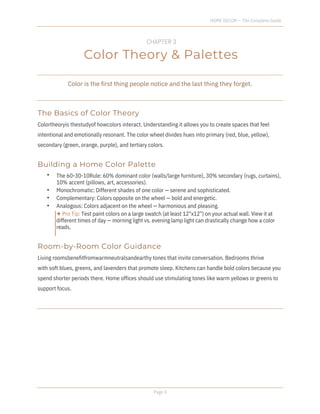
Colortheoryis thestudyof howcolors interact. Understanding it allows you to create spaces that feel
intentional and emotionally resonant. The color wheel divides hues into primary (red, blue, yellow),
secondary (green, orange, purple), and tertiary colors.
Building a Home Color Palette
Room-by-Room Color Guidance
Living roomsbenefitfromwarmneutralsandearthy tones that invite conversation. Bedrooms thrive
with soft blues, greens, and lavenders that promote sleep. Kitchens can handle bold colors because you
spend shorter periods there. Home offices should use stimulating tones like warm yellows or greens to
support focus.
•
•
•
•
The 60-30-10Rule: 60% dominant color (walls/large furniture), 30% secondary (rugs, curtains),
10% accent (pillows, art, accessories).
Monochromatic: Different shades of one color — serene and sophisticated.
Complementary: Colors opposite on the wheel — bold and energetic.
Analogous: Colors adjacent on the wheel — harmonious and pleasing.
✦ Pro Tip: Test paint colors on a large swatch (at least 12"x12") on your actual wall. View it at
different times of day — morning light vs. evening lamp light can drastically change how a color
reads.
6.
Page 6
HOME DECOR— The Complete Guide
CHAPTER 4
Furniture Selection & Arrangement
Choose pieces that work as hard as they are beautiful.
Investment vs. Save Strategy
Invest inquality foritemsuseddaily:sofa, bed,dining table, and desk chair. Save on trendy items that
you'll update in a few years: accent chairs, decorative pillows, art, and side tables.
Choosing the Right Furniture
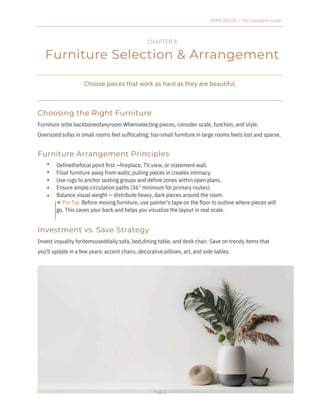
Furniture isthe backboneofanyroom.Whenselecting pieces, consider scale, function, and style.
Oversized sofas in small rooms feel suffocating; too-small furniture in large rooms feels lost and sparse.
Furniture Arrangement Principles
•
•
•
•
•
Definethefocal point first —fireplace, TV,view, or statement wall.
Float furniture away from walls; pulling pieces in creates intimacy.
Use rugs to anchor seating groups and define zones within open plans.
Ensure ample circulation paths (36" minimum for primary routes).
Balance visual weight — distribute heavy, dark pieces around the room.
✦ Pro Tip: Before moving furniture, use painter's tape on the floor to outline where pieces will
go. This saves your back and helps you visualize the layout in real scale.
7.
Page 7
HOME DECOR— The Complete Guide
CHAPTER 5
Lighting Design
Lighting is not just functional — it is transformational.
The Three Layers of Light
Professionalinterior designersalwayslayer three types of lighting in every room. This three-layer
approach eliminates the flat, harsh feel of relying on a single overhead fixture.
Statement Fixtures as Decor
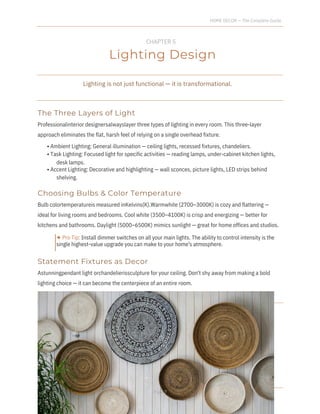
Astunningpendant light orchandelierissculpture for your ceiling. Don't shy away from making a bold
lighting choice — it can become the centerpiece of an entire room.
Choosing Bulbs & Color Temperature
Bulb colortemperatureis measured inKelvins(K).Warmwhite (2700–3000K) is cozy and flattering —
ideal for living rooms and bedrooms. Cool white (3500–4100K) is crisp and energizing — better for
kitchens and bathrooms. Daylight (5000–6500K) mimics sunlight — great for home offices and studios.
• Ambient Lighting: General illumination — ceiling lights, recessed fixtures, chandeliers.
• Task Lighting: Focused light for specific activities — reading lamps, under-cabinet kitchen lights,
desk lamps.
• Accent Lighting: Decorative and highlighting — wall sconces, picture lights, LED strips behind
shelving.
✦ Pro Tip: Install dimmer switches on all your main lights. The ability to control intensity is the
single highest-value upgrade you can make to your home's atmosphere.
8.
Page 8
HOME DECOR— The Complete Guide
CHAPTER 6
Textiles & Soft Furnishings
Texture is the secret ingredient in every beautiful room.
The Right Rug Size
Themostcommon rug mistake is buying one that's too small. In living rooms, all front legs of furniture
should rest on the rug — or all four legs. In dining rooms, the rug should extend at least 24 inches
beyond each side of the table so chairs stay on the rug when pulled out.
Why Textiles Matter
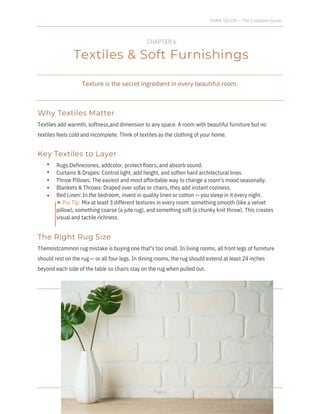
Textiles add warmth, softness,and dimension to any space. A room with beautiful furniture but no
textiles feels cold and incomplete. Think of textiles as the clothing of your home.
Key Textiles to Layer
•
•
•
•
•
Rugs:Definezones, addcolor, protect floors, and absorb sound.
Curtains & Drapes: Control light, add height, and soften hard architectural lines.
Throw Pillows: The easiest and most affordable way to change a room's mood seasonally.
Blankets & Throws: Draped over sofas or chairs, they add instant coziness.
Bed Linen: In the bedroom, invest in quality linen or cotton — you sleep in it every night.
✦ Pro Tip: Mix at least 3 different textures in every room: something smooth (like a velvet
pillow), something coarse (a jute rug), and something soft (a chunky knit throw). This creates
visual and tactile richness.
9.
Page 9
HOME DECOR— The Complete Guide
CHAPTER 7
Wall Decor & Art
Empty walls are missed opportunities.
Gallery Walls
Agallerywall isacurated collection of frames, art, and objects arranged together. To create a cohesive
gallery wall:
Hanging Height
Thecenterof a singlepiece of art should hang at eye level — approximately 57–60 inches from the floor
to the center of the artwork. This is the standard used in galleries and museums, and it makes art feel
intentional and comfortable.
Mirrors as Decor
Mirrors are among the most versatile decor tools available. They reflect light, making rooms feel
brighter and larger. A large mirror opposite a window doubles the perceived daylight in a room.
Choosing Art That Speaks to You
Thebest art is theart you love— notthemostexpensive or trendy piece. Your home should reflect your
journey, your travels, your humor, and your passions. Buy what moves you.
• Choose a unifying element: same frame color, similar subject matter, or one consistent mat
color.
Plan your arrangement on the floor before putting holes in the wall.
Start with the largest piece and work outward, maintaining 2–3 inches between frames.
•
•
• Mix sizes for visual interest — avoid all frames being the same size.
✦ Pro Tip: Use paper templates (trace the frames) taped to the wall to plan your gallery before
nailing. This eliminates guesswork and wasted nail holes.
10.
Page 10
HOME DECOR— The Complete Guide
CHAPTER 8
Indoor Plants & Greenery
A home with plants is a home that breathes.
Plant Placement Strategy
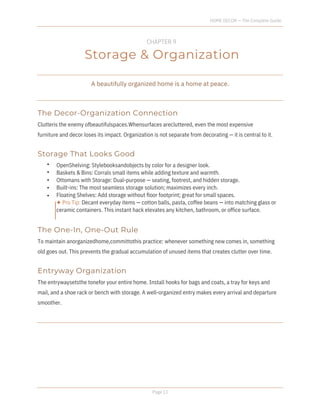
Placetallplantslike fiddle-leaf figsandpalms in empty corners to fill vertical space. Use trailing plants
like pothos or string of pearls on high shelves. Cluster small succulents on windowsills and coffee tables
for low-maintenance color.
Best Plants for Beginners
The Benefits of Indoor Plants
•
•
•
•
•
•
•
•
•
Improve airquality byabsorbing carbon dioxide and some toxins.
Reduce stress and boost mood — studies show plants lower cortisol levels.
Add color, texture, and life to static spaces.
Act as natural dividers between zones in open-plan living.
Pothos:Nearlyindestructible,thrives in low light, trails beautifully.
Snake Plant (Sansevieria): Tolerates neglect, filters air, striking silhouette.
ZZ Plant: Thrives on minimal water and low light — ideal for dark corners.
Peace Lily: Elegant white blooms, tolerates shade, signals when it needs water by drooping.
Monstera Deliciosa: Bold, tropical, fast-growing — a statement plant.
✦ Pro Tip: Group plants in odd numbers (3 or 5) at different heights for a lush, organic vignette.
Vary pot sizes and materials — mix terracotta, ceramic, and woven baskets for texture.
11.
Page 11
HOME DECOR— The Complete Guide
CHAPTER 9
Storage & Organization
A beautifully organized home is a home at peace.
Entryway Organization
The entrywaysetsthe tonefor your entire home. Install hooks for bags and coats, a tray for keys and
mail, and a shoe rack or bench with storage. A well-organized entry makes every arrival and departure
smoother.
Storage That Looks Good
The One-In, One-Out Rule
To maintain anorganizedhome,committothis practice: whenever something new comes in, something
old goes out. This prevents the gradual accumulation of unused items that creates clutter over time.
The Decor-Organization Connection
Clutteris the enemy ofbeautifulspaces.Whensurfaces arecluttered, even the most expensive
furniture and decor loses its impact. Organization is not separate from decorating — it is central to it.
•
•
•
•
•
OpenShelving: Stylebooksandobjects by color for a designer look.
Baskets & Bins: Corrals small items while adding texture and warmth.
Ottomans with Storage: Dual-purpose — seating, footrest, and hidden storage.
Built-ins: The most seamless storage solution; maximizes every inch.
Floating Shelves: Add storage without floor footprint; great for small spaces.
✦ Pro Tip: Decant everyday items — cotton balls, pasta, coffee beans — into matching glass or
ceramic containers. This instant hack elevates any kitchen, bathroom, or office surface.
12.
Page 12
HOME DECOR— The Complete Guide
CHAPTER 10
Kitchen & Dining Spaces
Where nourishment and gathering become art.
Dining Room Design
Thedining roomshouldfeel warm, intimate, and inviting. A chandelier hung 30–34 inches above the
dining table surface creates perfect ambiance. The chandelier width should be approximately half the
table width — so a 60" table calls for a 30" fixture.
Hardware & Fixtures
Swapping cabinet hardwareis one of the cheapest, highest-impact upgrades available. Matte black,
brushed brass, and satin nickel are currently popular finishes. Ensure all hardware in the kitchen
matches — this creates a pulled-together, professional feel.
Kitchen Decor Essentials
The kitchen isoften themost challengingroom to decorate because functionality must dominate. But
that doesn't mean it can't be beautiful. Focus on what's visible — cabinet hardware, backsplash,
countertop accessories, and lighting.
• Choose seating that encourages lingering — comfort matters at the table.
•
•
•
A statement rug anchors the dining zone in open-plan spaces.
A sideboard or buffet provides both storage and a surface for seasonal display.
Fresh flowers or a sculptural centerpiece elevate everyday meals.
✦ Pro Tip: If you can't replace your cabinets, paint them. A fresh coat of paint on dated cabinets
in a trendy color (sage green, navy, warm white) can completely transform a kitchen at a
fraction of the cost of new cabinetry.
13.
Page 13
HOME DECOR— The Complete Guide
CHAPTER 11
Bedroom & Bathroom Retreats
Design your most personal spaces with intention and care.
Bathroom Design
Evensmallbathroomscan feellike spa retreats. Focus on eliminating visual clutter by organizing
countertops and investing in matching accessories. Rolled towels in a basket, coordinated dispensers,
and a simple tray to corral items on the vanity make an immediate difference.
Bedroom Decor Principles
The Bedroom as Sanctuary
Your bedroomshould bethemostrestorativeroom in your home. Every design decision should support
sleep, relaxation, and personal renewal. Eliminate anything that causes stress or distraction.
•
•
•
•
•
Investin yourbedding — youspend a third of your life sleeping.
Blackout curtains are both functional and visually grounding.
Nightstands should be at mattress height for comfortable reach.
Soft, warm lighting (2700K) promotes relaxation before sleep.
Keep technology out of the bedroom or hidden when not in use.
✦ Pro Tip: The 'hotel rule': use all-white or neutral bedding as your base, then add personality
with pillows, a throw, and a bed runner. It always looks luxurious and is easy to update
seasonally.
• Replace a basic mirror with a framed mirror for an instant upgrade.
• Add a bath mat with texture — thick cotton or a woven rug.
•
•
Candles, a small plant, and simple art make a bathroom feel personal and luxurious.
Heated towel rails are a practical luxury that transforms the daily experience.
14.
Page 14
HOME DECOR— The Complete Guide
CHAPTER 12
Seasonal Decor & Refreshes
A home that evolves with the seasons never grows old.
A Seasonal Decor Calendar
Your Home Is a Living Document
Home decorisnevertruly finished— and thatis partofits joy. Your tastes will evolve, your family will grow,
your circumstances will change. The most beautiful homes are the ones that have been lived in, adjusted,
and refined over time. Trust the process, trust your instincts, and above all — make your home yours.
Why Seasonal Decorating Matters
Youdon't needto redecorate yourentire homeeveryseason — but making small, intentional updates
keeps your space feeling fresh, current, and alive. Seasonal decor also gives you an opportunity to swap
out tired pieces for new ideas without a major investment.
Low-Effort, High-Impact Refreshes
Youcan completely changethe feelof a roomwithoutbuying a single new item. Rearrange your existing
furniture — even a 90-degree rotation of a sofa changes the energy entirely. Rehang art in different
groupings. Swap cushions from one room to another. Move plants around. These cost-free changes
exercise your design eye and keep your home feeling dynamic.
•
•
•
•
Spring:Lightlinens,fresh flowers, pastel accents, open windows, and airy curtains.
Summer: Natural textures (rattan, jute, linen), coastal tones, bold botanicals.
Autumn: Warm amber and rust tones, cozy textures, dried botanicals, candles.
Winter: Soft blankets, warm metallics, evergreen accents, rich jewel tones.
✦ Pro Tip: Invest in a 'seasonal decor box' for each season. When the season ends, pack
everything carefully and label clearly. You'll rediscover items each year like old friends — and it
prevents waste and duplicate purchasing.
“Does your home feel dull or outdated? With a few smart décor strategies, you can completely
transform your space. This step-by-step guide helped me a lot:” CLICK HEAR
15.
Page 15
HOME DECOR— The Complete Guide
✦ ✦ ✦
Thank You
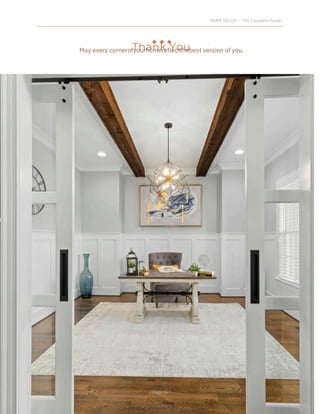
May every cornerofyourhomereflectthebest version of you.