[Type here]
Standards Treatment Guidelines - Dr J L Meena 1
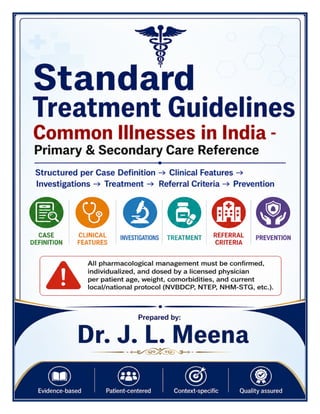
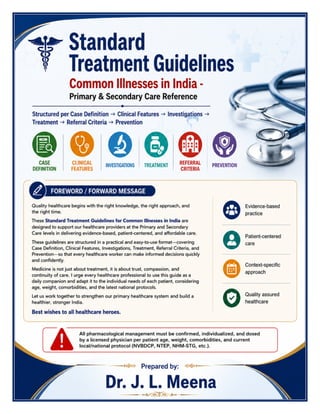
Standard Treatment Guidelines
Common Illnesses in India - Primary & Secondary Care Reference
Structured per Case Definition → Clinical Features → Investigations → Treatment → Referral Criteria → Prevention
All pharmacological management must be confirmed, individualized, and dosed by a licensed physician per patient age,
weight, comorbidities, and current local/national protocol (NVBDCP, NTEP, NHM-STG, etc.).
Prepared by: Dr. J. L. Meena
[Type here]
Standards Treatment Guidelines - Dr J L Meena 2
[Type here]
Standards Treatment Guidelines - Dr J L Meena 3
Table of Contents
Section 1: Respiratory & Seasonal Illnesses ....................................................................... 5
Common Cold (Acute Viral Rhinitis) .............................................................................................5
Influenza-Like Illness (ILI) ............................................................................................................5
COVID-19....................................................................................................................................6
Sinusitis (Acute) ..........................................................................................................................6
Acute Tonsillopharyngitis ............................................................................................................7
Acute Bronchitis..........................................................................................................................7
Pulmonary Tuberculosis..............................................................................................................8
Community-Acquired Pneumonia ................................................................................................8
Section 2: Water- & Food-Borne Illnesses........................................................................... 9
Acute Diarrheal Disease ..............................................................................................................9
Cholera.......................................................................................................................................9
Typhoid Fever (Enteric Fever) .....................................................................................................10
Viral Hepatitis A / E....................................................................................................................10
Soil-Transmitted Helminthiasis .................................................................................................11
Food Poisoning..........................................................................................................................11
Section 3: Vector-Borne (Mosquito & Insect) Illnesses .......................................................12
Malaria .....................................................................................................................................12
Dengue Fever ............................................................................................................................12
Chikungunya.............................................................................................................................13
Lymphatic Filariasis ..................................................................................................................13
Japanese Encephalitis...............................................................................................................13
Section 4: Skin, Eye & Common Infections ........................................................................15
Dermatophytosis (Ringworm/Tinea) ...........................................................................................15
Scabies.....................................................................................................................................15
Urinary Tract Infection...............................................................................................................15
Acute Conjunctivitis ..................................................................................................................16
Varicella (Chickenpox)...............................................................................................................16
Section 5: Chronic & Lifestyle Conditions..........................................................................18
Type 2 Diabetes Mellitus............................................................................................................18
Hypertension ............................................................................................................................18
Bronchial Asthma......................................................................................................................19
Iron-Deficiency Anemia .............................................................................................................19
[Type here]
Standards Treatment Guidelines - Dr J L Meena 4
Hypothyroidism.........................................................................................................................19
Gastro-Esophageal Reflux Disease (GERD)/Gastritis...................................................................20
Migraine....................................................................................................................................20
Hemorrhoids (Piles)...................................................................................................................21
Nephrolithiasis (Kidney Stones) .................................................................................................21
Section 6: Emergencies Requiring Immediate Referral.......................................................23
Quick First-Aid & Self-Care Reference...............................................................................24
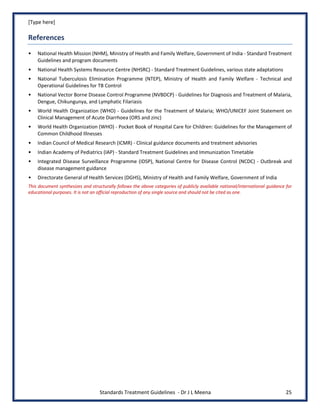
References ......................................................................................................................25
Abbreviations ..................................................................................................................26
Important Notes...............................................................................................................28
(Right-click and choose “Update Field” if this appears blank when opened in Word)
[Type here]
Standards Treatment Guidelines - Dr J L Meena 5
Section 1: Respiratory & Seasonal Illnesses
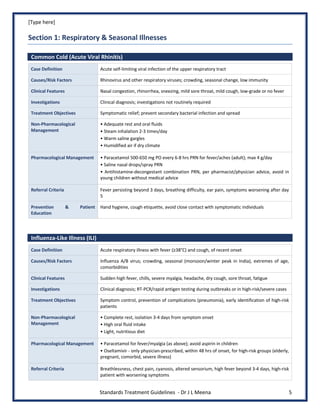
Common Cold (Acute Viral Rhinitis)
Case Definition Acute self-limiting viral infection of the upper respiratory tract
Causes/Risk Factors Rhinovirus and other respiratory viruses; crowding, seasonal change, low immunity
Clinical Features Nasal congestion, rhinorrhea, sneezing, mild sore throat, mild cough, low-grade or no fever
Investigations Clinical diagnosis; investigations not routinely required
Treatment Objectives Symptomatic relief; prevent secondary bacterial infection and spread
Non-Pharmacological
Management
• Adequate rest and oral fluids
• Steam inhalation 2-3 times/day
• Warm saline gargles
• Humidified air if dry climate
Pharmacological Management • Paracetamol 500-650 mg PO every 6-8 hrs PRN for fever/aches (adult); max 4 g/day
• Saline nasal drops/spray PRN
• Antihistamine-decongestant combination PRN, per pharmacist/physician advice, avoid in
young children without medical advice
Referral Criteria Fever persisting beyond 3 days, breathing difficulty, ear pain, symptoms worsening after day
5
Prevention & Patient
Education
Hand hygiene, cough etiquette, avoid close contact with symptomatic individuals
Influenza-Like Illness (ILI)
Case Definition Acute respiratory illness with fever (≥38°C) and cough, of recent onset
Causes/Risk Factors Influenza A/B virus; crowding, seasonal (monsoon/winter peak in India), extremes of age,
comorbidities
Clinical Features Sudden high fever, chills, severe myalgia, headache, dry cough, sore throat, fatigue
Investigations Clinical diagnosis; RT-PCR/rapid antigen testing during outbreaks or in high-risk/severe cases
Treatment Objectives Symptom control, prevention of complications (pneumonia), early identification of high-risk
patients
Non-Pharmacological
Management
• Complete rest, isolation 3-4 days from symptom onset
• High oral fluid intake
• Light, nutritious diet
Pharmacological Management • Paracetamol for fever/myalgia (as above); avoid aspirin in children
• Oseltamivir - only physician-prescribed, within 48 hrs of onset, for high-risk groups (elderly,
pregnant, comorbid, severe illness)
Referral Criteria Breathlessness, chest pain, cyanosis, altered sensorium, high fever beyond 3-4 days, high-risk
patient with worsening symptoms
[Type here]
Standards Treatment Guidelines - Dr J L Meena 6
Prevention & Patient
Education
Annual influenza vaccination for high-risk groups, hand hygiene, masking in crowded settings
during outbreaks
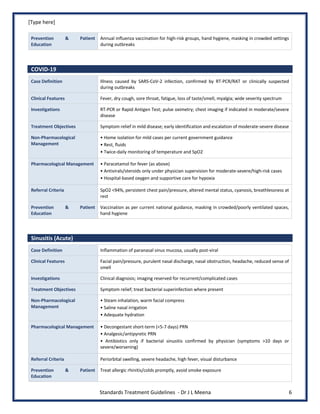
COVID-19
Case Definition Illness caused by SARS-CoV-2 infection, confirmed by RT-PCR/RAT or clinically suspected
during outbreaks
Clinical Features Fever, dry cough, sore throat, fatigue, loss of taste/smell, myalgia; wide severity spectrum
Investigations RT-PCR or Rapid Antigen Test; pulse oximetry; chest imaging if indicated in moderate/severe
disease
Treatment Objectives Symptom relief in mild disease; early identification and escalation of moderate-severe disease
Non-Pharmacological
Management
• Home isolation for mild cases per current government guidance
• Rest, fluids
• Twice-daily monitoring of temperature and SpO2
Pharmacological Management • Paracetamol for fever (as above)
• Antivirals/steroids only under physician supervision for moderate-severe/high-risk cases
• Hospital-based oxygen and supportive care for hypoxia
Referral Criteria SpO2 <94%, persistent chest pain/pressure, altered mental status, cyanosis, breathlessness at
rest
Prevention & Patient
Education
Vaccination as per current national guidance, masking in crowded/poorly ventilated spaces,
hand hygiene
Sinusitis (Acute)
Case Definition Inflammation of paranasal sinus mucosa, usually post-viral
Clinical Features Facial pain/pressure, purulent nasal discharge, nasal obstruction, headache, reduced sense of
smell
Investigations Clinical diagnosis; imaging reserved for recurrent/complicated cases
Treatment Objectives Symptom relief; treat bacterial superinfection where present
Non-Pharmacological
Management
• Steam inhalation, warm facial compress
• Saline nasal irrigation
• Adequate hydration
Pharmacological Management • Decongestant short-term (<5-7 days) PRN
• Analgesic/antipyretic PRN
• Antibiotics only if bacterial sinusitis confirmed by physician (symptoms >10 days or
severe/worsening)
Referral Criteria Periorbital swelling, severe headache, high fever, visual disturbance
Prevention & Patient
Education
Treat allergic rhinitis/colds promptly, avoid smoke exposure
[Type here]
Standards Treatment Guidelines - Dr J L Meena 7
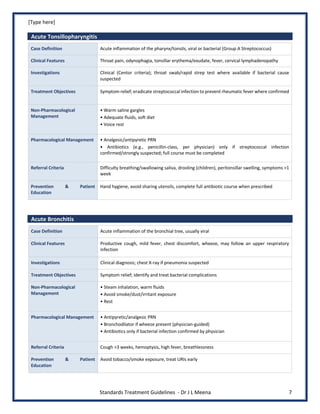
Acute Tonsillopharyngitis
Case Definition Acute inflammation of the pharynx/tonsils, viral or bacterial (Group A Streptococcus)
Clinical Features Throat pain, odynophagia, tonsillar erythema/exudate, fever, cervical lymphadenopathy
Investigations Clinical (Centor criteria); throat swab/rapid strep test where available if bacterial cause
suspected
Treatment Objectives Symptom relief; eradicate streptococcal infection to prevent rheumatic fever where confirmed
Non-Pharmacological
Management
• Warm saline gargles
• Adequate fluids, soft diet
• Voice rest
Pharmacological Management • Analgesic/antipyretic PRN
• Antibiotics (e.g., penicillin-class, per physician) only if streptococcal infection
confirmed/strongly suspected; full course must be completed
Referral Criteria Difficulty breathing/swallowing saliva, drooling (children), peritonsillar swelling, symptoms >1
week
Prevention & Patient
Education
Hand hygiene, avoid sharing utensils, complete full antibiotic course when prescribed
Acute Bronchitis
Case Definition Acute inflammation of the bronchial tree, usually viral
Clinical Features Productive cough, mild fever, chest discomfort, wheeze, may follow an upper respiratory
infection
Investigations Clinical diagnosis; chest X-ray if pneumonia suspected
Treatment Objectives Symptom relief; identify and treat bacterial complications
Non-Pharmacological
Management
• Steam inhalation, warm fluids
• Avoid smoke/dust/irritant exposure
• Rest
Pharmacological Management • Antipyretic/analgesic PRN
• Bronchodilator if wheeze present (physician-guided)
• Antibiotics only if bacterial infection confirmed by physician
Referral Criteria Cough >3 weeks, hemoptysis, high fever, breathlessness
Prevention & Patient
Education
Avoid tobacco/smoke exposure, treat URIs early
[Type here]
Standards Treatment Guidelines - Dr J L Meena 8
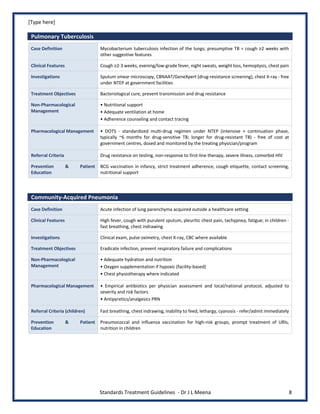
Pulmonary Tuberculosis
Case Definition Mycobacterium tuberculosis infection of the lungs; presumptive TB = cough ≥2 weeks with
other suggestive features
Clinical Features Cough ≥2-3 weeks, evening/low-grade fever, night sweats, weight loss, hemoptysis, chest pain
Investigations Sputum smear microscopy, CBNAAT/GeneXpert (drug-resistance screening), chest X-ray - free
under NTEP at government facilities
Treatment Objectives Bacteriological cure, prevent transmission and drug resistance
Non-Pharmacological
Management
• Nutritional support
• Adequate ventilation at home
• Adherence counseling and contact tracing
Pharmacological Management • DOTS - standardized multi-drug regimen under NTEP (intensive + continuation phase,
typically ~6 months for drug-sensitive TB; longer for drug-resistant TB) - free of cost at
government centres, dosed and monitored by the treating physician/program
Referral Criteria Drug resistance on testing, non-response to first-line therapy, severe illness, comorbid HIV
Prevention & Patient
Education
BCG vaccination in infancy, strict treatment adherence, cough etiquette, contact screening,
nutritional support
Community-Acquired Pneumonia
Case Definition Acute infection of lung parenchyma acquired outside a healthcare setting
Clinical Features High fever, cough with purulent sputum, pleuritic chest pain, tachypnea, fatigue; in children -
fast breathing, chest indrawing
Investigations Clinical exam, pulse oximetry, chest X-ray, CBC where available
Treatment Objectives Eradicate infection, prevent respiratory failure and complications
Non-Pharmacological
Management
• Adequate hydration and nutrition
• Oxygen supplementation if hypoxic (facility-based)
• Chest physiotherapy where indicated
Pharmacological Management • Empirical antibiotics per physician assessment and local/national protocol, adjusted to
severity and risk factors
• Antipyretics/analgesics PRN
Referral Criteria (children) Fast breathing, chest indrawing, inability to feed, lethargy, cyanosis - refer/admit immediately
Prevention & Patient
Education
Pneumococcal and influenza vaccination for high-risk groups, prompt treatment of URIs,
nutrition in children
[Type here]
Standards Treatment Guidelines - Dr J L Meena 9
Section 2: Water- & Food-Borne Illnesses
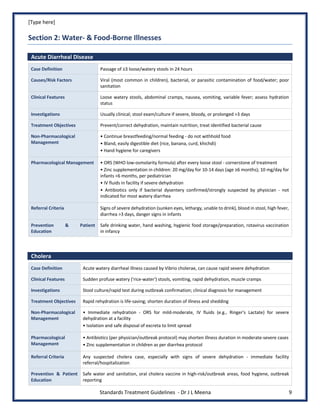
Acute Diarrheal Disease
Case Definition Passage of ≥3 loose/watery stools in 24 hours
Causes/Risk Factors Viral (most common in children), bacterial, or parasitic contamination of food/water; poor
sanitation
Clinical Features Loose watery stools, abdominal cramps, nausea, vomiting, variable fever; assess hydration
status
Investigations Usually clinical; stool exam/culture if severe, bloody, or prolonged >3 days
Treatment Objectives Prevent/correct dehydration, maintain nutrition, treat identified bacterial cause
Non-Pharmacological
Management
• Continue breastfeeding/normal feeding - do not withhold food
• Bland, easily digestible diet (rice, banana, curd, khichdi)
• Hand hygiene for caregivers
Pharmacological Management • ORS (WHO low-osmolarity formula) after every loose stool - cornerstone of treatment
• Zinc supplementation in children: 20 mg/day for 10-14 days (age ≥6 months); 10 mg/day for
infants <6 months, per pediatrician
• IV fluids in facility if severe dehydration
• Antibiotics only if bacterial dysentery confirmed/strongly suspected by physician - not
indicated for most watery diarrhea
Referral Criteria Signs of severe dehydration (sunken eyes, lethargy, unable to drink), blood in stool, high fever,
diarrhea >3 days, danger signs in infants
Prevention & Patient
Education
Safe drinking water, hand washing, hygienic food storage/preparation, rotavirus vaccination
in infancy
Cholera
Case Definition Acute watery diarrheal illness caused by Vibrio cholerae, can cause rapid severe dehydration
Clinical Features Sudden profuse watery ('rice-water') stools, vomiting, rapid dehydration, muscle cramps
Investigations Stool culture/rapid test during outbreak confirmation; clinical diagnosis for management
Treatment Objectives Rapid rehydration is life-saving; shorten duration of illness and shedding
Non-Pharmacological
Management
• Immediate rehydration - ORS for mild-moderate, IV fluids (e.g., Ringer's Lactate) for severe
dehydration at a facility
• Isolation and safe disposal of excreta to limit spread
Pharmacological
Management
• Antibiotics (per physician/outbreak protocol) may shorten illness duration in moderate-severe cases
• Zinc supplementation in children as per diarrhea protocol
Referral Criteria Any suspected cholera case, especially with signs of severe dehydration - immediate facility
referral/hospitalization
Prevention & Patient
Education
Safe water and sanitation, oral cholera vaccine in high-risk/outbreak areas, food hygiene, outbreak
reporting
[Type here]
Standards Treatment Guidelines - Dr J L Meena 10
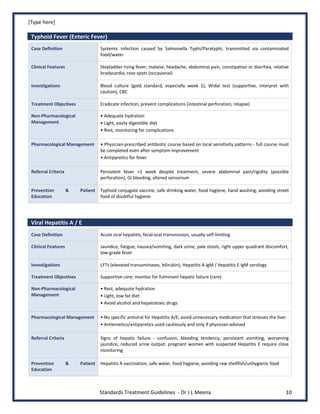
Typhoid Fever (Enteric Fever)
Case Definition Systemic infection caused by Salmonella Typhi/Paratyphi, transmitted via contaminated
food/water
Clinical Features Stepladder rising fever, malaise, headache, abdominal pain, constipation or diarrhea, relative
bradycardia, rose spots (occasional)
Investigations Blood culture (gold standard, especially week 1), Widal test (supportive, interpret with
caution), CBC
Treatment Objectives Eradicate infection, prevent complications (intestinal perforation, relapse)
Non-Pharmacological
Management
• Adequate hydration
• Light, easily digestible diet
• Rest, monitoring for complications
Pharmacological Management • Physician-prescribed antibiotic course based on local sensitivity patterns - full course must
be completed even after symptom improvement
• Antipyretics for fever
Referral Criteria Persistent fever >1 week despite treatment, severe abdominal pain/rigidity (possible
perforation), GI bleeding, altered sensorium
Prevention & Patient
Education
Typhoid conjugate vaccine, safe drinking water, food hygiene, hand washing, avoiding street
food of doubtful hygiene
Viral Hepatitis A / E
Case Definition Acute viral hepatitis, fecal-oral transmission, usually self-limiting
Clinical Features Jaundice, fatigue, nausea/vomiting, dark urine, pale stools, right upper quadrant discomfort,
low-grade fever
Investigations LFTs (elevated transaminases, bilirubin), Hepatitis A IgM / Hepatitis E IgM serology
Treatment Objectives Supportive care; monitor for fulminant hepatic failure (rare)
Non-Pharmacological
Management
• Rest, adequate hydration
• Light, low-fat diet
• Avoid alcohol and hepatotoxic drugs
Pharmacological Management • No specific antiviral for Hepatitis A/E; avoid unnecessary medication that stresses the liver
• Antiemetics/antipyretics used cautiously and only if physician-advised
Referral Criteria Signs of hepatic failure - confusion, bleeding tendency, persistent vomiting, worsening
jaundice, reduced urine output; pregnant women with suspected Hepatitis E require close
monitoring
Prevention & Patient
Education
Hepatitis A vaccination, safe water, food hygiene, avoiding raw shellfish/unhygienic food
[Type here]
Standards Treatment Guidelines - Dr J L Meena 11
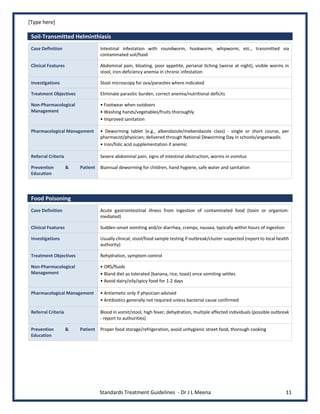
Soil-Transmitted Helminthiasis
Case Definition Intestinal infestation with roundworm, hookworm, whipworm, etc., transmitted via
contaminated soil/food
Clinical Features Abdominal pain, bloating, poor appetite, perianal itching (worse at night), visible worms in
stool, iron-deficiency anemia in chronic infestation
Investigations Stool microscopy for ova/parasites where indicated
Treatment Objectives Eliminate parasitic burden, correct anemia/nutritional deficits
Non-Pharmacological
Management
• Footwear when outdoors
• Washing hands/vegetables/fruits thoroughly
• Improved sanitation
Pharmacological Management • Deworming tablet (e.g., albendazole/mebendazole class) - single or short course, per
pharmacist/physician; delivered through National Deworming Day in schools/anganwadis
• Iron/folic acid supplementation if anemic
Referral Criteria Severe abdominal pain, signs of intestinal obstruction, worms in vomitus
Prevention & Patient
Education
Biannual deworming for children, hand hygiene, safe water and sanitation
Food Poisoning
Case Definition Acute gastrointestinal illness from ingestion of contaminated food (toxin or organism-
mediated)
Clinical Features Sudden-onset vomiting and/or diarrhea, cramps, nausea, typically within hours of ingestion
Investigations Usually clinical; stool/food sample testing if outbreak/cluster suspected (report to local health
authority)
Treatment Objectives Rehydration, symptom control
Non-Pharmacological
Management
• ORS/fluids
• Bland diet as tolerated (banana, rice, toast) once vomiting settles
• Avoid dairy/oily/spicy food for 1-2 days
Pharmacological Management • Antiemetic only if physician-advised
• Antibiotics generally not required unless bacterial cause confirmed
Referral Criteria Blood in vomit/stool, high fever, dehydration, multiple affected individuals (possible outbreak
- report to authorities)
Prevention & Patient
Education
Proper food storage/refrigeration, avoid unhygienic street food, thorough cooking
[Type here]
Standards Treatment Guidelines - Dr J L Meena 12
Section 3: Vector-Borne (Mosquito & Insect) Illnesses
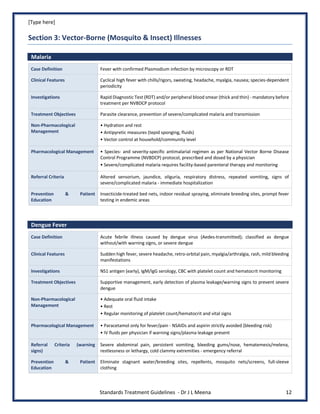
Malaria
Case Definition Fever with confirmed Plasmodium infection by microscopy or RDT
Clinical Features Cyclical high fever with chills/rigors, sweating, headache, myalgia, nausea; species-dependent
periodicity
Investigations Rapid Diagnostic Test (RDT) and/or peripheral blood smear (thick and thin) - mandatory before
treatment per NVBDCP protocol
Treatment Objectives Parasite clearance, prevention of severe/complicated malaria and transmission
Non-Pharmacological
Management
• Hydration and rest
• Antipyretic measures (tepid sponging, fluids)
• Vector control at household/community level
Pharmacological Management • Species- and severity-specific antimalarial regimen as per National Vector Borne Disease
Control Programme (NVBDCP) protocol, prescribed and dosed by a physician
• Severe/complicated malaria requires facility-based parenteral therapy and monitoring
Referral Criteria Altered sensorium, jaundice, oliguria, respiratory distress, repeated vomiting, signs of
severe/complicated malaria - immediate hospitalization
Prevention & Patient
Education
Insecticide-treated bed nets, indoor residual spraying, eliminate breeding sites, prompt fever
testing in endemic areas
Dengue Fever
Case Definition Acute febrile illness caused by dengue virus (Aedes-transmitted); classified as dengue
without/with warning signs, or severe dengue
Clinical Features Sudden high fever, severe headache, retro-orbital pain, myalgia/arthralgia, rash, mild bleeding
manifestations
Investigations NS1 antigen (early), IgM/IgG serology, CBC with platelet count and hematocrit monitoring
Treatment Objectives Supportive management, early detection of plasma leakage/warning signs to prevent severe
dengue
Non-Pharmacological
Management
• Adequate oral fluid intake
• Rest
• Regular monitoring of platelet count/hematocrit and vital signs
Pharmacological Management • Paracetamol only for fever/pain - NSAIDs and aspirin strictly avoided (bleeding risk)
• IV fluids per physician if warning signs/plasma leakage present
Referral Criteria (warning
signs)
Severe abdominal pain, persistent vomiting, bleeding gums/nose, hematemesis/melena,
restlessness or lethargy, cold clammy extremities - emergency referral
Prevention & Patient
Education
Eliminate stagnant water/breeding sites, repellents, mosquito nets/screens, full-sleeve
clothing
[Type here]
Standards Treatment Guidelines - Dr J L Meena 13
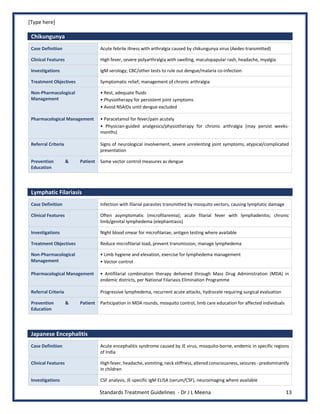
Chikungunya
Case Definition Acute febrile illness with arthralgia caused by chikungunya virus (Aedes-transmitted)
Clinical Features High fever, severe polyarthralgia with swelling, maculopapular rash, headache, myalgia
Investigations IgM serology; CBC/other tests to rule out dengue/malaria co-infection
Treatment Objectives Symptomatic relief; management of chronic arthralgia
Non-Pharmacological
Management
• Rest, adequate fluids
• Physiotherapy for persistent joint symptoms
• Avoid NSAIDs until dengue excluded
Pharmacological Management • Paracetamol for fever/pain acutely
• Physician-guided analgesics/physiotherapy for chronic arthralgia (may persist weeks-
months)
Referral Criteria Signs of neurological involvement, severe unrelenting joint symptoms, atypical/complicated
presentation
Prevention & Patient
Education
Same vector control measures as dengue
Lymphatic Filariasis
Case Definition Infection with filarial parasites transmitted by mosquito vectors, causing lymphatic damage
Clinical Features Often asymptomatic (microfilaremia); acute filarial fever with lymphadenitis; chronic
limb/genital lymphedema (elephantiasis)
Investigations Night blood smear for microfilariae, antigen testing where available
Treatment Objectives Reduce microfilarial load, prevent transmission, manage lymphedema
Non-Pharmacological
Management
• Limb hygiene and elevation, exercise for lymphedema management
• Vector control
Pharmacological Management • Antifilarial combination therapy delivered through Mass Drug Administration (MDA) in
endemic districts, per National Filariasis Elimination Programme
Referral Criteria Progressive lymphedema, recurrent acute attacks, hydrocele requiring surgical evaluation
Prevention & Patient
Education
Participation in MDA rounds, mosquito control, limb care education for affected individuals
Japanese Encephalitis
Case Definition Acute encephalitis syndrome caused by JE virus, mosquito-borne, endemic in specific regions
of India
Clinical Features High fever, headache, vomiting, neck stiffness, altered consciousness, seizures - predominantly
in children
Investigations CSF analysis, JE-specific IgM ELISA (serum/CSF), neuroimaging where available
[Type here]
Standards Treatment Guidelines - Dr J L Meena 14
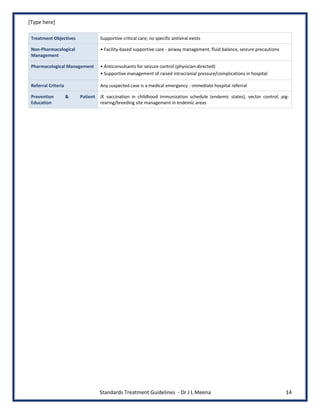
Treatment Objectives Supportive critical care; no specific antiviral exists
Non-Pharmacological
Management
• Facility-based supportive care - airway management, fluid balance, seizure precautions
Pharmacological Management • Anticonvulsants for seizure control (physician-directed)
• Supportive management of raised intracranial pressure/complications in hospital
Referral Criteria Any suspected case is a medical emergency - immediate hospital referral
Prevention & Patient
Education
JE vaccination in childhood immunization schedule (endemic states), vector control, pig-
rearing/breeding site management in endemic areas
[Type here]
Standards Treatment Guidelines - Dr J L Meena 15
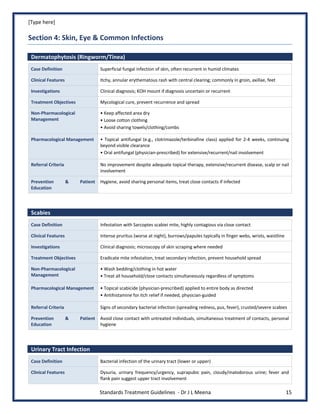
Section 4: Skin, Eye & Common Infections
Dermatophytosis (Ringworm/Tinea)
Case Definition Superficial fungal infection of skin, often recurrent in humid climates
Clinical Features Itchy, annular erythematous rash with central clearing; commonly in groin, axillae, feet
Investigations Clinical diagnosis; KOH mount if diagnosis uncertain or recurrent
Treatment Objectives Mycological cure, prevent recurrence and spread
Non-Pharmacological
Management
• Keep affected area dry
• Loose cotton clothing
• Avoid sharing towels/clothing/combs
Pharmacological Management • Topical antifungal (e.g., clotrimazole/terbinafine class) applied for 2-4 weeks, continuing
beyond visible clearance
• Oral antifungal (physician-prescribed) for extensive/recurrent/nail involvement
Referral Criteria No improvement despite adequate topical therapy, extensive/recurrent disease, scalp or nail
involvement
Prevention & Patient
Education
Hygiene, avoid sharing personal items, treat close contacts if infected
Scabies
Case Definition Infestation with Sarcoptes scabiei mite, highly contagious via close contact
Clinical Features Intense pruritus (worse at night), burrows/papules typically in finger webs, wrists, waistline
Investigations Clinical diagnosis; microscopy of skin scraping where needed
Treatment Objectives Eradicate mite infestation, treat secondary infection, prevent household spread
Non-Pharmacological
Management
• Wash bedding/clothing in hot water
• Treat all household/close contacts simultaneously regardless of symptoms
Pharmacological Management • Topical scabicide (physician-prescribed) applied to entire body as directed
• Antihistamine for itch relief if needed, physician-guided
Referral Criteria Signs of secondary bacterial infection (spreading redness, pus, fever), crusted/severe scabies
Prevention & Patient
Education
Avoid close contact with untreated individuals, simultaneous treatment of contacts, personal
hygiene
Urinary Tract Infection
Case Definition Bacterial infection of the urinary tract (lower or upper)
Clinical Features Dysuria, urinary frequency/urgency, suprapubic pain, cloudy/malodorous urine; fever and
flank pain suggest upper tract involvement
[Type here]
Standards Treatment Guidelines - Dr J L Meena 16
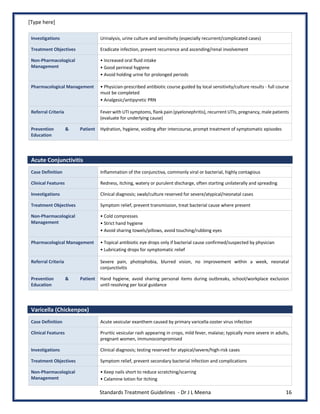
Investigations Urinalysis, urine culture and sensitivity (especially recurrent/complicated cases)
Treatment Objectives Eradicate infection, prevent recurrence and ascending/renal involvement
Non-Pharmacological
Management
• Increased oral fluid intake
• Good perineal hygiene
• Avoid holding urine for prolonged periods
Pharmacological Management • Physician-prescribed antibiotic course guided by local sensitivity/culture results - full course
must be completed
• Analgesic/antipyretic PRN
Referral Criteria Fever with UTI symptoms, flank pain (pyelonephritis), recurrent UTIs, pregnancy, male patients
(evaluate for underlying cause)
Prevention & Patient
Education
Hydration, hygiene, voiding after intercourse, prompt treatment of symptomatic episodes
Acute Conjunctivitis
Case Definition Inflammation of the conjunctiva, commonly viral or bacterial, highly contagious
Clinical Features Redness, itching, watery or purulent discharge, often starting unilaterally and spreading
Investigations Clinical diagnosis; swab/culture reserved for severe/atypical/neonatal cases
Treatment Objectives Symptom relief, prevent transmission, treat bacterial cause where present
Non-Pharmacological
Management
• Cold compresses
• Strict hand hygiene
• Avoid sharing towels/pillows, avoid touching/rubbing eyes
Pharmacological Management • Topical antibiotic eye drops only if bacterial cause confirmed/suspected by physician
• Lubricating drops for symptomatic relief
Referral Criteria Severe pain, photophobia, blurred vision, no improvement within a week, neonatal
conjunctivitis
Prevention & Patient
Education
Hand hygiene, avoid sharing personal items during outbreaks, school/workplace exclusion
until resolving per local guidance
Varicella (Chickenpox)
Case Definition Acute vesicular exanthem caused by primary varicella-zoster virus infection
Clinical Features Pruritic vesicular rash appearing in crops, mild fever, malaise; typically more severe in adults,
pregnant women, immunocompromised
Investigations Clinical diagnosis; testing reserved for atypical/severe/high-risk cases
Treatment Objectives Symptom relief, prevent secondary bacterial infection and complications
Non-Pharmacological
Management
• Keep nails short to reduce scratching/scarring
• Calamine lotion for itching
[Type here]
Standards Treatment Guidelines - Dr J L Meena 17
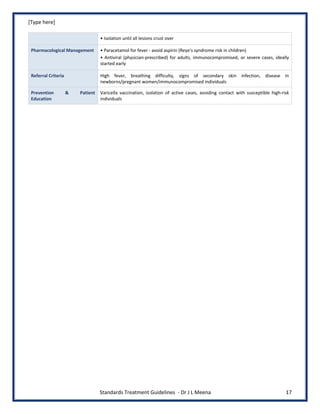
• Isolation until all lesions crust over
Pharmacological Management • Paracetamol for fever - avoid aspirin (Reye's syndrome risk in children)
• Antiviral (physician-prescribed) for adults, immunocompromised, or severe cases, ideally
started early
Referral Criteria High fever, breathing difficulty, signs of secondary skin infection, disease in
newborns/pregnant women/immunocompromised individuals
Prevention & Patient
Education
Varicella vaccination, isolation of active cases, avoiding contact with susceptible high-risk
individuals
[Type here]
Standards Treatment Guidelines - Dr J L Meena 18
Section 5: Chronic & Lifestyle Conditions
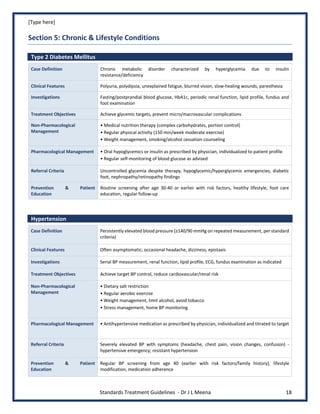
Type 2 Diabetes Mellitus
Case Definition Chronic metabolic disorder characterized by hyperglycemia due to insulin
resistance/deficiency
Clinical Features Polyuria, polydipsia, unexplained fatigue, blurred vision, slow-healing wounds, paresthesia
Investigations Fasting/postprandial blood glucose, HbA1c, periodic renal function, lipid profile, fundus and
foot examination
Treatment Objectives Achieve glycemic targets, prevent micro/macrovascular complications
Non-Pharmacological
Management
• Medical nutrition therapy (complex carbohydrates, portion control)
• Regular physical activity (150 min/week moderate exercise)
• Weight management, smoking/alcohol cessation counseling
Pharmacological Management • Oral hypoglycemics or insulin as prescribed by physician, individualized to patient profile
• Regular self-monitoring of blood glucose as advised
Referral Criteria Uncontrolled glycemia despite therapy, hypoglycemic/hyperglycemic emergencies, diabetic
foot, nephropathy/retinopathy findings
Prevention & Patient
Education
Routine screening after age 30-40 or earlier with risk factors, healthy lifestyle, foot care
education, regular follow-up
Hypertension
Case Definition Persistently elevated blood pressure (≥140/90 mmHg on repeated measurement, per standard
criteria)
Clinical Features Often asymptomatic; occasional headache, dizziness, epistaxis
Investigations Serial BP measurement, renal function, lipid profile, ECG, fundus examination as indicated
Treatment Objectives Achieve target BP control, reduce cardiovascular/renal risk
Non-Pharmacological
Management
• Dietary salt restriction
• Regular aerobic exercise
• Weight management, limit alcohol, avoid tobacco
• Stress management, home BP monitoring
Pharmacological Management • Antihypertensive medication as prescribed by physician, individualized and titrated to target
Referral Criteria Severely elevated BP with symptoms (headache, chest pain, vision changes, confusion) -
hypertensive emergency; resistant hypertension
Prevention & Patient
Education
Regular BP screening from age 40 (earlier with risk factors/family history), lifestyle
modification, medication adherence
[Type here]
Standards Treatment Guidelines - Dr J L Meena 19
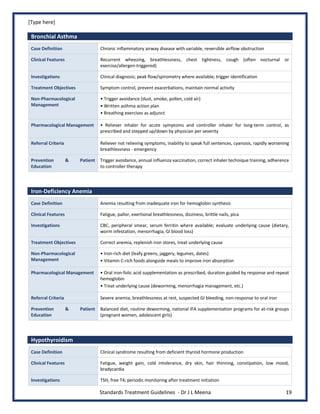
Bronchial Asthma
Case Definition Chronic inflammatory airway disease with variable, reversible airflow obstruction
Clinical Features Recurrent wheezing, breathlessness, chest tightness, cough (often nocturnal or
exercise/allergen-triggered)
Investigations Clinical diagnosis; peak flow/spirometry where available; trigger identification
Treatment Objectives Symptom control, prevent exacerbations, maintain normal activity
Non-Pharmacological
Management
• Trigger avoidance (dust, smoke, pollen, cold air)
• Written asthma action plan
• Breathing exercises as adjunct
Pharmacological Management • Reliever inhaler for acute symptoms and controller inhaler for long-term control, as
prescribed and stepped up/down by physician per severity
Referral Criteria Reliever not relieving symptoms, inability to speak full sentences, cyanosis, rapidly worsening
breathlessness - emergency
Prevention & Patient
Education
Trigger avoidance, annual influenza vaccination, correct inhaler technique training, adherence
to controller therapy
Iron-Deficiency Anemia
Case Definition Anemia resulting from inadequate iron for hemoglobin synthesis
Clinical Features Fatigue, pallor, exertional breathlessness, dizziness, brittle nails, pica
Investigations CBC, peripheral smear, serum ferritin where available; evaluate underlying cause (dietary,
worm infestation, menorrhagia, GI blood loss)
Treatment Objectives Correct anemia, replenish iron stores, treat underlying cause
Non-Pharmacological
Management
• Iron-rich diet (leafy greens, jaggery, legumes, dates)
• Vitamin C-rich foods alongside meals to improve iron absorption
Pharmacological Management • Oral iron-folic acid supplementation as prescribed, duration guided by response and repeat
hemoglobin
• Treat underlying cause (deworming, menorrhagia management, etc.)
Referral Criteria Severe anemia, breathlessness at rest, suspected GI bleeding, non-response to oral iron
Prevention & Patient
Education
Balanced diet, routine deworming, national IFA supplementation programs for at-risk groups
(pregnant women, adolescent girls)
Hypothyroidism
Case Definition Clinical syndrome resulting from deficient thyroid hormone production
Clinical Features Fatigue, weight gain, cold intolerance, dry skin, hair thinning, constipation, low mood,
bradycardia
Investigations TSH, free T4; periodic monitoring after treatment initiation
[Type here]
Standards Treatment Guidelines - Dr J L Meena 20
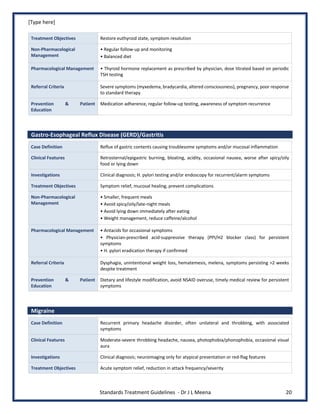
Treatment Objectives Restore euthyroid state, symptom resolution
Non-Pharmacological
Management
• Regular follow-up and monitoring
• Balanced diet
Pharmacological Management • Thyroid hormone replacement as prescribed by physician, dose titrated based on periodic
TSH testing
Referral Criteria Severe symptoms (myxedema, bradycardia, altered consciousness), pregnancy, poor response
to standard therapy
Prevention & Patient
Education
Medication adherence, regular follow-up testing, awareness of symptom recurrence
Gastro-Esophageal Reflux Disease (GERD)/Gastritis
Case Definition Reflux of gastric contents causing troublesome symptoms and/or mucosal inflammation
Clinical Features Retrosternal/epigastric burning, bloating, acidity, occasional nausea, worse after spicy/oily
food or lying down
Investigations Clinical diagnosis; H. pylori testing and/or endoscopy for recurrent/alarm symptoms
Treatment Objectives Symptom relief, mucosal healing, prevent complications
Non-Pharmacological
Management
• Smaller, frequent meals
• Avoid spicy/oily/late-night meals
• Avoid lying down immediately after eating
• Weight management, reduce caffeine/alcohol
Pharmacological Management • Antacids for occasional symptoms
• Physician-prescribed acid-suppressive therapy (PPI/H2 blocker class) for persistent
symptoms
• H. pylori eradication therapy if confirmed
Referral Criteria Dysphagia, unintentional weight loss, hematemesis, melena, symptoms persisting >2 weeks
despite treatment
Prevention & Patient
Education
Dietary and lifestyle modification, avoid NSAID overuse, timely medical review for persistent
symptoms
Migraine
Case Definition Recurrent primary headache disorder, often unilateral and throbbing, with associated
symptoms
Clinical Features Moderate-severe throbbing headache, nausea, photophobia/phonophobia, occasional visual
aura
Investigations Clinical diagnosis; neuroimaging only for atypical presentation or red-flag features
Treatment Objectives Acute symptom relief, reduction in attack frequency/severity
[Type here]
Standards Treatment Guidelines - Dr J L Meena 21
Non-Pharmacological
Management
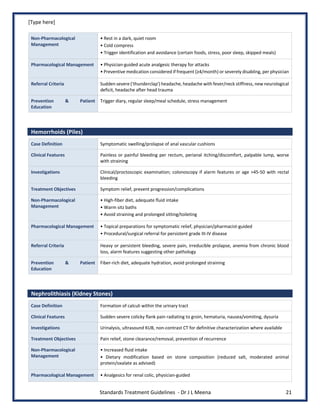
• Rest in a dark, quiet room
• Cold compress
• Trigger identification and avoidance (certain foods, stress, poor sleep, skipped meals)
Pharmacological Management • Physician-guided acute analgesic therapy for attacks
• Preventive medication considered if frequent (≥4/month) or severely disabling, per physician
Referral Criteria Sudden severe ('thunderclap') headache, headache with fever/neck stiffness, new neurological
deficit, headache after head trauma
Prevention & Patient
Education
Trigger diary, regular sleep/meal schedule, stress management
Hemorrhoids (Piles)
Case Definition Symptomatic swelling/prolapse of anal vascular cushions
Clinical Features Painless or painful bleeding per rectum, perianal itching/discomfort, palpable lump, worse
with straining
Investigations Clinical/proctoscopic examination; colonoscopy if alarm features or age >45-50 with rectal
bleeding
Treatment Objectives Symptom relief, prevent progression/complications
Non-Pharmacological
Management
• High-fiber diet, adequate fluid intake
• Warm sitz baths
• Avoid straining and prolonged sitting/toileting
Pharmacological Management • Topical preparations for symptomatic relief, physician/pharmacist-guided
• Procedural/surgical referral for persistent grade III-IV disease
Referral Criteria Heavy or persistent bleeding, severe pain, irreducible prolapse, anemia from chronic blood
loss, alarm features suggesting other pathology
Prevention & Patient
Education
Fiber-rich diet, adequate hydration, avoid prolonged straining
Nephrolithiasis (Kidney Stones)
Case Definition Formation of calculi within the urinary tract
Clinical Features Sudden severe colicky flank pain radiating to groin, hematuria, nausea/vomiting, dysuria
Investigations Urinalysis, ultrasound KUB, non-contrast CT for definitive characterization where available
Treatment Objectives Pain relief, stone clearance/removal, prevention of recurrence
Non-Pharmacological
Management
• Increased fluid intake
• Dietary modification based on stone composition (reduced salt, moderated animal
protein/oxalate as advised)
Pharmacological Management • Analgesics for renal colic, physician-guided
[Type here]
Standards Treatment Guidelines - Dr J L Meena 22
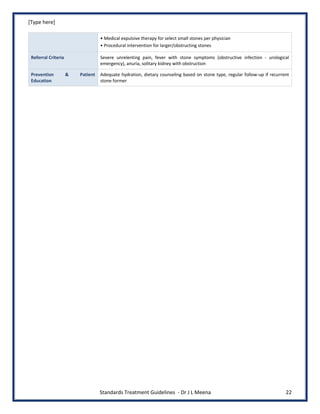
• Medical expulsive therapy for select small stones per physician
• Procedural intervention for larger/obstructing stones
Referral Criteria Severe unrelenting pain, fever with stone symptoms (obstructive infection - urological
emergency), anuria, solitary kidney with obstruction
Prevention & Patient
Education
Adequate hydration, dietary counseling based on stone type, regular follow-up if recurrent
stone former
[Type here]
Standards Treatment Guidelines - Dr J L Meena 23
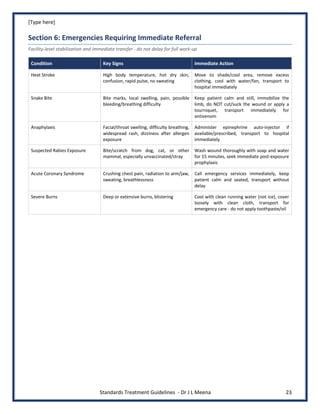
Section 6: Emergencies Requiring Immediate Referral
Facility-level stabilization and immediate transfer - do not delay for full work-up
Condition Key Signs Immediate Action
Heat Stroke High body temperature, hot dry skin,
confusion, rapid pulse, no sweating
Move to shade/cool area, remove excess
clothing, cool with water/fan, transport to
hospital immediately
Snake Bite Bite marks, local swelling, pain, possible
bleeding/breathing difficulty
Keep patient calm and still, immobilize the
limb, do NOT cut/suck the wound or apply a
tourniquet, transport immediately for
antivenom
Anaphylaxis Facial/throat swelling, difficulty breathing,
widespread rash, dizziness after allergen
exposure
Administer epinephrine auto-injector if
available/prescribed, transport to hospital
immediately
Suspected Rabies Exposure Bite/scratch from dog, cat, or other
mammal, especially unvaccinated/stray
Wash wound thoroughly with soap and water
for 15 minutes, seek immediate post-exposure
prophylaxis
Acute Coronary Syndrome Crushing chest pain, radiation to arm/jaw,
sweating, breathlessness
Call emergency services immediately, keep
patient calm and seated, transport without
delay
Severe Burns Deep or extensive burns, blistering Cool with clean running water (not ice), cover
loosely with clean cloth, transport for
emergency care - do not apply toothpaste/oil
[Type here]
Standards Treatment Guidelines - Dr J L Meena 24
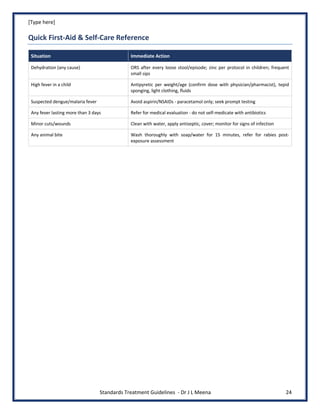
Quick First-Aid & Self-Care Reference
Situation Immediate Action
Dehydration (any cause) ORS after every loose stool/episode; zinc per protocol in children; frequent
small sips
High fever in a child Antipyretic per weight/age (confirm dose with physician/pharmacist), tepid
sponging, light clothing, fluids
Suspected dengue/malaria fever Avoid aspirin/NSAIDs - paracetamol only; seek prompt testing
Any fever lasting more than 3 days Refer for medical evaluation - do not self-medicate with antibiotics
Minor cuts/wounds Clean with water, apply antiseptic, cover; monitor for signs of infection
Any animal bite Wash thoroughly with soap/water for 15 minutes, refer for rabies post-
exposure assessment
[Type here]
Standards Treatment Guidelines - Dr J L Meena 25
References
• National Health Mission (NHM), Ministry of Health and Family Welfare, Government of India - Standard Treatment
Guidelines and program documents
• National Health Systems Resource Centre (NHSRC) - Standard Treatment Guidelines, various state adaptations
• National Tuberculosis Elimination Programme (NTEP), Ministry of Health and Family Welfare - Technical and
Operational Guidelines for TB Control
• National Vector Borne Disease Control Programme (NVBDCP) - Guidelines for Diagnosis and Treatment of Malaria,
Dengue, Chikungunya, and Lymphatic Filariasis
• World Health Organization (WHO) - Guidelines for the Treatment of Malaria; WHO/UNICEF Joint Statement on
Clinical Management of Acute Diarrhoea (ORS and zinc)
• World Health Organization (WHO) - Pocket Book of Hospital Care for Children: Guidelines for the Management of
Common Childhood Illnesses
• Indian Council of Medical Research (ICMR) - Clinical guidance documents and treatment advisories
• Indian Academy of Pediatrics (IAP) - Standard Treatment Guidelines and Immunization Timetable
• Integrated Disease Surveillance Programme (IDSP), National Centre for Disease Control (NCDC) - Outbreak and
disease management guidance
• Directorate General of Health Services (DGHS), Ministry of Health and Family Welfare, Government of India
This document synthesizes and structurally follows the above categories of publicly available national/international guidance for
educational purposes. It is not an official reproduction of any single source and should not be cited as one.
[Type here]
Standards Treatment Guidelines - Dr J L Meena 26
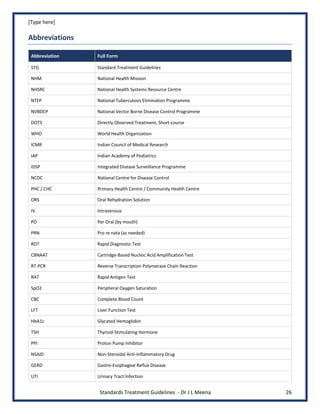
Abbreviations
Abbreviation Full Form
STG Standard Treatment Guidelines
NHM National Health Mission
NHSRC National Health Systems Resource Centre
NTEP National Tuberculosis Elimination Programme
NVBDCP National Vector Borne Disease Control Programme
DOTS Directly Observed Treatment, Short-course
WHO World Health Organization
ICMR Indian Council of Medical Research
IAP Indian Academy of Pediatrics
IDSP Integrated Disease Surveillance Programme
NCDC National Centre for Disease Control
PHC / CHC Primary Health Centre / Community Health Centre
ORS Oral Rehydration Solution
IV Intravenous
PO Per Oral (by mouth)
PRN Pro re nata (as needed)
RDT Rapid Diagnostic Test
CBNAAT Cartridge-Based Nucleic Acid Amplification Test
RT-PCR Reverse Transcription Polymerase Chain Reaction
RAT Rapid Antigen Test
SpO2 Peripheral Oxygen Saturation
CBC Complete Blood Count
LFT Liver Function Test
HbA1c Glycated Hemoglobin
TSH Thyroid-Stimulating Hormone
PPI Proton Pump Inhibitor
NSAID Non-Steroidal Anti-Inflammatory Drug
GERD Gastro-Esophageal Reflux Disease
UTI Urinary Tract Infection
[Type here]
Standards Treatment Guidelines - Dr J L Meena 27
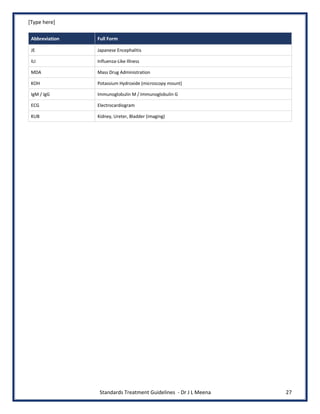
Abbreviation Full Form
JE Japanese Encephalitis
ILI Influenza-Like Illness
MDA Mass Drug Administration
KOH Potassium Hydroxide (microscopy mount)
IgM / IgG Immunoglobulin M / Immunoglobulin G
ECG Electrocardiogram
KUB Kidney, Ureter, Bladder (imaging)
[Type here]
Standards Treatment Guidelines - Dr J L Meena 28
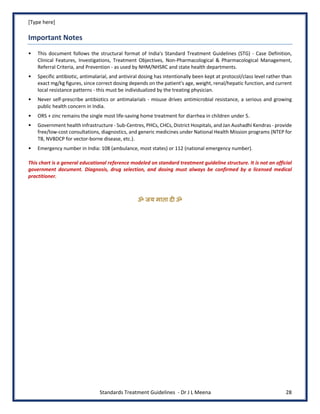
Important Notes
• This document follows the structural format of India's Standard Treatment Guidelines (STG) - Case Definition,
Clinical Features, Investigations, Treatment Objectives, Non-Pharmacological & Pharmacological Management,
Referral Criteria, and Prevention - as used by NHM/NHSRC and state health departments.
• Specific antibiotic, antimalarial, and antiviral dosing has intentionally been kept at protocol/class level rather than
exact mg/kg figures, since correct dosing depends on the patient's age, weight, renal/hepatic function, and current
local resistance patterns - this must be individualized by the treating physician.
• Never self-prescribe antibiotics or antimalarials - misuse drives antimicrobial resistance, a serious and growing
public health concern in India.
• ORS + zinc remains the single most life-saving home treatment for diarrhea in children under 5.
• Government health infrastructure - Sub-Centres, PHCs, CHCs, District Hospitals, and Jan Aushadhi Kendras - provide
free/low-cost consultations, diagnostics, and generic medicines under National Health Mission programs (NTEP for
TB, NVBDCP for vector-borne disease, etc.).
• Emergency number in India: 108 (ambulance, most states) or 112 (national emergency number).
This chart is a general educational reference modeled on standard treatment guideline structure. It is not an official
government document. Diagnosis, drug selection, and dosing must always be confirmed by a licensed medical
practitioner.
ॐ जय माता द( ॐ
[Type here]
Standards Treatment Guidelines - Dr J L Meena 29
[Type here]
Standards Treatment Guidelines - Dr J L Meena 30
[Type here]
Standards Treatment Guidelines - Dr J L Meena 31
[Type here]
Standards Treatment Guidelines - Dr J L Meena 32
[Type here]
Standards Treatment Guidelines - Dr J L Meena 33