Sharof Rashidov SamarkandState University
Faculty of Central Asian Languages and Culture
Department of Philology and Language Teaching: English Language
Group: 204
Topic: THE IMPACT OF SOCIAL MEDIA ON SOCIETY
Done by: Raxmonova Ruxshona
Checked by: Kadirova Feruza
2.
Table of Contents(3-Part Body Structure)
Part 1: History, Connectivity, and the Roots of Division
Part 2: Personal Impact (Mental Health & Privacy) and Economic Shifts
Part 3: Social Change, Governance Challenges, and the Future
3.
Introduction
Social mediahas changed modern society a lot. It has reshaped how
we talk, connect with others, and get news. What started as simple chat
sites has quickly grown into complex platforms that touch every part of
our lives. This presentation looks at the many ways social media affects
us, exploring its good points and the problems it creates. Understanding
these ideas is key to understanding today's world.
4.
Social Media's BigImpact
on Society
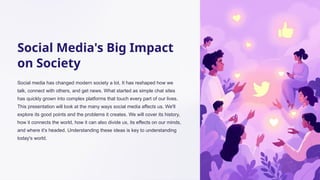
Social media has changed modern society a lot. It has reshaped how we
talk, connect with others, and get news. What started as simple chat sites
has quickly grown into complex platforms that touch every part of our lives.
This presentation will look at the many ways social media affects us. We'll
explore its good points and the problems it creates. We will cover its history,
how it connects the world, how it can also divide us, its effects on our minds,
and where it's headed. Understanding these ideas is key to understanding
today's world.
5.
A Brief History:From Forums to Feeds
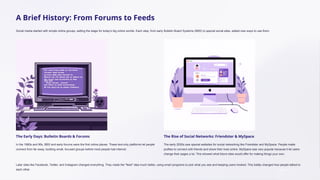
Social media started with simple online groups, setting the stage for today's big online worlds. Each step, from early Bulletin Board Systems (BBS) to special social sites, added new ways to use them.
The Early Days: Bulletin Boards & Forums
In the 1980s and 90s, BBS and early forums were the first online places. These text-only platforms let people
connect from far away, building small, focused groups before most people had internet.
The Rise of Social Networks: Friendster & MySpace
The early 2000s saw special websites for social networking like Friendster and MySpace. People made
profiles to connect with friends and share their lives online. MySpace was very popular because it let users
change their pages a lot. This showed what future sites would offer for making things your own.
Later sites like Facebook, Twitter, and Instagram changed everything. They made the "feed" idea much better, using smart programs to pick what you see and keeping users hooked. This totally changed how people talked to
each other.
6.
Social Media: Connectingthe World
Social media helps people connect worldwide, breaking down what separates us. It creates a global community where different
people talk, share, and work together, building a sense of shared humanity.
Connects Everyone Instantly
Platforms let people talk instantly around
the world, connecting individuals across
continents. This real-time chat changes
how we connect and do business, making
long distances feel short.
Builds Communities with
Shared Interests
Social media helps people find lively
groups based on what they love. These
groups give support, share information,
and help people feel like they belong.
Shares Cultures and Builds
Understanding
By showing users different viewpoints,
social media helps us learn about other
cultures. This breaks down old ideas and
helps us understand each other better.
This power to connect helps with jobs, learning, and helping others, making it easier for groups to work together. It also gives a voice
to many people who didn't have one before.
7.
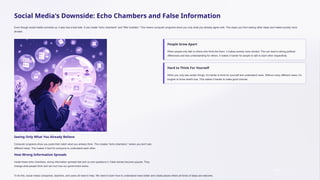
Social Media's Downside:Echo Chambers and False Information
Even though social media connects us, it also has a bad side. It can create "echo chambers" and "filter bubbles." This means computer programs show you only what you already agree with. This stops you from seeing other ideas and makes society more
divided.
Seeing Only What You Already Believe
Computer programs show you posts that match what you already think. This creates "echo chambers," where you don't see
different ideas. This makes it hard for everyone to understand each other.
How Wrong Information Spreads
Inside these echo chambers, wrong information spreads fast and no one questions it. False stories become popular. They
change what people think and can hurt how our government works.
People Grow Apart
When people only talk to others who think like them, it makes society more divided. This can lead to strong political
differences and less understanding for others. It makes it harder for people to talk to each other respectfully.
Hard to Think For Yourself
When you only see certain things, it's harder to think for yourself and understand news. Without many different views, it's
tougher to know what's true. This makes it harder to make good choices.
To fix this, social media companies, teachers, and users all need to help. We need to learn how to understand news better and create places where all kinds of ideas are welcome.
8.
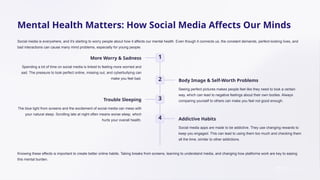
Mental Health Matters:How Social Media Affects Our Minds
Social media is everywhere, and it's starting to worry people about how it affects our mental health. Even though it connects us, the constant demands, perfect-looking lives, and
bad interactions can cause many mind problems, especially for young people.
1
More Worry & Sadness
Spending a lot of time on social media is linked to feeling more worried and
sad. The pressure to look perfect online, missing out, and cyberbullying can
make you feel bad. 2 Body Image & Self-Worth Problems
Seeing perfect pictures makes people feel like they need to look a certain
way, which can lead to negative feelings about their own bodies. Always
comparing yourself to others can make you feel not good enough.
3
Trouble Sleeping
The blue light from screens and the excitement of social media can mess with
your natural sleep. Scrolling late at night often means worse sleep, which
hurts your overall health. 4 Addictive Habits
Social media apps are made to be addictive. They use changing rewards to
keep you engaged. This can lead to using them too much and checking them
all the time, similar to other addictions.
Knowing these effects is important to create better online habits. Taking breaks from screens, learning to understand media, and changing how platforms work are key to easing
this mental burden.
9.
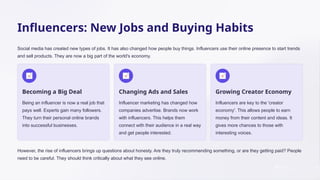
Influencers: New Jobsand Buying Habits
Social media has created new types of jobs. It has also changed how people buy things. Influencers use their online presence to start trends
and sell products. They are now a big part of the world's economy.
Becoming a Big Deal
Being an influencer is now a real job that
pays well. Experts gain many followers.
They turn their personal online brands
into successful businesses.
Changing Ads and Sales
Influencer marketing has changed how
companies advertise. Brands now work
with influencers. This helps them
connect with their audience in a real way
and get people interested.
Growing Creator Economy
Influencers are key to the 'creator
economy'. This allows people to earn
money from their content and ideas. It
gives more chances to those with
interesting voices.
However, the rise of influencers brings up questions about honesty. Are they truly recommending something, or are they getting paid? People
need to be careful. They should think critically about what they see online.
10.
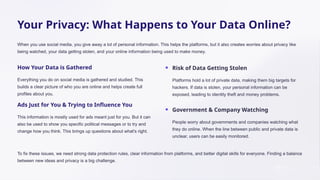
Your Privacy: WhatHappens to Your Data Online?
When you use social media, you give away a lot of personal information. This helps the platforms, but it also creates worries about privacy like
being watched, your data getting stolen, and your online information being used to make money.
How Your Data is Gathered
Everything you do on social media is gathered and studied. This
builds a clear picture of who you are online and helps create full
profiles about you.
Ads Just for You & Trying to Influence You
This information is mostly used for ads meant just for you. But it can
also be used to show you specific political messages or to try and
change how you think. This brings up questions about what's right.
Risk of Data Getting Stolen
Platforms hold a lot of private data, making them big targets for
hackers. If data is stolen, your personal information can be
exposed, leading to identity theft and money problems.
Government & Company Watching
People worry about governments and companies watching what
they do online. When the line between public and private data is
unclear, users can be easily monitored.
To fix these issues, we need strong data protection rules, clear information from platforms, and better digital skills for everyone. Finding a balance
between new ideas and privacy is a big challenge.
11.
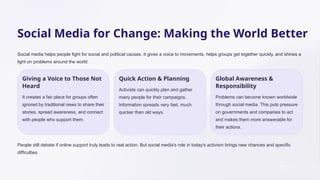
Social Media forChange: Making the World Better
Social media helps people fight for social and political causes. It gives a voice to movements, helps groups get together quickly, and shines a
light on problems around the world.
Giving a Voice to Those Not
Heard
It creates a fair place for groups often
ignored by traditional news to share their
stories, spread awareness, and connect
with people who support them.
Quick Action & Planning
Activists can quickly plan and gather
many people for their campaigns.
Information spreads very fast, much
quicker than old ways.
Global Awareness &
Responsibility
Problems can become known worldwide
through social media. This puts pressure
on governments and companies to act
and makes them more answerable for
their actions.
People still debate if online support truly leads to real action. But social media's role in today's activism brings new chances and specific
difficulties.
12.
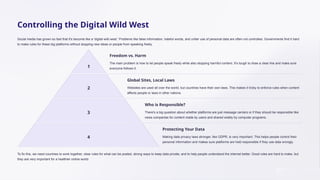
Controlling the DigitalWild West
Social media has grown so fast that it's become like a 'digital wild west.' Problems like false information, hateful words, and unfair use of personal data are often not controlled. Governments find it hard
to make rules for these big platforms without stopping new ideas or people from speaking freely.
1
Freedom vs. Harm
The main problem is how to let people speak freely while also stopping harmful content. It's tough to draw a clear line and make sure
everyone follows it.
2
Global Sites, Local Laws
Websites are used all over the world, but countries have their own laws. This makes it tricky to enforce rules when content
affects people or laws in other nations.
3
Who is Responsible?
There's a big question about whether platforms are just message carriers or if they should be responsible like
news companies for content made by users and shared widely by computer programs.
4
Protecting Your Data
Making data privacy laws stronger, like GDPR, is very important. This helps people control their
personal information and makes sure platforms are held responsible if they use data wrongly.
To fix this, we need countries to work together, clear rules for what can be posted, strong ways to keep data private, and to help people understand the internet better. Good rules are hard to make, but
they are very important for a healthier online world.
13.
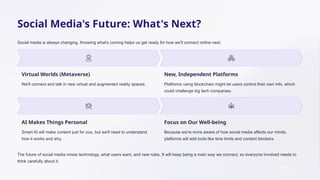
Social Media's Future:What's Next?
Social media is always changing. Knowing what's coming helps us get ready for how we'll connect online next.
Virtual Worlds (Metaverse)
We'll connect and talk in new virtual and augmented reality spaces.
New, Independent Platforms
Platforms using blockchain might let users control their own info, which
could challenge big tech companies.
AI Makes Things Personal
Smart AI will make content just for you, but we'll need to understand
how it works and why.
Focus on Our Well-being
Because we're more aware of how social media affects our minds,
platforms will add tools like time limits and content blockers.
The future of social media mixes technology, what users want, and new rules. It will keep being a main way we connect, so everyone involved needs to
think carefully about it.
14.
Conclusion ✨
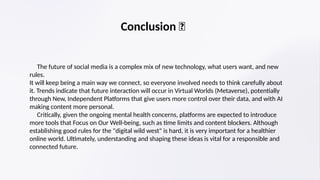
Thefuture of social media is a complex mix of new technology, what users want, and new
rules.
It will keep being a main way we connect, so everyone involved needs to think carefully about
it. Trends indicate that future interaction will occur in Virtual Worlds (Metaverse), potentially
through New, Independent Platforms that give users more control over their data, and with AI
making content more personal.
Critically, given the ongoing mental health concerns, platforms are expected to introduce
more tools that Focus on Our Well-being, such as time limits and content blockers. Although
establishing good rules for the "digital wild west" is hard, it is very important for a healthier
online world. Ultimately, understanding and shaping these ideas is vital for a responsible and
connected future.
15.
References
1.Smith, J. (2022).Social Media Trends and Marketing Strategies. MediaPress.
2.Johnson, L. (2023). The Impact of Social Media on Youth Behavior.
SocialMediaInsights. https://www.socialmediainsights.com/youth-behavior
3.Brown, A. (2021). Marketing in the Age of Social Media. Digital Marketing
Review.
4.Pew Research Center. (2023). Social Media Usage in 2023.
https://www.pewresearch.org/social-media-usage