Social Media Vetting for US Student Visa
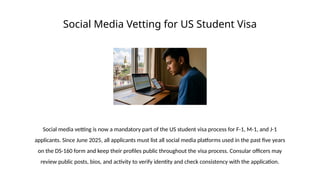
Social media vetting is now a mandatory part of the US student visa process for F-1, M-1, and J-1
applicants. Since June 2025, all applicants must list all social media platforms used in the past five years
on the DS-160 form and keep their profiles public throughout the visa process. Consular officers may
review public posts, bios, and activity to verify identity and check consistency with the application.
What Social Media Vetting Really Means
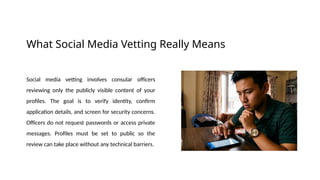
Social media vetting involves consular officers
reviewing only the publicly visible content of your
profiles. The goal is to verify identity, confirm
application details, and screen for security concerns.
Officers do not request passwords or access private
messages. Profiles must be set to public so the
review can take place without any technical barriers.
Policy Changes from 2025 to 2026
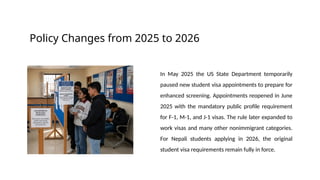
In May 2025 the US State Department temporarily
paused new student visa appointments to prepare for
enhanced screening. Appointments reopened in June
2025 with the mandatory public profile requirement
for F-1, M-1, and J-1 visas. The rule later expanded to
work visas and many other nonimmigrant categories.
For Nepali students applying in 2026, the original
student visa requirements remain fully in force.
What Consular Officers Focus On
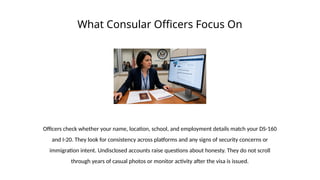
Officers check whether your name, location, school, and employment details match your DS-160
and I-20. They look for consistency across platforms and any signs of security concerns or
immigration intent. Undisclosed accounts raise questions about honesty. They do not scroll
through years of casual photos or monitor activity after the visa is issued.
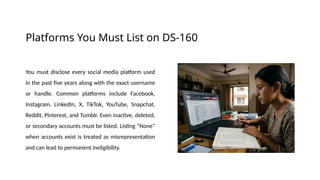
Platforms You Must List on DS-160
You must disclose every social media platform used
in the past five years along with the exact username
or handle. Common platforms include Facebook,
Instagram, LinkedIn, X, TikTok, YouTube, Snapchat,
Reddit, Pinterest, and Tumblr. Even inactive, deleted,
or secondary accounts must be listed. Listing “None”
when accounts exist is treated as misrepresentation
and can lead to permanent ineligibility.
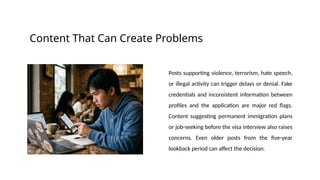
Content That Can Create Problems
Posts supporting violence, terrorism, hate speech,
or illegal activity can trigger delays or denial. Fake
credentials and inconsistent information between
profiles and the application are major red flags.
Content suggesting permanent immigration plans
or job-seeking before the visa interview also raises
concerns. Even older posts from the five-year
lookback period can affect the decision.
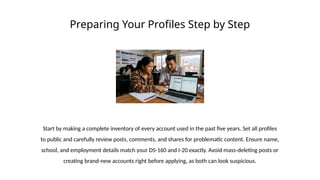
Preparing Your Profiles Step by Step
Start by making a complete inventory of every account used in the past five years. Set all profiles
to public and carefully review posts, comments, and shares for problematic content. Ensure name,
school, and employment details match your DS-160 and I-20 exactly. Avoid mass-deleting posts or
creating brand-new accounts right before applying, as both can look suspicious.
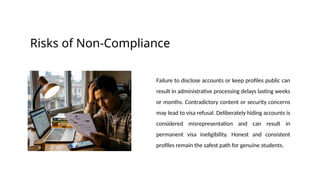
Risks of Non-Compliance
Failure to disclose accounts or keep profiles public can
result in administrative processing delays lasting weeks
or months. Contradictory content or security concerns
may lead to visa refusal. Deliberately hiding accounts is
considered misrepresentation and can result in
permanent visa ineligibility. Honest and consistent
profiles remain the safest path for genuine students.
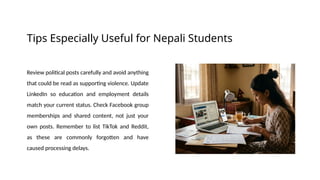
Review political posts carefully and avoid anything
that could be read as supporting violence. Update
LinkedIn so education and employment details
match your current status. Check Facebook group
memberships and shared content, not just your
own posts. Remember to list TikTok and Reddit,
as these are commonly forgotten and have
caused processing delays.
Tips Especially Useful for Nepali Students
Get Expert Help for Your F-1 Application
Proper preparation of social media profiles and the DS-160 is essential for a smooth visa process.
Expert review helps catch inconsistencies and overlooked accounts before submission. Consistent,
honest, and public profiles support a stronger application. Start early so nothing is left to chance. For
the complete details, visit: edwisefoundation.com/social-media-vetting-for-your-u-s-student-visa/