 Explain why customers are important to the
hospitality business
 Describe the needs that hospitality businesses
satisfy
 Explain the importance of quality service
 Describe the two types of hospitality employees
 List the six characteristics of customer-focused
employees
 Indentify the 11 critical moments in customer
service
 Explain the importance of good communication
skills
 Describe methods of handling customer
complaints
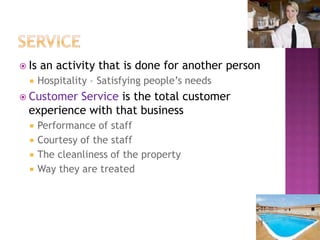
 Is an activity that is done for another person
 Hospitality – Satisfying people’s needs
 Customer Service is the total customer
experience with that business
 Performance of staff
 Courtesy of the staff
 The cleanliness of the property
 Way they are treated
 Someone who purchases products or services
from a business
 Guests – a customer who purchases products or
services from a hospitality business.
 Customer = main reason for hospitality industry
 No customers = NO business = NO PROFITS
 Who are the customers:
 Anybody and everybody
 Diverse – languages, background, disabilities, height,
shape, special needs
 Best way to understand people – empathy – the
ability to put yourself in someone else’s shoes
and know how that person feels
 Empathy – figure out what customer needs
 As a table,
 List some customers needs when they are
away from home.
 Hungry = food
 Hot/thirsty = drink
 Tired = a place to sleep
 People need more than good food, cold
beverages or a comfortable place to sleep
 Welcome
 The quality of feeling welcome is often more
important that the quality of the food or the
comfort of a hotel room
 Hospitality satisfies both physical &
psychological needs of customers
 Abraham Maslow – ranked human needs in order from
most basic to high
 Customer satisfaction – the positive feeling
customers have about a business that meets
their needs
 How is it achieved – training employees in
the art of customer service
 Quality service – service that meets or
exceeds customer expectations
 Treated w/dignity & respect
 Honest money transactions
 Honesty in menus
 Quality service = KEY establishing &
maintaining a success business
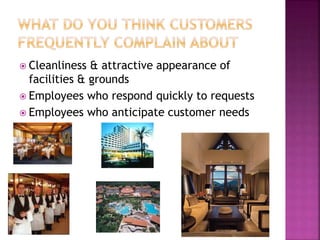
 Cleanliness & attractive appearance of
facilities & grounds
 Employees who respond quickly to requests
 Employees who anticipate customer needs
 Consistent quality service – providing the
same good service & products to customers
each & every time they come to your
business
 Key to success
 Depends on PEOPLE – interactions between
customer & staff member - service
encounter
 Building blocks
 Happens before, during and after
 1st encounter = 1st impression
 Fail or succeed depending on quality of
service
 Why is it so important???
 Talk
 Word-of-mouth publicity – informal
conversation people have about the
experiences with a business
 One of the major ways we find out a business
 90% + unhappy customers will do not return &
will tell at least 9 people
 Flip side = Positive people = FREE publicity
 Two groups
 Front-of-the-House
 The area that guests usually see
 Back-of-the-House
 Area that guest normally do not see
 Heart-of-the-house
 Restaurant -
 Front-of-the-House employees
 Main function is to interact with customers
 Back-of-the-house employees
 Work rarely involves interacting w/customers
 Are front of the house employees the only
ones that need to worry about customer???
 NO
 All employees are responsible for making
sure customers receive the best service
possible
 Customer focused
 All interactions makes an impression
 1st Requirement of quality service
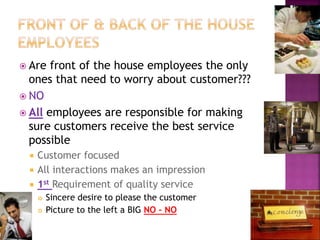
 Sincere desire to please the customer
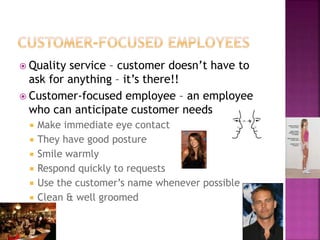
 Picture to the left a BIG NO – NO
 Quality service – customer doesn’t have to
ask for anything – it’s there!!
 Customer-focused employee – an employee
who can anticipate customer needs
 Make immediate eye contact
 They have good posture
 Smile warmly
 Respond quickly to requests
 Use the customer’s name whenever possible
 Clean & well groomed
 Critical moments & handling customers
 Handouts
 Grade Back-of-the House & Front-of-the
house gradebook
 Eye contact
 Make eye contact as soon as the he/she enters
 Often, as you open the door for the customer
 Eye contact – shows a willingness to serve!
 Communicates that you are giving customer your TOTAL attention
 Posture
 Important trait for all
 Employees that customers see should pay particular attention
 Head – up
 Do not stare at the ground or off in space
 Avoid slumping or stooping back
 Face – interested & lively, not bored
 Project an attitude of enthusiasm
 Smile
 Part of the uniform
 Warm smile – respect & readiness to serve, friendly, shows enjoyment
of job
 Respond Quickly
 Respond quickly
 Attitude – positive & business like
 Response – competency, concern for customer &
willingness to help
 Customer’s Name
 When possible
 Restaurants – waiting list – names to be seated
 Bell attendants – front desk
 Feel important & welcome – likely to return to
business
 Well Groomed
 Hospitality image – made by the staff
 EXTREMELY important
 Uniforms regulations
 All service encounters – important
 Certain ones have a greater impact on
customer satisfaction
 Critical moment – time when the customer’s
experience makes a bigger impact on
customer satisfaction than at others
 There are 11, as a table can you name them
 Phone calls
 Guests form an impression based on the way a person answering the
phone treats them
 Rude – no business
 The building entrance
 Set the theme
 Dirty – place is dirty
 People will not enter
 Employees inspect the parking lot, sidewalks, lobby, plants, etc
 You cannot fix the problem – tell someone who can
 Spotless – good impression
 The greeter
 First person guest sees
 Greeting – formal part of the job
 Good Greeter:
 Open the door
 Greet all guests w/in 30 seconds
 “I will be right with you”
 Make all guest feel valued
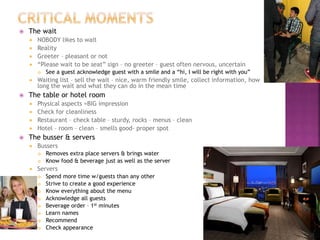
 The wait
 NOBODY likes to wait
 Reality
 Greeter – pleasant or not
 “Please wait to be seat” sign – no greeter – guest often nervous, uncertain
 See a guest acknowledge guest with a smile and a “hi, I will be right with you”
 Waiting list – sell the wait – nice, warm friendly smile, collect information, how
long the wait and what they can do in the mean time
 The table or hotel room
 Physical aspects =BIG impression
 Check for cleanliness
 Restaurant – check table – sturdy, rocks – menus – clean
 Hotel – room – clean – smells good- proper spot
 The busser & servers
 Bussers
 Removes extra place servers & brings water
 Know food & beverage just as well as the server
 Servers
 Spend more time w/guests than any other
 Strive to create a good experience
 Know everything about the menu
 Acknowledge all guests
 Beverage order – 1st minutes
 Learn names
 Recommend
 Check appearance
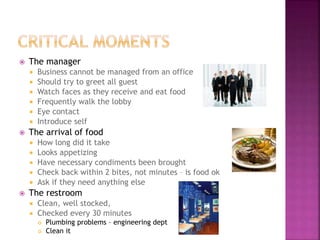
 The manager
 Business cannot be managed from an office
 Should try to greet all guest
 Watch faces as they receive and eat food
 Frequently walk the lobby
 Eye contact
 Introduce self
 The arrival of food
 How long did it take
 Looks appetizing
 Have necessary condiments been brought
 Check back within 2 bites, not minutes – is food ok
 Ask if they need anything else
 The restroom
 Clean, well stocked,
 Checked every 30 minutes
 Plumbing problems – engineering dept
 Clean it
 The check or bill
 sit in restaurants for hours, but when they are ready to leave,
they ARE ready to leave
 Some will bring the check then disappear – not good
 After delivering the check, take a few steps – look back see if guests
are ready to pay – if not – return in 2 minutes
 Hotels – checkout – critical – guests packed, ready to leave
 Check out – smooth & quickly
 Ask pleasant stay???
 Confirm if bill is okay
 Can offer to make reservations for another stay
 Automated checkout – smoother & faster
 The good bye
 last critical moment
 Positive last impressive
 Smile, thank them for their visit
 Invite them back
 SMILE
 Out of the 11 critical moments which are the
top 5 critical moments that your table agrees
upon
 Communication Skills
 Crucial for every employee
 Begins @ top
 Managers – rules, standards & other info.
 Front-of-the-house – must communicate
effectively w/customers & w/coworkers to make
sure things run smoothly
 Back-of-the-house – each other & outside
supplier to create a smooth & efficient operation
 Verbal
 Tone of voice & way you speak
 Proper grammar – not slang
 NEVER use profanity
 Never discuss one customer w/another or coworker
 Written
 Food servers – orders
 Front desk staff – enter information into system
 Nonverbal
 Facial expressions, hand gestures, posture, eye
contact
 Look away – impatience or annoyance
 Ignore them – “we don’t care” attitude, not
important
 Should convey warmth & concern
 Using written communication, write how you
would handle a customer complaint.
 Will Always be
 Key – RESOLVE complaints to customer
satisfaction
 Seven techniques
 Can you name them???
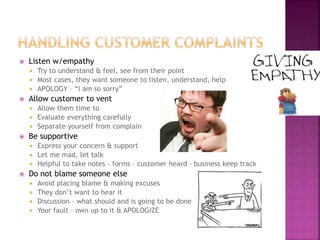
 Listen w/empathy
 Try to understand & feel, see from their point
 Most cases, they want someone to listen, understand, help
 APOLOGY – “I am so sorry”
 Allow customer to vent
 Allow them time to
 Evaluate everything carefully
 Separate yourself from complain
 Be supportive
 Express your concern & support
 Let me mad, let talk
 Helpful to take notes – forms – customer heard – business keep track
 Do not blame someone else
 Avoid placing blame & making excuses
 They don’t want to hear it
 Discussion – what should and is going to be done
 Your fault – own up to it & APOLOGIZE
 Have a positive attitude
 Express positive attitude about the customer & the
relationship with the business
 Do not be negative
 Offer solutions
 Offer one or more
 None acceptable – ask what will it take
 Important – know company’s policies
 Agree on solution
 Follow through
 Personally – make sure it is carried out correctly &
quickly
 Handled poorly – never see them again
 Handled positively – you may have a loyal customer