EMOTIONAL
PROBLEMS
FACED BY
SEAFARERS
UNDERSTANDING MENTAL
HEALTH CHALLENGES AT SEA
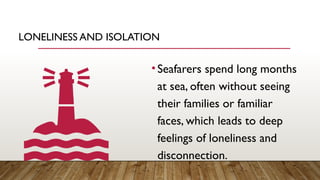
LONELINESS AND ISOLATION
•Seafarers spend long months
at sea, often without seeing
their families or familiar
faces, which leads to deep
feelings of loneliness and
disconnection.
HOMESICKNESS
•Being away from home for
extended periods causes
yearning for family, home-
cooked meals, and the
comfort of one's own
environment.
DEPRESSION
• Persistent sadness, low mood,
and loss of interest in daily
activities are common due to
harsh conditions and
separation from loved ones.
ANXIETY
• Constant worry about family, job
security, or dangers at sea
contributes to heightened anxiety
levels.
STRESS FROM
WORKLOAD
LONGWORKING
HOURS AND
DEMANDING TASKS
CREATE PHYSICAL
AND MENTAL
STRESS, LEADING
TO BURNOUT.
FATIGUE AND
SLEEP
DISORDERS
•Irregular shifts and noise
disturbances can result in
chronic fatigue, poor sleep,
and irritability.
LACK OF
SOCIAL
INTERACTION
•Limited communication
options and language barriers
can reduce meaningful social
contact, making it harder to
form bonds.
MARITAL AND
RELATIONSHIP
STRAIN
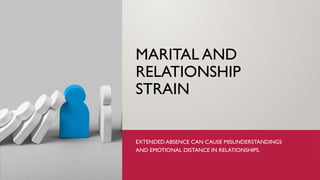
EXTENDED ABSENCE CAN CAUSE MISUNDERSTANDINGS
AND EMOTIONAL DISTANCE IN RELATIONSHIPS.
CULTURAL AND
LANGUAGE
BARRIERS
• Diverse crews with different
languages and customs may
face difficulties in
communication and
understanding.
FEAR OF
ACCIDENTS
OR PIRATES
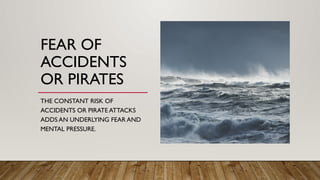
THE CONSTANT RISK OF
ACCIDENTS OR PIRATE ATTACKS
ADDS AN UNDERLYING FEAR AND
MENTAL PRESSURE.
BURNOUT
CONTINUOUS
PHYSICAL AND
EMOTIONAL
EXHAUSTION DUE TO
PROLONGED STRESS
AND OVERWORK.
EMOTIONAL
SUPPRESSION
•Cultural or professional norms may
discourage expressing emotions, leading
to emotional numbness.
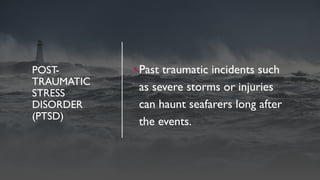
POST-
TRAUMATIC
STRESS
DISORDER
(PTSD)
•Past traumatic incidents such
as severe storms or injuries
can haunt seafarers long after
the events.
LACK OF
MENTAL
HEALTH
SUPPORT
•Limited access to mental
health professionals and
services makes coping with
emotional problems difficult.
ADJUSTMENT
DISORDERS
• Returning home after a long
contract can bring difficulty in
adjusting to life on land, causing
stress and confusion.
SUBSTANCE
ABUSE
•Some seafarers may turn to
alcohol or drugs as a coping
mechanism for emotional
distress.
FEELING OF DETACHMENT FROM LAND LIFE
•Long separation makes seafarers feel
disconnected from everyday life and current
events back home.
GUILT (MISSING
FAMILY EVENTS)
•Missing birthdays,
anniversaries, or emergencies
can cause a deep sense of guilt
and helplessness.
PRESSURE OF
PERFORMANCE
AND DISCIPLINE
• Strict onboard hierarchies and
performance expectations can
lead to high levels of internalized
pressure.
SUICIDAL
THOUGHTS
• When emotional problems
are left unaddressed, some
seafarers may feel hopeless,
leading to suicidal ideation.
DIFFERENT MENTAL PROBLEMS OF SEAFARERS
• Loneliness and Isolation
• Homesickness
• Depression
• Anxiety
• Stress from Workload
• Fatigue and Sleep Disorders
• Lack of Social Interaction

CASE STUDY
"Alone at Sea – The
Story of Chief Mate
Daniel"