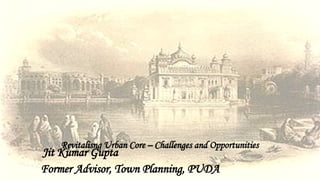
Revitalisng Urban Core – Challenges and Opportunities
Jit Kumar Gupta
Former Advisor, Town Planning, PUDA
Introduction to Cities-
Role, Relevance and
Importance
Cities- Introduction-UN Habitat
State of World’s Cities 2008/2009- Harmonious Cities, defines --
Cities contain both order and chaos.
In them reside beauty and ugliness--virtue and vice.
They can bring out best or worst in human kind.
They are physical manifestation of history and culture
They are incubators of innovations, industry,
technology, entrepreneurship and creativity.
Cities are materialization of humanity’s noblest ideas, ambitions and aspirations,
but when not planned or governed properly, can be repository of society’s ills.
Cities drive national economies by creating wealth,
enhancing social development and providing employment
but they can also be breeding grounds
for poverty, exclusion and environmental degradation..
Cities- Introduction
Cities -have been part of human history.
Cities- known to command power and authority
.Cities- known for both -- positivity and negativities
Cities –also known for their dualities and contradictions
Cities -- known to be areas of concentration of population, vehicles,
institutions, activities, infrastructures, services, healthcare, education
Cities -- known to be Engines of economic growth-70%
Cities – generate employment , wealth and prosperity,
Cities – also known for their negativities,
Cities – where rich and poor rub shoulders-
Cities – consumers of large resources/energy/ land
Consuming 60% global energy , generating 70% waste
– Cities responsible for
•
Cities- Introduction
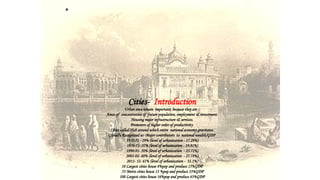
Urban area remain important; because they are :
Areas of concentration of future population, employment & investment.
Housing major infrastructure & services.
Promoters of higher order of productivity
Cities called-Hub around which entire national economy gravitates.
Globally Recognized as -Major contributors to national wealth/GDP
1950-51 - 29% (level of urbanization - 17.29%)
1970-71- 37% (level of urbanization - 19.91%)
1990-91- 50% (level of urbanization - 25.72%)
2001-02- 60% (level of urbanization - 27.78%)
2011- 12- 65% (level of urbanization - 31.1%)
10 Largest cities house 8%pop and produce 15%GDP
53 Metro cities house 13 %pop and produce 33%GDP
100 Largest cities house 16%pop and produce 43%GDP
Cities- Introduction
Looking Historically- Cities grow /expand at undefined speed
Growth of cities is always layered –
Each layer has distinct character
role, relevance & importance
in planning, development ,management of city
Each layer has distinct quality, characteristic pattern of
Living, Working, travel, doing business,
clearly demonstrated by
physical, social. economic, cultural ,structural elements,
built environment
For promoting planned, orderly and rational development -
always valuable will be –
to study, analyze , understand
different urban layers in general and
inner layer in particular
City Core/Walled City-
Definitions and
Characteristics
.
Walled Cities/Core City
Walled/ Urban Core
–remain different and distinct
No two cores are similar
Urban Cores have its
typical character , culture, structure,
Based on which ;Walled city /Core areas
Based on these peculiarities , they offer
numerous Development challenges &
Innovative planning opportunities
Walled City/Urban Core
1. A core/ walled city is the historical and central part of a city
that is fully enclosed by defensive walls,
serving as the original urban settlement with
cultural, administrative, and economic significance.
2. A walled city refers to the central urban zone
historically surrounded by continuous walls
that defined the city’s boundaries, controlled access and protected inhabitants. –
-- wall were not merely military structures;
-- they shaped daily life, including housing, markets, religious sites, and administrative
buildings, creating a self-contained urban system where streets, public spaces, and
institutions developed within the enclosure.
Residents lived permanently inside, and the area functioned as a hub
of social, economic, and cultural activity.
Walled Cities/Core City-Characteristics-
Showcasing Origin of settlement, -
Marked by historicity and Centrality
Having Well defined Boundaries-- physical features/walls
Approached by Controlled access.
- Forming Heart & soul of City
- defining Physical, social, economic, cultural Physical features
Introvert planning,
high density/intensity -growth & development-
Self-Contained in day –to-day living/
having well defined urban system marked by -
distinct cultural, administrative & economic identity/significance
hub of trade & commerce -shaping daily life,
housing valuable heritage –tangible & non-tangible
–marked by narrow roads/streets
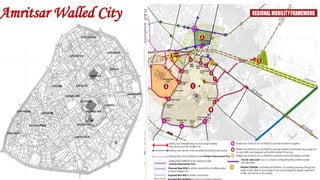
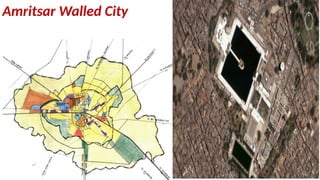
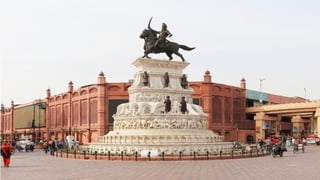
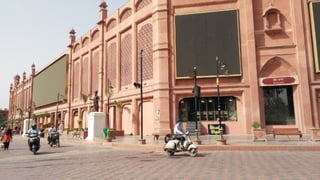
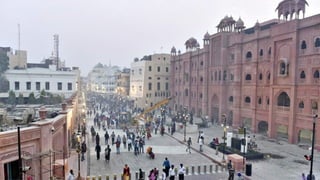
Amritsar Walled City
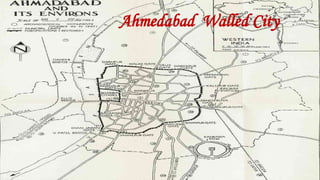
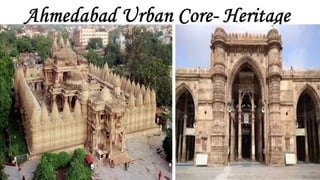
Ahmedabad Walled City
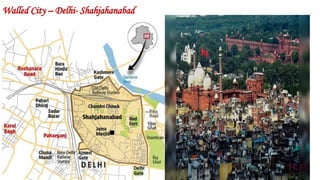
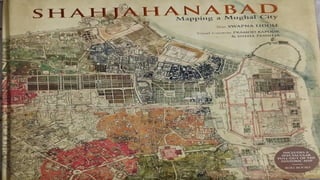
Walled City – Delhi- Shahjahanabad
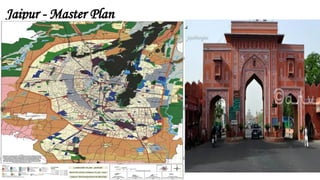
Walled City- Jaipur
Jaipur - Master Plan
Core- City
Positivities and Challenges
Walled City/Urban Core-Positivities;
Remain Valuable- Historically& Culturally
Function as Heart and soul of city
Operates as Nerve Centre of the city,
Gives a distinct character & identity to city,
Operate as Hub of trade & commerce- Makes large contribution to urban economy,
House large volume of heritage,
Generate large proportion of employment,
Ensure Self-sufficiency in day to day living,
promoting proximity of living & working- Mixed land use
providing easy access to basic amenities of life ,
Marked by Social Vibrancy,
attracting large number of tourists,
Walled City- Challenges
- House large population,
known for high density & congestion,
overcrowding of people on land&
overcrowding of buildings on land,
marked by narrow roads,
large scale unplanned sub-division of land,
Having high degree of obsolesce -Incompatible land-uses
large scale reconstruction of buildings, high land values,
large scale commercialization of buildings/land,
increased urbanisation, limited holding capacity,
Walled City- Challenges
lack of open spaces,
large conversion of land uses,
absence of adequately trained manpower & resources , capacity , capability
lack of will on part of ULBs, local communities & elected representatives
--to mange core areas,
Inadequate infrastructures- quantitively and qualitatively; Aging
infrastructures.
Increasing conflicts between heritage identification, conservation , building
bye-laws, development controls
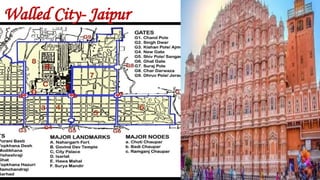
Walled Cities-Challenges; ,
large scale encroachment on public land/buildings
Changing Travel modes ;
Ever -increasing traffic congestion
Irrational Widening of access/internal roads
Creating large Parking Spaces
Encroaching Public land
Marginalizing Art, Architecture, Heritage
Absence of well- defined /dedicated policy
for protecting core areas,
Marginalisation of Local communities
Revitalising Core- City
Strategies
Transform Walled Cities into Active Living Areas Rather than
Freezing them- UNESCO
Walled Cities- Planning Strategies-Layering
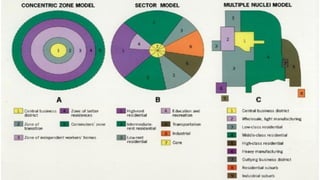
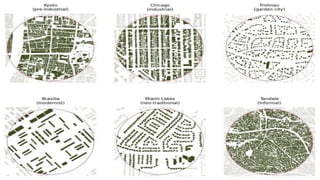
Looking at pattern of urban growth / development
Cities remain dissected into different layers-
Each layer remaining different, distinct & unique
Having distinct positivity and negativities
For rational planning- Each layer must be considered differently /distinctly
based on-
- origin, growth, physical, social. economic, cultural, structural qualities of cities & existing
typology of built environment
- depending upon its distinct character, specific issues, challenges and opportunities
For preserving unique identity /Character of city
– Core areas with unique identity
remain valuable for cities to make them
more productive, sustainable, livable , inclusive
For rational planning- Urban Core/walled city- needs to be classified as special area / Zone
Urban Core, must be planned, wih care /Caution
Walled Cities- Planning Strategies -SWOT
Considering complexity and uniqueness of Cities
Urban cores need
detailed mapping, study, documentation and analysis of
physical, social, economic structure
Besides carrying out detailed SWOT analysis
Detailed studies and analysis – would helps in identifying
-- existing positivities and negativities,
-prevailing dualities and contradiction
Understanding
urban form,
physical, social, economic structure,
culture , social fabrics , identity,
demography, infrastructures, services
Strategies- Preparing Development Plan
Based on detailed studies made& analysis carried out&
-supported by dedicated planning & development strategies;
- a Development plan for Urban core should be prepared
-Focusing on
maintaining ,preserving , conserving
&making value addition to unique /basic character of city
addressing prevailing challenges -optimizing opportunities
Leveraging Positivities- Overcoming Negativities– --
- Making /Empowering Urban core- socially, economically ,
environmentally more vibrant
Avoiding any attempt to --freeze the city
Planning Strategies –Conservative Surgery
Considering long time span of existence
Cities invariably -face dereliction/decay/unplanned development
marginalization of areas/structures
Identifying derelict area and redefining development
- Opting for Conservative Surgery --remains best option
for eliminating derelict /decayed area
Eliminate unplanned/unauthorized sub-division of land
Regulating new construction
Avoiding conflicts between new and old
Integrating old & new construction
-- Retaining valuable elements in development
based on Involving local communities
Walled Cities- Planning Strategies-Valuing Heritage
-Urban Core are known for heritage – tangible and intangible
Urban Core known for heritage values of built environment
Development Strategy for Urban core must be built on
- identifying, Preserving, Conserving, Promoting, Enhancing Heritage
-- Making Value addition to;
--religious, cultural, commercial ambiance
- improving quality of life &productivity of urban core
--Promoting adaptive Reuse of heritage Buildings
-Avoiding freezing of buildings
- Promoting Heritage based Tourism, industry, involving local communities
-Organising Heritage Walks--Carefully defining heritage Regulations, Building bye- Laws & Development Controls
Walled Cities- Planning Strategies –Traffic
Promote Urban core planning -focusing on people- not vehicles
promoting accessibility -not mobility
Minimize vehicular traffic
Promote Pedestrianization
Keeping traffic on fringe of urban core
Maintaining existing pedestrian character
Avoiding widening roads,
Minimizing induction of vehicles,
Minimizing parking
Converting roads into streets
Converting parking into green spaces
Adding landscape of public spaces & increasing sitting space
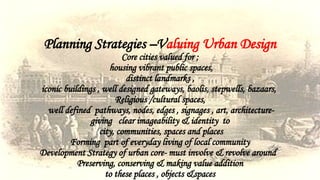
Planning Strategies –Valuing Urban Design
Core cities valued for ;
housing vibrant public spaces,
distinct landmarks ,
iconic buildings , well designed gateways, baolis, stepwells, bazaars,
Religious /cultural spaces,
well defined pathways, nodes, edges , signages , art, architecture-
giving clear imageability & identity to
city, communities, spaces and places
Forming part of everyday living of local community
Development Strategy of urban core- must involve & revolve around
Preserving, conserving & making value addition
to these places , objects &spaces
Revitalisng Urban Core- Case studies-
Amritsar
Delhi
Ahmedabad
Amritsar Walled Cities- Planning Strategies
Occupied merely 2.5% area , holding 16% of population of city.
Having unique quality of growth/ development.
-- major cultural and religious landmarks.
hub of trade , commerce
Heart , soul of city-‘ of Amritsar City.
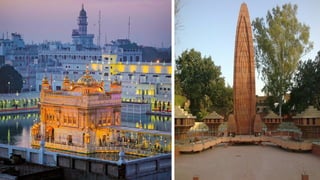
Housing— Golden Temple, Jallianwala Bagh,
Katras, Bungas, Haveli, narrow streets , specialized markets,
Marked with high degree of congestion-
facing acute problem of traffic & Transportation
City opted for Widening approach roads to GT/JB
Constructed Multi-storeyed parking
Faced Large scale sub-division of land
Large scale demolition of historic buildings
Amritsar Walled Cities- Planning Strategies
Master Plan Amritsar 2025 proposed
-Declaring walled city - Special Area
with planning/ Development based on-
Preserving, enhancing basic character of Walled City
Promoting quality of life
improving, upgrading ,providing adequate infrastructure and services.
Undertaking selective de-congestion of walled city
shifting wholesale /bulk material markets
to identified planned areas outside the Walled City
eliminating s unauthorized sub-division of land & change of land use
Promoting revitalization -- by opting conservative surgery.
Framing detailed “Urban Design Guidelines”
for promoting and enhancing quality of urban spaces& Heritage Buildings”
•
Walled Cities Amritsar - Planning Strategies
also suggested
metalled roads replaced by pavements for pedestrianization to restore old aura
—supplemented by large scale landscaping
- making overhead wires underground .
- Closely multi-storeyed, parking
- for minimizing damage to Golden Temple -due to carbon emissions generated by vehicles
- Converting Existing Parking into open spaces
Creating parking outside twelve gates --
vehicular traffic allowed on circular road.
Adding Appropriate designed Signages,
Replacing hoardings , advertisement to minimize visual pollution.
Giving facelift by reshaping facades involving eminent urban designers.
Making urban core tourism hub by-
encouraging people to offer bed and breakfast facilities
-help tourists- to stay longer ;enjoy Amritsary food,
understand , appreciate Amritsar living , warmth of Punjabi hospitality.
Walled Cities- Planning Strategies Delhi
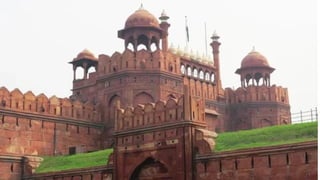
-Shahjahanabad (Walled City).
1. Increased commercialization- with improved accessibility due to MRTS.
2.Regulating / shifting-- noxious / hazardous- wholesale trades/ industrial activity
3. Conserving heritage value while retaining residential character.
4. Redeveloping katras on priority
5. Redefining building control regulations- based on :
i. Tradable FAR.- for Area surrendered for public facilities heritage value -
ii . Restructuring Street pattern: with linkages from metro stations;
prioritizing road widening - dictated by fire/ other disaster management;
iii Streets 30m to 50m lengths-min.width 3m ;Streets > 50m length --min width 4.5m
4.CreatingCommon facilities linked to pedestrian roads / metro stations.
5 . Preparing Integrated Redevelopment Scheme; with higher FAR -subject to heritage controls,
parking, facilitating emergency vehicles, basic service
Walled Cities/Core City-Ahmedabad
Urban Core /walled City - represents oldest part of city,
retaining its historic identity
-including twelve medieval gates and
several self-contained neighborhoods called pols,
providing security, community living, and shared resources.
Urban Core-host heritage buildings, temples, mosques’
, civic institutions,
reflecting centuries of urban continuity.
core walled city form heart of a city’s historical & cultural heritage,
defined by its enclosing walls,
dense urban fabric,
performing multifunctional role in administration, commerce, and community life.
Remains a living part of city,
balancing preservation with modern urban needs
--
Walled Cities- Ahmedabad
1.Creating dedicated Regulations for heritage city
- designed to protect/ preserve city's rich cultural / historical legacy.
Ensuring heritage city remains a vibrant / culturally rich place for future generations.
2. Dividing City into heritage values- based on
protected structures/ buildings that must be conserved.
3. Specifying permissible uses , conservation measures for these areas.
4. Levying Impact Fees: used for clearing illegal works in heritage homes after consulting,
Heritage Department / Heritage Conservation Committee.
5. Preparing Cultural Heritage Management Plan (CHMP): defining policies, legal / regulatory
frameworks, baseline data, planning / design based on city's cultural heritage.
6. Granting Heritage Transfer Development Rights (HTDR): for supporting conservation of
privately owned properties within old city of Ahmedabad--
Revitalising Core-
Conclusions
•
Conclusions-Walled Cities- Planning Strategies
-Need Accurate mapping of core area
documenting physical, social, economic structures
-Carrying out a Swot Analysis
Declaring core area a special planning, economic ,social zone of city
-prepare a dedicated Master Plan- based on urban design/heritage/landscaping
Avoid inducting vehicular traffic within walled city -confining traffic on periphery
- Avoid widening roads-Promote Predestination
-Minimise overcrowding and congestion- Create more open spaces
-Convert roads into streets & parking spaces into green spaces
-Use landscaping for bringing greenery and making value addition to public spaces
-Identify Heritage – natural/manmade and protect heritage
-Use Conservative Surgery optionto revitalize core city
-Remove obsolesce by removing dilapidated buildings/structure
-Eliminate unplanned/unauthorized Change of land use/sub-division of land
-Minimise change in building footprints /height/vocabulary
•
Conclusion--Walled Cities- Planning Strategies
-Minimise land speculation
-Minimise change in building footprints /height/vocabulary
- Improve basic infrastructures /services/amenities
-Redefine building bye-laws and development Controls
-Don't freeze city-
permit adaptable use of buildings
-Create a dedicated policy, dedicated cell & dedicated agency within Ulbs/Development Authority -with adequate
power /resources-
for managing core areas
- Involving Communities
- Promoting Tourism
- Displaying Signages
-Involving social media- showcasing walled city
Holding exhibitions/dedicated festivals to celebrate history, culture of city
-Involving educational Institutions
Incentivise innovations and innovators- making value addition to core city
Revitalising Urban Core: Challenges, Opportunities, and Planning Strategies for Sustainable City Development