RECENT ADVANCES IN ANTI-HISTAMINES
(H-3 AND H-4 RECEPTOR ANTAGONISTS)
1
Dr. Akhil Nagar
RC Patel Institute of Pharmaceutical
Education and Research
Histamine:
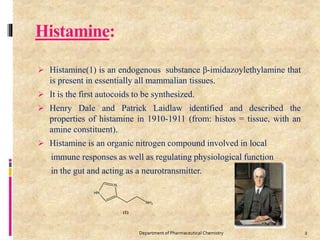
 Histamine(1) is an endogenous substance β-imidazoylethylamine that
is present in essentially all mammalian tissues.
 It is the first autocoids to be synthesized.
 Henry Dale and Patrick Laidlaw identified and described the
properties of histamine in 1910-1911 (from: histos = tissue, with an
amine constituent).
 Histamine is an organic nitrogen compound involved in local
immune responses as well as regulating physiological function
in the gut and acting as a neurotransmitter.
2Department of Pharmaceutical Chemistry
Synthesis of histamine:
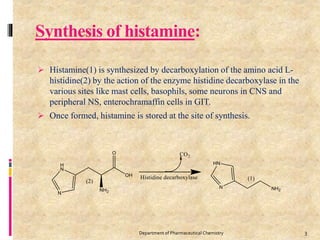
 Histamine(1) is synthesized by decarboxylation of the amino acid L-
histidine(2) by the action of the enzyme histidine decarboxylase in the
various sites like mast cells, basophils, some neurons in CNS and
peripheral NS, enterochramaffin cells in GIT.
 Once formed, histamine is stored at the site of synthesis.
3Department of Pharmaceutical Chemistry
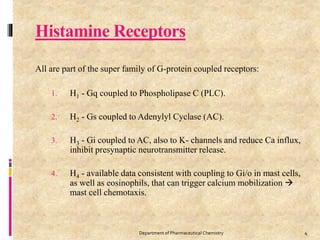
Histamine Receptors
All are part of the super family of G-protein coupled receptors:
1. H1 - Gq coupled to Phospholipase C (PLC).
2. H2 - Gs coupled to Adenylyl Cyclase (AC).
3. H3 - Gi coupled to AC, also to K- channels and reduce Ca influx,
inhibit presynaptic neurotransmitter release.
4. H4 - available data consistent with coupling to Gi/o in mast cells,
as well as eosinophils, that can trigger calcium mobilization 
mast cell chemotaxis.
4Department of Pharmaceutical Chemistry
Receptors: Distribution and Function
5Department of Pharmaceutical Chemistry
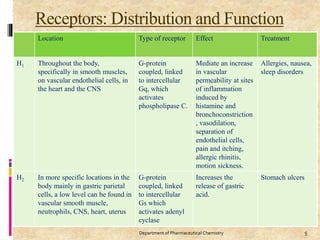
Location Type of receptor Effect Treatment
H1 Throughout the body,
specifically in smooth muscles,
on vascular endothelial cells, in
the heart and the CNS
G-protein
coupled, linked
to intercellular
Gq, which
activates
phospholipase C.
Mediate an increase
in vascular
permeability at sites
of inflammation
induced by
histamine and
bronchoconstriction
, vasodilation,
separation of
endothelial cells,
pain and itching,
allergic rhinitis,
motion sickness.
Allergies, nausea,
sleep disorders
H2 In more specific locations in the
body mainly in gastric parietal
cells, a low level can be found in
vascular smooth muscle,
neutrophils, CNS, heart, uterus
G-protein
coupled, linked
to intercellular
Gs which
activates adenyl
cyclase
Increases the
release of gastric
acid.
Stomach ulcers
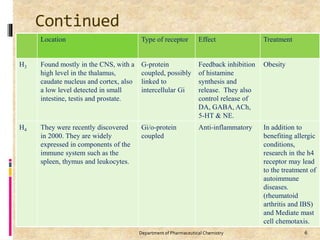
Location Type of receptor Effect Treatment
H3 Found mostly in the CNS, with a
high level in the thalamus,
caudate nucleus and cortex, also
a low level detected in small
intestine, testis and prostate.
G-protein
coupled, possibly
linked to
intercellular Gi
Feedback inhibition
of histamine
synthesis and
release. They also
control release of
DA, GABA, ACh,
5-HT & NE.
Obesity
H4 They were recently discovered
in 2000. They are widely
expressed in components of the
immune system such as the
spleen, thymus and leukocytes.
Gi/o-protein
coupled
Anti-inflammatory In addition to
benefiting allergic
conditions,
research in the h4
receptor may lead
to the treatment of
autoimmune
diseases.
(rheumatoid
arthritis and IBS)
and Mediate mast
cell chemotaxis.
Continued
Department of Pharmaceutical Chemistry 6
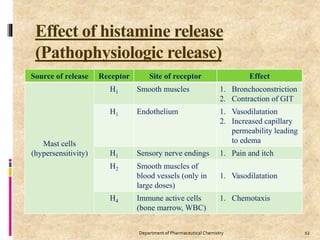
Effect of histamine release
(Pathophysiologic release)
Source of release Receptor Site of receptor Effect
Mast cells
(hypersensitivity)
H1 Smooth muscles 1. Bronchoconstriction
2. Contraction of GIT
H1 Endothelium 1. Vasodilatation
2. Increased capillary
permeability leading
to edema
H1 Sensory nerve endings 1. Pain and itch
H2 Smooth muscles of
blood vessels (only in
large doses)
1. Vasodilatation
H4 Immune active cells
(bone marrow, WBC)
1. Chemotaxis
12Department of Pharmaceutical Chemistry
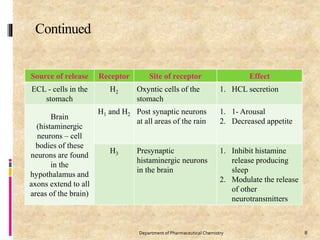
Continued
Source of release Receptor Site of receptor Effect
ECL - cells in the
stomach
H2 Oxyntic cells of the
stomach
1. HCL secretion
Brain
(histaminergic
neurons – cell
bodies of these
neurons are found
in the
hypothalamus and
axons extend to all
areas of the brain)
H1 and H2 Post synaptic neurons
at all areas of the rain
1. 1- Arousal
2. Decreased appetite
H3 Presynaptic
histaminergic neurons
in the brain
1. Inhibit histamine
release producing
sleep
2. Modulate the release
of other
neurotransmitters
8Department of Pharmaceutical Chemistry
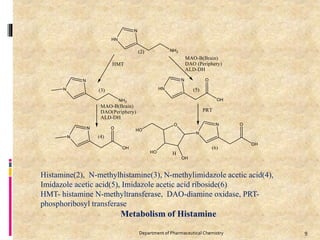
Department of Pharmaceutical Chemistry 9
Histamine(2), N-methylhistamine(3), N-methylimidazole acetic acid(4),
Imidazole acetic acid(5), Imidazole acetic acid riboside(6)
HMT- histamine N-methyltransferase, DAO-diamine oxidase, PRT-
phosphoribosyl transferase
Metabolism of Histamine
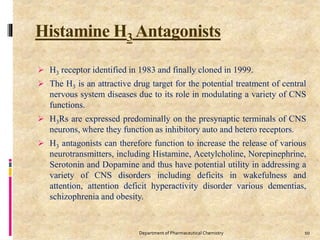
Histamine H3 Antagonists
 H3 receptor identified in 1983 and finally cloned in 1999.
 The H3 is an attractive drug target for the potential treatment of central
nervous system diseases due to its role in modulating a variety of CNS
functions.
 H3Rs are expressed predominally on the presynaptic terminals of CNS
neurons, where they function as inhibitory auto and hetero receptors.
 H3 antagonists can therefore function to increase the release of various
neurotransmitters, including Histamine, Acetylcholine, Norepinephrine,
Serotonin and Dopamine and thus have potential utility in addressing a
variety of CNS disorders including deficits in wakefulness and
attention, attention deficit hyperactivity disorder various dementias,
schizophrenia and obesity.
10Department of Pharmaceutical Chemistry
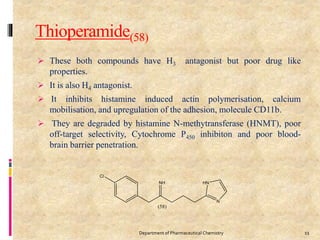
Thioperamide(58)
 These both compounds have H3 antagonist but poor drug like
properties.
 It is also H4 antagonist.
 It inhibits histamine induced actin polymerisation, calcium
mobilisation, and upregulation of the adhesion, molecule CD11b.
 They are degraded by histamine N-methytransferase (HNMT), poor
off-target selectivity, Cytochrome P450 inhibiton and poor blood-
brain barrier penetration.
11Department of Pharmaceutical Chemistry
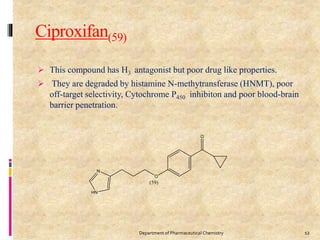
Ciproxifan(59)
 This compound has H3 antagonist but poor drug like properties.
 They are degraded by histamine N-methytransferase (HNMT), poor
off-target selectivity, Cytochrome P450 inhibiton and poor blood-brain
barrier penetration.
12Department of Pharmaceutical Chemistry
13
Histamine receptors –
H1- Allergic responses. Watery eyes, congestion, etc. from allergies.
Anaphylaxis – bronchial larynx constriction.
Skin allergic response – reddening, rashes, welts.
Edema from injury.
H2 – Gastric secretion. Important for ulcer treatment and acid reflux
H3 – CNS receptors. There are also H1 receptors in the CNS.
Antihistamines are also used for motion sickness. In general their
antimuscarinic effects are similar to that of scopolamine, although weaker.
14
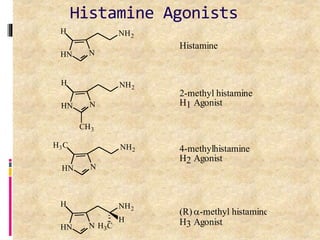
HN N
NH2
H
HN N
NH2
H
CH3
HN N
NH2
H3C
HN N
NH2
H
H
H3C
(R)-methyl histamine
H3 Agonist
4-methylhistamine
H2 Agonist
2-methyl histamine
H1 Agonist
Histamine
Histamine Agonists
15
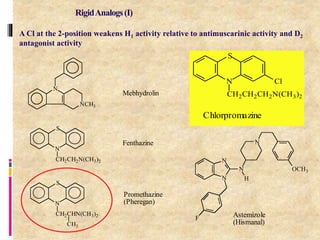
A Cl at the 2-position weakens H1 activity relative to antimuscarinic activity and D2
antagonist activity
N
NCH3
N
S
CH2CH2N(CH3)2
N
S
CH2CHN(CH3)2
CH3
Mebhydrolin
Fenthazine
Promethazine
(Pheregan)
N
S
CH2CH2CH2N(CH3)2
Cl
Chlorpromazine
N
N
N
N
OCH3
H
F Astemizole
(Hismanal)
RigidAnalogs(I)
16
Cl
O OCH2CH3
N
N
CH3
N
S
Cl
N
N
H
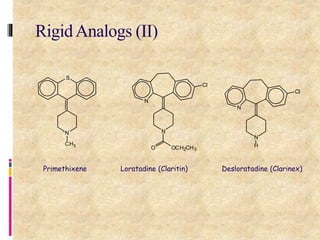
Primethixene Loratadine (Claritin) Desloratadine (Clarinex)
RigidAnalogs (II)
17
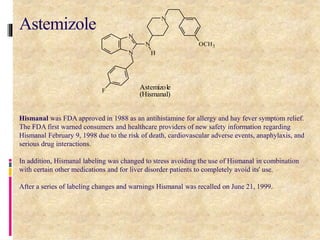
Hismanal was FDA approved in 1988 as an antihistamine for allergy and hay fever symptom relief.
The FDA first warned consumers and healthcare providers of new safety information regarding
Hismanal February 9, 1998 due to the risk of death, cardiovascular adverse events, anaphylaxis, and
serious drug interactions.
In addition, Hismanal labeling was changed to stress avoiding the use of Hismanal in combination
with certain other medications and for liver disorder patients to completely avoid its' use.
After a series of labeling changes and warnings Hismanal was recalled on June 21, 1999.
N
N
N
N
OCH3
H
F Astemizole
(Hismanal)
Astemizole
18
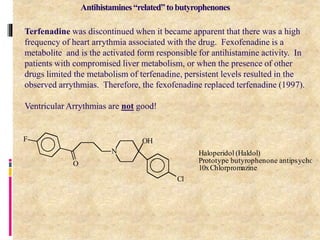
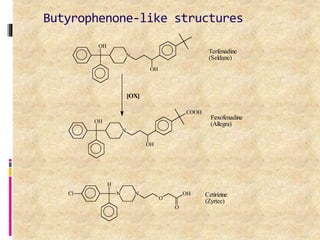
Terfenadine was discontinued when it became apparent that there was a high
frequency of heart arrythmia associated with the drug. Fexofenadine is a
metabolite and is the activated form responsible for antihistamine activity. In
patients with compromised liver metabolism, or when the presence of other
drugs limited the metabolism of terfenadine, persistent levels resulted in the
observed arrythmias. Therefore, the fexofenadine replaced terfenadine (1997).
Ventricular Arrythmias are not good!
N
OH
O
Cl
F
Haloperidol (Haldol)
Prototype butyrophenone antipsychotic
10xChlorpromazine
Antihistamines“related”tobutyrophenones
19
N
OH
OH
N
OH
COOH
OH
[OX]
Terfenadine
(Seldane)
Fexofenadine
(Allegra)
N N
H
O
Cl OH
O
Cetirizine
(Zyrtec)
Butyrophenone-like structures
20
O
N
CH3
CH3
N
N
CH3
Cl
N
Cl
NH
N
N
OCl
OH
O
Diphenhydramine
Meclizine
Desloratadine
Cetirizine
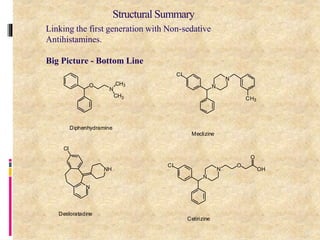
Linking the first generation with Non-sedative
Antihistamines.
Big Picture - Bottom Line
Structural Summary
Recent advance in Antihistaminic agents
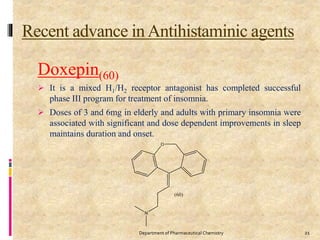
Doxepin(60)
 It is a mixed H1/H2 receptor antagonist has completed successful
phase III program for treatment of insomnia.
 Doses of 3 and 6mg in elderly and adults with primary insomnia were
associated with significant and dose dependent improvements in sleep
maintains duration and onset.
21Department of Pharmaceutical Chemistry
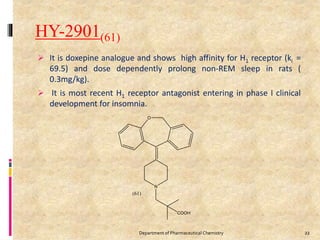
 It is doxepine analogue and shows high affinity for H1 receptor (ki =
69.5) and dose dependently prolong non-REM sleep in rats (
0.3mg/kg).
 It is most recent H1 receptor antagonist entering in phase I clinical
development for insomnia.
HY-2901(61)
22Department of Pharmaceutical Chemistry
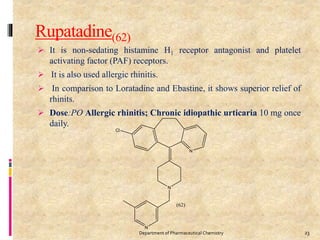
Rupatadine(62)
 It is non-sedating histamine H1 receptor antagonist and platelet
activating factor (PAF) receptors.
 It is also used allergic rhinitis.
 In comparison to Loratadine and Ebastine, it shows superior relief of
rhinits.
 Dose:PO Allergic rhinitis; Chronic idiopathic urticaria 10 mg once
daily.
23Department of Pharmaceutical Chemistry
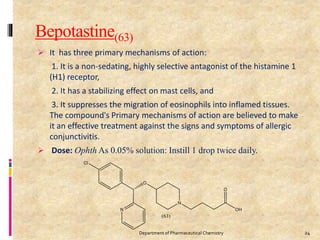
Bepotastine(63)
 It has three primary mechanisms of action:
1. It is a non-sedating, highly selective antagonist of the histamine 1
(H1) receptor,
2. It has a stabilizing effect on mast cells, and
3. It suppresses the migration of eosinophils into inflamed tissues.
The compound's Primary mechanisms of action are believed to make
it an effective treatment against the signs and symptoms of allergic
conjunctivitis.
 Dose: Ophth As 0.05% solution: Instill 1 drop twice daily.
24Department of Pharmaceutical Chemistry
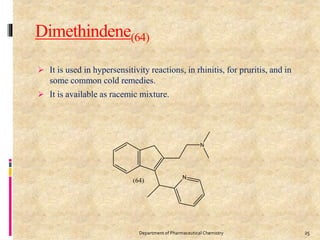
Dimethindene(64)
 It is used in hypersensitivity reactions, in rhinitis, for pruritis, and in
some common cold remedies.
 It is available as racemic mixture.
25Department of Pharmaceutical Chemistry
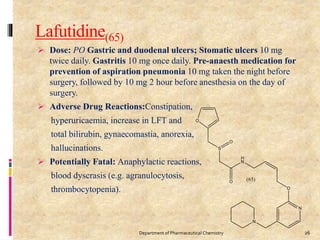
Lafutidine(65)
 Dose: PO Gastric and duodenal ulcers; Stomatic ulcers 10 mg
twice daily. Gastritis 10 mg once daily. Pre-anaesth medication for
prevention of aspiration pneumonia 10 mg taken the night before
surgery, followed by 10 mg 2 hour before anesthesia on the day of
surgery.
 Adverse Drug Reactions:Constipation,
hyperuricaemia, increase in LFT and
total bilirubin, gynaecomastia, anorexia,
hallucinations.
 Potentially Fatal: Anaphylactic reactions,
blood dyscrasis (e.g. agranulocytosis,
thrombocytopenia).
26Department of Pharmaceutical Chemistry
Recent advance in H3 antagonists
1. Sleep/wake
 Narcolepsy is disabling sleep disorder characterized by excessive
daytime sleepiness and sudden loss of muscle tone (catalepsy).
 Antagonism of H3Rs is anticipated to increased activation of central
H1Rs through various mechanism like control over release of
histamine.
 Antagonism of H3Rs is not only reduce excessive somnolence, but
also prevent inappropriate transitions into paradoxical sleep states
thought to underlie cataleptic episodes.
27Department of Pharmaceutical Chemistry
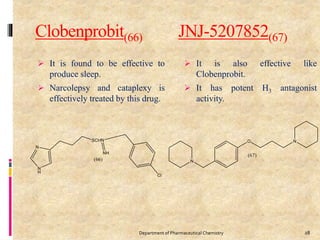
Clobenprobit(66) JNJ-5207852(67)
 It is found to be effective to
produce sleep.
 Narcolepsy and cataplexy is
effectively treated by this drug.
 It is also effective like
Clobenprobit.
 It has potent H3 antagonist
activity.
28Department of Pharmaceutical Chemistry
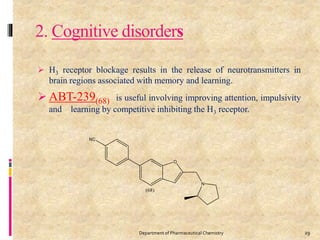
2. Cognitive disorders
 H3 receptor blockage results in the release of neurotransmitters in
brain regions associated with memory and learning.
 ABT-239(68) is useful involving improving attention, impulsivity
and learning by competitive inhibiting the H3 receptor.
29Department of Pharmaceutical Chemistry
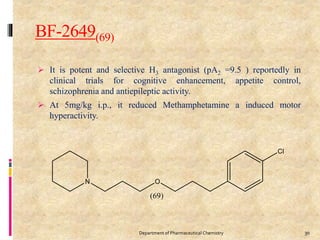
BF-2649(69)
 It is potent and selective H3 antagonist (pA2 =9.5 ) reportedly in
clinical trials for cognitive enhancement, appetite control,
schizophrenia and antiepileptic activity.
 At 5mg/kg i.p., it reduced Methamphetamine a induced motor
hyperactivity.
30Department of Pharmaceutical Chemistry
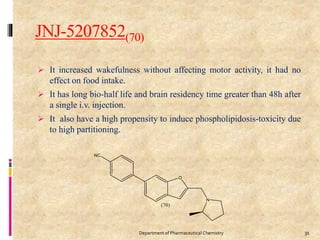
JNJ-5207852(70)
 It increased wakefulness without affecting motor activity, it had no
effect on food intake.
 It has long bio-half life and brain residency time greater than 48h after
a single i.v. injection.
 It also have a high propensity to induce phospholipidosis-toxicity due
to high partitioning.
31Department of Pharmaceutical Chemistry
Department of Pharmaceutical Chemistry 32
 JNJ reported dual H3 activity in a series of tetrahydroisoquinolines for
treating depression.
 Compound (71) and (72) displayed high affinity for both H3 (Ki = 2.7
and 13nM) and also had moderate activity for Norepinephrine and
Dopamine transporters.
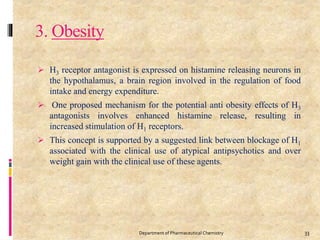
3. Obesity
 H3 receptor antagonist is expressed on histamine releasing neurons in
the hypothalamus, a brain region involved in the regulation of food
intake and energy expenditure.
 One proposed mechanism for the potential anti obesity effects of H3
antagonists involves enhanced histamine release, resulting in
increased stimulation of H1 receptors.
 This concept is supported by a suggested link between blockage of H1
associated with the clinical use of atypical antipsychotics and over
weight gain with the clinical use of these agents.
33Department of Pharmaceutical Chemistry
Department of Pharmaceutical Chemistry 34
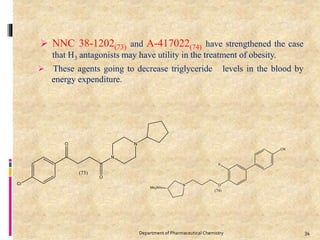
 NNC 38-1202(73) and A-417022(74) have strengthened the case
that H3 antagonists may have utility in the treatment of obesity.
 These agents going to decrease triglyceride levels in the blood by
energy expenditure.
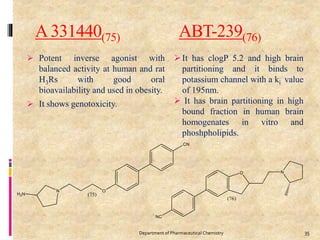
A331440(75) ABT-239(76)
 Potent inverse agonist with
balanced activity at human and rat
H3Rs with good oral
bioavailability and used in obesity.
 It shows genotoxicity.
It has clogP 5.2 and high brain
partitioning and it binds to
potassium channel with a ki value
of 195nm.
 It has brain partitioning in high
bound fraction in human brain
homogenates in vitro and
phoshpholipids.
35Department of Pharmaceutical Chemistry
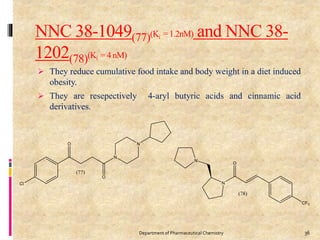
NNC 38-1049(77)(Ki =1.2nM) and NNC 38-
1202(78)(Ki =4nM)
 They reduce cumulative food intake and body weight in a diet induced
obesity.
 They are resepectively 4-aryl butyric acids and cinnamic acid
derivatives.
36Department of Pharmaceutical Chemistry
4.Analgesia
 A large number of H3 antagonists have been claimed for the use and
treatment of neuropathic pain.
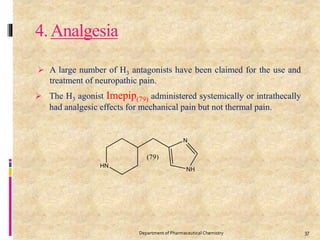
 The H3 agonist Imepip(79) administered systemically or intrathecally
had analgesic effects for mechanical pain but not thermal pain.
37Department of Pharmaceutical Chemistry
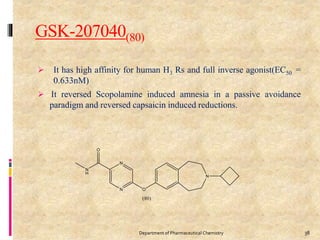
GSK-207040(80)
 It has high affinity for human H3 Rs and full inverse agonist(EC50 =
0.633nM)
 It reversed Scopolamine induced amnesia in a passive avoidance
paradigm and reversed capsaicin induced reductions.
38Department of Pharmaceutical Chemistry
Drugs acting by dual mechanism
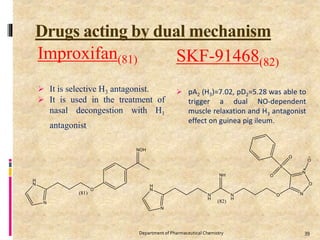
Improxifan(81)
 It is selective H3 antagonist.
 It is used in the treatment of
nasal decongestion with H1
antagonist.
SKF-91468(82)
 pA2 (H3)=7.02, pD2=5.28 was able to
trigger a dual NO-dependent
muscle relaxation and H3 antagonist
effect on guinea pig ileum.
39Department of Pharmaceutical Chemistry
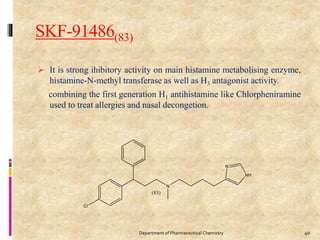
SKF-91486(83)
 It is strong ihibitory activity on main histamine metabolising enzyme,
histamine-N-methyl transferase as well as H3 antagonist activity.
combining the first generation H1 antihistamine like Chlorpheniramine
used to treat allergies and nasal decongetion.
40Department of Pharmaceutical Chemistry
Recent advance in H4 antagonist:
 The H4 receptor was characterized and cloned first in 2000 by Oda et
al. and Nakamura et al.
 The human H4 receptor is related most closely to the human H3
receptor.
 It is expressed in hematopoietic cells, lung, small intestine, colon and
skeletal muscle.
 It also expressed in liver, brain and skeletal muscle.
 It is 390amino acid residue sequence.
Department of Pharmaceutical Chemistry 41
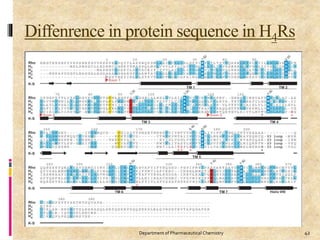
Diffenrence in protein sequence in H4Rs
Department of Pharmaceutical Chemistry 42
For Selective H4Rs
 It is not surprising that the H4 receptor is activated by several H3
receptor agonist, including Imepip(79) (Ki = 9nM)(79), Imetit(Ki
=5nM), α-methylhitamine (Ki = 146nM)
 Furthermore, H4 receptor is activated by the H2 – H3 receptor antagonist
Burimamide(52) and the Clobenprobit(66) (Ki = 13nM)
 Thioperamide(58) an inverse agonist at the H4 receptor(Ki = 27nM)
and Ki (H3/H4) = 0.92.
 The binding pocket for histamine has been identified in a pocket
by trans membrane domain 3(TM3), TM5, TM6. in all biogenic
amine receptors which is essential for binding histamine.
 An Asparagine residue to form an ionic bond is probably responsible for
the increase in binding affinity for histamine of the H4 receptor compared
with the other histaminic receptor.
Department of Pharmaceutical Chemistry 43
Expression of H4Rs
 These receptors are expressed in hematopoietic cells, in bone marrow,
peripheral blood vessels, spleen, thymus, lung small intestine, colon
and heart, liver.
Mast cells:
 They are the key component of allergic and other immune response.
 They are not only producer of histamine but are regulated by
histamine.
 H4Rs activation induces calcium mobilization in mast cells and
mediates mast cell migration towards histamine, but does not affect
IgE crosslinking-induced degranulation of mast cells, thus these
receptor antagonist used as anti-inflammatory agents.
Department of Pharmaceutical Chemistry 44
Department of Pharmaceutical Chemistry 45
Eosinophil:
 Low concentration of histamine induce eosinophil chemotaxis, which
is now known to be mediated by the these receptors.
 Eosinophil chemotaxis leads to actin polymerisation, shape change
and expression of adhesion molecules that are involved in cell
migration like CD11b.
 Thus inhibiton of the these receptor inhibits the eosinophil chemotaxis
and thereby these receptor antagonists can be used as anti-
inflammatory agents.
T-cells and dendritic cells:
 Activation of the these receptors on dendritic cells can also affect T
cell activation, leads to T cell polymerization, and increases the
inflammatory cytokines IL-6 and IL-17 which leads to actin
polymerisation and chemotaxis of dendritic cells.
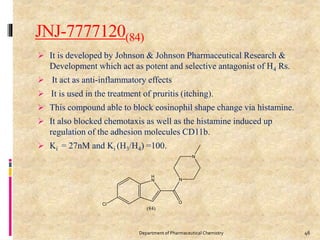
JNJ-7777120(84)
 It is developed by Johnson & Johnson Pharmaceutical Research &
Development which act as potent and selective antagonist of H4 Rs.
 It act as anti-inflammatory effects
 It is used in the treatment of pruritis (itching).
 This compound able to block eosinophil shape change via histamine.
 It also blocked chemotaxis as well as the histamine induced up
regulation of the adhesion molecules CD11b.
 Ki = 27nM and Ki (H3/H4) =100.
46Department of Pharmaceutical Chemistry
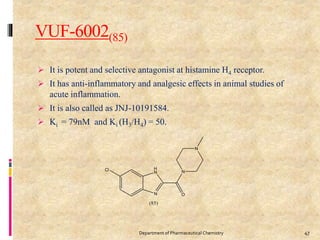
VUF-6002(85)
 It is potent and selective antagonist at histamine H4 receptor.
 It has anti-inflammatory and analgesic effects in animal studies of
acute inflammation.
 It is also called as JNJ-10191584.
 Ki = 79nM and Ki (H3/H4) = 50.
47Department of Pharmaceutical Chemistry
References
 http://clinicaltrials.gov
 http://www.fda.gov
 http://www.sciencedirect.com
 http://www.cimsasia.com
Department of Pharmaceutical Chemistry 48
THANK YOU
Department of Pharmaceutical Chemistry 49