![AFFIRMATIVE SENTENCES:[Subject + haveor has + pastparticiple of verbs]Examples: “WehavevisitedItalytwice.” “She has learntfourlanguages.”](https://image.slidesharecdn.com/presentperfectforpastexperiences-110217102555-phpapp01/85/Present-perfect-for-past-experiences-3-320.jpg)
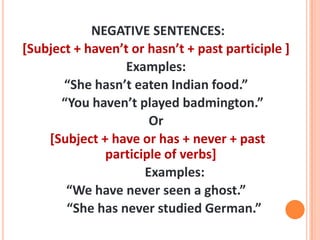
![QUESTIONS:[Haveor has + subject + ever + pastparticiple + ? ]Examples:“Has sheevereatenIndianfood?”“Haveyoueverplayedbadmington?”](https://image.slidesharecdn.com/presentperfectforpastexperiences-110217102555-phpapp01/85/Present-perfect-for-past-experiences-4-320.jpg)
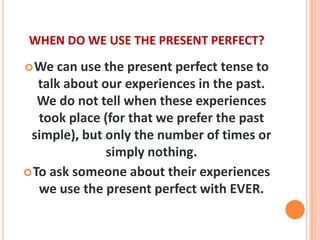
![NEGATIVE SENTENCES:[Subject + haven’torhasn’t + pastparticiple ]Examples:“Shehasn’teatenIndianfood.” “Youhaven’tplayedbadmington.”Or [Subject + haveor has + never + pastparticiple of verbs]Examples: “Wehaveneverseen a ghost.” “She has neverstudiedGerman.”](https://image.slidesharecdn.com/presentperfectforpastexperiences-110217102555-phpapp01/85/Present-perfect-for-past-experiences-5-320.jpg)


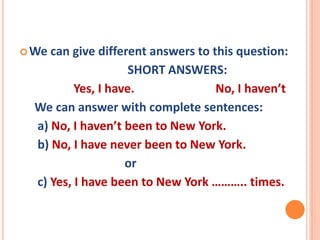
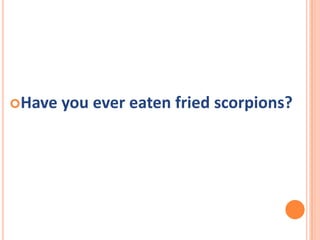
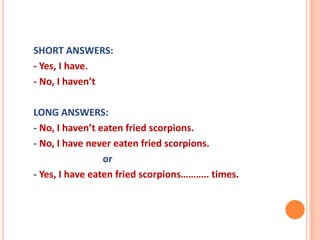
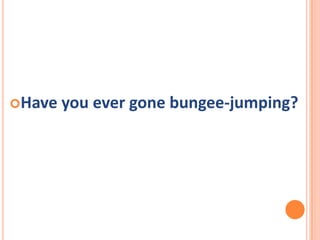
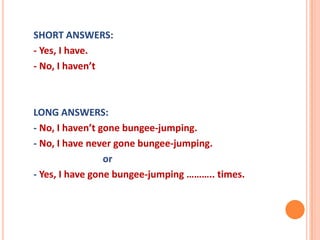
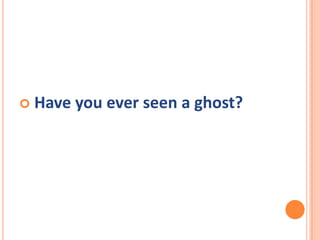
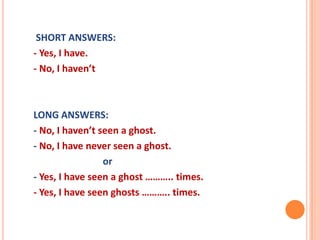
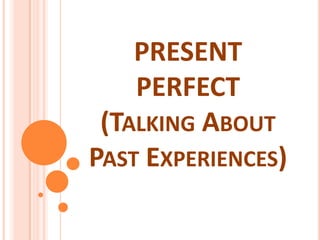
The document discusses the present perfect tense and how it is used to talk about past experiences. It notes that the present perfect tense does not specify when the experiences occurred, only the number of times or lack of details. It provides examples of affirmative and negative sentences using the present perfect tense structure of subject + have/has + past participle. Common questions using the present perfect tense with "ever" are also shown, along with short and long answer responses about experiences.
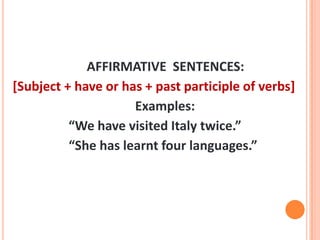
![AFFIRMATIVE SENTENCES:[Subject + haveor has + pastparticiple of verbs]Examples: “WehavevisitedItalytwice.” “She has learntfourlanguages.”](https://image.slidesharecdn.com/presentperfectforpastexperiences-110217102555-phpapp01/85/Present-perfect-for-past-experiences-3-320.jpg)
![QUESTIONS:[Haveor has + subject + ever + pastparticiple + ? ]Examples:“Has sheevereatenIndianfood?”“Haveyoueverplayedbadmington?”](https://image.slidesharecdn.com/presentperfectforpastexperiences-110217102555-phpapp01/85/Present-perfect-for-past-experiences-4-320.jpg)
![NEGATIVE SENTENCES:[Subject + haven’torhasn’t + pastparticiple ]Examples:“Shehasn’teatenIndianfood.” “Youhaven’tplayedbadmington.”Or [Subject + haveor has + never + pastparticiple of verbs]Examples: “Wehaveneverseen a ghost.” “She has neverstudiedGerman.”](https://image.slidesharecdn.com/presentperfectforpastexperiences-110217102555-phpapp01/85/Present-perfect-for-past-experiences-5-320.jpg)