PREOPERATIVE
ANAESTHESIA ASSESSMENT
& PATIENT PREPARATION
Dr. R. Mowri Ranjath MD., DA
Assistant Professor,
Dept of Anaesthesia,
Krishangiri Medical college
Introduction
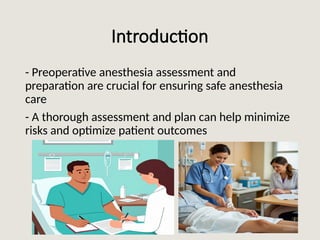
- Preoperative anesthesia assessment and
preparation are crucial for ensuring safe anesthesia
care
- A thorough assessment and plan can help minimize
risks and optimize patient outcomes
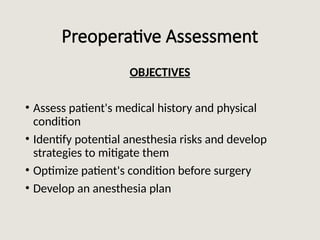
Preoperative Assessment
OBJECTIVES
• Assess patient's medical history and physical
condition
• Identify potential anesthesia risks and develop
strategies to mitigate them
• Optimize patient's condition before surgery
• Develop an anesthesia plan
Components Of PAC
- Medical history
- Physical examination
- Laboratory tests and investigations
- Review of systems
Medical History
• Previous anesthesia experiences
• Allergies
• Medications :
• - Anticoagulants
• - Antihypertensives
• - Antidiabetics
• Medical conditions :
• - Hypertension
• - Diabetes
• - Cardiac disease
• - Respiratory disease
• - Renal / Liver disease
Physical Examination
1. Systemic Examination :
- Cardiovascular examination
- Heart sounds
- Murmurs
- Respiratory examination
- Lung sounds
- Breath sounds
- Vital signs
- Blood pressure
- Heart rate
- Respiratory rate
- Oxygen saturation
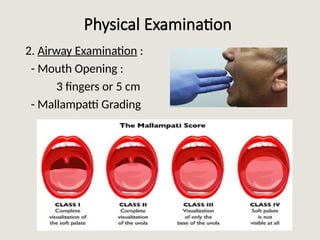
Physical Examination
2. Airway Examination :
- Mouth Opening :
3 fingers or 5 cm
- Mallampatti Grading
Laboratory Tests and
Investigations
- Complete blood count (CBC)
- Blood grouping and typing
- Renal function test
- Electrolyte panel
- Coagulation studies
- Chest X ray
- ECG and other cardiac evaluations
- Echocardiogram
- Stress test
Risk Assessment
- Identifying high-risk patients
- Severe cardiac disease
- Respiratory disease
- Renal disease
- Difficult airway
- ASA classification
Risk Assessment
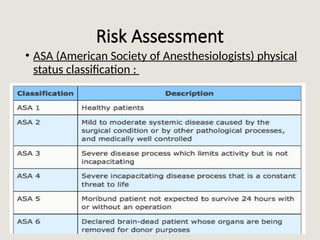
• ASA (American Society of Anesthesiologists) physical
status classification :
Anaesthesia Plan
- Type of anesthesia
- General anesthesia
- Regional anesthesia
- Local anesthesia
- Anesthetic technique
- Induction agents
- Maintenance agents
- Monitoring and support
- Vital sign monitoring
- Oxygen therapy
Preparation for Anesthesia
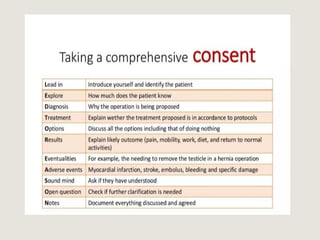
- Patient education and informed consent
- Preoperative fasting and bowel preparation
- Medication management
- Continuation or discontinuation of medications
- Venous thromboembolism prophylaxis
- Mechanical prophylaxis
- Pharmacological prophylaxis
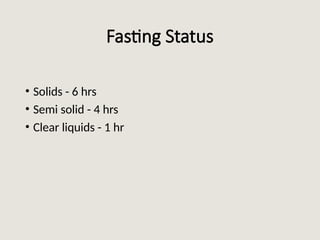
Fasting Status
• Solids - 6 hrs
• Semi solid - 4 hrs
• Clear liquids - 1 hr
PREOPERATIVE ANAESTHESIA ASSESSMENT AND PATIENT PREPARATION