Explore key factors, quality parameters, evaluation methods, and treatments to maintain and enhance the post-harvest quality of fruits, vegetables, flowers, and processed commodities for better market value and consumer acceptance.
Post-harvest quality offruits, vegetables, flowers and
various processed commodities
Prepared by
Umesh Timilsina
Assistant Professor
CNRM, Bardibas
Agriculture and Forestry University
2.
Post-harvest quality offruits, vegetables, flowers and various
processed commodities
• Post-harvest quality is one of the most important aspects of horticultural
science because it determines the market value, consumer acceptance, storage
life, processing suitability, and export potential of horticultural produce.
• The quality of fruits, vegetables, flowers, and processed products begins in the
field and must be maintained throughout harvesting, handling, storage,
transportation, processing, and marketing.
• High-quality produce is characterized by desirable appearance, freshness,
nutritional value, safety, and freedom from defects.
3.
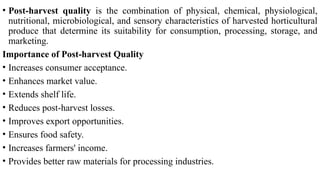
• Post-harvest qualityis the combination of physical, chemical, physiological,
nutritional, microbiological, and sensory characteristics of harvested horticultural
produce that determine its suitability for consumption, processing, storage, and
marketing.
Importance of Post-harvest Quality
• Increases consumer acceptance.
• Enhances market value.
• Extends shelf life.
• Reduces post-harvest losses.
• Improves export opportunities.
• Ensures food safety.
• Increases farmers' income.
• Provides better raw materials for processing industries.
4.
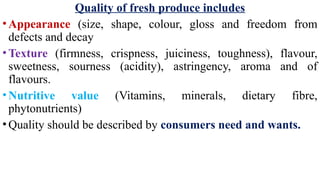
Quality of freshproduce includes
•Appearance (size, shape, colour, gloss and freedom from
defects and decay
•Texture (firmness, crispness, juiciness, toughness), flavour,
sweetness, sourness (acidity), astringency, aroma and of
flavours.
•Nutritive value (Vitamins, minerals, dietary fibre,
phytonutrients)
•Quality should be described by consumers need and wants.
5.
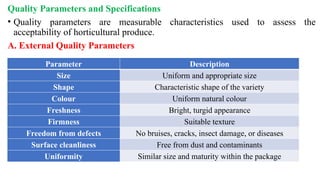
Quality Parameters andSpecifications
• Quality parameters are measurable characteristics used to assess the
acceptability of horticultural produce.
A. External Quality Parameters
Parameter Description
Size Uniform and appropriate size
Shape Characteristic shape of the variety
Colour Uniform natural colour
Freshness Bright, turgid appearance
Firmness Suitable texture
Freedom from defects No bruises, cracks, insect damage, or diseases
Surface cleanliness Free from dust and contaminants
Uniformity Similar size and maturity within the package
6.
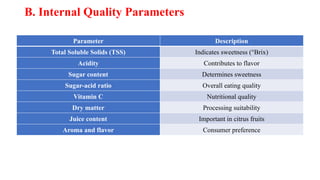
B. Internal QualityParameters
Parameter Description
Total Soluble Solids (TSS) Indicates sweetness (°Brix)
Acidity Contributes to flavor
Sugar content Determines sweetness
Sugar-acid ratio Overall eating quality
Vitamin C Nutritional quality
Dry matter Processing suitability
Juice content Important in citrus fruits
Aroma and flavor Consumer preference
7.
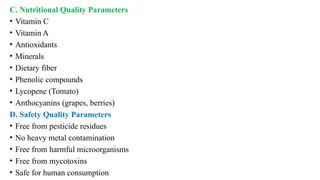
C. Nutritional QualityParameters
• Vitamin C
• Vitamin A
• Antioxidants
• Minerals
• Dietary fiber
• Phenolic compounds
• Lycopene (Tomato)
• Anthocyanins (grapes, berries)
D. Safety Quality Parameters
• Free from pesticide residues
• No heavy metal contamination
• Free from harmful microorganisms
• Free from mycotoxins
• Safe for human consumption
8.
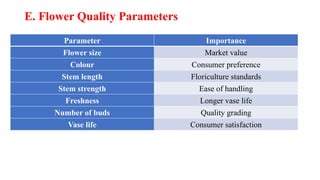
E. Flower QualityParameters
Parameter Importance
Flower size Market value
Colour Consumer preference
Stem length Floriculture standards
Stem strength Ease of handling
Freshness Longer vase life
Number of buds Quality grading
Vase life Consumer satisfaction
9.
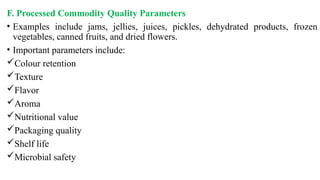
F. Processed CommodityQuality Parameters
• Examples include jams, jellies, juices, pickles, dehydrated products, frozen
vegetables, canned fruits, and dried flowers.
• Important parameters include:
Colour retention
Texture
Flavor
Aroma
Nutritional value
Packaging quality
Shelf life
Microbial safety
10.
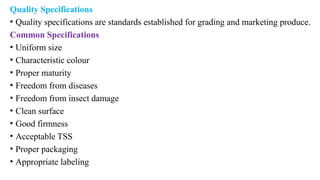
Quality Specifications
• Qualityspecifications are standards established for grading and marketing produce.
Common Specifications
• Uniform size
• Characteristic colour
• Proper maturity
• Freedom from diseases
• Freedom from insect damage
• Clean surface
• Good firmness
• Acceptable TSS
• Proper packaging
• Appropriate labeling
11.
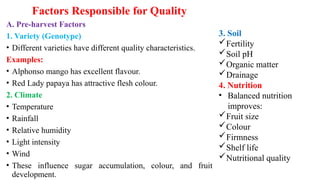
Factors Responsible forQuality
A. Pre-harvest Factors
1. Variety (Genotype)
• Different varieties have different quality characteristics.
Examples:
• Alphonso mango has excellent flavour.
• Red Lady papaya has attractive flesh colour.
2. Climate
• Temperature
• Rainfall
• Relative humidity
• Light intensity
• Wind
• These influence sugar accumulation, colour, and fruit
development.
3. Soil
Fertility
Soil pH
Organic matter
Drainage
4. Nutrition
• Balanced nutrition
improves:
Fruit size
Colour
Firmness
Shelf life
Nutritional quality
12.
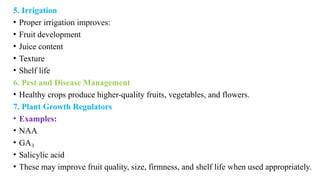
5. Irrigation
• Properirrigation improves:
• Fruit development
• Juice content
• Texture
• Shelf life
6. Pest and Disease Management
• Healthy crops produce higher-quality fruits, vegetables, and flowers.
7. Plant Growth Regulators
• Examples:
• NAA
• GA₃
• Salicylic acid
• These may improve fruit quality, size, firmness, and shelf life when used appropriately.
13.
B. Harvest Factors
Harvestmaturity
Harvesting method
Time of harvesting
Weather during harvest
Mechanical injury
C. Post-harvest Factors
Washing
Sorting
Grading
Pre-cooling
Packaging
Storage temperature
Relative humidity
Transportation
Marketing practices
14.
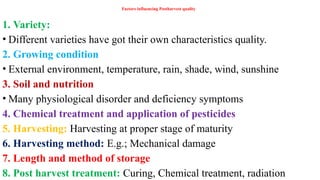
Factors influencing Postharvestquality
1. Variety:
• Different varieties have got their own characteristics quality.
2. Growing condition
• External environment, temperature, rain, shade, wind, sunshine
3. Soil and nutrition
• Many physiological disorder and deficiency symptoms
4. Chemical treatment and application of pesticides
5. Harvesting: Harvesting at proper stage of maturity
6. Harvesting method: E.g.; Mechanical damage
7. Length and method of storage
8. Post harvest treatment: Curing, Chemical treatment, radiation
15.
Evaluation of Quality
•Quality evaluation involves assessing physical, chemical, sensory, and
microbiological characteristics.
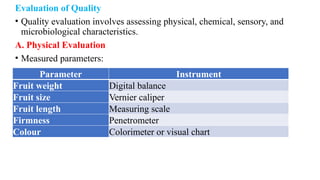
A. Physical Evaluation
• Measured parameters:
Parameter Instrument
Fruit weight Digital balance
Fruit size Vernier caliper
Fruit length Measuring scale
Firmness Penetrometer
Colour Colorimeter or visual chart
16.
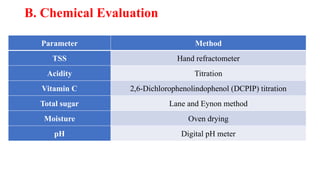
B. Chemical Evaluation
ParameterMethod
TSS Hand refractometer
Acidity Titration
Vitamin C 2,6-Dichlorophenolindophenol (DCPIP) titration
Total sugar Lane and Eynon method
Moisture Oven drying
pH Digital pH meter
17.
C. Sensory Evaluation
•Sensory analysis is conducted by trained panelists or consumers.
• Parameters include:
Appearance
Colour
Aroma
Taste
Texture
Overall acceptability
• Common evaluation scales:
5-point hedonic scale
9-point hedonic scale
D. Microbiological Evaluation
• Total microbial count
• Yeast count
• Mold count
• Coliform count
• Pathogen detection
18.
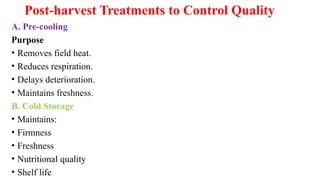
Post-harvest Treatments toControl Quality
A. Pre-cooling
Purpose
• Removes field heat.
• Reduces respiration.
• Delays deterioration.
• Maintains freshness.
B. Cold Storage
• Maintains:
• Firmness
• Freshness
• Nutritional quality
• Shelf life
19.
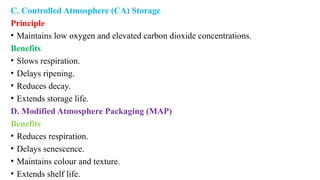
C. Controlled Atmosphere(CA) Storage
Principle
• Maintains low oxygen and elevated carbon dioxide concentrations.
Benefits
• Slows respiration.
• Delays ripening.
• Reduces decay.
• Extends storage life.
D. Modified Atmosphere Packaging (MAP)
Benefits
• Reduces respiration.
• Delays senescence.
• Maintains colour and texture.
• Extends shelf life.
20.
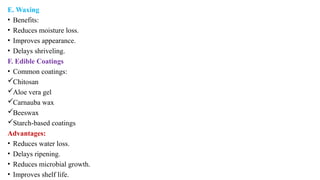
E. Waxing
• Benefits:
•Reduces moisture loss.
• Improves appearance.
• Delays shriveling.
F. Edible Coatings
• Common coatings:
Chitosan
Aloe vera gel
Carnauba wax
Beeswax
Starch-based coatings
Advantages:
• Reduces water loss.
• Delays ripening.
• Reduces microbial growth.
• Improves shelf life.
21.
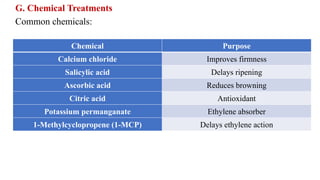
G. Chemical Treatments
Commonchemicals:
Chemical Purpose
Calcium chloride Improves firmness
Salicylic acid Delays ripening
Ascorbic acid Reduces browning
Citric acid Antioxidant
Potassium permanganate Ethylene absorber
1-Methylcyclopropene (1-MCP) Delays ethylene action
22.
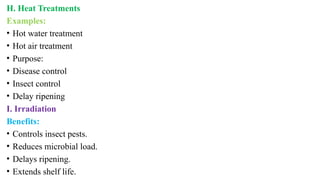
H. Heat Treatments
Examples:
•Hot water treatment
• Hot air treatment
• Purpose:
• Disease control
• Insect control
• Delay ripening
I. Irradiation
Benefits:
• Controls insect pests.
• Reduces microbial load.
• Delays ripening.
• Extends shelf life.
23.
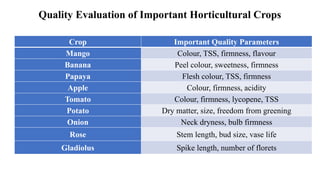
Quality Evaluation ofImportant Horticultural Crops
Crop Important Quality Parameters
Mango Colour, TSS, firmness, flavour
Banana Peel colour, sweetness, firmness
Papaya Flesh colour, TSS, firmness
Apple Colour, firmness, acidity
Tomato Colour, firmness, lycopene, TSS
Potato Dry matter, size, freedom from greening
Onion Neck dryness, bulb firmness
Rose Stem length, bud size, vase life
Gladiolus Spike length, number of florets
24.
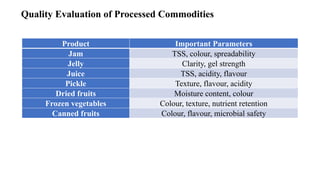
Quality Evaluation ofProcessed Commodities
Product Important Parameters
Jam TSS, colour, spreadability
Jelly Clarity, gel strength
Juice TSS, acidity, flavour
Pickle Texture, flavour, acidity
Dried fruits Moisture content, colour
Frozen vegetables Colour, texture, nutrient retention
Canned fruits Colour, flavour, microbial safety
25.
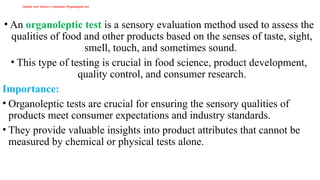
Quality test/ Sensoryevaluation/ Organoleptic test
• An organoleptic test is a sensory evaluation method used to assess the
qualities of food and other products based on the senses of taste, sight,
smell, touch, and sometimes sound.
• This type of testing is crucial in food science, product development,
quality control, and consumer research.
Importance:
• Organoleptic tests are crucial for ensuring the sensory qualities of
products meet consumer expectations and industry standards.
• They provide valuable insights into product attributes that cannot be
measured by chemical or physical tests alone.
26.
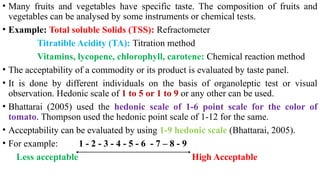
• Many fruitsand vegetables have specific taste. The composition of fruits and
vegetables can be analysed by some instruments or chemical tests.
• Example: Total soluble Solids (TSS): Refractometer
Titratible Acidity (TA): Titration method
Vitamins, lycopene, chlorophyll, carotene: Chemical reaction method
• The acceptability of a commodity or its product is evaluated by taste panel.
• It is done by different individuals on the basis of organoleptic test or visual
observation. Hedonic scale of 1 to 5 or 1 to 9 or any other can be used.
• Bhattarai (2005) used the hedonic scale of 1-6 point scale for the color of
tomato. Thompson used the hedonic point scale of 1-12 for the same.
• Acceptability can be evaluated by using 1-9 hedonic scale (Bhattarai, 2005).
• For example: 1 - 2 - 3 - 4 - 5 - 6 - 7 – 8 - 9
Less acceptable High Acceptable
27.
Consideration during OrganolepticTest
• While doing organoleptic test, the following things should be taken into
consideration
The person should be in acquaintance with the quality of product.
The person should not be taste blind.
The person should not be hungry or just have enough food.
The room should be neat and clean, there should not be smell and
flavour.
There should be enough light in the room.
There should not be any disturbance and pollution.
It should be done in a quiet, clean and calm place.
Mouth should be rinsed with water after each taste.
28.
Factors Responsible forQuality Deterioration
• High respiration
• Moisture loss
• Ethylene production
• Mechanical injury
• Improper storage temperature
• High humidity
• Microbial infection
• Poor packaging
• Delayed marketing
• Improper handling
29.
Methods to MaintainHigh Post-harvest Quality
• Harvest at the proper maturity stage.
• Handle produce carefully.
• Pre-cool immediately after harvest.
• Wash with clean, sanitized water.
• Grade and sort produce.
• Use suitable packaging materials.
• Maintain the cold chain.
• Apply approved post-harvest treatments.
• Store at recommended temperature and relative humidity.
• Transport under hygienic conditions.
Key Points
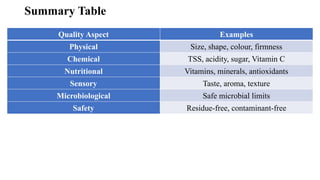
• Post-harvestquality refers to the combined physical, chemical, nutritional,
sensory, microbiological, and safety attributes of horticultural produce that
determine its acceptability for consumption, processing, storage, and marketing.
• Major quality parameters include size, shape, colour, firmness, TSS, acidity,
sugar content, vitamin C, aroma, texture, and freedom from defects.
• Quality specifications require produce to be uniform, mature, clean, free from
pests and diseases, and properly packaged.
• Quality is influenced by pre-harvest factors (variety, climate, soil, nutrition,
irrigation, pest management), harvest factors (maturity, harvesting method,
weather), and post-harvest factors (handling, storage, packaging, transportation).
32.
• Quality evaluationinvolves physical measurements, chemical analyses,
sensory assessment, and microbiological testing.
• Major post-harvest treatments for maintaining quality include pre-
cooling, cold storage, controlled atmosphere storage, modified
atmosphere packaging, waxing, edible coatings, calcium and
antioxidant treatments, hot water treatment, and irradiation.
• Maintaining the cold chain, minimizing mechanical injury, practicing
proper sanitation, and using appropriate packaging are essential for
preserving the quality of fruits, vegetables, flowers, and processed
horticultural commodities throughout storage and marketing.
 Most read
 Most read