Physiological Disorders in Horticultural Produce and Their Prevention
Overview of physiological disorders in fruits, vegetables, and flowers, including causes, symptoms, and preventive measures to improve quality, shelf life, and marketability of horticultural crops.
Physiological Disorders in Horticultural Produce and Their Prevention
1.
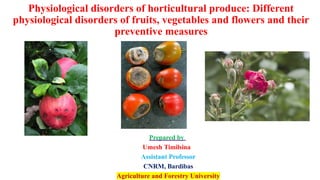
Physiological disorders ofhorticultural produce: Different
physiological disorders of fruits, vegetables and flowers and their
preventive measures
Prepared by
Umesh Timilsina
Assistant Professor
CNRM, Bardibas
Agriculture and Forestry University
2.
Physiological disorder
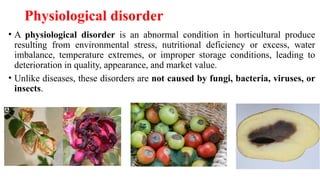
• Aphysiological disorder is an abnormal condition in horticultural produce
resulting from environmental stress, nutritional deficiency or excess, water
imbalance, temperature extremes, or improper storage conditions, leading to
deterioration in quality, appearance, and market value.
• Unlike diseases, these disorders are not caused by fungi, bacteria, viruses, or
insects.
3.
Causes of PhysiologicalDisorders
• Nutrient deficiency or toxicity
• Moisture stress (drought or excess irrigation)
• High or low temperature
• Sunlight injury
• Humidity fluctuations
• Poor ventilation
• Ethylene injury
• Mechanical damage
• Improper harvesting stage
• Inappropriate storage conditions
• Oxygen and carbon dioxide imbalance
• Genetic susceptibility
4.
Importance of StudyingPhysiological Disorders
• Reduces post-harvest losses.
• Improves produce quality.
• Extends shelf life.
• Enhances marketability.
• Increases export potential.
• Improves farmer income.
5.
Physiological Disorders ofFruits
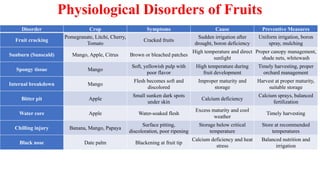
Disorder Crop Symptoms Cause Preventive Measures
Fruit cracking
Pomegranate, Litchi, Cherry,
Tomato
Cracked fruits
Sudden irrigation after
drought, boron deficiency
Uniform irrigation, boron
spray, mulching
Sunburn (Sunscald) Mango, Apple, Citrus Brown or bleached patches
High temperature and direct
sunlight
Proper canopy management,
shade nets, whitewash
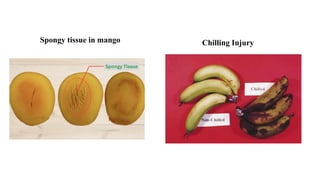
Spongy tissue Mango
Soft, yellowish pulp with
poor flavor
High temperature during
fruit development
Timely harvesting, proper
orchard management
Internal breakdown Mango
Flesh becomes soft and
discolored
Improper maturity and
storage
Harvest at proper maturity,
suitable storage
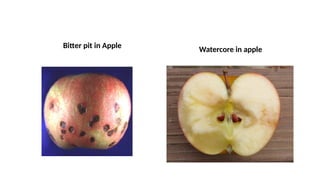
Bitter pit Apple
Small sunken dark spots
under skin
Calcium deficiency
Calcium sprays, balanced
fertilization
Water core Apple Water-soaked flesh
Excess maturity and cool
weather
Timely harvesting
Chilling injury Banana, Mango, Papaya
Surface pitting,
discoloration, poor ripening
Storage below critical
temperature
Store at recommended
temperatures
Black nose Date palm Blackening at fruit tip
Calcium deficiency and heat
stress
Balanced nutrition and
irrigation
Storage Disorders
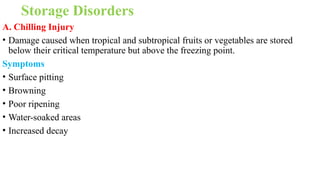
A. ChillingInjury
• Damage caused when tropical and subtropical fruits or vegetables are stored
below their critical temperature but above the freezing point.
Symptoms
• Surface pitting
• Browning
• Poor ripening
• Water-soaked areas
• Increased decay
15.
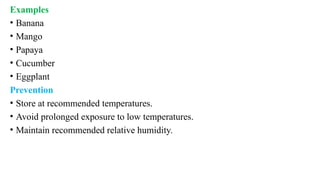
Examples
• Banana
• Mango
•Papaya
• Cucumber
• Eggplant
Prevention
• Store at recommended temperatures.
• Avoid prolonged exposure to low temperatures.
• Maintain recommended relative humidity.
16.
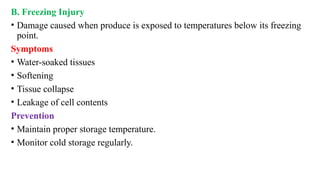
B. Freezing Injury
•Damage caused when produce is exposed to temperatures below its freezing
point.
Symptoms
• Water-soaked tissues
• Softening
• Tissue collapse
• Leakage of cell contents
Prevention
• Maintain proper storage temperature.
• Monitor cold storage regularly.
17.
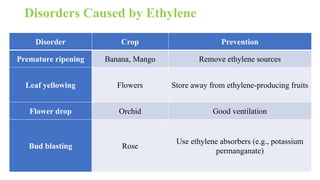
Disorders Caused byEthylene
Disorder Crop Prevention
Premature ripening Banana, Mango Remove ethylene sources
Leaf yellowing Flowers Store away from ethylene-producing fruits
Flower drop Orchid Good ventilation
Bud blasting Rose
Use ethylene absorbers (e.g., potassium
permanganate)
18.
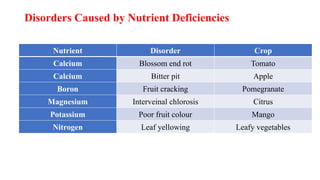
Disorders Caused byNutrient Deficiencies
Nutrient Disorder Crop
Calcium Blossom end rot Tomato
Calcium Bitter pit Apple
Boron Fruit cracking Pomegranate
Magnesium Interveinal chlorosis Citrus
Potassium Poor fruit colour Mango
Nitrogen Leaf yellowing Leafy vegetables
19.
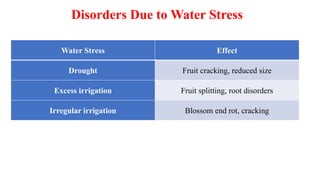
Disorders Due toWater Stress
Water Stress Effect
Drought Fruit cracking, reduced size
Excess irrigation Fruit splitting, root disorders
Irregular irrigation Blossom end rot, cracking
20.
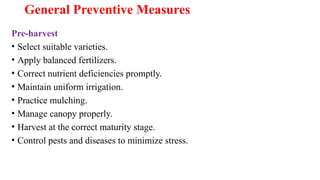
General Preventive Measures
Pre-harvest
•Select suitable varieties.
• Apply balanced fertilizers.
• Correct nutrient deficiencies promptly.
• Maintain uniform irrigation.
• Practice mulching.
• Manage canopy properly.
• Harvest at the correct maturity stage.
• Control pests and diseases to minimize stress.
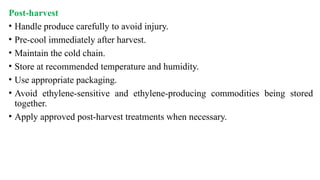
21.
Post-harvest
• Handle producecarefully to avoid injury.
• Pre-cool immediately after harvest.
• Maintain the cold chain.
• Store at recommended temperature and humidity.
• Use appropriate packaging.
• Avoid ethylene-sensitive and ethylene-producing commodities being stored
together.
• Apply approved post-harvest treatments when necessary.
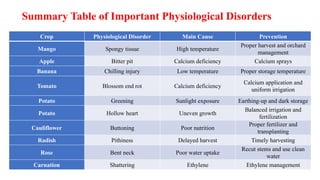
Summary Table ofImportant Physiological Disorders
Crop Physiological Disorder Main Cause Prevention
Mango Spongy tissue High temperature
Proper harvest and orchard
management
Apple Bitter pit Calcium deficiency Calcium sprays
Banana Chilling injury Low temperature Proper storage temperature
Tomato Blossom end rot Calcium deficiency
Calcium application and
uniform irrigation
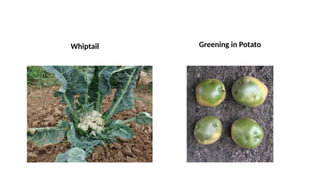
Potato Greening Sunlight exposure Earthing-up and dark storage
Potato Hollow heart Uneven growth
Balanced irrigation and
fertilization
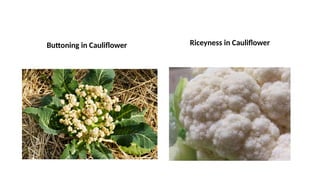
Cauliflower Buttoning Poor nutrition
Proper fertilizer and
transplanting
Radish Pithiness Delayed harvest Timely harvesting
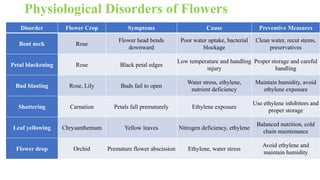
Rose Bent neck Poor water uptake
Recut stems and use clean
water
Carnation Shattering Ethylene Ethylene management
24.
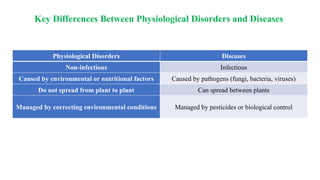
Key Differences BetweenPhysiological Disorders and Diseases
Physiological Disorders Diseases
Non-infectious Infectious
Caused by environmental or nutritional factors Caused by pathogens (fungi, bacteria, viruses)
Do not spread from plant to plant Can spread between plants
Managed by correcting environmental conditions Managed by pesticides or biological control
25.
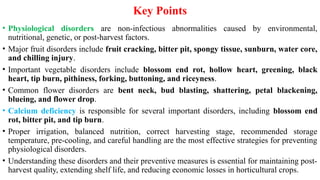
Key Points
• Physiologicaldisorders are non-infectious abnormalities caused by environmental,
nutritional, genetic, or post-harvest factors.
• Major fruit disorders include fruit cracking, bitter pit, spongy tissue, sunburn, water core,
and chilling injury.
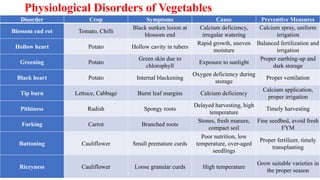
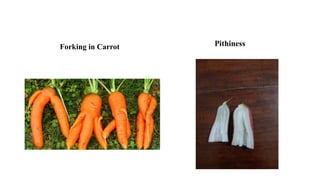
• Important vegetable disorders include blossom end rot, hollow heart, greening, black
heart, tip burn, pithiness, forking, buttoning, and riceyness.
• Common flower disorders are bent neck, bud blasting, shattering, petal blackening,
blueing, and flower drop.
• Calcium deficiency is responsible for several important disorders, including blossom end
rot, bitter pit, and tip burn.
• Proper irrigation, balanced nutrition, correct harvesting stage, recommended storage
temperature, pre-cooling, and careful handling are the most effective strategies for preventing
physiological disorders.
• Understanding these disorders and their preventive measures is essential for maintaining post-
harvest quality, extending shelf life, and reducing economic losses in horticultural crops.
 Most read
 Most read
 Most read