Phase 3 Trial of Semaglutide in Metabolic Dysfunction.pptx
1.
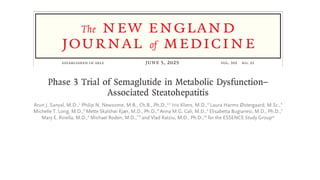
Phase 3 Trialof Semaglutide in
Metabolic Dysfunction–
Associated Steatohepatitis
Presented by
Dr Bikash Poudel
DM resident
Medical Gastroenterology
3.
Introduction
• Metabolic Dysfunction-AssociatedSteatohepatitis (MASH): A
progressive liver disease linked to obesity, type 2 diabetes, and
metabolic syndrome.
• Prevalence: Affects ~5-10% of adults globally.
• Progression: Steatosis → inflammation → fibrosis → cirrhosis.
4.
Burden of MASH
•Leading cause of liver-related morbidity and mortality.
• Associated with increased risk of hepatocellular carcinoma (HCC) and
liver transplantation.
5.
Role of GLP-1Agonists
• Mechanism:
• Enhance insulin sensitivity.
• Promote weight loss.
• Reduce hepatic fat accumulation.
• Anti-inflammatory and anti-fibrotic effects.
Semaglutide: Approved for obesity and type 2 diabetes.
6.
• Phase 2,72 weeks, once-daily sc semaglutide (0.1 mg, 0.2 mg, 0.4
mg) vs. placebo.
• Patients: Biopsy-confirmed MASH with liver fibrosis (stages 1, 2, 3).
• Steatohepatitis resolution: 59% (0.4 mg semaglutide) vs. 17%
(placebo), P<0.001.
• Fibrosis reduction: Observed in semaglutide group, but not
statistically significant.
7.
• Current Treatment:Resmetirom has FDA accelerated approval for
MASH with stage 2 or 3 liver fibrosis;
• Ongoing studies aim for full approval.
• Unmet Need: Additional MASH treatments are needed, ideally
addressing both liver and cardiovascular risks.
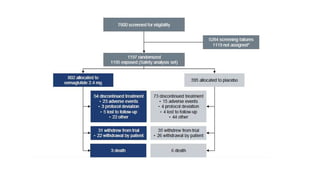
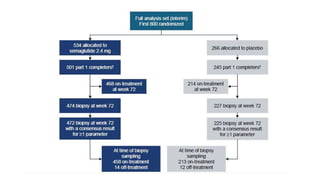
• ESSENCE Trial: Interim efficacy results from first 800 patients
completing 72 weeks of once-weekly sc semaglutide (2.4 mg) vs.
placebo in biopsy-defined MASH ( stage 2 or 3 fibrosis).
8.
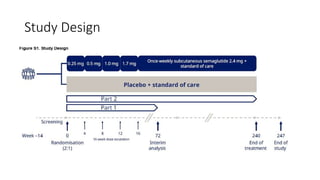
Study Design
• Phase3, multicenter, randomized, double-blind, placebo-controlled
trial
• 253 clinical sites in 37 countries.
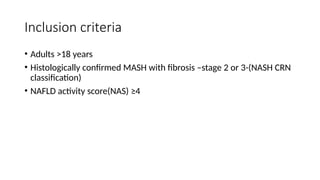
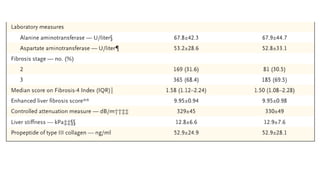
Inclusion criteria
• Adults>18 years
• Histologically confirmed MASH with fibrosis –stage 2 or 3-(NASH CRN
classification)
• NAFLD activity score(NAS) ≥4
11.
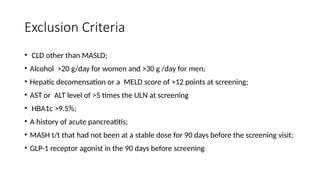
Exclusion Criteria
• CLDother than MASLD;
• Alcohol >20 g/day for women and >30 g /day for men;
• Hepatic decomensation or a MELD score of >12 points at screening;
• AST or ALT level of >5 times the ULN at screening
• HBA1c >9.5%;
• A history of acute pancreatitis;
• MASH t/t that had not been at a stable dose for 90 days before the screening visit;
• GLP-1 receptor agonist in the 90 days before screening
12.
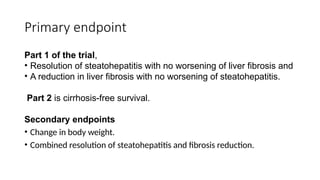
Primary endpoint
Part 1of the trial,
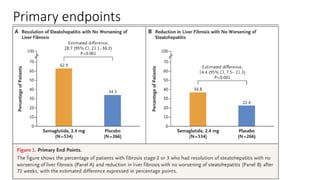
• Resolution of steatohepatitis with no worsening of liver fibrosis and
• A reduction in liver fibrosis with no worsening of steatohepatitis.
Part 2 is cirrhosis-free survival.
Secondary endpoints
• Change in body weight.
• Combined resolution of steatohepatitis and fibrosis reduction.
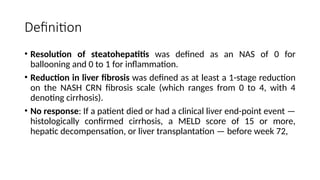
Definition
• Resolution ofsteatohepatitis was defined as an NAS of 0 for
ballooning and 0 to 1 for inflammation.
• Reduction in liver fibrosis was defined as at least a 1-stage reduction
on the NASH CRN fibrosis scale (which ranges from 0 to 4, with 4
denoting cirrhosis).
• No response: If a patient died or had a clinical liver end-point event —
histologically confirmed cirrhosis, a MELD score of 15 or more,
hepatic decompensation, or liver transplantation — before week 72,
Secondary End Points
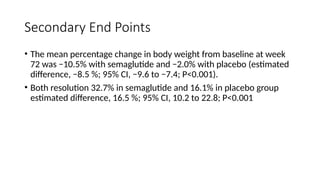
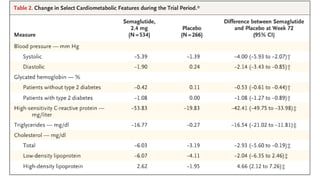
•The mean percentage change in body weight from baseline at week
72 was −10.5% with semaglutide and −2.0% with placebo (estimated
difference, −8.5 %; 95% CI, −9.6 to −7.4; P<0.001).
• Both resolution 32.7% in semaglutide and 16.1% in placebo group
estimated difference, 16.5 %; 95% CI, 10.2 to 22.8; P<0.001
28.
Limitations of theTrial
• Limited follow-up duration for long-term outcomes.
• Biopsy-based endpoints: Invasive, sampling variability.
• Exclusion of advanced liver disease (MELD >12).
• small number of Black patients,
• a lack of data regarding biomarkers of alcohol consumption,
• genetic polymorphisms as a determinant of therapeutic response.
29.
Take home message
•Semaglutide (2.4 mg) significantly improves steatohepatitis and
fibrosis in MASH.
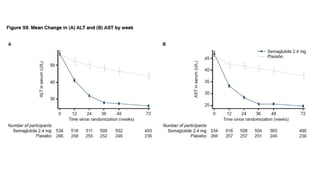
• Additional benefits: Weight loss, improved liver enzymes, and quality
of life.
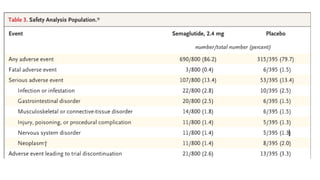
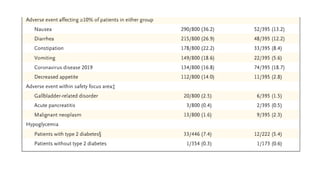
• Safe and well-tolerated with manageable adverse events.
• Potential to transform MASH treatment landscape.
#10 NASH CRN fibrosis scale (which ranges from 0 to 4, with 4 denoting cirrhosis) CRN:Clinical Research Network
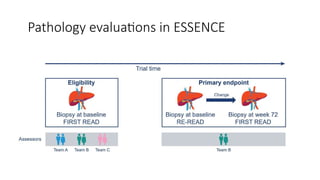
The NAS is a composite score of steatosis, lobular inflammation, and hepatocyte ballooning, with a score of ≥1 in each component, all based on an evaluation by a central pathologist. The scores range from 0 to 8, with a score of 5 or more indicating a diagnosis of definite NASH and a score of 3 or less ruling it out
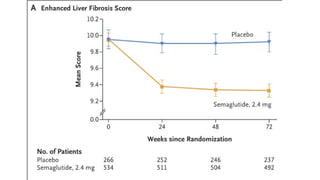
#22 Enhanced liver fibrosis score : three parameters 1.hyaluronic acid (HA), 2.procollagen III amino-terminal peptide (PIIINP), and 3. tissue inhibitor of metalloproteinase 1 (TIMP-1) <7.7: Little or no fibrosis (F0-F1). 7.7–9.8: Moderate fibrosis (F2-F3). >9.8: Severe fibrosis or cirrhosis (F4).
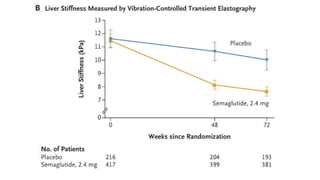
#23 The percentage of patients who met the prespecified definition of a decrease in the ELF score of 0.5 or more was 55.8% in the semaglutide group and 25.5% in the placebo group. The percentage of patients who met the response criteria for a decrease in liver stiffness of 30% or more was 52.0% with semaglutide and 30.3% with placebo
 Most read
 Most read
 Most read