Nutrition Therapy for
the Addicted Brain
*June 2016*
ASAM Disclosure of Relevant Financial
Relationships
Content of Activity: “Nutrition Therapy for
the Addicted Brain”
Date of Activity: June 4, 2016
Name Commercial
Interests
Relevant
Financial
Relationships:
What Was
Received
Relevant
Financial
Relationships:
For What Role
No Relevant
Financial
Relationships
with Any
Commercial
Interests
David Wiss MS
RDN
Nutrition in
Recovery,
Founder and
Owner
LECTURE OBJECTIVES
1. Discuss the impact of addictive substances on
nutritional status
2. Explore disordered and dysfunctional eating
patterns in addicted populations
3. Propose nutrition therapy guidelines for specific
substances and for poly-substance abuse
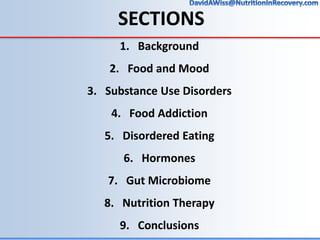
SECTIONS
1. Background
2. Food and Mood
3. Substance Use Disorders
4. Food Addiction
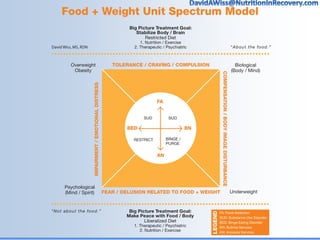
5. Disordered Eating
6. Hormones
7. Gut Microbiome
8. Nutrition Therapy
9. Conclusions
1. Background
BACKGROUND
• Substance Use Disorders
(SUDs) assoc. w/ vitamin &
mineral deficiencies1-6
• What about altered neuro-
circuitry?
• Nutrition-related hormones?
• Leptin, ghrelin, insulin
• Gut microbiome?
• We need to know more!
1. Estevez, J. F. D., Estevez, F. D., Calzadilla, C. H., Rodriquez,
E. M. R., Romero, C. D., & Serra-Majem, L. (2004).
Application of linear discriminant analysis to the biochemical
and haematological differentiation of opiate addicts from
healthy subjects: A case-control study. European Journal of
Clinical Nutrition, 58, 449-455
2. Heathcote, J., & Taylor, K. B. (1981). Immunity and
nutrition in heroin addicts. Drug and alcohol dependence, 8,
245-255.
3. Hossain, K. J., Kamal, M. M., Ahsan, M, & Islam, S. N.
(2007). Serum antioxidant micromineral (Cu, Zn, Fe) status of
drug dependent subjects: Influence of illicit drugs and
lifestyle. Substance Abuse Treatment, Prevention, and Policy,
2(12). Retrieved from
http://www.substanceabusepolicy.com/content/2/1/12
4. Islam, S. K. N., Hoassain, K. J., & Ahsan, M. (2001). Serum
vitamin E, C, and A status of the drug addicts undergoing
detoxification: influence of drug habit, sexual practice and
lifestyle factors. European Journal of Clinical Nutrition, 55,
1022-1027.
5. Ross, L. J., Wilson, M., Banks, M., Rezannah, F., & Daglish,
M. (2012). Prevalence of malnutrition and nutritional risk
factors in patients undergoing alcohol and drug treatment.
Nutrition, 28, 738-743.
6. Saeland, M., Haugen, M., Eriksen, F. L., Wandel, M.,
Smehaugen, A., Bohmer, T., & Oshaug, A. (2011). High sugar
consumption and poor nutrient intake among drug addicts in
Oslo, Norway. British Journal of Nutrition, 105, 618-624.
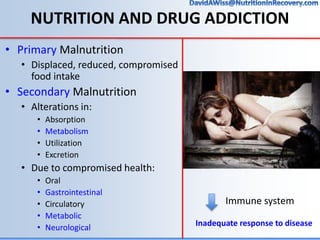
NUTRITION AND DRUG ADDICTION
• Primary Malnutrition
• Displaced, reduced, compromised
food intake
• Secondary Malnutrition
• Alterations in:
• Absorption
• Metabolism
• Utilization
• Excretion
• Due to compromised health:
• Oral
• Gastrointestinal
• Circulatory
• Metabolic
• Neurological
Immune system
Inadequate response to disease
DRUG ADDICTION VS. ALCOHOL
• Negative effect of alcohol on
nutritional status well-described
• Protocols in place (i.e. thiamine)
• Illicit drug-induced malnourishment
largely unknown
• Primary or secondary?
• Poly-drug abuse
• Ethical/legal challenges with
controlled trial research
• Poor patient follow-up
Most data speculative,
underpowered, retrospective
CURRENT CLIMATE
…Little progress incorporating dietitians
into drug rehabilitation programs despite
continued explosion of drug abuse
• Lack of interest from RDs???
• Associated stigmas of drug abuse
• Difficulties conducting research on this
population
• Non-collaboration between public
and private sector
• Limited funding for new initiatives
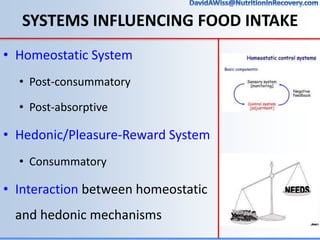
SYSTEMS INFLUENCING FOOD INTAKE
• Homeostatic System
• Post-consummatory
• Post-absorptive
• Hedonic/Pleasure-Reward System
• Consummatory
• Interaction between homeostatic
and hedonic mechanisms
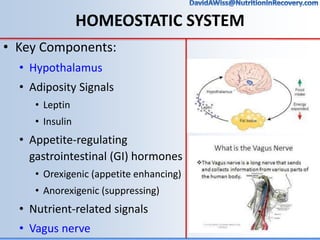
HOMEOSTATIC SYSTEM
• Key Components:
• Hypothalamus
• Adiposity Signals
• Leptin
• Insulin
• Appetite-regulating
gastrointestinal (GI) hormones
• Orexigenic (appetite enhancing)
• Anorexigenic (suppressing)
• Nutrient-related signals
• Vagus nerve
HEDONIC/PLEASURE-REWARD SYSTEM
• Brains response to rewarding
events essential for survival:
• Eating behavior
• Sexual behavior
• Associated pleasure influences
future behavior
• Ensures survival as a species
• Hedonic system
• Drawn toward pleasurable activities
• “Reward” (dopamine)
• Cognitive and emotional factors
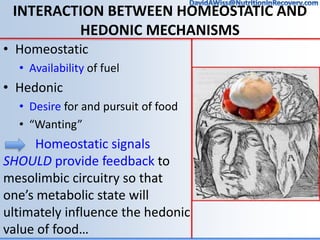
INTERACTION BETWEEN HOMEOSTATIC AND
HEDONIC MECHANISMS
• Homeostatic
• Availability of fuel
• Hedonic
• Desire for and pursuit of food
• “Wanting”
Homeostatic signals
SHOULD provide feedback to
mesolimbic circuitry so that
one’s metabolic state will
ultimately influence the hedonic
value of food…
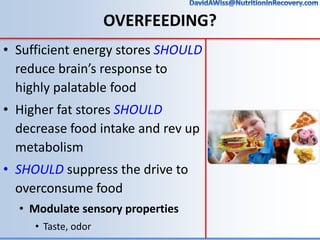
OVERFEEDING?
• Sufficient energy stores SHOULD
reduce brain’s response to
highly palatable food
• Higher fat stores SHOULD
decrease food intake and rev up
metabolism
• SHOULD suppress the drive to
overconsume food
• Modulate sensory properties
• Taste, odor
HEDONIC OVERRIDES HOMEOSTATIC
• Pleasurable effect of highly
palatable food very
MOTIVATING
• “Food Motivation”
• Contemporary food is
supercharging our reward
systems!
• Hedonic drive (once provided
evolutionary advantage) has
now transformed into a burden
2. Food and Mood
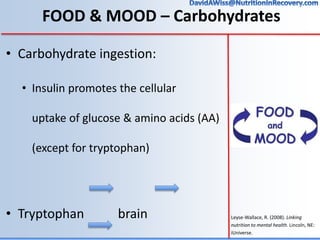
FOOD & MOOD – Carbohydrates
• Carbohydrate ingestion:
• Insulin promotes the cellular
uptake of glucose & amino acids (AA)
(except for tryptophan)
• Tryptophan brain Leyse-Wallace, R. (2008). Linking
nutrition to mental health. Lincoln, NE:
iUniverse.
FOOD & MOOD – Protein
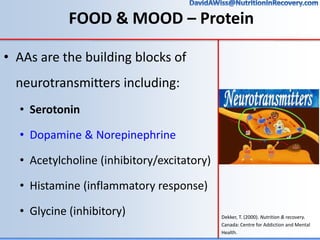
• AAs are the building blocks of
neurotransmitters including:
• Serotonin
• Dopamine & Norepinephrine
• Acetylcholine (inhibitory/excitatory)
• Histamine (inflammatory response)
• Glycine (inhibitory) Dekker, T. (2000). Nutrition & recovery.
Canada: Centre for Addiction and Mental
Health.
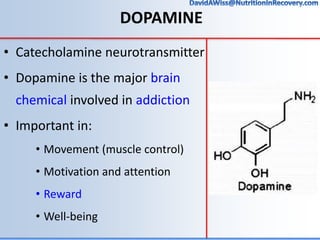
DOPAMINE
• Catecholamine neurotransmitter
• Dopamine is the major brain
chemical involved in addiction
• Important in:
• Movement (muscle control)
• Motivation and attention
• Reward
• Well-being
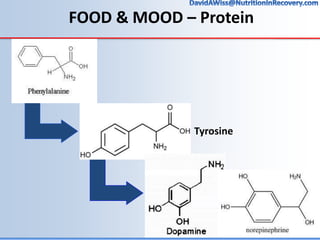
FOOD & MOOD – Protein
• Tyrosine
FOOD & MOOD – Protein
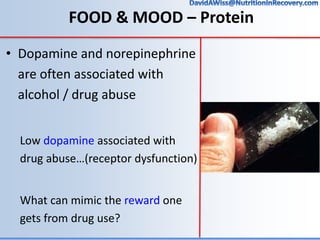
• Dopamine and norepinephrine
are often associated with
alcohol / drug abuse
Low dopamine associated with
drug abuse…(receptor dysfunction)
What can mimic the reward one
gets from drug use?
FOOD & MOOD – Fat
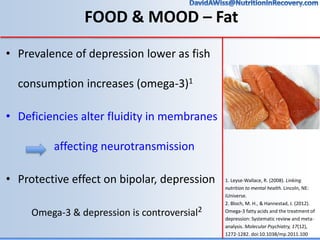
• Prevalence of depression lower as fish
consumption increases (omega-3)1
• Deficiencies alter fluidity in membranes
affecting neurotransmission
• Protective effect on bipolar, depression
Omega-3 & depression is controversial2
1. Leyse-Wallace, R. (2008). Linking
nutrition to mental health. Lincoln, NE:
iUniverse.
2. Bloch, M. H., & Hannestad, J. (2012).
Omega-3 fatty acids and the treatment of
depression: Systematic review and meta-
analysis. Molecular Psychiatry, 17(12),
1272-1282. doi:10.1038/mp.2011.100
3. Substance Use
Disorders (SUDs)
POLY-SUBSTANCE ABUSE
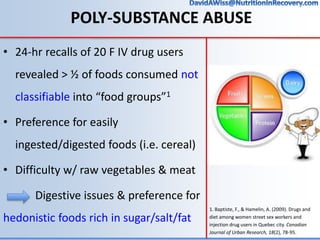
• 24-hr recalls of 20 F IV drug users
revealed > ½ of foods consumed not
classifiable into “food groups”1
• Preference for easily
ingested/digested foods (i.e. cereal)
• Difficulty w/ raw vegetables & meat
Digestive issues & preference for
hedonistic foods rich in sugar/salt/fat
1. Baptiste, F., & Hamelin, A. (2009). Drugs and
diet among women street sex workers and
injection drug users in Quebec city. Canadian
Journal of Urban Research, 18(2), 78-95.
POLY-SUBSTANCE ABUSE
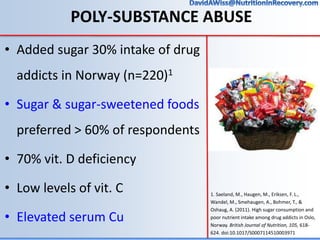
• Added sugar 30% intake of drug
addicts in Norway (n=220)1
• Sugar & sugar-sweetened foods
preferred > 60% of respondents
• 70% vit. D deficiency
• Low levels of vit. C
• Elevated serum Cu
1. Saeland, M., Haugen, M., Eriksen, F. L.,
Wandel, M., Smehaugen, A., Bohmer, T., &
Oshaug, A. (2011). High sugar consumption and
poor nutrient intake among drug addicts in Oslo,
Norway. British Journal of Nutrition, 105, 618-
624. doi:10.1017/S0007114510003971
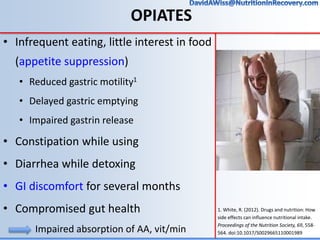
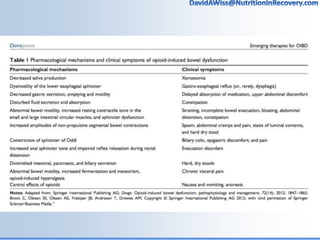
OPIATES
• Infrequent eating, little interest in food
(appetite suppression)
• Reduced gastric motility1
• Delayed gastric emptying
• Impaired gastrin release
• Constipation while using
• Diarrhea while detoxing
• GI discomfort for several months
• Compromised gut health
Impaired absorption of AA, vit/min
1. White, R. (2012). Drugs and nutrition: How
side effects can influence nutritional intake.
Proceedings of the Nutrition Society, 69, 558-
564. doi:10.1017/S0029665110001989
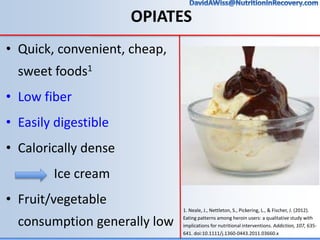
OPIATES
• Quick, convenient, cheap,
sweet foods1
• Low fiber
• Easily digestible
• Calorically dense
Ice cream
• Fruit/vegetable
consumption generally low
1. Neale, J., Nettleton, S., Pickering, L., & Fischer, J. (2012).
Eating patterns among heroin users: a qualitative study with
implications for nutritional interventions. Addiction, 107, 635-
641. doi:10.1111/j.1360-0443.2011.03660.x
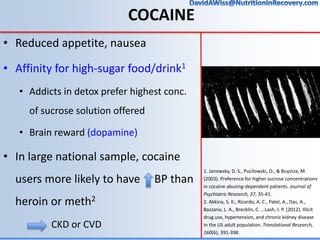
COCAINE
• Reduced appetite, nausea
• Affinity for high-sugar food/drink1
• Addicts in detox prefer highest conc.
of sucrose solution offered
• Brain reward (dopamine)
• In large national sample, cocaine
users more likely to have BP than
heroin or meth2
CKD or CVD
1. Janowsky, D. S., Pucilowski, O., & Buyinza, M.
(2003). Preference for higher sucrose concentrations
in cocaine abusing-dependent patients. Journal of
Psychiatric Research, 37, 35-41.
2. Akkina, S. K., Ricardo, A. C., Patel, A., Das, A.,
Bazzano, L. A., Brecklin, C. ...Lash, J. P. (2012). Illicit
drug use, hypertension, and chronic kidney disease
in the US adult population. Translational Research,
160(6), 391-398.
COCAINE
• Low levels of omega-3 and omega-6
linked to relapse1
• May stem from increased anxiety
associated w/ low PUFA2
• Addiction stripping brain EFAs3
• Impaired utilization of AAs for NT
synthesis (serotonin, dopamine)
• Amino acid therapy???
1. Buydens-Branchey, L., Branchey, M., McMakin,
D. L., & Hibbeln, J. R. (2003). Polyunsaturated fatty
acid status and relapse vulnerability in cocaine
addicts. Psychiatry Research, 120, 29-35.
doi:10.1016/S0165-1781(03)00168-9
2. Buydens-Branchey, L., & Branchey, M. (2006).
N-3 polyunsaturated fatty acids decrease anxiety
feelings in a population of substance abusers.
Journal of Clinical Psychopharmacology, 26(6).
doi:10.1097/01.jcp.0000246214.49271.fl
3. 1. Grotzkyj-Giorgi, M. (2009). Nutrition and
addiction – can dietary changes assist with
recovery?. Drugs and Alcohol Today, 9(2), 24-28.
COCAINE – AMINO ACID THERAPY?
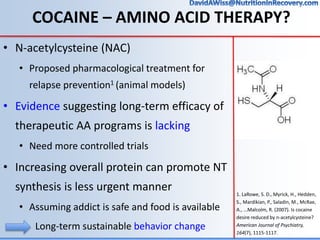
• N-acetylcysteine (NAC)
• Proposed pharmacological treatment for
relapse prevention1 (animal models)
• Evidence suggesting long-term efficacy of
therapeutic AA programs is lacking
• Need more controlled trials
• Increasing overall protein can promote NT
synthesis is less urgent manner
• Assuming addict is safe and food is available
Long-term sustainable behavior change
1. LaRowe, S. D., Myrick, H., Hedden,
S., Mardikian, P., Saladin, M., McRae,
A., ...Malcolm, R. (2007). Is cocaine
desire reduced by n-acetylcysteine?
American Journal of Psychiatry,
164(7), 1115-1117.
METHAMPHETAMINE
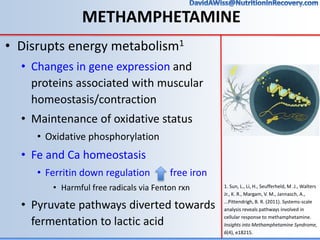
• Disrupts energy metabolism1
• Changes in gene expression and
proteins associated with muscular
homeostasis/contraction
• Maintenance of oxidative status
• Oxidative phosphorylation
• Fe and Ca homeostasis
• Ferritin down regulation free iron
• Harmful free radicals via Fenton rxn
• Pyruvate pathways diverted towards
fermentation to lactic acid
1. Sun, L., Li, H., Seufferheld, M .J., Walters
Jr., K. R., Margam, V. M., Jannasch, A.,
...Pittendrigh, B. R. (2011). Systems-scale
analysis reveals pathways involved in
cellular response to methamphetamine.
Insights into Methamphetamine Syndrome,
6(4), e18215.
METHAMPHETAMINE
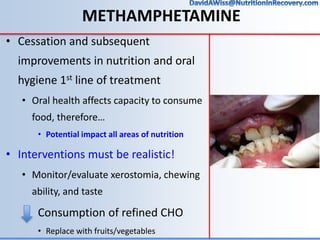
• > 40% meth users had dental/oral dz1
• Almost 60% had missing teeth
• IV users higher rates of dental dz compared
to smoking/snorting, and to other IV drugs2
• Altered Ca utilization?3
• High intake refined CHO, high calorie
carbonated beverages, increased acidity in
oral cavity, GI regurgitation/vomiting4
“Meth mouth”
1. Shetty, V., Mooney, L. J., Zigler, C.
M., Belin, T. R., Murphy, D., &
Rawson, R. (2010). The relationship
between methamphetamine use
and increased dental disease.
Journal of the American Dental
Association, 141(3), 307-318.
2. Laslett, A., Dietze, P., & Dwyer, R.
(2008). The oral health of street-
recruited injecting drug users:
Prevalence and correlates of
problem. Addiction, 103, 1821-
1825. doi:10.1111/j.1360-
0443.2008.02339.x
3. Sun, L., Li, H., Seufferheld, M .J.,
Walters Jr., K. R., Margam, V. M.,
Jannasch, A., ...Pittendrigh, B. R.
(2011). Systems-scale analysis
reveals pathways involved in
cellular response to
methamphetamine. Insights into
methamphetamine syndrome, 6(4),
e18215.
4. Hamamoto, D. T., & Rhodus, N. L.
(2009). Methamphetamine abuse
and dentistry. Oral Diseases, 15, 27-
37. doi:10.1111/j.1601-
0825.2008.01459.x
METHAMPHETAMINE
• Cessation and subsequent
improvements in nutrition and oral
hygiene 1st line of treatment
• Oral health affects capacity to consume
food, therefore…
• Potential impact all areas of nutrition
• Interventions must be realistic!
• Monitor/evaluate xerostomia, chewing
ability, and taste
Consumption of refined CHO
• Replace with fruits/vegetables
“SOCIAL DRUGS”
CAFFEINE & NICOTINE
• Used together for synergistic effects
• Caffeine as cue for nicotine
• Some treatment centers do not
allow “social drugs,” others allow
without any formal regulation
• Often used as a breakfast substitute
for individuals in recovery, which
may have adverse effects in the
afternoon1
1. Dekker, T. (2000). Nutrition and recovery.
Toronto, CAN: Centre for Addiction and Mental
Health.
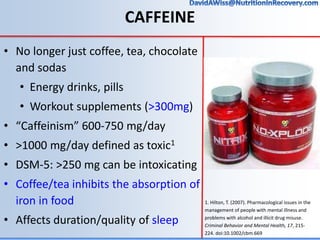
CAFFEINE
• No longer just coffee, tea, chocolate
and sodas
• Energy drinks, pills
• Workout supplements (>300mg)
• “Caffeinism” 600-750 mg/day
• >1000 mg/day defined as toxic1
• DSM-5: >250 mg can be intoxicating
• Coffee/tea inhibits the absorption of
iron in food
• Affects duration/quality of sleep
1. Hilton, T. (2007). Pharmacological issues in the
management of people with mental illness and
problems with alcohol and illicit drug misuse.
Criminal Behavior and Mental Health, 17, 215-
224. doi:10.1002/cbm.669
Yudko, E., & McNiece, S. I., (2014). Relationship between coffee use and
depression and anxiety in a population of adult polysubstance abusers.
Journal of Addiction Medicine, 8(6), 438-442.
• N = 69
• Mean age = 35
• Treatment center in rural Hawaii
• Racially diverse
• About half Pacific Islander
• Coffee use associated with
depression
• Beck Depression Inventory
• Direction of causality?
NICOTINE
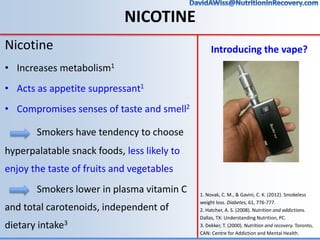
Nicotine
• Increases metabolism1
• Acts as appetite suppressant1
• Compromises senses of taste and smell2
Smokers have tendency to choose
hyperpalatable snack foods, less likely to
enjoy the taste of fruits and vegetables
Smokers lower in plasma vitamin C
and total carotenoids, independent of
dietary intake3
Introducing the vape?
1. Novak, C. M., & Gavini, C. K. (2012). Smokeless
weight loss. Diabetes, 61, 776-777.
2. Hatcher, A. S. (2008). Nutrition and addictions.
Dallas, TX: Understanding Nutrition, PC.
3. Dekker, T. (2000). Nutrition and recovery. Toronto,
CAN: Centre for Addiction and Mental Health.
“SOCIAL DRUG” USE – THOUGHTS
• Caffeine and nicotine can impact one’s hunger/fullness cues and
lead to dysfunctional eating behavior
• Dietitians in treatment settings can help patients meet reduction or
cessation goals when ready
• By focusing on the benefits of improved physical health, patients will
be positioned to make informed choices about what they eat
• Strict avoidance of caffeine during early recovery may make
nutrition seem punitive vs. a helpful component of recovery
• “First things first” – complete avoidance may lead to relapse
• Nutrition education and counseling can become an effective
adjunctive approach towards caffeine/nicotine reduction/cessation
LET’S BE PRACTICAL – BIG PICTURE
• Caffeine, nicotine, and hyperpalatable food may have beneficial
functions in early recovery!
• First issue is always to get the individual past the immediate crisis…
• “Many of us have noticed a tendency to eat sweets and have found
this practice beneficial.” –AA Big Book, p. 134
• Prolonged abuse after abstinence achieved may contribute to:
• Comorbid conditions
• Compromised quality of life
• Decreased likelihood of long-term recovery
• Overall healthcare burden
4. Food Addiction (FA)
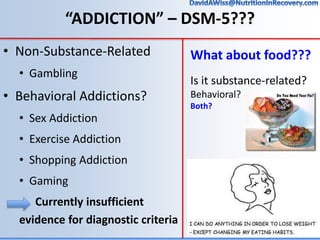
“ADDICTION” – DSM-5???
• Non-Substance-Related
• Gambling
• Behavioral Addictions?
• Sex Addiction
• Exercise Addiction
• Shopping Addiction
• Gaming
Currently insufficient
evidence for diagnostic criteria
What about food???
Is it substance-related?
Behavioral?
Both?
THE CONTROVERSY OF FOOD ADDICTION
• Is overeating a behavioral problem
or a substance related problem?
• Does obesity stem from high-risk
people or high-risk foods?
• Abstinence from offending “drug
foods”?
• Risk factor for binge eating?
• Or abstinence from offending
behaviors?
• Classic ED treatment
CURRENT CLIMATE
• Eating disorder (ED) clinicians
uneasy about incorporating FA
• Classic EDs such as AN-R do not
resemble an addiction
• Education about FA will cause
those with restrictive EDs to
deepen into their ED
• Challenges the classic messages:
• “All foods fit”
• “Everything in moderation”
• “A calorie is a calorie”
• “Food is fuel”
Meanwhile…
Standard ED treatment is
associated with high rates of
relapse and poor long-term
remission rates1
1. Bergh, C., Callmar, M., Danemar, S., Holcke, M.,
Isberg, S., Leon, M., ...Sodersten, P. (2013). Effective
treatment of eating disorders: Results at multiple
sites. Behavioral Neuroscience, 127(6), 878-889.
MODERATION?
• Perceived (vs. defined)
• Self-serving biases
• Justify over-consumption
• Used to reduce self-conflict
• Very appealing message
• More part of the problem
than the solution
• Misinterpreted & misapplied
• Big Food loves “moderation” vanDellen, M. R., Isherwood, J. C., & Delose, J. E. (2016). How
do people define moderation? Appetite, 101, 156-162.
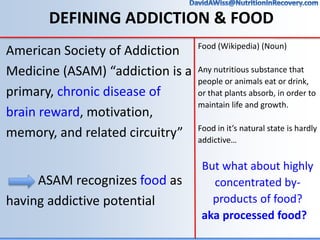
DEFINING ADDICTION & FOOD
American Society of Addiction
Medicine (ASAM) “addiction is a
primary, chronic disease of
brain reward, motivation,
memory, and related circuitry”
ASAM recognizes food as
having addictive potential
Food (Wikipedia) (Noun)
Any nutritious substance that
people or animals eat or drink,
or that plants absorb, in order to
maintain life and growth.
Food in it’s natural state is hardly
addictive…
But what about highly
concentrated by-
products of food?
aka processed food?
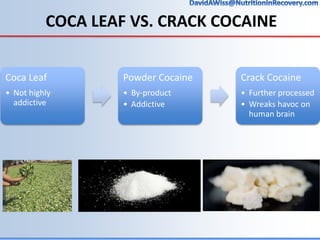
COCA LEAF VS. CRACK COCAINE
Coca Leaf
• Not highly
addictive
Powder Cocaine
• By-product
• Addictive
Crack Cocaine
• Further processed
• Wreaks havoc on
human brain
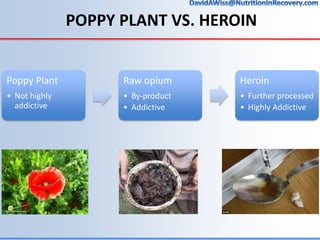
POPPY PLANT VS. HEROIN
Poppy Plant
• Not highly
addictive
Raw opium
• By-product
• Addictive
Heroin
• Further processed
• Highly Addictive
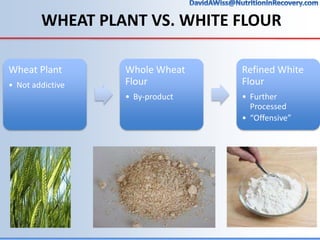
WHEAT PLANT VS. WHITE FLOUR
Wheat Plant
• Not addictive
Whole Wheat
Flour
• By-product
Refined White
Flour
• Further
Processed
• “Offensive”
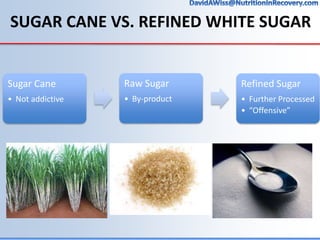
SUGAR CANE VS. REFINED WHITE SUGAR
Sugar Cane
• Not addictive
Raw Sugar
• By-product
Refined Sugar
• Further Processed
• “Offensive”
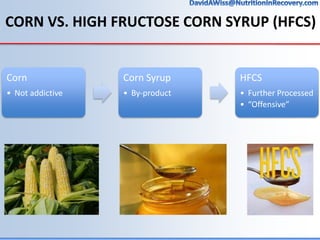
CORN VS. HIGH FRUCTOSE CORN SYRUP (HFCS)
Corn
• Not addictive
Corn Syrup
• By-product
HFCS
• Further Processed
• “Offensive”
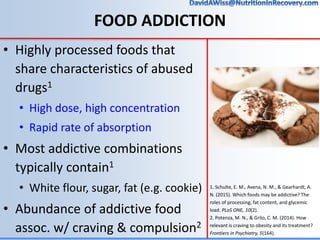
FOOD ADDICTION
• Highly processed foods that
share characteristics of abused
drugs1
• High dose, high concentration
• Rapid rate of absorption
• Most addictive combinations
typically contain1
• White flour, sugar, fat (e.g. cookie)
• Abundance of addictive food
assoc. w/ craving & compulsion2
1. Schulte, E. M., Avena, N. M., & Gearhardt, A.
N. (2015). Which foods may be addictive? The
roles of processing, fat content, and glycemic
load. PLoS ONE, 10(2).
2. Potenza, M. N., & Grilo, C. M. (2014). How
relevant is craving to obesity and its treatment?
Frontiers in Psychiatry, 5(164).
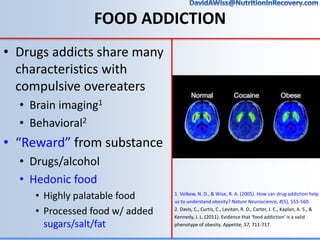
FOOD ADDICTION
• Drugs addicts share many
characteristics with
compulsive overeaters
• Brain imaging1
• Behavioral2
• “Reward” from substance
• Drugs/alcohol
• Hedonic food
• Highly palatable food
• Processed food w/ added
sugars/salt/fat
1. Volkow, N. D., & Wise, R. A. (2005). How can drug addiction help
us to understand obesity? Nature Neuroscience, 8(5), 555-560.
2. Davis, C., Curtis, C., Levitan, R. D., Carter, J. C., Kaplan, A. S., &
Kennedy, J. L. (2011). Evidence that 'food addiction' is a valid
phenotype of obesity. Appetite, 57, 711-717.
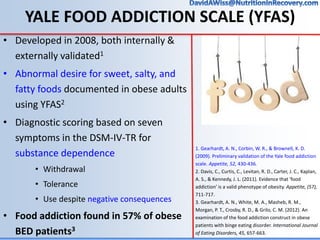
YALE FOOD ADDICTION SCALE (YFAS)
• Developed in 2008, both internally &
externally validated1
• Abnormal desire for sweet, salty, and
fatty foods documented in obese adults
using YFAS2
• Diagnostic scoring based on seven
symptoms in the DSM-IV-TR for
substance dependence
• Withdrawal
• Tolerance
• Use despite negative consequences
• Food addiction found in 57% of obese
BED patients3
1. Gearhardt, A. N., Corbin, W. R., & Brownell, K. D.
(2009). Preliminary validation of the Yale food addiction
scale. Appetite, 52, 430-436.
2. Davis, C., Curtis, C., Levitan, R. D., Carter, J. C., Kaplan,
A. S., & Kennedy, J. L. (2011). Evidence that ‘food
addiction’ is a valid phenotype of obesity. Appetite, (57),
711-717.
3. Gearhardt, A. N., White, M. A., Masheb, R. M.,
Morgan, P. T., Crosby, R. D., & Grilo, C. M. (2012). An
examination of the food addiction construct in obese
patients with binge eating disorder. International Journal
of Eating Disorders, 45, 657-663.
FOOD ADDICTION – CULPRITS
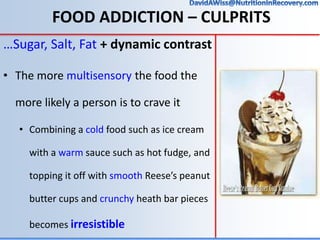
…Sugar, Salt, Fat + dynamic contrast
• The more multisensory the food the
more likely a person is to crave it
• Combining a cold food such as ice cream
with a warm sauce such as hot fudge, and
topping it off with smooth Reese’s peanut
butter cups and crunchy heath bar pieces
becomes irresistible
FOOD ADDICTION – CULPRITS
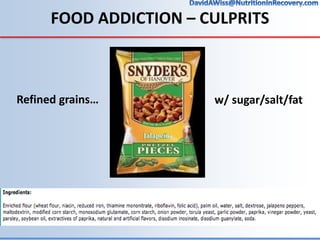
Refined grains… w/ sugar/salt/fat
FOOD ADDICTION – CULPRITS
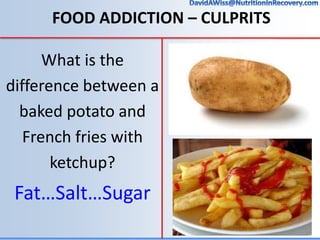
What is the
difference between a
baked potato and
French fries with
ketchup?
Fat…Salt…Sugar
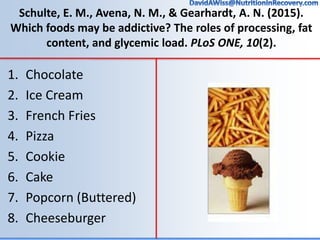
Schulte, E. M., Avena, N. M., & Gearhardt, A. N. (2015).
Which foods may be addictive? The roles of processing, fat
content, and glycemic load. PLoS ONE, 10(2).
1. Chocolate
2. Ice Cream
3. French Fries
4. Pizza
5. Cookie
6. Cake
7. Popcorn (Buttered)
8. Cheeseburger
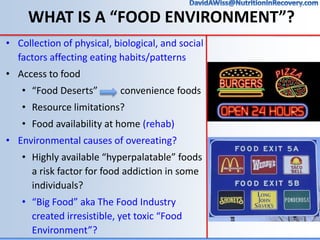
WHAT IS A “FOOD ENVIRONMENT”?
• Collection of physical, biological, and social
factors affecting eating habits/patterns
• Access to food
• “Food Deserts” convenience foods
• Resource limitations?
• Food availability at home (rehab)
• Environmental causes of overeating?
• Highly available “hyperpalatable” foods
a risk factor for food addiction in some
individuals?
• “Big Food” aka The Food Industry
created irresistible, yet toxic “Food
Environment”?
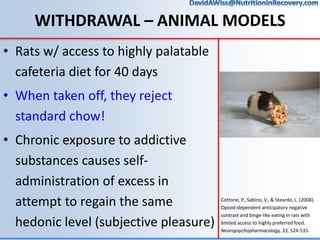
WITHDRAWAL – ANIMAL MODELS
• Rats w/ access to highly palatable
cafeteria diet for 40 days
• When taken off, they reject
standard chow!
• Chronic exposure to addictive
substances causes self-
administration of excess in
attempt to regain the same
hedonic level (subjective pleasure)
Cottone, P., Sabino, V., & Steardo, L. (2008).
Opioid-dependent anticipatory negative
contrast and binge-like eating in rats with
limited access to highly preferred food.
Neuropsychopharmacology, 33, 524-535.
BED vs. FOOD ADDICTION
Binge Eating Disorder
• Ate the whole box of
chocolates in one sitting
• Psychological/emotional
• DSM-5 clinical diagnosis,
insurance reimbursement
Food Addiction
• Ate the whole box over
several sittings
• Biological/neurochemical
• Not recognized or
reimbursable
There are more similarities than there are differences…
Obesity can exist without either one!
FOOD ADDICTION
• Reward-responsive phenotype
of obesity1
• Can exist without obesity2
• And without BED
• Food becomes less rewarding
and more habitual3
• Alterations in dopamine circuitry
• Low levels of DA transmission
linked w/ heightened
propensities towards substance
abuse in bulimic women4
1. Davis, Caroline (2013). Compulsive overeating
as an addictive behavior: Overlap between food
addiction and binge eating disorder. Current
Obesity Reports, 2, 171-178.
2. Eichen, D. M., Lent, M. R., Goldbacher, E., &
Foster, G. D. (2013). Exploration of "food
addiction" in overweight and obese treatment-
seeking adults. Appetite, 67, 22-24.
3. Guo, J., Simmons, W. K., Herscovitch, P., Martin,
A., & Hall, K. D. (2014). Striatal dopamine D2-like
receptor correlation with human obesity and
opportunistic eating behavior. Molecular
Psychiatry, 1-7.
4. Steiger, H., Thaler, L., Gauvin, L., Joober, R.,
Labbe, A., Israel, M., & Kucer, A. (2016). Epistatic
interactions involving DRD2, DRD4, and COMT
polymorphisms and risk of substance abuse in
women with binge-purge eating disturbances.
Journal of Psychiatric Research, 77, 8-14.
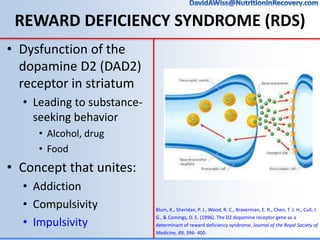
REWARD DEFICIENCY SYNDROME (RDS)
• Dysfunction of the
dopamine D2 (DAD2)
receptor in striatum
• Leading to substance-
seeking behavior
• Alcohol, drug
• Food
• Concept that unites:
• Addiction
• Compulsivity
• Impulsivity
Blum, K., Sheridan, P. J., Wood, R. C., Braverman, E. R., Chen, T. J. H., Cull, J.
G., & Comings, D. E. (1996). The D2 dopamine receptor gene as a
determinant of reward deficiency syndrome. Journal of the Royal Society of
Medicine, 89, 396- 400.
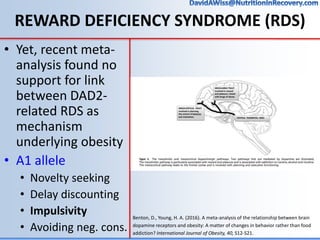
REWARD DEFICIENCY SYNDROME (RDS)
• Yet, recent meta-
analysis found no
support for link
between DAD2-
related RDS as
mechanism
underlying obesity
• A1 allele
• Novelty seeking
• Delay discounting
• Impulsivity
• Avoiding neg. cons.
Benton, D., Young, H. A. (2016). A meta-analysis of the relationship between brain
dopamine receptors and obesity: A matter of changes in behavior rather than food
addiction? International Journal of Obesity, 40, S12-S21.
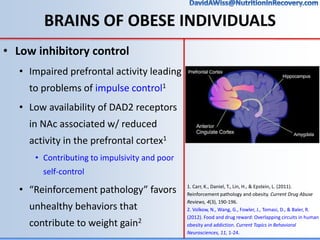
BRAINS OF OBESE INDIVIDUALS
• Low inhibitory control
• Impaired prefrontal activity leading
to problems of impulse control1
• Low availability of DAD2 receptors
in NAc associated w/ reduced
activity in the prefrontal cortex1
• Contributing to impulsivity and poor
self-control
• “Reinforcement pathology” favors
unhealthy behaviors that
contribute to weight gain2
1. Carr, K., Daniel, T., Lin, H., & Epstein, L. (2011).
Reinforcement pathology and obesity. Current Drug Abuse
Reviews, 4(3), 190-196.
2. Volkow, N., Wang, G., Fowler, J., Tomasi, D., & Baler, R.
(2012). Food and drug reward: Overlapping circuits in human
obesity and addiction. Current Topics in Behavioral
Neurosciences, 11, 1-24.
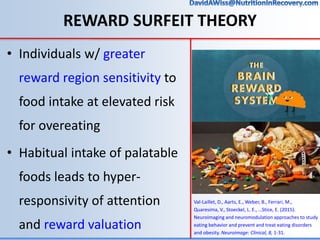
REWARD SURFEIT THEORY
• Individuals w/ greater
reward region sensitivity to
food intake at elevated risk
for overeating
• Habitual intake of palatable
foods leads to hyper-
responsivity of attention
and reward valuation
Val-Laillet, D., Aarts, E., Weber, B., Ferrari, M.,
Quaresima, V., Stoeckel, L. E., …Stice, E. (2015).
Neuroimaging and neuromodulation approaches to study
eating behavior and prevent and treat eating disorders
and obesity. Neuroimage: Clinical, 8, 1-31.
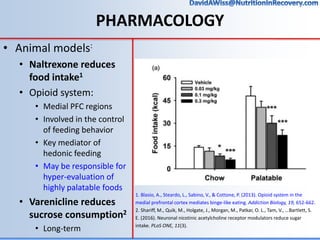
PHARMACOLOGY
• Animal models:
• Naltrexone reduces
food intake1
• Opioid system:
• Medial PFC regions
• Involved in the control
of feeding behavior
• Key mediator of
hedonic feeding
• May be responsible for
hyper-evaluation of
highly palatable foods
• Varenicline reduces
sucrose consumption2
• Long-term
1. Blasio, A., Steardo, L., Sabino, V., & Cottone, P. (2013). Opioid system in the
medial prefrontal cortex mediates binge-like eating. Addiction Biology, 19, 652-662.
2. Shariff, M., Quik, M., Holgate, J., Morgan, M., Patkar, O. L., Tam, V., ...Bartlett, S.
E. (2016). Neuronal nicotinic acetylcholine receptor modulators reduce sugar
intake. PLoS ONE, 11(3).
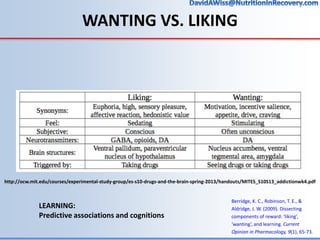
WANTING VS. LIKING
Berridge, K. C., Robinson, T. E., &
Aldridge, J. W. (2009). Dissecting
components of reward: ‘liking’,
‘wanting’, and learning. Current
Opinion in Pharmacology, 9(1), 65-73.
http://ocw.mit.edu/courses/experimental-study-group/es-s10-drugs-and-the-brain-spring-2013/handouts/MITES_S10S13_addictionwk4.pdf
LEARNING:
Predictive associations and cognitions
5. Disordered Eating
CO-OCCURING SUBSTANCE USE DISORDER (SUD) &
EATING DISORDER (ED)
• HOT TOPIC (shortage of data!)
• Anorexia nervosa (AN) + AUD
• Alcohol use disorder (AUD) + AN
• Bulimia nervosa (BN) + AUD
• AUD + BN
• BN + SUD
• SUD + BN
• Binge eating disorder (BED) + SUD
• SUD + BED (often sub-threshold)
BACKGROUND
• Substance Use Disorders (SUD)
on the rise
• Eating Disorder (ED) + SUD
• SUD + ED
• Bidirectional associations1,2
• Most of the research conducted
on females with AN and bulimia
nervosa (BN)
• “Drunkorexia”3
1. Baker, J. H., Mitchell, K. S., Neale, M. C., & Kendler,
K. S. (2010). Eating disorder symptomatology and
substance use disorders: Prevalence and shared risk in
a population based twin sample. International Journal
of Eating Disorders, 43, 648-658.
2. Grilo. C. M., Levy, K. N., Becker, D. F., Edell, W. S., &
McGlashan, T. H. (1995). Eating disorders in female
inpatients with versus without substance use
disorders. Addictive Behaviors, 20(2), 255-260.
3. Hunt, T. K., & Forbush, K. T. (2016). Is "drunkorexia"
an eating disorder, substance use disorder, or both?
Eating Behaviors, 22, 40-45.
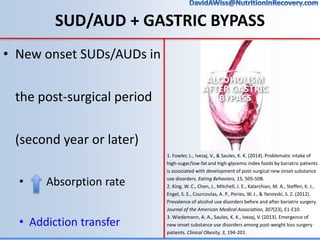
SUD/AUD + GASTRIC BYPASS
• New onset SUDs/AUDs in
the post-surgical period
(second year or later)
• Absorption rate
• Addiction transfer
1. Fowler, L., Ivezaj, V., & Saules, K. K. (2014). Problematic intake of
high-sugar/low-fat and high-glycemic index foods by bariatric patients
is associated with development of post-surgical new onset substance
use disorders. Eating Behaviors, 15, 505-508.
2. King, W. C., Chen, J., Mitchell, J. E., Kalarchian, M. A., Steffen, K. J.,
Engel, S. E., Courcoulas, A. P., Pories, W. J., & Yanovski, S. Z. (2012).
Prevalence of alcohol use disorders before and after bariatric surgery.
Journal of the American Medical Association, 307(23), E1-E10.
3. Wiedemann, A. A., Saules, K. K., Ivezaj, V. (2013). Emergence of
new onset substance use disorders among post-weight loss surgery
patients. Clinical Obesity, 3, 194-201.
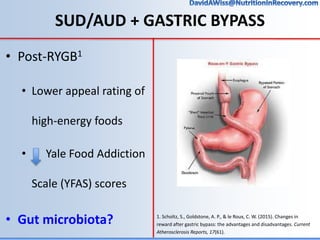
SUD/AUD + GASTRIC BYPASS
• Post-RYGB1
• Lower appeal rating of
high-energy foods
• Yale Food Addiction
Scale (YFAS) scores
• Gut microbiota? 1. Scholtz, S., Goldstone, A. P., & le Roux, C. W. (2015). Changes in
reward after gastric bypass: the advantages and disadvantages. Current
Atherosclerosis Reports, 17(61).
SUD – DISORDERED EATING
• Women in SUD treatment1
• BED and sub-threshold BED
• Bulimia nervosa
• Men in SUD treatment2
• First 6 months
• Bingeing
• Use of food to satisfy drug cravings
• 7-36 months
• Weight concerns, distress about
efforts to lose weight
1. Czarlinksi, J. A., Aase, D. M., & Jason, L. A. (2012).
Eating disorders, normative eating self-efficacy and
body image self-efficacy: Women in recovery homes.
European Eating Disorders Review, 20, 190-195.
2. Cowan, J., & Devine, C. (2008). Food, eating, and
weight concerns of men in recovery from substance
addiction. Appetite, 50, 33-42.
doi:10.1016/j.appet.2007.05.006
NUTRITION & ADDICTION TREATMENT
• Disordered eating
• Drug abuse risk factor for EDs1
• Genetic and environmental2
• Increased sugar use over time3
• Alcohol linked to bingeing/purging4
1. Krahn, D. D. (1991). The relationship of
eating disorders and substance abuse. Journal
of Substance Abuse, 3(2), 239-253.
2. Munn-Chernoff, M. A., Duncan, A. E., Grant,
J. D., Wade, T. D., Agrawal, A., Bucholz, K. K., ...
Heath, A. C. (2013). A twin study of alcohol
dependence, binge eating, and compensatory
behaviors. Journal of Studies on Alcohol and
Drugs, 74, 664-673.
3. Levine, A. S., Kotz, C. M., & Gosnell, B. A.
(2003). Sugar and fats: The neurobiology of
preference [Special section]. Journal of
Nutrition, 831S-834S.
4. Fischer, S., Anderson, K. G., & Smith, G. T.
(2004). Coping with distress by eating or
drinking: Role of trait urgency and
expectancies. Psychology of Addictive
Behaviors, 18(3), 269-274.
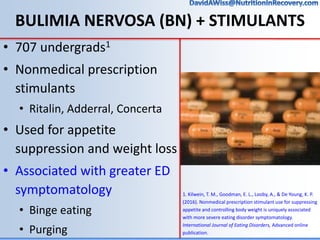
BULIMIA NERVOSA (BN) + STIMULANTS
• 707 undergrads1
• Nonmedical prescription
stimulants
• Ritalin, Adderral, Concerta
• Used for appetite
suppression and weight loss
• Associated with greater ED
symptomatology
• Binge eating
• Purging
1. Kilwein, T. M., Goodman, E. L., Looby, A., & De Young, K. P.
(2016). Nonmedical prescription stimulant use for suppressing
appetite and controlling body weight is uniquely associated
with more severe eating disorder symptomatology.
International Journal of Eating Disorders, Advanced online
publication.
BN + ADDICTION
• Associated with the eating or
the compensatory behaviors?1
• DSM-5 purging disorder
• Overlap between BN + FA
• Nutritional approach?
• Reduced exposure to addictive
foods?1
• Liberalize the diet?
• Food restriction increases reward
sensitivity, promotes rebound
bingeing2
1. Muele, A., von Rezori, V., & Blechert, J. (2014). Food
addiction and bulimia nervosa. European Eating
Disorders Review. doi:10.1002/erv.2306
2. Avena, N., Murray, S., & Gold, M. S. (2013).
Comparing the effects of food restriction and
overeating on brain reward systems. Experimental
Gerontology, 48, 1062-1067.
Umberg, E. N., Shader, R. I., Hsu, G., & Greenblatt, D. J. (2012). From disordered
eating to addiction: The "food drug" in bulimia nervosa. Journal of Clinical
Pharmacology, 32, 376-389.
• BN should be separated into
two distinct sub-types!!!
• Hyporesponsive to reward
• Akin to AN
• Hypersensitive reward circuitry
• Akin to FA
ED + FA
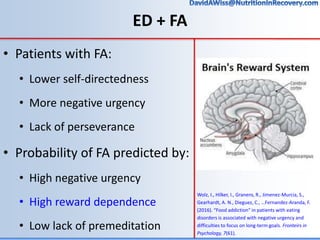
• Patients with FA:
• Lower self-directedness
• More negative urgency
• Lack of perseverance
• Probability of FA predicted by:
• High negative urgency
• High reward dependence
• Low lack of premeditation
Wolz, I., Hilker, I., Granero, R., Jimenez-Murcia, S.,
Gearhardt, A. N., Dieguez, C., …Fernandez-Aranda, F.
(2016). “Food addiction” in patients with eating
disorders is associated with negative urgency and
difficulties to focus on long-term goals. Fronteirs in
Psychology, 7(61).
BED + SUD
• Approximately one fourth
of BED patients have SUD1
• BED should be treated in a
way that acknowledges the
presence of a range of
binge eating phenotypes2
• Including co-occurring SUD1
1. Becker, D. F., & Grilo, C. M. (2015). Comorbidity of mood and
substance use disorders in patients with binge eating disorder:
Associations with personality disorder and eating disorder
pathology. Journal of Psychosomatic Research. Advance online
publication. Retrieved from
http://dx.doi.org/10.1016/j.psychores.2015.01.016
2. Marcus, M. D., & Wildes, J. E. (2014). Disordered eating in
obese individuals. Current opinion in psychiatry, 27(6), 443-
447.
DISORDERED EATING
• Body image issues often relevant to both
AUD/SUD patients
• Does not always imply presence of ED
• Early recovery is stressful!
• Craving, compulsivity
• Relapse risk
• Substance abuse linked to low distress
tolerance, leading to consumption of food1
• Night Eating Syndrome
1. Kozak, A. T., & Fought, A. (2011).
Beyond alcohol and drug addiction.
Does the negative trait of low
distress tolerance have an
association with overeating?
Appetite, 57, 578-581.
doi:10.1016/j.appet.2011.07.008
NIGHT EATING SYNDROME
• Severity associated with FA1
• Higher food tolerance
• Amount of food consumed
• Effect of consumed food
• Among psychiatric outpatients2
• Turkish sample:
• Depression
• Impulse control disorder
• Nicotine dependency
• Psych meds?
1. Nolan, L. J., & Geliebter, A. (2016). "Food
addiction" is associated with night eating
severity. Appetite, 98, 89-94.
2. Saracli, O., Atasoy, N., Akdemir, A., Guriz, O.,
Konuk, N., Sevincer, G. M., ...Atik, L. (2015). The
prevalence and clinical features of the night
eating syndrome in psychiatric out-patient
population. Comprehensive Psychiatry, 57, 79-
84.
6. Hormones
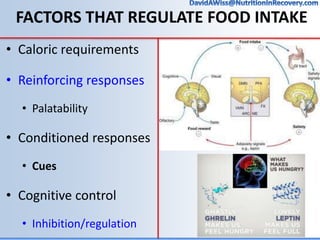
FACTORS THAT REGULATE FOOD INTAKE
• Caloric requirements
• Reinforcing responses
• Palatability
• Conditioned responses
• Cues
• Cognitive control
• Inhibition/regulation
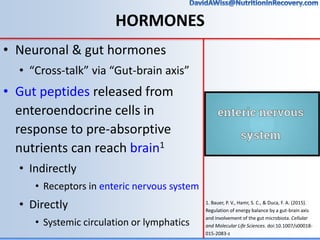
HORMONES
• Neuronal & gut hormones
• “Cross-talk” via “Gut-brain axis”
• Gut peptides released from
enteroendocrine cells in
response to pre-absorptive
nutrients can reach brain1
• Indirectly
• Receptors in enteric nervous system
• Directly
• Systemic circulation or lymphatics
1. Bauer, P. V., Hamr, S. C., & Duca, F. A. (2015).
Regulation of energy balance by a gut-brain axis
and involvement of the gut microbiota. Cellular
and Molecular Life Sciences. doi:10.1007/s00018-
015-2083-z
GUT-BRAIN AXIS
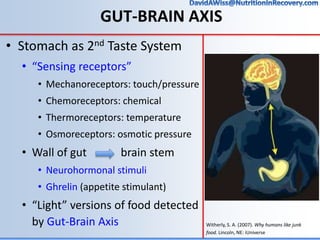
• Stomach as 2nd Taste System
• “Sensing receptors”
• Mechanoreceptors: touch/pressure
• Chemoreceptors: chemical
• Thermoreceptors: temperature
• Osmoreceptors: osmotic pressure
• Wall of gut brain stem
• Neurohormonal stimuli
• Ghrelin (appetite stimulant)
• “Light” versions of food detected
by Gut-Brain Axis Witherly, S. A. (2007). Why humans like junk
food. Lincoln, NE: iUniverse
VENTRAL TEGMENTAL AREA (VTA)
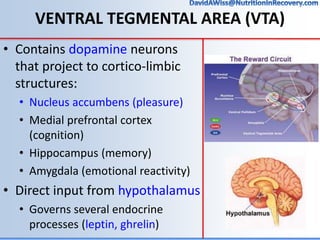
• Contains dopamine neurons
that project to cortico-limbic
structures:
• Nucleus accumbens (pleasure)
• Medial prefrontal cortex
(cognition)
• Hippocampus (memory)
• Amygdala (emotional reactivity)
• Direct input from hypothalamus
• Governs several endocrine
processes (leptin, ghrelin)
HYPOTHALAMUS
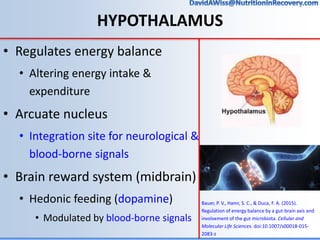
• Regulates energy balance
• Altering energy intake &
expenditure
• Arcuate nucleus
• Integration site for neurological &
blood-borne signals
• Brain reward system (midbrain)
• Hedonic feeding (dopamine)
• Modulated by blood-borne signals
Bauer, P. V., Hamr, S. C., & Duca, F. A. (2015).
Regulation of energy balance by a gut-brain axis and
involvement of the gut microbiota. Cellular and
Molecular Life Sciences. doi:10.1007/s00018-015-
2083-z
LEPTIN
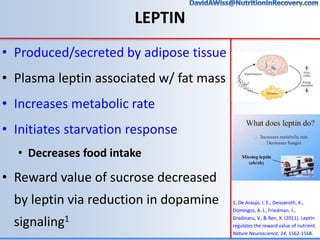
• Produced/secreted by adipose tissue
• Plasma leptin associated w/ fat mass
• Increases metabolic rate
• Initiates starvation response
• Decreases food intake
• Reward value of sucrose decreased
by leptin via reduction in dopamine
signaling1
1. De Araujo, I. E., Deisseroth, K.,
Domingos, A. I., Friedman, J.,
Gradinaru, V., & Ren, X. (2011). Leptin
regulates the reward value of nutrient.
Nature Neuroscience, 14, 1562-1568.
LEPTIN & CRAVING
• Leptin regulates homeostatic
center of hypothalamus
• Hedonic system1
• Subjective desires for food
• Food deprivation decreases
circulating leptin
• Contributing to preference for
highly palatable foods
• “Hunger is the best sauce”
• Leptin-dopamine interaction
• Bi-directional2
1. Schloegl, H., Percik, R., Hortsmann, A., Villringer, A., &
Stumvoll, M. (2011). Peptide hormones regulating
appetite - focus on neuroimaging studies in humans.
Diabetes/Metabolism Research and Reviews, 27, 104-112.
2. Leinninger, G. M. (2011). Lateral thinking about leptin:
A review of leptin action via the lateral hypothalamus.
Physiology and Behavior, 104(4), 572-581.
LEPTIN & CRAVING
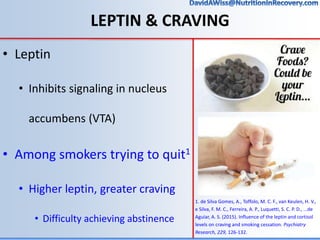
• Leptin
• Inhibits signaling in nucleus
accumbens (VTA)
• Among smokers trying to quit1
• Higher leptin, greater craving
• Difficulty achieving abstinence
1. de Silva Gomes, A., Toffolo, M. C. F., van Keulen, H. V.,
e Silva, F. M. C., Ferreira, A. P., Luquetti, S. C. P. D., ...de
Aguiar, A. S. (2015). Influence of the leptin and cortisol
levels on craving and smoking cessation. Psychiatry
Research, 229, 126-132.
GHRELIN
• Stimulates appetite
• Decreases after eating
• Opposing effects with leptin
• Leptin counters ghrelin
• Stomach-derived
• Receptors identified in VTA,
hippocampus, amygdala1
• Sight of food elevates ghrelin2
• Non-obese healthy subjects
1. Dagher, A (2012). Hunger, hunger, and food addiction.
In Brownell, K. D., & Gold, M. S., Food and addiction
(131-137). New York, NY: Oxford University Press.
2. Schussler, P., Kluge, M., Yassouridis, A., Dresler, M.,
Uhr, M., & Steiger, A. (2012). Ghrelin levels increases
after pictures showing food. Obesity, 20, 1212-1217.
INSULIN
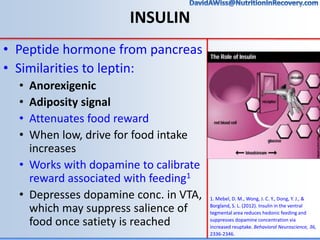
• Peptide hormone from pancreas
• Similarities to leptin:
• Anorexigenic
• Adiposity signal
• Attenuates food reward
• When low, drive for food intake
increases
• Works with dopamine to calibrate
reward associated with feeding1
• Depresses dopamine conc. in VTA,
which may suppress salience of
food once satiety is reached
1. Mebel, D. M., Wong, J. C. Y., Dong, Y. J., &
Borgland, S. L. (2012). Insulin in the ventral
tegmental area reduces hedonic feeding and
suppresses dopamine concentration via
increased reuptake. Behavioral Neuroscience, 36,
2336-2346.
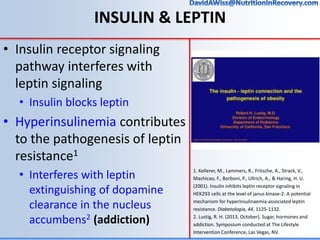
INSULIN & LEPTIN
• Insulin receptor signaling
pathway interferes with
leptin signaling
• Insulin blocks leptin
• Hyperinsulinemia contributes
to the pathogenesis of leptin
resistance1
• Interferes with leptin
extinguishing of dopamine
clearance in the nucleus
accumbens2 (addiction)
1. Kellerer, M., Lammers, R., Fritsche, A., Strack, V.,
Machicao, F., Borboni, P., Ullrich, A., & Haring, H. U.
(2001). Insulin inhibits leptin receptor signaling in
HEK293 cells at the level of janus kinase-2: A potential
mechanism for hyperinsulinaemia-associated leptin
resistance. Diabetologia, 44, 1125-1132.
2. Lustig, R. H. (2013, October). Sugar, hormones and
addiction. Symposium conducted at The Lifestyle
Intervention Conference, Las Vegas, NV.
Daws, L. C., Avison, M. J., Robertson, S. D., Niswender, K. D., Galli, A., & Saunders, C.
(2011). Insulin signaling and addiction. Neuropharmacology, 61(7), 1123-1128.
• Insulin receptors present in brain and midbrain dopamine
neurons
• Insulin-influenced dopamine transmission can affect the
ability of drugs to exert their neurochemical and behavioral
effects
• Interplay between insulin signaling and drug-induced
increases in extracellular dopamine may contribute to high
comorbidity of eating disorders and drug abuse
• Improvements in brain dopamine function by normalizing
or bypassing disruptions in insulin signaling might be
effective in treating addictions
Ersche, K. D., Stochl J., Woodward, J. M., & Fletcher, P. C. (2013). The skinny on
cocaine. Insights into eating behavior and body weight in cocaine-dependent men.
Appetite. Advance online publication. Retrieved from
http://dx.doi.org/10.1016/j.appet.2013.07.011
• Cocaine-dependent men reported increased food intake, specifically
foods high in fat and carbohydrate
• Trend towards lower levels of circulating leptin in the cocaine group,
directly interfering with metabolic processes
• Overeating in cocaine-dependent individuals pre-dates recovery,
with the effect masked by lack of weight gain
• Taken together, cocaine abuse results in imbalance between fat
intake and storage, leading to excessive weight gain during recovery
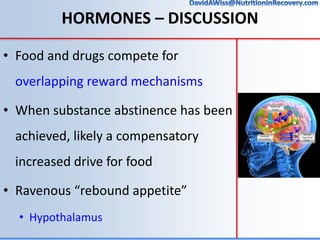
HORMONES – DISCUSSION
• Food and drugs compete for
overlapping reward mechanisms
• When substance abstinence has been
achieved, likely a compensatory
increased drive for food
• Ravenous “rebound appetite”
• Hypothalamus
HORMONES – DISCUSSION
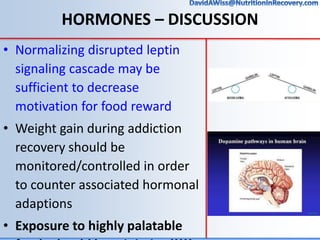
• Normalizing disrupted leptin
signaling cascade may be
sufficient to decrease
motivation for food reward
• Weight gain during addiction
recovery should be
monitored/controlled in order
to counter associated hormonal
adaptions
• Exposure to highly palatable
7. Gut Microbiome