Managing Pests inApple,
Mango, and Citrus Crops
A comprehensive guide to protecting your fruit crops from common pests
and implementing effective control strategies
2.
The Silent Threat:Understanding Common
Pests of Apple Orchards
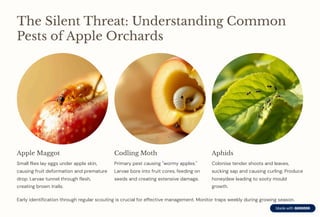
Apple Maggot
Small flies lay eggs under apple skin,
causing fruit deformation and premature
drop. Larvae tunnel through flesh,
creating brown trails.
Codling Moth
Primary pest causing "wormy apples."
Larvae bore into fruit cores, feeding on
seeds and creating extensive damage.
Aphids
Colonise tender shoots and leaves,
sucking sap and causing curling. Produce
honeydew leading to sooty mould
growth.
Early identification through regular scouting is crucial for effective management. Monitor traps weekly during growing season.
3.
Safeguarding Your Harvest:Integrated Pest
Management for Apples
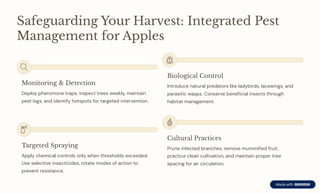
Monitoring & Detection
Deploy pheromone traps, inspect trees weekly, maintain
pest logs, and identify hotspots for targeted intervention.
Biological Control
Introduce natural predators like ladybirds, lacewings, and
parasitic wasps. Conserve beneficial insects through
habitat management.
Targeted Spraying
Apply chemical controls only when thresholds exceeded.
Use selective insecticides, rotate modes of action to
prevent resistance.
Cultural Practices
Prune infected branches, remove mummified fruit,
practice clean cultivation, and maintain proper tree
spacing for air circulation.
4.
Tropical Troubles: KeyPests Affecting Mango
Cultivation
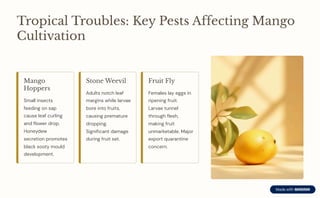
Mango
Hoppers
Small insects
feeding on sap
cause leaf curling
and flower drop.
Honeydew
secretion promotes
black sooty mould
development.
Stone Weevil
Adults notch leaf
margins while larvae
bore into fruits,
causing premature
dropping.
Significant damage
during fruit set.
Fruit Fly
Females lay eggs in
ripening fruit.
Larvae tunnel
through flesh,
making fruit
unmarketable. Major
export quarantine
concern.
5.
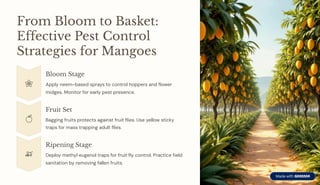
From Bloom toBasket:
Effective Pest Control
Strategies for Mangoes
Bloom Stage
Apply neem-based sprays to control hoppers and flower
midges. Monitor for early pest presence.
Fruit Set
Bagging fruits protects against fruit flies. Use yellow sticky
traps for mass trapping adult flies.
Ripening Stage
Deploy methyl eugenol traps for fruit fly control. Practice field
sanitation by removing fallen fruits.
6.
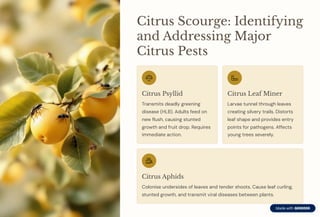
Citrus Scourge: Identifying
andAddressing Major
Citrus Pests
Citrus Psyllid
Transmits deadly greening
disease (HLB). Adults feed on
new flush, causing stunted
growth and fruit drop. Requires
immediate action.
Citrus Leaf Miner
Larvae tunnel through leaves
creating silvery trails. Distorts
leaf shape and provides entry
points for pathogens. Affects
young trees severely.
Citrus Aphids
Colonise undersides of leaves and tender shoots. Cause leaf curling,
stunted growth, and transmit viral diseases between plants.
7.
Keeping it Zesty:Sustainable Pest
Management for Citrus Groves
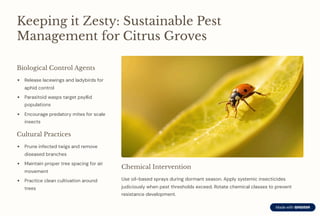
Biological Control Agents
Release lacewings and ladybirds for
aphid control
Parasitoid wasps target psyllid
populations
Encourage predatory mites for scale
insects
Cultural Practices
Prune infected twigs and remove
diseased branches
Maintain proper tree spacing for air
movement
Practice clean cultivation around
trees
Chemical Intervention
Use oil-based sprays during dormant season. Apply systemic insecticides
judiciously when pest thresholds exceed. Rotate chemical classes to prevent
resistance development.
8.
The IPM Advantage:Benefits of an Integrated
Approach Across Crops
Cost Effective
Reduces pesticide expenditure by 40-60% through targeted
applications and natural enemy conservation, improving farm
profitability.
Environmentally Friendly
Minimises chemical load in ecosystem, protects beneficial
insects, preserves soil health, and reduces water
contamination risks.
Pest Resistance Management
Rotating control methods prevents development of resistant
pest populations, ensuring long-term effectiveness of
management strategies.
Improved Quality
Produces residue-free fruits meeting export standards,
commanding premium prices in domestic and international
markets.
9.
Innovative Solutions: New
Technologiesand Future
Trends in Pest Control
01
Pheromone Traps & Lures
Species-specific attractants for monitoring and mass trapping, reducing
pesticide dependency through precision targeting.
02
Remote Sensing & Drones
Satellite imagery and UAVs detect pest hotspots early, enabling targeted
interventions and reducing overall chemical usage.
03
Sterile Insect Technique
Release radiation-sterilised males to reduce pest populations biologically,
proven effective against fruit flies in multiple regions.
04
Biotechnological Solutions
RNA interference and CRISPR-based approaches developing for species-
specific pest control with minimal environmental impact.
10.
Questions and Discussion:
ProtectingOur Fruit,
Ensuring Our Future
Key Takeaways
Regular monitoring, timely
intervention, and integrated
approaches are essential for
successful pest management
across all fruit crops.
Implementation
Support
Connect with local Krishi
Vigyan Kendras for region-
specific pest advisories,
training programmes, and
technical guidance.
Knowledge Sharing
Exchange experiences with fellow farmers through farmer field
schools, cooperatives, and agricultural extension services.
"Sustainable pest management protects not just our harvest, but our
soil, water, and the health of farming communities for generations to
come."