Pre-clinical studies: Safetypharmacology
M.Sc. In Clinical Research (Specialisation in Clinical Trials)
From Mechanism to Safety
By Dr. Heena Tabassum
December 3, 2025
2.
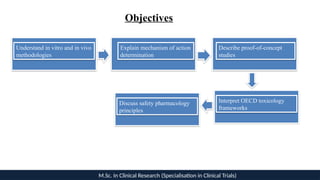
Objectives
M.Sc. In ClinicalResearch (Specialisation in Clinical Trials)
Understand in vitro and in vivo
methodologies
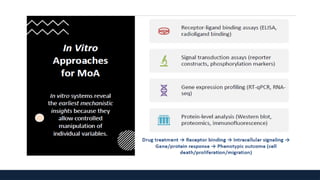
Explain mechanism of action
determination
Describe proof-of-concept
studies
Interpret OECD toxicology
frameworks
Discuss safety pharmacology
principles
3.
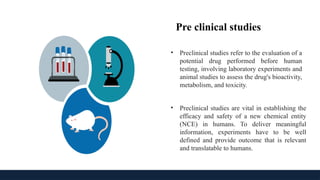
• Preclinical studiesrefer to the evaluation of a
potential drug performed before human
testing, involving laboratory experiments and
animal studies to assess the drug's bioactivity,
metabolism, and toxicity.
Pre clinical studies
• Preclinical studies are vital in establishing the
efficacy and safety of a new chemical entity
(NCE) in humans. To deliver meaningful
information, experiments have to be well
defined and provide outcome that is relevant
and translatable to humans.
4.
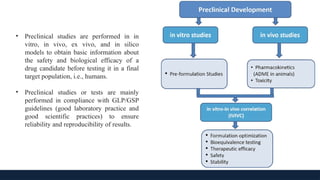
• Preclinical studiesare performed in in
vitro, in vivo, ex vivo, and in silico
models to obtain basic information about
the safety and biological efficacy of a
drug candidate before testing it in a final
target population, i.e., humans.
• Preclinical studies or tests are mainly
performed in compliance with GLP/GSP
guidelines (good laboratory practice and
good scientific practices) to ensure
reliability and reproducibility of results.
5.
Role of Pre-ClinicalStudies
E
s
t
a
b
l
i
s
h
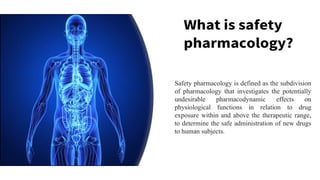
s
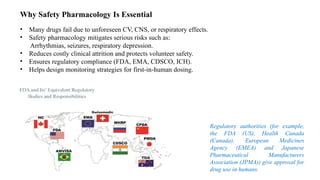
a
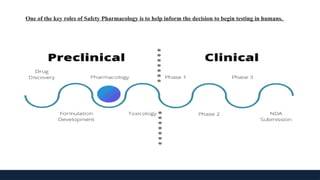
f
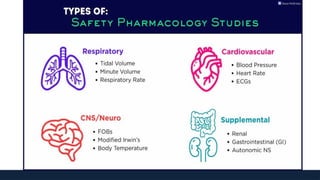
e
t
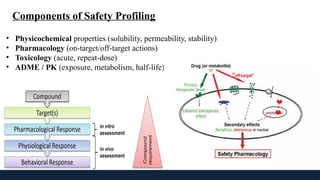
y
U
n
d
e
r
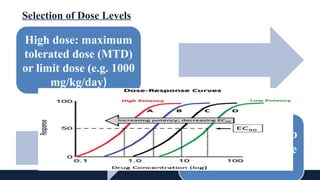
s
t
a
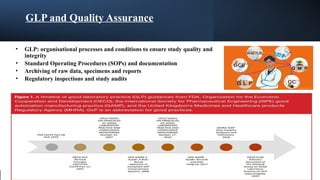
n
d
b
i
o
l
o
g
i
c
a
l
a
c
t
i
v
i
t
y
D
e
t
e
r
m
i
n
e
s
a
f
e
h
u
m
a
n
s
t
a
r
t
i
n
g
d
o
s
e
R
e
g
u
l
a
t
o
r
y
r
e
q
u
i
r
e
m
e
n
t
b
e
f
o
r
e
P
h
a
s
e
I
7.
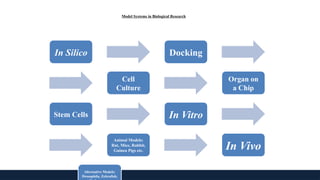
Model Systems inBiological Research
In Silico Docking
Organ on
a Chip
Cell
Culture
Stem Cells In Vitro
In Vivo
Animal Models:
Rat, Mice, Rabbit,
Guinea Pigs etc.
Alternative Models:
Drosophila, Zebrafish,
9.
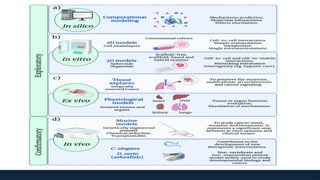
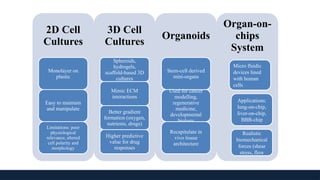
2D Cell
Cultures
Monolayer on
plastic
Easyto maintain
and manipulate
Limitations: poor
physiological
relevance, altered
cell polarity and
morphology
3D Cell
Cultures
Spheroids,
hydrogels,
scaffold-based 3D
cultures
Mimic ECM
interactions
Better gradient
formation (oxygen,
nutrients, drugs)
Higher predictive
value for drug
responses
Organoids
Stem-cell derived
mini-organs
Used for cancer
modelling,
regenerative
medicine,
developmental
biology
Recapitulate in
vivo tissue
architecture
Organ-on-
chips
System
Micro fluidic
devices lined
with human
cells
Applications:
lung-on-chip,
liver-on-chip,
BBB-chip
Realistic
biomechanical
forces (shear
stress, flow
10.
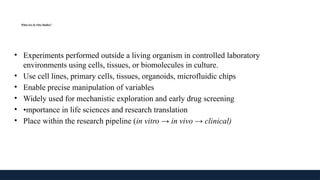
What Are InVitro Studies?
• Experiments performed outside a living organism in controlled laboratory
environments using cells, tissues, or biomolecules in culture.
• Use cell lines, primary cells, tissues, organoids, microfluidic chips
• Enable precise manipulation of variables
• Widely used for mechanistic exploration and early drug screening
• •mportance in life sciences and research translation
• Place within the research pipeline (in vitro → in vivo → clinical)
11.
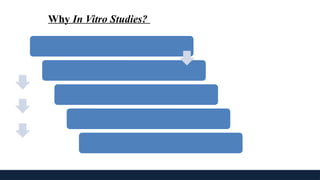
Why In VitroStudies?
C
o
n
t
r
o
l
l
e
d
m
i
c
r
o
e
n
v
i
r
o
n
m
e
n
t
→
h
i
g
h
r
e
p
r
o
d
u
c
i
b
i
l
i
t
y
A
b
i
l
i
t
y
t
o
i
s
o
l
a
t
e
s
p
e
c
i
f
i
c
v
a
r
i
a
b
l
e
s
R
e
d
u
c
t
i
o
n
o
f
e
t
h
i
c
a
l
c
o
n
c
e
r
n
s
c
o
m
p
a
r
e
d
t
o
i
n
v
i
v
o
C
o
s
t
-
e
f
f
e
c
t
i
v
e
,
s
c
a
l
a
b
l
e
,
f
a
s
t
e
r
e
x
p
e
r
i
m
e
n
t
a
t
i
o
n
E
s
s
e
n
t
i
a
l
f
o
r
m
e
c
h
a
n
i
s
m
-
o
f
-
a
c
t
i
o
n
(
M
O
A
)
e
x
p
l
o
r
a
t
i
o
n
12.
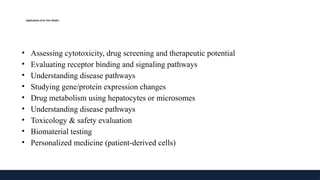
Applications of InVitro Studies
• Assessing cytotoxicity, drug screening and therapeutic potential
• Evaluating receptor binding and signaling pathways
• Understanding disease pathways
• Studying gene/protein expression changes
• Drug metabolism using hepatocytes or microsomes
• Understanding disease pathways
• Toxicology & safety evaluation
• Biomaterial testing
• Personalized medicine (patient-derived cells)
13.
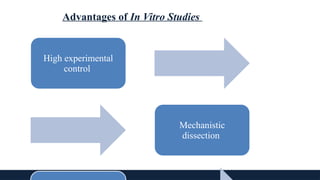
Advantages of InVitro Studies
High experimental
control
Mechanistic
dissection
14.
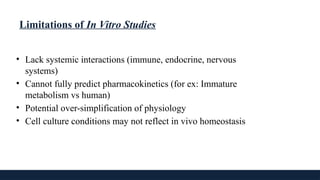
Limitations of InVitro Studies
• Lack systemic interactions (immune, endocrine, nervous
systems)
• Cannot fully predict pharmacokinetics (for ex: Immature
metabolism vs human)
• Potential over-simplification of physiology
• Cell culture conditions may not reflect in vivo homeostasis
15.
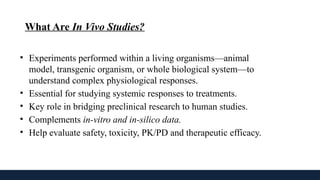
What Are InVivo Studies?
• Experiments performed within a living organisms—animal
model, transgenic organism, or whole biological system—to
understand complex physiological responses.
• Essential for studying systemic responses to treatments.
• Key role in bridging preclinical research to human studies.
• Complements in-vitro and in-silico data.
• Help evaluate safety, toxicity, PK/PD and therapeutic efficacy.
16.
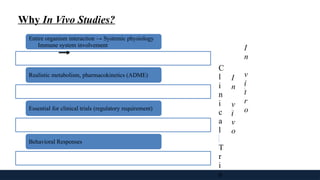
Why In VivoStudies?
I
n
v
i
t
r
o
I
n
v
i
v
o
C
l
i
n
i
c
a
l
T
r
i
a
Entire organism interaction → Systemic physiology
Immune system involvement
Realistic metabolism, pharmacokinetics (ADME)
Essential for clinical trials (regulatory requirement)
Behavioral Responses
17.
Applications of InVivo Studies
• Validating in vitro findings in whole-organism context
• Studying immune response
• Testing real-world therapeutic performance
• Drug efficacy & toxicity evaluation
• Pharmacokinetic/pharmacodynamic (PK/PD) studies
• Disease modeling (cancer, neurodegeneration, diabetes)
• Genetic manipulation studies
• Vaccine development
• Biomaterial/implant testing
18.
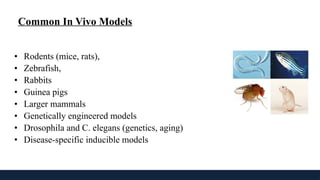
Common In VivoModels
• Rodents (mice, rats),
• Zebrafish,
• Rabbits
• Guinea pigs
• Larger mammals
• Genetically engineered models
• Drosophila and C. elegans (genetics, aging)
• Disease-specific inducible models
19.
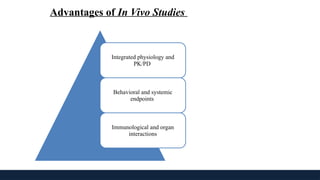
Advantages of InVivo Studies
Integrated physiology and
PK/PD
Behavioral and systemic
endpoints
Immunological and organ
interactions
20.
Limitations of InVivo Studies
Higher
COST And
Variability
Species
Differences And
Translational
Gaps
Ethics And
Regulatory
Oversight
21.
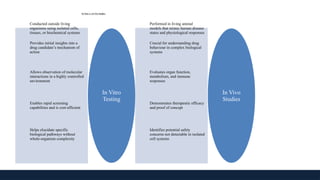
In Vitro vs.In Vivo Studies
Conducted outside living
organisms using isolated cells,
tissues, or biochemical systems
Provides initial insights into a
drug candidate’s mechanism of
action
Allows observation of molecular
interactions in a highly controlled
environment
Enables rapid screening
capabilities and is cost-efficient
Helps elucidate specific
biological pathways without
whole-organism complexity
In Vitro
Testing
Performed in living animal
models that mimic human disease
states and physiological responses
Crucial for understanding drug
behaviour in complex biological
systems
Evaluates organ function,
metabolism, and immune
responses
Demonstrates therapeutic efficacy
and proof of concept
Identifies potential safety
concerns not detectable in isolated
cell systems
In Vivo
Studies
22.
Bridging In Vitroto In Vivo
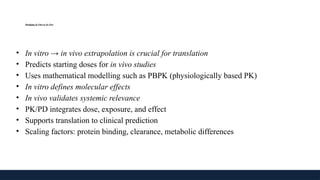
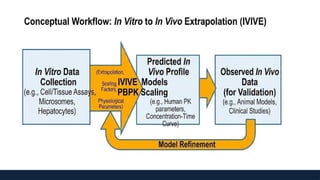
• In vitro → in vivo extrapolation is crucial for translation
• Predicts starting doses for in vivo studies
• Uses mathematical modelling such as PBPK (physiologically based PK)
• In vitro defines molecular effects
• In vivo validates systemic relevance
• PK/PD integrates dose, exposure, and effect
• Supports translation to clinical prediction
• Scaling factors: protein binding, clearance, metabolic differences
24.
Mechanism of Actionin Preclinical Studies
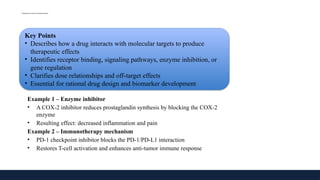
Key Points
• Describes how a drug interacts with molecular targets to produce
therapeutic effects
• Identifies receptor binding, signaling pathways, enzyme inhibition, or
gene regulation
• Clarifies dose relationships and off-target effects
• Essential for rational drug design and biomarker development
Example 1 – Enzyme inhibitor
• A COX-2 inhibitor reduces prostaglandin synthesis by blocking the COX-2
enzyme
• Resulting effect: decreased inflammation and pain
Example 2 – Immunotherapy mechanism
• PD-1 checkpoint inhibitor blocks the PD-1/PD-L1 interaction
• Restores T-cell activation and enhances anti-tumor immune response
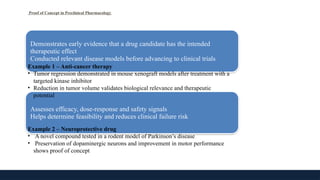
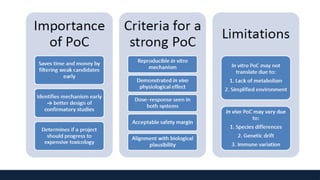
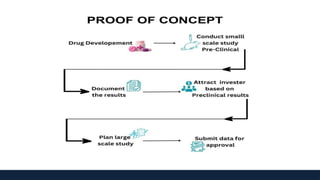
Proof of Conceptin Preclinical Pharmacology
Demonstrates early evidence that a drug candidate has the intended
therapeutic effect
Conducted relevant disease models before advancing to clinical trials
Assesses efficacy, dose-response and safety signals
Helps determine feasibility and reduces clinical failure risk
Example 2 – Neuroprotective drug
• A novel compound tested in a rodent model of Parkinson’s disease
• Preservation of dopaminergic neurons and improvement in motor performance
shows proof of concept
Example 1 – Anti-cancer therapy
• Tumor regression demonstrated in mouse xenograft models after treatment with a
targeted kinase inhibitor
• Reduction in tumor volume validates biological relevance and therapeutic
potential
32.
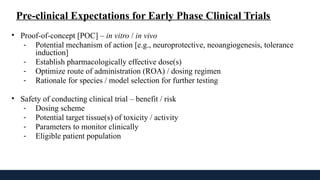
Pre-clinical Expectations forEarly Phase Clinical Trials
• Proof-of-concept [POC] – in vitro / in vivo
- Potential mechanism of action [e.g., neuroprotective, neoangiogenesis, tolerance
induction]
- Establish pharmacologically effective dose(s)
- Optimize route of administration (ROA) / dosing regimen
- Rationale for species / model selection for further testing
• Safety of conducting clinical trial – benefit / risk
- Dosing scheme
- Potential target tissue(s) of toxicity / activity
- Parameters to monitor clinically
- Eligible patient population
35.
Regulatory Framework: OECDGuidelines for Toxicology Studies
• The Organisation for Economic Co-operation and Development (OECD)
provides internationally harmonized test guidelines that ensure standardized,
reproducible, and globally accepted toxicology study designs. These
guidelines form the backbone of regulatory submissions worldwide.
36.
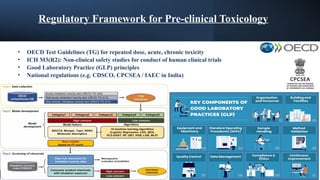
Regulatory Framework forPre-clinical Toxicology
• OECD Test Guidelines (TG) for repeated dose, acute, chronic toxicity
• ICH M3(R2): Non-clinical safety studies for conduct of human clinical trials
• Good Laboratory Practice (GLP) principles
• National regulations (e.g. CDSCO, CPCSEA / IAEC in India)
39.
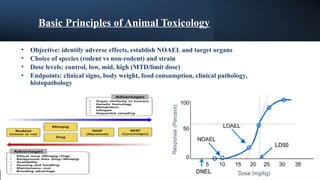
Basic Principles ofAnimal Toxicology
• Objective: identify adverse effects, establish NOAEL and target organs
• Choice of species (rodent vs non-rodent) and strain
• Dose levels: control, low, mid, high (MTD/limit dose)
• Endpoints: clinical signs, body weight, food consumption, clinical pathology,
histopathology
40.
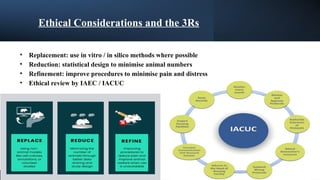
Ethical Considerations andthe 3Rs
• Replacement: use in vitro / in silico methods where possible
• Reduction: statistical design to minimise animal numbers
• Refinement: improve procedures to minimise pain and distress
• Ethical review by IAEC / IACUC
41.
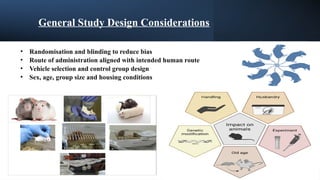
General Study DesignConsiderations
• Randomisation and blinding to reduce bias
• Route of administration aligned with intended human route
• Vehicle selection and control group design
• Sex, age, group size and housing conditions
42.
Acute Toxicity Studies
•Single dose
administration to
identify
immediatetoxic
effects, determine
lethal dose ranges
(LD50),and
characterize
clinical signs of
toxicity. These
studies typically
use 2-3 dose levels
and provide initial
safety signals that
guide subsequent
studydesign.
Sub-Acute Toxicity
• Repeated dosing over
14-28 days to detect
early adverse effects and
identify target organs of
toxicity.Studies include
comprehensive clinical
observations,
hematology, clinical
chemistry, urinalysis,
and histopathological
examination of major
organs. Toxicokinetic
data collected during
these studiesestablish
exposure-response
relationships.
43.
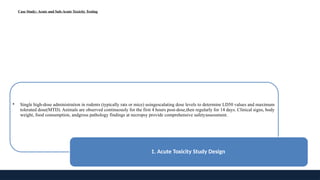
Case Study: Acuteand Sub-Acute Toxicity Testing
• Single high-dose administration in rodents (typically rats or mice) usingescalating dose levels to determine LD50 values and maximum
tolerated dose(MTD). Animals are observed continuously for the first 4 hours post-dose,then regularly for 14 days. Clinical signs, body
weight, food consumption, andgross pathology findings at necropsy provide comprehensive safetyassessment.
1. Acute Toxicity Study Design
44.
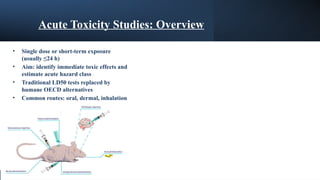
Acute Toxicity Studies:Overview
• Single dose or short-term exposure
(usually ≤24 h)
• Aim: identify immediate toxic effects and
estimate acute hazard class
• Traditional LD50 tests replaced by
humane OECD alternatives
• Common routes: oral, dermal, inhalation
Other Acute ToxicityStudies
c
i
t
y
(
e
.
g
.
O
E
C
D
T
y
(
e
.
g
.
O
E
C
D
T
G
4
i
n
j
e
c
t
i
o
n
o
r
t
o
p
i
c
n
a
n
d
l
a
b
e
l
l
i
n
g
a
48.
Design of 28-DayRepeated Dose Study (OECD 407)
i
c
a
l
l
y
r
a
t
;
b
o
t
h
s
e
x
e
s
l
s
+
c
o
n
c
u
r
r
e
n
t
c
o
n
t
r
o
l
v
a
t
i
o
n
s
,
b
o
d
y
w
e
i
g
h
t
,
f
o
l
o
g
y
,
c
l
i
n
i
c
a
l
c
h
e
m
i
s
t
r
y
h
i
s
t
o
p
a
t
h
o
l
o
g
y
o
f
m
a
j
o
r
49.
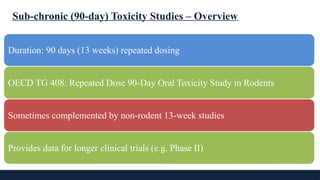
Sub-chronic (90-day) ToxicityStudies – Overview
Duration: 90 days (13 weeks) repeated dosing
OECD TG 408: Repeated Dose 90-Day Oral Toxicity Study in Rodents
Sometimes complemented by non-rodent 13-week studies
Provides data for longer clinical trials (e.g. Phase II)
50.
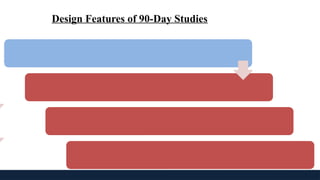
Design Features of90-Day Studies
H
i
g
h
e
r
s
e
n
s
i
t
i
v
i
t
y
t
o
c
u
m
u
l
a
t
i
v
e
a
n
d
d
e
l
a
y
e
d
e
f
f
e
c
t
s
I
n
t
e
r
i
m
k
i
l
l
s
m
a
y
b
e
i
n
c
l
u
d
e
d
f
o
r
t
i
m
e
-
c
o
u
r
s
e
a
s
s
e
s
s
m
e
n
t
M
o
r
e
c
o
m
p
r
e
h
e
n
s
i
v
e
h
i
s
t
o
p
a
t
h
o
l
o
g
y
a
n
d
t
o
x
i
c
o
k
i
n
e
t
i
c
s
(
T
K
)
R
e
c
o
v
e
r
y
g
r
o
u
p
s
t
o
a
s
s
e
s
s
r
e
v
e
r
s
i
b
i
l
i
t
y
/
p
e
r
s
i
s
t
e
n
c
e
51.
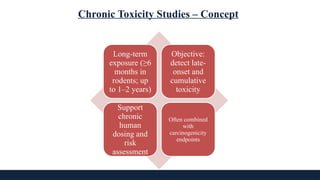
Chronic Toxicity Studies– Concept
Long-term
exposure (≥6
months in
rodents; up
to 1–2 years)
Objective:
detect late-
onset and
cumulative
toxicity
Support
chronic
human
dosing and
risk
assessment
Often combined
with
carcinogenicity
endpoints
52.
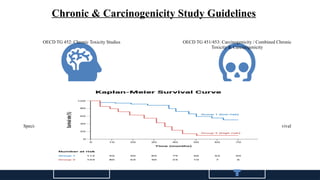
Chronic & CarcinogenicityStudy Guidelines
OECD TG 452: Chronic Toxicity Studies OECD TG 451/453: Carcinogenicity / Combined Chronic
Toxicity & Carcinogenicity
Species: usually rat and mouse; sometimes alternative models Key endpoints: tumour incidence, organ toxicity, survival
53.
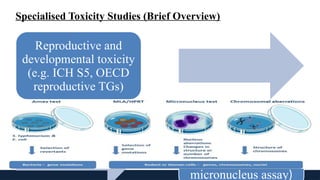
Specialised Toxicity Studies(Brief Overview)
Reproductive and
developmental toxicity
(e.g. ICH S5, OECD
reproductive TGs)
Genotoxicity and
mutagenicity (e.g.
Ames test,
micronucleus assay)
54.
Safety pharmacology isdefined as the subdivision
of pharmacology that investigates the potentially
undesirable pharmacodynamic effects on
physiological functions in relation to drug
exposure within and above the therapeutic range,
to determine the safe administration of new drugs
to human subjects.
55.
Why Safety PharmacologyIs Essential
Regulatory authorities (for example,
the FDA (US), Health Canada
(Canada), European Medicines
Agency (EMEA) and Japanese
Pharmaceutical Manufacturers
Association (JPMA)) give approval for
drug use in humans.
• Many drugs fail due to unforeseen CV, CNS, or respiratory effects.
• Safety pharmacology mitigates serious risks such as:
Arrhythmias, seizures, respiratory depression.
• Reduces costly clinical attrition and protects volunteer safety.
• Ensures regulatory compliance (FDA, EMA, CDSCO, ICH).
• Helps design monitoring strategies for first-in-human dosing.
56.
One of thekey roles of Safety Pharmacology is to help inform the decision to begin testing in humans.
57.
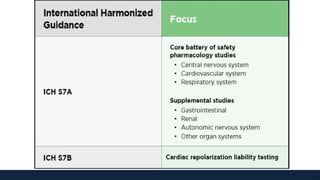
• The InternationalConference on Harmonization (ICH S7A and ICH S7B) guidelines
recommend a core battery and supplemental studies to evaluate the effects of new chemical
entities on the main organ systems, including central nervous system, cardiovascular,
respiratory, gastrointestinal and renal.
The two main categories of safety pharmacology studies are essential core studies and
supplemental studies are conducted when the type of drug, route of administration, and
results obtained from the core studies demand further exploration.
Embryonic stem cell technology and pharmacogenetics are essential in the advancement of
safety pharmacology studies.
59.
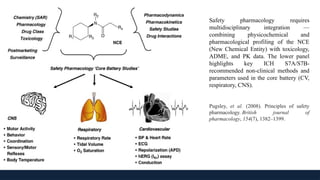
Safety pharmacology requires
multidisciplinaryintegration —
combining physicochemical and
pharmacological profiling of the NCE
(New Chemical Entity) with toxicology,
ADME, and PK data. The lower panel
highlights key ICH S7A/S7B-
recommended non-clinical methods and
parameters used in the core battery (CV,
respiratory, CNS).
Pugsley, et al. (2008). Principles of safety
pharmacology. British journal of
pharmacology, 154(7), 1382–1399.
60.
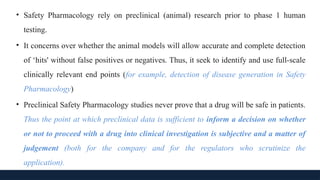
• Safety Pharmacologyrely on preclinical (animal) research prior to phase 1 human
testing.
• It concerns over whether the animal models will allow accurate and complete detection
of ‘hits' without false positives or negatives. Thus, it seek to identify and use full-scale
clinically relevant end points (for example, detection of disease generation in Safety
Pharmacology)
• Preclinical Safety Pharmacology studies never prove that a drug will be safe in patients.
Thus the point at which preclinical data is sufficient to inform a decision on whether
or not to proceed with a drug into clinical investigation is subjective and a matter of
judgement (both for the company and for the regulators who scrutinize the
application).
61.
What is theSignificance?
• Challenges in safety pharmacology play a crucial role in the failure rates during
both preclinical and clinical phases of drug development.
• These data are vital for determining appropriate dosing in Phase I trials.
• Conducting safety pharmacology assessments is a mandatory step for IND
applications before any human testing.
• Mistakes in this area can lead to severe and far-reaching consequences.
62.
ICH S7A/S7B: SafetyPharmacology
• ICH S7A sets the foundation for safety pharmacology by requiring early studies that identify
any undesirable effects of an NCE on vital organ systems (cardiovascular, respiratory, CNS)
before human trials.
• It follows a tiered approach, starting with the core battery, and moving to follow-up or
supplemental studies only when the drug’s pharmacology, toxicology, or early data indicate
additional risk.
• S7A emphasizes thoughtful study design, choosing relevant species or models, using
validated methods, establishing dose–response relationships, and integrating PK/PD data to
understand exposure levels.
• GLP compliance is encouraged for studies that directly support human risk assessment,
ensuring reliability and regulatory acceptance.
63.
ICH S7A/S7B: SafetyPharmacology
• ICH S7B complements S7A by specifically addressing the risk of delayed ventricular
repolarization, primarily QT/QTc prolongation linked to life-threatening arrhythmias.
• S7B requires a stepwise evaluation using both in vitro assays (e.g., hERG inhibition)
and in vivo QT studies, with results integrated to estimate proarrhythmic potential before
first-in-human dosing.
• Both guidelines highlight flexibility, allowing study plans to be tailored to the drug’s
properties, mechanism, and intended clinical use, and permitting reduced testing for agents
with low systemic exposure or highly selective biologics.
• Together, S7A and S7B ensure a science-driven, risk-based assessment designed to protect
human participants while avoiding unnecessary or redundant animal studies.
64.
When Safety Pharmacologyis Required?
• Safety pharmacology is required before first-in-human studies to ensure that no serious
cardiovascular, respiratory, or CNS risks are present.
• It is also needed whenever new safety signals arise in toxicology, such as unexpected ECG
changes, respiratory effects, or neurological findings.
• Additional studies are required if the drug class or mechanism is known to carry specific
risks, or when structural alerts or PK/PD data suggest the potential for organ-specific
toxicity.
• During clinical development, safety pharmacology may be repeated or expanded if new
human adverse effects appear, if higher doses are planned, or if drug–drug interactions
introduce new concerns.
65.
Objectives of SafetyProfiling
• Identify potential life-threatening functional effects of the test compound.
• Understand dose-dependent changes in physiological systems.
• Establish safety margins relative to exposure levels.
• Determine reversibility and predictability of effects.
• Aid in risk–benefit evaluation for progression into Phase I.
Selection of DoseLevels
High dose: maximum
tolerated dose (MTD)
or limit dose (e.g. 1000
mg/kg/day)
Mid and low doses to
define dose–response
relationship
68.
GLP and QualityAssurance
• GLP: organisational processes and conditions to ensure study quality and
integrity
• Standard Operating Procedures (SOPs) and documentation
• Archiving of raw data, specimens and reports
• Regulatory inspections and study audits
70.
Cardiovascular (CV) Safety
•Cardiovascular toxicity remains one of the leading causes of drug failure and market withdrawal, often due to
undetected electrophysiological risks.
• Even small changes in cardiac ion channels can trigger QT prolongation, arrhythmias, conduction blocks, or sudden
cardiac death, making early assessment essential.
• Prominent examples include:
Cisapride – withdrawn after causing significant QT prolongation and Torsades de Pointes.
Terfenadine – caused fatal arrhythmias, especially when combined with CYP3A4 inhibitors.
These cases reshaped regulatory expectations for cardiac safety evaluation.
• Cardiovascular safety pharmacology evaluates key functional parameters such as heart rate, blood pressure, myocardial
contractility, and rhythm stability.
• ECG assessment is central, covering PR, QRS, QT/QTc intervals, arrhythmia detection, and conduction abnormalities.
• Telemetry-based studies in conscious animals allow continuous real-time monitoring of cardiac function under
physiological conditions.
• CV safety testing helps identify proarrhythmic potential early, enabling safer dose selection, informed clinical
monitoring, and prevention of life-threatening cardiac events in humans.
71.
Respiratory Safety
• Respiratorysafety evaluation is critical because respiratory depression remains one of the most life-
threatening adverse effects of opioids, sedatives, anesthetics, and many CNS-active agents.
• Even small alterations in respiratory drive or airway tone can rapidly lead to hypoventilation, hypoxia,
or apnea, especially in vulnerable populations. In addition, several drugs can cause small airway
constriction, which is especially dangerous in individuals with asthma or chronic obstructive airway
conditions.
• Safety pharmacology studies assess how a compound affects breathing patterns, gas exchange
efficiency, airway resistance, and ventilatory control. Early identification of changes in tidal volume,
respiratory frequency, or CO retention prevents unexpected respiratory compromise during clinical
₂
trials.
• Detecting apnea risk or bronchospastic tendencies at the preclinical stage is essential to ensure safe
dosing, define exclusion criteria, and establish proper monitoring strategies in humans.
72.
CNS Safety
• Thecentral nervous system is highly sensitive to pharmacological agents, and its
responses are often diverse, unpredictable, and rapid in onset.
• CNS adverse effects can range from mild sedation or agitation to severe outcomes such
as seizures, loss of coordination, cognitive impairment, or altered consciousness.
• Many drugs, whether intended for CNS action or not, can cross the blood–brain barrier
or influence neuronal signaling, CNS safety pharmacology is essential for identifying
functional risks early.
• These evaluations help predict how a compound may impact behavior, motor function,
perception, or brain activity, ensure safer first-in-human dosing and minimize
unexpected neurological events.
73.
Gastrointestinal (GI) Safety
•GI safety assessment is a key component of safety pharmacology because many drugs,
especially those affecting autonomic, serotonergic, dopaminergic, or smooth muscle
pathways, can significantly alter gastric emptying, intestinal motility, secretion, and gut
smooth muscle tone.
• These effects can lead to clinically relevant symptoms such as constipation, diarrhea,
cramping, nausea, or vomiting, which not only impact tolerability but also influence oral
drug absorption and systemic exposure.
• Early identification of GI functional disturbances helps prevent unexpected intolerance in
clinical trials and supports better dose selection.
• Since the GI tract is highly innervated and sensitive to many pharmacological
mechanisms, understanding a compound’s effect on gut motility and reflex pathways is
crucial for ensuring patient comfort and safety during early human studies.
74.
Renal Safety
• Renalsafety assessment is crucial because the kidneys play a central role in drug
elimination, fluid–electrolyte homeostasis, and detoxification, making them highly
susceptible to injury from xenobiotics.
• Many drugs can cause hemodynamic changes, tubular toxicity, glomerular damage, or
impaired filtration, leading to acute kidney injury (AKI) or chronic dysfunction.
• Early detection of renal liabilities helps prevent progression to severe nephrotoxicity and
ensures appropriate dose adjustments for at-risk populations.
• Modern renal safety testing relies on sensitive biomarkers such as NGAL (Neutrophil
Gelatinase–Associated Lipocalin), KIM-1 (Kidney Injury Molecule-1), and cystatin C,
which detect functional impairment much earlier than traditional measures like serum
creatinine. These biomarkers provide insight into specific segments of the nephron
affected and support early decision-making in preclinical studies.
75.
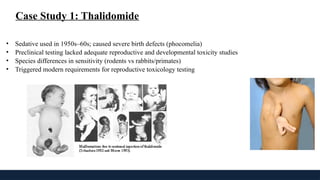
Case Study 1:Thalidomide
• Sedative used in 1950s–60s; caused severe birth defects (phocomelia)
• Preclinical testing lacked adequate reproductive and developmental toxicity studies
• Species differences in sensitivity (rodents vs rabbits/primates)
• Triggered modern requirements for reproductive toxicology testing
76.
Case Study 2:TGN1412 (Monoclonal Antibody)
• FIH trial in 2006: healthy volunteers developed cytokine storm and multi-organ
failure
• Non-clinical studies in monkeys did not predict severe reaction at clinical dose
• Issues: supra-pharmacological dosing, limited in vitro human immune models
• Led to new FIH guidance for high-risk biologicals (stepwise dosing, sentinel
subjects)
77.
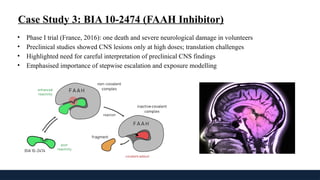
Case Study 3:BIA 10-2474 (FAAH Inhibitor)
• Phase I trial (France, 2016): one death and severe neurological damage in volunteers
• Preclinical studies showed CNS lesions only at high doses; translation challenges
• Highlighted need for careful interpretation of preclinical CNS findings
• Emphasised importance of stepwise escalation and exposure modelling
78.
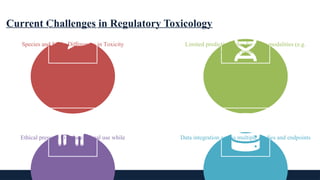
Current Challenges inRegulatory Toxicology
Species and Strain Differences in Toxicity Limited predictive value for some modalities (e.g.
biologics, gene therapy)
Ethical pressure to reduce animal use while
maintaining safety
Data integration across multiple studies and endpoints
79.
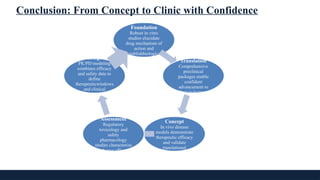
Conclusion: From Conceptto Clinic with Confidence
Mechanistic
Foundation
Robust in vitro
studies elucidate
drug mechanism of
action and
establishbiological
rationale
Clinical
Translation
Comprehensive
preclinical
packages enable
confident
advancement to
first-in-human
trials
Proof of
Concept
In vivo disease
models demonstrate
therapeutic efficacy
and validate
translational
potential
Safety
Assessment
Regulatory
toxicology and
safety
pharmacology
studies characterize
adverse effect
profiles
Risk Integration
PK/PD modeling
combines efficacy
and safety data to
define
therapeuticwindows
and clinical
strategies
80.
Thank you
M.Sc. InClinical Research (Specialisation in Clinical Trials)
Summary
• Regulatory animal toxicology is essential to ensure human safety before clinical trials
• OECD and ICH guidelines structure acute, sub-acute, sub-chronic and chronic studies
• Well-designed studies provide NOAEL and target organ information
• Case studies illustrate both limitations and strengths of animal data
• Emerging methods aim to enhance prediction and reduce animal use In vitro + in vivo provide foundational
data
• MOA & POC confirm biological validity
• Toxicology ensures safety margins
• Safety pharmacology protects vital organ systems
• All together → enables safe entry into human trials
Editor's Notes
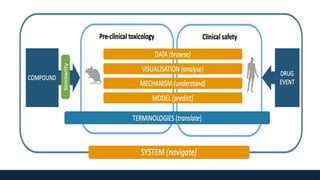
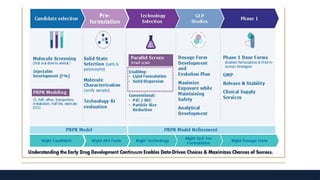
#2 “Drug discovery is a long and complex process that integrates biology, chemistry, pharmacology, and clinical science. With rising disease burdens and an increasing need for effective therapies, efficient drug development pipelines have become more important than ever.”
#5 “Pre-clinical studies evaluate whether a drug is sufficiently safe and effective to justify human testing. These studies characterize biological activity and establish the safety margins required for an IND submission.”
#21 Together, these complementary approaches build a comprehensive biological rationale and establish feasibility before advancing candidates into human clinical trials. The integration of in vitro mechanistic insights with in vivo validation creates a robust foundation for predicting human response and minimizing clinical development risks.
#31 Industry Example: Onco design's integrated proof of concept services in oncology and immuno-inflammation leverage sophisticated disease models and biomarker
platforms to accelerate candidate validation, reducing development timelines and improving probability of clinical success.
#47 Repeated dosing for ~28 days (4 weeks)
Bridge between acute and longer-term toxicity
Supports short clinical trials and dosing regimen selection
OECD TG 407: Repeated Dose 28-Day Oral Toxicity Study in Rodents
#79 The preclinical development pathway represents a sophisticated, integrated approach that combines cutting-edge science with regulatory rigor. By establishing mechanism of action, demonstrating proof of concept, and
comprehensively characterizing safety profiles through OECD-compliant toxicology and ICH-guided safety pharmacology studies, drug developers build the essential foundation for successful clinical translation.
Emerging technologies in computational toxicology, microphysiological systems, and biomarker discovery continue to enhance the predictive power of preclinical studies while reducing animal use through 3Rs principles.
Strategic partnerships with expert CROs provide access to specialized capabilities and accelerate timelines without compromising quality or compliance.
Together, these preclinical pillars—mechanistic understanding, proof of concept validation, comprehensive safety assessment, and integrated risk evaluation—build confidence that new drug candidates will demonstrate
both efficacy and safety in human trials, ultimately bringing innovative medicines to patients who need them.
#80 “To summarize, pre-clinical studies ensure scientific rationale, safety, and biological activity. They form the foundation that determines whether a drug can progress into clinical trials.”