Downloaded 37 times
- 1 / 38
- 2 / 38

- 3 / 38
- 4 / 38
- 5 / 38
- 6 / 38
- 7 / 38
- 8 / 38
- 9 / 38
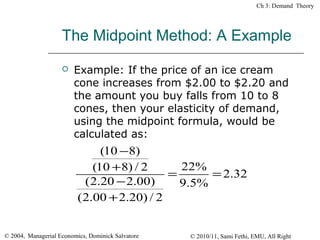
- 10 / 38
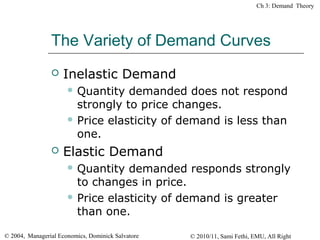
- 11 / 38
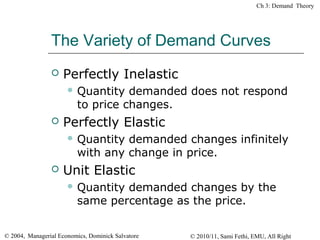
- 12 / 38
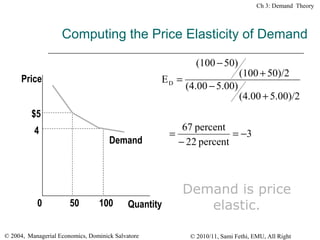
- 13 / 38
- 14 / 38
- 15 / 38
- 16 / 38
- 17 / 38
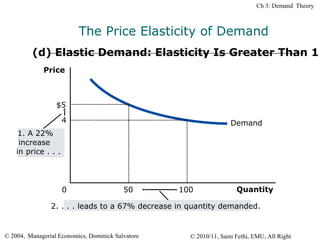
- 18 / 38
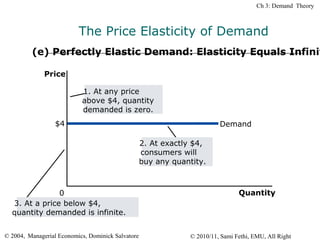
- 19 / 38
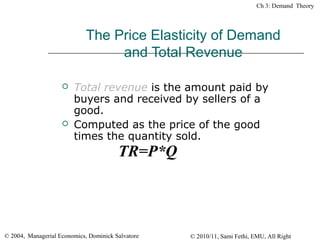
- 20 / 38
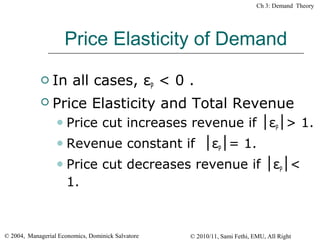


![Ch 3: Demand Theory
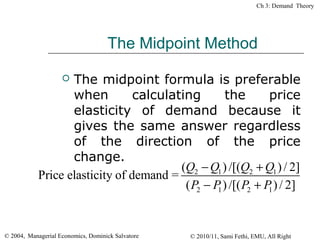
The Midpoint Method
The midpoint formula is preferable
when calculating the price
elasticity of demand because it
gives the same answer regardless
of the direction of the price
change.
Q - Q Q +
Q
P - P P +
P
Price elasticity of demand = ( ) /[( ) / 2]
© 2004, Managerial Economics, Dominick Salvatore © 2010/11, Sami Fethi, EMU, All Right
Reserved.
2 1 2 1
2 1 2 1
( ) /[( ) / 2]](https://image.slidesharecdn.com/lecture4-140923231344-phpapp02/85/Lecture-4-8-320.jpg)


![Ch 3: Demand Theory
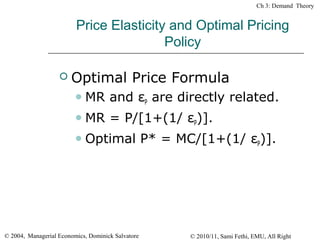
Price Elasticity and Optimal Pricing
Policy
Optimal Price Formula
MR and εP are directly related.
MR = P/[1+(1/ εP)].
Optimal P* = MC/[1+(1/ εP)].
© 2004, Managerial Economics, Dominick Salvatore © 2010/11, Sami Fethi, EMU, All Right
Reserved.](https://image.slidesharecdn.com/lecture4-140923231344-phpapp02/85/Lecture-4-24-320.jpg)


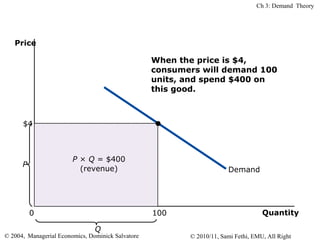
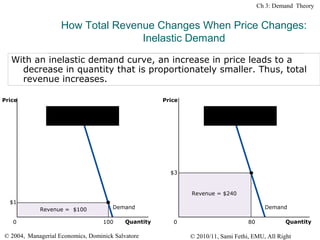
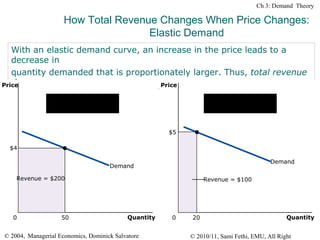
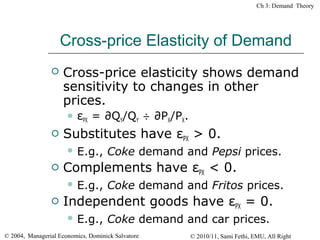
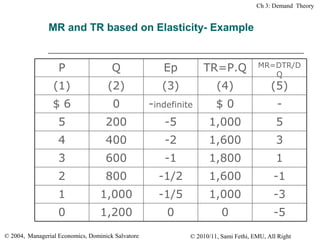
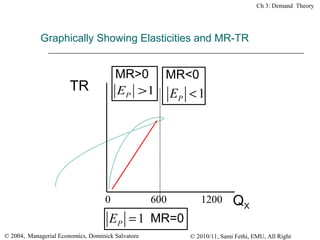
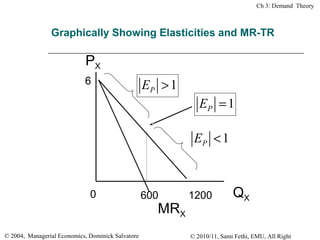
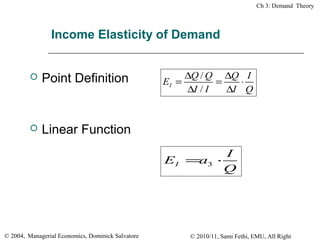
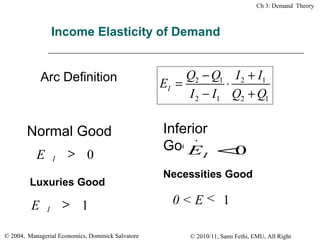
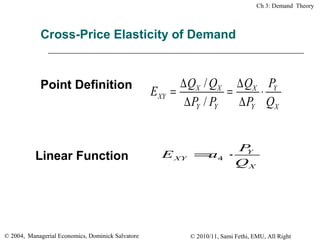
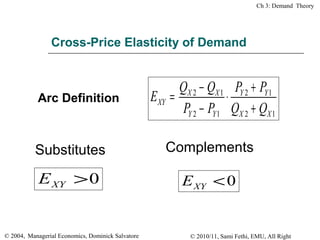
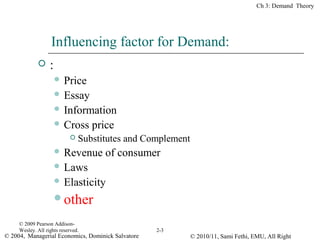
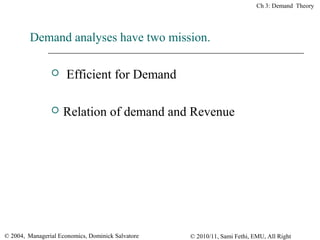
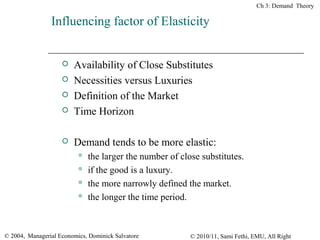
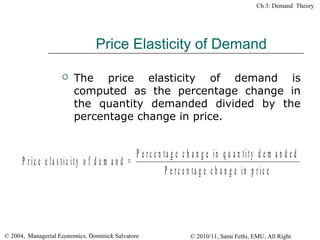
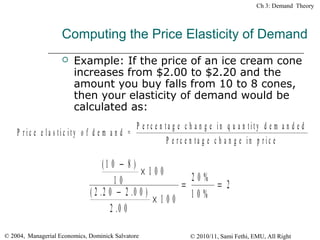
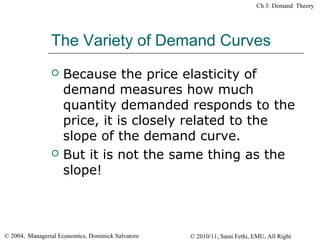
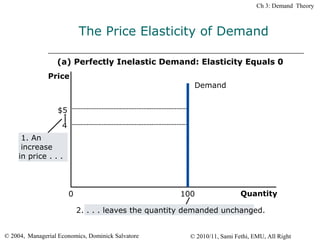
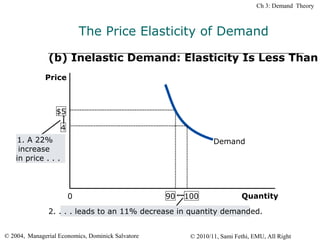
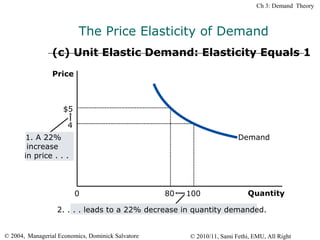
This document discusses demand theory and the concept of elasticity in economics. It defines demand as a buyer's willingness and ability to pay for a good or service. The key factors that influence demand are outlined as price, income of consumers, availability of substitutes, and cross-prices of related goods. Elasticity measures the responsiveness of quantity demanded to changes in price or other factors. Price elasticity is computed by comparing the percentage changes in quantity and price. Demand can be inelastic, elastic, or unit elastic depending on the elasticity value. The relationship between elasticity, total revenue, and marginal revenue is also examined.


![Ch 3: Demand Theory
The Midpoint Method
The midpoint formula is preferable
when calculating the price
elasticity of demand because it
gives the same answer regardless
of the direction of the price
change.
Q - Q Q +
Q
P - P P +
P
Price elasticity of demand = ( ) /[( ) / 2]
© 2004, Managerial Economics, Dominick Salvatore © 2010/11, Sami Fethi, EMU, All Right
Reserved.
2 1 2 1
2 1 2 1
( ) /[( ) / 2]](https://image.slidesharecdn.com/lecture4-140923231344-phpapp02/85/Lecture-4-8-320.jpg)


![Ch 3: Demand Theory
Price Elasticity and Optimal Pricing
Policy
Optimal Price Formula
MR and εP are directly related.
MR = P/[1+(1/ εP)].
Optimal P* = MC/[1+(1/ εP)].
© 2004, Managerial Economics, Dominick Salvatore © 2010/11, Sami Fethi, EMU, All Right
Reserved.](https://image.slidesharecdn.com/lecture4-140923231344-phpapp02/85/Lecture-4-24-320.jpg)