Jonathan Bate-The Song of the Earth-Harvard University Press (2002).pdf
1.
Nso by JonathanBate in Picador
NON-FICTION
Tbe Genias of Sbakespeare
F I CTION-
The Cure for Loue
of the E, arth
Jonathan Bate
The Song
PICADOR
2.
F-irst publishcd zoooby Picador
'I'his erlition publishcd zoor by Picador
an imprint of Macmillan Publishers Ltd
25 Ilccleston Placc, London swrw 9NF
Ilasingst<>ke and Oxfrrrd
Associatc<l cornpanics throughout the worlcl
ww w. nr,rclrr iIl:tn.cotrl
tstN () 1l,o r,7t&1 6
( i, r1r,y r.i glrt (<
).1orrrrthrrrr ll,ttc zooo
'l lrc riulrt ol.forr:rth:rn llrrtc to lrc irlcntilictl as tlrc
:rutlrot ol-this work lrls lrccrr :rsscrtcrl lr1, hirrr irr rlccor(lincc
with thc O()pyright, l)esigrrs antl I)rtcnts Act r<7tltl.
Ail rights reservcd. No part of this publication may bc
reproduced, storcd in or introducetl into a retrieval system, or
transmifted, in any f<rrm, or by any means (clccronic, mechanical,
photocopving, rccording or otherw'ise) without thc prior written
permission of thc publisher. Any person who does any unauthorizcd
act in rcleti(m to this publication may trc liable to criminal
pr()sccution and civil claims for damages.
r 157<1 8642
A ( ill) c:rtrrloguc rccortl firr this lxx>k is rvailable freirlr
thc Ilritish Lilrrary.
'l'y1-rcsct lry SetSystcnts l,td, Saffrr>n Walden, llssex
Printctl and lxrund in (ireat llritain by
Mackays of Chatham plc, Chatham, Kent
'l'his book is soltl sub.ject to thc conditi<)n that it shall not,
by u,ay of trade or othcn!.ise, be lcnt, re-sold, hired out,
or othcn4,ise circulated u'ithout the pulrlisher's prior conscnt
in any form of binding or covcr other than that in which
it is pulllishc<l antl without a simil.irr conclition including this
condition lreing imposed on the subsequent purchaser.
forI'om
-l-herefore all seasons shall be sweet to thee,
Whether the summer clothe the general earth
Withgreenness...
3.
Prefa c e
Thisis a book about why poetry continues to matter as .!'e enter a
new millennium that will be ruled by technology. It is a book about
modern Western man's alienation from nature. It is about the
capacity of the writer to restorc us to the earth which is our home.
'Ihe argument bcgins from certain prose works - novels by
Jane Austen and
-fhomas [Iardy, the philosophy of Jcan-Jacques
Rousseau, M^ry Shelley's Frankenstein, the writings of the naturalist
W. f{. Hudson - but is then concentrated upon a group of early
nineteenth-century F,nglish poets who meditated deeply on the
complex relations befween humankind, nature and society: William
Wordsworth, Samuel
-laylor Coleridge, John Keats, Percy Bysshe
Shelley, Lord Byron and John Clare. 'l-hey are chief among those
who have come to be called the 'Romantics'. In the twenticth
century some of their concerns were reawakened by a rnore geo-
sraphically widespread arrav of writers. Among thc small but
powerfully representative selection discussed are the Americans
Wallace Stevens and lilizabeth Bishop, the West Indian Fldward
IJrathwaite, the Northurnberlander Basil Bunting, the Australian
I-es Murray, the rniddle-Europeans Rainer Nlaria Rilke and Paul
Celan, and the Anglo-Welsh Edward'Ihomas.
In the first three chapters I establish some contexts. Why do we
value literary works with rural settings? How can we reconcile
'culture' and 'nature', two forces which are traclitionally opposed to
each other? What indeed do we mean by 'nature'? [Iow and why
do we dream of living in unity with 'her'? 'fhen in the book's
middle chapters I ask with respect to a range of poems some of the
questions which ecologists ask of biological organisms. F{ow are
they influenced by clirnate? In what kind of landscape do they
flourish? &at are their modes of creating shelter, their relations
with other species?
4.
Pref'ace
Human beings arenot, however, like other species: there are
spiritual, linguistic, historical, regional and national aspects to our
senses of identity and belonging. In meditating on these in the
closing two chapters, I have found myself drawn to the work of
the German philosopher Martin Heidegger - but I have also felt the
need to speak of that about which Heidegger remained notoriously
silent.
C ontents
List of lllustrations xiii
r. Going, Going r
z. The State of ll/ature 24
3. A Voice for Arie I 68
4. fuIajor Weatber 94
5. The Picturesque Enaironment r rg
6. Nests, Sbells, Landmarks r5j
7. Poets, Apes and Other Animals r76
8. Tbe Place of Poetry 2o5
g. What are Poets For? z4 j
I,{otes z I 5
Saggestions for Furtber Reading 3r7
Acknowledge??tents 3 z r
Index 3 z 3
5.
List of Illustrations
r.Jacob Epstein, Rim.a. Monument to W. H. Hudson, Hyde
Park, London. Relief in Portland stone (rgr5).
z. Marcus Stone, 'Trevelyan at Casalunga'. Line illustration to
Anthony Trollope, He Knew He Was Right (r869).
3. John Martin, The Bard. Oil on canvas (r8r7). @y kind
permission of the I-aing Art Gallery, Newcastle-upon-
Tyne.)
4. James Baker Pyne, Winderun:ere Jrorn Orrest Head. Lithograph
from his series Tbe Englisb Lake Diyrict (r8Sl).
5. Joseph Wilkinson, 'Cottages in Applethwaite looking from
Skiddaw'. Engraving from Select Views in Cam.berland,
Westmorela'nd, and Lancash ire (r 8 ro).
6. Title-page of Dr Syntax in Search of tbe Picturesqu.e.
7. Thomas Rowlandson,'Dr Syntax tumbling into the water'.
Engraving from William Cornbe, Tbe Tou" oJ-Dr Syntax in
Sear"ch of the Picturesque (r8o9, repr. r8rz).
8. Thomas Rowlandson, 'Dr Slmtax losing his way'. Fi,ngraving
ftom Dr Syntux in Search oJ-the Pictur"esqtte.
9. Thomas Rowlandson, 'Dr Syntax sketching on Lake'.
Engraving ftom Dr Syntax in Search oJ'the Picturesque.
ro. Harmoniously arranged cows, from William Gilpin's
. 'Northern Tour'. Engraving from Obsetruations, Relatiae Chieju
to PiL"tu?'esqae Beauty Q786).
r r. 'fhornas Rowlandson, 'Dr Syntax drawing after nature'.
Engraving from Dr Syntax in Search oJ-the Picru.resqtte.
rz. A ruined abbcy, from Williarn Gilpin's Wye Tour. Engraving
from Oltset'uatiltts on the Riaer Wye (t782).
r3. 'Tintern Abbey', from Samuel Ireland's Picturesque Views 0n tbe
Riu er Wy e $ 7 g7). F.ngraving.
ry. P.J. de Loutherbourg,, Tbe Riuer Wye at Tintent Abbey. Oil on
6.
xia l,ist oflllustrutions
canvas (r 8o5). (By kind permission of the Syndics of the
Fitzwilliam Museum, Cambridge.)
r5. Max Beerbohm, Wordxt;ot'th in the Lake District - at Lylss-
purylses. Caricature from'I'he Poets' Corner (rgo+).
The poetry of earth is never dead . . .
(John Keats)
But there remains the song that names the earth.
(Martin Heidegger)
7.
1
Going, Going
And thatwill be England gone,
The shadows, the meadows, the lanes,
The guildhalls, the carved choirs.
There'll be books; it will linger on
In galleries; but all that remains
For us will be concrete and tyres.
(Philip Larkin,'Going, Going')
Ar rnr END oF the twentieth century, the two most popular
English writers of the nineteenth century were Jane Austen and
Thomas Hardy. Year in, year out their books have gone on selling
in paperback in quantities undreamed of bv their modern-day
successors. The agency which calculates the number of boola
borrowed from British libraries, for the purpose of paying the
modest Public Lending Right fee to living authors, publishes a
record of annual borrowings of dead authors: Austen and Hardy
are consistently at or near the top. In the United States, Austen's
stock was massively inflated in the r99os as the result of a series
of highly successful film adaptations.
What is the source of their enduring appeal? There is a
cynical answer to this question, which could be summarized, as
frocks and sm.ocks. Austen stands for a lost world of elegance, of
empire-line dresses, of good manners, of ladylikeness and gentle-
manliness in large and beautiful houses. Hardy, meanwhile, rep-
resents nostalgia for a simple, honest rustic way of life among
hedgerows, haystacks and sturdy English oak trees. Together they
stand for the imagined better life of both the higher and the
lower classes in a world where there is no place for the motor car.
8.
,n", represen,,r. ;:,:';;;';^:::,ns,and or shadows,
meadows and lanes that are gone.
The cynic will say that nostalgia for the old southern shires is
a cultural disease. If that is so, then the popularity of Austen and
Hardy suggests that our culture is in the erip of an epidemic. Our
longing for the imagined health of the past must be a sign of the
sickness of the present.
Jane Austen went t<l the small medieval cathedral ciry of
Winchestcr to die. To get there nor'^/ you drive through the deep
scar - it feels like a wound upon the very earth - which the
motorway has cut through the ancient chalk downland of Twy-
ford. Stand on llardy's I')gdon l{eath and you will be deafened
by the roar of low-flying Air Force jets, while far above the blue
of the sky u,ill be broken by the white ribbons of condensed
water vapour in the exhaust gases of the Jumbrls on their path
into Heathrow - the visible remnant of the thousands of gallons
of fossil fuel consumed by each flight. For Austen's characters
and for l{ardy's, a journey to the nearest tot'n is an cvent, a
trip to London an adventure. Now we can fly from London
to New York in about the time it takes Hardy's Judc to get to
()xford.
Alrcirtly, though, in I lartly tlrc p<lssibilitics of mobility are
lrcing opcncrl rr;r lry tlrc etlvcrtt r>f tlrc railway. FIis novels docu-
nr(:nt rtil':rl t'trstort'rs tlf' grcit alrtitluiry even as they represent a
worltl st:rntling orr thc lrrink of tnodcrnity. We usually read his
novcls in thc tcxt wlrich hc rcviscd for the Wessex editicln of
t9tz, just trv<.r ycars llcforc thc first international war of techno-
krgically engineerecl mass destructitln. Born in rB4o, the son and
grancls<;n of master stonctnasons who performed in the band of
the local parish church,
-fhornas llardy died in r9z8 with a
knowledge of the automobile, the aeroplane, the gramophone
record and the raclio. We may take a measure of the changes
through which he livecl if w'e contemplate the difference between
two kinds of inscription. First, think of the words chiselled with
slow care on stone by a master mason, words on a gravestone, let
us say, which only disappear through the inexorable but imper-
ceptible erosion of time and weather in the passing of - a phrase
from one of Flardy's best poems - 'the vcars, the years'. Then
Going,, Going 3
think of the values printed on a banknote in Weimar Germany or
a stock market listing in Wall Street, 1929, inscriptions which
lose their meaning almost before the ink is dry.
Our instinct about Flardy is this: he values a world - for him
vanishing, for us long vanished - in which people liae in rbythm
with nature. Presumably we value such a world because we are not
entirely hrppy with our own modernity, with speed, with noise.
We sense that there is something wrong about our comfortable
insulation against the rhythms of the seasons, something alienat-
ing about the perpetual mediation of narure through the instru-
ments of culrure, whether radio and canned food, which Hardy
lived to see, or television and genetically modified crops, which
he would have had grave difficulty in imagining.
On first reflection, the attraction of Jane Austen would seem
to be very different, to be bound up with the rhythms not of
nature but of a supremely poised culture. A battle between the
country (customarily regarded as the sign of narure) and the city
(the sign of civilization) has been fought almost since literature
began. Austen's anatomy of social relations and the high value
which she places upon civility would seem to place her on the
side of the ciry. But she is not. Like Hardy, she is suspicious of
mobility and of the city. A lack of rootedness and a metropolitan
brashness are associated with modernity and with corruption. The
immoral Crawfords come from London to disrupt the harmony
of Mansfield Park. The nouvelle riche Mrs Elton barges into the
closed community of }Iighbury, bringing with her the smell of
slav;-;;rt Brislll',nr,
the association of Hardy with 'narure' and
Austen with 'culture' is erroneous. The error is, I believe, bound
up with the changing meanings of the word 'culture'. The lt{ew
Sbotter Oxford English Dictionary offers seven different definitions
of 'culture' as a noun, dividing them into two semantic categories.
The earliest meaning of 'culture', which endured from the middle
English period to the end of the eighteenth centur/, was 'a
cultivated field or piece of land'. In late middle English, the
primary sense shifted from cultivated land itself to the action of
cultivation: the word referred to tillage, the working over of the
soil. In the early seventeenth century, it was extended to other
9.
4 The Songof the Earth
forms of farming: one could speak of the cultivation not only of
crops, but also of fish, oysters and bees, even of silk. The only
remnant of this range of meanings associated with organic growth
is the scientific sense, emerging in the late nineteenth centur/,
which refers to the action which causes bacteria or tissue to grow
in a prepared medium, as when one speaks of a cancer culture.
The word's path from common currenry in the context of
agriculrural subsistence to technical usage in biological research
is itself a little allegory of the march to modernity.
The second range of meanings goes back to the early sixteenth
century. It was originally figurative: as the soil is improved and
made productive by tillage, so the mind and manners may be
irnproved by education and training. The word is thus removed
from the earth and linked to the advance of society. It is, if you
will, removed from the country to the ciry - cultivation comes to
mean civiliw, a word which has its root in the Latin ciuilis,
meaning'of, or pertaining to, the city'. William Shakespeare and
his wife came from rural families who cultivated the land, whereas
he himself underwent the cultivation of a grammar school edu-
cation and moved to London, where he became a professional
anatomist of mind and manners.
lir<lrn Shakcspcarc's timc to Jane Austen's, the old and the
ncw scnscs of 'culturc' cxistcd side by side. But in the nineteenth
ccntury, with thc dirninution of the proportion of the population
involvcd in tillage and the rapid growth of industrialization and
urbanization, thc old sense died and the new one was further
developed. t-arly in the cenrur/, the word was applied to the
aesthetic sphere: it came to mean 'refinement of mind, tastes, and
manners; artistic and intellectual development; the artistic and
intellectual side of civilization'. It is in this sense that we speak of
Shakespeare, Jane Austen and Hardy as part of 'our culrural
inheritance'. T'hen in the mid-century the word was given an
anthropological spin: 'A particular form, stage, or type of intellec-
tual development or civilization in a society; a society or group
characterized by its distinctive customs, achievements, products,
oudook'. As Darwin and his successors developed the sciences of
evolution and ecologl, so there emerged a parallel science which
srudied the variations and the development of hurnan social
Going, Going t
behaviour; it is in this sense that we speak of 'culfural relativism'.
By the end of the nineteenth centurlz, a sociological variant was
emerging, whereby one might speak not only of, say, 'Mayan
culture' but also of 'working-class culture' and, later, of the arts
and the sciences as 'two cultures'.
The key development for our purposes was the association of
'refinement of mind, tastes, and manners' with 'the artistic and
intellectual side of civilization'. For it was here that a division
between culture and nature was made explicit. Consider the
Sborter Oxford Diaionary's two exemplary quotations for this
sense: 'The great men of culture' (Matthew Arnold, inspector of
schools) and 'Of what use is culture to a labourer' (Manny
Shinwell, Socialist politician from the East End of London).
Originally'culture' was rhe work done by a labourer in the fields,
whereas for Arnold and his successors culrure is intellectual, even
spiritual, work which seryes the moral needs of a society and is
set in opposition to the very idea of physical labour.
In Jane Austen, however, this division has not yet been opened
up. Flere is Emma Woodhouse, surveying the view from the
grounds of Donwell Abbey, the home of George Knightley:
The considerable slope, at nearly the foot of which the Abbey
stood, gradually acquired a steeper form beyond its grounds;
and at half a mile distant was a bank of considerable abrupt-
ness and grandeur, well clothed with wood; - and at the
bottom of this bank, favourably placed and sheltered, rose the
Abbey-Mill Farm, with meadows in front, and the river
making a close and handsome curve around it.
It was a sweet view - sweet to the eye and the mind.
English verdure, English culture, English comfort, seen under
a sun bright, without being oppressive.
The knightly Mr Knightley takes his Christian name, George,
from England's patron saint. He embodies a value-structure
which remains profoundly Christian, but which has shifted from
pious observance to secular virtue. His house is on the site of a
former abbey. A place that was once consecrated to the spiriual
good life, to the vertical relationship between humankind and
God, it is now consecfated to the social good life: it has become
10.
6 The Songof tbe Eartb
an emblem of productive and harmonious rural being. Instead of
being drawn upward to the heavens, the eye looks out horizontally
to the well ordered environment.
The abbey occupies a safe middle ground, below a hill and
above a river. It is surrounded by mature woodland that signifies
Knightley's willingness to take the long view of profit - potential
timber is an invesfinent for future generations. f'he farm is below
the abbey in the landscape, as the gentleman farmer Robert
Martin is below Mr Knightley in the social order, but it is
protected by its environment, as the interests of Martin are cared
for by Knightley. The weather - 'a sun bright, without being
oppressive' - is made one with the social structure. Here Austen
is inhcritor of a long tradition of European thought which
associatcd a tcmporate climate with a liberal sociery and excessive
heat with oricntal clcspotism
'linglish vcrtlurc, tl,nglish culture, English comfort' are thus
embedded in a particular landscape. What Austen regards as
authentic national identity is derived not from a set of political
institutions based in London - monarchy, parliament and so forth
- but from the harmonious play, suggested by the verllal euphony,
of 'verdure' and 'culture'. Verdure is natural greenness, the
product of lingland's wet wcather, while 'culture' is intended to
irnply thc nrixcrl tirrrnland of traditional English farming methods.
'l'hc
llrcscncc of 'mcadows' is crucial here. Meadow is grassland
rn()wn f<rr hay, which scrvcs as winter feed for cattle. It is the
suprcme example of culture working together with nature: the
grass grows naturally (it is not sown in the manner of arable
crops), but it needs to be maintained artificially (if not mown, it
would revert to wildwood). Larkin wrote 'Going, Going', a poem
commissioned by the Department of the Environment, in ry72.
FIe was prescient about the loss of England's flower-rich hay
meadows: since the Second World War, no less than ninety-
seven per cent of their acreage has gone. England no longer
offers many 'sweet views' of the chequered fields that are charac-
teristic of mixed farmland. Instead, most of the country is now
covered by vast unbroken tracts of intensive cereal crop and a
monoculture of artificially fertilized perennial ryegrass. As for
winter feed, the consequence of replacing hay with a compound
Going, Going T
including ground-down animal carcasses has been BSE, or'mad
cow disease'.
For Austen, then, 'culture' is located in a landscape and a
mode of agriculture, not merely in manners and aesthedcs. Her
ideal England is one in which social relations and the aesthetic
sense - that sweetness to the eye and the mind - are a function of
cnvironmental belonging. But she is also acutely aware of change.
William Cobbett, the son of a farm labourer, was born in t763
in Farnham, Flampshire; Jane Austen, the daughter of a village
clergyman, was born two years later in Steventon, in the same
county. Chawton, where she wrote her mature novels, is just ten
rniles from Farnham. Raymond Williams noted this proximity in
his classic study, The Counuy and the City. FIe then quoted a
famous passage from Rural Rides, in which Cobbett distinguished
between
a resident natiae gentr/, attached to the soil, known to every
farmer and labourer from their childhood, frequently mixing
with them in those pursuits where all artificial distinctions are
lost, practising hospitality without ceremony, from habit and
not on calculation; and a gentr/, only now-and-then residing
at all, having no relish for country-delights, foreign in their
manners, distant and haughty in their behaviour, looking to
the soil only for its rents, viewing it as a mere object of
speculation, unacquainted with its cultivators, despising them
and their pursuits, and relying, for influence, not upon the
good will of the vicinage, but upon the dread of their power.
Attitudes to the soil and to those who work the soil are seen
by Cobbett to be implicit in one another. FIe believes that both
the community and the earth are served better by stay-at-home
Tory paternalists than by mobile Whig arrivistes. Jane Austen
explores exactly the same distinction between good stewardship
and absenteeism, though by example and not by polemic. And she
is more discriminating in her judgements: whereas Cobbett flails
indiscriminately at all the representatives of new money - finan-
cial speculators, nabobs and negro-drivers, generals and admirals
- Austen is doubtful about some (Sir'lhomas Bertram, the bad
father who has bought Mansfield Park on the proceeds of his
11.
8 'l'he SongoJ' the Earth
sugar plantations in Antigua) but robustly defensive of others
(Admiral Croft, the good husband who in Persuasion rents Kel-
lymch flall on the proceeds of his successes during the Napoleonic
Wars). Ifuightley is her prime example of the 'resident natiue
gentrfr attached to the soil'. Henry Crawford in Manslield Park is
the very image of the second kind of landowner. FIe has no relish
for his Norfolk estate, where in his absence worthy tenants have
nearly been evicted as a result of the underhand dealing of his
agent. In a crucial passage Fanny Price makes him choose
betwcen returning there or going to London; he opts for London,
a roacl which leads to elopement with Maria and the loss of
Iiirnny.
.r'2.,'r' ntrtl ,scn.silritity ltcgin:; witlu n,rn"r-,evcl eviction. The novel
()pcns es tollows:
'l'he family of l)ashwood had been long settled in Sussex.
Their estate was large, and their residence was at Norland
Park, in the centre of their property, where, for many gener-
ations, theyhad lived in so respectable a manner, as to engage
the general good opinion of their surrounding acquaintance.
-lhis is Cotrllctt's resident native gentr/, long settled through the
generations. Rcspect clnanates from the central point of the great
house in an environing circle that embraces the community and
the soil. But a complex set of testamentary provisions forces the
suniving Dashwood women away from their patrimonial home
and into rented accommodation in the West Country. The estate
falls into the hands of Mr John l)ashwood, u,ho has only ever
made occasional visits to Norland and has no feeling for the
place. I{aving expelled his stepmother and half-sisters, he rides
roughshod over the bond of reciprocal responsibility he owes to
the local commoners and small farmers. IIe encloses and he
engrosses:
The inclosure of'Norland Common, now carrying on, is a
most serious drain. And then I have made a little'purchase
within this half year; F)ast Kingham F'arm, you must remem-
Going, Going g
ber the place, where old Gibson used to live. The land was so
very desirable for me in every respect, so immediately adjoin-
ing my own properry, that I felt it my dury to buy it. I could
not have answered it to my conscience to let it fall into any
other hands.
(Gibson of East Kingham Farm would, like Robert Martin of
Abbey-Mill Farm, have been a yeoman, or gendeman farmer with
a freehold on a small parcel of land.) The old Dashwood family
knew their obligations to the place; that 'general good opinion of
their surrounding acquaintance' would have been earned by the
performance of duties to tenants and neighbours. Austen turns
her ironic glare on John by means of the rwist on 'dury' and
'conscience': it can only be hypocrisy for him to use such words,
since he has failed in his duty even to his own family and has
shown scant conscience as his wife has talked him out of leaving
them a reasonable annuity. When he turns his attention to the
land, the language of harmonious reciprocation is again replaced
by that of greedy appropriation.
Lack of respect for neighbours is accompanied by lack of
attachment to the soil. On the next page we learn that a green-
house is to be built upon the knoll behind the house:
'I"he old walnut trees are all come down to make room for it.
It will be a very fine object from many parts of the park, and
the flower-garden will slope down just before it, and be
exceedingly pretty. We have cleared away all the old thorns
that grew in patches over the brow.
Old English trees are felled to make way fbr the exotic plants of
the hothouse. 'lhe history of the greenhouse is bound up with
that of empire. Originally 'nothing more than a room or building
to keep oranges and other tender "greens" (hence the name) over
the winter, with provision for a small stove or even an open fire
to kecp the keenest frosts at bay', the greenhouse developed
into a much more elaborate and heat-efificient structure during
the last two decades of the seventeenth century as a result of
the increased cultivation of exotic plants brought back from the
empire in the East and West Indies. Austen's youth, a cenrury
12.
Tbe Song ofthe Eartb
later, was the heyday of the imported exotic, as may be seen from
, prrrrg. in her favorrrite poem, Wiltiam Cowper's Tbe Task:
Who loves a garden, loves a greenhouse too'
Unconscious of a less propitious clime
There blooms exotic beauty, warm and snug,
While the winds whistle and the snows descend'
The spiry myrtle with unwith'ring leaf
Shinei there and flourishes. The golden boast
Of Portugal and Western lndia there,
The ruddier orange and the paler lime,
Peep through their polish'd foliage at the storm,
And seem to smile at what they need not fear'
'['h' anrotnum there with intermingling flow'rs
Ancl cltcrrics hangs her twigs' Geranium boasts
I Icr critttsotr honours, and the spangled beau,
Iiiciodcs, glitters bright all winter long'
N[ plants, of ev'ry leaf, that can endure
The winter's frown if screen'd from his shrewd bite'
Live there and prosper. Those Ausonia claims,
Levantine regions these; th'Azores send
Their jessamine; her jessamine remote
Caffraria: foreigners from many lands,
They form one social shade, as if convened
By magic summons of th' Orphean lyre'
For Cowper, rhe greenhouse provides the opportunity to display
the trophies of empi.e; he regards it as his role as poet - rvielder
of the brph.rn lyre - to celebrate a shared exoticism of place-
names and plant-names.
The hothouse flowers and trees of Tbe Task tend to have
smoothly polished surfaces, a veneer analogous to that social
slickness which characterizes the morally dubious newcomers
to Austen's communities. That geranium boasting its crimson
honours and the 'spangled beau' ficiodes are horticultural equiva-
lents of the red-coated seducer Wickham in Pride and Prejudice'
To judge therefore from the activities of Mr John Dashwood,
in the ,rrrar., of greenhouses Jane Austen for once did not share
the sensibility of her admired Cowper. FIer allegiance was to the
IO
Going, Going r r
rough old walnut tree, a species originally imported by the
Romans but so fully naruralized as to be classed in Austen's time
as native rather than exotic.
Though Cowper and Austen differ over the greenhouse, they
share a scepticism about the principal 'improving' activity of the
new landowners of the late eighteenth century: the work of
landscape gardening. Later in book three of Tlte Task, Cowper
:rttacks 'Capability' Brown for altering houses and landscapes that
had for generations been integrated with their local environment.
Brown is presented as a dangerous magician who subverts the
course of nature: 'The lake in front becomes a lawn, / Woods
vanish, hills subside, and valleys rise.'The erriployment of his arts
is seen as characteristic of new money and the loss of the old
rlrder in which 'Mansions once / Knew their own masters, and
laborious hands / That had survived the father, served the son'.
lmprovement goes hand in hand with the selling of old woodland
and with short-term commercialism: 'Estates are landscaped,
gazed upon awhile, /'I'hen advertised, and auctioneer'd away.'
Instead of having a responsible, nurturing relationship to the
soil, the improver has a purely aesthetic one. l{e regards his estate
as a pleasure-garden rather than as land which needs to be
rnanaged with care and consideration, John Dashwood clears the
old thorn patches simply in order to improve the view. In so
doing, he erases one of the enduring links between English
culrure and English narure, for the hawthorn was
the ancestor of the Maypole, the source of May Day garlands
and the decorations of Jacks-in-the-Green and Green Geor-
ges, and one of the models for the foliage which wreathes the
faces of Green Men carved in churches and inns. . . . Isolated
hawthorns [have traditionally been] treated with respect, too,
and though often little more than bushes, are the most
frequent trees mentioned in Anglo-Saxon boundary charters.
The thorn is also the tree after which the Anglo-Saxon runic
letter p is named
Where hawthorn summons up a whole folk-history and a com-
munal way of life, improvement bespeaks the tynanny of the
nouveau riche landowner's eye. Landscaping is, then, a symptom
13.
12 The Songof the Eartb
of the growing division between the aesthetic and the agricultural
senses of the word 'cu[rure'.
Elinor is thankful that Marianne is not present to hear of the
clearing of the thorns and the felling of the walnuts. FIad the
yorrrgJ, sister of tender sensibilities been there, she would no
h""bt have quoted Cowper, as Fanny Price does upon hearing
that an avenue of trees must come down in the name of Mr
Rushworth's improvement of his estate, a result of his faddish
obsession with the landscape designs of Flumphrey Repton:
,cut down an avenue! what a pity! Does it not make you
think of cowper? ,,Ye fallen avenues, once more I mourn
your fatc unmerited."'
Iianny's quotation is from a passage in book one of The Task
conccrning Sir John'I'hrockmorton's enclosure and improvement
of his estate at W'eston Underwood, near Cowper's village of
olney. ,The Poptar-Field" one of cowper's best-known lyrics
(Th; poplars ,.. f.U.d; farewell ro the shade, / And the whisper-
ing sound of the cool colonnade!'), was a further lament occa-
siJned by the gentleman improver's changes to his local
environment. Fanny's instinctive reaction to landscape 'improve-
ment, is qxnpathy for the felled tree expressed through an
apposite line of poetry. Austen wishes us to register it as a mark
of h., heroine's sensitivity that she should regard the figure of
the poet as the spokesman for nature.
In making these connections, Austen comes closer to the
sensibility of Romanticism than we usually allow her to be. FIer
more sensitive heroines read Cowper rather than Wordsworth,
but they would be broadly in sympathy with the argument of the
preface to Lyrical Ballads that the poet has a special bond with
rustic life because it is in the country that the essential passions
of the heart 'find a better soil' and in the rural condition that 'the
passions of men are incorporated with the beautiful and perma-
,r"rrt for-s of nature'. William Blake said that the tree which
moves some to tears of joy is to others nothing but a green thing
that gets in the way. Poets and Jane Austen heroines are alike in
beinf troubled by the moment when an ancient tree ceases to be
Going, Going
permanent, when it is uprooted not because it is diseased but
lrccause it gets in the way.
Jane Austen was wriiing about rooted (I use the word advis-
cdly) communities during the period when-Wordsworth, follow-
ing in the footsteps of Cowper, was arguing that the increasing
trccumulation of men in cities was a cause of what we now call the
'alienation' of the human spirit. In the next few generations, the
Victorians had a proud sense of their own 'progress', but they
rrlso worried profoundly about their loss of 'place'. No writer had
r deeper sense of that loss than Thomas Hardy.
Mren Flardy gathered togethei his works in 1896, he grouped
the most celebrated of them together under the rubric 'Novels of
(lharacter and Environment'. I have suggested that Jane Austen
was also interested in the influence of 'environment' on character,
llut, interestingly, the word was barely available to her. 'Environ-
rnent' does not appear in Dr Johnson's dictionary. The modern
rneaning of the word emerges in the course of the nineteenth
centur/, in parallel contexts of social and biological analysis: 'The
set of circumstances or conditions, especially physical conditions,
in which a person or community lives, works, develops, or a thing
exists or operates; the external conditions affecting the life of a
plant or animal.' The Orford Englisb Dictionary's earliest example
of the word in the context of physical or geographical setting is
Thomas Carlyle writing in r83o of the 'picturesque environment'
around Bayreuth (I will argue in a later chapter that the emer-
gence of the term 'picturesque' was crucial to the whole question
of the growth of environmental consciousness).
I suspect that the word 'environment' began to be applied to
social contexts exactly because of the feeling of the alienation of
city-dwelling which was identified by Wordsworth and others.
That is to say, prior to the nineteenth century there was no need
for a word to describe the influence of physical conditions on
persons and communities because it was self-evident that personal
and communal identity were intimately related to physical setting.
The influence of, for instance, the climate and the soil was taken
for granted. But from the late eighteenth century onwards, there
r3
14.
14 The Songof the Earth
was an increasing awareness of industry's tendency to alter the
qualiry of our surroundings, even to affect the air we breathe.
In several passages of Tbe Task, Cowper noted with alarm the
effects of smoke on the health of city-dwellers. The most often
quoted line of The Task,'God made the country, and man made
the town', is famously false - historians of the countryside have
demonstrated that, especially in a crowded island such as Britain,
most rural landscapes (felled, planted and ploughed) are influ-
enced by the hand of man every bit as much as all urban ones -
but Cowper nevertheless registers an enduring intuition that the
country offers a narural environrnent, the town an artificial one.
'l'hc worcl 'cnvironment'emerges as a sign of that difference.
'l'hc Ilcvcrend'1. R. Malthus's Essay on the Principle of Popula-
tion, which appcared in its first edition in r 7g8, the same year as
the first cdition of Wordsworth and Coleridge's Lyrical Ballads,
was among thc first works to predict environmental catastrophe.
Malthus's infamous argument was that population grows geomet-
rically, but the means of subsistence arithmetically, so some form
of social engineering is required in order to forestall mass starva-
tion. Independently, Charles Darwin and Alfred Wallace each
read Malthus and came to the conclusion that his principle held
the key to evolution: natural selection operates through a species'
fitness to its enaironrnent. By the end of the nineteenth centurf,
this biological principle had filtered back into the Malthusian
realm of human society by way of the 'Social Darwinism' which
sought to naturalize rampant capitalism on the grounds of -
F{erbert Spencer's variant on
(natural
selection'- 'the survival of
the fittest'.
It is in this context that we must understand Hardy's concep-
tion of 'Character and Environment'. Where Social Darwinism
was a gospel of change and the new, I{ardy - who acknowledged
Darwin, Thomas Huxley and l{erbert Spencer as three of the
thinkers who had most influenced him - found true fitness in
stabiliry and the old. He placed mobile new men and advanced
ideas in opposition to rooted types and traditional ways. 'fhe
irreconcilable clash between the forces of tradition and of inno-
vation is at the core of his tragic vision. The opposition between
Going, Going r 5
(liles winterbourne and Edred F)tzpiers in The wood.land.ers,
published in r887, provides a perfect example.
'lhe novel begins u.ith the image of an old coach-road cutting
a line from Bristol to the south coast, skirting extensive woodland-s
intcrspersed with apple orchards. The immediate suggesrion is of
a mixed r-ural economy - timber and fruit-growing - linked by
the artery of the road to a city that is srrongly associated witir
trade. I{ardy frequently figures the landscape as a human body.
llere the face of the country has been changed by the road, but
the process has'been slow, the balance between dwelli,g and
trading thus remaining relatively stable. But the road is now
f,rsaken: in place of an economy of local connections between
c()untry and torvn, the railway has brought national and poten-
tially international forms of commerce rvhich have no need t<r
rcspect geographical parricularity.
'rhe contesr berween the old and the new is drarnatized in the
traditional form of a love-triangle. Grace Melbury, the daughter
of a prosperous timber merchant, belongs tn trre locariry, brrt hn,
lrcen educated abroad. she is 'flexible': she will either L,e drawn
back down to her roots or aspire upward towards social improve-
rrlent and mobiliry. She is first ,".r, ."ro.ning from her ,finishing,
school, wearing a pair of new gloves which insulate her hanJs
fi'om the soil. She is met by her childhood sweetheart, Giles
winterbourne, who - to her embarrassment as a newly made
'lady' - is standing in the middle of the market prace holding a
ten-foot high apple tree, a specimen of his produce which brings
the 'suggestion of orchards into the heart of the town,. A green
rnan in a green shade, he is a woodlander in the most literal sense.
As Giles drives Grace home in his gig, her mental distance
from her native environment becomes apparent:
'They had a good crop of bitter-sweets; they couldn,t grind
them all.' Hc nodded towards an orchard where some heaps
of apples had been left lying ever since the ingathering.
She said 'Yes,' but looking at another orchard.
'Why, you are looking at John-apple rees! you know
bitter-sweets - you used to well enough?'
15.
r 6 TheSong of the Earth
'I am afraid I have forgotten, and it is getting too dark to
distinguish.'
Winterbourne did not continue. It seemed as if the knowl-
edge and interests which had formerly moved Grace's mind
had quite died away from her.
She has lost that intimate awareness of the particularities of her
immediate surroundings which Hardy describes in a crucial
phrase later in the chapter as 'local knowledge'.
Winterbourne's perception of the world is shaped by the local
environment, whereas Grace is at this moment remembering'a
much contrasting scene: a broad lawn in the fashionable suburb
of a fast city, the evergreen leaves shining in the evening sun'.
Suburllia is a new kind of living space, a simulacrum of the quiet
country withirr the bounds of the 'fast' city, where manicured
lawns and importcd ornamental evergreens stand in for meadows
and productive native hroadleaf woodland. The suburbanization
of Grace's sensibility enacts the nineteenth-century change in the
meaning of the word 'culrure':
It was true; cultivation had so far advanced in the soil of Miss
Melbury's mind as to lead her to talk of anything save of that
she knew well, and had the greatest interest in developing:
herself. She had fallen from the good old Hintock ways.
The association of cultivation with the metaphorical soil of the
mind obliterates the old root of the word in the literal earth.
The move from the state of nature to that of civiliry is likened
to the fall of man.
'The good old Flintock ways' are intended to be evocative of
communal obligations rooted in locality. Grace abnegates these in
the name of a modish self-cultivation which denies the true self.
She has developed the capacity to imagine herself in a place other
than the one where she is. A few pages later we hear of Edred
Fitzpiers, who embodies scientific progress as opposed to local
knowledge. Grace sees a strange light in the night, caused by his
scientific experiments. According to old Grammer Oliver, Fitzpiers
believes that 'Everything is Nothing', that 'There's only Me and
Not Me in the whole world'. He is a disciple of the transcendental
Going, Going r Z
phitosophy - originatecl by Kanr, schematized by Fichte - which
thinks not of a symbiosis between human communiry and narural
cnvironment, but of two opposing realms, interior and exterior,
nrind and world, self and not-self. Grace's commitment to imagin-
rrtion as opposed to observation, and to a fashionable other world
ils opposed to a native community, mark her out as an embryonic
transcendentalist bound for the arms of Fitzpiers.
whereas Hardy brings Giles and Grace together beneath a
tree, he has Fitzpiers first spy the girl from a distance through an
eycglass. The doctor is an outsider who always looks to mediate
rlature through technology. F-or the vcry reason that he has no
commitmenr to environment, thar he reiects local knowledge in
thc name of the Germanic metaphysic which prefers the ideal to
thc real, Fitzpiers does not belong among the woodlanders. He is
'like a tropical plant in a hedgerow, a nucleus of advanced ideas
rrnd practices which had nothing in common with the life around,.
'l'hc 'alchemist-surgeon' is concerned only with the future, not
tlre past; he exists in an ironic relation to his own origin as a
rnember of an ancient local family whose name is linked to the
nrost traditional of Engli"^h trees: the liitzpier.ses of Oakbury-
liitzpiers.'I'he charactcr to whom the name of oak should belong,
firr he is the equivalent of Gabri el in Far from the Madd.ing crowd,
is of course Giles:
tIe had a marvellous power of making trees grow. Nthough
he would seem to shovei in the earth quite carclessly there
was a sort of sympathy berween hirnself and the fir, oak, or
beech that he was operating on; so that the r.ots took hold of
the soil in a few days.
At the end of the novel, it is Marry South, nor Grace Melbury,
who stands over the dead woodman's grave and possesses his
rnemory because she is the only one who 'had approximated to
w'interbourne's level of intelligent intercourse with Narure'. 'fhe
spirits of Giles and Marry ultimately belong together because
they have planted, coppiced and felled rogerher, they have shared
the language of the wood, 'the tongue of the ffees and fruits and
flowers themselves'.
Giles represents the acceptance of lirnits. FIis thoughts are
16.
T
r8 The Songof tbe Earth
'corerminous with the margin - of the Hintock woodlands'.
Fitzpiers, on the other hand, is bored because the place has no
presence to him. Because he is a professional man who has dropped
down into the rural place 'by mere accident', he has no sense of
the embeddedness of a community's history in its environment.
Without this sense, he is told upon by loneliness. Those who
truly dwell in the place are never lonely because they are attuned
to collective memory, to 'old association - an almost exhaustive
biographical or historical acquaintance with every object, animate
and inanimate, within the observer's horizon'. For Flardy, to
belong in a place means to know its history, to
know all about those invisible ones of the days gone by, whose
fcct havc traversed the fields which look so grey from his
wincl,.rws; recall whose creaking plough has turned those sods
frorn timc to time; whose hands planted the trees that form a
crest to the opposite hill; whose horses and hounds have torn
through that underwood; what birds affect that particular
brake; what bygone domestic dramas of [ove, jealousy,
revenge, or disappointment have been enacted in the cottages,
the mansion, the street or on the green. The spot may have
beauty, grandeur, salubrity, convenience; but if it lacks mem-
ories it will ultimately pall upon him who settles there without
opportunity of intercourse with his kind.
For the old woodlanders, there is no division between human
intercourse and local environment. The presence of memory
means that the countrJrside is inhabited rather than viewed aes-
thetically. The condition of the modern man, with his mobility
and his displaced knowledge, is never to be able to share this
sense of belonging. He will always be an outsider; his return
to nature will always be partial, touristic and semi-detached.
Fitzpiers is never without his eyeglass; he peers fitfully at his
environment instead of dwelling steadily within it.
Grace's tragedy is that her realization that she wishes to be a
native who returns comes too late. At the pivotal point of the
novel - the end of chapter twenty-eight - the motions of the plot
are dramatized in the landscape. Fitzpiers disappears on the high
ground as he rides away in the direction of his mistress, and in
Going, Going r g
the next instant Giles 'arise[s] out of the earth' below, looking
rnd smelling'like Aufumn's very brother',
his face being sunburnt to wheat-colour, his eyes blue as
corn-flowers, his sleeves and leggings dyed with fruit-stains,
his hands clammy with the sweet juice of apples, his hat
sprinkled with pips, and everywhere about him that atmos-
phere of cider which at its first return each season has such
an indescribable fascination for those who have been born
and bred among the orchards.
'l'lrc man beneath the apple-tree is now covered with the signs of
his trade. We could almost say that he has become cider and that
( irace is drawn to drink him in:
Her heart rose from its late sadness like a released bough; her
senses revelled in the sudden lapse back to Nature unadorned.
The consciousness of having to be genteel because of her
husband's profession, the veneer of artificiality which she had
acquired at the fashionable schools, were thrown off, and she
became the crude country girl of her latent early instincts.
In a moment which vividly anticipates D. H. Lawrence, Grace
revolts 'against social law' and in 'her passionate desire for
primitive life' her face seems to welcome Giles, who reaches out
and gently caresses the flower she is wearing between her breasts.
Ilut where in Lawrence this would herald the beginning of a
passionately earthy illicit fifair in the manner of Lady Chatterley
and Me[[ors, in The Woodlnnders the force of the social law is such
that Giles and Grace manage no more than a single kiss. It is
cssential to lIardy's honesty as a writer that he recognizes that
once we have left our native home and been educated into
gentility, we can never rerurn, save in the brief moment of blind
passion, to the world of latent early instinct.
In this sequence, the new sense of the word culture has fully
taken over from the old. The apple-spattcred Giles represents
'Nature unadoined', whilst Grace's education into fashionable
society represents a modern 'culture'which is seen at an extreme
of anti-Nature in Fitzpiers - with his eyeglass, his microscope,
his chemistry apparatus, his phrenological studies, his use of the
17.
',o^,r*^rand
his *",L,;: l':::;'-hichsets the interior
life of the mind above the day-to-day motions of the seasons and
the body.
As a professional man of letters, Hardy himself could not help
being , ,.pr"r"ntative of that same modern culture. Unlike his
father, he was not a stone-mason making music in the village
church. First an architect who went west to find work (where he
found a wife as well), then a writer drawn to the London world
of publishing houses and high cutture, he physically returned to
his native Dorset but lived a life of the mind and the word that
was always clsewhere. FIe built a grand townhouse in Dorchester,
not a humble hut in the woods, like that of Henry David 'Ihoreau
in Walclcn. IIis study is a dark indoor place a world
^way
from
thc light and spacc of his imagined F,gdon Fleath.
(lilcs Wintcrbournc surrounded by the atmosphere of cider,
his cycs llluc as ctlrnflowcrs, is an image of man as part of nature.
1'homas llardy, inventing Giles Winterbourne in his imagination,
is a man apart from nature. Winterbourne is at one with the Song
of the eaith, yet he is rendered in language, by means of the
skilled control of rhythm and rhetoric, arts that are of culture not
nature. As readers of Thomas Flardy, we are inevitably closer to
the position of the writer than that of the cider-maker. We are
more Iiitzpiers than Winterbourne. We do not know cider. In our
imagination, it is a powerful sign of lost nature - it conjures up
an orchard in southern England, a pub in which locally produced
'scrumpy' is served from ancient casks once turned by a local
cooper, a boy's sexual initiation under a hay-wagon at harvest
time (the nostalgia-fest of Laurie Lee's Cider with Rosie) - but in
our reality cider is the smell on the breath of the homeless in
concreted ciry shopping precincts. We read Tbe Woodlanders to
remind ourselves of the world we think we have lost, but the fact
that we are reading it at all is a symptom of the very loss'
In the early rg3os, the years immediately after Hardy's death,
the young Cambridge literary critic F'. R. Leavis and his school-
master friend Denys Thompson became obsessed withTbe Wbeel-
wright's Shop and Change in tbe Village, two books by George
Srurt which documented the decline of the old village crafts, the
old way of life based on what Flardy had called 'local knowledge'.
Going, Going 2 r
Leavis and Thompson were fired into the publication of a jere-
rniad in the form of a textbook for English students in schools,
cntitled Cuhure and Enaironntent. They vented their spleen upon
the whole apparatus of modernity: advertising, mass production,
standardization,'levelling-down' and, above all,'suburbanism'.
Sturt had convinced them that 'we have lost the organic com-
nrunity with the living culture it embodied'. They argued that it
was the mission of a literary education to fill the gap left by that
Ioss:
Many teachers of English who have become interested in the
possibilities of training taste and sensibility must have been
troubled by accompanylng doubts. What effect can such
training have against the multitudinous counter-influences -
films, newspapers, advertisirg - indeed, the whole world
outside the class-room? Yet the very conditions that make
literary education look so desperate are those which make it
more important than ever before; for in a world of this kind
- and a world that changes so rapidly - it is on literary
tradition that the office of maintaining continuity must rest.
Organicism, tradition, continujty: these are the conservative val-
Lres which were so eloquently expounded by Edmund Burke in
tlrat archetfpal jeremiad against modernity, the Refltctions on the
Reaolution in France, published in r79o. If modernity is defined by
'improvement', by the project of social engineering and the march
<rf culrure away from nature, then the apologist for the supposed
naturalness of the old ways must speak the language of heritage
and of conservation. The Larkin who anatomized the vulgarity of
the masses and longed for the dying England of guildhalls and
carved choirs was, notoriously, deeply Conservative in his politics.
In Cuhure and Enuironment Leavis and Thompson also quoted
a key passage from D. II. Lawrence on the ugliness of the
suburbanized environment and the process whereby 'The indus-
trial England blots out thc agricultural England. One meaning
blots out another. The new England blots out the old England.
And the continuity is not organic, but mechanical.' Lawrence's
resistance to industrial modernity, his search for something primi-
tive, strong and organic, led him in some troubling directions.
18.
F--
22 Tbe Songof the Ea.rth
IIis novel Knngaroo, published in tgz3, took a robust interest in
an Australian fascist leader who preached the return to nature.
Lawrence's lifelong wandering in rebellion against 'the new Erg-
land' evenrually led him to the far south-west of the United
States. FIe ended his life in New Mexico, where the values of the
old frontier still endured. By the end of the twentieth century,
this same American West had become the homc of both radical
environmentalists fighting to protect the receding wilderness at
any cost and that anti-modern, anti-culture, anti-centralizing
fringe of survivalists whose atavism was epitornized by the bomb-
ing of the Federal Building in Oklahoma City.
As for I,'. R. Leavis and Denys Thompson in 1933, they only
hatl to look :rcross to (]ermany to see the politics of organicism
in action - back to thc land and out with the Jews. Being good
lilrcr';rls in thc tradition of Matthew Arnold, they would have been
horrificd at 2rny irnputation of c<lntinuity between their values and
those of Nazisrn, but the synchronicity should not go unnoticed.
Indeed, it gives us the opportunity to ponder a choice.
Let us assume that the desire to live closer to nature, whether
in the wilds of the American West or the gentler green world of
Austen and Hardy, is an instinct that is in us for a reason. Let us
suppose that it is a mechanism of admonition, that it serves to
make us pause, as Larkin pauses in the third stanza of 'Going,
Going':
'I'hings are tougher than we are, just
As earth will always respond
I{owever we mess it about;
Chuck filth in the sea, if you must:
Ihe tides will be clean beyond.
- But what do I feel now? Doubt?
The choice, then, is as to what we do w-ith our doubt about the
capaciry of the earth to go on sustaining all we throw at it, our
fears about diminishing resources and increasing pollution,
our nostalgia for Flardy's 'good old llintock ways' - which is in
part nostalgia for our own past (Larkin recognizes that it may be
merely'age'he is feeling). Do we hitch our sense of crisis directly
to the bandwagon of an atavistic politics? Or do we, in the words
Going, Going 23
.f Raymond williams, begin by acknowledging 'that recognition
,f the crisis, and almost all possible ways of resolving it, are
functions of consciousness'? The choice of those who make a
commitment to writing and reading musr be the latter. The
question of consciousness comes first; the political consequences
which may flow from a different kind of consciousness should not
lrc anticipated too readily. D. H. Lawrence was over-hasty in this
respect.
For Leavis and rhompson the function of a literary education
was to develop critical awareness, to resist the blandishments of
the mass media shouting their breathless praise of 'progress' and
.f everything shiny and new. The business of literarure is to work
upon consciousness. The practical consequences of that work -
social, environmental, political in the broadest sense - cannot be
controlled or predicted. -lhey will be surprising, haphazard,
indirect, long-term. william wordsworth could not have known
that one effect of his writing on the consciousness of later readers
would have been the establishment of a network of National
l)arks, first in the United States and then in Britain.
My aim in this opening chapter has not been to advocate a
rerurn to the values ofJane Austen's English gentry or to propose
that we should renounce our metropolitan modernity and become
cider-makers. I am interested in the way in which an imaginative
cntry into the fictive worlds of Austen's Donwell and Flardy's
wessex - places which have some kind of historical origin, but
which are ultimately quasi-mythic - may serve as an analogy for
the human capaciry, in Thoreau's phrase with regard to his time
in Walden woods, 'to live deliberately'. To live, that is to say,
with thoughrfulness and with an attentiveness, an atfunement to
both words and the world, and so to acknowledge that, although
we make sense of things by way of words, we do nor live apart
from the world. For culrure and environment are held togerher
in a complex and delicate web.
19.
Tb e Stateof Ir{atare
With painful nostalgia we yearn to return as soon as we
have begun to experience the pressure of civilisation and
hear in the remote lands of art our mother Nature's
tender voice.
(Friedrich Schiller, '()n Naive and Sentimental Poetry')
Ar rur BEGTNNTNG oF the third millennium of the Christian
era, the state of nanrre is parlous.
-Ihe litanv of present and
impending catastrophes is all too familiar. Carbon dioxide pro-
duced by the burning of fossil fuels is trapping the heat of the
sun, causing the planet to become warmer. Glaciers ancl perma-
frost are melting, sea levels rising, rainfall pafterns changing,
winds growing stronger. Meanwhile, the oceans are overfished,
deserts are spreading, forests shrinking, fresh $'ater becnming
scarcer. 'lhe diversiry of species upon the planet is diminishing.
lVe live in a world of toxic waste, acid rain and enilocrine
disrupters - chemicals which interfcre with the functioning of sex
hormones, causing male fish and birds to change sex.
-fhe
urban
air carries a cocktail of pollutants: nitrogen dioxide, sulphur
dioxide, benzene, carbon monoxide and rnore. ln intensively
farmed economies, the topsoil is so eroded that the growth of
cereal crops is entirely dependent on artificial fertilizers.
-l'he
feeding of dead poultry to living cattle has bequeathed us bovine
spongiform encephalopathy ('mad cow disease'), which causes the
collapse of the central nervous system and is transmissible to
humans.
We are bound to ask again the old question, but in changed
circumstances: where did we begin to go wrong? 4zith pesticides
and post-war 'factory farming'? With the advent of the auto-
The State of Nature
mobile? With consumerism, capitalism and the extinction of the
'organic community'? With the industrial revolution and mass
production? But where in history do we fix the origin of these
lltter phenomena? Economic historians seem to spend most of
their time changing the dates of the industrial and agricultural
rcvolutions, or arguing that they never really happened.
F'or Philip Larkin in the rg7os, rural England was vanishing
tunder concrete and tyres. But if Leavis and Thompson were right
rrbout the 'organic community' having disappeared by the r93os,
,rne would have thought that by the r97os the meadows and lanes
would have been not 'Going, Going' but long Gone. And wasn't
I lardy gauging the same loss of the old ways in The Woodlanders
in the r88os? What about Cobbett in the time of Jane Austen,
fulminating about the rise of the new rentier class with their
cxploitative relationship to the environment? But then Oliver
(loldsmith in his Deserted Village of r77o was blaming modern
consumerism for the desolation of the land.
Raymond Williams reflects on exactly this problem of histori-
cal perspective in his book The Country and the Ciry: the better life
is always just behind us, 'over the last hill'. We irnagine that there
was an 'organic community' i, the time of our parents (perhaps)
or our grandparents (for sure), but they in turn look back to the
'good old ways' and sun-drenched idylls of their own childhood.
Williams portrays rural nostalgia as an escalator reaching further
and further back into the past.
(Where
indeed sha[l we go, before
the escalator stops?' he asks. To which 'One answer, of course, is
l',den'.
Where did we begin to go wrong? Where do we begin in
cven attempting to grasp such a question? In prehistory, perhaps,
or in myth? Eden seems a good place to start. Telling stories is
the characteristically human way of humanizing the big questions.
Idealization of the supposed organic communities of the past,
like idolization of the aboriginal peoples who have supposedly
cscaped the ills of modernity, may often serve as mask for the
oppressions of the present. But the myth of a better life that has
gone is no less important for being myth rather than history.
Myths are necessary imaginings, exemplary stories which help our '
species to make sense of its place in the world. Myths endure so
25
20.
F-
26 The Songof the Earth
long as they perform helpful work. The myth of the natural life
which exposes the ills of our own condition is as old as Eden and
Arcadia, as new as Larkin's 'Going, Going' and the latest I{olly-
wood adaptation of Austen or Hardy. Its endurance is a sign of
its importance. Perhaps we need to remelnber what is 'going,
going' as a survival mechanism, as a check upon our instinct for
self-advancement.
A child playing with building bricks, learning how to balance
tlrem, could be a young chimpan zee. A child listening to a story
could not. Once we have language, we soon want narratives. Our
being is always in time, and our perception of time is dependent
on a conception of beginnings. 'Once upon a time', the child's
srory begins. Nl hurnan communities have myths of origin, stories
which st:rvt: both to invent a past which is necessary to make
sensc of the present and to establish a narrative of humankind's
unirlucrrcss and apartness from the rest of nature. For instance:
we wcre thc choscn oneS whom God created last and whom he
made lord and master of the earth. Or: we were the chosen ones
on whom the gods bestowed the Promethean gift of fire, which is
to say of technology. T'he danger in such progressive narratives.
is hubris. 'lhe inadequacy of them is their failure to account fo1,
let us say, war, slavery, suicide, social oppression and environmen-
tal degradation. 'lo understand these ills, we need darker narra-
tives, stories of our fall into knowledge and death, of the expulsion
from Eden and the opening of Pandora's box.
The Graeco-Roman counterpart to the story of Iiden is that
of the lost Golden Age: It is a story which has had an extraordi-
narily long and fertile history as a mythic and literary archetype.
It tells of how all beasts had horiz.ontal backbones and
^
g ze
that looked down towards the earth, until there came Prome-
theus who 'Upended man into the vertical', and 'tipped up his
chin / So to widen his outlook on heaven'. Once man looked
away from where he walked, the earth became vulnerable. The
desire for transcendence, the aspiration to higher realms, was
predicated upon a denial of biological origin, a deparrure from
' ground.
-lhe earliest surviving version of this ancient Greek myth of
origins is the Tbeogony of Flesiod. It tells of how the original
Tbe State of Nature 2Z
(iolden Age declined to Silver and thence to Bronze and finally
to the lron of the present. F'rom Hesiod and his Greek successors,
the myth passed to Ovid, who gave it definitive Latin form in the
lirst book of his Metamnrphoses. From the Renaissance onwards,
( )vid has been the poets' favourite classical poet. He has been
wcll served by his translators, from Arthur Golding, whose r567
vcrsion of the Metarunrphoses was well known to Shakespeare,
to 'led Hughes, whose flagging reputation was revived by his
rcmarkable Tales from Oaid of ryg7.
-fhe poetry of l{ughes graphically presents a nature that is, in
'l'cnnyson's phrase, 'red in tooth and claw'. Yet whilst relishing
thc violence of nature's own processes, Flughes in his later years
lrccame increasingly angry about the violence wrought by man
ulx)n nature. F{e cared deeply about the pollution of the country-
sirle and the decimation of Britain's wildlife population. In t97o,
irr the first number of a new journal called Your Enairlnn ent,he
rcviewed The Enaironm.ental Reaolution by Max Nicholson, one of
thc earliest books to enumerate the full extent of our ecological
crisis. Here the future Poet Laureate declared his hand as a
t'rrrd-carrying Green. F{e wrote of the need to salvage 'all nature
lrrrm the pressures and oversights of our runaway populations,
,rncl from the monstrous anti-Nature that we have created, the
now nearly-autonomous Technosphere'. FIe advanced a sweeping
xrgument in which 'The story of the mind exiled from Nature is
tlre story of Western Man'. He cistigated moderrt capitalism for
its expoitative attitude to the earth:
While the mice in the field are listening to the Universe, and
moving in the body of nature, where every living cell is sacred
to every other, and all are interdependent, the Developer is
peering at the field through a visor, and behind him stands
the whole army of madmen's ideas, and shareholders,
impatient to cash in the world.
A biological scientist would not be entirely hrppy with Flughes's
spiritual claims about the mice and the cells - but the poet would
reply that the reductive method that predominates in modern "
science is itself a big part of the problem. Where Flughes fipd3'1,
hope is in the relatively new science of ecology, which emphasizes
21.
28 'fbe Songof tbe Earth
the interconnectedness of all things. 'Ihe ecologist builds a model
which shows us the wholeness of the living globe, shows us 'the
extreme intricary and precision of its interconnected working
parts - winds, currents, rocks, plants, animals, weathers, in all
ih.i, swarming and law-abiding variety'. At the same time, he
shows us 'the extreme smallness' of the earth, 'its finiteness and
frailq'.'Moreover, with this model the ecologist puts the whole
globe into our hands, as sclmething now absolutely in our care.'
F'or Flughes, this vision binds the ecologist to the poet'
On Lrning ro Ovid some rwe.ry-five years later, Ilughes
founcl his mythic paradigm for the crisis of Western Man's self-
exile from Nature. In translating the 'Four Ages' sequence, he
givcs it a profoundly ecological spin:
And the first age was Gold.
Without law, without law's enforcers,
'fhis age understood and obeYed
What had created it.
Listening deeply, man kept faith with
the source.
'Ihe Golden Age precedes the arrival of the social law. It is
imagined as a time in which narural processes are acknowledged
and limits are accepted. At first the translation stays close to the
original. But with the line 'Listening deeply, man kept faith with
the source,, ovid is given a distinctly Hughesian idiom. one
senses the implication that the Poet is a seer who, alone in our
Iron Age, is still capable of listening deeply and keeping faith
with the source. After all, in his own original work Flughes had
always written of pike, crow and fox in a sryle which sought to
keep faith with nature's own cycle of creation and destruction.
The fall from the Golden Age comes with deforestation (the
lofty pine gives way to the axe), with empire (timber is hauled
to shipyards, and soon other lands are glimpsed 'from the lift
of the ocean swell'), with the building of cities, with war, agri-
culture, mining, properry and money. By the time of the Iron
Age, mankind has ceased to listen deeply 'To the harmony of
the whole creation'. Instead, 'The inward ear, attuned to the
Creator, / Is underfoot like a dog's mrd' and 'Mother Earth' is
The State of Nature 29
lcft 'blood-fouled'. The image of the earth as a violated woman
rnay strike a chord with the feminist critics who - their eyes
riveted to the corpse of Sylvia Plath - have made so much of the
rrggression and masculinity of F{ughes's poetr1., but here the
rnodern translation is only being true to the original. Language
which identifies all-conquering humankind as male and the rav-
,rged earth as female is as old as Hesiod. The more telling respect
in which the ancient narrative of the Four Ages is, so to speak,
ccologized in its Flughesian retelling is revealed by that reference
to the 'inward ear': the Flughes version consistently heightens the
notion that harmonious dwelling with the earth is a matter of
ttaying put and listening in, whereas the rapacious drive of 'pro-
gress' is towards trauelling lut and making claims - the claims of
l<nowledge, of conquest and of possession. In contrast to Seamus
I leaney, who began as a poet of turf, bog and locality, but has
lrccome ever more cosmopolitan in his interests, Hughes dug
hirlself in on a smallholding in the far west of England. In his
lrrter poetry, he is always driving away from London, back to the
l:rrm. He rarely went abroad, and when he did the places which
inspired him were the Australian outback and the wilderness of
Alaska.
The example of Ted Hughes's Tales fro* Ouid shows that
t'lrrssical myth can still serve a poet's sense of where he belongs
,rnd what we have done to the earth. But we no longer believe
that Eden or the Golden Age are true stories of our origin and
,rur break from 'the state of nature'. We look for more tangible
tlrings: names, dates, inventions, facts. The demand for historical
cxplanations as well as, or instead of, mythical ones is one of the
t'h aracteristics of 'modernity'.
T'he notion that we are 'moderns' who possess a rational set
,rf explanations for our condition, explanations which were not
,rvailable to our forefathers, is another of Ra)rmond Williarns's
cscalators. The story of the loss of the imagined organic com-
rnunity plays out in miniature the bigger story of humankind's
tlcparture from nature. 'The emergence of modernity' is a term
of shorthand for that bigger story. Being a bigger story, it has a
longer timescale. fu the miniature story places the loss a gener-
ation or two ago, so the bigger one places its great change a cycle
22.
)o The Songof the Earth
or two back in the grand narrative of the march of ideas. Thus it
was the general consensus among the intellectuals of the last
cenrury of th" second millennium that the key period for the
emergence of moderniry was the so-called Enlightenment of two
..ntuii", before. Myth, magic, the idea that Nature was a sacred
book written by God: these ancient and closely interrelated ideas
were called into question by the new science and new philosophy
clf the- seventeenth century. According to this narrative, the
intellectual life of the eighteenth century was characterized by
processes of secularization, rationalization and codification which
Jecisively inaugurated the era of modernity - with its magprificent
progress in human knowledge, its technological and medical
advanccs, llut also its accompanying alienations.
Iivcn within thc linlightenment, though, there was a critique
of linlightcnrnent. 'l'he old story of the fall of man and the loss
of thc (lolden Age was given new fortns.
In 1754the Academy of Dijon orooo..o the following question
for an essay competition: 'What is the origin of inequality among
men and is it warrantcd by natural law?' Five years earlier a fiery
young man from Geneva named Jean-Jacques Rousseau had won
the annual l)ijon prize for his discourse on the sciences and the
arts. I{e did not repeat his succcss on this second occasion, but
the essay which he submitted, Discoul"se 0n tbe Origitt and Foundu-
tions oJ' Inequality am.o?tg Men, has continued to haunt Western
man's thinking about nature.
Creatures of all species have nantral inequalities of age, health,
physical strength, and, in the case of higher mammals, tempera-
ment. But human beings also have political inequalities - of
wealth and power, comtnand and service. Rousseau's discourse
sought to 'pinpoint the moment in the development of events
*hen right replaced violence and nature was subjectecl to law, and
to explain by what sequence of marvellous events the strong could
resolve to serve the weak and the people to purchase a semblance
of peace at the price of true felicity'. Natural inequality leads trr
the rule of the physically strong, as among other species, whereas
human societies are ordered according to other kinds of law,
Tbe State of Nature 3r
which sustain a political inequality whereby it is not the strong
who rule over the weak but the rich who rule over the poor.
In order to find the origin of the law of political inequality,
we need to imagine a 'state of nature' in which that law is absent.
We need to ask what unsocialized man might look like. In his
preface, Rousseau hedges his bets as to whether the 'state of
nature' is a heuristic model or a real lost condition: it 'no longer
cxists and perhaps never did and probably never will' (my italics).
lLither way, we must have an accurate conception of it 'in order
to judge our present state properly'. The second discourse is a
thought experiment, a piece of hypothetical reasoning which asks
us to imagine a state of nature as a way of critiquing the state of
society. In this sense, it is in the tradition of Sir Thomas More's
IJtopia, with the difference that instead of an imaginary better
place it envisions an imaginary better time.
'lhat time is one in which we are imagined to be in touch
with our instincts. Rousseau addresses mankind: 'I shall, as it
were, describe the life of your dpecies, in light of the character-
istics you once received which your education and habits could
corrupt trut not entirely destroy'. According to this argumenr, to
lrc in touch with instinct - to be in touch with nature - is to be at
liberry. Our original freedom is compromised by the necessity to
live under the rule of institutions, that is to say, compromised by
cducation, by government, by the rule of civil law.
The critic Jean Starobinski summarizes the object and scope
of Rousseau's social analysis as follows:
his protest is directed against society insofar as society is
contrary to nature. Society, which neg,ates nature (or the
natural order), has not eradicated nature. Society and nature
remain, rather, in permanent conflict, and it is this conflict
that gives rise to all man's ills and vices. Rousseau's critique
thus begins a 'negation of the negation.' He acLu;es civiliza-
tion, which is characterized by its negatiail with respect to
nature. The established culture denies nature: this is the
dramatic claim put forward in the two Discourse.r and Emile.
Civilization's 'deceptive lights' do not illuminate man's world
but veil the transparency of nature, separate men from one
another, give rise to special interests, destroy all possibility of
23.
u) Tbe SongoJ'the Earth
mutual confidence, and substitute for true communication
between souls a factitious commerce, devoid of sincerity.
Society is the negation of nature. The work of the thinker is to
negate the negation, to accusc civilization, which is characterized
by its negativiry with respect to nature. Insofar as he held such
beliefs, Rousseau may be characterized as a proto-Green thinker.
The word 'nature' is notoriously difficult to define. Rousseau
uses it in two principal senses, which are best understood in
relation to their opposites. One sense is that of innate disposition
<lr inherent constitution, though for Rousseau this includes not
only that with which we are ltorn but also that which we develop
in rcsponsc to our infant and childhood environment. Nature in
this scnsc is opposctl to that which we learn through the processes
<rf s<rciirlizrrtion. 'l'lrc opprisition is spelt out in Ernile, Rousseau's
trcatisc on cclucation:
We are born with the use of our scnses, and from our birth
we are affected in various ways by the objects surrounding us.
As soon as we have, so to speak, consciousness of our sen-
sations, ^/e are disposed to seek or avoid the objects which
produce them, at first according to whether the,v are pleasant
or unpleasant to us, then according to the conftrrmity or lack
of it that we fincl lretween us and these objects, and finally
according to the judgments we make about them on the basis
of the idea of happiness or of perfection given us by reason.
'l'hese dispositions are extended and strengthened as we
become more capable of using our senses and more enlight-
ened; but constrained by our habits, they are rnore or less
corrupted by our npinions. Before this corruption they are
what I call in us natut'e.
Emile is a variation on the second Discou.'rse, in that its ternporal
location of the 'state of nature' is the infancy of the individual
rather than that of rnankind. Its argument is that the institution-
alizing processes of education constitute a denial of the narural
child. llence the dilernma: 'F'orced to combat nature or the social
instirudons, one must choose between rnaking a man or making a
citizen, for one cannot make both at the same time.' So it is that
7'be State of Ntture
'nrlture' is made into the opposite of 's<lciety'{)r, as we rvould now
t,l1', t)f 'CUltUre'.
lrnagine a world without human 'society' or'culture' and you
ilct ltousseau's second sense of 'nature', which corresponcls
l,rrradly to the meaning of the word in common usage today,
,'s1rcciall1, in contexts leferring to the environment. The I17ezu
.l.tor-ter Orford English Dictionary cornes to this definition in the
li rllowing way:
'l-he creative and re6;ulative physical power conceived of as
operating in the material world and as the irnrnediate cause of
all its phenomena (sometirnes, especially Nature, personified
as a female being); these phenomena collectively; the material
world; specifically, plants, animals, and other features of the
carth itself, as opposed to humans or human creations or
civilization.
'l'he paradox of man and the dilemma of environmentalism are
lrcrc in a nutshefi. 'I'he definition begins u.ith 'nature' as the
irrrrnediate cause of the entire material r,r,'orld, of all phenomena
irrclucling humankind, but it ends with an opposition between
'n:lture' and 'humans or human creations <lr civilizations'. We are
lroth a part clf and apart from nature.
(iiven the dictionary's defirritional slide from nll the phenorn-
crra of the material world to 'features of thc earth itself ' as opposed
ra those associatecl with humanitl,, it will be helpful to hold in
rrrind not only Rousseau's two senses of 'nature' but also the
threefold distinction of a modern philosopher, Kate Soper:
r. Dmployed as a mctaphysical concept, which it rnainly is
in the argument of philosophy, 'nature' is the concept
through which humanity thinks its difference and
specificity. It is the concept of the non-human, even if . . .
the absoluteness of the humaniry-nature demarcation has
been disputed, and our ideas about what falls to the side
of 'nature' have been continuously revised in the light
of changing perceptions of what counts as 'human' . . .
z. Employed as a realist concept, 'nature' refers to the
structures, processes and causal po /ers that are constantlv
operative u.ithin the physical world, that provicle the
),
24.
34 The Songof the Earth
objects of study of the natural sciences, and condition
the possible forrns of human intervention in biology
or interaction with the environment. It is the nature to
whose laws we are always subject, even as we harness
them to human purposes, and whose processes we can
neither escape nor destroy.
3. Employed as a'lay'or'surface' concept, as it is in much
everyday, literary and theoretical discourse,'nature' is
. used in reference to ordinarily observable features of the
world: the 'natural' as opposed to the urban or industrial
environment ('landscape','wilderness','countryside',
'rurality'), animals, domestic and wild, the physical
body in space and raw materials. This is the nature of
imrnediate experience and aesthetic appreciation; the
nature we have destroyed and polluted and are asked
to c:onserve and preserve.
-I'hroughout this book, when I talk about 'the question of
man's place in nature' or 'nature versus culture/society', I am
using the word
(nafure'
primarily in the first of these senses: 'the
concept of the non-human'. When I talk about biological and
ecological processes, and about 'truth to nafure' as a criterion of
aesthetic judgement, I am using the word 'nature' primarily in the
second: 'the structures, processes and causal powers that are
constantly operative within the physical world'. When I talk about
'environmental' questions - the appreciation of 'landscapes', the
preservation of 'wilderness', the valuation of 'green spaces', the
extinction of great apes - I am using the word 'nature' primarily
in the third sense: 'the nature of immediate experience and
aesthedc appreciation'.
But it is impossible to hold the three senses fully apart. What
are commonly supposedly to be 'natural' landscapes, such as the
fells of the English Lake District, look as they look not only
because of millions of years of geological activity, but also because
of thousands of years of human agricultural and arboricultural
activity. Then again, the evolution of a conception of the human
as apart from 'nature' (sense r) was itself a mechanism in our
species' struggle for survival, which is itself a prime example of
'the nature to whose laws we are always subject' (sense z).
The State oJ' Nature
'l'he'dilemma of environmentalism', as I have termed it, stems
ll'orn the way in which sense 3 is the inevitable consequence of
('r)se r. Once you invent the category of the 'human', you have
(o rnake'nature'its Other. Sense 3 is needed as a register of what
lrrrs been lost as a result of the advances forged by sense r. Once
nrrture is Other, man can advance with scant regard for it. Or do
r'c sav 'for her'? Ecofeminists have argued that the traditional
lrcrs<;nification of nature as female ('Mother Nature') yokes the
t'xploitation of I ler to the oppression of woman. Ted l{ughes
rrr,rtle this link in his r97o essay on 'The Environmental Revolu-
riorl': "I-he subtly apotheosized misoglmy of Reformed Christian-
irv is proportionate to the fanatic rejection of Nature, and the
r'.:sult has been to exile man from N{other Nature'.
Until very reccntly, debates about sense r'have tended to speak
r rot of 'human' and'nature' but <lf 'man' and'naturc'. F'urthcrmorc,
'nran' has usuall), been taken to mean 'civilizecl (i"e. white, typically
l'.uropean) as opposed to savage (i.e. tllack, rypically African, native
nrerican or aboriginal Australian) man'. 'l-his has resulted in
'rvoman' and 'black' also being regarded as Othcr. I Iencc the
('ornmon association of '$'oman' and 'black' with closeness to
r):lture, with instinct and biology, of 'nlan' and 'Fluropean' with
r',rtionality and with transcendence of nature. In the next chapter I
s'ill :rsk whv the recovery of thc repressecl 'Others' of woman and
lrlack in culrural criticism since the r96os has not generally becn
irccornpanied b,v a recovery of 'nature', the original C)ther.
Rousseau saicl that 'conscience' was the 'voice of nature'
w'orking within us. M<lst of us do seem, at least sometimes, to feel
cither guilt or fear about what the advance of 'civilization' has
tlone, and continues to do with ever more drastic consequerlces,
t() nature (sense l). We value nature (sense 3) for the very reasoR
th:rt we are destroying it; the more we 'tame' naturc in our
cveryday livcs, the more we value 'wild' nature in our leisure
tirne. Prosperous Americ'.rns, ()ermans, Ilritons and Japanese
rnake up the bulk of those who like to watch wild animals in
,{frica. Perhaps Rousseau's 'conscience', the voice of nature which
calls to us from within, is itself a regulative mechanism of narure
(sense z) that will evenrually lead to a necessary reversal. After all,
if we destroy the earth we will destroy ourselves.
3t
25.
r*s:
36 The Songof the Earth
But where is the voice of nature calling ns? Back to a pre-
modern age? Or forward to a saner furure? There are dangers
in the psychological mechanism which attracts us to places
which seem to be purer than the cities in which the majority
of moderns spend their working lives - a 'natural' landscape,
a 'harmonious' village community, a 'primitive' wilderness. The
urge to go 'back to nature'
^
y lead us into nostalgia for an
historical era when, we suppose, humans were less alienated from
nature. Theodor Adorno warns us that 'fu long as the face of
the earth keeps being ravished by utilitarian pseudo-progress, it
will turn out to be impossible to disabuse human intelligence of
the notion that, despite all the evidence to the contrary, the pre-
modern world was better and more humane, its backwardness
notwithstanding.'
As I suggcstcd at thc end of chaptcr onc, the danger lies in
what we do with the nostalgia. Perhaps we will seek to return
to the old values. One thinks here of a German chicken farmer
of the rgzos who argued that corruption and cowardice came
from the cities, purity and virtue from traditional Bavarian village
life. FIis name was Heinrich Flimmler and his programme for
bringing back the old ways involved the extermination of millions
of those who had no place in traditional Bavarian village life
(Jews, Slavs, gypsies, homosexuals).
Nternatively, we may regard the supposed simplicity and
naturalness of the old ways as an allegory that is necessary to our
psychological and social health. According to this way of thinking,
we will be in error if we try to translate the images into reality,
but at the same time we must attend to the admonitions of
Rousseau's 'voice of nature'. Adorno's analysis of this issue, to
which I will return in chapters three and five, offers a hope as
well as a warning: 'Natural beauty is myth transposed into
imagination and thus possibly redeemed'.
Thinkers from Rousseau to the late-twentieth-century Greens
have proposed that man's presumption of his own apartness from
nature is the prime cause of the environmental degradation of the
earth. Green thinking is not, however, a uniform phenomenon.
Among both theorists and practitioners, there are deep divisions.
It has become customary to draw a distinction between what might
The State of l,latare 3Z
lrc thought of as 'light Greens', known as 'environmentalists', and
'.lark Greens', known as 'deep ecologists'. Environmentalists are
t lrose who believe that the degradation of nature may be reversed
lry a combination of regulation, restraint, less toxic and wasteful
rnocles of production, and various forms of technologically engin-
.'crccl - including genetically and bioengineered - intervention.
liut since the intervention of technological man is the cause of the
1rr'oblem, can a 'technological fix' also be the solution? 'Deep
ccologists' are those who think not. They believe that our clnly
srlvation fronr impending environmental apocalypse is to return to
t ho state of nature. 'lhey say that we must renounce the idols that
lrrrvc sdt us apart from nafure - idols variously identified as
rcc:l-rnolog'y-; civtlization; Iinlightenment; patriarchy (this is the
tcofeminist variant); the quest for economic g;rowth; capitalism
:rnd militarisnr (this is the ecological socialist variant); rnaterialism;
r hc: consumer society; and so forth.
'l'he true deep ecologist is a utopian who forgets that 'utopia'
litcrally rneans 'nowhere', a primitivist who forgets ltousseau's
wry admission that the state of nature 'no longer exists and
pcrhaps never did and probably never will'. IIow can a world str
crowded with cities, with 'civilization', possibly be returned to the
state of nature? And, besides, would we want to return it there?
Life in the state of nature, 'I'homas Flobbes reminded readers of
Leaiathan in 165r, is solitary, poor, rast/, brutish and short. It
rnay be necessary to critique the values of the Enlightenment, but
to reject enlightenment altogether would be to reject iustice,
political liberty and altruism.
Central to the dilemma of environmentalism is the fact that
the act of identifring the presumption of human apartness from
nature as the problem is itself a symptom of that very apartness.
'lhe identification is the product of an instrumental way of
thinking and of using language. It may therefore be that a
necessary step in overcoming the apartness is to think and to
use language in a different way. Let us begin by supposing
that we cannot do without thought-experiments and language-
experiments which imagine a return to narure, a reintegration of
the human and the Other. The dream of deep ecology will never
be realized upon the earth, but our survival as a species may be
26.
-ffir'
38 Tbe Songof the Eartb
dependent on our capacity to dream it in the work of our
imagination. This book will be a testing of these supposes.
Rousseau's second Discourse is a foundational paradigm for my
hypothesis, but the majority of my examples will be - for reasons
which will become apparent - poems in the 'Romantic' and 'post-
Romantic' tradition.
Starobinski's summation of the project of Rousseau's social
criticism could as well be an account of that broad cultural
movement which we call Romanticism. Like RousSeau, Romanti-
cism negates the negation. Typically, it defines civilization as
alienation from nature, and accordingly idealizes both childhood
and imagined lost ways of dwelling in oneness with the earth.
And, like Rousseau, the Romantics explored three possible ways
of rcturning to nature.
Thc first of these three paths was the dream of a transforma-
tion for all humankind, through the overthrow of that very
institutionalized despotism which defines society as the opposite
of narure. This was the way from Rousseau's Social Contract to the
storming of the Bastille to the Romantics' initial enthusiastic
welcoming of the French Revolution. It is the model for that
brand of green thinking known as 'social ecology': the social
ecologist argues that capitalism ancl militarism are the sources of
environmental degradation and that it will therefore be impossible
to harmonize humankind with narure until we remake society in
a more compassionate and less competitive mould. Social ecology
is Marxism with ecology added on.
But the legacy of Jacobinism and Marxism is not an entirely
hrppy one. In the closing section of the second Discourse, Rous-
seau anticipated where the way of social liberation would eventu-
ally lead:
This is the final stage of inequality, the extreme point that
closes the circle and links up with the point from which we
set out. Flere, all individuals become equal again because they
are nothing, here subjects have no law save the will of the
master, nor the master any rule save that of his passions . . .
Flere, everything is brought back solely to the law of the
strongest, and hence to a new state of nature differing from
7'he State oJ'Natare
thc one with'which we began in that the one was the state of
nrture in its pure form and the other the fruit of excessive
trrrruption.
I ht Socinl Contract had proposed the substitution of the 'general
rr ill' for the will of the tyrant, but after every revolution in history
rlrt' law of narure has always reasserted itself. T'he fittest survive,
rrriuht rules over right, Napoleon and Stalin rise to power from
rlrc lshes of the drcam. Rousseau recognizes that to frame a
rt()vcrnrnent according to thc law of nanlre may ultimately mean
.,rrlrrnission to the will of a strong rnaster.
llccent critical historians of Green thinking such as Anna
llrrrrnwell and Luc Ferry have demonstrated that the attempt to
,lt'rive politics from 'ecologXz' has often been yoked disrurbingly
r, a Ftihrer principle. If Green thinking's m).th of origins (of
lirrll) is Rousscau's second Discourse, its rnyth of ending (of Apocal-
r lrsc) is 'lhomas Malthus's Essay on tbe Principle oJ- Population,
rvrittcn fbrty-four years later. Greens have consistently proposed
r lr,rt draconian social conrrol is the <lnly action possible in the
l:rcc of the inexorable Malthusian ratio whereby populadon grows
l,v gcotnetric progression and food producti<ln does not. But can
tlrc general will include the will to self-restraint? Is it not more
likcly that a Leader will be called upon to decide who is to.
rcproduce and who is not to? Perhapq the Lcader will say that
rhc people of the 'I'hird Arrrrld must restrain themselves. Or
lrcrhaps he will say that the limitations set by narure upon his
lrcople's Lebensraum are best addressed by race law's, by eugen-
it's, by genocide.
'Ihe theory of evolution had antecedents in the late eighteenth
,rnd early nineteenth centuries, notably in the work of Flrasmus
l)arwin and Jean Lamarck. Charles L)arwin's innovation was the
l';rw' of narural selection. As was noted in the previous chapter,
this was a lau' he learnt from Malthus. When that law was
rcappropriated into politics by Social l)arwinism, the rule of the
Master prevailed. -I'he buzzwords remain familiar: 'struggle for
cxistence', 'will to power', 'surv'ival of the fittest', and, of course,
the Ubermensch. In the r89os, however, the anarchist Peter
Kropotkin argued to the contrary that the politics of mastery
39
27.
40 Tbe Songof the Eartb
rested on crude simplifications of Darwin, and that 'mutual aid'
was as important a factor as competition in the complex web
of interrelations which constitutes evolutionary process. That
both the competitive Social I)arwinism of F{erbert Spencer and
Kropotkin's alternative model of cooperation, community and
self-sacrifice can be derived from the law of natural selection
according to fitness to environment demonstrates that there is no
straightforward path from scientific to political ecology. Rous-
seau's argument suggests that there cannot be, if only for the
reason that the institutional structures which constitute the polit-
ical - government, law and so forth - are the negation of narure.
The first path thus proving to be a dead end, Rousseau and
the Romantics followed two other tracks back to nature, those of
thc small group and the self. Rousseau dedicated the second
Discourse to his birthplace, the independent republic of Geneva.
IIis ideal community was one of a manageable size; he argued
that if we see and know our fellow-people, the love of country
will 'take the form of love of its citizens rather than of its soil'.
FIis novel La l{ouaelle Hdloise begins with an opposition between
society (represented by the difference in rank berween Julie
and Saint-Preux) and nature (represented by their love for each
other, which is first realized by a kiss in the rural setting of
a grove). Ilut in its second half, the novel acknowledges the
possibiliry of a sociable good life through the model of the
enlightened administration of Wolmar's and Julie's compact and
well--managed rural estate at Clarens on the shores of Lake
Geneva. So too for the Romantics, the small-scale republic of
free men living amidst the untamed forms of nature was a
compelling ideal of society. William Wordsworth thought he
had found such a society among the yeomanry of the English
Lake District; Samuel T'aylor Coleridge and Robert Southey
sought one with their plan to establish a 'pantisocratic' agrarian
commune beside the banks of the Susquehanna River.
If Saint-Preux, the embodiment of 'sincerity' or passionate
sentiment, were to be assimilated into the community at Clarens,
he would have to be cured of his love. By book four of La l,{ouuelle
Hdloise, Julie is married, which is to say socially contracted,
to Wolmar. In the famous boating scene, a storm forces her to
Tbe State of Nature 4r
,,lrcltcr with Saint-Preux nn the shore opposite to that of the
.strrto. 'I'he associations of wild place and rough weather bring
rlrcrn close to a final relapse into passion, butJulie's disciplined
rr ill prevails. Flereafter, Saint-Preux can only be a shadow of his
tr uc self.
-fhe exclusion of the imllassioned self from society, the
.,('nsc that sincerity, passion and libertv of spirit require solitude,
lrrcf-cratrly in a stormy and mountainous setting, represents the
rlrird - and most characteristic, most intense - Romantic route
l,,rck to naturc.
In Rousseau, it is scen most fully in his final work, Les R?aeries
tltt prumeneur solitair"e ('Reveries of the solitary walker'). The self,
n()w set in reaction against society, takes refuge in reverie;
tlrr'.rugh memory, through imagination, through the reorganiza-
riorr of his mental and emotional world, Rousseau creates his or,l'n
rrrtcrior 6statc of nature'. At the same time, when he walks and
rlrcn dreams in solirude, he allows himsclf to be absorbed into an
,,rrlrcopled external nature. ln the first of his Dialogzrs, Rousseau,
.lrrrrnatizing himself as Jean-Jacques, had written of himself thus:
'l lrave seen him travel two leagues daily alntost throughout the
,,1rring to listen to the nightingale at llercy. IIe necdcd water,
rirecnery, solirude, and woods to makc the bird's song touching
rrr lris ear.'In the seventh promenade of rhe R?aeries, this kind of
;,ur-rlc1r into narure is extended and a state of complctc absorption
rs ,rchieved:
'l'he more sensitive the soul of the ot)server, the greater
the ecstasy aroused in him by this harmonv fof the great
pageant of nature]. At such times his senses are possessed by
a deep and delightful reverie, and in a state of blissful self-
abandontnent he loses himself in the immensity of this beau-
tiful order, rvith which he feels himself at one. Nl individual
objects escape him; he sees and feels nothing but the unity of
rll things.
llut the pricc of this intoxication with the spirit of things is a
,lcfinitive brcak from the human community. Pantheism displaces
lrhilanthropy, communion with nature stands in for social aware-
rrcss. Vtilliam IIazlitt constantly harried Wordsworth and the
other Lake Poets because he bclieved that this was the story of
28.
42 The Songof the Earth
their development - from Hazlitt's own liberal perspective, it was
a story of political apostasy.
Updating the terminology, we might say that the Rousseau-
istic motions of reverie, of solirude and of walking are conducive
to what I shall call 'ecopoetic' consciousness but not necessarily
to 'ecopolitical' commitment. They are motions which may well
lead to environmentalism - the desire to conserve green spaces
(parks, wilderness areas) in which to walk, dream and find solitude
- but their connection with radical ecology's project of wholesale
social transformation is more abstruse.
Indeed, there is a fundamental problem in making that con-
nection, since poetic and practical language have very different
purposes. Reverie, solitude, walking: to turn these experiences
into language is to be an ecopoet. Ecopoetry is not a description
of dwclling with the earth, not a disengaged thinking about it,
but an experiencing of it. By 'poetry' here I mean poiesis, making,
the medium of which may as well be, say, paintingi as writing.
Thus the philosopher Maurice Merleau-Ponty on the experience
of looking at a painting: 'When I see the bright green of one of
C6zanne's vases, it does not make me tbink of pottery, it presents
it to me.' Ecopoetry is not slmonpnous with writing that is
pragmatically green: a manifesto for ecological correctness will
not be poetic because its language is bound to be instrumental, to
address questions of doing rather than to 'present' the experience
of dwelling. We wil[, then, need to hesitate over the complex
of intersections and contradictions between ecopoetics and eco-
politics.
Rousseau' s Discourse on the Or; of Inequalify is, as I have said,
modernity's founding myth of the 'state of nature' and our
severance from that state. Its narrative is based upon a similar
series of falls or ruptures to those identified in the classical myth
of the F'our Ages. Rousseau traces an accumulation of disasters,
among them the fall into deforestation, the fall into meat-eating,
the fall into language and the fall into property.
Part one of the discourse begins with an image of man in the
state of nature. He subsists, he is contented, he is at one with an
T-he State oJ' I'{ature 43
('nvironment that is virgin, that has not yet been colonized: 'The
t',rrth, left to its natural fertility and bespread with immensc
lot'cstS never hewn by an axe, everywhere offers storehouses and
,,lrcltcr for animals of every species'. In one of his long footnotcs,
liotrsseau acknowledges the source of this image of natural plenry
,,ltthc life-cycle which sustains ecosystems - in the "f'heory of
rlrc liarth'of the great naturalist (and keeper of the King's
ri,rrtlcn), Georges-Louis Leclerc, Comte de Buffon:
llccrruse plants get for their nourishment much more sutr-
stance frorn air and water than they get from the earth, it
hirppens that when they rs1, they return nlore to the earth
than they have taken frorn it; furthermore, a forest keeps the
waters of the rain by preventing evaporation. 'I'hus in a wood
lcft untouched for a long time, the layer of soil that supports
vcgetation would increase considerably; but trecause animals
roturn less to the earth than they draw from it, and men
consume enonnous quantities of timbcr and plants for fires
'.rnd other uses, it follows that in an inhallitecl country the
layer of vegetative soil must always diminish and eventually
become like the soil of Arabia Petraea, and so many other
provinces of the Orient, which is in fact the area of most
encient habitation, where today we find only salt and sand;
firr the fixed salts of plants and animals remain, while all the
other particles are volatilized.'
l{ousseau adds a specific link berween deforestation and the
l)r'ogress of civilization: 'history tells us about the huge forests all
ovcr the earth which had to be cut down as it became populated
,rncl civilized'. A key principle in scientific ecology is then articu-
l:rtcd: 'the destruction of the topsoil - that is, the loss of the
strllstanc€ suited to vegetation - must accelerate in proportion to
llrc earth's degree of cultivation and to the consumption of its
products of every kind by i$ more indusrrious inhabitants'. ln
srrch passages as this, we have the beginnings of a green history
, r[ the world.
'lhe secon d Discoarse tends to be read by political theorists in
rclation to a tradition of narural rights philosophy going back
to Hobbes, Pufendorf and Burlamaqui, but an examination of
29.
w
44 Tbe SongoJ'tbe Eartb
Rousseau's footnotes - and foofirotes are, after all, the traditional
place for the enumeration of key sources - reveals that the first
two substantial quotations are from the Comte de Buffon's ency-
clopaedic l{atural History. Rousseau's political theory is mediated
via narural history. There is one later substantial quotation from
Locke on civil government, but much more frequently Rousseau
turns to eighteenth-century voyage narratives, for instance when
he reproduces a long passage concerning the orang-utan in
support of the argument that Horno sapiens is a narural vegetarian.
We have the teeth and intestine of a frugivore. According to
Rousseau, whereas carnivores fight over their pre/, orang-utans -
ancl .humans in the statc of nature - eat fruit and nuts, and
thcrcf<rrc livc :rt pcace. '['wo generations later, Percy Shelley, in
his 'Vindication of the Natural Diet', developed a similar argu-
mcnt allout how thc cating of red meat creates bloodthirstiness
and leads to war.
By becoming omnivorous, our species improved its prospects
of survival over those of the apes, rcndering itself capable of
adapting to different environments. But at the same time, the
argument goes, the formation of groups and the division of labour
necessary for the hunting of big game led to violence and
inequaliry. Meat-eating is thus added to deforestation as a second
fall on the sorry road to civilized inequality
Rousseau does not idealize the state of narure into a pure
golden age. I-Ie recognizes that it has its own inequalities: as in the
animal world, the fittest sun'ive, while weak infants and the elderly
quickly die. But such deaths are from narural causes; Rousseau
contrasts them with the physical and psychological illnesses
brought about by progress - socially induced stress, sexually
transmitted diseases, the effects of gluttonl, alcoholism, and so
forth. The paradox of humankind is that we are free to destroy
ourselves by these means. The difference lretween man and animals
is that we may act according to free will, as opposed to instinct.
It is not his understanding that constitutes the distinctive
characteristic of man among all other animals, but his capacity
as a free agent. Nature commands every animal, and the beast
obeys. Man experiences the same impulsion, but he recognizes
The State of lr{atare
that he is free to comply or resist; and it is above all the
lrwareness of this freedom that reveals the spirituality of his
soul.
lrrn is also distinguished by the faculty of self-improvement: 'an
.rnirnal at the end of a few months already is what it will remain
,rll its life, and its species will be at the end of a thousand years
u'lnt it was in the first of those thousand years'. But our perfecti-
lrility - by which Rousseau means the capacity perperually to
ilnl)rove, not the real prospect of reaching a utopian goal - brings
'r
ith it the concomitant potential for degeneration. For Rousseau,
rlrt' paradox of the human condition is that our very freedom to
rrrrrrsform and transcend the state of nature is the source of our
t'rrslavement. He was the first to articulate what Theodor Adorno
,rrrtl Max Horkheimer were to call the dialectic of Enlightenment,
,rrr idca to which I will rerurn in the next chapter. We are born
lrt'c, trut wc are enchained by a society which we try and fail to
n'rlnsform, so we seek instead to return romantically to the state
ol'rrature.
Man's improvement consists in altering the face of nature but
l,riling to make'himself happy. We have few narural predators, so
u'c suffer hardly any evils save those we inflict upon ourselves:
When we consider, on the one hand, man's colossal achieve-
lnents, so many sciences developed, so many arts invented, so
rrlany forces exploited, chasms filled over, mountains pulver-
ized, rocks broken up, rivers made navigable, land cleared,
lakes carved out, swamplands drained, enormous buildings
crected on land, the sea bespread with ships and sailors; and
when, on the other hand, we search with a little meditation
for the real advantages that have accrued from all this for the
happiness of the human race, we cannot fail to be struck by
the stuming disproportion tretween these things, or fail to
deplore man's blindness, which to feed his lunatic vanity and
I know not what undue self-admiration, makes him fervently
chase after all the miseries of which he is capable, and which
a beneficent nature had painstakingly kept from him.
'l'he progress catalogued here is built upon exploitatior, -,slfu.i1tf,
,,nd workers clear ihe lard and raise the buildings; shrfit go ",'to
4t
30.
I.IF
46 T'be Songof tbe Earth
to build empires, colonization destroys virgin lands, 'Admire
human sclciety as you will, it is no less true that it necessarily
leads men to abominate each other to the degree that their
interests conflict, and to pretend to render each other services
while in fact doing each other every imaginable harm'. 'savage
man,' by contrast, 'when he has eaten, is at peace with all
narure and the friend of all his fellou.s'. Perhaps, aftcr all, it
is the primitive who is truly free. So it is that modern Greens
reawaken the image of the noble savage, idealizing native
Americans, indigenous Australians and the last pcoples of the
Amaz<ln.
ILousscau argues that social man is not at peace because he
has moved from necessities to superfluities, to a pursuit of
pleasurc and wealth that inevitallly depends on the subjection
and slavcry of othcrs. Advanccd society brings u'ith it not only
inequaliry, but also 'mental agonies' (it is hard to imagine a
savage cornrnitting suicidc) and 'epidemic diseases generated by
the bad air in places where masses of men are gathered together'.
Density of population leads to natural disasters - floods and
landslips, say - whereby nature makes us pay for the contempt
we have shown towards its lessons. Civilization also inevitably
brings war and 'the numbers of unwholesome trades that shorten
lives or destroy men's vigour - trades like working in mines,
processing metals and rninerals, especially lead, copper, mercury,
cobalt, arsenic, realgar'.
At one level, Rousseau is contribudng to a well-established
debate in eighteenth-century social and economic theory. Ber-
nard de Mandeville, for instance, had argued that luxury was a
public benefit, an encouragement to universal prosperity and
growth. More or less contemporaneously with Rousseau, Oliver
Goldsmith devoted his poem The Desened Village to the conrrary
argument that luxury, and in particular the conspicuous con-
sumption of exotic goods imported from the colonies, led only
to rural depopulation and degradation. At another level, though,
Rousseau is raising the stakes in a manner that makes him into
one of the fiist prophets of ecocide: 'I fear that it will occur to
someone to answer that men wisely invented all these great
things - the arts, sciences, and laws - as a therapeutic plague to
Tbe State of Nature 4Z
1,r'cclude the excessive increase of the species, for fear that this
ru rrld might in the end become too small for its inhabitants'. A
,l,rrkly Malthusian deep Green might argue just this.
An assault on the plague of modernity - largely undertaken
rrr tlre footnotes - is secondary to the main interest of the Dis-
r r)tt't's€, which remains the question of origins. When and why did
rrrrrn depart from the state of nature? Was it with the invention
, rl' language? Rousseau writes, in a famous phrase, picked up by
rlrc Scottish Jacobin John Oswald for the title of his animal
r iq'lrts manifesto of r79r, that man's first language was 'the cry
ol' nature' ('le ri de la nature'). Primal language is regarded as
,'tpivalent to the cry of the animal in pain or the baby expressing
It'.rr or a desire for nutrition. But with socialization comes the
rrcccl to refer to things. A gesrural language emerges. Then, in
,r'tlcr to refer to absent or invisible things, sounds are substituted
lirr gestures and names attached to things. According to this
tlrc<rr/, language is a means by which humans represent the
,lrjccts of nature. It is a sophisticated tool designed to further
tlrc instrumentalization of our relationship with nature. Rousseau
is not sure whether society is necessary for the invention of
lrrnguage or language for the invention of society, but, either
r,vrry, in the division between nature and society, language is
linnly on the side of society. Romanticism often insists that
l,rnguage is a prison house which cuts us off from narure, but
sirnultaneously the poet strives to create a special kind of
lrrnguage that will be the window of the prison cell.
F'or Rousseau, the final fall from nature to society is the
invention of property. He marks the break within the structure
, rf his Discourse: part one has idealized man in the state of nature,
while part two is a narrative of loss. The second part begins with
the memorable words:
The true founder of civil sociery was the first man who,
having enclosed a piece of land, thought of saying, 'This is
mine', and came across people simple enough to believe him.
How many crimes, wars, murders and how much misery and
horror the human race might have been spared if someone
had pulled up the stakes or filled in the ditch, and cried out
31.
48 The SongoJ'tbe Earth
to his fellows: 'Beware of listening to this charlatan. You are
lost if you frrrget that the fruits <lf the earrh belong to all
and that the earth itself tlelongs to no one!'
Nascent man is like Karl Marx's u,alienated labourer, 'scarcely
profiting from the gifts supplied hirn by narure, much less imag-
ining he could wresr anyrhing from it'. But everything changes
witlr the advent of various ftrrms of instrumentality: the use of
fire and of tonls leads to a perccprion of relatiotts, of things rhar
are different fronr rhe self. 'I'his leads ro reflecdon, ro subiectiv-
ism, to affirmation of the primacy of thc species ancl thence to
the claim for the primacy of the individual, the claim which
creates the conditions nf political inequality.
Agriculture and metallurp;y lead to the division of labour:
'fr.m the moment onc man nceded help from another, and as
soon as thcy f<rund it uscful f<lr one man to have provisions
enough for two, equality evaporated, prnperty was introduced,
and work became nrandat,ry'. Iior ltousseau, what we would
now call ecological cxploitaticln is always coordinate with social
exploitation: 'vast forests werc transformed into sunny open
country that had to be watered with the sweat of man, and where
slavery and aclversity u,ere soon scen to germinate and ripen with
the crops'. With tl're cultivation of land comc custorn and law:
liverything begins to take on a new appearance. Men who
had once roiimed the woods, having taken upr a fixed loca-
tion, slowll, came together, gathcrcd in variorrs clusters, and
in each region evenrually frrrmed a partic.lar nation, united
by customs and character . . . 'fhe cultivation of the land
necessarily led to its division, and the recognition of property
led to the first rules of justice . . . the division of land had
procluced a new sort of right, that is, thc right to property,
which is different fr.m the right derived li'm natural law.
Agriculrure and law have rhus emerged t,eether; the law of
properry- and the law of inequality are one. trVithin societies, civil
law comcs t. replace the law of nature; betwcen societies, the
law of narure - the survival of the sffongest - continues to
operate. So it is that territorialiry initiates the spir:al that evenru-
ally leads to war.
The State of Nature 49
In the first promenade of his Solitary Walker, Rousseau, set
lirrnly in opposition to civilization's inevitable progress toMards
llroperty and war, describes himself as a 'monster'. To make
clrrims for the natural man was to question the value-structure of
societf, and in so doing to adopt the stance of the outsider. I
w:rnt to turn now to two literary reworkings of the Rousseau-
csque model of 'the state of narure'. The first of them is English
litcrature's primary myth of how the spirit of Enlightenment or
rrrodernity creates an image of the natural man as a sign of its
,rwn alienation, but having created that image can only condemn
ir to exile and mark it with monstrosity.
Mrry Shelley's Frankensteln A"g rwith the Enlightenment quest
t() rnaster nature. The narrator, Robert Walton, is sailing north
in the direction of the magnetic pole. Late eighteenth-century
science had yielded new knowledge about two invisible forces
which, it was speculated, might be keys to the secret of life itself:
rrrap;netism and electricity. The first of Mary Shelley's questers
is in pursuit of the former force, the second of the latter. It is
thc sight of the effect of an electrical storm which inspires Victor
lirankenstein to become a scientist
Iior Walton, knowledge of the earth is also a means to con-
rluest on behalf of tris nation. The second motivation for his
iourney is the desire to break through the north-eastern passage
irr the hope of facilitating British colonization and trade. That
such an ambition brings with it the destruction of narure is
sie'nalled to the reader not only by the fact that Walton trains
lirr his expedition by getting himself hired on a whaler, but also
l,y the identity of the role-model whom he self-consciously
rrrlopts. FIe admits that he has derived his passion for polar
cxploration from Coleridge's Ancient Mariner. He jokes to his
sister that he will rerurn home safely, since he will not go so far
rrs to ki[[ an albatross. The Mariner negates the Coleridgean
principle that there is one life within us and abroad: his arbitrary
rrct of shooting the albatross is the archeqpal crime against
rrature. The killing of the bird breaks man apart from the rest
of nature, so that even after his act of atonement in blessing the
32.
=
to The Songof the Eartb
water-snakes the Mariner remains an outsider. He will always be
a wanderer, an alien, a crearure of knowledge and of language
who will never be allowed to rest at home, to dwell upon the
earth. Walton and Frankenstein suffer a similar fate.
Walton is witness to the last titanic struggle betw"een l,-rank-
enstein and his creation. J'he (lreature is first seen through
Walton's eyes from a distance of half a mile: he appears to be
'a savage inhabitant of somc undiscovered isle'. 'lhe next day,
Frankenstein appears: hc, bv contrast, is identified as 'an Fluro-
pean' with a 'cultivatcd' mind. 'fhe Crcature is thus identified
with primitivism, with the state of nature, F'rankenstein with
cultivation, thc state of linlighrenment.
firankcnstein's narrativc of his own life confirms his role as a
son of the Ir)nlightenmcnt intcnt on the conquest of nafure's
sccrcts. After a [tousseauesque childhood in which he is at one
with his Swiss cnvironment, he falls into scientific knowledge.
IIe shares the ambition of Sir }Iumphry Davy, whose tSoz Dis-
cuutrse, Introdu,ctory t0 il Coure of Lectures on Chemistty &Iary
Shelley read before writing the novel. Chemistry-, writes Datry,
has given tt-l man
an acquaintance with the different relations of the parts of
the external world; and more than that, it has bestowed upon
him powcrs which may bc almost called creative; which have
enabled him to modifz and change the beings surrounding
him, and by his experinrents to interrogate nature with
power, n<lt simply as a scholar, passive and seeking only to
understand her operations, but rather as a master, active with
his own instrumcnts.
Frankenstein's education rc-enacts the history of European sci-
ence, as he progresses from alchemical fency to sceptical Enlight-
enment (embodied in the 6gure of his first universiry teacher,
Krempe) to rnodern chemistry (embodied in his ideal teacher,
Waldman, who, unlike Krempe, grants that the older alchemical
theories must still be respected because they laid the foundations
for the modern quest to understand the origins and nature of life).
The onset of Frankernstein's higher education into the mastery
of nature coincides with the death of his mother and his deparrure
The State of l'{ature i r
Irorn home. Science is thus set in opposition to the female
lrrinciples of maternity and natural landscape. The bond with
l,oth biological mother and mother nature is broken. I would
.,uggcst that Mary Shelley makes Frankenstein a Genevan because
,,1' that city's associations with Rousseau, whose example had
1,,,wcrfully yoked together the idea of childhood, the bond with
n.rture and the environment around Lake Geneva, where Shelley
rr,rs writing her novel. When Frankenstein is far away in lreland,'
lrt' slreaks of his 'devouring maladie du. pays', an allusion to what
':rs regarded as a national characteristic of the Swiss: their
p,rthological longing for the homeland. The word nostalgia, with
.rll its Rousseauesque associations, entered the English language
rrr thc late eighteenth century as a translation of German Heim-
,r','1, the technical term for Swiss homesickness.
lirankenstein cuts himself off from the natural environment of
rlrc Swiss Nps and encloses himself in his laboratory. There, like
.r scnetic engineer a century and a half before the discovery of
l)NA, he pursues his dream of becoming, as the subtitle of the
rr,,vcl has it, 'the modern Prometheus': 'a new species would bless
nrc as its creator and source; many hrpry and excellent natures
rr,,uld owe their being to me'. But the attempt to create a new
nrrture is a transgression against nature. Frankenstein frequently
.scs a language of light-bringing - of Enlightenment - in describ-
rrrs his task, but the accomplishment of his deed occurs on a dark
,rrrtl dreary night of Novemtrer; the Creafure's first motion is the
,,1rcning of a'du[l yellow eye'seen'by the glimmer of the half-
crtinguished light'. Enlightenment proves to be endarkening.
( )rrce Frankenstein brings the Creature to life, his own eyes
lrr'come 'insensible to the charms of nature'. His nightmare
rrrrrnediately after the creation is of the destruction of the femi-
nirrc principle of nature: he imagines that on kissing his beautiful
l,ckrved Elizabeth, she is transformed into the corpse of his dead
rrrother. By going against the natural process of generation, by
ru,rking a child of his own without submission to the fecundiry of
.r woman's womb, he qrmbolically ki[[s mother nature. His sub-
c(luent story veers wildly berween moments of restoration to and
lry nature in its pure mountain form and further severances of
t' rr vironmental belonging.
33.
--*-
t3
j2 Song oftbe Earth
Where Frankenstein is the representative of Enlightenment
man, the Crearure is an emtlodiment of the state of narure. FIis
autobiographical narrative tells the familiar Rousseauesque story
- mediated via the English Rousseau, Mrry Shelley's father,
William Godwin - of a fall from natural benevolence to misery
and fiendishncss.
On being deserted by his father Frankeristein, the (lrearure
retreats to the forest where, like Rousseau's natural man, he eats
berries and shades himself uncler the foliage of the trees.
-lhe
order of his life replicates the history outlined in Giambattista
Vico's The l{cw Science:'This was the order of human institutions:
first the frrrests, after that the huts, then the villages, next the
cities, ancl finally the academies'. But because the Creature is
creatccl frorn tlre last of these institutions, from the knowledge of
thc acadcrnics, hc is fbrcdoomecl to deseneration. tt is linlight-
enrrcnt rnen who invcnts the natural man; like Rousseau's second
Discottrse,, Frankcnstein uses the state of nature as a heuristic
device to critique both Ancien R6gime tyranny and the enlight-
ened aspirations of the present.
As in the Discourse, the differentiating process initiated by the
learning of language is a key stage in the fall. Language, properry
and institutionalization bring atlout the fall from nature inro
histor/, learned by the Creature as he overhears Felix's readings
from Volney's Ruins of Empire: 'While I listened to the instruc-
tions which F'elix bestowed upon the Arabian, the strange system
of human society was explained to me. I heard of the division of
property, of immense wealth and squalid povert/i of rank,
descent, and noble blood.'
When Frankenstein first re-encounters his Crearure in the
sublime narural setting of Chamounix, he says 'There can be no
community between you and me'. Frankenstein's crime, commit-
ted in the isolation of his laboratory, has been to deny the
principle of communiry. Like Coleridge's Mariner, he breaks the
contract of mutual dependency which binds species in a network
of reciprocal relations. The attempt to cheat death through
knowledge instead of intercourse is the novel's original sin. The
second crime is that against the Creature, which drives him into
exile and turns him to malignancy. This crime could be called
The State of Nature
'spcciesism'. The blind old man De Lacy is prepared to help the
rrrrknown stranger, eliciting from him the delighted reply, 'I shall
rrot be driven from the society and sympathy of your fellow-
r r.cituf€s'. But with the entrance of the sighted - the Enlightened
lielix, Safie and Agatha, the Crearure is regarded as Other, as
.rlicn. He is driven out. On the lonely night that follows, all of
n:lture seems to him harmonized whereas he alone is alone. When
lrt. returns to the De Lacy family's cottage of pastoral retreat two
,l,rys later, he finds that 'My protectors had departed, and had
l,r'oken the only link that held me to the world'. Once that link
rs lrroken, he proceeds to turn against the ecosystem in which
tlrc De Lacys had eked out their living:'I placed a variety of
,,rnrbusdbles around the cottage; and, after having destroyed
(.vcry vestige of cultivation in the garden, I waited with forced
rrrrltatience until the moon had sunk to commence my operations.'
I lcre the Promethean knowledge of the instrumentality of fire is
r,'turned upon man with a vengeance.
'['he Creature's request for a mate comes from a desire to
It'gain some form of community, to 'become linked to the chain
ol'cxisterce' once again. Movingly, he swears 'by the earth which
I inhabit'that he will do no harm to any other species. He dreams
, rl' returning to the state of nature with a beloved partner, going
,,lf to live as a vegetarian in America every bit in the manner of
( )oleridge and Southey's ideal pantisocratic community:
If you consent, neither you nor any other human being shall
ever see us again: I wilt go to the vast wilds of South America.
My food is not that of man; I do not destroy the lamb and
the kid to glut my appetite; acorns and berries afford me
sufificient nourishment. My companion 'will be of the same
nature as myself, and will be content with the same fare. We
shall make our bed of dried leaves; the sun will shine on us as
on man, and will ripen our food. The picture I present to you
is peaceful and human, and you must feel that you could deny
it only in the wantonness of power and cruelty.
'l'he idea of the wilds of South America as a place where one
rtright recover the lost state of nature is one to which writers
34.
t4 The Songof the Earth
returned throughout the nineteenth and early rwentieth centuries,
as we will see.
Frankenstein initially denies the Crearure's request on the
grounds that the 'joint wickedness' of the monster and his partner
'might desolate the world'. Later, he relents, but then changes his
mind again, for fear of creating a race of destructive supermen.
But in reality it is he himself, the Enlightenment scientist, who is
desolating the world. It is he who refuses to give his Crearure any
narne but Monster, who by treating hirn as a monster turns him
into one. T'he Crearure, we may say, is the repressed nature which
returns and threatens to destroy the society that has repressed it.
-fhe
close of Frankenstein offers an image of nature's continu-
ing power to resist the human quest for mastery. Enlightenment
mastery is bascd on diaision Knowledge is divided into categories,
as in that archerypal cnterprise of the eighteenth century, the
cncyckrpaeclitr. (lhemistr/, as Davy suggests, breaks nature down
into its constiruent parts. Iirankenstein's creation begins from bits
and pieces of body part. Mary Shelley.'s narrative ends in thc
Arctic, which is, by contrast, a place where diaisions do not bold.
The Creature does finally return to the state of nature: he is
swallowed up among the ice-floes of the north. Perhaps the quest
for human mastery began at the moment in the Genesis narrative
when God divided the land from the waters. But on the shifting
pack ice of the Arctic, there is no division between land and sea.
The phenomenology of dualism cannot function. As Barry Lopez
has demonstrated in his wonderful book, Arctic Dreams, the Arctic
makes you see differently: dme, season, light and spatial relations
do not operate in the ways that we who know only the temperate
zones regard as 'narural'. Like Coleridge's Mariner, crossing and
recrossing the equatorial line, seeing the sun rise first one side
then the other, temperate man is disoriented in the Arctic:
The idea that the sun 'rises in the east and sets in the west'
simply does not apply. 'I'he thought that a',Jay' consists of
a morning and a fbrenoon, an afternoon and an evening, is a
convention . . . The pattern is not the same here.
But this is a healthy disorientation, for to acknowledge it is to
realize that Western man may not after all be the master of all
The State of Nature
rlrings. fu Lopez shows, we are sdll remarkably ignorant about
nlitny northern wonders - the habits of polar bears, migration
l)lrtterns, the life rycle of narwhals. You cannot fix or predict life
rrr the Arctic: ice is both land and sea, so in the far north (and
south) maps, those markers of human mastery, can only ever be
lrrovisional. If only Walton had known that the North Magnetic
l'ole itself does not stay in one and the same place.
lirankenstein begins to create ,ftJf.-rt. partner for the Crearure,
lrrrt dismembers it before it (or she) is completed. By repressing
thc female, with its associations of benign nurture, Frankenstein
the man who wishes to create a life without the assistance of a
rvomb - unleashes the destructive power of nature.'lhe Creature,
I have suggested, is the repressed which returns and destroys its
rrrrrker. More specifically, we may say that its destructive fnrce is
l,rtlged in its maleness. Flaving examined a female author's repre-
serrtation of the degeneration of the natural rnan, let us now
,.onsider a male author's representation of the state of nature as
li:rnale.
William Henry Hudson (t&4r-rgzz) is a writer who has
,lropped out of the literary canon, partly because of a certain
l,,tlwardian purpleness that robes his prose, but principally because
lrc defies generic categorization. He was at once a naturalist (in
prrrticular an ornithologist and a founding'father of the Royal
Society for the Protection of Birds), a travel writer, an English
(.ount{/rn afr, a romancer and a memoirist. He is unlikely to be
rrruch read in an age which regards the natural history essay as an
rrnliterary, or at least a marginal, form. But I would like to suggest
that what was in its own time his most successful romance will
rcpay fresh attention a cenrury after its first appearance' It is one
,rl the few English literary works of the past to speak to the
srcatest ecological catastrophe of the present, the destruction of
thc tropical rainforest of South America. Written in r9o4, partly
in reaction against the vogue for stories of Africa as the 'dark'
t.ontinent (Conrad's Heart of Darkness being the most eminent
cxample), it is entitl ed Green Mansions: A Romance of tbe Tropical
liorest.
,t
35.
t6 T'he Songof rhe Earth
Befrrre turning to this novel, both the flavour of l{uclson's
prose and a sense of his spiritual allegiances may be suggested by
a pair of passages from other works. First, from Harupshirv Days:
l'he blue sky, the brown soil beneath, the grass, the ffees, the
animals, the wind, and rain, and sun, and stars are never
strange to me; for I am in and of and am one with them; and
my flesh and the soil are one, and the heat in rny blood and
in the sunshine are one, and the winds and tempests and my
passions are one. I feel the 'strangeness' only with regard to
my fellow-men, especially in towns, where they exist in
conditions unnatural to me, but congenial to them. . . . In
such monrents we sometimes feel a kinship with, and are
strangely drawn to, the dead, who were not as these; the long,
long dcad, the men who knew not life in towns, and felt no
stran€iencss in sun and wind and rain.
And secondly from The P,arple Land, Fludson,s firsr novel, a
narrative of an Englishman journeying thr<lugh South funerica
and undergoing a conversion from patriotism to love of untamed
nature:
Ah yes, we are all vainly seeking after happiness in the wrong
way. It was with us once and ours, but we despised it, for it
was only thc old cornnlon happiness which Nature gives to all
her children, and we went
^i^y
from it in search of another
grander kind of happiness which some dreamer - Bacon or
another - assured us we should find. we had only to conquer
Nature, find out her secrets, make her our obedie,t slave,
then the Earth would be Eden, and every man Adarn and
every woman Flve. We are still rnarching bravely on, conquer_
ing Nature, but how weary and sad we are gettingl The old
joy in life and gaiety of heart have vanished, though we do
sometirnes pause for a few moments in our long forced march
to watch the labours of some pale mechanician seeking after
perpetual motion and indulge in a little, dry, crackling raugh
at his expense.
I{ere we see how the line from Rousseau to Romanticism runs
on into the twentieth cenrury. The themes are familiar: the
enervation of the human spirit under the rule of technology and
Tbe State of lllature jT
inclustry; retreat from the town as return to a narural life in which
rhc human spirit is integrated with its environment; the imagining
of a lost tribe of humans in the state of nature; a reference to
nature's 'children' which implies that in childhood we might
rrpproximate to the condition of that lost tribe; critique of the
llaconian-(lartesian dream of mastery, together with its politics
of oppression (Narure as violated and enslaved female); an implicit
t'ondemnation of orthodox religion for its abnegation of the
cnergies of natural life ('pale mechanician' neatly twists a famous
phrase in Swinburne's assault on Christianity as extinguisher of
:he spirit of classical pantheism: 'Thou hast conquered, O pale
( Illilean; the world has grown grey from Thy breath').
But Fludson stands slightly apart from the mainstream of late
Victorian and Edwardian Romanticism by virtue of his familial
rrrigins. He spent his childhood on an estancia. in Argentina. Born
irr r84r, he only came to England in 1874. His memoir.of his
Argentinian childhood, possibly his best book, is entitled Far
. lzual and Long Ago, whrle the original title of The Purple Land was
'l'be
Put'ple Land tbat England Lost. A gringo on the pampas has a
vcry different sense of the relationship between self and environ-
rncnt - a very different 'spiritual geography', to use Hudson's
, rwn phrase - from that of a smallholder on the English Downs.
I ludson is an intriguing figure because he reverses Darwin's
irurnef, going from Patagonia to southern F)ngland. The key
rv<rrd in the passage from Hampshire Days is 'strangeness': Hudson
li'lt alienated not just from urban man, but from the tameness of
thc linglish pastoral landscape. FIe writes so well about English
rtrral life because it seems strange to him, because he sees it with
thc unsentimental eyes of an outsider. FIe is only at home in a
lrurd that is lost. The year after Green Mansions, he published
,r children's story entitled A Little Boy Lost,, about an orphan who
wrrnders alone through pampas, sierra and rainforest. Such a tale
is firrnly in the Rousseauesque tradition of narratives concerning
t'hildren who do not just survive but flourish when they are alone
w'ith nature - the tradition which runs from Bernardin de St
l)icrre's Paul et Virginie through Rudyard Kipling's Jungle Book
,rncl R. M. Ballanqme's Coral Island, and which is then unravelled
rrr William Golding's Lord of tbe Flies.
36.
t8 The Songof the Earth
Fludson knew the pampas with the intimacy of a field natural-
ist, but he also knew that in order to create a myth of the return
to nature, he would have to evoke the primeval forest. Green
Mansions is, accordingly, set not in the Argentina of his childhood,
but in the Guianan rainforest, known to Hudson from ffavel
books rather than experience. It begins in reaction against the
Baconian dream of conquering nature so that the earth is again
Eden 'and every man Adam and every woman Eve'. Hudson
believes with Rousseau that we have fallen from the state of
nature. Science will not rerurn us to Eden, conjure back the state
of the prelapsarian Adam and Eve. The protagonist of the novel
is accordingly called Abel. His journey into the rainforest repre-
sents the atternpt of a man who comes after the fall to return to
Eden by mcans of a willed primitivism.
In the prologuc to the novel, Abel is met by the narrator in
Georgetown; he lives in a shadowy room, harbouring a dark
secret and an urn filled with mysterious ashes. FIe is Frankenstein
as met by Walton, or the Mariner viewed through the eyes of
the wedding-guest: he has gone outside society, penetrated to the
heart of nature and come back with some terrible knowledge.
There is a structural resemblance to Hean of Darkness, published
four years earlier, though with the difference that, unlike Kurtz,
Abel survives to narrate his own story.
Abel's dream has been to visit the 'primitive wilderness'of the
tropical rainforest aqd to encounter 'its savage inhabitants, with
their ancient customs and character, unadulterated by contact
with Europeans'. In order to get travel papers, he masquerades as
an adventurer in search of knowledge that will be of benefit to
the process of colonization, but in his heart he has no s).rrnpathy
for the white man's ambitions. Among the 'degenerate'Indians in
the trading oulposts on the edge of the jungle he sees enacted
'the last act in the great American tragedy'- the tragedy, that is,
of domination through alcoholic intoxication.
fu Abel penetrates deeper into the forest, he progressively
abandons his European oudook. He gives up first on the idea of
writing a book about his journey (mastery through geographic
narrative), then on the quest for gold which had led Sir Walter
Raleigh on the first English-speaking expedition into the interior
Tbe State of Nature t9
ol'(]uiana. To propitiate a native, he hands over his tinderbox,
sign of Promethean fire. Eventually he finds himself alone and
rvithout instruments of calculation or domination in the 'wild
lrrrraclise' of the rainforest itself. Sheltering beneath its leaS'
t.rrrroplr he is enchanted by the grace of monkeys: 'With that
|,,*u.iart tropical nature, its green clouds and illusive aerial
sl):tces, full of myster/, they harmonised well in language, appear-
,,,.,.., and motions; - mountebank angels, living their fantastic
livcs far above earth in a half-way heaven of their own.' 'Moun-
rclrank angels'and'half-way heaven'suggest that the path to life
r.c,rches backwards to our I)arwinian cousins, not upwards in
tluest of a supposedly transcendent divinity which really resides
, xrly in the humtrn brcast.
On further acquaintance with a part of the forest which the
rr:rtive inhabitants are afraid to enter, Abel catches a glimpse of a
lrcing who seems half-bird and half-girl, who sings a natural
I.,',guage that he cannot understand. He then undergoes his Fall.
I le' speaks of the forest as 'my belovcd grecn mansions'. His claim
, r[ ownership, his appropriation of the place as a house (a mansion
:rr that - not merely a humble hut such as that in which
-I-horeau
,lwclt for a year in Walden woods), is analogous to the moment
, rf fall into property at the beginning of part two of Rousseau's
rliscourse. Cb"l ,h".r tries to grasp, to possess, the bird-girl who
crnboclies the spirit of the place, with the result that he is instantly
lritten by a snake. He runs to get help back at the village, but
loses his way and physically falls down a precipice at another edge
,rf the forest. We can hardly miss the lapsarian s),mbolism. But
thcre is an important variant on the traditional fall narrative' Abel
has already ttied to kill the snake, and the bird-girl has prevented
him; now the snake is protecting the girl. The fall is brought
rrbout by the man who comes from the ciry.
-I-he
serpent is victim,
not perpetrator - D. H. Lawrence, a keen reader of Hudson,
undertook a similar revision of tradition in his poem 'Snake'.
coming round after his Fall, Abel finds himself being tended
by an old man who lives on the fringes of the special forest place
*lirh his adoptcd granddaughter, Rima. She is the bird-girl,
though beyond the forest she is pale and meek, whereas within its
c,rrrfines she is animated, vibrant, alive and shimmering. Rima is
37.
ffi
'l'ltc Song oJ-tbe Eartb
a Iitcral embodiment of the influence of environment on both
physique and temperament.
Flave you ever observed a humming-bird moving about in an
adrial dance among the flowers - a living prismitic gem that
changes its colour.with every change o? position - how in
turning it catches the sunshine on its burnished neck and
gorget plumes - green and gold and flame_coloured, the
beams changing to visible flakes as they fall, dissolving into
nothing, to be succeeded by others ,rri y"t others? . . . And
have you seen this same fairy-like crearure suddenry perch
itself on a twig, in the shade, its misty wings and faniike tair
folded, the iridescent glory vanished, i""kirrg like some com-
mon dull-plumaged little bird sitting in a cage? Just so great
was thc difference in the girl, as I had ,.", h", in the forest
and as shc n.w appcared under the smoky roof in the firelight.
Hudson is at his best in this passage, as he plays off live motion
against death-like sdllness, outdoors against irr, ,ratord light against
artifi cial, simultaneously writing with ornithological r..rrirry rbor,,
the hummingbird and evoking the symbolic"spirit of being_in_
the-state-of-narure which is represented by Rima.
Rima is bird and butterfly and reaf and flower and monkey all
in one; her voice is the voice not only of bird, but also of insect,
of wind and of water. Abel's falling in love with Rima is an
allegorical narrative of fallen man's yearning for a reunion with
nature. There is an irony here: since .trtoi" is represented as
female, desire for.her is inevitabry accompanied by the possibility
of sexual possession. rn Tbe purple Laid, Hudstn had written
against the urge 'to conquer Nature, find out her secrets,, yet
here in the very act of returning to nature, in rejection of the
Baconian-cartesian urge, Abel finds himself wishing ro penetrate
Rima's secrets and in this sense to conquer her. H,riror, ,egisters
the irony through the effect on Rima of her reciprocal love for
Abel: because rh"
ll.previously lived in oneness with all living
things, the act of falling in love with an individual, who iI
moreover a man unable to speak her narural language, alienates
her from herself. She cannot understand her own ieelings. we
might say: it is all very well for us to love nature, bur the idea of
The State of Nature 6t
nrrture loving us is incomprehensible. To try to comprehend the
irlca will be to anthropomorphize nature, and to anthropomor-
lrlrize nature may be to begin to destroy it (her?). Green Mansions
turns on a double bind: once Abel has fallen in love with Rima
lrc will always be cut off from his fellow humans in society;
rncanwhile, when Rima falls in love with Abel she exposes her
vLrlnerability to man.
'l-he encounter with Abel makes Rima conscious of her differ-
cnce from him: 'She had begun to realise, after knowing me, her
isolation and unlikeness to others, and at the same time to dream
that all human beings might not be unlike her and unable to
rrnderstand her mysterious speech and to enter into her thoughts
rrnd feelings.'The effect of this fall into a knowledge of difference
is that Rima contracts a desire to discover her own kind, to seek
thc lost tribe of humans-in-the-state-of-nature from which she
lras sprung. Flaving dwelt immanently in nature, she has not
previously been concerned with history and geography. Now,
lrccause of Abel, she undergoes her own fall from natural into
historical and geographical identity. Abel takes her to the top of a
rnountain, where he marks out boundary lines and piles up stones,
converting the land into a giant map with which he teaches her
the names of places across the continent where she has never
lreen. To tell her'about other worlds is to begin to alienate her
from her own dwelling.
Among the names, she hears one which brings back dim
rnemories of her childhood. Thus she falls into history. Her quest
for origins takes her on a journey away from the sacred forest
where she dwells to the place where the old man who brought
her up first encountered her injured pregnant mother. On arrival,
Rima discovers that the tribe is indeed lost, that her mother was
the last survivor. A terrible price is paid for this knowledge: by
going on the journey in pursuit of origins, Rima vacates the forest
and allows the natives to enter it. Once they have established
themselves there, they are in a position to kill her on her return.
They do so by burning down a great tree in which, birdlike, she
has hidden. Abel returns, his spirit broken; he undergoes purga-
tion and penance in the forest, 'a period of moral insanity' which
leads to orgiastic meat-eating and evenrually to the destruction of
38.
6z The Songof the Earth
both the environment and the native tribe. Finally, Abel picks out
Rima's ashes from the charred remnant of the tree and returns to
civilization bearing them in an urn.
The allegorical possibilities are striking. Abel's desire to rerurn
to narure has destroyed the very nature he desired. Penetration of
the virgin place perforce deprives it of its virginiry: in this, Abel's
story may be read as a prophetic admonition to ecotourists. Nl
that remains of Rima is a name and a heap of ash in a well-
wrought urn marked with a texrual inscription. In Spanish, the
language of Hudson's lost childhood, Rima is 'rhyme' or 'poetry'.
Allegorically, then: poetrf, or more specifically the kind of narra-
tive represented by Green Mansions: A Romance of tbe Tropical
Forest, is all that remains of the spirit of narure. The language in
which Rima communicates with birds cannot be communicated
to the reader; instead, Rima is caged into language. The language
of art is a sign of our distance from narure, even as it is a seeking
after lost nature: poets wanr to sing like nightingales or skylarks
because they know that they do not have the freedom of flight
and the pure expressive capacity of real birds. Green Mansions is
an elegy for the lost forest inscribed on the pulped cellulose fibres
of fallen ffees.
Where else will you find Rt; now? Not on a tour to the
diminished and still diminishing rainforest of South America. No,
you will find her sculpted in inorganic material - Portland stone
- by Jacob Epstein on a memorial to the life of W. FI. Hudson
(plate r).
of all the arts, sculprure is the one in which the artist works
over his raw material most physically. Epstein conquers his slab
of stone, transforms nature into art. The 'Rima' bas-relief is a
great but deeply alienated work. To adapt Marshal Bosquet,s
remark about the charge of the Light Brigade, 'C'est rnagnifi.que,
mais ce n'efi pa.s la nature.' Epstein's Rima is alienated not least in
her environment. The monument stands far away from the
Patagonia where I{MS Beagle took Darwin and where Fludson
spent the idle days of his youth. It is in a highly artificial green
mansion, a space intensively managed so as to function as the
The State of ltlatyre 63
lung of the metropolis: you will find Rima by an ornamental pond
in London's Flyde Park.
Whereas 'primitive' communities in the state of nafure made
scnse of their place in the world by means of animistic stories
c<rncerning gods and nature-spirits, we have only representations of
nature. 'fo Western rnan, the virgin rainforest is a powerfd idea.
'l'he reality is that the moment we go there - in a jet plane, say,
or with a television camera - it it is no longer virgin. As will be
shown in my analysis of the 'picruresque' in chapter five, when
we go out from the ciry to the country our response to what we
sce is shaped by culrural conditions.
l{udson's fiction of Rima and Epstein's image of her fill the
cap left by what Adorno and llorkheirner, in an essay I will
tliscuss in the next chapter, call 'the extirpation of animism'.
'l'he ciry park is a place of recreation because it is an artificial
re-creation of the state of nature. Hyde Park was laid out in
the seventeenth cenrury for the recreational benefit of well-to-
tlo Londoners. f-he continuous expansicln nf London over the
ccnturies has been the surest sign of the develr)pment of Britain
ll'orn a predominantly agriculrural to a mercantile, thcn an indus-
trial and now a post-industrial economy. Social and economic
change have meant that to an increasingly high proportion of
the population, the green world has become Other. 'I'he state of
nature is the repressed which rerurns in the ftrrm of such fantasies
,rs nostalgia for 'merrie F)ngland' and the desire to retire to a
cottage with roses round the door. The ciry park and the garden
suburb are the best that politicians and town planners can do
t<ru,'ards r ealizing the fantasy.
In the nineteenth century, Frederick Law Olmsted began his
'Oonccption of the Plan' for the design of New York's Central
I)ark with the proposition that 'The Park throughout is a single
work of art, and as such subject to the primary law of every work
of art, namely, that it shall be framed upon a single, noble motive'.
Olmsted's noble motive was the preser:vation of a green space in
the centre of what was becoming one of the most densely
populated cities in the world. Flvery New Yorker must thank him
for it. 'fhe park answers to a psychological need in all of us.
llecause Central Park is a 'work of art', it is a representatiln of the
39.
64 The Songof the Earth
state of nature. Bat that does not ruake it unreal: it is a representa-
tion which we may experience, a re-creational space in which we
can walk and breathe and play. In the rernainder of this book, I
want to consider the possibility that other works of art, mostly
poems, may create for the mind the same kind of re-creational
space that a park creates for the body.
According to Starobinski, Rousseau argued that civilization
veils the ffansparency of nature; I want to ask if poetry can unveil
that transparency. I think of the book as an 'experiment in
ecopoetics'. The experiment is this: to see what happens when we
regard poems as imaginary parks in which we may breathe an air
that is not toxic and accommodate ourselves to a mode of dwelling
that is not alienated.
At the sarne time, it is necessary to recognize that experiments
tend to be conducted in artificial conditions. The imagination is
a perfect laboratory, cleansed of the contaminations of history.
The true poet has to be sirnultaneously a geographer of the
imagination and a historian of the alienations and desecrations
that follow the march of 'civilization'. Green Mansions was written
when the British empire was at its zenith. Even as it laments the
death of Rima, it partakes of the myth nf superiority which
licenses the gen<lcide of the native tribe. A century on, we cannot
escape the melancholy knowledge that ecocide and genocide go
hand in hand.
If in our imagination we are to follow A/. H. I{udson back
into the tropical forest, we should perhaps also take with us the
ironic self-awareness of a more modern poet, Elizabeth Bishop
Qgrv79). Like Hudson, she knew South America. From r95r to
rg74 she spent much of her time in Brazrl.
Bishop begins her poem 'Brazil, January r, r5oz'with the
timeless beauty of the rainforest. Each new year for five hundred
years, the forest is the same. The precise botanic eye of the poet
picks out each part, both the exquisite small things and the
startling large ones, whilst simultaneously framing the whole as if
Nature were an embroiderer:
Januaries, Nature greets our eyes
exactly as she must have greeted theirs:
The State of lllature 65
every square inch filling in with fbliage-
big leaves, litde leaves, and giant leaves,
blue, blue-green, and olive,
with occasional lighter veins aud edges,
on a satin underleaf turned over;
monster ferns
in silver-graY relief,
and flowers, too, like giant water lilies
up in the air-up, rather, in the leaves-
purple, yellow, tr'l'o Yellows, Pink,
rust red and greenish white;
solid but airy; fresh as if just finished
' and taken off the frame.
tls tf Narure u,ere an embroiderer. Bishop usually prefers
sirnilc iu ,-,"trphor trecause the words 'like' and 'as' carry with
thcm the knowleclge of 'unlike', of difference. T'ypically, Ilishop
rv,ill comprr. ,,r*.thing in nature with sorncthing man-made.
In her p,r.- 'Florida', for instance, grcen hurnmocks sprouting
grass are like 'ancient cannon-balls' and long thin wacling birds
,rr-c 'S-shaped'. Ilishop's imagenz x1*rrs respects naturc as it is
:rnrl for itsetl while at the same time recognizing that we can only
rrrrderstand nature by way of those distinctively human categr>ries,
lristory (the cannonball) and language (the shape of the letter 'S')'
'l'hus although the hiological life of thc rainforest endures on a
tirnescale faib"yotd the human, once the poct addresses herself
t() the place, the environrnent can no longer be'virgin'or
,,,l.ff..t"d by the human. In order to write about a place, wc have
ro find a name for it. On r January I5oz, the Portuguese sailed
irlro a tlay on the eastern coast of South America, thought it was
Ir river ancl named it frorn the date: River of January, Rfo de
.lrrneiro. From that momcnt ol1, ltazil was sucked into Iiuropean
lrist<1ry.
liurthermore, the Westerner's perception of the place cannot
Irut be influenced lty Western aesthetics. IJishop's poem carries as
cpigraph some lines from Kenneth Clark's book l,andscape into
,iri,
^
rtrrdy of l-row the artistic representation of narure is always
just that - a representation, part of the meaning of which is prior
representations antl symtlolic formations.'llmhroidered nature
40.
66 The Songof tbe Earth
. . . tapestried landscape' runs the epigraph, alluding to a section
in Clark's book concerning stylized representations of the 'hortus
conclusus', the paradisal enclosed garden of medieval iconog-
raphy.
'BrazilrJanuary r, t5oz' ends with the 'fall' into empire. The
European male introduces 'a brand.new pleasure' to the rain-
forest: the desire to possess . Brazll becomes the 'horrus conclusus'
with sexual pleasure added on:
Just so the Christians, hard as nails,
tiny as nails, and glinting,
in creaking armor, came and found it all,
not unfamiliar:
no lovers'walks, no bowers,
no cherries to be picked, no lute music,
but corresponding, nevertheless,
to an old dream of wealth and luxury
already out of style when they left home-
wealth, plus a brand-new pleasure.
Directly after Mass, humming perhaps
L'tlom.me atmri or some such tune,
they ripped away into the hanging fabric,
each out to catch an Indian for himself-
thosc maddening little women who kept calling,
calling to each other (or had the birds waked up?)
and retreating, always retreating, behind it.
In the stanza's final image, the rape of the native women and the
rape of the virgin forest are brought together by means of a direct
allusion to Rima. At the age of seventeen, Bishop wrote of
Hudson's Green Mansions:
I wished that the book had been wice as long when I put it
down, and I was filled with longing to leave for South America
immediately and search for those forgotten bird-people. It
seemed still unfinished, even more than that delightful region
in my mind I told about, and I felt sure that if I could only
find the right spot, the right sun-lighted arches of the trees,
and wait patiendy, I would see a bright-haired figure slipping
'fhe State of l'{atu.re 67
eway among the moving shadows, and hear the sweet, light
music of Rima's voice.
l,orrie Goldensohn quotes this passage in her marvellous srudy of
llishop, and then reports that on sailing to Brazil on the SS
Bowplate the poet and a Miss Breen 'confess that the same
rrxnantic, images havc dravvn them to the tropics, an early and
unf<rrgettable part of which for each woman has been her early
reacling of W. Il. I{udson'. (Nliss Breen, 'a retired police lieuten-
rtnt, six feet tall', puts in an appearance in 'Arrival at Santos', a
poem of disembarkation which precedes 'lrazil,January r, t5o2'
It the beginning of Bishop's collection,, Questions oJ-Traael.)
Just so the Christians': Ilishop knows that as a visitor to
lraz,il, not a native inhabitant of the forest, she is in the position
of the colonizer, not of Rirna. Elizabeth Bishop shared Friedrich
Schiller's knowledge that Nature is calling to us in a voice like
that of our primal mother. But together with that Romantic
knov'ledge she carried x wrlr ironic, tnoclern recognition that in
the very act of answering the call we penetrate the veil of Narure's
purify. In so doing, we force Rima to retreat, always to retreat
iurther and further into an ever-diminishing unknown. When
there is no more unknown, when the last of the tropical rainforqst
has been cleared, it may then be only in art - in poetry - that we
will be able to hear the cry of Rima.
41.
3
A Voice forAriel
Meanwhile, man, precisely as the one so threatened, exalts
himself and postures as lord of tl're earth. In this way the
illusion comes to prevail that everything man encounters
exists only insofar as it is his construct. This illusion gives
rise in turn to one final illusion: it seems as though rnan
everywhere and always encounters only himself.
(Martin IJeidegger,
'The Question concerning Technology')
'lnr FTNELy pRTNTED text of Tbe Tempesr holds prime position
in the first Folio edition of William Shakespeare's plays. Whether
by chance or choice, Shakespeare's friends and fellow-actors
who prepared the Folio for the press gave pride of place to the
dramatist's final solo-authored work. It is fitting: The Tempest
does seem to be a summation of Shakespeare's art and his
thinking about art.
I le sets a plot in motion, even making it conform ro the
classical unity of time. He conjures up a storm. FIe uses Ariel and
company as agents in a drama over which he watches. He stages
a masque. At the end of the play, he renounces his art and goes
into retirement. These are all things which rnay be said of both
Prospero and the author of The Ternpest. So it is that there is a
long tradition in which Prospero is read as an allegorical represen-
tation of his own creator. Prospero: 'the very Shakspeare himself,
as it were, of the ternpest', remarked Samuel Taylor Coleridge in
one of his lectures.
When we speak of a 'Romantic', such as Coleridge, we often
mean someone who regards the creative artist as a person of
peculiar - quasi-magical, quasi-divine - power. The Romantic
A Voice for Ariel 69
poet conjures something out of nothing through the sheer force
of his imagination. Thus Kubla Khan is to Coleridge as Prospero
is to Shakespeare.
Shakespeare's The Tempest and Coleridge's'Kubla Khan' con-
front us with one of the central questions of aesthetics: do we
admire the play or the poem for its familiarity or its strangeness,
for its truth to nature or its autonomy as a kind of 'other world'?
A work of art may be admired because it answers to a prior sense
of how the world is. Prospero, Kubla: yes, their behaviour con-
forms to our expectation of how a powerful rnan will show off his
power. Nternatively, the work of art may be admired because it
is beautiful, exotic, unknown: how lovely to imagine a sunny
pleasure-dome with caves of ice or an isle that is full of noises,
sounds and sweet airs that give delight and hurt not.
For most readers and spectators, the admiration of a play or
poem is compounded of both responses. The first, with its empha-
sis on truth to nature and experience, may be described as the
mimetic approach. The second, with its emphasis on difference
from narure and experience, may be described as the imaginative.
The mimetic approach has a way of sliding into a didactic one. In
place of the criterion of truthfulness to tbe world as it is comes that
of truthfulness to the world as it oaght to be. People of a didactic
disposition will praise or blame a work according to some value-
system: does it conform to what we believe about the desirability
of, say, divine justice or sexual equaliry? 'Ihose for whom art is
more playground than classroom will not be interested in such
questions. Revelling in the imaginative approach, they will say, 'I
arn not interested in the religious position or the implicit gender
and race politics of Shakespeare and Coleridge; I like these works
because of their strangeness, The Tempest because personally I have
never heard a spirit in the air and "Kubla Khan" because my
experience of ice is that it melts when exposed to sunlight.'
Since the time of Coleridge, works of imagination have, for
good or i11, elicited the attentions of a class of professional readers
- call thern critics, call them academics. Among these professionals,
the relative sway of the mimetic, the didactic and the imaginative
has fluctuated. In the Mctorian period, Matthew Arnold spoke for
an elevated notion of the mimetic: 'to see the object as in itself it
42.
To The Songof the Earth
really is'. The imaginative probably reached its zenith at the end
of the nineteenth century, with the cry'art for art's sake'and Oscar
Wilde's desire 'to see the object as in itself it really is not'' At the
end of the twentieth, for all the playfulness of 'deconstructionist'
modes of reading, the didactic held the ascendancy. A kind of
millennial puritanism took grip, and what were once known as
'works of literature' becarne 'texts' which had to be 'interrogated'
with regard to their allegiances of gender, race and class.
't'he New Didacticism. as it might be called, reversed an older
moralism. Where previous generations had found a humanistic
icleal in what was replarded as the wisdom of Prospero, the New
Didacticism bcgan fio* a critique of humanism and all its works'
'l'raditional 'litieral humanist' criticism read from the point of
vicw of Prospero, who uses his magical power in order to control
the forces of nature (the spirits of thc isle) so that they may assist
him in a series of acts of moral education- Posrmodern criticism,
perhaps beginning from W'alter llenjamin's dictum that there is
,ro docoment of civilization which is not also a document of
barbarism, drew attention to the acts of oppression involved along
the way. The New Didacticism read The Tem.pesf from a different
point of 'oi.*, that of Caliban.
-lhe play came to be regarded as-
Li,h.. an embodiment of, or a meditation upon, the poetics of
imperialism. Mcanwhild, an alternative strand of the New Didac-
ticism read from the point of view of Caliban's mother, Sycorax:
it was the patriarchy which called Prospero a sage and his magic
white, Sycorax a witch and her powers black'
The origins of the New Didacticism may be traced back to
the social and culroral upheaval of the r96os. After the collapse
of communism in eastern Europe at the end of the r98os, it
became apparent that the enduring influence of the earlier decade
of ferment was to be found not in high politics, but in cultural
attitudes. The radicalism of the r96os failed in so far as there
were not many Marxist or Maoist revolutions in sight as the
twentieth cenrury came to its end, but succeeded in so far as
racism and sexism became unacceptable in the more advanced
quarters of Western society. The New Didacticism, otherwise
known as post-colonialism and feminism, was the intellectual arm
.,f thic of social values.
A Voice Jor Ariel Zr
Early in his book We Haae Neaer Been Modern, the historian
of science Bruno Latour reflects on the fact that 1989 was marked
not only by the faIl of the Berlin Wall, but also by the first
international conferences (in Paris, Amsterdam and London) on
the global state of the planet. The West began to crow that 'we
have won the Cold War'. But it also had to admit that'we have
invented ecocides as well as large-scale famine':
The perfect symmetry between the dismantling of the Wall
of shame and the end of limitless Nature is invisible only to
the rich Western democracies. The various manifestations of
socialism destroyed both their peoples and their ecosystems,
whereas the powers of the North and the West have been
able to save their peoples and some of their countrysides by
destroying the rest of the world and reducing its peoples to
abject poverty. Hence a double tragedy: the former socialist
societies think they can solve both their problems by imitating
the West; the West thinla it is the sole possessor of the clever
trick that will allow it to keep on winning indefinitely,
whereas it has perhaps already lost everything.
Ecocide: the systematic destruction of dwelling places in the
name of progress, of the globalization of capital. If there is such a
thing as a historical rupture, a moment of what Michel Foucault
calls'epistemic change', then surely one occurred in r98g. Suppose
that Latour is correct about the hidden symmetq/ of the rupture:
should we not then be rereading the literature of the past in the
light of this bringing together of politics and ecocide, as feminists
and post-colonialists have reread and revised the literary canon in
the light of their concernsP
After all, besides feminism and anti*racism, a third form of
r96os radicalism also survived in the wider culfure: environmen-
talism. Indeed, by the end of the century more people in the
West were involved in environmental action and protest of
various kinds, from local planning disputes to the international
issues raised by such pressure groups as Greenpeace, than in any
other form of political activism. fu feminist literary theory is to
women's rights and post-colonial reading to anti-racism, so one
would have expected there to be a flourishing literary ecocriticism
43.
72 'fhe Songof the Earth
to go with the environmental movement. But, s6 far as I am
,*r=r., only a single book of explicitly ecological literary criticism
was published during the r98os, the growth decade of feminist
arrd iort-colonial criticism. And even through the nineties there
*"r.. dozens of works of feminism and stuclics of the representa-
tion of ethnicity for any one book which addressed literature in
relation to questions of ecology and environment'
Modern environmental consciousness is traditionally dated
from the publication in t96z of Rachel Carson's indictment of
the pesticia. on'l, Silent Spring. The titlc of that book is a
reminder of political ecology's dependence on literarv imagery: it
is an allusion to the absence of birdsong imagined in John Keats's
pocm 'La bellc dame sans merci'. So why is it that ccological
ii,.rrry criticism has cleveloped so much more slowly than other
ways of reading forged in the smithy of sixties radicalism?
Much of the work in feminist and post-colonial theorv has been
done by people who are berreficiaries of the cultural rcvolutions of
which ihrt *.rrk is a part: women and peoptre of colour. Thetre is
even a certain suspicion of those whri take it upon themselves to
,speak on behalf o? the other" as the jargon puts it, namely male
feminists and white analysts of race.
-I'he potential beneficiaries of
an acknowledgement of the rights of nature - the land, the ocean,
the polluted air, the endangered species - cannot' hrlwever, speak
fcrr themselvcs.'l'he ecocritic has no choice but to speak on behalf
of the Other. 'l'he ecocritical project always involvcs speak|ng for
its subject rather than speaking as its subject: a critic may speak as a
woman or aS a person of colour, but cannot speak as a tree. Readers
of colour find it easy to proicct themselves into Caliban, women
readers into Sycorax or Miranda. Ilut it is not easy for any of us to
project ourselves into a character who is specificallY non-lruman
and is onlv gendercd in a shadowy way. Perhaps that is whv
postmoclern criticism has been almost silent about Ariel.
But the problem goes deeper than this. Literary discourse
takes place in the realm of culrure, which, as we have seen, is by
clefiniiion in opposition to the reahn of nature. A central question
in environmental ethics is whether to regard humankind as part
of nature or apart from narure. It is the task of literary ecocriti-
cism to address a local version of that question: what is the place
A Voice for Ariel 73
of creative imagining and writing in the complex set of relation-
ships between humankind and environment, between mind.and
world, between thinking, being and dwelling?
A very central place, the Romantic tradition tells us. In his
essay 'On Naive and Sentimental Poetry' Friedrich Schiller sug-
gested that as soon as we experience the pressure of civilization,
we yearn nostalgically for the nature we have lost. Where may
'she' be rediscovered? 'Im fernen Auslande der Kunst', says Schiller,
in the distant foreign land of art, we hear the tender voice of our
lost mother nature. Art is the place of exile where we grieve for
our lost home upon the earth.
For Schiller, the modern poem is perforce either an elegy for
a lost unity with nature or a satire on 'the contradiction between
actualiry and the ideal'. Ultimately, elegy and satire are but two
modes of expressing the same 'alienation from nature'. 'The poets
are everywhere, by their very definition, the guardians of nature,'
Schiller wrote in r7g5.'They will either be nan;re, or they will
seek lost nature.'
The essay 'On Naive and Sentimental Poetry' reinflects
Rousseau's story of our fall away from nature. It argues that the
ancient poet and the child are 'naive' in the positive sense that
they don't think about their relationship with their environment:
they are part of nature. But the moderns have fallen into self-
consciousness. That we have feelings (sentiments) about nature
demonstrates that we are separated from it (her?). Our self-
consciousness is a product of our striving to rranscend the con-
straints of nature (instinct, biology, mortality) and, as such, it is a
sign of 'progress'. But at the same time, our longing for nature is
like an invalid's longing for health.
According to Schiller, neither an ancient poet nor a modern
child would understand the questions 'What do you feel about
this landscape? Do you find it beautiful?' Categories such as
'feeling about' and 'beaudful', even the framing of environment
into 'landscape', are themselves symptoms of the loss of integra-
tion with nature. What is r.ulgarly called 'nature poetry'is usually
consumed in a spirit of nostalgia. It evokes a lost pre-urban world,
a lost childhood, a lost Eden. The mode of pastoral has always
been closely linked to the mood of elegy. The idealized pastoral
44.
Tq 'fbe Songof the Earth
realm of 'Arcaclia' was invented two thousand years ago by Virgil,
the supreme poet of urbanitY, of the city, of Rornan imperialism'
You only need Arcadia when your reality is Rome'
For Schiller, the exernplary poeric genre was the idyll, where
there is no restless division between internal and external worlds,
between self and environment:
The poetic representation of innocent and contented mankind
is the universal concepr of this type of poetic composition.
Since this innocence and this contentedness appear incompat-
ibte with the artificial conditions of society at large and with
a certain degree of education and refinement, the poets have
removed the location of idyll from the tumult of everyday life
into the simple pastoral state and assigned its period before
the beginnings oJ'ciuilisation in the childlike age of man.
The rnyth of the lost idyll is powerful because it seems to work
both historically and psychologically. We look at shepheids or
Native Americans or Australian Aboriginals and idealize them,
id,yltize them, into a 'state of narure' which we have lost. We
lament our own alienation and tell ourselves that once there was
a time when all of humankind lived in their hrppy state. Flistori-
cally, we assign that state to a 'period before the beginnings of
civiiization'. We find support for this primitivism when we
remember that thc root nf the word 'civilization' is Latin ciailis,
'of the city'.
Schiller calls the pre-civilizational idyll the 'childlike' age of
man. Psychologically, we associate the 'state of nature' with
infancy.'AccorJing to William Wordsworth's theory of child
developnrent in Tie Prelude, the baby first gains security from the
mothe;,s breast and 'gather[s] passion from his mother's eve'.
Then, gradually,
Along his infant veins are interfused
. -lhe gravitation and the filial bond
Of Nature that connect him with the world'
'Nature' here is a second mother, with whom we have a 'filial
bond'. So it is that when Wordsworth writes a few lines later 'I
helcl mute dialogues with my mother's heart', the mother is both
A Voice for Ariel 7t
'Nature' and the woman who bore him. 'Ecofeminism' is that
discourse which addresses the causes and effects, the strengths
and the dangers, of the traditional personification of Nature as
mother.
The adult Wordsworth invested his strongest poetic energy
in those moments of reverie when he held 'mute dialogue'
with nature. Quintessential Wordsworthian poiesis occurs in the
moment of silence when the owls do not respond to the boy's
mimic hooting. In the mute dialogue, the poet imagines himself
at one with nature again. That which was lost has been found.
The poet is narure. But a mute dialogue is an oxymoron. Once
the logos,language, is introduced, the gap is opened again. The
attempt to reanimate the moment linguistically is, in Schiller's
term, a seeking after lost nature. The writer's image of nature is
always refracted through language: Ariel only speaks when
brought into the service of Prospero. 'What is the pastoral
convention, then, if not the eternal separation between the mind
that distinguishes, negates, legislates, and the originary simplicity
of the natural?' asked one of the pre-eminent literary theorists of
the late twentieth century, Paul de Man: "I'hcrc is no doubt that
the pastoral theme is, in fact, the only poetic theme, that it is
poetry itself.'
If de Man is correct, essential ecocriticism may not be a
form of political criticism in the manner of feminism and post-
colonialism. No one could say that the question concerning
gender or the question concerning race is poeny itself. Ecocriticism
does have a contribution to make to green politics, as post-
colonial and feminist reading contribute to race and gender
politics, but its true importance may be more phenomenological
than political. If that is the case, 'ecopoetics' will be a more
helpful denomination than 'ecocriticism'. Ecopoetics asks in what
respects a poem may be a making (Greek poiesis) of the dwelling-
place - the prefix eco- is derived from Greek oikos,'the home or
place of dwelling'. According to this definition, poetry will not
necessarily be synon)rynous with verse: the poeming of the dwell-
ing is not inherently dependent on metrical form. Flowever, the
rhythmic, syntactic and linguistic intensifications that are charac-
teristic of verse-writing frequently give a peculiar force to the
45.
76 Tbe Songof the Earth
poiesis: it could be that poiesis in the sense of verse-making is
language's most direct path of return to the oikos, the place of
dwelling, because metre itself - a quiet but persistent music, a
recurring cycle, a heartbeat - is an answering to nature's own
rhythms, an echoing of the song of the earth itself.
In Greek tragedy, the demands of the oikos, the householcl, the
domestic space which is conventionally seen as woman's domain,
frequently clash with the necessitics of the polis, the public place
of governance and social relations. When Aristotle said that man
is a political animal, he meant that we have a tendency to gather
into groups and cventually to build cities. Our word 'political'
derives from polis., the Greek word for the city-state. ()nce we
have built our cities, once we have fallen into the political, nature
perforce becomes the objcct of our politics. For this reason,
ecopoetics finds itself pulled from the phenomenological to the
political, drawn towards questions concerning gender, race and
power. Why is Nature gendered as female? Is it a coincidence
that imperialisrn has always led to environmental degradation?
What is the relationship between political'progress'and attitudes
to narure?
'The Concept of Enlightenment' is instructive here. In a
celebrated essay with this title, 'Iheodor Adomo and Max [{ork-
heimer made a number of suggestive connections. Enlightenment
means progressive thought. Its ambition has been to free human
beings from superstition and fear. By disabusing mankind of the
superstitious illusion that kings sit on the throne by divine right,
Enlightenment prepares the w'ay for democratic revolution and
the transfer of sovereignry to the people. 'The program of the
Enlightenment was the disenchantment of the world; the disso-
lution of myths and the substitution of knowledge for fancy.' The
key formula for the successful running of the programme was that
of F'rancis Bacon, whom Voltaire (hig'h priest of Enlightenment)
called 'the father of experimental philosophy'. Bacon's formula
was 'knowledge is power':
Despite his lack of mathematics, Bacon's view was appropriate
to the scientific attitude that prevailed after him. The concor-
.I^-^o hetrvcen the mind of man and the nature of things that
A Voice for Ariel ZZ
he had in mind is patriarchal: the human mind, which over-
comes superstition, is to hold sway over a disenchanted
nature. Knowledge, which is power, knows no obstacles:
neither in the enslavement of men nor in compliance with the
world's rulers. As with all the ends of bourgeois economy in
the factory and on the battlefield, origin ls no bar to the
dictates of the entrepreneurs: kings, ,ro less directly than
businessmen, control technology; ii is as democratic as the
economic system with which it is bound up. Technology is
the essence of this knowledge. It does nor work by concepts
and images, by the fortu,ate insight, but refers to *ethod,
the exploitation of others, work, and capital.
This, for Adorno and Florkheimer, is the ,dialectic,of
Enlight-
enment: its programme is liberation, its effect is enslave---"rrr.
Technology is the instrument which enslaves narure and exploits
the masses. Dial_ectic of Enlightennxent was wrirten durini the
Second world war: on battlefields around the world and il the
concentration camps of eastern Europe, technology knew no
obstacles- And it was writen in the place that is -oit ,artificial,,
most alienated from narure: Los Angeles, the ciry that was once a
deserr, the city of the automobile. For Adorno and Florkheimer,
writes the cultural geographer Mike Davis, Los Angeles was ,the
crystal ball of capitalism's furure' - 'confronted wiJr this future,
they experienced all the more painfuily the death ,gory oi
Enlightenment Europe.'
In a groundbreaking study of the dialectical play of technology
and the pastoral ideal in the culrural values of ihe united strtJr,
the critic Leo Marx read shakespeare's Tempest as
,a
prologue to
American literature' - its topography'anticipates the mord-g.og_
raphy of the American imagination'. But there is a larger ,.rrr" in
whjch Tbe Tempest is a prologue to the whole thrust of"technolog-
ical moderniry. Though exiled from ciry to island, shakespearjs
Prospero is the protorFpe of Enlightenment Man.
-In
his Magnnlia I'{atura, Bacon proposed that the new philos-
ophy would give man the power to raise storms, control the
seasons and hasten the harvest; by srudying nature, one could
come to understand it and take control of its forces. shakespeare,s
play may be read as an allegorical anticipation of the project of
46.
7'be Song ofthe Hartlt A Voice for Ariel 79
and in which special laws apply.' That self-enclosed area might
be called Ariel's Island or Kubla's Garden. To go there in
imagination is to rediscover enchantment without having to
pay the price of destroying the ecosystems of real islands, as
one would by, say, colonizing the Caribbean - whether as an
eighteenth-century plantation owner or a twentieth-century pack-
age tour operator.
In his Discours sur le ,otoriA)e of rg55, Aim6 C6saire, the
Caribbean theorist of ndEitude, warned against the ecological
consequences of the First World's destruction of the Third: 'I am
talking . . . about food crops destroyed, malnutrition permanently
introduced, agricultural development oriented solely toward the
benefit of the metropolitan countries, about the looting of prod-
ucts, the looting of raw materials'. f'he Senegalese writer L6opold
Senghor defined ndgritude as 'the sum total of the values of the
civilization of the African world'. It{1gritude reclaims and cele-
brates that 'Otherness'which whites have f<lr cenruries projected
onto blacks. For Senghor, whilst European values divide and
sterilize, African ones unift and make fertile through'communal
warmth, the image-symbol and the cosmic rhythm'. The critic
Lawrence Buell understands ndg,itude as a form of modern
pastoral or, to use Schiller's term, idyll: 'lt evokes a traditional,
h<llistic, nonmetropolitan, narure-affuned myth of Africanity in
reaction to and critique of a more urbanized , "artificial" European
order - and evokes it, furthermore, from the standpoint of one
who has experienced exile and wishes to return.'The language of
ndgritude, then, presents us with one possible modern form of
ecopoetics.
An ecopoetic reading of The Tem.pest might therefore take the
fonn of a rewriting of the play for the theatre of ndgritude. ln
1968, C6saire undertook such a rewriting and called it Utte
tumpAtu. Not rre tempest of Shakespeare, but a tempest for our
time. For C6saire, 'Caliban is the man who is still close to his
beginnings, whose link with the natural world has not yet been
broken'. ln (Jne tempAte, Prospero is 'l'anti-Nature', whilst Caliban
is at one with nature through his hearing of the voices of the isle.
78
masterywhichCametobecalledBaconianmethodandthen
Enlightenment. Prospero's magic is a form of technology, used
to harness the po*.i, of narure, which are dramatized in the
figrrr., of Ariel and fellow-spirits' Prospero's explicit programme
is"enlightened and humanisiic: he wishes to free his antagonists
into self-knowledge. But his method is the exploitation of the
work of others, ,q;.t ancl Caliban' 'Men pay for the increase of
their power with alienation from that over which they exercise
their'po*e.,' write Adorno and Horkheimer''Enlightenment
behaves towards things as a dictator toward men' [Ie knov's tlrem
in so far as he can nianipulate them.' Caliban initially u'elcomes
Prorp.ru to the islancl, but Prospero's assumption of power over
him ieads to alienati,n berwce' ih.-. prospero buys Ariel's grati-
tude by freeing the spirit from thc clld enchantment of Sycorax,
but the freedorn qui.t ty proves itself a new forrn of sen'irude,
bringing its owtl ,ii"rriit"'' Prospero can only'acknowledge his
hae for Ariel and company after he has finished using their
energetic lirbour an6 naturai capital. Ariel will onl,v llecome truly
fr"" Ift., all the humans have left the island'
The ecological fcrrm of the dialectic of Enlightenment is this:
Fi,nlighten*"ri,', instrumentalization of nature frees mankincl
fromthetyrannyofnarure(disease,farnine),butitsdisenchant-
lncnt of nantre- li..nr,,, thc clcstruction of nature and hence of
rnankind.
,Men havc alw:rys hzrcl to choose between thcir subjec-
tion to narure or the subjection of nature to the Se[f.' I]ut: the
further technology advances, the closer this choicc comes t0 a
crisis.
'I'hat crisis is as likely to be spiritual as material' '-I'he disen-
chantmenr of the *orld is the extirpation of animism' . ' ' Ani-
mism spirirualized the object, whercas industrialism objectifics
the spirits of mcn.' F)rlightentnent's antagonist in this respect is
Romanticism, which is a protest against the objectification of the
spirit. For Arlorno and H.orkheirrrer, poetry is the orrly means of
,L-.rr.hrrting the worlcl: 'With the prog'ess of enlightenment'
only authentic works of art were able to avoid the mere irnitation
of that which alreacly is. . . . 'fhe work of art still has something
in common with enchantment: it posits its own, self-enclosed
area. which is withclrawn frorn the context of profane existence,
47.
8o Tbe Sangof the Earth
In C6saire's reimagining of Shakespeare, Prospero stays put on
the island in a desperate desire to ensure that it remains 'civilized'.
But once he has let go of his pewer over Ariel, he cannot succeed
in his endeavour. I Ie finds the island being overmn with 'unclean
nature', with peccaries, wild boars and - his particular bugbear -
grinning opossums. Caliban, meanwhile, is released: the final
words of the play are his cries of frecdorn, 'heard from afar among
the noise of the surf and the twittering of birds'. (Jne ternp|te is
more than an assimilati<ln of Shakespeare into the discourse of
ndgrittde: it is also a starting-point for an imagining of the voice
not of a nation or a race, btrt of the ravaged earth itself.
Conternporaneously with C6saire's [Jne tempte, the Iinglish-
speaking Caribbean writer Edward Kamau Brathwaite published
a poem callcd 'Caliban'. An'analysis of it will reveal the rich
potendal, but also the pitfalls, of an ecopoetics that srows out of
post-coloni al consci ousness.
Brathwaite, who was born in Barbados in r93o, 4/ent to
universiry at Cambridge and was published by Oxford. I Iis work
is written in a distinctively Caribbeart voice, but it reconfigures
rathcr than entirely rejects the 'high' English culrural tradition
that is epitomized try Oxbridge. Unlike certain youngcr black
anglophone poets of Caribbean origin, such as Michael Srnith
and Linton Ku,esiJohnson, whose u'ork relies entirely on the oral
and vernacular traditions of reggae and rap, Ilrathwaite moves
between )azz or folk rhythms on the one hand and 'traditional'
allusion and diction on the other. FIis work thus enacts a passage
bctw,een the old rvorld and the new; his own passage into the
literary tradition is a sometimes liberated, sometimes uneasy,
reversal of the middle passage of his forebears into slavery.
The three volumes of Brathwaitc's 'New' World 'frilogy' are
called Rights of Passage (tg6il, Masks (1968) and Islands (tq6q).
They are triangulated upon the Atlantic slave trade: in both style
and reference they move tretween F)ngland, Africa and the Carib-
bean. 'fhe overall structure of the trilop;y proposes that after the
passage to slavery in the plantations, it becomes essential for the
black to wear masks. To begin with, he or she will inherit
alienated Western man's mask-making, inauthentic and associated
with social roles (the black personae such as Uncle 'I'om being
A Voice J-or Ariel I r
subservient). But by following the path of ndgrinrde and making
the passage in reverse, returning to Africa and recovering its
rraditions - the animisrn, the riruals and the rhythms of the
fuhanti nation - a more creative, spirirual use of masks can
cmerge. 'lhe mask becomes that of the god. lt is then possible to
re-enchant the islands of the Antilles, to make them a place of
grace and beauty, not of oppression.
'I'he classic . literary-clramaric role for Brathwaite, as for
c6saire, is caliban. His poem of this title occupies a pivotal
position in the collection Islands, which itself works through a
devekrprnent sirnilar to rhar of the trilogy as a whole * its five
sections are endtled Neu.World, Limbo, Rebellion, Possession
ancl Begirrring. 'caliban' is in the middle of Limbo, but within
the poem 'limbo' brings a glimpse of freedom.
This description of Islands is misleading, insofar as it implies a
sequential, historical narrative. Part of Brathwaite's proiect is to
collapse different historical momenrs, ro read the present by
making the past simultaneous with it:
It was December second, nineteen lifty-six.
It was the first of August eighteen thirty-eight.
It was the twelfth (Jc:tober fourteen ninery-two.
IIow rnany bangs how many revolutions?
'lhe poem begins in Castro's l{avana, but it views modern
caribbean history through the longer perspective that reaches
back via the beginnings of the cuban rev'lution and the
nineteenth-cenrury abolition of slavery to columbus's first sight-
ing of larrd on his voyage in t4gz. The opening stanza of 'cjaliban'
holds together prophets past and presenr. It is written in the
historian's knowledge that everything is already known, but is
always having to be learned again:
Ninety-five per cent of my pcople poor
ninety-five per cenr of my people black
ninety-five per cenr of my people dead
you have heard it all before C) Leviticus O Jeremiah
OJean-Paul Sartre
48.
8z Tbe Songof tbe Earth
Sartre is there because he wrote the preface to Frantz Fanon's
Wretched, of tbe Earth, one of the foundation texts of the racial
liberation movemenq but the voice who is speaking these lines is '
not that of the European prophet. The latter's empathetic voicing
with the wretched could not but itself be a form of colonialism,
of Prospering - I, Jean-Paul Sarrre, great white French intellec-
rurl, splrk with and hence for the Other. But when Brathwaite
replies, the white man is not the subject: he is addressed with an
'O', he becomes the Other. This change from object to subiect is
crucial to the creative renewal of the once oppressed which has
occurred in post-colonial literatures.
when ir is caliban who 'writes back" as in this poem, the
voice is multiple. 'Caliban', after all, is the creation of another
great white F.uropean. The Cuban revolutionary writer Roberto
Ferndndez Retamar argued that the position of Caliban is the
only available one for the 'new world' writer: he has no choice
bur to use the tool - the langu age - bequeathed to him by
Prospero. At school in Barbados, Brathwaite had to read Shake-
,p.r.", Jane Austen and George Eliot: 'British literature and
lit...ry for*r, the models which had very little to do, really, *ith
the environment and the reality of non-Europe'. He seized on
Caliban because Caliban couldbe read as having a great deal to do
with his own environment and reality, because he found in
Caliban a prophecy of his own historical situation. It is a usable
prophecy t r.,ty L..r.rr" - unlike Sartre's - it is not directly
.o".fr"a as such. There is a certain scepticism in the attitude to
Jean-Paul Sartre since he comes, as Retamar puts it, from the
'elsewhere' of the European merropolis, 'the colonizing centers'
whose
,,right wings" have exploited us and whose supposed "left
wings,, ha,oe pretended and continue to pretend to guide us with
pio"s solicirude'. It is different with Shakespeare. Because of what
john Keats called his negative capabiliry, because he was not
trying to guide Retamar's and Brathwaite's 'us'with pious solici-
rude, theyhave no compunction about adopting one of his voices.
The process of writing back necessitates the creation of a
,r.* sryle, and here too caliban can help. Brathwaite says of
the English poetic mainstream: 'the pentameter remained, and
it carries with it a certain kind of experience, which is not the
A Voice for Ariel I j
experience of a hurricane. The hurricane does not roar in pen-
tameters. And that's the problem: how do you get a rhythm which
approximates the natural experience, the enaironmental experi-
ence?' 'fhe answer is in 'natiott language,, which is the kind of
English spoken by the people who were brought to the Carib-
bean, not the official Iinglish now, but the language of slaves and
labourers'. 'lhe language, that is to say, which binds, indeed
works to create, the black nation. This language and this nation
initially cannot help but be parasitic upon the colonizing language
and nation, as Caliban is upon Prospero, yet as they develop they
take on their own identity, their own freedom.
I{ow does nation language sound? It is 'the utbmerged area of
that dialect which is much more closely allied to the African
aspect of experience in the Caribbean. It may be in English: but
often it is an English which is like a howl, or a shout or a
machine-g;un or the wind or a wave.' Many of llrathwaite's poems
move between the voices of the English tradition and of nadon.
In his lecture History of the Voice, from which I have been quoting
this account of nation language, Brathwaite cites John Figueroa's
'Portrait of a Woman' as an example of double-voiced W'est
Indian poetry: 'the "classical", even Prosperian elenlent - the most
part of the poem - is in Fi,nglish.
-fhe marginal bit, that of the
voice and status of the domestic helper, Caliban's sister, is in a
nation but a nation still sticky and wet with the interposition of
dialect.' Section one of 'Caliban' is in traditional English: 'Ninety-
five per cent of my people poor' is a pentameter, albeit one in
u,hich the stress patterns are already straining for release from the
constraints of the iamb. But in sections two and three Caliban
speaks in the rhythrns of nation:
Ban
Ban
Cal-
iban
like to play
pan
at the Car-
nival;
49.
84 The So'ngof tbe Eartb
pran-
cing up to the lim-
bo silence
down
down
down
so the god won't drown
him
down
down
down
to the is-
land town
The allusion here is to 'Ban, Ban, Ca-Caliban'in Tlte .Ternpest's
song of rebellion, ,No more dams I'll make for fish'. caliban
expresses his freedom by deconstructing the name that Prospero
hai given him; the vigorous rhythm of his song is an affront to
Prospero's rod-like pentameter world. It may be imagined as a
rudimentary form of nation language. For Shakespeare's Caliban,
,Freedom, high-day!' is an illusion: he has merely exchanged one
master, one god, for another. Brathwaite revises the situation by
combining Ca[ban's anrhem of freedom with Ariel's song of
warery metamorphosis, 'Full fathom five'. When the Caribbean
Caliban bends his back and passes beneath the limbo stick, the
music and dance transform him: because he has gone
down
down
down
he can rise
up
up
up
A note in Brathwaite's glossary reminds us that 'limbo' is not
only a state of spirirual darkness and exclusion, it is also
a dance in which the participants have to move, with their
bodies thrown backwards and without any aid whatsoever
A Voice for Ariel 15
under a stick which is lowered at every successfully completed
passage under it, until the stick is practically touching the
ground. It is said to have originated - a necessary therapy -
after the experience of the cramped conditions between the
slave-ship decks of the Middle Passage.
The limbo is first performed with
eycs
',*';3Thip right
i,llXl,,o the ship
where his free-
dom drown
But it bccomes a rneans to freedom and celebration:
sun coming up
and the drummers are praising me
il:"i:h*ior"o, are raising me
up
up
,:, the music is saving me
In Ariel's song in the original play, Alonso has gone down,
down, down, but as the action unfolds we watch his soul rise up,
up, up. From recognition of sin in act three,
Methought the billows spoke and told me of it,
The winds did sing it to me, and the thunder,
-fhat deep and dreadful organ-pipe, pronounced
l'he name of Prosper. It did bass my trespass,
he passes to penitence in act five: 'Thy dukedom I resign, and do
entreat / Thou pardon me my wrongs'. In Brathwaite's poem,
Caliban follows a similar course - down,,then up - by means of
the limbo dance.
50.
86 The Songof the Earth
The key difference is in the kind of god. Alonso's is a high
Renaissance Christian God, reached through the linguistic for-
mality of confession. The Caribbean Caliban is raised by gods
who are dumb save in the music. fu Brathwaite puts it in 'The
Making of the Drum', a poem of great importance in Masks,
God is dumb
until the drum
speaks
In each case, human art - Prospero's magic, the drummer and
the dancer - brings about a perception of something named as
divine. But where the hurricane of Nonso's god roars in pentam-
eters, Brathwaite's Caliban finds a god of his own environment
and culrure. It is a defining characteristic of Shakespeare's Caliban
that he hears the music of the isle, and that Prospero's failure to
understand this must vitiate any monovocal Prosperian reading of
the play. The music of the isle is the key to Brathwaite's poetr/,
too. But he makes a different music, that of his own isles, of A.fro-
Caribbean culture.
That culture is seen to be close to nature in a way that has
been renounced by Western man. 'lhe 'modernization' - West-
ernization, Americanization - of [Iavana described in the first
part of 'Caliban' is decadent ('the police toured the gambling
houses / wearing their dark glasses / and collected tribute'). That
modernization is also an assault on nature. Where Ariel's song
imagines a creative transformation from dead bone to living coral,
economic progress is conceived here as the desrructive fransfor-
mation of living coral into dead concrete:
out of the living stone, out of the living bone
of coral, these dead
towers; out of the coney
islands of our mind-
less architects, this death
of sons, of songs, of sunshine;
out of this dearth of coo ru coos, home-
less piqeons, this perturbation that does not signal health.
A Voice for Ariel 87
when caliban finds the god in the dance, what he is really
achieving is a reunification with nature. The rnovement is the
sarne as that in C6saire's (Jne tenzpatu, where Prospero is anti-
nature and Caliban's freedom means a unification of his voicc
with those of the birds and the surf. For Brathwaite, the legacy of
European and American empire in the Antitles is the dcath not
only of sons of Africa, llut also of songs, <lf sunshine, nf bircls, of
coral. fu I write, the reefs around such islands as Barbados are
dying, as raw sewage is pumped from the bcachside hotels, ancl
locals earn a living by breaking off chunks of coral and selling
them ttr tourists.
The hyphen across Brathwaite's stanza-break passes judge-
menr on western man. Flconomic devclopment, high-rise apart-
ments resembling rabbit hutches, come 'out of the coney / islands
of our mind-' - but the 'mind' is transf<rrmed into 'our mindless
architects'. Brathwaite's turn of 'mind' to 'mindless' is a rebuke to
the res cagitans for its quest to master nature.
fu Robert Pogue Flarrison has demonstrated in his remarkable
book, Forests: The shadow of ciailizatioz, imperialism has always
brought with it deforestation and the consuming of narural
resources. Since the tr)nlightenlnenr privileging clf 'mind', Western
man has mapped his own placc in the world so as to justif, this:
Irr his Disxtursa on ll'lethod l)cscartes compares the authority
of tradition to a forest of error, beyond which lies the
promised land of reason. once he arrives in that promised
land, Descartes redefines his relation not onlv to tradition but
also to nature in its totality. 'r'he new cartesian distinction
between the ,es cogitans, or thinking self, and thc reT extensil,
or embodied substance, sets up the terms for the objectivity
of science and the abstraction from historicity, l.carion,
nature, and culrure. 4{hat interests us about l)escartes in this
context is the fact that he sought to empower the subject of
knowledge in such a way that, through its application of
mathematical method, humaniry could achieve what he called
'mastery and possession <lf nature.'
we only know ourselves when we confront our other. Fanon
and sirnone de Beauvoir taught us that the defining others of
51.
88 The Songof the Earth
Western man are the black and woman, but in the beginning
man's shadow was the forest which he cleared in order to make a
space for himself. 'A sylvan fringe of darkness defined the limits'
of Western civilization's cultivation, writes Flarrison, 'the margins
of its cities, the boundaries of its instirutional domain; but also
the extravagance of its imagination.'
What does a civilization do when it has chopped down its own
forests? It launches expeditions across that other boundary, the
sea, and finds new lands to devastate. Thus the island becomes
as the forest. Ilarrison's argument begins with the passage from
The ll/ew Scien,ce of Giambattista Vico which I quoted apropos
of Frankenstein in my previous chapter: 'This was the order of
human instirutions: first the forests, after that the huts, then the
villages, next the cities, and finally the academies'. The 'progress'
of civilization is a progression away from the forest and destruc-
tive of the forest. Man dislodges the trees in order to see the sky.
His sky-gods - Jupiter, Jehovah, the quest to conquer space -
displace the tree-gods, the narure spirits which connect'primitive'
communities to their environment. But Vico leaves one step out
<lf his sorry progression: he should have written 'next the cities,
soon the colonies, and finally thc academies'. The greatest enemy
of the forest is empire. Early in the Metamorphoses, Ovid reminds
us that in the Golden Age (Schiller's infancy of rnankind) man
was content to remain in his own land, but with the Iron Age (the
era of technology) came the felling of ffees, the building of ships,
the building of empire. One of the many respects in which the
Metaruorpho.ses is a rebuke to that great apologia for empire,
Virgil's Aeneid, is its anthropomorphic sympathy for trees. Give a
tree a human past and it can no longer merely be raw material
for ship-building. flarrison's Forests keeps returning, threnodially,
to the s).mbiosis between imperialism and deforestation: before
the Athenian empire, the hills of Attica were canopied; before the
Roman empire, the length of North Africa was wooded and
fertile; before the Venetian empire, forest stretched from the
lagoon to the Nprt before the American empire, the rainforest
spread across Brazll.
The poern 'Caliban', then, is not only about culture against
culrure, white against black, European against African ways of
A Voice f-or Ariel gg
seeing. It is also about culture against nature. 'I'his raises doubts
about the New Didacticism's assumption that The T'em.pest must
be read only in terms of cultural confrontation. ,vhite readers of
the play in relation to the 'discourse of colonialism' focus on
Prospero and caliban because rhe troubled relationship berween
master and slave encourages talk of hostile exchange lrerween
culture and culture. Such readers have political reasons for deny-
irg the possibiliry of exchange berween cukure and natuic.
Nature, they say, is ju.st someone else's culrure. Thc cultural critic
F)ric cheyfitz is rypical when he suggcsts in a book callerJ The
Poetics of Im.perialisrn that 'rn The 'Ternpest nature is not narure but
culture'. c6saire's and lJrathwaire's linking of Caliban with narure
proposes something very different: that racial oppression and the
exploitation of nature go hand in hand.
'fhere are, hou'ever, probr"-, *,,n a model which praiscs black
culture for being in touch u,ith nature in a way that white culturc
isn't, for if imported into'white'ways of thinking it runs thc risk
of forgerting the history of the wcsr's dcspoliation of indigent
cultures, and retaining the imagc of black traditions as Other -
only this dme a desirably primal, carth-ffue othcr. when a
sophisticatcd l.uropean reader allegorizes rhe character of Cali-
ban, there is always the risk of condcscending primitivism: for
Robcrt llrou,ning, caliban meditating upon his god Setebos was
the cmbodimcnt of Darwin's 'missing link' benveen ape and rnan.
Ilaving acknowleclged the ecopoetic force ol n6gtitude, the white
reader must be wary of appropriating a language that is not his
own, of doubly speaking on behalf .f the other. -fhe mare
practitioner of ecof'eminist reading faces the sarne problern. So in
thinking about a rereadin g o{ 'lhc 'Tempast in rerms of culture and
nature, it may be wise for the reader who is perforce a troubled
Prosperian to follow an alternative track and consider an impro-
visation on rhe voice of Ariel - that voice which was silcnced by
Iatc twentieth-century criticism's special intcrest in caliban
In rBzz, the last year of his life, Percy l]ysshe shclley wrote a
group of lyric poems to his friend Jane williams. onc of them is
called 'With a Guitar. -Iir
Jane'. It begins
52.
go The Songof the Earth
Ii;[##,Lkri*r::
Composed in the same tetrameter as Prospero's epilogue, it is a
kind of second epilogue to The Tempest, written from fuiel's point
of view. Jane is Miranda, her husband Edward williams is
Ferdinand and Shelley himsell Ariel. The poem is a 'token / Of
more than ever can be spoken'; it lightly and touchingly mediates
Shelley's admiration for Jane through the fantasy of Ariel being
silently and unrequitedly in love with Miranda. Shelley's ideal or
intellectual love finds its analogy in Ariel's narure as a disembod-
ied spirit of fire and air. The impossibility of that love's realization
in thl material world is expressed in an image suggestive of Ariel's
fate at the hands of Sycorax: 'And now, alas! the poor sprite is /
Imprisoned for some fault of his / In a body like a grave'. The
elegant conceit which allows the poet-lover out of his bind is that
the spirit of his art will be held in the guitar which he gives Jane
.og"th., with the poem, and'that when she plays it he will be able
to continue serving her as she makes music out of him. But where
does the guitar come from?
The artist who this idol wrought
To echo all hannonious thought
F'elled a tree, while on the steep
The woods were in their winter sleep
Rocked in that repose divine
On the wind-swePt APennine.
To make a guitar, you must fell a tree; to harness the power
of Ariel, you must split open a pine. Shelley's poem claims that
because it was felled while sleeping in winter, the ffee 'felt no
pain' and that now it is a guitar it is living'in happier form again'.
In the light of Shelley's Neoplatonism, the lamer phrase may be
presumed to imply that in its guitar-form the tree transcends its
iriginal particular Apennine hillside and makes a music which
holds together
all harmonies
Of the plains and of the skies,
A Voice Jor Ariel gr
Of the forests and the mountains,
And the many-voiced fountains,
The clearest echoes of the hills,
The softest notes of falling rills,
'I'he melodies of birds and bees,
The murmuring of summer seas,
And pattering rain and breathing dew
And airs of evening.
In this account, art - the music of the guitar which is metonymic
of the poem itself - offers the ideal or intellccrual form of nature.
In The Terupest, it is in response to Stephano and -l'rinculo's
hearing of Ariel's music that Caliban speaks of horv he has
sometimes heard something which a Renaissance audience would
have thought of as approximating to the music of the spheres. So
here, the Ariel music of the gSritar knows
-fhat seldom heard mysterious sound,
Which, driven on its diurnal round
As it floats through boundless day
Our world enkindles on its way.
In another sense, however, this rnusic does not constitute nature
perfected. Fl,arly in each of the poem's two verse-paragraphs there
is a noun which questions the status of the guitar. In the first, it
is a 'slave': Prospero uses that word of Ariel, but does so more
frequently of Caliban. In the first chapter of A Pbilosopbical View
of Reform, Shelley had described the struggle for liberty in terms
of the abolition of slavery and the enfranchisement of poetry.
The presence of the word 'slave' here, with its Calibanesque
undertow, suggests that poerry may nevertheless be dependent
on certain enslavements of its own. And in the second verse-
paragraph there is a suggestion of Bacon's term for false mental
images: 'The artist who this idol wrotght'. The apparently ideal
may in fact be an idol. The premise of Ariel's unrequited love for
Miranda and the positioning of the poem as a second epilogue to
Tbe Terupesr establish a sense of loss, an elegiac tone, that cannot
be unwritten by the gift of the guitar. 'Slave', 'idol' and 'felled'
break up the harmonious movement of the coupletsl 'wrought',
twice used of the making of the guitar, suggests a beating into
53.
92 Tbe Son.gof tbe Earth
shape, the hard working of iron as well as wood. If something has
to be wrought, resistance is implied.
O that r,r.t o* aTlrrt;ffi::"
-
Died in sleep, and felt no pain.
That the tree died in sleep and felt no pain implies that a tree
might be killed whilst awake and in that case feel pain. An optative
like the parentheti c
(may' in these lines is always provoked by fear
of its forceful opposite.
The price of art is the destruction of a living tree. You can't
have music without dead wood. You can sing a poem to a local
audience, but you cannot disseminate it more widely - or hope
that it will endure beyond your death or the death of your most
committed listeners who have learnt your words - without paper,
papyrus, electronic reproduction device or some other medium
which has required the working-over of raw materials. You create
culture by enslaving nature. Prospero makes g pe a pine and
threatens to rend an oak in order to display his power. In this, he
is anti-nature. F{is technology is an image of that 'mastery and
possession of nature' which Descartes believed was within the
grasp of res cogitans, the mind of man. Shelley was an inheritor of
Cartesian dualisrn - his Neoplatonism was an attempt to get
round it - and it does seem to me that at a profound level his
poem registers the irony of the post-Cartesian condition. What
are the highest things that the guitar tells of? They are res extensa:
plains, skies, forests, mountains, birds, bees, seas, rain and dew.
fut is an attempt to recover the very thing which has been
destroyed so that art can be made.
Nevertheless, the end of Tlte Tempesr is still there as an image
of the possibility of renunciation of the claim to mastery and
possession of nature. We don't know where Caliban goes at the
end of the play, but we do know that Ariel is free and that the
island will be his again. ln a general sense, Tbe Tem.per, continues
to function as an exernplary humanist text because it is a vehicle
through which later culrures reflect on pressing contemporary
concerns. F'ormally speaking, it achieves its exemplarity through
its multivocality. It does not offer the sole voice of Prospero. The
A Voice for Ariel 93
presence of Caliban is an enabling voice for poets like Brathwaite
and C6saire, while Shelley thinks as Ariel and even as the tree in
which Ariel was confined. In a particular sense, Tbe Tempest was
and remains an exemplary humanist text because it is set on an
island that is its own place. In the sixteenth century, the imaginary
island was a place in which one could reflect upon the ideal
society in the manner of Sir T'homas More's tJnpia. In our
twenty-first century, we need to ffeasure the memory or the m).th
of an island which Prospero has left, an ecosystem which man is
content to leave alone. Post-colonialism has restored a voice to
Caliban. Ecopoetics asks us to imagine that Ariel can be set free.
-I'he
freedom of birds - Keats's nightingale, Shelley's skylark -
is a necessary imagining. I stand in the field behind my house,
watching and listening as the sLylark rises. My heart leaps up. But
my rnind has fallen into knowledge: a biologist will be able to
explain to me why the lark rises. Freedom has nothing to do with
it. The freedom of the lark is only in my imaginarion, just as the
state of nature - Arcadia, Ariel's island - is but a necessary dream.
Maybe the true poets are those who hold fast to the dream even as
they recognize it as a dream. We have spent much of this chapter
thinking back to the island of the Shakespearean imagination
which forces the European mind ro re-examine itself.'l'o end the
chapter, let us hear a voice from a real island where Western man
has again and again been forced to confront the strangeness, the
beaury and the violence of a narure that is Other.
-lhe
voice is that
of Les Murray, Australia's truest poet, meditating on a bird's flight,
then coming down to earth with knowledge of the food chain:
AntEr-
Upward, cheeping, on huddling wings,
these small brown mynas have gained
a keener height than their kind ever sustained
but whichever of them fails first
falls to the hawk circling under
who drove them up.
Nothing's free when it is explained.
Not free when explained. But that does not stop us gaining the
keen height each time we read the poem.
54.
Major Weatber
Ir wasrN THE EARLv rg8os that I first encountered Byron's
poem 'Darkness', of which these are the opening lines. I heard it
quoted by the then leader of the British Labour Party, Michael
Foot. The party was avowedly in favour of unilateral nuclear
disarmament; membership of the Campaign for Nuclear Dis-
armament was at its highest ever; the women's peace camp at
Greenham Common, Fortress UK's principal base for American
cruise missiles, was yoking gender politics and defence policy as
never before; E. P. Thompson had iust written Protest and Surviae;
and scientists were telling us about something called 'nuclear
winter' - the dust blasted into the stratosphere by the explosion
of the ICBMs would blot out the sun for three years, destroying
all but the most resilient forms of life upon the planet. Michael
Foot quoted from the close of the poem, hailing Byron as a
prophet who foreknew that war would ultimately lead to global
winter:
The world was void,
The populous and the powerful was a lump,
Seasonless, herbless, treeless, manless, lifeless -
A lump of death - a chios of hard clay.
The rivers, lakes, and ocean all stood still,
And nothing stirr'd within their silent depths.
The Romantic in me was uplifted by Foot's fururistic reading.
The literary critics was more sceptical: the poem could not really
be about nuclear winter, so what was it about?
In 1986, there arose with the publication of volume four of
the Oxf<rrd edition of Byron's Complete Poetical Works the possi-
bility of 'Darkness' being elucidated. That edition's headnote to
the poem consists principally of a catalogue of possible literary
sources: Tbe Last Man, which was an anonyrnous translation
(published in 18o6) of a French novel by Cousin de Grainville;
'various apocalyptic passages in the bible'; Burnet's Sacred Theory
of the Eartb;'various commonplaces of Enlightenment science', to
be found in Buffon and Fontenelle; the conclusion to the De
rerum. natura of Lucretius; and 'M. G. (Monk) Lewis, who came
to Diodati on 14 August 1816 and who helped to shift the
conversations with the Shelleys, Polidori, and B[yron] on to grim
9t
4
Mnj or Weatb er"
A'elll if the Bard was weather-w-lse . . .
(Coleridge,'I)ejection')
Ours is a (lovernment that now seelns to depend very
nruch upon the weather'.
(Williarn Cohben, Rttral Rides)
I had a dream, which r'as llot all a drcarn.
The bright sun was extinguish'd, and the stars
Did wander darkling in the eternal space'
Rayless, and pathless, and the icy earth
Swung blind and blackening in the moonless air;
Morn came and went - and came, and brought no day,
And men forgot their passions in the dread
Of this their desolation; and all hearts
Were chill'd into a selfish prayer for light:
And they did live by watchfires - and the thrones,
The palaces of crowned kings - the huts,
The habitations of all things which dwell,
Were burnt for beacons; cities were consumed,
And men were gathered round their blazing homes
To look once more into each other's face;
Hrppy were those who dwelt within the eye
Of the volcanos, and their mountain-torch:
A fearful hope was all the world contain'd;
Forests were set on fire - but hour by hour
They fell and faded - and the crackling trunks
Extinguish'd with a crash - and all was black.
(I.ord Byron,'Darkness')
55.
96 The SongoJ'rbe b)arth
subjects'. This is a rich list, but does it not evade the poem every
trit as much as Foot did? 'Ihe politician's rhetorical appropriation
propels the poem into its future; the scholar's elucidation of
sources fbssilizes it in its past. Its present, its significance in r8r6,
is in neithef case addrcssed. Neither the politician nor the scholar
has an answer to the obvious questions: what led Ilyron to write a
poem about the extinction of sunlight in the sumlner of r8I6 and
*hrt woulcl have corne to the minds of his readers when the
poem was published with The Prisoner oJ'Cbillon_later that year?
The Oxford edition pins thc poem's date of composition down
to the five wceks between zt JuJy and z5 August rflr6. -l'he key
which unlocks the impulse behind the poem is, I believe, found
in an apparcntly flippant remark in a letter of ByT orr to Samuel
Rogers, datcd zg)urly 18r6:'we have had lately such stupid mists
- fogs - rains - and perperual density - that one would think
Castlereagh had the forcign affairs of thc kingdom rtf I Ieaven also
- upotl his hands.'
-l'hc
suntnter weathcr around Lake Gcneva is
always variatrle, but in r8r6 llyron ftruncl it particularly irksome.
A month earlier, he had conrplained in a lctter to John Murray of
the 'strcss of weather'.
Could this be r.r'here 'l)arkness' bcgins: with the stress of
weathcr? 'Ihe poern opens, 'l had a tlream, r'l'hicl-r lvirs not all :r
dream. /'t'hc bright sun was extinguish'd'. I)oes it stretch credu-
liry too far to supp()se that thc first clause of the second sentence
follows from the second clause of the first sentence? 'I'hat the
extinguished sun was not all a dream? i{ight the origin of the
poem not be the absence of sunshine in June, July and August
r8r6?
It rained in Switzerland on I30 out of the r tl3 days from April
to Septcmber rttl6. 'I'he avcrage temperature that July 'ur"as an
ast<rnishin g 4.g" Fahrenheit below the mean for that nlonth in the
years tgoT-24. fu Byron shivcred in Gcneva, so did his rcaders
back home. ln London it rainecl on eighteen days in July 1816
and on only one day dicl the tcmperature reach 7o"; during the
Same month the previous ycar, the tempcrature was over 7o" on
nineteen days and it only rained three times. 7oo was recorded on
only two days in August, r,r'hereas the figrre for the previous year
was thirteen. At noon on r Septcmller 18t(r, the tentperature in
Major Weatber gT
London was +7o; the average noon temperarure in the first half of
the previous September had been 63".
The pattern was the same across Europe and the United States.
Consult the meteorological reports and you will find that 18r6 was
the worst summer ever recorded; indeed, it became popularly
known as 'the year without a summer'. The bad weather led to
failed harvests. To continue with the example of Switzerland:
annual harvests for that country have been graded by economic
historians on a scale of one to six, according to yield. r 8 r 6 achieved
a minimal one. As a result of the poor harvests, there was a
hemispheric subsistence crisis, marked byviolent price fluctuation,
basic food shortage and concordant public disorder.
What caused the bad weather? In the popular imagination it
was frequently associated with the unusual visibility of sun spots.
The darkening of the sun led to fears of apocalypse - the exact
situation of Byron's poem. More precise observers noted a consis-
tently dense haze permanently on the horizon - 'It had nothing
of the nature of a humid fog. It was like that smoking vapour
which overspread Europe about thirty years a1o,' wrote Dr
Thomas D. Mitchell in the I'{ew York Medical Repository.
'Smoking vapour' is a good intuition. Benjamin Franklin had
observed similar atmospheric conditions back in 1784 and sug-
gested that the cause might have been volcanic vapour. There is
an unintentional irony in the lines in which Byron says that those
who live close to volcanoes are lucky because they are accorded
at least some light and warmth in the darkened world, for as it
happens the eruption of Tambora volcano in Indonesia in r8r5
killed some 8o,ooo people on the islands of Sumbawa and Lom-
bok. It was the greatest eruption since r 5oo. The dust blasted
into the stratosphere reduced the transparency of the atmosphere,
filtered out the sun and consequently lowered surface tempera-
tures. The effect lasted for three years, straining the growth-
capacity of life across the planet. Beginning in r8r6, crop failure
led to food riots in nearly every country in Europe. Only in r819
were there good harvests again. The index for the Swiss harvest
that year shot up to a maximal six.
Editors have a tendency to explain literary works with refer-
ence to other literary works. The Oxford headnote to 'Darkness',
56.
98 Tbe SongoJ-tbe Ea'rth
with its network of sources, treats the poem as a purely texfual
weave. Because a poetic composition is a culrural phenomenon, it
is related to other phenomena in the culture. lt is not explained
in terms of nature.
But Byron does not set culrure apart from nature. what is
striking about both the remark in the letter to Rop;ers and the
poem itself is Byron's easy yoking of politics and narure. The
i.tt", jokingly blames the ministry of Castlereagh for the bad
weather; 'perpetual density' is taken to be simultaneously a
rneteorological and a socio-political condition. The poem darkly
narrates a history in which war temporarily ceases as humankind
pulls together in the face of inclement weather but is then
renewed on a global scale as a result of the famine consequent
upon the absence of sunlight. T'he global struggle for subsistence
leads ultimately to the extinction of mankind. In r8r5, Byron
and his public witnessed the cessation of a l)uropean, indeed
w6rldwide, war which had lasted for more than twenty years; in
1816, they endured the year without a summer. The poem is as
contemporary as it is apocallptic. 'I'he first referent for any
reader of the poem in 1816 would surely have been not Lucre-
tius or de (irainville's novel The Last Man, but the sunless sum-
mer rhey had just undergone and the fear of famine brought
with it.
But contemporary as it was, the poem remains powerfully
prophetic: how far away the nuclear forebodings of the Cold War
seem now, how near the vision of a world seasonless, herbless,
rreeless, the rivers, lakes and oceans silent. When Michael Fogt
rcad '-Darkness' he had in his mind the Mutually Assured Destruc-
tion of the Cold War. When we read 'I)arkness' now, Byron may
be reclaimed as a prophet of - to adopt Bruno Latour's word,
cited in my previous chapter - ecocide.
According to Latour, the *oO;, critical stance has sought to
'establish a partition benveen a natural world that has always been
there, a society with predictable and stable interests and stakes,
and a discourse that is independent of both reference and sociery'.
Late twentiedr-cenrury literary criticism and theory participated
Major Weather gg
in what Latour calls 'the work of purification' which 'creates two
entirely distinct ontological zones: that of human beings on the
one hand; that of nonhumans on the other'. For Latour and his
intellecrual master Michel Serres, ecocide sounds the death knell
of the 'modern Constitution', inaugurated by Bacon and Des-
cartes, which effects these separations. Serres asks in his Le contrat
naturel:
who, then, is inflicting on the world, which is henceforth a
common objective enemy, this harm that we hope is still
reversible, this oil spilled at sea, this carbon monoxide spread
in the air by the millions of tons, these acidic and toxic
chemicals that come back down rvith the rain? Whence comes
this filth that is choking our little children with asthma and
covering our skin with blotches? Who, beyond private and
public persons? What, beyond enormous metropolises, con-
sidered either as aggregations of individuals or as networks of
relations? Our tools, our arms, our efficacy, in the end our
reason, about which we're so legitimately vain: our mastery
and our possessions.
Mastery and possession: these are the master words
launched by Descartes at the dawn of the scientific and
technological age, when our Western reason went off to
conquer the universe. We dominate and appropriate it: such
is the shared philosophy underlying industrial enterprise
as well as so-called disinterested science, which are indis-
tinguishable in this respect. Cartesian mastery brings science's
objective violence into [ine, making it a well-controlled strat-
egy. Our fundamental relationship with objects comes down
to war and property.
Mastery and possession are the driving forces not only of science
but also of capitalism. Karl Marx added his signarure to the
modern Constirution when he claimed that man was superior to
the animals by virtue of his 'working-over of inorganic narure'.
So too did the literary criticism of the Cold War era, locked as it
was into a model of inter-cultural conflict.
The Lisbon earthquake of ITSS gave the direst affront to
post-Cartesian aspiration precisely because it was a reminder that
57.
roo
man was notmaster of nature. Bad weather was a scandal to the
modern Constitution. As Serres has remarked, the Enlightenment
was one long attempt to repress the weather, to dispel the clouds
of unknowing: 'the eighteenth century can be defined quite
simply, in both its epistemology and its histor/, as the erasure of
"meteors".' But, as the Lisbon earthquake shows, we cannot
master nature, erase the meteors. The earth has its way of striking
back, most drastically with carthquakes and volcanic eruptions,
but more often with plain old bad weather. This is the insight of
the age of ecocide. Knowledge in this age does not confine itself
to local politics, tcl Corn Laws and the moral economy of the
rioting crowd. It asks for the cause of flooding in Bangladesh and
finds the answer in the deforestation of the F{imalayan foothills;
it looks at starvation in Africa and discovers that imperialism has
always been accompanied bv ecological exploitation.
The moclern Constitution presupposed a Newtonian concept
of order in nature. It is nclt a coincidence that James Thomson's
poem in praise of Newton was published with The Seasons in
rT3o.Thomson celebrated the variety of the seasons, but the
thrust of his argument was that the weather itself had a funda-
mental order, a concord in its discord; disorder resided in the
morality of the observer and was accordingly a matter of human
agency. The constancy of narure was something against which to
measure the vicissirudes of culture.
But nature is not stable. Weather is the primary sign of its
mutability. The Chaos theory of the r99os put disorder back into
nature. It can be demonstrated mathematically that a small inter-
vention upon the environment in one part of the world can have
a massive effect on the other side of the world. Chaos theory
has been able to explain the unpredictability of the weather as
Newtonian theory could not.
The modern Constitution was above all premised on a strict
separation between culture and nature. Yet in 1748, Charles-
Louis de Secondat, Baron de Montesquieu published an analysis
of Tlte Spirit of the Laws of different societies in relation to their
respective climates, and in r8o7 Nexander von Humboldt pro-
duced an Essay on the Geography of Plants which arged that history
was a function of environment, that humans are products of their
Major Weather IOI
climate, that the imaginative and aesthetic sense of different
peoples is shaped by the landscapes, the very rock-formations,
which surround them. The varying configurations of the human
species may be mapped by climate and soil, just as the distribution
of plants may be so mapped. We who claim to be modern have
taken the Cartesian Constitution for granted and ignored the
insistence of Montesquieu and Humboldt that ideology may be
influenced by the weather. Because they work indoors in their
air-conditioned libraries, the modern analysts of ideology - like
Frankensteins enclosed in their laboratories - have forgotten
about the weather.
Perhaps, however, to insist that the weather, considered as a
symecdoche for the environment, is the prime influence which
causes the differentiation of human communities is to be both
premodern and postmodern. The idea is an ancient one, going
back at least to Hippocrates' treatise On Airs, Waters and Places.
And it is a dangerous one, when inflected racially: historically, it
has been used to bolster assumptions about the superiority of
Europeans over fuians and Africans. But at the same time it is an
idea which may be given a strikingly anti-racial inflection, and in
this it is proleptic of post-colonial values. Luc Ferry cites the
argument of Immanuel Kant, which was developed from that of
Montesquieu: 'it was the people on the peripheries, to the North
and to the South, who avoided the influence of the civilization
developed, in the center, by Europe', but'in these two regions, it
was natare, nlt roce, that constrained ruen to a ruarginal statas'. The
cold north is too harsh, the hot Caribbean too luxurious and
sloth-inducing, for culture to cut itself off from nature and
advance itself down the road to capital and empire. According to
this argument, difference is created by environment and not by
racial essence. There is, indeed, no such thing as racial essence.
Move people to a different environment and they will behave
according to the conditions of that environment; they will not be
bound by their racial origin.
We who have signed the social contract but refused to draw
up a natural contract have been blind to the weather. In the post-
colonial, postmodern, post-r989 world, we have to come out of
the hermetically sealed laboratory: the experiment of planned
T'be Song of the Eartb
58.
I
ro2 The Songof the Eartb
socialism has failed, the confidence of science has been shaken.
We have to learn to attend once more to the weather: to read the
signs'of the times in the signs of the skies, as our ancestors did.
For my local purpose here as a reader of English poetry written
in the second decade of the nineteenth century: in the age of
ecocide we need to attend to things which were invisible to the
cultural criticism of the Cold War era, to such questions as why
there was bad weather in the years 1816 to r8r8. f'he answer to
that specific question is a simple one: the eruption of Tambora.
'fhe weather is the primary sign of the inextricability of
culture and nature. Serres points out in Le contrat nattrrel that
peasants and sailors know the power of the weather in ways
that scientists and politicians do not. Romanticism listens to the
wisdom of sailors and peasants - of Coleridge's Mariner and
Wordsworth's Michael. It challenges the moderns' separation of
culture from narure. Romanticism knows that, in Latour's phrase,
'a delicate shuttle' has woven together 'the heavens, industry,
texts, souls and moral law'.
With this in mind, I want to reflect further in this chapter
upon some of the things that Romantic and post-Romantic poetry
can say to us in an age of global climatic change. I have begun
with Byron's 'Darkness' because of all Romantic poems it is the
one that seems to me nlost directly responsive to the global
climatic change of the Romantics' own time. I now want to turn
to Keats's "lo Autumn'. I propose that in order to read it livingly
in the age of ecocide we must begin with the knowledge that we
have no choice but to live with the weather.
As the meteorological reports for July r 8 r 6 are the key context
for Byron's 'Darkness', so our understanding of 'To Autumn'
should begin with the knowledge that the wcather was clear and
sunny on thirry-eight out of the forty-scven days frorn 7 August
to zz September r819, and that in the week of r5-zz September
temperatures were in the mid-6os, whcreas in the corresponding
week in each of the three previous ycars they had been in the
mid-5os. Remember the meteorological and consequent agricul-
rural pattern: the terrible summer ancl failed harvest of r8r6, bad
weather and poor harvests continuing in r8r7 and r8r8, then at
last in r819 a good summer, a full harvcst, a tleautiful aurumn.
Major Weather ro3
To AuruuN
Season of mists and mellow fruitfirlness,
Close bosom-friend of the maturing sun:
Conspiring with him how to load and bless
With fruit the vines that round the thatch-eves run;
To bend with apples the moss'd cottage-trees,
And fill all fruit with ripeness to the core;
To swell the gourd, and plump the hazel shells
With a sweet kernel; to set budding more,
And still more, later flowers for the bees,
Until they think warm days will never cease,
F'or summer has o'er-brimm'd their clammy cells.
Who hath not seen thee oft amid thy store?
Sometimes whoever seeks abroad may find
Thee sitting careless on a granary floor,
Thy hair soft-lifted by the winnowing wind;
Or on a half-reap'd furrow sound asleep,
Drows'd with the fume of poppies, while thy hook
Spares the next swath and all its twined flowers:
And sometimes like a gleaner thou dost keep
Steady thy laden head across a brook:
Or by a ryder-press, with patient look,
Thou Matchest tlle last oozings hours by hours.
Where are the songs of spring? Ay, where are they?
Think not of them, thou hast thy music too,-
While barred clouds bloom the soft-dying day,
And touch the stubble-plains with rosy hue;
Then in a wailful choir the small gnats mourn
Among the river sallows, borne aloft
Or sinking as the light wind lives or dies;
And full-grown lambs loud bleat from hilly bourn;
F{edge-crickets sing; and now with treble soft
The red-breast whistles from a garden-croft;
And gathering swallows twitter in the skies.
This is not an escapist fantasy which turns its back on the rup-
tures of Regency culture, as late twentieth-century criticism
tended to suggest. No: it is a meditation on how human culrure
59.
ro4 The Songof the Eartb
can only function through links and reciprocal relations with
nature.
Iior Keats, there is a direct correlation between the self 's bond
with its environment and the bonds between people which make
up society. The link is clear in the letters he wrote around the
time of the composition of 'Autumn'. At the end of August r8r9,
he writes to F'anny Keats:
'I'he delightful Weather we have had for two Months is the
highest gratification I could receive - no chill'd red noses -
,ro shireri.tg - but fair Atmosphere to think in - a clean towel
mark'd with the mangle and a basin of clear Water to drench
one's face with ten times a day: no need of much exercise - a
Mile a day being quite sufficient - My greatedt regret is that I
have not treen well enough to bathe though I have been two
Months by the sea side and live now close to delicious bathing
- Still I enjoy the Weather I adore fine Weather as the
greatest blessing I can have.
The measure of human happiness, Keats suggests, is not a matter
of government decree, is not determined by the hilh politics of
Fat Louis ancl Fat Regent, to whom he refers dismissively later in
the same letter. 'l.here are more basic necessities: good weather,
clean water to wash and bathe in, unpolluted air in which to
exercisc. Aware of his poor lungs, Keats took up residence in
Margate where Dr A. P. Buchan practised medicine and wrote
his seminal book on the healthy atmosphere of the Thanet
penin sul a, Practi ca I O b s eruations conc entin g S e a - B atb in g ( r 8o4). The
emergence in the early nineteenth century of discourses of sea-
bathing and ozone are crucial here.
In his journal-letter of zr September r8r9 to the George
Keatses, Keats moves easily from human bonds ('Men who live
together have a silent moulding and influencing power over each
other - 'Ihey interassimilate') to the bond between self and
environment ('Now the time is beautiful. I take a walk every day
for an hour before dinner and this is generally -y walk'). The
walk is described: it traces a path from culture to nature, from
cathedral and college to meadow and river. Between theorizing
about interassimilation and describing his walk in the fresh
Major Weather ro5
autumn air, Keats writes 'I am not certain how I should endure
loneliness and bad weather together'. Life depends on sociability
and warmth: in order to survive, our species needs both social and
environmental networks, both human bonds and good weather.
'To Autumn' is a poem about these networks. f"hat it is a
weather poem is manifest from the passage describing its genesis
in the other famous letter which Keats wrote on Tuesday zr
September 1819, toJ. H. Reynolds:
How beautiful the season is now - How fine the air. A
temperate sharpness about it. Really, without joking, chaste
weather - Dian skies - I never lik'd stubble fields so much as
now - Aye better than the chilly green of the spring. Some-
how a stubble plain looks warm - in the same way that some
pictures look warm - this struck me so much in my sunday's
walk that I composed upon it. I hope you are better employed
than in gaping after weather. I have been at different times so
hrppy as not to know what weather it was.
f'he consumptive has no choice but to gape after weather. The
key context for this passage could well be the poor air qualiry
of the years 1816-18 - Byron's 'perpetual densiry', the effect of
Tambora. Flealth, wrote Keats in his late letters, is the greatest
of blessings, the cornerstone of all pleasures. When his body was
finaily opened by Dr Clark, Dr Luby and an Italian surgeon,'they
thought it the worst possible Consumption - the lungs were
intirely destroyed - the cells were quite gone'. Air quality is of
the highest importance for those whose lungs have been invaded
by Mycobacterium, tttbercalosis. Keats was hurried to his death
less by the reviewers, as Byron supposed, than by the weather.
Perhaps when he refers to the 'different times' at which he was
'so happy as not to know what weather it was', he is thinking
nostalgically of the time before the bad weather of the immediate
post-Tambora years which tragically coincided with the first
taking hold of his pulmonary tuberculosis. The good summer and
clear aurumn of r8r9 .rery literally gave him a new lease of life.
'To Aurumn' itself is a poem of networks, links, bonds and
correspondences. Linguistically, it achieves its most characteristic
effects by making metaphors seem like metonyrnies. Mist and
60.
ro6 Tbe Songof tbe Earth
fruitfulness, bosom-friend and sun, load and bless, are not
(nat-
urally' linked pairs in the manner of bird and wings. One would
expect the yoking of them to have the element of surprise, even
violence, associated with metaphor. But Keats makes the links
seem natural: the progression of one thing to another through
the poem is anything but violent or surprising. The effect of this
naturalization within the poem is to create contiguity berween all
its elements.
The world of the poem thus comes to resemble a well-
regulated ecosystem. Keats has an intuitive understanding of the
underlying law of community ecology, namely that biodiversity is
the key to the survival and adaptation of ecosystems. Iliodiversity
depends on a principle which we might call illusory excess.In order
to withstand the onslaught of weather an ecosystem needs a
sufificient diversity of species to regenerate itself; species which
serve no obvious purpose in one homeostasis may play a vital role
in changed environmental circumstances. Their superfluousness
is an illusion; they are in fact necessary. The wild flowers in the
second stanza of 'To Autumn' are an excellent example: in terms
of the agricultural economy, the flowers which seed themselves in
the cornfield are a waste, an unnecessary excess, but under
different environmental conditions they could be more valuable
than the corn. 'lhe wild-flower which Keats names is the poppy.
The flower may be chosen not only for aesthetic effect - the red
dots contrasting with the golden corn, as in Monet's Wild Poppia
- and because of its traditional associations with mortality, but
also as a reminder of medicinal value. 'The fume of poppies'
makes us think of opiates against pain and care. Spare the next
swath with your reaping-hook, says Keats, and you might just
gain medical benefit; spare the remaining rainforests, say ecolo-
giss, and you might just find a cure for some present or future
disease among the billions of still unstudied plant species you
would otherwise annihilate.
The ecosystem of 'To Aurumn' is something larger than an
image of agribusiness. Agribusiness sprays the cornfields with
pesticides, impatient of poppies and gnats. Agribusiness removes
hedgerows, regarding them as wasteful; 'To Autumn', in contrast,
listens to hedge-crickets. The poem is concerned with a larger
Major Weather ro7
economy than the human one: its bees are there to pollinate
flowers, not to produce honey for humans to consume ('later
flowers for the bees', not bees for human bee-keepers).
But the imaginary ecosystem of the text is also something
larger than a piece of descriptive biology. -lhere are not only
links within the biota - flower and bee, the food chain that
associates gnat and swallow - but also links between the discourses
which the mcldern Constirution sought to separate out. The poem
not only yokes external and internal marks of biological process
(the bending of the apple tree, the swelling of the gourd), it
also yokes communiry and chemistry (bosom-friend and sun),
physics and theology (load and bless), biology and aesthetics (a
link which we may express through the rwo halves of the word
which describes the closing images of the poem: bird-song). And
crucially, it refuses to sign the Cartesian constirution which splits
apart thinking mind and embodied substance. In contrast ro
Keats's earlier odes, there is no 'Il listening to a nightingale or
looking at an urn: the self is dissolved into the ecosystem. In
his journal-letter, Keats wrote of his ideal of interassimilation
between men; in the poem he is interassimilated with the environ-
ment. Indeed, environment is probably the wrong word, because
it presupposes an image of man at -the centre, sun ounded by
things; ecosystem is the better word exactly because an ecosystem
does not have'a centre, it is a netwclrk of relations.
Insofar as the poem does have a centre and does anthropo-
morphize, it is given a 'patient look' which seems distinctively
female. The human figures in the central stanza - winnower,
reaper, gleaner and cider-presser - are not in process of 'working
over inorganic nature' in the manner of Marxian man. They are
suspended, irnmobile.
-lhe winnower's hair is balanced in the
wind, the gleaner balances herself in equilibrium with the eddies
of the brook, the reaper is asleep under the influence of the
poppy, the cider-presser is winding down in entropic rhythm with
the oozings.
In contrast to those feminists who seek to denaturali ze tra-
ditional images of masculinity and femininity, ecofeminists re-
appropriate and celebrate the idea of woman's closeness to the
rhythms of mother earth. A line of work beginning with Sherry
61.
ro8 Tbe Songof the Eartb
Orbrer's essay'Is Female to Male as Nature is to Culture?', and
best exemplified by Carolyn Merchant's book Tbe Death of I'{ature,
posits direct links between Enlightenment science, masculinity
and technology on the one hand, the exploitation of women and
the exploitation of the eafth on the other. Keats's images of wise
female passivity and responsiveness to nature are prototypically
ecofeminist.
If we return to the letter to Reymolds with this in mind, we
will notice that it offers more than a weather report. It mediates
between meteorology and mythology. The unblemished sky is
compared to Diana, mythical goddess of chastity. This allusion
fits with the poem's feminized relationship with nature. Keats
would have read in LempriEre's Classical Dictionary that the poppy
was sacred to Diana. Several of the goddess's traditional functions
and associations suggest that she may be regarded as a spirit of
ecological wholeness: she was supposed to promote the union
of communities; she was especially worshipped by women; she
seems originally to have been a spirit of the woods and of wild
nature who was subsequently brought into friendly accord with
early Roman farmers. But this latter shift also reveals the illusion
upon which the poem is based. Diana, with her associations of
woodland, chase and pool, is pre-eminently the presider over a
pre-agrarian world. The meadows in which she runs are never
harvested. Chastity is an ancient image of untouched - virgin -
land. It might be said that a more appropriate presider for the
poem would be one of Diana's opposites, the fertile Cleopatra:
'he ploughed her and she cropped', says Enobarbus of Caesar and
Cleopatra. The male farmer ploughs, the female land is cropped.
In both letter and poem, Keats celebrates the stubble, that
which remains after the cropping and the gathering. This land
is worked-over, not virgin. The aestheticized still-point of the
poem occurs at the moment when humankind has possessed and
emptied the land. But where in the 'Ode on a Grecian IJrn'
the objective correlative was a human artwork which was cele-
brated precisely because it transcends time, 'To Autumn' offers
only a momentary suspension upon the completion of harvest. At
the close of the poem, the gathering swallows and the full-grown
lamb are already reminding us of the next spring. Famously,
Major Weather ro9
Keats renounces that quest for aesthetic transcendence which
is to be heard yearning through his earlier odes. Instead, he
embraces the immanence of nature's time, the rycle of the
seasons.
'By chance or wisdom,' writes Serres, 'the French language
uses a single word, ten ps, for the time that passes and for the
weather outside, a product of climate and of what our ancestors
called meteors.' 'To Autumn' is a poem of both time and the
weather. In this respect, it mediates between exterior and interior
ecologies. Ecosystems evolve in time through the operation of
weather; the ecology of the human mind is equally dependent on
the two senses o{ tem.ps. C)ur moods are affected by the weather.
Our identities are constituted in both time and place, are always
shaped by both memory and environment. Romantic poetry is
especially concerned with these two constitutions. It is both a
mnemonic and an ecologic. Weather is a prime means of linking
spatiality and temporality - this could be why so many major
Romantic poems are weather poems. A Romantic poem may.be
regarded as a model of a certain kind of being and of dwelling;
whilst always at several removes from the actual moment of being
and place of dwelling in which it is thought and written, the poem
itself is an image of ecological wholeness which may grant to the
attentive and receptive reader a sense of being-at-home-in-the-
world.
Let us read 'To Aurumn' backwards. The poem ends with an
at-homeness-with-all-living-things (swallow, robin, cricket, lamb,
willow, gnat). The final stanza's river and distant hill are not
virgin ecosystems, but they are less touched by humankind than
is the intermediate farmed environment of the middle stanza.
Where the poem has begun is with an intensively managed but
highly fertile domestic economy in a coftage-garden. The move-
ment of the poem is thus like that of the inspirational walk out of
Winchester: from culture to nature. But the movement through
the poem, with its intricate ryntactical, metrical and aural inter-
linkings, is not one which divides the culture from the nature.
There is no sense of river, hill and sky as the opposite of house
and garden. Rather, what Keats seems to be saylng is that to
achieve being-at-homeness-in-the-world you have to begin from
62.
;::, ".-,
d*.ri,s-;'*:';,':";:;,',he poemmish, be
saying - act locally.
With its thatch-eves, mossed .l*rr.-,rees and morning misti-
ness, Keats's imaginary dwelling-place is built upon the Nether
Stowey cottage-home described by Coleridge in his blank-verse
meditation of 1798, 'Frost at Midnight'. The verbal echoes sound
from the closing section of 'Frost':
Therefore all seasons shall be sweet to thee,
Whether the summer clothe the general earth
With greenness, or the redbreast sit and sing
Betwixt the tufts of snow on the bare branch
Or mossy apple-tree, while the nigh thatch
Smokes in the sun-thaw; whether the eave-drops fall
Heard only in the trances of the blast,
Or if the secret ministry of frost
Shall hang them up in silent icicles,
Quietly shining to the quiet Moon.
At the micro-political level of ideology, the celebration in 'Frost
at Midnight' of snug - though surely not smug - domestic virtue
may be related to a Burkean defence of 'home' against French
revolutionary innovation during the invasion fear of r7g8. At the
macro-political level of ecosophy (Greek snphls,'wisdom', con-
cerning the oikos), it is a meditation on the relationship between
being and dwelling, achieved through a subtle inter-play of what
Serres calls /es deux temps
The secret ministry of the frost (weather) is the exterior
analogue for the equally secret interior ministry of the memory
(time). fu the frost writes upon the window pane, so memory
writes the poet's identity. By the end of the night both the
environment of the cottage and the ecology of the poet's mind
will have subtly evolved. The poet has learnt to dwell more
securely with himself, his home and his environment. But the
structure of the evolution is that of a topological network, not a
Newtonian sequence of action and reaction. The distinction is
one made by Serres in his Eclaircissements.If you take a handker-
Major Weuther trr
chief and lay it flat to iron it, you can define fixed distances
between points on it: this is the geometry of the classical age. But
if yru crumple up the handkerchief to put it in your pocket, two
points that were far apart can be near together or even super-
imposed on one another: this is the topology of nerworks. For
Serres, both time and the weather are structured according to this
kind of topology.
Chaos theory has the means to understand these relationships:
fractal geometry. fu Keats seems to have had an inruitive know-
ledge of the importance of illusory excess as a principle of
community ecology, so may Coleridge have had an intuitive
knowledge of the fractal structure of time and weather. I{ow may
we measure the motions of 'F'rost at Midnight'? The pattern of
the'frost; the flickering of the flame and the flapping of the film
on the grate; the flowings of breeze, wave, cloud, thaw-steam,
eve-drop and icicle? They describe shapes which are fractal, not
classically geometric. T'he poet's abstruser musings have dirn
sympathy with these motions because they have a similar struc-
ture, in that the poem's temporal structure is not classically
sequential, but crurnpled like Serres' handkerchief in such a way
that it makes manifest neighbourings ('aoisinages') which are invis-
ible to the modern Constitution.
f'he temporal structure may be simplified as present-past-
future-present. In its imagining of the baby I{artley's future, the
poem proposes an ideal mode of dwelling in which the human
subject is set into a new relationship with the objects of nature:
Brt thou, my babe! shalt warlder like abreez.e
By lakes and sandy shores, beneath the crags
Of ancient mountain, and beneath the clouds,
Which image in their bulk both lakes and shores
And mountain crags.
'lhe child is imagined as becoming like the weather, the hreeze
r+,hich plays across both land and water. But, more than this, the
Enlightenment form of spatial perception is shattered: the paral-
lelism of 'beneath the crags' and 'beneath the clouds' breaks down
the rigid distinction between solid and vaporous matter, while
the image of the clouds imaging the lakes and crags reverses the
I
t
,t .
,I
t
j
{
t,
63.
II)
II2 Tbe Songof the Earth
classical structure of substance and shadow (real mountain above,
illusory image reflected in water below). f'he dislocation - the
pliage - is such that it no longer seems appropriate to talk about
human subject and natural object. The Cartesian subject/object
distinction is made to vanish.
The imagined relationship between Flartley and nature is like
the articulated relationship between Samuel and Flartley. The
italicized tbou strives to replace the dialectic of subject and object
with an intercourse of I and thou. Where the subject/object
relationship is one of power, the Vthou is one of love. Bond and
tie replace mastery and possession. An ecofeminist language of
nurture and care, as against male technological exploitation, is
again apposite. What is truly radical about 'Frost at Midnight'
is Coleridge's self-representation as a father in the traditional
maternal posture of watching over a sleeping baby. In ecofeminist
terms, this realignment of gender roles clears the way for a caring
as opposed to an exploitative relationship with the earth.
Michel Serres asks: 'In politics or economics, by means of the
sciences, we know how to define power; but how can we think
fragility?' I ask myselfi what might be the legacy of Romantic
poetry in the twenty-first cenrury? And on reflection I think that
the answer to one question is the answer to the other: Romantic
poetry can enable us to think fragility. Byron's 'Darkness' pto-
poses that when ecosystems collapse, human bonds do so too.
Keats's 'To Autumn' and Coleridge's 'Frost at Midnight' are
thinkings of our bonds with each other and the earth, thinkings
of fragile, beautiful, necessary ecological wholeness. To quote
Serres once more:
Modernity neglects, speaking in absolute terms. It cannot and
will not think or act toward the global, whether temporal or
spatial.
Through exclusively social contracts, we have abandoned
the bond that connects us to the world, the one that binds the
time passing and flowing to the weather outside, the bond
that relates the social sciences to the sciences of the universe,
history to geography, law to nature, politics to physics, the
bond that allows our language to communicate with mute,
Ma.jor Weatber
passive, obscure things - things that, because of our .*..rr"r,
are recovering voice, presence, activity, light. We can n<r
longer neglect this bond.
While we uneasily await a secnnd Flood, can we practise a
diligent religion of the world?
Some organisms, it is said, disappeared from the face of
the Earth as a result of their enornlous size. This still
astonishes us, that the biggest things should be the weakesr,
like the whole F)arth, Man as megalopolis or Being-every-
rvhere, even God. llaving long enjoyed the death of these
grand and fragile entities, philosophy today is taking refuge
in srnall details, which give it a sense of security.
Whose diligent shoulders can henceforth sustain this
irnmense and fissured sky, which we fear, fbr the second time
in a long history, will fall on our heads?
'To Autumn' and 'firost at Midnight' are among English poctry's
greatest contemplations of time and the weather. I want to close
this chapter by collapsing time and following "I'o Autumn' for-
ward to what Yvor Winters calls 'probably the greatest American
poem of the tvventieth century and certainly one of the greatest
contemplative poems in English': Wallace Stevens's 'Sunday
Morning', written in New York in r9r5, and published in the
poet's first volume, Ilarwr.onittm, in 'tg23.
Stevens's most sensitive reader, Helen Vendler, has demon-
strated that the close of 'Sunday Morning' is an imitation of "lo
Autumn'.-Stevens replaces Keats's gathering swallows u.ith morc
urban birds, namely undulating pigeons, tlut Vendler notes that
at the same time his introduction of 'wilderness forms' in place
of Keats's 'domestic ones' gives the rewriting a distinctively
American inflection. Stg,ens is rewriting not only Keats but
also the New England Puritan traclition in which an errand into
the wilderness becomes the road to God. 'fhe woman in the
poem is not spending her 'Sunday Morning' in church; instead,
she is taking 'late / Coffee and oranges in a sunny chair'. In place
of the dove, traditional representation of the l{oly Spirit, there
is an image of a bright green cockatoo woven into a rug.
'l'he second stanza asks:
64.
r 14 TheSong of tbe Eartb
Why should she give her bounty to the dead?
What is divinity if it can come
Only in silent shadows and in dreams?
Shall she not find in comforts of the sun,
In pungent fruit and bright, gr€en wings, or else
In any balm or beauty of the earth,
Things to be cherished like the thought of heaven?
Diviniry must live within herself:
Passions of rain, or moods in falling snow;
Grievings in loneliness, or unsubdued
Elations when the forest blooms; gusty
Emotions on wet roads on autumn nights;
Nl pleasures and all pains, remembering
The bough of summer and the winter branch.
These are the measures destined for her soul.
In stanza one, a green cockatoo instead of the holy spirit. In
stanza two, a denial of ffanscendence. For Stevens, spiritual
fulfilment is to be found neither in formal religious observance
nor in contemplation of the hereafter, but in the 'comforts of the
sun' and the 'beauty of the earth'. To understand him fully, we
must accept the real presence of the sun whilst simultaneously
granting that a poem can only ever offer a woven image of a
cockatoo, not a cockatoo itself.
The barometer of our spiritual moods is our emotional reac-
tion to weather. We feel as we feel because of the rain, the snow,
the wind, 'The bough of summer and the winter branch'. In place
of Keats's autumn day, Stevens has 'gorty / Emotions on wet
roads on autumn nights'. Whenever I read the poem, I misread
'g,rsty' as 'gutsy'. I chastise myself for so doing, but then decide
that the misreading is felicitous: the weather, like great poetr/,
worls within our guts. Throughout our lives we respond to place,
to changes in our surroundings; we measure ourselves through
our dwellings, recalling our histories through time and the
weather. Each of us remembers that drive, that autumn night,
those wet leaves.
As Keats in 'To Autumn' gives up on the quest for transcen-
dence that ached through his previous odes, so Stevens in'sunday
Morning' refuses to translate the forms of nature into divinities.
Major Weather II'
I-Iis sky is notJove's domain; it is a 'dividing and indifferent blue'.
'fhe blue of the sky is indifferent to us.
-lhere is nothing above
this slgr. Keats's swallow flies again in Stevens?s fourth stattza)
its passage a sign of the returning cycle of the seasons rather
than a journey towards a paradise beyond the biological world.
The swallow's wings arc in a 'consummation' of the seasons,
the noun serving to evoke death - the 'consummatum est' of
Christ, Flamlet's 'consummation devoutly to be wished'. 'l)eath
is the mother of beauty', Stevens writes in the fifth stanza and
reiterates in the sixth. FIis poem is a celebration of things that
are valuable because they are mortal, because they are fragile.
'Sunday Morning' is about learning to put aside the immortal
longings of the old religion and the equally transcendent urges of
that technological frame of mind the ultimate end of which is to
conquer space and time, to master the weather, to stop the clock
which counts us to our death
'lhe poem ends with images of contented dwelling upon our
island-earth, with acceptance of biolo 8y, of contingency, of chaos.
T'o respect time and the weather may be the means of living and
dying graccfully:
We live in an old chaos nf the sun,
Or old dependency of day and night,
Or island solitude, unsponsored, free,
Of that wide water, inescapable.
Deer walk upon our mountains, and the quail
Whistle about us their spontaneous cries;
Sweet berries ripen in the wilderness;
And, in the isolation of the sky,
At evening, casual flocla of pigeons make
Ambiguous undulations as they sink,
Downward to darkness, on extended wings.
'The mood of autumn,' wrote Stevens in a letter, is 'the mood
in which one sums up and meditates on the actualities of the
acrual year'. Stevens's poetry always attaches great importance to
actuality, but it is also acutely aware of mortality. Perhaps that
awareness was bound ,p with his daily work for the Hartford
Accident and Indemnity Company. To think poetically about'life
65.
r 16 TbeSong of tbe Earth
insurance' is a strange thing. Stevens lived among actuaries,
experts in statistics who calculate life expectancies, insurance risks
and premiums. 'Actuality' is derived from medieval Latin actuali-
tas, an entity; 'actuary' from actaarius, a bookkeeper. Stevens's
writing life was a testing of the difficult, necessary relationship
between bookkeeping and entities. The poem belongs to the book
and not the world; it is the 'supreme fiction'. But the poet longs
to ground his being in the actualities of the world. The strivings
of the imagination must be reconciled with connection to the
earth.
Perhaps this reconciliation may be achieved through an accep-
tance of time and the weather. Consider two extraordinary late
poems, in which Stevens returns to some of the themes of 'Sunday
Morning', though stripping his language of its former Keatsian
excess and lushness. 'World without Peculiarity', written in r948
and published in the collection Tbe Auroras of Autumn, begins
with . dissonance between human mortality and the biotic cycle,
disconnection between the memory of dead parents and 'The red
ripeness of round leaves'. Dislocation initially prompts a troubled
questioning, a sense that we should be something more than mere
earth which returns to earth:
What good is it that the earth is justified,
That it is complete, that it is an end,
That in itself it is enough?
But then the poem moves to an acceptance. It is perhaps enough
that we are part of the earth and the earth is part of us: 'It is the
earth itself that is humanity'. Sometimes there are moments when
'difference' disappears and the earth seems not 'the meaningless
place' but a home where all things 'Become a single being, sure
and true'. t{uman beings have the unique capacity to imagine
infinity; that capaciry is one of the forces which drives the
technological quest. But we also have a necessary capacity to
imagine finirude. Stevens in his late poems seems to be saying
something similar to the later Heidegger, who argued that the
authenticity of Dasein is finally lodged in its being towards death.
The closing poem of Stevens's last collection, Tbe Rock, writ-
Major Weatber r rT
ten in 1954, is called 'Not Ideas about the Thing but the Thing
Itself ':
At the earliest ending of winter,
In March, a scrawny cry from outside
Seemed like a sound in his mind.
He knew that he heard it,
A bird's cry, at daylight or before,
In the early March wind.
The sun was rising at six,
No longer a battered panache above snow. . .
lt would have been outside.
It was not from the vast ventriloquism
Of sleep's faded papier-rnich6 . . .
-I'he
sun was coming from outside.
'fhat scrawny cry - it was
A chorister whose c preceded the choir.
It was part of the colossal sun,
Surrounded by its choral rings,
Still far
^wty.It
was like
A new knowledge of reality.
fu always with Stevens, the moment of vision - or, more exactly,
of aural insight - is hedged around with ironies and uncertainties.
The cry from the world outside seems like a cry in the mind; an
owl is not a chorister and a 'c' is a mark in the text, not the world.
'It was like a new knowledge of reality', it was not reality itself.
But the poet knows that sometimes the discipline he needs is one
which renounces the work clf metaphor and simile, of striving to
connect and thus perforce to confront the disconnections. Only
through what Stevens in 'An Ordinary Evening in New Flaven'
called an 'intricate evasion of as if ' can he give up on ideas about
the thing and hear the thing itself. Only then can he let the owl
be an owl. Is that possible? 'Iowards the end of his manifesto
poem, 'Notes toward a Supreme Fiction', Stevens quietly insists
that it may be. If we do not impose, we may discover:
,,1
II
J
I
,l
66.
rr8 7'be Songof tbe Earth
To discover an order as of
A season, to discover summer and know it,
To discover winter and know it well, to find,
Not to impose, not to have reasoned at all,
Out of nothing to have come on major weather,
It is possible, possible, possible.
5
Th e Picturesqae Enaironrnent
Am I,
To see in the Lake District, then,
Another bourgeois invention like the piano?
0M. H. Auden, 'Bucolics III: Mountains')
Should we baae stayed at home,
wbereaer tbat may be?
(Elizabeth Bishop, 'Questions of Travel')
Lrr us RETURN for a moment to Keats's account of the walk
which was the occasion for the composition of 'To Autumn':
'Now the time is beautiful. I take a walk every day for an hour
before dinner and this is generally -y walk.'The time is beautiful:
it is beautiful at this time of day, this time of year. It is beauti-
ful because the weather is beautiful. ,{gain, time is weather. But
what makes the time beautiful?
T. W. Adorno opens his discussion of 'The beauty of nature'
as follows:
Beginning with Schelling, who titled his major work on
aesthetics Pbilosophy of Art, aesthetics has shown an almost
exclusive concern with works of art, discontinuing any system-
atic investigation of 'the beautiful in nature', which had
occasioned some of the most perspicuous analyses in Kant's
-
Critique of Judgment. Why was natural beauty dropped from
the agenda of aesthetics? The reason was not that it was truly
sublated in a higher realm, as Hegel would have us believe.
Rather, the concept of natural beauty was simply repressed.
Its continued presence would have touched a sore spot,
67.
r 20 eSong oJ'the Earth
conjuring up associations of acts of violence perpetrated by
every work of art, as a pure artefact, against the natural.
Wholly man-rnade, the work of art is radically opposed to
, nature, which appears not to be so made.
Iior Flegel, works of art were purely human. 't'hey were indeed
regarded as the purest, the highest creations of the human, the
embodiment of freedom and digniry, those qualitics which,
according to the Enlightenment, make us morc than mere ani-
mals. Hegelianism proposes that the great work of art reconciles
us symbolically to the world. Aesthetics must therefore be silent
about the fact that art can only lle achieved by perperraring
violence against the world in the manner described by Shelley in
his poem on the felling of a trec for the rnanufac:ture of a musical
instrument. Ad<lrno accuses idealist aesthedcs of laying waste to
'all that is not under the sway of the sutlject', of failing to respect
the difference of nature's entities.
The opposition betw'een art and nature, bctween Prospercr
and Ariel/Caliban, is the very corc of 'aesthetics' as it was
constituted as a discipline of thought during the Enlightenment.
When eighteenth-century aesthetics becomes nineteenth-century
aestheticism, Oscar Wilde writes that
What Art really revcals to us is Nature's lack of desien, her
curious crudities, her extraordinary monotony, her absolutely
unfinished condition. Narure has good intentions, of course,
but, as Aristotle once said, she cannot carry thern out. Vhen
I look at a landscape I cannot help seeing all its def-ects. It is
fortunate for us, however, that Nature is so inrperfect, as
otherwise we should have no art at all. Art is our spirited
protest, our gallant attempt to teach Nature her proper place
. . . Nature is so uncomfortable. Grass is hard and lurnpy and
damp, and full of dreadful black insects. Why, even [Williarnl
Morris's poorest workman could make you a more comfort-
able seat than the whole of Nature can.
IJuman beings have comfortable chairs and houscs designed in
proper proportions - not to mention lteautiful artworks and
elegant, paradoxical, epigpammatic Wildean conversarions.'f'hese
The Picturesque Enaironment t 2 t
are things which 'Nature' lacks and so we should be ctcrnrrlly
grateful for their invention.
But Adorno, in his very different way as much a mastcr of thc
paradox as Wilde, suggests that the case is not so simple:
in their antithetical opposition man and nature are dependcrrt
on each other: nature on the experience of a mediated anrl
objectified world, art on nature which is the mediated plcni-
potentiary of immediacy. Refleitions on natural beauty, thcrc-
fore, are an integral and inalienable part of any theory of art.
Nature only appears to be not man-made, for in order to imagirrc
a totality of entities the world must be 'mediated and objectifictl'.
Air, trees, rocks, grass, water and so forth exist, but they <lnly
become 'Nature' when they are mediated by human conscious-
ness, when a subject makes them its objects of attention. 'l'hcn
again, according to Adorno, man depends on nature every bit as
much as nature depends on man. This is because nature functi<lrrs
for man as 'the mediated plenipotentiary of immediacy'. Adorn<r
explains what he means by this a little later in his analysis:
Delight in nature is tied up with the notion of the subject as
being-for-itself and potentially infinite. The subject projects.
itself on to nature, gaining a sense of nearness to nature lly
virtue of its isolation. The subject's helplessness in a society
petrified into second nature prompts it to seek refuge in first
nature.
With that phrase 'second nature' Adorno is alluding to Marx's
notion of false consciousness, the idea that ideology has the powcr
to make us assume in our day to day lives that the conditions irr
which we live - wage-slaverf t economic inequaliry - are inhercnt
in the nature of the world, whereas they are in fact the result <>f :r
particular, and changeable, social system such as capitalisnr.
Adorno proposes that one of the functions of 'first nature' for
modernity is as a place of refuge for the individual consciousncss.
To be myself alone on a mountainside is to be-for-myself, rathcr
than to be petrified into my social self as a worker. So it is that to
be alone on a mountainside is to feel within oneself the potential
for infinirude.
68.
The Song ofthe Eartb
F'or Adorno, there is a historical core to our delight in nature,
a core which 'both legitimates and detracts from narural beauty'.
IIe argues that 'fu long as nature had not yet been repressed,
its seeming indomitability was a source of fear'. It is well known
that in the seventeenth centurf, mountains tended to elicit only
disgust (a symptom of fear), whereas in the eighteenth cenfury
they tended to elicit delight. Adorno would say that the increasing
technological domination of nature which marked the eighteenth
century led to the repression <lf nature's wildness. The repressed
returns, but as a shiver of delight rather than a shudder of true
impotence, in the frisson which eighteenth-century aestheticians
called 'the sublime'. The aesthetic appreciation of wild landscape
thus emerges as the counter-tide of technological modernity:
'Over long periods of time, the appreciation of natural beauty
amalgamated itself with the suffering of the lone subject in an
instrumen talized and mutilated world'. Natural beauty'represents
the recollection of a non-repressive condition that may never
have existed'. That is both its necessity and its limitation, its
strength and its weakness.
Adorno reconciles the opposition between narure and art by
means of an ingenious dialectic. I Iegel had argued in his Aesthetics
that art is an attempt to overcome the deficiency of natural
beauty. The clever remarks of Vivian in Wilde's 'f)ecay of Lying',
quoted above, are in this respect Flegelian. Adorno replies that
out of the <lpposition comes a potential redemption:
art is influenced by the fact that nature is not yet what it
appears to be; and this condition will last as long as narure is
exclusively defined in terms of its opposition to society. Art
accomplishes what nature strives for in vain: it opens its eyes.
Nature in its appearance - that is, nature in so far as it is not
an object to be worked upon - in turn provides the expression
of melancholia, peace or what have you. Art stands in for
nature by abolishing the latter in ef6gy.
Nature is not just an image of beaury, it is also an object that is
worked over and commodified, but the beauty of nature neverthe-
less offers us a promise of freedom, peace and belcln5ryng. By
withdrawing into its own realm and thus obliterating the scars of
Tbe Picturesque Enaironm.ent r 23
commodification, art has the capacity to redeem that promise.
When we contract ourselves to respond sympathetically to an
artwork, we are following the same logic as when we let ourselves
go and inhale the fresh air of the park or the counffy. Even as it
is a cry against the commodification and instrumentalization that
characterize modernity, contemplation of the beauty of art and
nature is a strong and necessary deed:
L,ike every promise, the beautiful in nature is feeble in that it
is just a promise and strong in that it cannot be blotted out
once it has been received. Words tend to bounce off nature
as they try tq deliver nature's language into the hands of
another language foreign to it. But this is not to say that there
cannot be sunny days in southern countries which seem to be
waiting to be taken notice of, never mind the teleological
fantasy that seems to be implied in such a statement. When a
day like this draws to a close, radiating the same peaceful
brilliance it did when it began, a message seems to be
inscribed in it. lt says not all is lost yet, or perhaps it says,
more affirmatively, that everything will be all right.
This could serve equally well as a description of Keats's feelings
on the aurumn day when he says 'Now the time is beautiful' and
our feelings when we respond sympathetically to his ode 'To
Autumn'.
Just how inextricably narural and artistic beauty are inter-
locked', writes Adorno a little earlier, 'can be seen by looking
more closely at the essence of what appreciation of natural beauty
is':
First of all, it focuses exclusively on nature as appearance,
never on nature as the stuffof work and material reproduction
of life, let alone as a substratum of science. Like the aesthetic
appreciation of art, that of nature centres on images. Nature
is perceived as appearance of the beautiful and not as an
object to be acted upon. This abnegation of the purpose of
self-preservation, then, is just as crucia[ to the aesthetic
perception of nature as it is to that of art. In this respect they
hardly differ.
69.
r24 Tbe Songof the Earth
If you are a peasant or a sailorr /our reladonship with nature
will be bound up with self-preservation; if you live in the luxury
of technological modernity, /our relationship with narure will be
aesthedc. It will be bound up with the image and the gaze. So let
us think about some irnaga of natural beaury.
The prolific Anthony Trollope rose to an unusual pitch of
emotional intensity in his late novel He Knew He Was Rigbt (1869).
It is a tale of sexual jealousy of almost Othello-like proportions.
The central character, Louis T'revelyan, is driven to melancholy
and eventual madness by his utterly unfounded conviction of his
wife's adultery. In the depths of his despair, he holes up alone in a
secluded house called Casalunga in the hills above Siena. In a classic
example of what 'Irollope's contemporary John Ruskin called the
'pathetic fallacy', the arid hilly landscape is made to mirror the
bleakness of the character's mood. Trollope's illusrrator, Marcus
Stone, catches the moment in stark monochromatic tones (plate z).
The unkempt hair, the pose of contemplation and the black
clothing are traditional attributes of the melancholy man. But, try
as we might, we cannot imagine this figure to be Hamlet or a
despairing lover from older times. Why not? Because of the
intimate link berween his emotions and the environment in which
he is placed. FIis body seems to grow from the black rock, the
landscape beyond to be an emanation of his interior life. 'Ihis
kind of self-conscious identification between mood and environ-
ment is not characteristic of older representations of melancholy.
Ruskin showed that the pathetic fallaqt is distinctly a mark of the
modern - we would say the Romantic - artist.
In defence of the idea of natural beauty, Adorno wryly notes
that 'Flowever true it may be that anything in narure can be
considered beautiful, empirical propositions to the conrrary are
also true, e.g. a statement to the effect that the landscape of
Tuscany is more beautiful than the surroundings of Birmingham
or Pittsburgh'. From the poetry of Byron and Shelley to late
twentieth-century tourist brochures aimed at well-to-do Ameri-
cans and northern Europeans, the Tuscan hills have been associ-
ated with picture-postcard beauty. So in order to make those hills
echo Trevelyan's black mood in the novel, Trollope had to write
explicitly against the grain of convention:
The Picturesqae Enuironment r25
Olives and vines have pretty names, and call up associations
of landscape beauty. But here they were in no way beautiful.
The ground beneath them was turned ,p, and brown, and
arid ... The occupants of Casalunga had thought more of
the produce of their land than of picturesque or attractive
appearance.
Illustrator Marcus Stone had to work equally hard to avoid
calling up associations of landscape beauty, to produce a picture
that was not picturesque. FIe did not entirely succeed. Various
characters visit Trevelyan at Casalunga and express amazement
that any human being could live in such an uninviting place, but
if there is any Romantic blood in us, when we look at the
illustration we will feel the urge to change places with Trevelyan,
to be among those hills instead of in our library. An image of an
impassioned man among the mountains inevitably suffrrses us
with the thrill of the sublime, with the recollection of, say, John
Martin's representation (plate 3) of the following rhapsodic lines
from Thomas Gray's poem, 'The Bard' (from Odes, t7 57):
On a rock, whose haughty brow
Frowns o'er old Conway's foaming flood,
Robed in the sable garb of woe,
With haggard eyes the poet stood;
(Loose his beard and hoary hair
Streamed, like a meteor, to the troubled air).
The two associations which I have here brought to bear upon
Stone's illustration of Trevelyan at Casalunga are srrikingly diver-
gent. The suggestion that we feel the urge to changes places with
Trevelyan implies a projection of the reader's self into a real
mountainous landscape - which could be Tuscany, but might as
well be the English Lake Disrrict or the American Adirondacks.
To make such a suggestion is to conceive a book illustration as an
evocation of nature as well as a visualization of a piece of fictive
text. Yet to speak of that same illustration as working within the
tradition of the painterly sublime is to relate it not to nature, but
to a previous work of art.
Gray was doing something similar when he composed his
70.
r 26 T-beSong of tbe b)arth
lines about the poet on the rock. On the one hand, he was
among the first F),nglish men of letters to be inspired by moun-
tain sceneV, to which he was initially exposed when he visited
the Grand Charteuse alone as a young man. On the other hand,
his notion of a Ilard was derived from a body of ancient Celtic
poetry in which he took a deep antiquarian interest. Equally,
he admitted in a letter to a friend that the figure of the Bard,
beard and hair streaming in the wind, was inspired by a previous
work of art: 'the thought . . . is borrou,'d from painting. Rafael
in his Vision of llzekiel (in the Duke of Orleans' Collection) has
given the air of head, which I tried to express, to God the
Fathcr.'
At one level, what we are addressing here is the perennial
problenr of artistic reprcsentation in anv fonn, whether painting,
poetry or fiction: artists try to tell you something about the world,
about life - they hold up a mirror to narure - but they can only
do so via a repertoirc of techniques and conventions that are
inherited from previous art. At another level, thclugh, the problern
is peculiarly acute in the case of representations of a rerurn to thc
wild. Stone's
-I'revelyan and Martin's Bard are intendcd to be
gathered into their secluded environment, to have an unmediatecl
oneness with untrammelled nature. 'lhe intrusion of artistic
tradition is neccssary to tloth the cornpositional process and the
affective response, but it contaminates the purity of the relation-
ship with nature itself. An artistic reprcsentation of a figure in
a lanclscape cannot but be rnediated. Is it possible, though, fcrr a
figure to stand in a narural landscape and relate to it in a manner
that is unmediated? In this chapter, I u,ant to reflect upon this
question in relation to that aesthedc tradition u,hich 'I"rollope
invokes only in order to dismiss: I want to 'call up associations of
landscape beauw' and explore some of the paracloxes of the
'picturesque'.
*
In the autumn of 1769,'fhomas Gray visited the English Lake
District and wrote a series of lemers, soon to be published in the
form of a continuous journal, in praise of the mountains, lakes
and vales he found there. A few years later, -I'hornas W'est
The Picturesque Enaironm,ent r27
published I Guide to the Lakes. That massive branch of the
modern tourism industry, the journey back to narure, has its
origins here. The early tourists went armed with guidebook,
sketchpad, Claude glass and sometimes camera obscura. We still
take the guidebook, but our key piece of equipment is the modern
descendant of the camera obscura. When we see an especially fine
view, we take a photograph of it. If we stop to think about the
procedure, this is a rather strange thing to do.
'There is,' writes Malcolm Andrews in an exceilent book on
the origins of picturesque tourism, 'a peculiar circularity in the
tourist's experience. FIe values the kind of scenery which has been
aesthedcally validated in paintings, postcards and advertisements;
he appraises it with the word "picturesque"; and then he takes a
photograph of it to confirm its pictorial value.' In participating in
such a process, we turn the places we visit into commodities,
implicitly or explicitly encouraging others to follow our footsteps
there, and thus to make them ever less pristine, less 'narural'
and uncontaminated by the signs and relics of mass humaniry.
Poets and painters are worse culprits than humbler individuals
such as ouiselres where we only show our snapshots to family
and friends, they disseminate their picturesque images to a huge,
undiscriminating public of potential fellow-pilgrims. Consider
two of the most popular volumes of Regency poetry: Lord
Byron's Cbilde Harold's Pilgrimage sent thousands rrekking to the
Falls of Terni, while Samuel Rogers' Italy provided a pocket
compendium of picruresque destinations from the Nps to Naples,
functioning for nineteenth-century travellers as a kind of versified
Fodor or Blue Guide.
Let us look at James Baker Pyne's lithograph of Windermere,
the first port-of-call on the Lake Tour (plate 4). f'o the right,
oRe can just make out a group of well-to-do figures who have
ascended to an elevated station from which they may gain an
excellent view of the lake and the hills beyond. But the figure
in the foreground, his rustic dress indicating that he is a local
rather than a tourist, is pointing to something else: the train
that is moving across the valley to the left. Instead of the tourist
regarding the native labourer as part of the picruresque scene,
the local is looking at the trainload of visitors, regarding them as
71.
r 28 'fheSong of the Earth
anthropological curiosities. Pyne's irony is now somewhat lost,
since steam trains have themselves joined the repertory of pictur-
esque tourism; for the picture to regain its impact, we would
have to drive a six-lane highway through the centre of it.
From our point of view, the irony inevitably rebounds on
William Wordsworth. He did more than anyone to popularize
his native Lakeland landscapes, and in so doing bring in the
trainloads of day trippers whom he then said would destroy
the place. In the final section of this chapter, it will be suggested
that Wordsworth was a subtle critic of the picturesque, but he
wa5 at the same time an active participant in the movement and
an economic beneficiary of it. His best-selling publication was
not a volume of poetry but a Guide to tbe Lakes. T'he text of
Wordsworth's guide first appeared in print as the accompanying
commentary to a series of archetypally picruresque landscape
engravings by the Reverend Joseph Wilkinson, entitled Selex
Wews in Cumberland, Westmoreland [sic], and Lancashire.'I-ypical
of Wilkinson's work is a view of Windermere, pre-railway, with
human figur:es placed harmoniously in the landscape. Equally
characteristic is his rendition of a pair of picturesque - because
dilapidated - cottages in the village of Applethwaite (plate 5).
A little pleasing peasant poverty is a necessary prerequisite
for the picturesque. If your scene is to be peopled, it should
be with beggars or, better still, colourful gypsies. 'I-hey are the
human equivalent of run-down buildings. Neither prosperous
yeomen nor well-maintained tenements will do. Buildings only
answer to the prescription if they are in a state of decay. }'our
generic picturesque prospect will usually include a carefully
placed ruin. In Thornas Love Peacock's comic novel Headlong
Hall Q8r6), a pleasant walk by the lake in the landscaped
grounds of the hall is rudely interrupted by a tremendous ex-
plosion: Squire }leadlong's ruined tower being insufEciently
tumbledown for a refined taste, he has taken it upon himself to
speed the process of decay with the assistance of some well-laid
gunpowder.
Thus Sir Uvedale Price in a treatise u,hich distinguishes
between the classically beautiful and the romantically picturesque:
!
I
t
i
i
{
I
1
l.
I
i
il
I
t
Tbe Picturesque Enaironment r 29
A temple or palace of Grecian architecture in its perfect entire
state, and with its surface and colour smooth and even, either
in painting or reality is beautiful; in ruin it is picturesque.
Observe the process by which time, the great author of such
changes, converts a beautiful object into a picturesque one.
First, by means of weather stains, partial incrustations,
mosses, etc., it at the same time takes off from the uniformity
of the surface, and of the colour; that is gives a degree of
roughness and variety of tint. Next, the various accidents of
weather loosen the stones themselves; they tumble in irregular
masses . . . Sedums, wall-flowers, and other vegetables that
bear drought find nourishment in the decayed cement from
which the stones have been detached: birds convey their food
into the chinks, and yew, elder, and other berried plants
project from the sides; while th" tty mantles over other parts
and crowns the top.
The influence of time, for which another word is weather,
transforms what was once a human imposition into a part of the
landscape itself.
The paradox of the picturesque is clearly visible in Price's
description of a ruin. The scene is composed on aesthetic prin-
ciples, the emphasis being on pleasing variety gathered into uniry
by a crowning fearure such as r,y. Viewed thus, it is like a picture,
hence picruresque. It is like a picture because many influential
landscape paintings of the previous cenrur/, notably those of
Claude Lorrain, were dotted with ruined temples and palaces
which served as moral reminders of the decay of human endeav-
our and the inevitability of mortality. But at the same time, Price
has an eye that is as committed to the particularities and energies
of nature as it is to the harmonies and traditions of art. FIe
regards the processes of time as less a memento mori than a
manifestation of nature's wonderful powers of regeneration,
organic life's capaciry to infiltrate the most seemingly desolate
places. The observation of sedum, wall-flower and bird-shelter is
more Gilbert White than Claude Lorrain.
Because of their obsession with the rules of taste, it is hard to
recover the freshness of vision that animates the handbooks of
,r,11Ilp
-Iiir o
72.
r 30 TbeSong of tbe Earth
the picturesque. A movement that began with a desire to return
to the simplicity of natural forms had become trapped by its own
prescriptive jargon.
'You must not inquire too far, Marianne - remember I have
no knowledge in the picturesque, and I shall offend you by
my ignorance and want of taste if we come to particulars. I
shall call hills steep, which ought to be bold; surfaces strange
and uncouth, which ought to be irregular and rugged; and
distant objects out of sight, which ought only to be indistinct
through the soft medium of ahazy atmosphere. . .'
'It is very true,'said Marianne,'that admiration of landscape
scenery is become a mere jargon. Every body pretends to feel
and tries to describe with the taste and elegance of him who
first defined what picturesque beauty was. I detest jargon of
every kind, and sometimes I have kept my feelings to myself,
because I could find no language to describe them in but what
was worn and hackneyed out of all sense and meaning.'
Jane Austen Mas working on the first draft of Sense and
Sensibility in the r7gos, when the fashion for the picturesque was
at its height. The theory that the ideal landscape was character-
ized by 'that peculiar type of beauty, which is agreeable in a
picrure' was associated so closely with the name of the Reverend
William Gilpin that Marianne does not need to mention his
name. She refers only to 'him who first described what pictur-
esque beauty was'. Jane Austen can assume that her readers would
have been familiar with the 'jargon' that characterized Gilpin's
descriptions of scenery. For instance:
On the spot, no doubt, and even in the first distances, the
marks of the spade, and the plough; the hedge, and the ditch;
together with all the formalities of hedge-row trees, and
square divisions of property, are disgusting in a high degree.
But when all these regular forms are softened by distance -
when hedge-row trees begin to unite, and lengthen into
streaks along the horizon - when farm-houses, and ordinary
buildings lose all their rulgarity of shape, and are scattered
about, in formless spots, through the several parts of a
The Picturesque Enaironment r3r
distance - it is inconceivable what richness, and beauty, this
mass of deformity, when melted together, adds to landscape.
Edward Ferrars in Sense and Sensibility does not regard farm-
houses and the marks of agricultural labour as vulgar or disgust-
ing. He takes a pragmatic view of landscape. His 'idea of a fine
country' is one which 'unites beauty with utility'. He is more
interested in productive agriculture - 'rich meadows and neat
farm houses', 'tidy, hrppy villagers' - than the stock properties of
the picturesque ('crooked, twisted, blasted trees' and 'ruined,
tattered coftages'). FIe is an embodiment of Enlightenment man,
who regards nature as something that must be tamed, ordered
and made serviceable to the community. He has no time for
waste, for the surplus of heathland that cannot be farmed. 'I am
not fond of nettles, or thistles, or heath blossoms'. Effectively he
says to Marianne: to stand around waxing lyrical on the subject of
well-composed prospects, rugged hills, hazy horizons, rwisted
trees and Gothic banditti is a luxury affordable only to the wealthy
and healthy; the important thing - especially in a time of bad
harvests - is to feed the people.
Marianne accepts Edward's critique of the jargon of the
picruresque, the notion that precise Gilpinesque terms must be
attached to each individual fearure of the landscape. Yet she holds
fast to her insistence that anyone capable of feeling strongly -
anyone of sensibiliry - will respond passionately to a wild land-
scape. She looks with 'compassion' on her sister Elinor, who is
destined to marry a man incapable of thrilling to the sight of
rocks and promontories.
Is Marianne any less of an exploiter of nature than Edward?
The superficial answer is 'yes': no utilitarian, she would disap-
prove of intensive land-management in the name of agriculrural
productivity (i.e., enclosure); she would want a space to be left for
that which has no utilitarian value - rocks, tw'isted trees, thistles,
heath blossoms. In later times, she would have been an advocate
for the idea of the National Park. Her ideal holiday would be
spent visiting the Peak District, the Lake District or the High-
lands of Scotland. A latter-day Marianne would perhaps even have
signed a petition objecting to the extension of the railway from
73.
r32 The Songof tbe Eartb
Kendal to Windermere or the ploughing of a motorway through
Twyford Down.
The origins of the conservation movement may be traced
back to the principles of picturesque tourism. Together with his
fellow authors of guides to places of natural beauty, Gilpin
created a taste for travel to such areas as the English Lakes and
the Scottish mountains. By the end of the nineteenth cenrury, the
number of people with the leisure and income to indulge that
taste had increased to such an extent that tourism itself began to
change those places, with the result that organizations such as
the National Trust were formed for the purpose of protecting the
most celebrated picturesque spots.
But what is the rationale of conservation? Proponents of the
establishment of a system of English and Welsh National Parks
did not base their arguments on a theory of nature's rights.
Rather, they argued from human needs. To look at a lake or walk
on a mountain makes us feel relaxed; the encounter with nature
is a form of recreation, all the more necessary because of the
stress and alienation of urban modernity. So the argument went.
In its way, this position is as utilitarian as that of Edward Ferrars.
The admirer of picturesque scenery pretends to be submitting to
the power of nature, but in fact she is taking something for herself
from it, using it as a source of nourishment for the spirit, just as
the man who encloses land does so in order to increase its yield
of nourishment for the body. Marianne loves wild landscape not
for itself, but because it is a testing-ground for her own romantic
sensibility.
The encounter with nature is a form of recreation: it is also
an act of re-creation. The very word 'landscape' makes the point.
A land-scape means land as shaped, as arranged, by a viewer. The
point of view is that of the human observer, not the land itself.
The classic picruresque view is seen from a 'station', a raised
promontory in which the spectator stands above the earth, look-
ing down over it in an attitude of Enlightenment mastery. Land-
scape was originally a technical term in painting; it denoted an
artistic genre, not something in nature. Hence the term 'pictur-
esque': a stretch of land that resembles a painting. We are in
danger of going through Alice's looking-glass here. The ultimate
The Pictures(lue Enaironment r33
gesture of the picturesque is that in which the genteel viewer
stands on her promontov, flrrns her back on the view itself and
takes out a Claude glass. The glass re-creates the landscape in the
style of the paintings of Claude Lorrain: nature is framed and
then made to change its hues as filters of different tints are put in
place across the glass. Gilpin's images tend to reproduce both the
oval shapes and the sepia hues of Claude.
Oscar Wilde remarked that there was no fog in London before
the Impressionists started painting. FIis point was that our percep-
tion of narure is pre-determined by aesthetic categories. The
admirer of picturesque landscape standing with her back to the
landscape is the ancestor of the idealist aesthete - of Flegel, of
Wilde, even of the band of post-structuralists who loftily dismiss
the notion of referentialiry from text to world. There are, how-
ever, dangers in concentrating solely on your act of representa-
tion, in supposing that there is nothing outside the frame of the
Claude glass: turn your back on the unpredictability and contin-
gency of narure, confine yourself to the realm of the aesthetic and
the theoretical, and you will fall into many a scrape. So discovers
that parody of Gilpin's tourist, Dr Syntax (plate 7).
The brilliance of Thomas Rowlandson's Dr Syntax caricatures
is that they parody the contradictions of the picturesque not only
in their substance but in their very form. Consider the title-page
of Slmtax's first tour, In searcb of the Picturesque (plate 6). Ostens-
ibly, the picturesque tourist is going in search of narure, but what
he is actually looking for are beauties pre-determined by art. His
ideal would therefore be to find a text inscribed upon the land: a
ruin which picks out the letters P I C. How do you find a
picruresque prospect? Do you look around at the landscapes
through which you are travelling? No, you look down at a text,
at your copy of Gilpin or West's or Wordsworth's Guide to the
Lakes. Since you're not acrually looking where you're going, you
may get lost (plate B). Oh well, why not paint a picturesque
landscape of the signpost itselfi
'Tis all in vain
To find my way across the plain;
So here my fortune I will try,
74.
r34 The Songof the Earth
And wait till some one passes by:
Upon that bank awhile I'll sit,
And let poor Grizzle graze a bit;
But as my time shall not be lost,
I'11 make a drawing of the post;
And, tho'your flimsy tastes may flout it,
There's something picturesque about it:
'Tis rude and rough,'arithout a gloss,
And is well covered o'er with moss;
And I've a right (who dares deny it?)
To place yon group of asses by it.
Aye! that will do: and now I'm thinking,
That self-same pond where Grizzle's drinking,
If hither brought 'twould better seem,
And, faith, I'll turn it to a stream;
I'll make this flat a shaggy ridge,
And o'er the water throw a bridge;
I'll do as other sketchers do -
Put any thing into the view;
And any object recollect,
To add a grace, and give effect.
Thus, tho'from truth I haply err,
The scene prese??es its character.
What man of taste my right will doubt,
To put things in, or leave them out?
'Tis more than right, it is a duty,
If we consider landscape beauty:-
F{e ne'er will as an artist shine,
Who copies nature line by line;
Whoe'er from nature takes a view,
Must copy and improve it too:
To heighten ev'ry work of art,
Fancy should take an active part:
Thus I (which few, I think, can boast)
Haue m.ade a Landscape of a Post.
Slmtax feels free to alter what he acrually sees in order to make
it conform to picturesque principles. To anyone who actually
inhabits the country, the whole procedure will seem very brzarre
(plate 9). The bemused fisherman in 'Dr Syntax sketching on the
The Pictures(lae Enaironm,ent r35
Lake' is anticipating Pyne's device of turning the gaze of the
native back reflectively on the tourist.
It is easy enough to recompose a landscape, but creduliry is
stretched by the attempt to redispose living forms. Gilpin devoted
many pages to the proper arrangement of cattle (plate ro).
Rowlandson forces us to imagine what it would be like to make
cattle submit to proper arrangement (plate r r). The caricarure is
called 'Dr Syntax drawing after narure', but you cannot imagine
nature to be so conformable. Formally, the elegant line and sepia
wash of Gilpin's cows bestow an aura of timeless peace analogous
to that of the winding herd crossing the lea in Thomas Gray's
'Elegy Written in a Country Churchyard', whereas Rowlandson's
use of caricature's sharpenings, elongations and bright colours
snaps all illusions of 'naturalness'. This is why the very form of
Dr Syntax is a critique of the picturesque: caricature is by
definition 'unrealistic', for implicit mocking allusion to the art of
accurate portraiture always inrudes between its images and their
'originals' in the world.
One of the oddities of Gilpin's picturesque tours is that,
though they concern visits to acrual regions of Britain, they rarely
illustrate actual scenes. Nearly all his drawings are of imaginary,
ideally picturesque landscapes. In order to focus exclusively on
what picruresque scenes should be like, Gilpin avoided the dis-
tractions of realiry. FIe proposes that there is nothing so good as
a ruined abbey (plate rz) for completing a picturesque landscape,
yet the illustration of one which he inserted into his Wye tour
is not an accurate representation of J'intern, the tailor-made
abbey which stood crumbling by the Wy.. The clear implication
is that even along a river as delightful as the Wye, picturesque
perfection can never be achieved. That is only possible in the
mind of the artist. The task of Gilpin's reader is to go the
Wye, the Lakes or Scotland and make the imaginative attempt
to transform fine, but necessarily blemished, prospects into the
true picturesque. In other words, nature must be re-envisioned
as art.
I have called this a Through the Looking-Glass procedure:
appropriately enough, the Dr Symtax project had its origins in
analogous topsy-rurvydom. The norm of book illustration is for
75.
r36 Tbe Songof the Eartb
the text to come first, the illustrations second. In the case of the
tours of Dr Syntax, it is the other way round: the poems illustrate
the illustrations, not vice-versa. William Combe, the writer, was
not acquainted with Rowlandson: he was sent a new picture each
month, and he composed his verse-narrative around it.
Nthough my argument has been advanced by way of carica-
ture, the point is deadly serious. The picturesque was among the
first artistic movements in history to throw out the Classical
premiss that art should imitate narure and to propose instead that
nature should imitate art. It sought to rreat entire landscapes in
the manner in which earlier culrures designed gardens: formal
Renaissance gardens, and in different ways the classic gardens of
China and Japan, enclosed and remade natural spaces according
to aesthetic principles. But the whole point of the formal garden
was that it was a controlled space, an 'inside' that was different
from untamed narure 'outside'. The eighteenth-cenfury reaction
against formality in garden design, the vogue for landscape gar-
dening, was sister to the picturesque because the landscaper
sought to break down the distinction between the garden itself
and the narure beyond - such devices as the ha-ha meant that the
eye could not distinguish between what was within and what was
without the domain of the gardener. Like a picruresque view, a
landscaped park is seemingly narural, but in fact highly artful.
Adorno's argument that the aestheticization of nature was the
inevitable consequence of the advent of technological modernity
offers a historical explanation of why the picruresque emerged
when it did. And there is an inevitable historical irony about its
emergence: in valuing art above narure whilst pretending to value
nature above art, the picturesque took to an extreme a tendenry
of Enlightenment thought which has had catastrophic ecological
consequences.
In the fourth section of his Discor.rse on Metbod. Ren6 Des-
cartes considered the possibiliry that everything which entered
his mind was as false as his dreams. It followed from the thought
that everything might be false that the rnind whicb had tbis thought
must be something substantial and true. Descartes thus formu-
lated the first principle of his philosophy: 'I think therefore I
am'. With this move, the mind and its processes became the
Tbe Pictaresque Enaironment r 37
starting-point of philosophy; the rest of nature becomes separate
and second^ry. The Cartesian system is dualistic, framed so as to
distinguish between subject and object, mind and world. Des-
cartes was no Pyrrhonist: he firmly believed in the existence of
the external world, and indeed in God's management of the laws
of nature, but by proposing that the mind is its own place he
opened the way for a denigration of material narure and an
exaltation of human consciousness. The forces of nature could
be seen to be there only to be harnessed by the might of man's
inventive mind.
From his first principle, Descartes moved inexorably towards
the final section of the Discourse, in which he wrote of a practical
philosophy which would enable us to know 'the power and effects
of fire, water, air, the stars, the heavens and all the other bodies
which surround us' - we may then put them 'to all the uses
for which they are appropriate, and thereby make ourselves, as
it were, masters and possessors of nature'. We will invent 'an
infinity of devices by which we might enjoy, without any effort,
the fruits of the earth and all its commodities'. The ground is laid
for the triumph of technology.
The industrial revolution of the late eighteenth and early
nineteenth centuries is conventionally seen as the period in which
technology first wrought a large-scale transformation of social
conditions through the harnessing - the consumption - of narural
resources, such as coal and iron. The positive effects of this
transformation have been manifold (without them, you would not
have the health, warmth, prosperity, leisure and prospect of
longevity to be reading this book). The negative ones will become
apparent the moment we note that this was the period in which
the word 'pollution'took on its modern sense.
Whilst industrialization and urbanization were the visible
practical consequences of the technological advances of the sev-
enteenth and eighteenth cenruries, the key theoretical conse-
quence of Cartesian dualism was the development of a philosophy
of mind which reached its apogee with the Kantian revolution of
the late eighteenth cenrury. For Immanuel Kant and his followers,
we cannot know things-in-themselves (noumena), we can only
know our idea of things in our own mind (phenornena). Onr ways
76.
r38 The Songof the Eartb
of knowing are pre-determined by the forms and categories of
consciousness.
Let us think in cartesian terms about the exchange regarding
the picruresque in sense and sensibility. Though Edward is the
technological Cartesian, Marianne is an epistemological one. 'I
think therefore r am';'I am pleased by this landscape, therefore
this landscape is worth preserving'. People who participate in
conservation movements are now called'environmentalists'.
Again, the word is revealing. 'Environ'means 'around'. Environ-
mentalists are people who care about the world around us. The
world around us: anthropocentrism, the valuation of nature only
in so far as it radiates out from humankind, remains a given. It is
not a paradox that environmentalism was begotten by the pictur-
esque, an aesthetic theory. Any environmental campaigner will
tell you that it is easy to raise money for the defence of natural
phenomena that are regarded as beautiful (a clear lake in the
mountains, an old-growth forest) or that have anthropomorphic
appeal (a cuddly giant panda, a seemingly smiling and linguisti-
cally well-endowed dolphin). It is much harder to gain interest in
un-picturesque but ecologically crucial phenomena such as pear-
bogs and earthworm communities.
Stopping a few motorways and saving a few spotted owls will
not solve the world's ecological crisis. There is indeed a case for
the argument that western environmentalism - keeping ortr
countryside picturesque - exacerbates world-wide ecological deg-
radation by shipping the production processes that cause the
worst pollution out to the Third world where u,e won't notice
them and in so doing shipping them out to where they can,t
afford to regulate them. The name Bhopal is eloquent shorthand
for this sad story. The argument in question is one of the causes
of the division within the Green movement berw,een 'environ-
mentalists', children of the picturesque who are interested in
particular conservation causes, and 'deep ecologists', who argue
that the only means of saving the earth is nothing less than a
complete transformation of Western value systems. At the centre
of the deep ecological project is a critique of cartesian dualism
and mastery, of what is sometimes termed 'the arrogance of the
Enlightenment'.
The Pictures(lae Enaironment r 39
William Wordsworth has often been held up as one of the
begetters of environmentalism. This is justifiable in view of his
love of the Lake District and, in particular, such interventions as
his 'Sonnet on the projected Kendal and Windermere Railway',
with its castigation of 'false utilitarian lure' and its rousing appeal
for the very winds and torrents to join in 'protest against the
wrong'. But his deeper importance may, it seems to me, be as an
ecological critic of the Enlightenment. The closing section of this
chapter will try to demonstrate that his most famous 'landscape'
poem stands in the same relation of critique towards the picrur-
esque as deep ecology stands towards environmentalism.
The eleventh book of Words*'*rn', long autobiographical med-
itation, Tbe Prelude, is entitled 'Imagination, how impaired and
restored'. In that book, Wordsworth suggests that there comes a
time in our intellecrual growh when we trust ourselves to Reason
above all other faculties. We could call such a time the moment
of Enlightenment. Of course there are 'obvious benefits' to be
drawn from it. But for Wordsworth theie is also danger. The
moment of Enlightenment is very good at being the 'enemy of
falshood' - say at resisting the tyranny of arbitrary monarchical
power and the superstition of priesthoods. But it is less good at
being 'the friend / Of truth'. The reason for this is that Enlight-
enment prefers 'to sit in judgement than to feel'.
Imagine a way of imagining the world that begins in feeling
and not in judgement. What consequences might there then be
for political economy? In a note published in the Morning Post on
16 October t8+4, together with the sonnet on the projected
railway extension to Windermere, Wordsworth wrote:
The degree and kind of attachment which many of the
yeomanry feel to their small inheritances can scarcely be over-
rated. Near the house of one of them stands a magnificent
tree, which a neighbour of the owner advised him to fell for
profit's sake. 'Fell it,' exclaimed the yeoman, 'I had rather fall
on my knees and worship it.' It happens, I believe, that the
intended railway would pass through this little property, and
77.
r4o Tbe Songof tbe Earth
I hope that an apology for an answer will not be thought
necessary by one who enters into the strength of the feeling.
'Fell it,' says the utilitarian judgement, the profit motive, the man
of Enlightenment. 'Worship it,' says the believer in the rights of
nature, the man endowed with strength of feeling.
The passage in book eleven of Tlte Prelude goes on to give a
specific example of what W<lrdsworth calls the 'presumption' of
the judgement. There was a time, he writes, when he took a kind
of pleasure in nature which 'pleased / Unworthily'. The unwor-
thiness was the result of a spirit of judgement and comparison:
disliking here, and there
Liking, by rules of mimic arr transferr'd
To things above art.
In the next line, wordsworth calls this tendency 'a srrong infec-
tion of the age'. There can be no doubt that he is referring to the
picturesque and its attempt to judge narure by the rules of art
(which should rather itself mimic narure). wordsworth claims
that he was never guilty of passing reductive judgements on
particular landscapes in the jargon of the picturesque. The claim
is slightly disingenuous, given the extent to which such early
works of his as 'An Evening Walk' and 'Descriptive Sketches'
were couched in conventional picruresque language. But this
may pass, since wordsworrh goes on ro blame himself for falling
into the same trap - of y'udging, of comparing, of presuming - as
Gilpin and his disciples:
T' a comparison rr rS#1,Ti'r.",r.,
Bent overmuch on superficial things,
Pampering myself with meagre novelties
Of colour or proportion, to the moods
Of time or season, to the moral power,
The affections and the spirit of the place
l,ess sensible.
'lhe tourist's restless quest for novelty and the aesthete's taste for
pleasing combinations of colour and satisf.ing proportions are
here contrasted to less tangible things - time, morality, feeling
Tbe Picturesque Enuironment r4r
and spirit. That the former overrode the latter was, Wordsworth
then suggests, not merely the result of the force of the faculty of
judgement and the vogue for the picturesque. There was
another cause,
More subde and less easily explain'd
-lhat almost seems inherent to the Creature,
Sensuous and intellectual as he is,
A rwo-fold Frame of body and of mind.
It is, in other words, Cartesian dualism that makes us err in our
dealings with nature.
Wordsworth sees that the posturing of the picturesque is but
a manifestation of a presumption that is inherent in the Enlight-
enment account of mankind which sets the mind apart from the
body, the res cogitans above the res extensa. He proposes that the
error is inherent in the Cartesian account of Homo sapiens, but
only'almost seems inherent to the Creature'itself. Wordsworth's
'almost' leaves space for an alternative account, which, he implies,
will be offered by his own work - by what may be called his
'ecopoetic'.
The Cartesian error is one 'In which the eye was master of
the heart'. As the eye is master of the heart and the judgement
master of the feelings, so mankind is master of narure. 'Despotic',
'absolute dominion', 'This ryranny': these are the terms in which
Wordsworth describes the condition. Enlightenment may have
been a path to social liberation, but it was also a programme for
ecological imperialism. The older Wordsworth implies that the
young Wordsworth's eye-driven relationship to narure was as
rapacious as that of an eighteenth-century empire-builder's to his
colonies:
Yet was I often greedy in the chace,
And roam'd from hill to hill, from rock to rock,
Still craving new combinations of new forms
New pleasure, wider empire for the sight,
Proud of its own endowments, and rejoiced
To lay the inner faculties asleep.
78.
r42 Tbe Songof the Eartb
The language here is extremely close to that in which Words-
worth described his first visit to the Wye valley in August t7g3.
As in this passage he roams from hill to hill and rock to rock,
hungry to expand the empire of his gaze, so when he revisits the
Wy. in rTgB he looks back on the time five years earlier when he
'bounded o'er the mountains' like a roe, consuming the colours
and forms of rock, mountain and wood with an insatiable
'appetite'
f'hat had no interest of a remoter charm
By thought supplied, or any interest
(Jnborrowed from the eye.
f'he similariry suggests that the twin critique of the picturesque
and of Cartesianism in book eleven of Tbe Prelude is a gloss or
commentary upon the poem that concludes the first volume of
Lyrical Ballads, the lines that have become known as 'Tintern
Abbey'.
Before or during his walk through the Wye valley inJuly 1798
Wordsworth read Gilpin's Obseruatio?xs 0n the Riuer Wy, . . .
Relatiae Chiefly t0 Pictu.resqu.e Beau4t: Made in tbe Suru.ru.er of tbe
Year r77o. Gilpin begins the narrative of his Wye tour as follows:
We travel for various purposes - to explore the culture of
soils - to view the curiosities of art - to survey the beauties of
nature - and to learn the manners of men; their different
polities, and modes of life.
The following little u,ork proposes a new object of pursuit;
that of examining the face of a country by tbe rules ofpictaresque
beauty.
The language of this exordium is locked within Cartesian dualism:
the traveller is the sabjecf, the environment he visits the object.
The Wye valley is a face to be examined, not a home in which to
dwell.
Gilpin regarded the 'maz.y course' and 'lofry banks' of the
River Wy. as the key to its beauty, but the spot he singled out as
being the most picturesque was a product of human history, not
geological time. In his northern tour, having described a range of
The Picturesqae Enaironment r43
picturesque natural features, he added another, of an 'artificial
kind', namely 'the ruins of abbeys; which, being naturalized to the
soil, might indeed, without much impropriery, be classed among
its narural beauties'. Ruined abbeys, he claimed, are among the
most picruresque beauties of the English landscape. So it was that
the high point on the Wy. tour, picturesquely secluded in a
harmonious vale, was Tintern Abbey:
A more pleasing retreat could not easily be found. The woods,
and glades intermixed; the winding of the river; the variety of
the ground; the splendid ruin, contrasted with the objects
of nature; and the elegant line formed by the summits of
the hills, which include the whole; make all together a very
inchanting piece of scenery. Every thing around breathes an
air so calm, and tranquil; so sequestered from the commerce
of life; that it is easy to conceive, a man of warm imagination,
in monkish times, might have been allured by such a scene to
become an inhabitant of it.
Gilpin noted with surprise and delight that within half a mile
of the site of the abbey there were great ironworks - and yet that
one would not knoM this whilst walking and meditating amongst
the ruins. He was writing, of course, without any awareness of
the environmental effects of mining and industry. When he
continued his journey downstream, he remarked that
one great disadvantage began here to invade us. Hitherto the
river had been clear, and splendid; reflecting the several
objects on it's banks. But it's waters now became ouzy, and
discoloured. Sludgy shores too appeared, on each side; and
other q/mptoms, which discovered the influence of a tide.
To our jaundiced eyes, such symptoms as sludge and discoloration
discover the influence less of a tide than of the ironworks. For
picturesque tourists, on the other hand, impressive new industrial
sites were objects of admiration just as much as ancient ruins and
imposing cliffs. Visitors on the Wy. tour saw no contradiction in
praising the valley's seclusion from the bustle of commerce, but
also the wonders of the great ironworks at New Weir. For a
79.
r44 Tbe Songof the Earth
painter such as Thomas Wright of Derby, the industrial sublime
elicited the same feelings as the natural.
The ruined abbey at Tintern was always regarded as the high
point of the Wy. tour. Samuel Ireland comes to it at the climax
of his Pixuresque Views on the Riuer Wye, published in ry97, the
year before Wordsworth's poem (plate 13 is from this book).
Ireland wrote of how contemplation of Tintern encouraged awe
and religious sentiment, inspired meditation on time and tyranny.
Given this conventional response, the title of Wordsworth's
poem would have come as a surprise to readers educated in the
picturesque: 'Lines written a few miles above Tintern Abbey,
On revisiting the banks of the Wy. during a tour, July r 3, 1798.'
Where previous visitors stood amidst the abbey ruins and
reflected on mortality, Wordsworth pointedly locates his poem at
an unspecified spot several miles upstream and makes his subject
not death but 'the life of things'. A footnote at the bottom of the
page on which the poem begins in the 1798 edition of Lyrical
Ballads informs the reader that 'The river is not affected by the
tides a few miles above Tintern', thus further emphasizing that
this is definitely not a poem located at the site of the abbey. (Plate
14: This painting by P.J. de Loutherbourg displaces the ruin to
the background; to imagine the poem properly, we need to go
further and blank it out altogether.)
The absence of the abbey from the poem has two main effects.
First, it critiques the picturesque assumption that 'artificial' fea-
rures such as ruins (and, for that matter, iron-furnaces) may be
classed as part of narure. The question of England's national
religion is a distraction from the poet's purpose. Wordsworth has
anticipated Adorno's recognition that a taste for picturesque ruins
is likely to be imbued with reactionary politics:
While it is true that nowadays an aesthetic relationship to the
past is liable to be poisoned by an alliance with reactionary
tendencies, the opposite standpoint of an ahistorical aesthetic
consciousness that brushes the dimension of the past into the
gutter as so much rubbish is even worse. There is no beauty
without historical remembrance. In a state of freedom -
particularly freedom from nationalism - mankind would be
Tbe Picturesqae Enaironm,ent r45
able innocendy to appropriate culturescapes along with the
historical past as a whole.
By erasing the abbey, Wordsworth ensures that the'culrurescape'
of the poem is free from nationalism. FIe writes of local, not
national affections, a matter to which I refurn in chapter eight.
The second effect of the absence is the transfer of religious
sentiment from Christianity to nature:
Once again
Do I behold these steep and lofty cliffs,
Which on a wild secluded scene impress
Thoughts of more deep seclusion, and connect
The landscape with the quiet of the sky.
'Lofty cliffs' is the conventional language of the picturesque, but
where in Gilpin the traveller is the subject and the landscape the
object, Wordsworth effects a grammatical and phenomenological
shift: the sentence begins with the perceiving eye as the subject
('I behold'), but in the subordinate clause the cliffs become the
subject. The reader's first impression is that 'thoughts of more
deep seclusion' are being pressed on Wordsworth's mind - and
that is of course the process by which the poem comes to be
written - but what Wordsworth in fact states is that the thoughts
are impressed on the scene itself. Nature is made capable of
feeling. The 'I' is written out, or rather absorbed into the scene.
Religious retreat meant seclusion from worldliness and sub-
mission of the self to the divine will; Wordsworthian 'deep
seclusion' means dissolution of the self from perceiving eye into
ecologically connected organism.
The vocabulary is not confined to the language of the eye, the
stock in trade of the picturesque gazer. Wordsworth also makes
us hear sound - or more precisely, the sound of silence. To begin
u,ith, there is a 'scene' and a 'landscape', but by the end of the
sentence the impress of the cliffs has made a connection with 'the
quiet of the sLy'. ltre key word - emphasized through Words-
worth's favourite metrical trick of suspension at the line-ending -
is 'connect'. Where the picturesque looks, the ecopoetic connects.
A successful ecosystem is one which is held in balance. There
80.
146 The Songof the Earth
will be predator species, but their predations remain sustainable.
Less than a few miles below Tintern Abbey, ironu.ork was
destroying the bioregional balance and polluting the Wye. A few
miles above, Wordsworth finds a cottage-economy which does
not'disturb' the ecosystem:
These plots of cottage-ground, these orchard-tufts
Which at this season, with their unripe fruits,
Among the woods and copses lose themselves,
Nor with their green and simple hue disturb
The wild green landscape.
As the poet's self is lost by means of the impress of the cliffs, so
here the predatory aspect of agricultural production is imagined
to be lost within the larger landscape. The colour green is
attached to both orchard and uncultivated land. This is an image
of sustainable productivity, in contradistinction to the Cartesian
ambition of developing an 'infinity of devices by which we might
enjoy, without any effort, the fruits of the earth and all its
commodities'. When Wordsworth looks at the 'wreathes of
smoke' on the horizon, his feeling of connectedness leads him to
suppose that it might come not from the Cartesian ironwork
observed by Gilpin but from the fires of 'vagrant dwellers in the
houseless woods', in other words g'ypsies who know the moment
when they have taken enough from a particular spot of earth and
must therefore move on.
In the central section of the poem, Wordsworth rurns to the
psychological work which narure can do for alienated urban man.
The crucial move here is the idea of quieting the eye, giving up
on the picturesque quest for mastery over a landscape, and
submitting instead to an inner vision which enables one to 'see
into the life of things'. The memory of the Wye valley teaches
the poet that all 'things', even apparently dead matter such as
earth and rock, have a life, an animating spirit. We may call this
pantheism: 'I, so long / A worshipper of Nature'. Or we may call
it a recognition of what in our time the ecologist James Lovelock
has called the Gaia hypothesis, the idea that the whole earth is a
single vast, living, breathing ecosystem:
lhe Picturesque Enaironment r4T
And I have felt
A presence that disturbs me with the joy
Of elevated thoughts; a sense sublime
Of something far more deeply interfused,
Whose dwelling is the light of setting suns,
And the round ocean, and the living air,
And the blue sky, and in the mind of man,
A motion and a spirit, that impels
All thinking things, all objects of all thought,
And rolls through all things.
Wordsworth's distinctive version of the Gaia principle refuses to
carve the world into object and subject; the same force animates
both consciousness ('the mind of man') and 'all things'. Is a river
or a plant the object of thought or is it itself a thinking thing?
&rordsworth says that it is both and that the distinction between
subject and object is a murderous dissection.
The principles of the picturesque involved the carving-up of
the perceiver's environment. According to Gilpin's Obsentations
on the Riaer Wye, every view has four parts. In the case of a river
valley, there is the area (the river itself), then there are two
side-screens (the banks, which mark the perspective) and the
front-screen (the angle which points out the winding). The views
along the Wlre were regarded as pleasurably variable because of
the contrast of the screens (different elevations on opposite banks)
and the folding of the side-screens over each other with the
winding of the river. W<lrdsworth refuses to look at his environ-
ment in this painterly way. By turning from sight to sound and
feeling, and thence to the temporal dimension of memory, he
connects his consciousness to the ecosystem. For Gilpin, ground,
wood, rocks and buildings were 'ornaments' of an aesthetically
arranged construction, whereas Wordsworth builds up instead of
breaks down. I{is metaphysic of 'presence' unites air, water and
mind.
Adorno attacks the modern equivalent of picruresque travel
on the following grounds:
Integrated in the commercial world (as 'tourist industry',
for example) and devoid of its critical sting, the immediate
81.
r48 Tbe Songof the Eartb
apprehension of nature has become neutralized. fu nature
becomes synonymous with national parks and wildlife pre-
serves, its beauty is purely tokenistic. Natural beauty is an
ideological notion because it offers mediatedness in the guise
of immediacy.
Wordsworth anticipates this line of argument in his critique of
the picruresque. Though he is himself on a tour through the Wye
valley, he attempts to overcome the mediatedness that is the
consequence of the tourist's status as g zer. Instead, his poem
seeks to replicate 'the immediate apprehension of nature'.
Is human consciousness part of nature? For the picturesque
theorist, it is not: the perceiving, dividing eye stands above
and apart from its 'prospect'. That strand of environmentalism
which emphasizes the conservation of landscapes of 'natural
beauty' adopts the same stance. The converse position is that of
Wordsworth's ecopoetic: 'the mind of man'can be part of nature.
'Lines written a few miles above Tintern Abbey' offers not a
aiew in the manner of the picturesque, but an exploration of the
inter-relatedness of perception and creation, a meditation on the
networks which link mental and environmental space.
The difference between the ecopoetic approach and that of
the picturesque spectator is made clear by something Wordsworth
said to Aubrey de Vere late in his life. The two men were
discussing how modern poets wrote about nature; Wordsworth
took down various volumes from his shelves and found a descrip-
tive passage by an unnamed poet; he said that it was clever but it
was not nature: 'it is the writing of a person who vainly endeav-
ours to blend together as much as he sees, whether congruous or
incongruous, into a single picrure'. Wordsworth continued,
This is the way in which he did his work. He used to go out
with a pencil and a tablet, and note what struck him, thus: 'an
old tower,' 'a dashing stream,' 'a green slope,' and make a
picture out of it . . . But Nature does not allow an inventory
to be made of her charmsl He should have left his pencil
behind, and gone forth in a meditative spirit; and, on a later
day, he should have embodied in verse not all that he had
noted but what he best remembered of the scene; and he
wourd n"". J' r:::'-':'-""':: :::' ln',^ n, *i&,h:
mere visual aspect of it.
Where the picturesque was under the tyranny of the eye, leading
to the reductive enumeration into parts mocked by Edward Fer-
rars, Wordsworth went in quest of the spirit of the whole. The
quest was well served by his compositional method. FIe did not
take out his notebook like Gilpin or the unnamed poet cited
here: according to his own account, he felt the poem a few miles
upstream from the abbey, began composing it in his head after
leaving Tintern, and concluded it on entering Bristol at the end
of the day; not one line was written down until he reached
Bristol.
Once the poem is written down, once the feeling is reconsti-
tuted in language, the vision of ecological integration is perforce
disrupted. Ecosystems stay in one place; they are not circulated in
the manner of published poems. Language is itself a sgnptom of
humankind's apartness from other species and our consequent
power to destabilize ecosystems. The poet is often more vagrant
than dweller, for he finds his home in the logos and nor the oikos.
fu Adorno put it in a passage I quoted earlier, 'Words tend to
bounce off nature as they try to deliver nature's language into the
hands of another language foreign to it'. 'We see into the life of
things' writes Wordsworth. Ecopoesis knows that things have a
life, but it also has to recognize that it can only communicate thar
knowledge in the form of propositions by using the divided
Cartesian language of subject ('we see') and object ('the life of
things').
How does Wordsworth deal with this problem? In book
eleven of The Prelude,, he describes how his imagination was
'corrected' after its fall into the Cartesian trap:
Amid the turns and counter-turns, the strife
And various trials of our complex being,
fu we grow up such thraldom of that sense
Seems hard to shun: and yet I knew a Maid,
Who, young as I was then, conversed with things
In higher style: from appetites like these
She, gentle Visitant! as well she might
82.
rto The Songof the Eartb
Was wholly free, far less did critic rules
Or barren intermeddling subtleties
Perplex her mind; but wise as Women are
When genial circumstance hath favor'd them,
She welcom'd what was given and craved no more.
Whatever scene was present to her eyes,
That was the best, to that she was attuned
Through her humility and lowliness,
And through a perfect happiness of soul
Whose variegated feelings were in this
Sisters, that they were each some new delight:
For she was Nature's inmate.
Not mastery, then, but sisterhood; not the arrogance of enlight-
enment, but the humility of dwelling. Wordsworth proposes that
it is women who are wise in matters ecological. Picturesquefeeling
for naatre can only occur when one stands in the position of the
spectator looking out or down upon an environment. Tourism
thus shares industry's instrumental attitude towards nature-
Whereas the tourist is a traveller, an outsider, the atruned and
nurturing woman, Wordsworth suggests, is a dweller, an 'inmate'
who feels with na;tt:re.
The same move is made towards the end of 'Lines written a
few miles above Tintern Abbey'. Woman - in The Prelude his
wife Mary, in 'Lines' his sister Dorothy - is the power which
draws man back to integration with narure. In the closing verse-
paragraph of 'Lines', in which Dorothy Wordsworth is intro-
duced, the key word is 'healing'. Orthodox feminists would say
that to praise woman thus is to condescend to her, to strip her of
reason and speech, to entrap her. Does not (inmate'
suggest a
prison cell? Ecofeminists would reply that the supposedly higher
faculties which woman is here denied are precisely those Carte-
sian presumptions u'ith which we must do away if we are to save
the earth. They would appreciate the move by which Wordsworth
expels from his vision the patriarchal God once worshipped by
the monks of Tintern Abbey and worships instead a maternal
Narure. Could it be that Mary's intuitive conversation with nature
is actually the higher style? We need to consider the possibility
that to be an inmate of nature might be a condition of freedom,
i
The Picturesque Enaironment r j r
not imprisonment, that the earth may only be healed if the
human mind becomes a mansion for all lovely forms instead of an
engine-house for the invention of an 'infinity of devices by which
we might enjoy, without any effort, the fruits of the earth and all
its commodities'.
Beaury is a quality ascribed to entities by humans. Adorno
recognized that even to talk about the beauty of narure is to
violate what he called the 'non-identity' of nature as the epitome
of the non-human. But he also recognized that the experience of
natural beauty may be a means of transcending the ryranny of
subjectivity and social oppression, an allegory of a beyond for
which we must strive. 'If you exclaim "what a sightl" in some
natural setting, you detract from its beauty by violating the silence
of its language'. That, as Wordsworth knew, is the trouble with
picruresque tourism. Dorothy's silence in the poem is a sign not
of condescending objectification, but of William's respect for her
attunement to the place. The impossible task of the ecopoet is to
speak the silence of the place. 'Lines written a few miles above
Tintern Abbey', with its language of tentative striving and its
honest profusion of negative prefixes ('some uncefiain notice',
'this unintelligible world'), is as a close as any poem has ever
reached to such a speaking.
Wordsworth's 'Lines' go beyond the enumeration of pictur-
esque beauties to a wholly felt, but perforce not fully describable,
sense of 'the indeterminable quality of things'. This last phrase is
Paul Val6ry's, as quoted by Adorno in his Aesthetic Theory:
As an indeterminate something, natural beauty is hostile to all
definition. It is undefinable, much like music, which in Schu-
bert drew considerable inspirrrtion from this abstract similarity
with nature. As in music, the beautiful in nature is like a spark
flashing momentarily and disappearing as soon as one tries to
get hold of it. Art imitates neither nature nor individual
natural beauty. What is does irnitate is natural beauty as such.
This puts the finger on the paradox of aesthetics as a whole,
which is intimately tied up with the paradox of natural beauty.
The subject matter of aesthetics, too, is defined negatively
as its undefinability. That is why art needs philosophy to
83.
r t2 TheSong of the Eartb
interpret it. Philosophy says what art cannot say: by not
saying it. The paradoxes of aesthetics are those of its subject
matter. fu Val6ry remarked, 'the beautiful may require the
slavish imitation of the indeterminable quality of things.' .A/esls, S h e lls, Lan dmar"ks
Nothing exists for its own sake, but for a harmony greater
than itself, which includes it. A work of art, which accepts
this condition, and exists upon its terms, honors the
Creation, and so becomes a part of it.
(Wendell Berry - poet, farmer, ecologist - in his
'Notes: Unspecializing Poetry')
JouN Cranr wes an agricultural worker who witnessed the
changes in the land wrought by parliamentary enclosure. In both
poetry and prose he marked the tracks, the wayside benches, the
names, the landmarks, the coppices and spinneys, the ponds and
streams, of the lost fields and meadows of his youth. Clare is
among English poetry's subtlest knowers of what the philosopher
Edmund Husserl calls'thing-experience', Dinget'ahrung. Clare's
world-horizon was the horizon of the things - the stones, animals,
plants, people - that he knew first and knew best. When he went
beyond that horizon, he no longer knew what he knew.
Clare's poetry is the record of his search for a home in the
world.
Tnp Hor.row TnrE
How oft a summer shower hath started me
To seek for shelter in a hollow tree
Old huge ash-dotterel wasted to a shell
Whose vigorous head still grew and flourished well
Where ten might sit upon the battered floor
And still look round discovering room for more
And he who chose a hermit life to share
Might have a door and make a cabin there
84.
rr4 Tbe Songof tbe Earth
They seemed so like a house that our desires
Would call them so and make our gipsey fires
And eat field dinners of the juicey peas
Till we were wet and drabbled to the knees
But in our old tree-house rain as it rnight
Not one drop fell although it rained till night
I have found a language for my response to this poem in a book
published in 1958 by the French philosopher and historian of
science Gaston Bachelard. Entided Tbe Poetics of Space, its subject
is what Bachelard calls the ontology of the poetic. He is interested
in the way that through the brilliance of a poetic image, 'the
distant past resounds with echoes, and it is hard to know at what
depth these echoes will reverberate and die away'. For Bachelard,
the poetic image has its distinctive being in this quality of
reverberation, which is an overcoming of time. But we can only
understand the being of the image by ourselves experiencing the
reverberation. Bachelard thus calls for a mode of reading that is
a listening rather than an interrogation. He considers himself a
felicitous rather than a severe reader.
Bachelard's'phenomenology' concerns itself with the moment
of the onset of the poetic image in an individual consciousness.
At that moment, 'the duality of subject and object is iridescent,
shimmering, unceasingly active in its inversions'. The conscious-
ness which experiences the poetic image becomes 'naive' in
Schiller's sense of being at one with, not self-reflexively apart
from, the world. Through the poetic image, oneness with the
world can be experienced directly rather than yearned for elegi-
acally in nostalgia for the temps percl,u of childhood or the imag-
ined good life of primitivism.
The images which reverberate in The Poetics of Space are those
of the spaces which we love: 'In this orientation, these investi-
gations would deserve to be called topophilia' . Topophilia is a term
derived from Greek t0p0s,'place', and pbilos, 'loving'. Bachelard's
argument is that we especially love the spaces which afford us
protection, first those within the house - secret rooms, drawers,
chests, wardrobes - and then their equivalents in the world,
especially nests and shells, the respective refuges of vertebrates
l/esfs, Sbells, Landmarks rt1
and invertebrates. Bachelard is mesmerized by the interpenetra-
tion of indoor and outdoor spaces, interior and exterior ecologies,
as when 'with the presence of lavender the history of the seasons
enters into the wardrobe'. FIis central theme is what he calls
inhabiting, which is what I call dwelling with the earth. 'In one
short sentence, Victor Hugo associates the images and beings of
the function of inhabiting. For Quasimodo, he says, the cathedral
has been successively "egg, nest, house, country and universe".'
Though written in the medium of analytic prose, Tbe Poetics
of Space is itself poetic. It enacts the sense of 'poetic' which it
describes. Read Bachelard on how we inhabit our childhood
homes and your own childhood home creeps, almost unnoticed,
into your memory. 'Our house is our corner of the world', writes
Bachelard. 'The house shelters day-dreaming'. But he is not only
concerned with bricks and mortar. 'Nl really inhabited space
bears the essence of the notion of home'. When we truly inhabit
the world, we are at home in it. True inhabiting necessitates a
willingness to look at and listen to the world. It is a letting go of
the self which brings the discovery of a deeper self.
'For a knowledge of intimacy, localization in the spaces of our
intimary is more urgent than determination of dates', writes
Bachelard. John Clare's poetry is supremely committed to locali-
zation of the spaces of his intimacy with the world. 'The Hollow
Tree' offers what Bachelard calls a 'primal image'which gives us
back 'areas of being, houses in which the human being's certainty
of being is concentrated', so that 'we have the impression that, in
images that are as stabilizing as these are, we could start a new
life, a life that would be our own, that would belong to us in our
very depths'. In human terms, the hollow tree is both a communal
shelter and a potential hermit's hut. For Bachelard, the hermit's
hut derives its truth 'from the intensity of its essence, which is
the essence of the verb "to inhabit." The hut immediately
becomes centralized solitude, for in the land of legend, there
exists no adjoining hut.' At the same time, in non-human terms,
the hollow tree affords the protection of a shell. Bachelard again:
'A snail's shell, this house that grows with its inmate, is one of
the marvels of the universe . . . The shell is the clearest proof of
life's ability to constitute forms.'And Clare: he collected snail or
85.
rt6 The Songof the Eartb
'pooty' shells, wondering delightedly at the variety and intricary
of their forms.
The hollow tree thus images not merely home, but home-in-
the-world. A world, moreover, that is lived and worked with, not
viewed sentimentally from without: the ash is a 'dotterel', which
means a pollarded tree. That is to say, it has been felled at ten
feet above the ground and then allowed to grow again, so as to
produce successive crops of wood for the benefit of the local
economy.
At the same time, however, the ash-dotterel in the poem
remains an image: its being resides on paper, the trace of what
was once wood-fibre, and in the poet's and reader's imaginations.
Clare's other shell - which both protects him and cuts him off
from his original dwelling-place - is the poem itself, constituted
in the rounded form of an unpunctuated sonnet. Does Clare live
in the place or the poem? The simultaneity of belonging and
alienation, dwelling and writing, is the source of his profundity as
a poet of both location and dislocation.
Clare's poems are round. The sonnet 'Emmonsails Fleath in
Winter' follows the motions of leaf and twig, and of bird-life that
rises, dips and weaves in a composed landscape. The poem ends
with the line 'And hang on little twigs and start again', the
absence of a closing fulI stop inviting us to complete the circle
and start reading again from the beginning. Through the round-
ing of the poem, the landscape is rounded and completed; because
of the roundness, everything seems to be in repose even as it is in
motion.
Birds are essential to the roundness of Clare's world. 'Ihe
'Sand Martin', for instance, in the sonnet s<l called, drills its nest
in the form of a small round hole in a quarry's side, and its
motion in the air is of constant circling. Listen to Bachelard on
roundness, as he set up reverberations between the language of a
nineteenth-century French Romantic historian of natural forms
and a twentieth-century German post-Romantic poet of place
and displacement.
A bird, for Michelet, is solid roundness, it is round life.
Michelet seized the bird's being in its cosmic situation, as a
l/esrs, Shells, Landm.arks r tT
centralization of life guarded on every side, enclosed in a live
ball, and consequendy, at the maximum of its unity. Nl other
images, whether of form, color or movement, are stricken
with relativism in the face of what we shall have to call the
absolute bird, the being of round life. Thus Rilke, who
undoubtedly did not recall what Michelet had written on the
subject, wrote:
. . . This round bird-call
Rests in the instant that engenders it
Huge as the sky above the withered forest
Docilely things take their place in this call
In it the entire landscape seems to rest.
To anyone who is receptive to the cosmicity of images, the
essentially central image of the bird is the same in Rilke's
poem as in the fragment by Michelet, only expressed in
another register. The round cry of round being makes the sky
round like a cupola. And in this rounded landscape, every-
thing seems to be in repose. The round being proprgrt.r itt
roundness, together with the calm of all roundness.
And for the professor who has broken with every kind of
'being-there' (tre-lh), it is a joy to the ear to begin his course
of metaphysics with the declaration: Das Dasein ist rund. Being
is round.
Thus Bachelard, musing on Michelet's L'Oiseaar The closing
allusion here is to the philosopher Martin Fleidegger, to whom -
together with Rilke - Me will rerurn in the final chapter.
There is an old French proverb that men can do everything
except build a bird's nest. In the poetry of Clare, as in the vision
of Bachelard, a nest is the small round thing which is the natural
world's analogue of the human idea of home. 'Intimacy needs the
heart of a nest', writes Bachelard. He explains that 'It is not the
task of the phenomenologist to describe the nests met with in
nature, which is a quite positive task reserved for ornithologists'.
Rather,
A beginning of a philosophical phenomenology of nests would
consist in our being able to elucidate the interest with which
we look through an album containing reproductions of nests,
86.
r t8 TbeSong of the Earth
or, even more positively, in our capacity to recapture the
naive wonder we used to feel when we found a nest. This
wonder is lasting, and today when we discover a nest it takes
us back to our childhood or, rather, to a childhood; to the
childhoods we should have had. For not many of us have
been endowed by life with the full measure of its cosmic
implications.
John Clare was lucky and unlucky enough to have been endowed
by life with the full measure of the cosmic implications of the
bird's nest. In his many nest poems, he recaptures the wonder of
the child finding a nest, but also recogpizes the vulnerabiliry
of the nest, which becomes an analogue for the r,'ulnerabiliry of
his own being-in-the-world.
Bachelard did not know Clare's work, but the following
passage is a beautiful gloss upon ''lhe Fern Owl's Nest', 'The
Wryneck's Nest', 'The Woodpigeon's Nest', 'The Robin's Nest',
'The Yellowhammer's Nest', 'The Pewit's Nest', 'The Nightin-
gale's Nest', and a dozen other poems:
It is living nests that could introduce a phenomenology of the
actual nest, of the nest found in natural surroundings, and
which becomes for a moment the center - the term is no
exaggeration - of an entire universe, the evidence of a cosmic
situation. Gendy I lift a branch . . .'Ihis is a living, inhabited
nest. A nest is a bird's house. I've known this for a long time,
people have told it to me for a long time. In fact, it is such an
old story that I hesitate to repeat it, even to myself. And yet I
have just re-experienced it.
'&rhen we examine a nest,' Bachelard remarks a few pages
later, 'we place ourselves at the origin of confidence in the world'.
For Clare, no bird has more confidence than the pettichap - the
chiffchaff - which builds its nest by the open road. Let us walk
with him:
Tnp PprrrcHAP's Nr,sr
Well, in my many walks I rarely found
A place less likely for a bird to form
Its nest close by the rut-gulled u,'aggon road
Nes/s, Sbells, Landmarks
And on the almost bare foot-trodden ground
With scarce a clump of grass to keep it warm
And not a thisde spreads its spears abroad
Or prickly bush to shield it from harm's way
And yet so snugly made that none may spy
It out, save accident - and you and I
Had surely passed it on our walk today
Had chance not led us by it - nay e'en now
Had not the old bird heard us trampling by
And fluttered out - we had not seen it lie
Brown as the roadway side - small bits of hay
Pluckt from the old propt-haystack's pleachy brow
And withered leaves make up its outward walls
That from the snub-oak dotterel yearly falls
And in the old hedge bottom rot away
Built like an oven with a little hole
Hard to discover - that snug entrance wins
Scarcely admitting e'en two fingers in
And lined with feathers warm as silken stole
And soft as seats of down for painless ease
And full of eggs scarce bigger e'en than peas
Flere's one most delicate with spots as small
fu dust - and of a faint and pinLy red
- We'll let them be and safety guard them well
For fear's rude paths around are thickly spread
And they are left to many dangers'ways
When green grasshopper's jump might break the shells
While lowing oxen pass them morn and night
And restless sheep around them hourly stray
And no grass springs but hungry horses bite
That trample past them twenty times a day
Yet like a miracle in safety's lap
They still abide unhurt and out of sight
- Stop, here's the bird. That woodman at the gap
Hath put it from the hedge -'tis olive green
Well I declare it is the pettichap
Not bigger than the wren and seldom seen
I've often found their nests in chance's tray
When I in pathless woods did idly roam
rt9
87.
160 Tbe Songof the Eartb
But never did I dream untill today
A spot like this would be her chosen home
It is difficult to write about a small, exquisite, complete poem such
as this. The interpreter is all too like that woodman, entering at
the end to disrurb the bird from its nest. With his poking finger,
he breaches the 'snug entrance' of the rounded female space. The
work of the human economy - the woodman, the animals hus-
banded as agricultural produce - will always be around us, disturbing
the processes of nature. At another level, the work of interpretation
will always be, in Schiller's terms, the sentimental intruding upon
the naive. Still, just by reading the poem and thinking about it, we
may conclude that, though there is a necessity for us to work over
nature in order to survive, there is also a necessity for us to find
time for idleness, time to contemplate the miracle embodied in
both the construction and the survival of a nest.
The pettichap's nest is a tiny thing, yet it shelters the principle
of life itself, the egg. The shell may be so fragile that even a
grasshopper's jump might break it. 'The Pettichap's Nest' is
a poem about tmst. 'Ihe pettichap does not guard its nest with
warlike instruments such as spear-grass and thistle. Not all the
eggs in every nest will hatch, but it may repay us to repay the
pettichap's trust and leave alone the nest upon which we could so
easily trample. After all, there may come a time when we our-
selves are r,'ulnerable, a time when we may need to remember that
even an exposed place sometimes has to be made into a home.
Clare discovered as much when he set off to walk in the direction
of home to Northamptonshire after escaping from the lunatic
asy4um where he was confined in Essex: 'one night I lay in a dyke
bottom and found one side wet through from the sock [soak,
damp] in the dyke bottom'.
A human being can do everything except build a bird's nest.
What we can do is build an analogue of a bird's nest in a poem.
We can make a verbal nest by gathering and cherishing odd
scraps of language, the words which stand in for the bits and
pieces of hay, rotten leaf and feather that are the pettichap's
material. We spend our time as well in gathering words as in
working over things. Even if you have never found a bird's nest
Aboae: The spirit of
the rainforest carved in
stone: Epstein's Rirna
Rigbt: The melancholy
man in the landscape:
"Ilevelyan at Casalunga'
88.
setr amidst thesublime: John Martin's The Bard
Picturesque station overlooking Windermere, with railway encroaching
Lake District cottages in picturesque disrepair
89.
!
I
I
I
i
,f ,.':
i ,rJ
-r'!.
''.r/" , ' :t ,l
In search of the PlCntresque
The perils of the picturesque
'Thus I (which few; I think, can boast) / Haae m.ade a landscape of a post'
The aesthete bemuses the locals
90.
Harmoniously arranged cows,frorn Gilpin's 'Northern Tour
Not so hannoniouslv arrangecl cows, drawn 'after nature
The abbey placecl in an ideal landscape, from Gilpin'.s Arye
-lour
The abbey clrawn from nature, in Ireland'.s
Pictu're.tque L'ieus ott the Riuu'Wye
91.
Al,oae: The abbey
lostin the landscape: de
Loutherbourg's Tb e Riaer
Wye at Tintetu Abbey
ley'; Not quite at one
with the child of narure:
Beerbohm's Wordxr or.t h
in tbe Lake District - at
crqss-purp1ses
.Ay'esrs, Sbells, Landm.arks t6r
and wondered at it, you may by means of Clare's poem begin to
feel a sense of why bird's nests matter, why they are, in Bache-
lard's grand term, 'the center of an entire universe'. For Clare, as
for Bachelard, to be drawn to a nest, to stoop towards it but still
to let it live, is to be gathered into the fabric of the earth and in
being so gathered to secure the identity of the self.
FIow are we to live fully but without profligacy upon our
crowded earth? Perhaps we could begin by taking the time to
listen to Clare as he catches at little things:
A gate whose posts are two old dotterel trees
A close with molehills sprinkled o'er its leas
A little footbrig u.ith its crossing rail
A wood-gap stopt with ivy-wreathing pale
A crooked stile each path-crossed spinnv owns
A brooklet forded by its stepping-stones
A wood-bank mined with rabbit-holes - and then
An old oak leaning o'er a badger's den
Whose cave-mouth enters 'neath the twisted charms
Of its old roots and keeps it safe from harms
('The Moorhen's Nest')
Each thing here is known and loved because it is small. The roots
of the oak offer not the 'charms' of a sweeping picturesque
prospect. Rather, they are like a miniature 'charm'worn against
evil. They keep the badger saf'e from huntsman and baiter. Small
holes and molehills - images of roundness - help Clare to dwell.
'The cleverer I am at miniarurizing the world,'writes Bache-
lard, 'the better I possess it'. The thought is beautiful and true,
but the associations of 'clever' and 'possess' are wrong because
they are evocative of Cartesian man. Let us rephrase: the more
attuned I am as I miniaturize the world, the better I dwell upon
the earth.
The above suggestion, ,r,"-j ,o describe, with the aid of
Bachelard, Some of the reverberations in the consciousness of one
reader of Clare. But the work of criticism also requires historical
reflection - reflection upon Clare's personal history, the history
l,
t;
I
J
{
li
t
i
92.
r6z The Songof the Earth
of his beloved place, and his own place in literary history. All
three histories bear the scars of alienation.
John Clare was born in the village of Helpston, Northampton-
shire, in t793. His barely literate father was a labourer; he himself
worked as a ploughboy, reaper and thresher. But he also became
a reader, discovering Thomson's Tbe Seasons at the age of thir-
teen. To read the seasons in a book was perhaps to begin to lose
the ability to live at ease with the seasons of the working life of
the farm. Alienation was compounded when Clare's first love,
Mary Joyce, was taken from him; her memory haunted the rest of
his days, like that of childhood itself.
In r8zo, his Poems Descriptiae of Rural Lrf, were published,
followed the next year by The Village Minstrel. FIis publisher
brought him to London, where he was celebrated as 'the peasant
poet'. John Taylor, the well-meaning publisher, not only per-
suaded Clare from his place, he also wrenched his language from
its own natural idiom, severely editing the long poem of seasonal
work and play, Tbe Shepher"d's Calendar" (t9z). By this time, Clare
was enduring periods of severe depression. In r832, his patron
and friends - meaning as well as Taylor, but judging as ill -
persuaded him to leave Helpston and move to a better-appointed
cottage, with its own garden, in the village of Northborough,
some three miles away. To us the distance seems small, but for
Clare - the miniaturist, the inhabiter of locality - removal to
Northborough meant exile from all that he knew and all in which
he felt secure:
I've left mine own old home of homes
Green fields and every pleasant place
The summer like a stranger comes
I pause and hardly know her face
I miss the hazel's hrppy green
The bluebell's quiet hanging blooms . . .
I miss the heath its yellow fillrze
Molehills and rabbit-tracks . . .
I sit me in my corner chair
That seems to feel itself from home . . .
('The Flitting')
Nes/s, Shells, Landm,arks r63
In r837 Clare was admitted to a private asylum at Fligh Beech in
Epping. There is an acute irony that the place should have been
located near an ancient forest, a traditional refuge. In r84r, he
escaped and walked home to Northamptonshire, navigating by
the sun. Shortly afterwards, he was again removed, this time to
Northampton General Lunatic Asylum, where he lived and wrote
for a further twenty-rwo and a half years until his death in r864.
The inhabited spaces of his childhood had gone too- In r8o9,
Parliament had passed An Act for Inclosing Lands in the Parishes
of Maxey . . . and Helpstone, in the County of Northampton.
Moors, loosing from the sight, far, smooth, and blea,
Where swopt the plover in its pleasure free
Are vanished now with commons wild and gay
As poet's visions of life's early day . . .
Fence now meets fence in owners' litde bounds
Of field and meadow large as garden grounds
In litde parcels litde minds to please
With men and flocks imprisoned ill at ease . . .
These paths are stopt - the rude philistine's thrall
Is laid upon them and destroyed them all
Each little tyrant with his little sign
Shows where man claims earth glows no more divine
But paths to freedom and to childhood dear
A board sticks up to notice'no road here'
And on the tree with ivy overhung
The hated sign by r.ulgar taste is hung
As tho'the very birds should learn to know
When they go there they must no further go
Thus, with the poor, sacred freedom bade goodbye
And much they feel it in the smothered sigh
And birds and trees and flowers without a name
Nl sighed when lawless law's enclosure came
('The Mores')
Here enclosure is imagined as an impediment to dwelling in the
world. The 'littleness' is not that of miniature, but of the mean
and grasping mind that encloses for the sake of economic gain.
The birds are presented as victims of such minds every bit as
93.
.l/esrs, Sh ells,Lnndmarks r6t
t64 Tbe Song of the Eurtb
much as the poor. The sign of the properry-owner blocks the
road to the freedom of the common land and in so doing also
changes the configuration of the poet's mental space, severing the
memory's way back to childhood. The two Rousseauesque states
of narure - childhood and a relationship to the land that is
anterior to the proprietorial - are simultaneously foreclosed.
And what of the third histol[, that of Clare's place in the
literary canon? Anthologies have always been a key mechanism in
the process of canonization, so there could be no more graphic
index of the continued undervaluation of Clare through the late
twentieth cenrury than his exclusion - save for one brief, weak,
uncharacteristic love-lyric - from the 1993 l,{ew Oxford Book of
Romantic Period Verse.It was an exclusion all the more astonishing
given Clare's centrality to two works which were seminal to the
growth of late-twentieth-century ideological, socially oriented
criticism of Romantic period texts, John Barrell's Tbe Idea of
Landscape and the Sense of Place (rg7r) and Ra)rmond Williams's
The Cou.ntry and the City Q973). 'History is repeating itself', wrote
Hugh Haughton and Adam Phillips in their introduction to the
first major collection of modern critical essays on Clare: his life
was a story of marginalization and exclusion and that has long
continued to be the story of his reputation.
One reason for the neglect of Clare by those who interrogated
the so-called 'Romantic ideology' was that his case disproves
an argument much favoured by disenfranchised late-twentieth-
century radical literary theorists, namely that the bond with
narure is forged in a retreat from social commitment, that it is a
symptom of middle-class escapism, disillusioned apostasy or false
consciousness. For Clare, the most authentically 'working-class'
of all major English poets, social relations and environmental
relations were not set in opposition to each other in this way. FIe
viewed the 'rights of man' and the 'rights of nature' as co-
extensive and co-dependent.
John Barrell's book Tbe ldea oJ- Landscape and tbe Sense of Place
provided a masterly demonstration of how enclosure was one of
the keys to Clare's alienation. But the author's politics led him to
subordinate place to social formation. Consider a characteristic
reading. Barrell expresses his admiration for Clare's poem 'The
Lamentations of Round-Oak Waters', in which a brook complains
about the effects of enclosure, but he regards the poem as
structurally flawed because Clare supposedly failed to 'properly
fuse together, his personal grief and that of the landscape:
It is the landscape as itself, where it was, that is being
regremed here; and from here onward the poem leaves clare's
mllancholy behind, and becomes more like a direct political
smtement against the enclosure. And so the poem, as it gets
berter, fails ln half; it could .nly be made whole again if we
were made to feel that Clare's sadness is his personal share of
a general sorrow at the enclosure; but this will hardly do. In
th-" firrt hatf of the poem the genius of the brook has been
emphasising clare's apartness from the collectivity of the
village, anJ although the cause of his sadness isn't explained,
*"
"i.
given good ,"rro., to think it is the result of his feeling
unlike and indeed superior to the other villagers, and yet
unable to rise above his social position and establish himself
as a poet.
The Clare of this poem is indeed set apart from the collectivity
of the village, bui should we conclude from this that Clare's
personal ,rJrr.r, is not part of a general sorrow at the enclosure?
-Srr.ely
it ri part of a general sorrow, but the point is that the
sorrow is felt more deeply by the land itself than by the other
villagers. Is the voice ol Routtd Oak Waters to be understood
o.,l1im a metaphor, a traditional poetic figuration of the genius
loci, o,. ,an extrerne use of the pathetic fallacy'? Or can we
conceive the possibility that a brook might really speak, a piece of
land might really feel Pain?
As inheritors of the Enlightenment's instrumental view of
narure we cannot. But if we imagine the poem from the point of
view of someone who has not inherited the Enlightenment view
of nature, it will not fall into two halves, the first of ecological
ancl the second of social prorest. How would the poem be read
by, sa/, an Australian Aboriginal who has walked some of the
invisible pathways which criss-cross the land, which are known to
Errropeans as Dreaming-tracks or Songlines and to the Aborigi-
nals themselves as Footprints of the Ancestors or the Way of the
94.
166 The Songof tbe Eartb
Law? Are we 'to understand the sorrows of the brook as an echo
of Clare's own?' asks Barrell. No, the Aboriginal reader will reply,
instinct with the knowledge that the land itself is always singing.
It may just be the other way round: the sorrows of Clare are an
echo of the brook's own.
Paul Klee spoke as an artist, not a critic: 'In a forest, I have
felt many times over that it was not I who looked at the forest.
Some days I felt that the trees were looking at me, were speak-
ing to me . . . I was there listening . . . I think that the painter
must be penetrated by the universe and not want to penetrate
it.' (An ecofeminist would pause here over the language of
penetrating and being penetrated.) Maurice Merleau-Ponty, a
phenomenological philosopher in a similar mould to Bachelard,
quoted Klee in 'Eye and Mind', an essay written late in his life
on the theme of creative artists' power to break down science's
divisions of subject and object, observing mind and mathemati-
zed world. For Merleau-Ponf/, 'We speak of "inspiration," and
the word should be taken literally. There really is inspiration
and expiration of Being.' The poet breathes in the being of the
world. Clare's inspiration was the expiration of his beloved
places. His melancholy was his knowledge that after expiration
comes death.
The traditional undervaluation of Clare on the part of
Romanticists is also premissed on a valuation of what John Keats
called the egotistical sublime. Clare merely desu"ibes nature, critics
are always complaining, whereas Wordsworth reflects self-
consciously on the relationship between mind and narure.
Wordsworth is regarded as modern because he is, in Schiller's
sense, sentimental; Clare is regarded as primitive because he is a
kind of Ab-original, because he is, in Schiller's sense, naive.
But the distinction does not hold so simply. The moment
Clare writes his poems he ceases to be naive, he separates him-
self from the land. He reads the texts of narure - for instance
the 'pen-scribbled' eggs in 'The Yellowhammer's Nest' - but as
a writer he inhabits the environment of imagination. FIis texts
^re ^t
several removes from the ecologlz of Helpston; they belong
to the logos and not the oikos. Once fixed in print and dissemi-
nated beyond their place of origin, the words of the poet are
.A/esfs, S h e lls, Landm.arks
,rlways Schillerianly sentimental. The poet may, however, aspire
to conjure into the reader a knowledge of the Schillerianlynaive.
llccause we are post-Enlightenment readers, I will never con-
vince you by rational argument that the land sings, that a brook
rnay feel pain, but by reading Clare you might be led to imagine
tlrc possibility. In Adorno and Florkheimer's phrase, the poem
rnight re-enchant the world. It can only do so if it is under-
stood as an experiencing of the world, not a description of it.
'A house that has been experienced is not an inert box,' writes
Ilachelard. 'Inhabited space transcends geometrical space.' Clare
is above all a poet of the experience of miniature inhabited
environments.
Clare was not a naive poet because he was aware of the
clifference between the world and the text: he acknowledged that
the yellowhammer's eggs only resemble writing. But exacdy
because of this awareness he began to lose his home in the land.
'I'hat loss was compounded when his publisher John Taylor
removed the poems from their place of origin, excised their
dialect of locality and polished them into London English fit for
the urban literary set. It Mas extended still further when Clare
was paraded before that set in his hob-nailed boots. He functions
for us as a scapegoat: only by alienating himself can he restore us
to the oikos. His identity came from the place; I suspect that it
began to slip as he became a reader and a writer; I am not sure
that he could ever have kept his sanity once he had gone to
London and returned.
What finally broke him was the move from Helpston to
Northborough. I think I hear the snap in a letter to Taylor of 6
September r832, in which Clare speaks of 'the Depressions that
distress me': 'I have nothing as yet on the ground neither cow
nor pigs nor any thing else & am in fact worse off th[a]n before I
entered on the place.' If our minds are to be grounded in sanity,
we need to have our feet'on the ground'; we enter into our being
only when we have 'entered on the place'. It is a first principle of
scientific ecology that the survival of both individuals and species
depends on the survival of ecosystems. Clare foreshadows scien-
tific ecology in his knowledge that, as James McKusick puts it,
'an organism has meaning and value only in its proper home, in
r6z
95.
168 Tbe Songof the Eartb
symbiotic association with all the creatures that surround and
nourish it'.
Our species originated around a.* thousand years ago. Even as
it has advanced itself, it has been preparing to destroy itself by
destroying its ecosystems. This has been going on ever since the
moment identified by Rousseau at the beginning of the second
part of the Discotwse 0n the Origin of Inequality when civil sociery
was founded through the act of enclosure. It is the contention of
Michel Serres, whose work I discussed in chapter four, that by
writing a social contract instead of a natural contract Rousseau
proved himself blind to his own insight. Serres and his followers
regard the Enlightenment as quite possibly our species' greatest
and last missed opporruniry. The culmination of Enlightenment
thought was the declaration of the universal rights of man; the
American and French revolutions proposed an ordering of sociery
according to abstract principles such as liberty and equaliry as
opposed to an inherited idea of supposedly'narural'degree. Given
that a hierarchical model was ingrained in eighteenth-century
natural science, it is understandable that progressive thinkers
sought to abandon the model of narure, but the price of that
abandonmentwas an acceleration of the ravage of the earth.
Robert Flarrison's book Forests is dedicated ro Serres. It
addresses these matters in the section entitled 'W'hat is Enlight-
enment? A Question for Foresrers'. Harrison reminds his readers
of Nietzsche's madman rushing into the markerplace with the
announcement that God is dead. Suppose we stopped him,
calmed him down, and asked him when and where God died.
'And suppose he were to answer: "In ,637, in part 4 of the
Discourse of Method!" A madman, after all, can afford to be precise
about such matters.' Descartes does have a God, but it is a cold
metaphysical God, not a force immanent in nature. A God who
doesn't, for instance, live in trees.
With the Enlightenmenr, the forest became a place neither
of mystery nor sanctuary but rather something to be managed:
'One of the ways in which this dream of mastery and possession
becomes reality in the post-Cartesian era is through the rise of
.Ay'es/s, S b e lls, Landm.arks r6g
forest management during the late-eighteenth and nineteenth
centuries.' Trees were planted with Cartesian precision, in
straight lines. Italo Calvino's novel The Baron in the Trees fanta-
sizes into being an eighteenth-century nobleman who climbed a
holm oak at the age of twelve and vowed never to set foot on the
ground again. Baron Cosimo wrote a number of political and
philosophical treatises which attracted the attention of the high
priests of Enlightenment, Voltaire and Diderot, but they had
no time for his most characteristic work, a Constitutional Project
fo, n Republican City witb a Declaration of tbe Rights of Men,
Women, Children, Domestic and Wild Animals, inclading Birds,
Fisbes and Insects, and All Vegetation, whetber Trees, Vegetable, or
Grass. Imagine the species and the forests that would still be
living if some of the principles of this project had found their way
into the enlightened declarations of the American and French
revolutionaries.
Baron Cosimo's treatise would have found an enthusiastic
reader in Shelley, but then he was always a marginal man. The
one pbilosopbe who might have understood it was Rousseau him-
self, for he stood Janus-faced at the edge of the Enlightenment
wood: as author of the 'Project for the Constitution of Corsica',
which proposed an 'exact policemanship of the forests', he was
the incarnation of his age, whereas in the second Discoarse
and the frequent passages concerning rural regeneration in his
other works - notably the Bois de Boulogne section of the
Confessions and Saint-Preux's walks in the Valais in La l{ouaelle
Hdloise - he kicked against modernity and embarked upon an anti-
Enlightenment quest for the old meanings of the forest. Har-
rison's book is an eloquent analysis of those old meanings, but it
is equally a passionately argued case for the continuing necessity
- social and psychological, as well as ecological - of the forest:
'Today we are witnessing the consequences of those one-sided
declarations of the right of a single species to disregard the
natural rights of every other species.'
The Constittttionnl Project of Calvino's 'Baron in the Trees'
was, according to the novel's wry narrator, 'a very fine work,
which could have been a useful guide to any government' - 'but
which no one took any notice of, and it remained a dead letter'.
96.
r7o Tbe Songof the Earth
The Baron's book remained a dead letter because the Enlighten-
ment style of discourse - the systematic, theoretical 'project' -
encouraged such hierarchical descriptions of narure as the Lin-
naean system of classification. It did not provid e
^
way of thinking
which allowed for the possibility of extending the universal rights
of man into a proclamation of the universal rights of narure. The
handful of ideologues who proposed such an extension were
dismissed as eccentrics. A book such as John 'Walking' Stewart's
Apocalypse of Nature (circa r79o), which argued that man must do
no violence to any part of animate narure, had absolutely no
influence in comparison with Tom Paine's Rights of Man.
Calvino's fantastic Baron Cosimo tries to compose a treatise
on the laws and government of an ideal arboreal state, 'but as he
wrote, his impulse to invent complicated stories intervened and
out poured a rough sketch of advenrures, duels and erotic tales'.
Which is to say: the universal rights of nature cannot effectively
be declared in a systematic treatise; they can only be expressed by
means of celebratory narrative. They require not an Enlighten-
ment project but a Romantic riot of sketches, fragments and tales
- narratives of community, reminiscences of walking and working,
vignettes of birds and their nests, animations of children and
insects and grass. Which is to say: the dead letter of the Baron's
constitutional project is brought to life in the poetry and prose of
John Clare - who was accordingly hostile to the Linnaean system
of classification. If I may adapt a remark of John Berryman's
about Shakespeare's sonnets: when Clare in the 'Lamentations of
Round-Oak Waters' wrote of the stream, 'You'll find an equal
there', reader, he was not kidding.
Equal carries the full weight of the Enlightenment discourse
on rights. Clare extends 1galitd from mankind to the non-human
world. When out walking on the first day of the open season for
shooting he is 'forcd to return home fearing I might be shot
under the hedges'; he thus puts himself into a bond of fraternit6,,
fellow-vulnerabiliry, with 'the poor hares partridges and pheas-
ants'. He considers a fallen elm tree to be a 'Friend not inani-
mate', the word friend, suggestive of radical philanthropy. And he
seeks libertd for all living things, as in the following passage about
a peregrine falcon:
Nes/s, Sbells, Landm.arks r7r
I saw one of these which a man had wounded with a gun; he
had stupefied it only, for when he got it home it was as fierce
& as live as ever . . . but at a dog it seemd rather scard & sat
on its tail end in a defensive posture with its wings extended
& its talons open, making at the same time a strange earpierc-
ing hissing noise which dis mayd the dog who would drop his
tail & sneak out as if in fear. They tyd a piece of tar marling
to one of its legs & tetherd it in a barn w[h]ere they kept it 3
or 4 days when it knawd the string from its leg & effected its
liberty.
Clare relished the bird's escape from the Bastille of that barn as
sharply as he would later lament his own incarceration in what he
called the 'English Bastille' of the madhouse.
'The Lament of Swordy Well' is a ballad of complaint, but
instead of being Wordsworthianly spoken by a discharged soldier
with 'limping leg' or a blind beggar with troubles pinned to his
breast, it is written in the voice of 'a piece of land'. 'Though I'm
no man yet any wrong / Some sort of right may seek', says
Swordy Well: the land may be wronged and may seek rights. It is
not only the poor but also the earth who is made to bow and sigh
under the weight of 'oppression's iron strife'. Swordy Well was
previously integral to a community of reciprocal respect, in which
it gave rights to the vagrant in return for its own freedom. If a
modest Utopia, it was nevertheless an effectively regulated eco-
system. Until, that is, enclosure replaced mutuality, community
and freedom, with exploitation, possession and enslavement:
There was a time my bit of ground
Made freemen of the slave
The ass no pindar'd dare to pound
When I his supper gave
The gipsey's camp was not affraid
I made his dwelling free
Till vile enclosure came and made
A parish slave of me.
('The Lament of Swordy Well')
The rights of the land, the ass and the gipsy are interlinked;
it is this interlinking which refutes the position of those who
97.
rT2 Tbe Songof the Earth
regard Romantic 'Love of Nature' as a retreat from 'Love of
Mankind'.
Phrases like 'The rights of freedom' and, conversely, 'Self-
inlerest', 'cant of tyranny in stronger powers' and 'To wrong
another by the name of right' are the common stock of radical
pamphleteering and rural protest in the years between Waterloo
and the Great Reform Bill. Clare, however, uses these phrases
with regard to the treatment not of the poor but of a tree, 'The
[allen Elm'. FIe proclaims the right to life of every living thing.
He recognizes that to hold such a belief will be regarded as a
foolish 'indisposition', but he is impassioned in his assertion of it,
even to the point of rurning the language of tyranny against those
who tyrannize over the environment for the sake of economic
gain and of acknowledging that his position is incompatible with
worldly (material) progress:
my two favourite Elm trees at the back of the hut are
condemned to dye [-] it shocks me to relate it but tis true [-]
the savage who owns them thinks they have done their best
& now he wants to make use of the benefits he can get from
selling them - O was this country E$pt & was I but a caliph
the owner shoud loose his ears for his arragant presumption
& the first wretch that buried his axe in their roots shoud
hang on their branches as a terror to the rest - I have been
several mornings to bid them farewell - had I 9roo to spare I
woud buy their reprieves - but they must dy" . . . was People
all to feel & think as I do the world coud not be carried on -
a green woud not be ploughd a tree or bush woud not be cut
for firing or furniture & every thing they found when boys
would remain in that state till they dyd - this is my indispo-
sition & you will laugh at it.
Taylor quoted this passage in his introduction to Clare's second
collection of poems, The Village Minstel (r8z r), as an example of
the 'things which were the landmarks of his life'. 'Landmarks' is
an excellent choice of word: without trees and hedges to orient
himself, Clare has no inner map. What is psychosis if not the loss
of such a map?
Even the supremely sane William Wordsworth sometimes
Nesfs, Shells, Landmarks r73
had to reach out and grasp a rree in order to prevent himself
from falling into the abyss of idealism. To experience the play
lletween inner and outer maps, between the tree which grounds
the sanity of the mind and the tree that is planted upon the earth,
we may listen once more to Bachelard, as he reads Rilke and
discovers that the tree needs us every bit as much as we need the
tree:
Poets will help us ro discover within ourselves such joy in
looking that sometimes, in the presence of a perfectly familiar
object, we experience an extension of our intimate space. Let
us listen to Rilke, for instance, give its existence of immensity
to a tree he is looking at:
Space, outside ourselves, invades and ravishes things:
If you want to achieve the existence of a tree,
Invest it with inner space, this space
That has its being in you. Surround it with compulsions,
It knows no bounds, and only really becomes a tree
If it takes its place in the heart of your renunciation.
The tree, like every genuine living thing, is taken in its
being that 'knows no bounds.' Its limits are mere accidents.
Against the accident of limits, the tree needs you to give it
your super-abundant images, nurtured in your intimate space,
in 'this space that has its being in you.' Then, together, the
tree and its dreamer, take their places, grow tall. Rilke wrote:
'These trees are magnificent, but even more magnificent is
the sublime and moving space berween them, as though with
their growth it too increased.' The rwo kinds of space,
intimate space and exterior space, keep encouraging each
other as it were, in their growth.
Thus The Poetics of Space.
For Clare, as for Bachelard in this exrract, the interior order
of the human mind is inextricable from the environmental space
which we inhabit. Saniry depends upon grounding in place. But it
also depends upon grounding in time. To reiterate the claim of my
fourth chapter: our identities are constiruted by a combination of
environment and memory. For Clare, the elm tree is a temporal as
well as a spadal landmark. Because it was there when he was a boy,
98.
r74 Tbe Songof the Eartb
it guarantees the continuity of his own life. 'Old favourite tree
thou'st seen time's changes lower / But change till now did never
injure thee.'When the tree goes, Clare's assuredness about his past,
his self, goes too. So it is that in the asylum poem 'Child Flarold',
survival means a desperate attempt to hold on to both a place and
a time: 'I'll be free in a prison and cling to the soil / I'11 cling to
the spot where my first love was cherished'. Might it not then
be the case that nature's rights correspond to humankind's needs?
Democratic revolutions have always been underpinned by a
rhetoric of rights - the right of the people to choose a govern-
ment, and so forth - but the extent of their implementation has
always been a matter of pragmatics. The people have usually been
given just sufficient rights to keep the peace. Assuming that
Hobbes was correct and Godwin was incorrect about the nature
of civil society, no amount of abstract principled argument con-
cerning the natural justice of animal or vegetable rights will be
sufficient to bring into being Baron Cosimo's arboreal Utopia.
But what the life and work ofJohn Clare can show us is that even
in terms of pragmatic self-interest it is to our benefit to care for
narure's rights - our inner ecology cannot be sustained without
the health of ecosystems.
In the first book of Tbe Prelude, the boy Wordsworth climbs
to a raven's nest and experiences the egotistical sublime ('While
on the perilous ridge I hung alone'). But the raven's nest in Clare
is a repository of communal, not individual memory. Each gen-
eration of village boys has attempted to climb the huge oak tree
to reach the nest at the top. When old men watch the young boys
try, they see themselves as they once were and gain assurance of
their collective identity. An oral tradition of reminiscence creates
a local history which identifies the village as a viable ecosystem,
constantly evolving but with necessary continuity. The ravens
return each spring and repair the nest:
where still they live
Through changes winds and storms and are secure
And like a landmark in the chronicles
Of village memorys treasured up yet lives
The hughe old oak that wears the raven's nest.
Nes/s, Shells, Landmarks r7t
llut if the 'landmark' nest were to be destroyed, the village would
lose its memory.
The lament of the piece of land ends with the words 'My
name will quickly be the whole / That's left of Swordy Well'.
'['hat is true: Swordy or Swaddy Well is now partly a stone quarry
and partly a refuse dump, but its name is left in the printed texts
of John Clare's poetry. To name a place is to allow that place its
being. Merleau-Ponty writes: 'The denomination of objects does
not follow upon recognition; it is itself recognition . . . For pre-
scientific thinking, naming an object is causing it to exist or
changing it; God creates beings by naming them and magic
operates upon them by speaking of thern.'
Ecopoetics reawakens the pre-scientific magic of naming.
'There remains,' wrote Heidegger in his Holzwege, or Forest Paths,
'the song that names the earth.' Postmodernity proclaims that all
marks are textmarks; ecopoetics proposes that we must hold fast
to the possibility that certain texrmarks called poems can bring
back to our memory humankind's ancient knowledge that without
landmarks we are lost.
99.
Poets, Apes
7
and Other Animals
for
(Let deeper sages the true cause determine)
IIe had a kind of inclination, or
Weakness, for what most people deem mere vermin -
Live animals.
(Byron, Don Junn, ro.5o)
Eenrv rN THE Discourse on the origin of Ineqaality, Jean-Jacques
Rousseau, under the influence of Ren6 Descartes's proposition
that an animal is nothing more than a sophisticated machine,
writes as follows:
I see in every animal merely an ingenious machine to which
nature has given senses to keep it going by itself and to
protect itself, up to a certain point, from every.thing likely to
distress or annihilate it. I see precisely the same things in the
human machine, with the difference that nature alone does
everything in the activities of a beast while man conrributes
to his own, in his capaciry as a free agent. The beast chooses
or rejects by instinct, man by free action, meaning that the
beast cannot deviate from the rule prescribed for it, even
when it might benefit from doing so, whereas man often
deviates from such laws to his own deriment.
It is Rousseau's argument, then, that animal behaviour is deter-
mined, whereas man is anti-nature in so far as he can detennine
his own destiny, even if it is harmful to himself. FIe can commit
suicide, he can drink himself to death. 'Man is free enough to die
of freedom', writes Luc Ferry, gl<lssing this section of the second
Discotn'se:
Poets, Apes and Otber Animals rT7
Seeing the best, he can choose the worst: this is the motto of
the antinatural creature. His bumanitas resides in his freedom,
in the fact that he is undefined, that his nature is to have no
nature but to possess the capacity to distance himself from
any code within which one may seek to imprison him.
'Nor dread nor hope attend / a dying animal', wrote W. B.
Ycats in his poem, 'Death': 'A man awaits his end / Dreading and
hoping all . . . Man has created death'. Paradoxically, among the
sreatest glories of human life is the will to die. The Homeric
warrior on the battlefield of Tlte lliad becomes most noble, most
human in the blazing moment when he welcomes death. Likewise
:r tragic hero who has lost everphing. 'My long sickness / Of
health and living now begins to mend,' says Shakespeare's Timon,
'And nothing brings me all things.'The freedorn to choose pain,
to choose death, to seek another world of whose existence we
have no sure knowledge: these are what make man the anti-
natural being. Negative freedom and secular ffanscendence: the
claims of Enlightenment Man.
But is the distinction between man and the animals so sharp?
lt appears that whales can commit suicide. Birds as well as
humans may put themselves in danger in order to protect their
young. Rousseau himself argued in the preface to the second
Discortrse that although animals cannot participate in narural law,
since they lack freedom, they must participate in natural right,
'and man is subject to some kind of duties toward them', since
they have sensations. Since animals can feel pain, we have a dury
rlot to inflict unnecessary pain upon them: from Rousseau
onwards, this became a standard humanitarian argument, leading
to the formation of such organizations as the Society for the
Prevention of Cruelty to Animals (established in r8z4). One
of the Society's founders was William Wilberforce, among the
most celebrated of anti-slavery campaigners. His pedigree reveals
how the animal liberation movement is premissed on the idea
of an increasingly extended circle of rights: first the emanci-
pation of the unpropertied and the poor, then that of women
and children, next of slaves, and so to animals. The National
Trust allowed the hunting of deer on its land in the west of
100.
r78 Tbe Songof tbe Eartb
England until 1997, when a committee of scientists produced
erriierrce that deer feel pain - or, more precisely, the level of
their stress hormones sharply increases - when they are being
chased at speed, then torn to pieces by hounds. In response to
this information, the Council of the Trust immediately proposed
a ban on the hunting. Presumably if some furure committee of
biologists produced evidence that trees feel pain when being
chopfed dl*n, the circle of humanitarian obligation would be
extended still further and the Trust would cease to manage its
forests.
Flomer's lliad is Western literature's founding text for the idea
of man as anti-narure, but his Odyssey offers a different picture'
when odysseus rerurns home from his long voyage, the first
being to recognize him is not a human:
While he sPoke
an old hound, lprg near, pricked up his ears
and lifted up his rrluzzle. This was Argos,
trained as a PuPPY bY OdYsseus ' ' '
Treated as rubbish now, he lay at last
upon a mass of dung before the gates ' ' '
Abandoned there, and half destroyed with flies,
old Argos lay.
But when he knew he heard
Odysseus'voice nearby, he did his best
to wag his tail, nose down, with flattened ears,
having no strength to move nearer his master'
Flaving seen his master after twenty years' absence, Argos closes
his eyes in death. This moment in the Odyssey supposes that a dog
may stay alive not out of the instinct for self-preservation, but in
o.i", to await his reunion with a beloved other. In contradistinc-
tion to Rousseau's claim, this imagined dog chooses the moment
at which he dies.
Values of home, community and loyalry are thus invested in
an animal. Whether or not this investment is regarded as pure
human projection, its function is to break down the distinction
between human and animal being. Theodor Adorno and Max
Flnrlrheimer read Odvsseus as the prototype of Enlightenment
Poets, Apes and Otber Anim,als r7g
man, whose triumph is his overcoming of the Siren song of
reversion to the animal: 'the estrangement from narure that he
brings about is realized in the process of the abandonment to
narure he contends with in each adventure.' But Argos's canine
act of survival in the name of love does not consort with this
reading. It invites us to think about what it might mean to dwell
upon the earth in company with other species.
The critic Northrop Fry", never afraid of bold schemes and
provocative generalizations, proposed that Homer established two
paradigms for Western literarure: the Iliadic, being the clash
of human and social forces, centred upon the city; and the
Odysseyan, being the struggle of human against natural forces,
ranged across the sea. For Frye, the lliad was the poem of war,
the Odyssey of desire. Epic and tragedy are traditionally Iliadic,
romance and comedy Odysseyan. Frye thought that all critics are
either Iliad critics or Odyssey critics.
Not surprisingly, literary criticism in the war-torn twentieth
century was predominantly Iliadic. The 'New Criticism'which
dominated the mid-century began with T. S. Eliot in the imme-
diate wake of the Great War; Eliot's epigone, F. R. Leavis, was
an orderly on an ambulance train on the Western Front.
New Criticism reached its zenith in the aftermath of the Second
World War and was transformed into deconstruction during the
Cold War. Formalism regarded texts as closed cities, waiting to
be besieged by critics. With two-handed engines such as irony
and ambiguity, the critics prised open the gates and the cities
vielded up their riches. For all its talk about artworks as organ-
isms, New Criticism typically treated texts as mechanisms -
'narure' was problematized or marginaLized. Among the major
influences on Eliot, Irving Babbitt and T. E. Hulme were notori-
ous anti-romantics. In this respect, New Criticism was not the
opposite but the cousin of the more overtly Iliadic, anti-natural,
militaristic forms of analysis which flourished alongside it, from
the Marxism of Christopher Caldwell in the r93os through to
the 'new historicism' and ideologism of the r98os. fu Karl
Kroeber has written, the rhetoric of both deconstruction and
ideologism 'springs from their common rootedness in a Cold
War mind-set. Both "schools" reflect fundamental attitudes of
![Prefa c e
This is a book about why poetry continues to matter as .!'e enter a
new millennium that will be ruled by technology. It is a book about
modern Western man's alienation from nature. It is about the
capacity of the writer to restorc us to the earth which is our home.
'Ihe argument bcgins from certain prose works - novels by
Jane Austen and
-fhomas [Iardy, the philosophy of Jcan-Jacques
Rousseau, M^ry Shelley's Frankenstein, the writings of the naturalist
W. f{. Hudson - but is then concentrated upon a group of early
nineteenth-century F,nglish poets who meditated deeply on the
complex relations befween humankind, nature and society: William
Wordsworth, Samuel
-laylor Coleridge, John Keats, Percy Bysshe
Shelley, Lord Byron and John Clare. 'l-hey are chief among those
who have come to be called the 'Romantics'. In the twenticth
century some of their concerns were reawakened by a rnore geo-
sraphically widespread arrav of writers. Among thc small but
powerfully representative selection discussed are the Americans
Wallace Stevens and lilizabeth Bishop, the West Indian Fldward
IJrathwaite, the Northurnberlander Basil Bunting, the Australian
I-es Murray, the rniddle-Europeans Rainer Nlaria Rilke and Paul
Celan, and the Anglo-Welsh Edward'Ihomas.
In the first three chapters I establish some contexts. Why do we
value literary works with rural settings? How can we reconcile
'culture' and 'nature', two forces which are traclitionally opposed to
each other? What indeed do we mean by 'nature'? [Iow and why
do we dream of living in unity with 'her'? 'fhen in the book's
middle chapters I ask with respect to a range of poems some of the
questions which ecologists ask of biological organisms. F{ow are
they influenced by clirnate? In what kind of landscape do they
flourish? &at are their modes of creating shelter, their relations
with other species?](https://image.slidesharecdn.com/jonathanbate-thesongoftheearth-harvarduniversitypress2002-251220162124-ca9deadb/85/Jonathan-Bate-The-Song-of-the-Earth-Harvard-University-Press-2002-pdf-3-320.jpg)
![Tbe Song of the Eartb
later, was the heyday of the imported exotic, as may be seen from
, prrrrg. in her favorrrite poem, Wiltiam Cowper's Tbe Task:
Who loves a garden, loves a greenhouse too'
Unconscious of a less propitious clime
There blooms exotic beauty, warm and snug,
While the winds whistle and the snows descend'
The spiry myrtle with unwith'ring leaf
Shinei there and flourishes. The golden boast
Of Portugal and Western lndia there,
The ruddier orange and the paler lime,
Peep through their polish'd foliage at the storm,
And seem to smile at what they need not fear'
'['h' anrotnum there with intermingling flow'rs
Ancl cltcrrics hangs her twigs' Geranium boasts
I Icr critttsotr honours, and the spangled beau,
Iiiciodcs, glitters bright all winter long'
N[ plants, of ev'ry leaf, that can endure
The winter's frown if screen'd from his shrewd bite'
Live there and prosper. Those Ausonia claims,
Levantine regions these; th'Azores send
Their jessamine; her jessamine remote
Caffraria: foreigners from many lands,
They form one social shade, as if convened
By magic summons of th' Orphean lyre'
For Cowper, rhe greenhouse provides the opportunity to display
the trophies of empi.e; he regards it as his role as poet - rvielder
of the brph.rn lyre - to celebrate a shared exoticism of place-
names and plant-names.
The hothouse flowers and trees of Tbe Task tend to have
smoothly polished surfaces, a veneer analogous to that social
slickness which characterizes the morally dubious newcomers
to Austen's communities. That geranium boasting its crimson
honours and the 'spangled beau' ficiodes are horticultural equiva-
lents of the red-coated seducer Wickham in Pride and Prejudice'
To judge therefore from the activities of Mr John Dashwood,
in the ,rrrar., of greenhouses Jane Austen for once did not share
the sensibility of her admired Cowper. FIer allegiance was to the
IO
Going, Going r r
rough old walnut tree, a species originally imported by the
Romans but so fully naruralized as to be classed in Austen's time
as native rather than exotic.
Though Cowper and Austen differ over the greenhouse, they
share a scepticism about the principal 'improving' activity of the
new landowners of the late eighteenth century: the work of
landscape gardening. Later in book three of Tlte Task, Cowper
:rttacks 'Capability' Brown for altering houses and landscapes that
had for generations been integrated with their local environment.
Brown is presented as a dangerous magician who subverts the
course of nature: 'The lake in front becomes a lawn, / Woods
vanish, hills subside, and valleys rise.'The erriployment of his arts
is seen as characteristic of new money and the loss of the old
rlrder in which 'Mansions once / Knew their own masters, and
laborious hands / That had survived the father, served the son'.
lmprovement goes hand in hand with the selling of old woodland
and with short-term commercialism: 'Estates are landscaped,
gazed upon awhile, /'I'hen advertised, and auctioneer'd away.'
Instead of having a responsible, nurturing relationship to the
soil, the improver has a purely aesthetic one. l{e regards his estate
as a pleasure-garden rather than as land which needs to be
rnanaged with care and consideration, John Dashwood clears the
old thorn patches simply in order to improve the view. In so
doing, he erases one of the enduring links between English
culrure and English narure, for the hawthorn was
the ancestor of the Maypole, the source of May Day garlands
and the decorations of Jacks-in-the-Green and Green Geor-
ges, and one of the models for the foliage which wreathes the
faces of Green Men carved in churches and inns. . . . Isolated
hawthorns [have traditionally been] treated with respect, too,
and though often little more than bushes, are the most
frequent trees mentioned in Anglo-Saxon boundary charters.
The thorn is also the tree after which the Anglo-Saxon runic
letter p is named
Where hawthorn summons up a whole folk-history and a com-
munal way of life, improvement bespeaks the tynanny of the
nouveau riche landowner's eye. Landscaping is, then, a symptom](https://image.slidesharecdn.com/jonathanbate-thesongoftheearth-harvarduniversitypress2002-251220162124-ca9deadb/85/Jonathan-Bate-The-Song-of-the-Earth-Harvard-University-Press-2002-pdf-12-320.jpg)
![T
r8 The Song of tbe Earth
'corerminous with the margin - of the Hintock woodlands'.
Fitzpiers, on the other hand, is bored because the place has no
presence to him. Because he is a professional man who has dropped
down into the rural place 'by mere accident', he has no sense of
the embeddedness of a community's history in its environment.
Without this sense, he is told upon by loneliness. Those who
truly dwell in the place are never lonely because they are attuned
to collective memory, to 'old association - an almost exhaustive
biographical or historical acquaintance with every object, animate
and inanimate, within the observer's horizon'. For Flardy, to
belong in a place means to know its history, to
know all about those invisible ones of the days gone by, whose
fcct havc traversed the fields which look so grey from his
wincl,.rws; recall whose creaking plough has turned those sods
frorn timc to time; whose hands planted the trees that form a
crest to the opposite hill; whose horses and hounds have torn
through that underwood; what birds affect that particular
brake; what bygone domestic dramas of [ove, jealousy,
revenge, or disappointment have been enacted in the cottages,
the mansion, the street or on the green. The spot may have
beauty, grandeur, salubrity, convenience; but if it lacks mem-
ories it will ultimately pall upon him who settles there without
opportunity of intercourse with his kind.
For the old woodlanders, there is no division between human
intercourse and local environment. The presence of memory
means that the countrJrside is inhabited rather than viewed aes-
thetically. The condition of the modern man, with his mobility
and his displaced knowledge, is never to be able to share this
sense of belonging. He will always be an outsider; his return
to nature will always be partial, touristic and semi-detached.
Fitzpiers is never without his eyeglass; he peers fitfully at his
environment instead of dwelling steadily within it.
Grace's tragedy is that her realization that she wishes to be a
native who returns comes too late. At the pivotal point of the
novel - the end of chapter twenty-eight - the motions of the plot
are dramatized in the landscape. Fitzpiers disappears on the high
ground as he rides away in the direction of his mistress, and in
Going, Going r g
the next instant Giles 'arise[s] out of the earth' below, looking
rnd smelling'like Aufumn's very brother',
his face being sunburnt to wheat-colour, his eyes blue as
corn-flowers, his sleeves and leggings dyed with fruit-stains,
his hands clammy with the sweet juice of apples, his hat
sprinkled with pips, and everywhere about him that atmos-
phere of cider which at its first return each season has such
an indescribable fascination for those who have been born
and bred among the orchards.
'l'lrc man beneath the apple-tree is now covered with the signs of
his trade. We could almost say that he has become cider and that
( irace is drawn to drink him in:
Her heart rose from its late sadness like a released bough; her
senses revelled in the sudden lapse back to Nature unadorned.
The consciousness of having to be genteel because of her
husband's profession, the veneer of artificiality which she had
acquired at the fashionable schools, were thrown off, and she
became the crude country girl of her latent early instincts.
In a moment which vividly anticipates D. H. Lawrence, Grace
revolts 'against social law' and in 'her passionate desire for
primitive life' her face seems to welcome Giles, who reaches out
and gently caresses the flower she is wearing between her breasts.
Ilut where in Lawrence this would herald the beginning of a
passionately earthy illicit fifair in the manner of Lady Chatterley
and Me[[ors, in The Woodlnnders the force of the social law is such
that Giles and Grace manage no more than a single kiss. It is
cssential to lIardy's honesty as a writer that he recognizes that
once we have left our native home and been educated into
gentility, we can never rerurn, save in the brief moment of blind
passion, to the world of latent early instinct.
In this sequence, the new sense of the word culture has fully
taken over from the old. The apple-spattcred Giles represents
'Nature unadoined', whilst Grace's education into fashionable
society represents a modern 'culture'which is seen at an extreme
of anti-Nature in Fitzpiers - with his eyeglass, his microscope,
his chemistry apparatus, his phrenological studies, his use of the](https://image.slidesharecdn.com/jonathanbate-thesongoftheearth-harvarduniversitypress2002-251220162124-ca9deadb/85/Jonathan-Bate-The-Song-of-the-Earth-Harvard-University-Press-2002-pdf-16-320.jpg)
![F--
22 Tbe Song of the Ea.rth
IIis novel Knngaroo, published in tgz3, took a robust interest in
an Australian fascist leader who preached the return to nature.
Lawrence's lifelong wandering in rebellion against 'the new Erg-
land' evenrually led him to the far south-west of the United
States. FIe ended his life in New Mexico, where the values of the
old frontier still endured. By the end of the twentieth century,
this same American West had become the homc of both radical
environmentalists fighting to protect the receding wilderness at
any cost and that anti-modern, anti-culture, anti-centralizing
fringe of survivalists whose atavism was epitornized by the bomb-
ing of the Federal Building in Oklahoma City.
As for I,'. R. Leavis and Denys Thompson in 1933, they only
hatl to look :rcross to (]ermany to see the politics of organicism
in action - back to thc land and out with the Jews. Being good
lilrcr';rls in thc tradition of Matthew Arnold, they would have been
horrificd at 2rny irnputation of c<lntinuity between their values and
those of Nazisrn, but the synchronicity should not go unnoticed.
Indeed, it gives us the opportunity to ponder a choice.
Let us assume that the desire to live closer to nature, whether
in the wilds of the American West or the gentler green world of
Austen and Hardy, is an instinct that is in us for a reason. Let us
suppose that it is a mechanism of admonition, that it serves to
make us pause, as Larkin pauses in the third stanza of 'Going,
Going':
'I'hings are tougher than we are, just
As earth will always respond
I{owever we mess it about;
Chuck filth in the sea, if you must:
Ihe tides will be clean beyond.
- But what do I feel now? Doubt?
The choice, then, is as to what we do w-ith our doubt about the
capaciry of the earth to go on sustaining all we throw at it, our
fears about diminishing resources and increasing pollution,
our nostalgia for Flardy's 'good old llintock ways' - which is in
part nostalgia for our own past (Larkin recognizes that it may be
merely'age'he is feeling). Do we hitch our sense of crisis directly
to the bandwagon of an atavistic politics? Or do we, in the words
Going, Going 23
.f Raymond williams, begin by acknowledging 'that recognition
,f the crisis, and almost all possible ways of resolving it, are
functions of consciousness'? The choice of those who make a
commitment to writing and reading musr be the latter. The
question of consciousness comes first; the political consequences
which may flow from a different kind of consciousness should not
lrc anticipated too readily. D. H. Lawrence was over-hasty in this
respect.
For Leavis and rhompson the function of a literary education
was to develop critical awareness, to resist the blandishments of
the mass media shouting their breathless praise of 'progress' and
.f everything shiny and new. The business of literarure is to work
upon consciousness. The practical consequences of that work -
social, environmental, political in the broadest sense - cannot be
controlled or predicted. -lhey will be surprising, haphazard,
indirect, long-term. william wordsworth could not have known
that one effect of his writing on the consciousness of later readers
would have been the establishment of a network of National
l)arks, first in the United States and then in Britain.
My aim in this opening chapter has not been to advocate a
rerurn to the values ofJane Austen's English gentry or to propose
that we should renounce our metropolitan modernity and become
cider-makers. I am interested in the way in which an imaginative
cntry into the fictive worlds of Austen's Donwell and Flardy's
wessex - places which have some kind of historical origin, but
which are ultimately quasi-mythic - may serve as an analogy for
the human capaciry, in Thoreau's phrase with regard to his time
in Walden woods, 'to live deliberately'. To live, that is to say,
with thoughrfulness and with an attentiveness, an atfunement to
both words and the world, and so to acknowledge that, although
we make sense of things by way of words, we do nor live apart
from the world. For culrure and environment are held togerher
in a complex and delicate web.](https://image.slidesharecdn.com/jonathanbate-thesongoftheearth-harvarduniversitypress2002-251220162124-ca9deadb/85/Jonathan-Bate-The-Song-of-the-Earth-Harvard-University-Press-2002-pdf-18-320.jpg)
![40 Tbe Song of the Eartb
rested on crude simplifications of Darwin, and that 'mutual aid'
was as important a factor as competition in the complex web
of interrelations which constitutes evolutionary process. That
both the competitive Social I)arwinism of F{erbert Spencer and
Kropotkin's alternative model of cooperation, community and
self-sacrifice can be derived from the law of natural selection
according to fitness to environment demonstrates that there is no
straightforward path from scientific to political ecology. Rous-
seau's argument suggests that there cannot be, if only for the
reason that the institutional structures which constitute the polit-
ical - government, law and so forth - are the negation of narure.
The first path thus proving to be a dead end, Rousseau and
the Romantics followed two other tracks back to nature, those of
thc small group and the self. Rousseau dedicated the second
Discourse to his birthplace, the independent republic of Geneva.
IIis ideal community was one of a manageable size; he argued
that if we see and know our fellow-people, the love of country
will 'take the form of love of its citizens rather than of its soil'.
FIis novel La l{ouaelle Hdloise begins with an opposition between
society (represented by the difference in rank berween Julie
and Saint-Preux) and nature (represented by their love for each
other, which is first realized by a kiss in the rural setting of
a grove). Ilut in its second half, the novel acknowledges the
possibiliry of a sociable good life through the model of the
enlightened administration of Wolmar's and Julie's compact and
well--managed rural estate at Clarens on the shores of Lake
Geneva. So too for the Romantics, the small-scale republic of
free men living amidst the untamed forms of nature was a
compelling ideal of society. William Wordsworth thought he
had found such a society among the yeomanry of the English
Lake District; Samuel T'aylor Coleridge and Robert Southey
sought one with their plan to establish a 'pantisocratic' agrarian
commune beside the banks of the Susquehanna River.
If Saint-Preux, the embodiment of 'sincerity' or passionate
sentiment, were to be assimilated into the community at Clarens,
he would have to be cured of his love. By book four of La l,{ouuelle
Hdloise, Julie is married, which is to say socially contracted,
to Wolmar. In the famous boating scene, a storm forces her to
Tbe State of Nature 4r
,,lrcltcr with Saint-Preux nn the shore opposite to that of the
.strrto. 'I'he associations of wild place and rough weather bring
rlrcrn close to a final relapse into passion, butJulie's disciplined
rr ill prevails. Flereafter, Saint-Preux can only be a shadow of his
tr uc self.
-fhe exclusion of the imllassioned self from society, the
.,('nsc that sincerity, passion and libertv of spirit require solitude,
lrrcf-cratrly in a stormy and mountainous setting, represents the
rlrird - and most characteristic, most intense - Romantic route
l,,rck to naturc.
In Rousseau, it is scen most fully in his final work, Les R?aeries
tltt prumeneur solitair"e ('Reveries of the solitary walker'). The self,
n()w set in reaction against society, takes refuge in reverie;
tlrr'.rugh memory, through imagination, through the reorganiza-
riorr of his mental and emotional world, Rousseau creates his or,l'n
rrrtcrior 6statc of nature'. At the same time, when he walks and
rlrcn dreams in solirude, he allows himsclf to be absorbed into an
,,rrlrcopled external nature. ln the first of his Dialogzrs, Rousseau,
.lrrrrnatizing himself as Jean-Jacques, had written of himself thus:
'l lrave seen him travel two leagues daily alntost throughout the
,,1rring to listen to the nightingale at llercy. IIe necdcd water,
rirecnery, solirude, and woods to makc the bird's song touching
rrr lris ear.'In the seventh promenade of rhe R?aeries, this kind of
;,ur-rlc1r into narure is extended and a state of complctc absorption
rs ,rchieved:
'l'he more sensitive the soul of the ot)server, the greater
the ecstasy aroused in him by this harmonv fof the great
pageant of nature]. At such times his senses are possessed by
a deep and delightful reverie, and in a state of blissful self-
abandontnent he loses himself in the immensity of this beau-
tiful order, rvith which he feels himself at one. Nl individual
objects escape him; he sees and feels nothing but the unity of
rll things.
llut the pricc of this intoxication with the spirit of things is a
,lcfinitive brcak from the human community. Pantheism displaces
lrhilanthropy, communion with nature stands in for social aware-
rrcss. Vtilliam IIazlitt constantly harried Wordsworth and the
other Lake Poets because he bclieved that this was the story of](https://image.slidesharecdn.com/jonathanbate-thesongoftheearth-harvarduniversitypress2002-251220162124-ca9deadb/85/Jonathan-Bate-The-Song-of-the-Earth-Harvard-University-Press-2002-pdf-27-320.jpg)
![42 The Song of the Earth
their development - from Hazlitt's own liberal perspective, it was
a story of political apostasy.
Updating the terminology, we might say that the Rousseau-
istic motions of reverie, of solirude and of walking are conducive
to what I shall call 'ecopoetic' consciousness but not necessarily
to 'ecopolitical' commitment. They are motions which may well
lead to environmentalism - the desire to conserve green spaces
(parks, wilderness areas) in which to walk, dream and find solitude
- but their connection with radical ecology's project of wholesale
social transformation is more abstruse.
Indeed, there is a fundamental problem in making that con-
nection, since poetic and practical language have very different
purposes. Reverie, solitude, walking: to turn these experiences
into language is to be an ecopoet. Ecopoetry is not a description
of dwclling with the earth, not a disengaged thinking about it,
but an experiencing of it. By 'poetry' here I mean poiesis, making,
the medium of which may as well be, say, paintingi as writing.
Thus the philosopher Maurice Merleau-Ponty on the experience
of looking at a painting: 'When I see the bright green of one of
C6zanne's vases, it does not make me tbink of pottery, it presents
it to me.' Ecopoetry is not slmonpnous with writing that is
pragmatically green: a manifesto for ecological correctness will
not be poetic because its language is bound to be instrumental, to
address questions of doing rather than to 'present' the experience
of dwelling. We wil[, then, need to hesitate over the complex
of intersections and contradictions between ecopoetics and eco-
politics.
Rousseau' s Discourse on the Or; of Inequalify is, as I have said,
modernity's founding myth of the 'state of nature' and our
severance from that state. Its narrative is based upon a similar
series of falls or ruptures to those identified in the classical myth
of the F'our Ages. Rousseau traces an accumulation of disasters,
among them the fall into deforestation, the fall into meat-eating,
the fall into language and the fall into property.
Part one of the discourse begins with an image of man in the
state of nature. He subsists, he is contented, he is at one with an
T-he State oJ' I'{ature 43
('nvironment that is virgin, that has not yet been colonized: 'The
t',rrth, left to its natural fertility and bespread with immensc
lot'cstS never hewn by an axe, everywhere offers storehouses and
,,lrcltcr for animals of every species'. In one of his long footnotcs,
liotrsseau acknowledges the source of this image of natural plenry
,,ltthc life-cycle which sustains ecosystems - in the "f'heory of
rlrc liarth'of the great naturalist (and keeper of the King's
ri,rrtlcn), Georges-Louis Leclerc, Comte de Buffon:
llccrruse plants get for their nourishment much more sutr-
stance frorn air and water than they get from the earth, it
hirppens that when they rs1, they return nlore to the earth
than they have taken frorn it; furthermore, a forest keeps the
waters of the rain by preventing evaporation. 'I'hus in a wood
lcft untouched for a long time, the layer of soil that supports
vcgetation would increase considerably; but trecause animals
roturn less to the earth than they draw from it, and men
consume enonnous quantities of timbcr and plants for fires
'.rnd other uses, it follows that in an inhallitecl country the
layer of vegetative soil must always diminish and eventually
become like the soil of Arabia Petraea, and so many other
provinces of the Orient, which is in fact the area of most
encient habitation, where today we find only salt and sand;
firr the fixed salts of plants and animals remain, while all the
other particles are volatilized.'
l{ousseau adds a specific link berween deforestation and the
l)r'ogress of civilization: 'history tells us about the huge forests all
ovcr the earth which had to be cut down as it became populated
,rncl civilized'. A key principle in scientific ecology is then articu-
l:rtcd: 'the destruction of the topsoil - that is, the loss of the
strllstanc€ suited to vegetation - must accelerate in proportion to
llrc earth's degree of cultivation and to the consumption of its
products of every kind by i$ more indusrrious inhabitants'. ln
srrch passages as this, we have the beginnings of a green history
, r[ the world.
'lhe secon d Discoarse tends to be read by political theorists in
rclation to a tradition of narural rights philosophy going back
to Hobbes, Pufendorf and Burlamaqui, but an examination of](https://image.slidesharecdn.com/jonathanbate-thesongoftheearth-harvarduniversitypress2002-251220162124-ca9deadb/85/Jonathan-Bate-The-Song-of-the-Earth-Harvard-University-Press-2002-pdf-28-320.jpg)
![48 The Song oJ'tbe Earth
to his fellows: 'Beware of listening to this charlatan. You are
lost if you frrrget that the fruits <lf the earrh belong to all
and that the earth itself tlelongs to no one!'
Nascent man is like Karl Marx's u,alienated labourer, 'scarcely
profiting from the gifts supplied hirn by narure, much less imag-
ining he could wresr anyrhing from it'. But everything changes
witlr the advent of various ftrrms of instrumentality: the use of
fire and of tonls leads to a perccprion of relatiotts, of things rhar
are different fronr rhe self. 'I'his leads ro reflecdon, ro subiectiv-
ism, to affirmation of the primacy of thc species ancl thence to
the claim for the primacy of the individual, the claim which
creates the conditions nf political inequality.
Agriculture and metallurp;y lead to the division of labour:
'fr.m the moment onc man nceded help from another, and as
soon as thcy f<rund it uscful f<lr one man to have provisions
enough for two, equality evaporated, prnperty was introduced,
and work became nrandat,ry'. Iior ltousseau, what we would
now call ecological cxploitaticln is always coordinate with social
exploitation: 'vast forests werc transformed into sunny open
country that had to be watered with the sweat of man, and where
slavery and aclversity u,ere soon scen to germinate and ripen with
the crops'. With tl're cultivation of land comc custorn and law:
liverything begins to take on a new appearance. Men who
had once roiimed the woods, having taken upr a fixed loca-
tion, slowll, came together, gathcrcd in variorrs clusters, and
in each region evenrually frrrmed a partic.lar nation, united
by customs and character . . . 'fhe cultivation of the land
necessarily led to its division, and the recognition of property
led to the first rules of justice . . . the division of land had
procluced a new sort of right, that is, thc right to property,
which is different fr.m the right derived li'm natural law.
Agriculrure and law have rhus emerged t,eether; the law of
properry- and the law of inequality are one. trVithin societies, civil
law comcs t. replace the law of nature; betwcen societies, the
law of narure - the survival of the sffongest - continues to
operate. So it is that territorialiry initiates the spir:al that evenru-
ally leads to war.
The State of Nature 49
In the first promenade of his Solitary Walker, Rousseau, set
lirrnly in opposition to civilization's inevitable progress toMards
llroperty and war, describes himself as a 'monster'. To make
clrrims for the natural man was to question the value-structure of
societf, and in so doing to adopt the stance of the outsider. I
w:rnt to turn now to two literary reworkings of the Rousseau-
csque model of 'the state of narure'. The first of them is English
litcrature's primary myth of how the spirit of Enlightenment or
rrrodernity creates an image of the natural man as a sign of its
,rwn alienation, but having created that image can only condemn
ir to exile and mark it with monstrosity.
Mrry Shelley's Frankensteln A"g rwith the Enlightenment quest
t() rnaster nature. The narrator, Robert Walton, is sailing north
in the direction of the magnetic pole. Late eighteenth-century
science had yielded new knowledge about two invisible forces
which, it was speculated, might be keys to the secret of life itself:
rrrap;netism and electricity. The first of Mary Shelley's questers
is in pursuit of the former force, the second of the latter. It is
thc sight of the effect of an electrical storm which inspires Victor
lirankenstein to become a scientist
Iior Walton, knowledge of the earth is also a means to con-
rluest on behalf of tris nation. The second motivation for his
iourney is the desire to break through the north-eastern passage
irr the hope of facilitating British colonization and trade. That
such an ambition brings with it the destruction of narure is
sie'nalled to the reader not only by the fact that Walton trains
lirr his expedition by getting himself hired on a whaler, but also
l,y the identity of the role-model whom he self-consciously
rrrlopts. FIe admits that he has derived his passion for polar
cxploration from Coleridge's Ancient Mariner. He jokes to his
sister that he will rerurn home safely, since he will not go so far
rrs to ki[[ an albatross. The Mariner negates the Coleridgean
principle that there is one life within us and abroad: his arbitrary
rrct of shooting the albatross is the archeqpal crime against
rrature. The killing of the bird breaks man apart from the rest
of nature, so that even after his act of atonement in blessing the](https://image.slidesharecdn.com/jonathanbate-thesongoftheearth-harvarduniversitypress2002-251220162124-ca9deadb/85/Jonathan-Bate-The-Song-of-the-Earth-Harvard-University-Press-2002-pdf-31-320.jpg)
![=
to The Song of the Eartb
water-snakes the Mariner remains an outsider. He will always be
a wanderer, an alien, a crearure of knowledge and of language
who will never be allowed to rest at home, to dwell upon the
earth. Walton and Frankenstein suffer a similar fate.
Walton is witness to the last titanic struggle betw"een l,-rank-
enstein and his creation. J'he (lreature is first seen through
Walton's eyes from a distance of half a mile: he appears to be
'a savage inhabitant of somc undiscovered isle'. 'lhe next day,
Frankenstein appears: hc, bv contrast, is identified as 'an Fluro-
pean' with a 'cultivatcd' mind. 'fhe Crcature is thus identified
with primitivism, with the state of nature, F'rankenstein with
cultivation, thc state of linlighrenment.
firankcnstein's narrativc of his own life confirms his role as a
son of the Ir)nlightenmcnt intcnt on the conquest of nafure's
sccrcts. After a [tousseauesque childhood in which he is at one
with his Swiss cnvironment, he falls into scientific knowledge.
IIe shares the ambition of Sir }Iumphry Davy, whose tSoz Dis-
cuutrse, Introdu,ctory t0 il Coure of Lectures on Chemistty &Iary
Shelley read before writing the novel. Chemistry-, writes Datry,
has given tt-l man
an acquaintance with the different relations of the parts of
the external world; and more than that, it has bestowed upon
him powcrs which may bc almost called creative; which have
enabled him to modifz and change the beings surrounding
him, and by his experinrents to interrogate nature with
power, n<lt simply as a scholar, passive and seeking only to
understand her operations, but rather as a master, active with
his own instrumcnts.
Frankenstein's education rc-enacts the history of European sci-
ence, as he progresses from alchemical fency to sceptical Enlight-
enment (embodied in the 6gure of his first universiry teacher,
Krempe) to rnodern chemistry (embodied in his ideal teacher,
Waldman, who, unlike Krempe, grants that the older alchemical
theories must still be respected because they laid the foundations
for the modern quest to understand the origins and nature of life).
The onset of Frankernstein's higher education into the mastery
of nature coincides with the death of his mother and his deparrure
The State of l'{ature i r
Irorn home. Science is thus set in opposition to the female
lrrinciples of maternity and natural landscape. The bond with
l,oth biological mother and mother nature is broken. I would
.,uggcst that Mary Shelley makes Frankenstein a Genevan because
,,1' that city's associations with Rousseau, whose example had
1,,,wcrfully yoked together the idea of childhood, the bond with
n.rture and the environment around Lake Geneva, where Shelley
rr,rs writing her novel. When Frankenstein is far away in lreland,'
lrt' slreaks of his 'devouring maladie du. pays', an allusion to what
':rs regarded as a national characteristic of the Swiss: their
p,rthological longing for the homeland. The word nostalgia, with
.rll its Rousseauesque associations, entered the English language
rrr thc late eighteenth century as a translation of German Heim-
,r','1, the technical term for Swiss homesickness.
lirankenstein cuts himself off from the natural environment of
rlrc Swiss Nps and encloses himself in his laboratory. There, like
.r scnetic engineer a century and a half before the discovery of
l)NA, he pursues his dream of becoming, as the subtitle of the
rr,,vcl has it, 'the modern Prometheus': 'a new species would bless
nrc as its creator and source; many hrpry and excellent natures
rr,,uld owe their being to me'. But the attempt to create a new
nrrture is a transgression against nature. Frankenstein frequently
.scs a language of light-bringing - of Enlightenment - in describ-
rrrs his task, but the accomplishment of his deed occurs on a dark
,rrrtl dreary night of Novemtrer; the Creafure's first motion is the
,,1rcning of a'du[l yellow eye'seen'by the glimmer of the half-
crtinguished light'. Enlightenment proves to be endarkening.
( )rrce Frankenstein brings the Creature to life, his own eyes
lrr'come 'insensible to the charms of nature'. His nightmare
rrrrrnediately after the creation is of the destruction of the femi-
nirrc principle of nature: he imagines that on kissing his beautiful
l,ckrved Elizabeth, she is transformed into the corpse of his dead
rrrother. By going against the natural process of generation, by
ru,rking a child of his own without submission to the fecundiry of
.r woman's womb, he qrmbolically ki[[s mother nature. His sub-
c(luent story veers wildly berween moments of restoration to and
lry nature in its pure mountain form and further severances of
t' rr vironmental belonging.](https://image.slidesharecdn.com/jonathanbate-thesongoftheearth-harvarduniversitypress2002-251220162124-ca9deadb/85/Jonathan-Bate-The-Song-of-the-Earth-Harvard-University-Press-2002-pdf-32-320.jpg)
![t8 The Song of the Earth
Fludson knew the pampas with the intimacy of a field natural-
ist, but he also knew that in order to create a myth of the return
to nature, he would have to evoke the primeval forest. Green
Mansions is, accordingly, set not in the Argentina of his childhood,
but in the Guianan rainforest, known to Hudson from ffavel
books rather than experience. It begins in reaction against the
Baconian dream of conquering nature so that the earth is again
Eden 'and every man Adam and every woman Eve'. Hudson
believes with Rousseau that we have fallen from the state of
nature. Science will not rerurn us to Eden, conjure back the state
of the prelapsarian Adam and Eve. The protagonist of the novel
is accordingly called Abel. His journey into the rainforest repre-
sents the atternpt of a man who comes after the fall to return to
Eden by mcans of a willed primitivism.
In the prologuc to the novel, Abel is met by the narrator in
Georgetown; he lives in a shadowy room, harbouring a dark
secret and an urn filled with mysterious ashes. FIe is Frankenstein
as met by Walton, or the Mariner viewed through the eyes of
the wedding-guest: he has gone outside society, penetrated to the
heart of nature and come back with some terrible knowledge.
There is a structural resemblance to Hean of Darkness, published
four years earlier, though with the difference that, unlike Kurtz,
Abel survives to narrate his own story.
Abel's dream has been to visit the 'primitive wilderness'of the
tropical rainforest aqd to encounter 'its savage inhabitants, with
their ancient customs and character, unadulterated by contact
with Europeans'. In order to get travel papers, he masquerades as
an adventurer in search of knowledge that will be of benefit to
the process of colonization, but in his heart he has no s).rrnpathy
for the white man's ambitions. Among the 'degenerate'Indians in
the trading oulposts on the edge of the jungle he sees enacted
'the last act in the great American tragedy'- the tragedy, that is,
of domination through alcoholic intoxication.
fu Abel penetrates deeper into the forest, he progressively
abandons his European oudook. He gives up first on the idea of
writing a book about his journey (mastery through geographic
narrative), then on the quest for gold which had led Sir Walter
Raleigh on the first English-speaking expedition into the interior
Tbe State of Nature t9
ol'(]uiana. To propitiate a native, he hands over his tinderbox,
sign of Promethean fire. Eventually he finds himself alone and
rvithout instruments of calculation or domination in the 'wild
lrrrraclise' of the rainforest itself. Sheltering beneath its leaS'
t.rrrroplr he is enchanted by the grace of monkeys: 'With that
|,,*u.iart tropical nature, its green clouds and illusive aerial
sl):tces, full of myster/, they harmonised well in language, appear-
,,,.,.., and motions; - mountebank angels, living their fantastic
livcs far above earth in a half-way heaven of their own.' 'Moun-
rclrank angels'and'half-way heaven'suggest that the path to life
r.c,rches backwards to our I)arwinian cousins, not upwards in
tluest of a supposedly transcendent divinity which really resides
, xrly in the humtrn brcast.
On further acquaintance with a part of the forest which the
rr:rtive inhabitants are afraid to enter, Abel catches a glimpse of a
lrcing who seems half-bird and half-girl, who sings a natural
I.,',guage that he cannot understand. He then undergoes his Fall.
I le' speaks of the forest as 'my belovcd grecn mansions'. His claim
, r[ ownership, his appropriation of the place as a house (a mansion
:rr that - not merely a humble hut such as that in which
-I-horeau
,lwclt for a year in Walden woods), is analogous to the moment
, rf fall into property at the beginning of part two of Rousseau's
rliscourse. Cb"l ,h".r tries to grasp, to possess, the bird-girl who
crnboclies the spirit of the place, with the result that he is instantly
lritten by a snake. He runs to get help back at the village, but
loses his way and physically falls down a precipice at another edge
,rf the forest. We can hardly miss the lapsarian s),mbolism. But
thcre is an important variant on the traditional fall narrative' Abel
has already ttied to kill the snake, and the bird-girl has prevented
him; now the snake is protecting the girl. The fall is brought
rrbout by the man who comes from the ciry.
-I-he
serpent is victim,
not perpetrator - D. H. Lawrence, a keen reader of Hudson,
undertook a similar revision of tradition in his poem 'Snake'.
coming round after his Fall, Abel finds himself being tended
by an old man who lives on the fringes of the special forest place
*lirh his adoptcd granddaughter, Rima. She is the bird-girl,
though beyond the forest she is pale and meek, whereas within its
c,rrrfines she is animated, vibrant, alive and shimmering. Rima is](https://image.slidesharecdn.com/jonathanbate-thesongoftheearth-harvarduniversitypress2002-251220162124-ca9deadb/85/Jonathan-Bate-The-Song-of-the-Earth-Harvard-University-Press-2002-pdf-36-320.jpg)
![7'be Song of the Hartlt A Voice for Ariel 79
and in which special laws apply.' That self-enclosed area might
be called Ariel's Island or Kubla's Garden. To go there in
imagination is to rediscover enchantment without having to
pay the price of destroying the ecosystems of real islands, as
one would by, say, colonizing the Caribbean - whether as an
eighteenth-century plantation owner or a twentieth-century pack-
age tour operator.
In his Discours sur le ,otoriA)e of rg55, Aim6 C6saire, the
Caribbean theorist of ndEitude, warned against the ecological
consequences of the First World's destruction of the Third: 'I am
talking . . . about food crops destroyed, malnutrition permanently
introduced, agricultural development oriented solely toward the
benefit of the metropolitan countries, about the looting of prod-
ucts, the looting of raw materials'. f'he Senegalese writer L6opold
Senghor defined ndgritude as 'the sum total of the values of the
civilization of the African world'. It{1gritude reclaims and cele-
brates that 'Otherness'which whites have f<lr cenruries projected
onto blacks. For Senghor, whilst European values divide and
sterilize, African ones unift and make fertile through'communal
warmth, the image-symbol and the cosmic rhythm'. The critic
Lawrence Buell understands ndg,itude as a form of modern
pastoral or, to use Schiller's term, idyll: 'lt evokes a traditional,
h<llistic, nonmetropolitan, narure-affuned myth of Africanity in
reaction to and critique of a more urbanized , "artificial" European
order - and evokes it, furthermore, from the standpoint of one
who has experienced exile and wishes to return.'The language of
ndgritude, then, presents us with one possible modern form of
ecopoetics.
An ecopoetic reading of The Tem.pest might therefore take the
fonn of a rewriting of the play for the theatre of ndgritude. ln
1968, C6saire undertook such a rewriting and called it Utte
tumpAtu. Not rre tempest of Shakespeare, but a tempest for our
time. For C6saire, 'Caliban is the man who is still close to his
beginnings, whose link with the natural world has not yet been
broken'. ln (Jne tempAte, Prospero is 'l'anti-Nature', whilst Caliban
is at one with nature through his hearing of the voices of the isle.
78
masterywhichCametobecalledBaconianmethodandthen
Enlightenment. Prospero's magic is a form of technology, used
to harness the po*.i, of narure, which are dramatized in the
figrrr., of Ariel and fellow-spirits' Prospero's explicit programme
is"enlightened and humanisiic: he wishes to free his antagonists
into self-knowledge. But his method is the exploitation of the
work of others, ,q;.t ancl Caliban' 'Men pay for the increase of
their power with alienation from that over which they exercise
their'po*e.,' write Adorno and Horkheimer''Enlightenment
behaves towards things as a dictator toward men' [Ie knov's tlrem
in so far as he can nianipulate them.' Caliban initially u'elcomes
Prorp.ru to the islancl, but Prospero's assumption of power over
him ieads to alienati,n berwce' ih.-. prospero buys Ariel's grati-
tude by freeing the spirit from thc clld enchantment of Sycorax,
but the freedorn qui.t ty proves itself a new forrn of sen'irude,
bringing its owtl ,ii"rriit"'' Prospero can only'acknowledge his
hae for Ariel and company after he has finished using their
energetic lirbour an6 naturai capital. Ariel will onl,v llecome truly
fr"" Ift., all the humans have left the island'
The ecological fcrrm of the dialectic of Enlightenment is this:
Fi,nlighten*"ri,', instrumentalization of nature frees mankincl
fromthetyrannyofnarure(disease,farnine),butitsdisenchant-
lncnt of nantre- li..nr,,, thc clcstruction of nature and hence of
rnankind.
,Men havc alw:rys hzrcl to choose between thcir subjec-
tion to narure or the subjection of nature to the Se[f.' I]ut: the
further technology advances, the closer this choicc comes t0 a
crisis.
'I'hat crisis is as likely to be spiritual as material' '-I'he disen-
chantmenr of the *orld is the extirpation of animism' . ' ' Ani-
mism spirirualized the object, whercas industrialism objectifics
the spirits of mcn.' F)rlightentnent's antagonist in this respect is
Romanticism, which is a protest against the objectification of the
spirit. For Arlorno and H.orkheirrrer, poetry is the orrly means of
,L-.rr.hrrting the worlcl: 'With the prog'ess of enlightenment'
only authentic works of art were able to avoid the mere irnitation
of that which alreacly is. . . . 'fhe work of art still has something
in common with enchantment: it posits its own, self-enclosed
area. which is withclrawn frorn the context of profane existence,](https://image.slidesharecdn.com/jonathanbate-thesongoftheearth-harvarduniversitypress2002-251220162124-ca9deadb/85/Jonathan-Bate-The-Song-of-the-Earth-Harvard-University-Press-2002-pdf-46-320.jpg)

![88 The Song of the Earth
Western man are the black and woman, but in the beginning
man's shadow was the forest which he cleared in order to make a
space for himself. 'A sylvan fringe of darkness defined the limits'
of Western civilization's cultivation, writes Flarrison, 'the margins
of its cities, the boundaries of its instirutional domain; but also
the extravagance of its imagination.'
What does a civilization do when it has chopped down its own
forests? It launches expeditions across that other boundary, the
sea, and finds new lands to devastate. Thus the island becomes
as the forest. Ilarrison's argument begins with the passage from
The ll/ew Scien,ce of Giambattista Vico which I quoted apropos
of Frankenstein in my previous chapter: 'This was the order of
human instirutions: first the forests, after that the huts, then the
villages, next the cities, and finally the academies'. The 'progress'
of civilization is a progression away from the forest and destruc-
tive of the forest. Man dislodges the trees in order to see the sky.
His sky-gods - Jupiter, Jehovah, the quest to conquer space -
displace the tree-gods, the narure spirits which connect'primitive'
communities to their environment. But Vico leaves one step out
<lf his sorry progression: he should have written 'next the cities,
soon the colonies, and finally thc academies'. The greatest enemy
of the forest is empire. Early in the Metamorphoses, Ovid reminds
us that in the Golden Age (Schiller's infancy of rnankind) man
was content to remain in his own land, but with the Iron Age (the
era of technology) came the felling of ffees, the building of ships,
the building of empire. One of the many respects in which the
Metaruorpho.ses is a rebuke to that great apologia for empire,
Virgil's Aeneid, is its anthropomorphic sympathy for trees. Give a
tree a human past and it can no longer merely be raw material
for ship-building. flarrison's Forests keeps returning, threnodially,
to the s).mbiosis between imperialism and deforestation: before
the Athenian empire, the hills of Attica were canopied; before the
Roman empire, the length of North Africa was wooded and
fertile; before the Venetian empire, forest stretched from the
lagoon to the Nprt before the American empire, the rainforest
spread across Brazll.
The poern 'Caliban', then, is not only about culture against
culrure, white against black, European against African ways of
A Voice f-or Ariel gg
seeing. It is also about culture against nature. 'I'his raises doubts
about the New Didacticism's assumption that The T'em.pest must
be read only in terms of cultural confrontation. ,vhite readers of
the play in relation to the 'discourse of colonialism' focus on
Prospero and caliban because rhe troubled relationship berween
master and slave encourages talk of hostile exchange lrerween
culture and culture. Such readers have political reasons for deny-
irg the possibiliry of exchange berween cukure and natuic.
Nature, they say, is ju.st someone else's culrure. Thc cultural critic
F)ric cheyfitz is rypical when he suggcsts in a book callerJ The
Poetics of Im.perialisrn that 'rn The 'Ternpest nature is not narure but
culture'. c6saire's and lJrathwaire's linking of Caliban with narure
proposes something very different: that racial oppression and the
exploitation of nature go hand in hand.
'fhere are, hou'ever, probr"-, *,,n a model which praiscs black
culture for being in touch u,ith nature in a way that white culturc
isn't, for if imported into'white'ways of thinking it runs thc risk
of forgerting the history of the wcsr's dcspoliation of indigent
cultures, and retaining the imagc of black traditions as Other -
only this dme a desirably primal, carth-ffue othcr. when a
sophisticatcd l.uropean reader allegorizes rhe character of Cali-
ban, there is always the risk of condcscending primitivism: for
Robcrt llrou,ning, caliban meditating upon his god Setebos was
the cmbodimcnt of Darwin's 'missing link' benveen ape and rnan.
Ilaving acknowleclged the ecopoetic force ol n6gtitude, the white
reader must be wary of appropriating a language that is not his
own, of doubly speaking on behalf .f the other. -fhe mare
practitioner of ecof'eminist reading faces the sarne problern. So in
thinking about a rereadin g o{ 'lhc 'Tempast in rerms of culture and
nature, it may be wise for the reader who is perforce a troubled
Prosperian to follow an alternative track and consider an impro-
visation on rhe voice of Ariel - that voice which was silcnced by
Iatc twentieth-century criticism's special intcrest in caliban
In rBzz, the last year of his life, Percy l]ysshe shclley wrote a
group of lyric poems to his friend Jane williams. onc of them is
called 'With a Guitar. -Iir
Jane'. It begins](https://image.slidesharecdn.com/jonathanbate-thesongoftheearth-harvarduniversitypress2002-251220162124-ca9deadb/85/Jonathan-Bate-The-Song-of-the-Earth-Harvard-University-Press-2002-pdf-51-320.jpg)
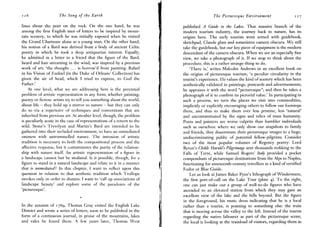
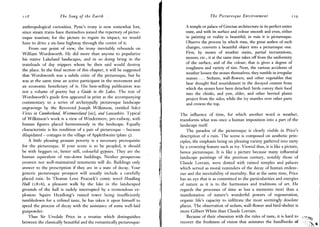
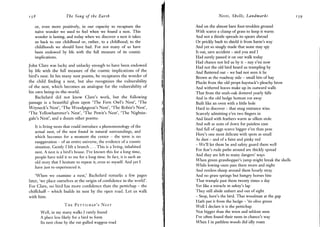
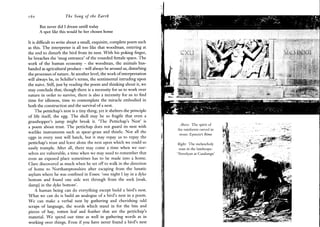
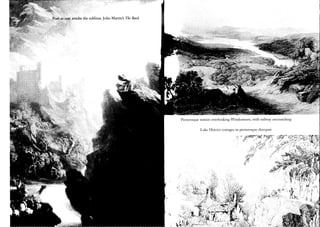
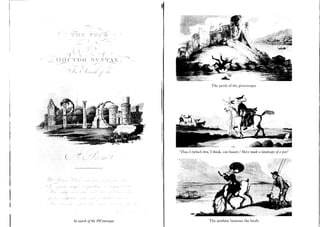
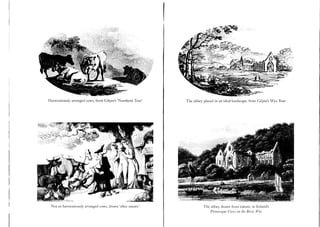
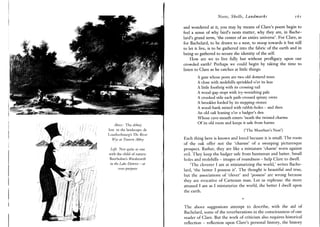
![rT2 Tbe Song of the Earth
regard Romantic 'Love of Nature' as a retreat from 'Love of
Mankind'.
Phrases like 'The rights of freedom' and, conversely, 'Self-
inlerest', 'cant of tyranny in stronger powers' and 'To wrong
another by the name of right' are the common stock of radical
pamphleteering and rural protest in the years between Waterloo
and the Great Reform Bill. Clare, however, uses these phrases
with regard to the treatment not of the poor but of a tree, 'The
[allen Elm'. FIe proclaims the right to life of every living thing.
He recognizes that to hold such a belief will be regarded as a
foolish 'indisposition', but he is impassioned in his assertion of it,
even to the point of rurning the language of tyranny against those
who tyrannize over the environment for the sake of economic
gain and of acknowledging that his position is incompatible with
worldly (material) progress:
my two favourite Elm trees at the back of the hut are
condemned to dye [-] it shocks me to relate it but tis true [-]
the savage who owns them thinks they have done their best
& now he wants to make use of the benefits he can get from
selling them - O was this country E$pt & was I but a caliph
the owner shoud loose his ears for his arragant presumption
& the first wretch that buried his axe in their roots shoud
hang on their branches as a terror to the rest - I have been
several mornings to bid them farewell - had I 9roo to spare I
woud buy their reprieves - but they must dy" . . . was People
all to feel & think as I do the world coud not be carried on -
a green woud not be ploughd a tree or bush woud not be cut
for firing or furniture & every thing they found when boys
would remain in that state till they dyd - this is my indispo-
sition & you will laugh at it.
Taylor quoted this passage in his introduction to Clare's second
collection of poems, The Village Minstel (r8z r), as an example of
the 'things which were the landmarks of his life'. 'Landmarks' is
an excellent choice of word: without trees and hedges to orient
himself, Clare has no inner map. What is psychosis if not the loss
of such a map?
Even the supremely sane William Wordsworth sometimes
Nesfs, Shells, Landmarks r73
had to reach out and grasp a rree in order to prevent himself
from falling into the abyss of idealism. To experience the play
lletween inner and outer maps, between the tree which grounds
the sanity of the mind and the tree that is planted upon the earth,
we may listen once more to Bachelard, as he reads Rilke and
discovers that the tree needs us every bit as much as we need the
tree:
Poets will help us ro discover within ourselves such joy in
looking that sometimes, in the presence of a perfectly familiar
object, we experience an extension of our intimate space. Let
us listen to Rilke, for instance, give its existence of immensity
to a tree he is looking at:
Space, outside ourselves, invades and ravishes things:
If you want to achieve the existence of a tree,
Invest it with inner space, this space
That has its being in you. Surround it with compulsions,
It knows no bounds, and only really becomes a tree
If it takes its place in the heart of your renunciation.
The tree, like every genuine living thing, is taken in its
being that 'knows no bounds.' Its limits are mere accidents.
Against the accident of limits, the tree needs you to give it
your super-abundant images, nurtured in your intimate space,
in 'this space that has its being in you.' Then, together, the
tree and its dreamer, take their places, grow tall. Rilke wrote:
'These trees are magnificent, but even more magnificent is
the sublime and moving space berween them, as though with
their growth it too increased.' The rwo kinds of space,
intimate space and exterior space, keep encouraging each
other as it were, in their growth.
Thus The Poetics of Space.
For Clare, as for Bachelard in this exrract, the interior order
of the human mind is inextricable from the environmental space
which we inhabit. Saniry depends upon grounding in place. But it
also depends upon grounding in time. To reiterate the claim of my
fourth chapter: our identities are constiruted by a combination of
environment and memory. For Clare, the elm tree is a temporal as
well as a spadal landmark. Because it was there when he was a boy,](https://image.slidesharecdn.com/jonathanbate-thesongoftheearth-harvarduniversitypress2002-251220162124-ca9deadb/85/Jonathan-Bate-The-Song-of-the-Earth-Harvard-University-Press-2002-pdf-97-320.jpg)