i
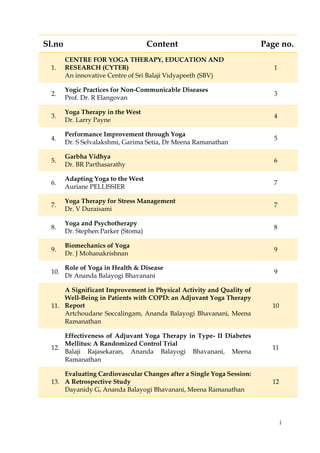
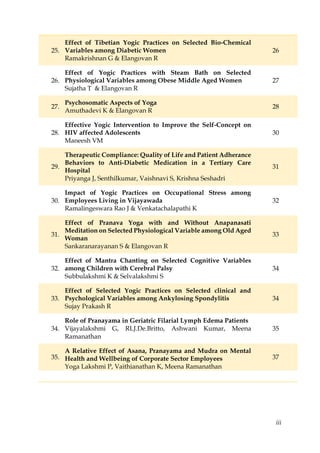
Sl.no Content Page no.
1.
CENTRE FOR YOGA THERAPY, EDUCATION AND
RESEARCH (CYTER)
An innovative Centre of Sri Balaji Vidyapeeth (SBV)
1
2.
Yogic Practices for Non-Communicable Diseases
Prof. Dr. R Elangovan
3
3.
Yoga Therapy in the West
Dr. Larry Payne
4
4.
Performance Improvement through Yoga
Dr. S Selvalakshmi, Garima Setia, Dr Meena Ramanathan
5
5.
Garbha Vidhya
Dr. BR Parthasarathy
6
6.
Adapting Yoga to the West
Auriane PELLISSIER
7
7.
Yoga Therapy for Stress Management
Dr. V Duraisami
7
8.
Yoga and Psychotherapy
Dr. Stephen Parker (Stoma)
8
9.
Biomechanics of Yoga
Dr. J Mohanakrishnan
9
10.
Role of Yoga in Health & Disease
Dr Ananda Balayogi Bhavanani
9
11.
A Significant Improvement in Physical Activity and Quality of
Well-Being in Patients with COPD: an Adjuvant Yoga Therapy
Report
Artchoudane Soccalingam, Ananda Balayogi Bhavanani, Meena
Ramanathan
10
12.
Effectiveness of Adjuvant Yoga Therapy in Type- II Diabetes
Mellitus: A Randomized Control Trial
Balaji Rajasekaran, Ananda Balayogi Bhavanani, Meena
Ramanathan
11
13.
Evaluating Cardiovascular Changes after a Single Yoga Session:
A Retrospective Study
Dayanidy G, Ananda Balayogi Bhavanani, Meena Ramanathan
12
ii
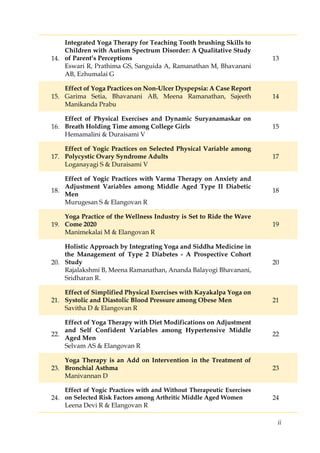
14.
Integrated Yoga Therapy for Teaching Tooth brushing Skills to
Children with Autism Spectrum Disorder: A Qualitative Study
of Parent’s Perceptions
Eswari R, Prathima GS, Sanguida A, Ramanathan M, Bhavanani
AB, Ezhumalai G
13
15.
Effect of Yoga Practices on Non-Ulcer Dyspepsia: A Case Report
Garima Setia, Bhavanani AB, Meena Ramanathan, Sajeeth
Manikanda Prabu
14
16.
Effect of Physical Exercises and Dynamic Suryanamaskar on
Breath Holding Time among College Girls
Hemamalini & Duraisami V
15
17.
Effect of Yogic Practices on Selected Physical Variable among
Polycystic Ovary Syndrome Adults
Loganayagi S & Duraisami V
17
18.
Effect of Yogic Practices with Varma Therapy on Anxiety and
Adjustment Variables among Middle Aged Type II Diabetic
Men
Murugesan S & Elangovan R
18
19.
Yoga Practice of the Wellness Industry is Set to Ride the Wave
Come 2020
Manimekalai M & Elangovan R
19
20.
Holistic Approach by Integrating Yoga and Siddha Medicine in
the Management of Type 2 Diabetes - A Prospective Cohort
Study
Rajalakshmi B, Meena Ramanathan, Ananda Balayogi Bhavanani,
Sridharan R.
20
21.
Effect of Simplified Physical Exercises with Kayakalpa Yoga on
Systolic and Diastolic Blood Pressure among Obese Men
Savitha D & Elangovan R
21
22.
Effect of Yoga Therapy with Diet Modifications on Adjustment
and Self Confident Variables among Hypertensive Middle
Aged Men
Selvam AS & Elangovan R
22
23.
Yoga Therapy is an Add on Intervention in the Treatment of
Bronchial Asthma
Manivannan D
23
24.
Effect of Yogic Practices with and Without Therapeutic Exercises
on Selected Risk Factors among Arthritic Middle Aged Women
Leena Devi R & Elangovan R
24
iii
25.
Effect of Tibetian Yogic Practices on Selected Bio-Chemical
Variables among Diabetic Women
Ramakrishnan G & Elangovan R
26
26.
Effect of Yogic Practices with Steam Bath on Selected
Physiological Variables among Obese Middle Aged Women
Sujatha T & Elangovan R
27
27.
Psychosomatic Aspects of Yoga
Amuthadevi K & Elangovan R
28
28.
Effective Yogic Intervention to Improve the Self-Concept on
HIV affected Adolescents
Maneesh VM
30
29.
Therapeutic Compliance: Quality of Life and Patient Adherance
Behaviors to Anti-Diabetic Medication in a Tertiary Care
Hospital
Priyanga J, Senthilkumar, Vaishnavi S, Krishna Seshadri
31
30.
Impact of Yogic Practices on Occupational Stress among
Employees Living in Vijayawada
Ramalingeswara Rao J & Venkatachalapathi K
32
31.
Effect of Pranava Yoga with and Without Anapanasati
Meditation on Selected Physiological Variable among Old Aged
Woman
Sankaranarayanan S & Elangovan R
33
32.
Effect of Mantra Chanting on Selected Cognitive Variables
among Children with Cerebral Palsy
Subbulakshmi K & Selvalakshmi S
34
33.
Effect of Selected Yogic Practices on Selected clinical and
Psychological Variables among Ankylosing Spondylitis
Sujay Prakash R
34
34.
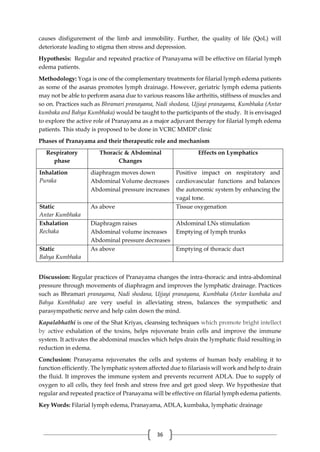
Role of Pranayama in Geriatric Filarial Lymph Edema Patients
Vijayalakshmi G, RLJ.De.Britto, Ashwani Kumar, Meena
Ramanathan
35
35.
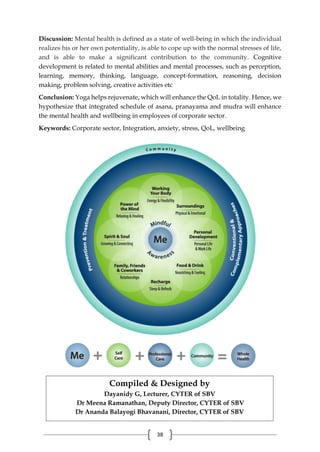
A Relative Effect of Asana, Pranayama and Mudra on Mental
Health and Wellbeing of Corporate Sector Employees
Yoga Lakshmi P, Vaithianathan K, Meena Ramanathan
37
1
CENTRE FOR YOGA THERAPY, EDUCATION AND RESEARCH
(CYTER)
An innovative centre of Sri Balaji Vidyapeeth (SBV)
Yoga has been a part of Sri Balaji Vidyapeeth since its inception and since 2010 the Centre for
Yoga Therapy, Education and Research (CYTER) has been promoting health in a holistic
manner with a scientific research based approach through the Mahatma Gandhi Medical
College and Research Institute (MGMCRI). All students of the constituent colleges of SBV are
exposed to the Yoga training (Yogabhyasa program) and numerous courses are offered in the
field of Yoga Therapy from PG Certificate to PhD level.
The innovative focus of CYTER is on “Salutogenesis”, the concept of health promotion and
disease prevention and management, that enables us to work towards holistic health and
wellbeing for all. This integrative approach bridges traditional and modern approaches to
healthcare in the form of Traditional, Complementary and Integrative Medicine (TCI) enables
us to serve the patient population in a more efficient, cost effective and patient friendly
manner. This is in line with the WHO Traditional Medicine Strategy 2014–2023 developed and
launched in response to the World Health Assembly resolution on traditional medicine
(WHA62.13).
CYTER has an integrated set up where we are educating future Yoga therapists while
simultaneously helping patients recover from illnesses and at the same time developing an
understanding through scientific research. It is notable that CYTER is an IAYT Member School
of the International Association of Yoga Therapists, USA; the first university based Yoga
therapy centre in India to receive this honor.
With international interest in its activities, CYTER strives to serve as a nodal center to train
medical educators and administrators for setting up such integrative health centers as it has
necessary infrastructure and human resources. This is only possible due to the supportive and
innovative milieu of Sri Balaji Vidyapeeth where the holistic art and science of Yoga, our
cultural heritage, has been able to reach both the classes and the masses of our society
optimally, effectively and holistically.
YOGA THERAPY AT CYTER
CYTER conducts a scientifically sound Yoga Therapy programme through its OPD in I Block
from 9 am to 1 pm every day. Consultations are offered by Dr. Ananda Balayogi Bhavanani
and Dr Meena Ramanathan, the Director and Deputy Director of CYTER who create
individualized therapeutic Yoga protocols for patients referred from different departments of
the hospital. Qualified Yoga instructors impart such individualized protocols in appropriate
individual/ small group settings from 9 am to 4.30 pm daily. These sessions are being
conducted for various medical conditions such as diabetes, hypertension, musculoskeletal
and psychiatric disorders with excellent feedback from participants. Yoga Therapy and
lifestyle consultations are offered daily as part of basic, superior, complete cardiac and deluxe
health check packages of Master Heath Check-up in the Corporate Services Wing of the
hospital. CYTER also offers generalized salutogenic sessions for faculty, staff and students of
SBV from 6 to 7am and 4.30 to 5.30pm on all working days.
2
YOGA THERAPY EDUCATION AT CYTER
CYTER offers various Yoga Therapy programmes for interested students ranging from PG
certificates to PhD level of training. As CYTER is part of a medical institution, extensive
opportunities are provided for clinical experience and this in turn enhances the learning curve
of our trainees.
CYTER offers an International Internship in Yoga Therapy and this three month regular (full
time) training offers an opportunity to experience Yoga Therapy in a modern medical setting
under the guidance of the CYTER team in the medical hospital of the MGMCRI of Sri Balaji
Vidyapeeth.
PG Certificate Courses and Diploma in Yoga Therapy: These courses are primarily offered
for modern medical and AYUSH doctors, dental surgeons, nursing professionals, bachelor in
physiotherapy, occupational therapy, PGDY, MA or MSc (Yoga /Yoga therapy) or equivalent
certification in Yoga from institutions of repute with any bachelor degree. PG certificate
courses are designed to assist students to develop a broad understanding of the foundation of
Yoga, Yoga Therapy as well as the applications of Yoga and clinical applications of Yoga
Therapy in different medical conditions. It will enable them to obtain requisite skills to
function independently as a Yoga therapist upon completion of the course.
M Phil Programme in Yoga Therapy: The MPhil (YT) programme is a full-time programme
that will run for one academic year with two semesters of 24 weeks each. During both
semesters there will be extensive practicum training and hands-on clinical experience that will
be assessed by internal audit prior to the final semester examination and public viva.
PhD in Yoga Therapy: This research program is offered as part of the SBV Ph.D. programmes
and eligible candidates will be selected by the university through a written test and interview
as per university norms. CYTER has two faculty members designated by SBV as eligible
guides for Ph.D.
YOGA RESEARCH AT CYTER
CYTER is focusing on building research based, empirical evidence for the practice of Yoga
and Yoga Therapy and to this extent has completed 19 research projects while another 10
projects are ongoing. Currently the inter-disciplinary studies are focusing on psycho
physiological effects in geriatrics, cardio-respiratory physiology, general medicine,
pulmonology, nursing, dental applications, ENT disorders, ophthalmology, dermatology ,
obstetrics & gynecology as well as special interest groups including children with special
needs, the aging population and the transgender community.
CYTER has published 105 papers, 3 chapters in books, 9 copyrights, 12 compilations and 32
abstracts in national and international journals as well as conference proceedings highlighting
the immediate, short term as well as long term, health enhancing benefits of Yoga training as
well as Yoga Therapy programs.
For more details: www.sbvu.ac.in/cyter
3
Yogic Practices for Non-Communicable Diseases
Prof. Dr. R Elangovan
Professor & Head, Faculty of Yoga Sciences, Meenakshi Academy of Higher
Education and Research (Deemed to be University), Chennai – 78.
ABSTRACT
Introduction: According to the 2019 edition of the Bloomberg Healthiest Country
Index, India is placed 120th rank among 169 countries related to the measures such as
mortality by communicable and non-communicable diseases and life expectancy.
India spends barely $240 per person and most of it is spent by people from their own
resources with little support from the government whereas US spends $11,000. Sri
Lanka, Bangladesh and Nepal ranked better than India.
Physical inactivity is now identified as the fourth leading risk factor for global
mortality. Unhealthy diet was the 2nd biggest factor in India driving most death and
disability combined after malnutrition. Food bone diseases cost India $ 15 billion.
According to World Health Organization, there is no improvement in global levels of
physical activity since 2001. 34% of Indians are physically inactive; 44% of Indian
women are not sufficiently active. Physical inactivity and improper diet elevate the
chances of Non-Communicable Diseases (NCDs) even if one maintains healthy
weight. People with a sedentary lifestyle are twice at risk than the physically active
ones.
Discussion: Muscles burn less fat and blood flow is slower allowing fatty acids to
more easily clog the heart; enzymes in the blood vessels of muscles responsible for
burning fat shut down. Idle muscles don’t respond easily to insulin; so the pancreas
produces more and more insulin that can lead to diabetes and other diseases; excess
insulin encourages cancerous cell growth especially for colon, breast and endometrial
cancers. Physical inactivity causes fluid to pool in the legs. Problems range from
swollen ankles with pain and varicose veins to dangerous blood clots called deep vein
thrombosis, cause nerve damage or pressure on nerves in the feet; contributes to sleep
apnea, too. Lack of activity increases in cases of osteoporosis; affects hip and lower
body bones to grow less thicker, denser and stronger; strains the cervical vertebrae
that lead to permanent imbalances. Physical inactivity causes blood clots which can
travel to brain causing a stroke; affects the lungs by developing a pulmonary
embolism; Sitting for long periods of time places a high amount of pressure on the
spine; results in compression of the spinal disks. Physical inactivity and poor diet
elevate cortisol levels which increased risk of serious health problems including
obesity, metabolic syndrome, Type 2 diabetes, fertility issues, high blood pressure,
heart attack and stroke.
There is strong evidence to demonstrate that adults between the ages of 18 to 64
should do at least 150 minutes of moderate intensity aerobic physical activity
throughout the week. Children and youth aged 6-17 years should accumulate atleast
60 minutes of moderate physical activity daily.
4
Conclusion: Yoga is an integral part of the total health care approach. Yoga is a
powerful antidote to the stresses of modern daily life. The aim of yoga is to eradicate
pain and misery. Yoga has three principles: purification, concentration and liberation.
According to Yoga Sutras, “Yoga sutures the wounds of life”. Yoga is an energy –
mind – body medicine, healing forces are within oneself is the philosophy of yoga
therapy.
Yogic practices purify the nadis by removing blockages from the body; Recondition
all the systems so that adequate immunity power is regained. Balanced secretion of
hormones shape metabolism particularly the brain and perfects electrical activities in
the brain. Electrical activities perfect the biological clock. Purification of genes also
perfects the biological clock. Yogic practices promote the biological clock of human
beings to overcome non-communicable diseases.
Key words: Physical inactivity, malnutrition, Yoga, antidote, mind-body medicine
Yoga Therapy in the West
Dr. Larry Payne
Co-founder/Director Yoga Therapy Rx™ program, Loyola Marymount University
Extension and Founding Director Prime of Life Yoga™ program, Loyola Marymount
University. Los Angeles, USA
ABSTRACT
Yoga Therapy Groups for the Lower back.
We all know that Yoga therapy is normally offered one on one.
As Yoga therapist we treat the whole person using the wide range of tools Yoga has
to offer. However, there is a new category to consider that physical therapist’s term
“Focus Groups” I am simply using the term “Yoga Therapy Groups” and the category
will be the “Lower Back.”
This group of people has been successfully treated one on one by a Yoga Therapist
however they are not quite ready for a group Yoga class. This concept could also be
used for a number of conditions such as Parkinson’s, MS, Post surgery for breast
cancer etc. Recently, the medical director of a new proposed “Integrative Medical
Center” at UCLA approached me on this category for the lower back. I will be sharing
the program I created for her.
5
Performance Improvement through Yoga
Dr. S Selvalakshmi1, Garima Setia2, Dr Meena Ramanathan3
1Assistant Professor, Department of Yoga, Tamil Nadu Physical Education and
Sports University, Melakotaiyur, Chennai -127.
2 PhD YT Research Scholar, CYTER, SBV
3 Deputy Director, CYTER, SBV
ABSTRACT
Introduction: Physical activities promotes strength, endurance, calmness and seems
to have regenerative and recuperative powers. Yoga enhances healing processes and
facilitates holistic overall development of mind, body, emotions.
Sporting activities which induce stress response, focuses on winning and fame and
use abusive substance (drugs/steroids) to enhance efficiency.
Corruption/malpractices and unethical means to achieve top levels are commonly
seen and heard of now-a-days. The prime focus is on only developing muscular
power, which leads to other systems of the body to suffer. Too much stress placed
during training and competition pressurizes heart and circulatory system, which is
visible in why many sports person over the age of 40 die of heart attacks. These are
few points noted in today’s scenario.
Aim and objectives: To promote psycho-physiological improvements through yoga
in recreational and professional sporting activities.
Discussion: Physiological perspective elucidates that sporting practice activates
sympathetic nervous system and the resultant organic and glandular overload.
Excessive chemicals released by the glands under pressure are highly destructive to
the brain leading to debilitation of nervous system, blood stream filled with activator
hormones such as cortisol, cortisone etc. Aging the muscles is a common physiological
factor which also causes harm to internal organs.
Practices of Yoga include:
 Asanas (static body postures), kriyas (dynamic body movement) – isometric,
builds both side of the body equally, flexibility, balance, control, strength not only
works on muscular system but aids digestive, excretory, circulatory, respiratory,
nervous and skeletal system.
 Pranayama increase the breathing capacity, purificatory and increases will,
heightens awareness and focus.
 Mudras stimulate and direct the energy.
 Yamas and Niyamas may stimulate sports person towards better behavioural
codes and abstaining from malpractices.
 Yogic relaxation promotes relaxation response.
6
Conclusion: Psycho-physiological benefits of Yoga is highly appreciated,
experimented upon and experienced too by modern man. Yoga promotes calmness,
relaxes mind, keeps parasympathetic state dominant thereby promoting healing and
rejuvenation. Steadiness (Stiram), one-pointedness (Ekagrata) is developed leading to
healthy mind and emotions promoting a healthy competitive spirit with others. Better
leadership and team building is seen and felt among the players in any sport. Yoga
practices help overall development of the whole body as the practices involve all
muscle groups in contrast to few sports that focuses on development of only one part
of the body and musculature.
Basic tenets of Yoga like “non-attachment to the fruits of labor”(vairagya), equal
mindedness in victory and failure”(samabhava) will help the person to be free from
anxiety and expectation. Giving your best and leaving the rest (nishkama karma) is the
doctrine of Bhagavad Gita which ultimately helps attain “Quiet mind” and
“controlled body” leading to stillness of mind and skill in action!!!
Key words: sporting activities, rejuvenation, stress response, relaxation response
Garbha Vidhya
Dr. BR Parthasarathy
Tutor in Physiotherapy, Center for Yoga Studies, Annamalai University.
ABSTRACT
Background: Although there is data on the spontaneous behaviour repertoire of the
foetus studies on their behaviour responses to external stimulation through music are
scarce.
Aim and Method: The aim of the current study was to measure foetal behaviour
responses in reaction to external music, utilizing 3D real time (4D ) sonography,
behaviour responses of 47 foetuses(21st to 36th week of gestation , N = 26 in the 2nd
and N= 21 in the 3rd trimester ) were frame by frame coded and analysed. Pregnant
women were initially screened for any hereditary disorders, other complication like
hypertension; diabetes mellitus etc and those patients were excluded in the study.
Both prime and other grade pregnancy mother were included. Informed consent was
obtained before starting the study from all pregnant women. A series of music
initiated with musical tones were started from fourth month of pregnancy and
continued up to the end of delivery. Foetal movements were assessed for duration of
one minute during ultrasonic scan for both without and with application of music.
Arm, head and mouth along with lower limb movement components were analysed
during ultrasonic scan.
Results: When compared to the pre and post test, Results showed that foetuses
displayed more arm (p – 0.0001), hands touching the body, arm crossing (p- 0.001),
head and mouth movements yawning (0.001) and lower limb movements (0.001).
7
Third trimester displayed more movements when compared to foetuses in the 2nd
trimester.
Conclusion: In summary , the results from the study suggest that foetuses respond to
external stimulation earlier than previously reported .Foetuses actively regulated their
behaviour as a response to external stimulation and fetal maturation affected the
emergence of the differentiate responses to the environment.
Adapting Yoga to the West
Auriane PELLISSIER
Yoga Teacher, France.
ABSTRACT
Yoga means to unite. It unites the various aspects of a human being: physical aspect,
mental aspect and spiritual aspect. After being trained in India for several years,
where yoga is considered as a lifestyle, I had to adapt my teaching and techniques to
the western audience, where people are mainly attracted by the physical aspect. I had
the opportunity to introduce yoga in a 5* holiday park in south of France for 2 years,
where clients have all different kinds of expectation, and I needed to make sure they
would all be satisfied, but this without compromising on the essence of yoga. For that
I’ve designed the practices trying numerous techniques. According to people’s
reaction, I had to keep/modify/replace some of the techniques to give them a taste of
what is yoga and offering them the chance to experience its benefits.
Yoga Therapy for Stress Management
Dr. V. Duraisami
Asst. professor, Department of Yoga, Tamil Nadu Physical Education and Sports
University, Melakotaiyur, Chennai -127.
ABSTRACT
Introduction: “Stress has been defined as stimulus, intervening and response to
variables by different researchers. As a stimulus variable stress is a precipitator; as an
intervening variable, a mediator; and as a response variable, a behavior.” There are
many factors which can cause stress for an sports men. There are two ways these are
demonstrated, the stress model and the stress response process. The stress model
demonstrates what factors affect stress in sport. Stress can affect performance, the way
an sports men responds to the stress can affect it, and the management of the stress
can negatively or positively affect the sports men’s stress level.
Discussion: The stress response process consists of five stages. Stage 1 is the
environmental demand; stage 2 is the sports men’s perception of the environmental
demand; stage 3 is the stress response to the environmental demand; stage 4 is the
behavioral consequences of the stress response to the behavioral demand; stage 5 is
8
the return to a homeostatic position. There are many different signs and symptoms
that signify anxiety. Some of these signs and symptoms include raging heartbeat,
difficulty breathing, paralyzing terror, nervousness, shaking, stress, heart
palpitations, dizziness, lightheadedness, nausea, trembling, sweating, shaking,
choking, chest pains, distress, fear, fright, hot flashes or sudden chills, and tingling
sensations in the fingers and toes. Many of these symptoms can be debilitating for the
sports men s experiencing them. Once these symptoms get out of the sports men’s
zone of optimal functioning they will not be able to participate to their maximum
ability.
Conclusion: Yoga therapist should also study the effect of the problem on the
individual. Understanding the individual having that particular problem is of utmost
value in planning therapeutic yoga. No ailment exists alone. It always inhibits
individual. The name of the ailment may be the same, but the individual affected are
different. So one prescription like yoga practice for any ailment does not work.
Disease oriented yoga approach is not an objective reality. Individualized orientation
is all that is required. The individual should be studied at all levels physical,
physiological, psychological and deeper. Detailed study of the individual in relation
to food habits, lifestyle activities, occupation, social and mental status should also be
undertaken.
Key words: stress response, therapeutic yoga, lifestyle activities, stimulus
Yoga and Psychotherapy
Dr. Stephen Parker (Stoma)
Psychotherapist & Senior Faculty
Himalayan Yoga Teachers Association, USA
ABSTRACT
The entire work of the external limbs of yoga is citta-prasādana, making the mindfield
clear, pleasant and stable in order to enable deep meditation. In this effort, one might
describe the yoga system as the original psychotherapy, encompassing work with
relationships (yama and niyama), the (mind-) body (āsana), breath (prāṇāyāma) and
sensory/thinking mind (manas; pratyāhāra). We will examine ways in which mindful
awareness and yoga have enriched the contemporary practice of psychotherapy in
many different domains: cognitive psychotherapy, trauma work, Gestalt and body-
related therapy and neuro scientific research.
9
Biomechanics of Yoga
Dr. J Mohanakrishnan
Physiotherapist, Department of Ortho Surgery, PMRC, JIPMER, Puducherry-INDIA
ABSTRACT
Yoga therapy in its practical sense applies asanas for its therapeutic outcome. To
maximize the outcome application of asanas, it has to be carefully tailored and
individualized. For a therapeutic tool to be precise and devoid of complication it has
to be time tested and validated with scientific background.
In simple words the biomechanical principles of asanas can define the purpose of
prescription. So a detailed introspection of basic biomechanical principles involved in
asana practice can solve many mysteries and unlock unsolved puzzles. The idea
behind the presentation is to introspect the asanas and ensure a safe prescription
devoid of complications.
Key words: Yoga Therapy, application of asanas, biomechanical principles, complications.
Role of Yoga in Health & Disease
Dr Ananda Balayogi Bhavanani
Professor & Director, CYTER of Sri Balaji Vidyapeeth, Pondicherry.
ABSTRACT
Yoga as a mode of therapy has become extremely popular, and a great number of
studies and systematic reviews offer scientific evidence of its potential in treating a
wide range of psychosomatic conditions. Healthy life can be considered as a by-
product of practicing yogic techniques since it has been observed that yoga
practitioners are physically and mentally healthier and have better coping skills to
stressors than the normal population.
This review paper details some of the health promoting benefits of yoga as well as
discusses the important cardiovascular, respiratory, musculoskeletal and metabolic
conditions in which it may have preventive, supportive, curative and rehabilitative
potential. Role of yoga in stress, mental health, cancer, pregnancy and childhood are
also detailed. Mechanisms for such beneficial physiological, biochemical and
psychological effects are discussed. Psycho-neuro-endocrine changes including
correction of GABAergic activity, and parasympathetic activation coupled with
decreased reactivity of sympathoadrenal system and HPA axis are highlighted.
Though most studies and reviews suggest a number of areas where yoga may be
beneficial, more research is required for virtually every one of them to establish their
benefits conclusively. This is true in the process of introducing any new therapy into
the modern health care system and is not surprising when we consider that the proper
studies on yoga as a therapeutic modality are not older than a few decades. It is
10
important to develop objective measures of various mind-body therapies and their
techniques while including them in intervention trials.
An overview is given of the lacunae present in the reviewed studies and suggestions
given for improvements in future studies. In conclusion, we can say that yoga has
preventive, promotive as well as curative potential and that a yogic lifestyle confers
many advantages to the practitioner. Since lifestyle related diseases are alarmingly on
the rise in our modern society, yogic lifestyle that is cost effective and relatively safe,
should be given a special place in preventing and managing these diseases.
A Significant Improvement in Physical Activity and Quality of Well-
Being in Patients with COPD: an Adjuvant Yoga Therapy Report
Artchoudane Soccalingam1, Ananda Balayogi Bhavanani2, Meena Ramanathan3
1 Yoga Therapist, Centre for Yogic sciences, Aarupadai Veedu Medical Colleges,
Vinayaka Missions Research Foundation, Pondicherry.
2 Director and 3 Deputy Director, CYTER, SBV, Pondicherry
Email ID: achudaa@gmail.com, 7667158227
ABSTRACT
Introduction: Chronic Obstructive Pulmonary Disease (COPD) is predicted third
leading cause of morbidity and mortality and it is characterized by irreversible airflow
obstruction, reduced quality of life, and high rate of mortality. Yogic management
includes a reduction in symptoms, complications, and exacerbations, improved
exercise tolerance, improved health status and reduced mortality. In COPD, Dyspnea
is the hallmark symptom that associated with anxiety and reason for which most
patients seek medical attention.
Aim: To understand the effect of yoga therapy on factors that hinder flexibility,
psychosocial function and psychological health in patients with COPD.
Objectives: To measure the effect of Yoga therapy on factors that hamper flexibility,
psychosocial function and psychological health among patients with COPD using
Saint George Respiratory Questionnaire.
Material and Methods: 60 COPD patients were recruited and randomized to yoga
group who received adjuvant yoga therapy along with standard medical management
and control group who received only medical management. Yoga therapy protocol
included jattis, asana, pranayama, and relaxation. Saint George Respiratory
Questionnaire (SGRQ) was used to assess symptoms, physical activity, psychosocial
function and quality of well-being. Changes in parameters were correlated with
symptoms, activity, psycho-social function and quality of well-being. Intra-group
comparisons were done using Student’s paired‘t’ test and intergroup comparisons
using unpaired‘t’ test.
11
Results: There was significant improvement (p < 0.001) in symptoms, physical
activity, psycho-social function and quality of well-being after four weeks of adjuvant
yoga therapy while controls showed no significant changes.
Conclusion: Significant improvements of physical activity and quality of well-being
with adjuvant yoga therapy. It can be attributed to improved vital capacity as well as
enhanced self-confidence /self-reliance. Hence yoga is a positive and additive role of
adjuvant therapy with standard medical management of COPD.
Key words: psychosocial function, quality of wellbeing, Saint George Respiratory
Questionnaire (SGRQ)
Effectiveness of Adjuvant Yoga Therapy in Type- II Diabetes
Mellitus: A Randomized Control Trial
Balaji Rajasekaran1, Ananda Balayogi Bhavanani2, Meena Ramanathan3
1 Assistant Professor, Centre for Yogic sciences, Aarupadai Veedu Medical Colleges,
Vinayaka Missions Research Foundation, Pondicherry
2 Director and 3 Deputy Director, Centre for Yoga Therapy, Education and Research,
Sri Balaji Vidyapeeth, Pondicherry.
Email ID: balaji.rajasekaran@avmc.edu.in, 99945 13634
ABSTRACT
Introduction: Recent studies provide ample evidence of the benefits of yoga in
various chronic disorders. Diabetes mellitus is a group of metabolic diseases and the
most prevalent non communicable metabolic disorder characterized by
hyperglycemia due to abnormality in secretion, action or both of insulin. Yoga therapy
may help in achieve enhanced glycemic control and overall health benefits.
Aim& Objectives: To study the effect of adjuvant yoga therapy in type II diabetes
mellitus (T2DM), using Fasting blood sugar (FBS), post- prandial blood sugar (PPBS),
and glycosylated hemoglobin (HbA1c)
Materials and Methods: Randomized control trial was made as interdisciplinary
collaborative work between departments of Center for Yoga Therapy Education &
Research (CYTER), and Endocrinology of MGMCRI, Sri Balaji Vidyapeeth,
Puducherry. 72 patients of diabetic Patients (who had HbA1c more than 7) were
randomized into control group (n=36) who received only standard medical treatment
and yoga group (n=36) who received yoga training thrice weekly for 4 months along
with standard medical management. Yoga therapy protocol included yogic
counseling, preparatory practices, Asanas or static postures, Pranayama or breathing
techniques and relaxation techniques. Hathenas of the Gitananda Yoga tradition were
the main practices used. Parameter assessment was done at the beginning & end of
12
the study period. Data was analyzed by Student’s paired and unpaired ’t’ test as it
passed normality.
Results: There was a statistically significant (p < 0.05) reduction in FBS, PPBS and
HbA1c in yoga group as compared to control group where parameters worsened over
study period.
Discussion: The present study provides substantial RCT evidence of the healthy and
highly significant reductions in all glycemic parameters (FBS, PPBS, HbA1c) in
patients receiving adjuvant Yoga Therapy
Conclusion: It is concluded from the present RCT that yoga has a definite role as an
adjuvant therapy as it enhances standard medical care and hence is even more
significant in routine clinical management of diabetes.
Key words: hyperglycemia, metabolic diseases, hathenas, yoga therapy, Asanas,
Pranayama
Evaluating Cardiovascular Changes after a Single Yoga Session:
A Retrospective Study
Dayanidy G1, Ananda Balayogi Bhavanani2, Meena Ramanathan3
1 Lecturer, Centre for Yoga Therapy, Education and Research (CYTER), Sri Balaji
Vidyapeeth (SBV), Pillaiyurkuppam, Pondicherry – 607 402.
2 Director & Professor, CYTER, SBV, Pillaiyurkuppam, Pondicherry – 607 402.
3 Deputy Director & Additional Professor, CYTER, SBV, Pillaiyurkuppam,
Pondicherry – 607 402.
E-mail of presenter: dayanidy@gmail.com, 9789210593
ABSTRACT
Aim and objective: This retrospective review of clinical data was done at Centre for
Yoga Therapy, Education and Research (CYTER) of Sri Balaji Vidyapeeth (SBV) to
determine cardiovascular effects of a single yoga session in patients of different
medical conditions as well as in normal subjects.
Methods: Data of 4620 patients (2678 female, 1843 male and 99 transgender) with
mean age of 44.40 ± 15.2y who attended yoga therapy sessions at CYTER between
October 2012 and December 2017 was used for analysis. Heart rate (HR), systolic (SP)
and diastolic pressure (DP) had been recorded using non-invasive blood pressure
(NIBP) apparatus before and after 60 minute yoga sessions at CYTER and indices like
pulse pressure (PP), mean pressure (MP), rate-pressure product (RPP) and double
product (DoP) were derived from recorded parameters. Participants were undergoing
appropriate yoga therapy protocols as per their individual condition while normal
subjects had a general schedule of practice. Typical yoga sessions included simple
warm ups (jathis and suryanamaskar), breath body movement coordination practices
13
(kriyas), static stretching postures (asana), breathing techniques (pranayama),
relaxation and chanting.
Results: There were statistically significant reductions (p<0.001) in all the studied
cardiovascular parameters following the yoga session. The magnitude of reductions
differed in the groups, it being more significant in those having Normal Subjects
(n=1492), endocrine/skin (n=871), musculoskeletal (n=792) & psychiatric (n=793) and
less significant in those having respiratory (n=176) conditions. It was moderately
significant in the patients having hypertension (n= 496) conditions.
Conclusion: There is a healthy reduction in HR, BP and derived cardiovascular
indices following a single yoga session. A similar study which was published earlier
in 2013 from CYTER, and now this has been done with a larger population and the
effect of Yoga therapy on different medical conditions is proved yet again. The
magnitude of this reduction depends on the pre-existing medical condition as well as
the yoga therapy protocol adopted. These changes may be attributed to enhanced
harmony of cardiac autonomic function as a result of coordinated breath-body work
and mind-body relaxation due to yoga.
Keywords: Yoga therapy; Cardiovascular effects; Psycho-somatic harmony; Single
yoga session
Integrated Yoga Therapy for Teaching Tooth brushing Skills to
Children with Autism Spectrum Disorder: A Qualitative Study of
Parent’s Perceptions
Eswari R1, Prathima GS2, Sanguida A3, Ramanathan M4, Bhavanani AB5, Ezhumalai
G6
1 Post Graduate Scholar, Department of Paedodontics & Preventive Dentistry, Indira
Gandhi Institute of Dental Sciences, Sri Balaji Vidyapeeth (Deemed to be University),
Puducherry, India.
2 Professor & Head of Department of Paedodontics & Preventive Dentistry, IGIDS
3 Associate Professor Department of Paedodontics & Preventive Dentistry, IGIDS
4 Deputy Director and Associate Professor, Centre for Yoga Therapy, Education and
Research (CYTER), SBV
5 Director and Professor, CYTER, SBV
6 Senior Statistician & Research Consultant, SBV
ABSTRACT
Introduction: Children with Autism Spectrum Disorder (ASD) exhibit poor oral
health due to lack of manual dexterity. The regular training methods like visual
pedagogy and video modeling for training the skill of tooth-brushing do not address
the core deficits of ASD like sensory integration dysfunction and lack of imitation
14
skills which facilitates their effective and quick learning. So there arises the need of
an integrated therapy to complement these regular training techniques.
Aim: To evaluate whether yoga can complement the regular training methods in
teaching the brushing skill to children with ASD.
Methodology: Two groups of 36 children each with ASD aged 7-15years were
imparted visual pedagogy and video modeling in Group I and additional yoga in
Group II which was taught by principal investigator. At the end of 1st, 2nd, 3rd & 6th
months, parents filled perception forms and teachers filled the assessment forms
based on the children’s level of concentration in watching the video at school which
was summarized as mean and standard deviation and compared using independent
t test.
Results: By the end of 6 months, higher percentage of parents of children in Group II
observed improvements in their child’s brushing skill as compared to parents of
children in Group I. Parents in Group II also perceived changes other than brushing
skills, while none of these changes were observed by the parents in Group I. Based on
teachers assessment, there was a statistically significant difference in the mean
number of days the children watched the video completely (p=0.001), with Group II
children watching the video for more number of days.
Discussion: The children with ASD who underwent training through visual
pedagogy and video modeling along with concurrent yoga training were able to learn
the tooth brushing skill more effectively and quickly when compared to the children
who were trained only by visual pedagogy and video modeling.
Conclusion: Yoga has a positive and additive role as an adjunct along with the regular
training methods of visual pedagogy and video modeling.
Key Words: Oral health, Learning, Attention, Pediatric Dentistry, Motor skills
Effect of Yoga Practices on Non-Ulcer Dyspepsia: A Case Report
Garima Setia1, Ananda Balayogi Bhavanani2, Meena Ramanathan3, Sajeeth
Manikanda Prabu4
1Ph.D Scholar, 2 Director & Professor, CYTER, 3 Deputy Director & Associate
Professor, CYTER, 4 Assistant Professor, Medical Gastroenterology
Email: setia.garima@gmail.com; 88002 54377
ABSTRACT
Introduction: Nonulcer (Functional) dyspepsia indicates abdominal discomfort or
pain with no obvious organic cause. Associated complaints include epigastric
burning, bloating, belching, nausea. The Rome III Committee divided functional
dyspepsia into Postprandial Distress Syndrome - PDS and b) Epigastric Pain
Syndrome (EPS).The ancient Hatha yogic practices including Shatkarmas (cleansing
15
practices), asanas, pranayama helps in cleansing, purifying and rejuvenating the
digestive system.
Aim: To study the effect Yoga practices on symptoms of non-ulcer dyspepsia
Methodology: A case report of a 24 year old female was carried out as a joint effort
between CYTER and department of Medical Gastroenterology, MGMCRI,
Pondicherry. Patient having a diagnosis of functional dyspepsia from medical
gastroenterology department, undergoing medical management was selected to be a
part of the study. GSRS (Gastrointestinal symptom rating scale) and dyspepsia
questionnaire were used to assess the symptoms. After collecting pre data, yoga
practices were given for a period of 1 month and post data collected.
Results: The patient showed a marked improvement in the symptoms both on GSRS
and dyspepsia scale. The pre scoring for GSRS and dyspepsia questionnaire was 42
and 20 respectively while the post scores recorded were 32 and 12 respectively.
Discussion: The patient was on medical management for 6 months after which she
was referred by the gastroenterologist to undergo Yoga Therapy along with medical
management. After 1 month of Yoga practice, the improvement in symptom score
showed relief in symptoms like alleviation of epigastric pain, relief in heartburn,
regurgitation and belching which can the result be of cleansing of digestive sytem and
resulting improvement in digestion. The Yoga practices remove excess Pitta from the
body and restoring the digestive fire, for proper functioning of the digestive system.
Conclusion: The case study paves the way for further research into digestive problem
like dyspepsia and its amelioration through Yoga
Key Words: Functional dyspepsia, Shatkarmas, Yoga, digestive fire
Effect of Physical Exercises and Dynamic Suryanamaskar on Breath
Holding Time among College Girls
Hemamalini1 & Duraisami V2
1 Ph.D, Research Scholar, Department of Yoga, Tamil Nadu Physical Education and
Sports University, Chennai.
2 Assistant Professor, Department of Yoga, Tamil Nadu Physical Education and
Sports University, Melakottaiyur, Chennai-600127.
ABSTRACT
Introduction: Yoga is the science of right living and as such, is intended to be
incorporated in daily life. It works on all aspects of the person: the physical, vital,
mental, emotional, psychic and spiritual. Dynamic suryanamaskar significantly
contribute for healthful living. Physical exercises are performed quickly and with a lot
of heavy breathing. Yogasanas are performed slowly with relaxation and
16
concentration. The benefits of various yoga improves body muscular strength,
performance, stress reduction, attainment of inner peace and self-realization.
Aim: The aim of the study was to find out the effect of physical exercise and Dynamic
suryanamaskar on Breath holding time of college girls.
Methodology: Sixty girls were randomly selected from Tamilnadu Physical Education
and Sports University. Their age ranged from 21 to 23 years. The experimental
variables used in the present study were three groups namely, Exp. Group I Physical
exercises group, Exp. Group II Dynamic suryanamaskar group and Group III Control
group. The criterion variables selected in this study were selected physiological
variables. These variables can be assessed accurately only through Breath holding
time.
Results: The results proved that physical exercises group and Dynamic
suryanamaskar group significantly improved Breath holding time (P <0.05). Dynamic
suryanamaskar group was found to be better than physical exercises group in
improving Breath holding time.
Discussion: Regular exercise stimulates changes in the cardiovascular system, lungs,
and muscle cells which improve athletic ability. Decrease in resting heart rate and a
lowering of maximal blood pressure with sub maximal exercise. The cardiovascular
(heart and blood vessels) and pulmonary (lungs) systems work together to deliver the
oxygen necessary for efficient (aerobic) energy metabolism to the exercising muscle.
Oxygen is extracted from air in the lungs and then transported in the blood to the cells
where it is extracted and utilized. The physiological variables of the schools girls are
intended through Breath holding time which are directly involved in the physiological
functions.
Conclusion: During pre and post-tests, both the experimental groups exhibited a
significant increase on Breath holding time immediately after the practices than the
control group.For the experimental groups, the Breath holding time immediately
after the practices is significantly higher for the Dynamic suryanamaskar group when
compared to physical exercises group during pre and posts tests.
Keywords: Dynamic suryanamaskar, Physical Exercises, Breath Holding Time.
17
Effect of Yogic Practices on Selected Physical Variable among
Polycystic Ovary Syndrome Adults
Loganayagi S1 & Duraisami V2
1 PhD. scholar, Department of Yoga, Tamil Nadu Physical Education and Sports
University, Chennai–600127
2 Assistant Professor, Department of Yoga, Tamil Nadu Physical Education and
Sports University, Chennai–600127
E-mail: logusrimal@gmail.com; 95519 72082
ABSTRACT
Introduction: Polycystic ovary syndrome is a condition in women characterized by
irregular or no menstrual periods, acne, obesity, and excess hair growth. PCOS is a
disorder of chronically abnormal ovarian function and hyper and rogenism
(abnormally elevated androgen levels). It affects 5-10% of women of reproductive age.
PCOS symptoms appear as early as adolescence in the form of amenorrhea (missed
periods), obesity, and hirsutism, the abnormal growth of body hair
Aim: The present study was designed to find out the effect of yogic practices on
selected physical variable as Body Weight among polycystic ovary syndrome Adults.
Methodology: For the purpose of the study, 30 polycystic ovary syndrome adults
from Shri Krishnasamy College Chennai city aged between 18 to 25 years were
selected. They were equally divided into two groups: experimental group (yogic
practices group) and control group (no intervention). The experimental group was
involved in yogic practices for the duration of twelve weeks. The control group was
in active rest during the period of the study. This study employed the experimental
random group design, with yogic practices as the independent variable and Body
Weight as the dependent variable.
Results and Discussion: The body weight was measured through weighing machine
by kilogram. The pre and post-test means of the experimental group and control
group statistically analyzed to find out the significance The adjusted post-test mean
scores of yogic practices and control group were recorded as 71.04, and 79.49
respectively .The obtained f value of 10.73 of adjusted post-test means was greater
than the required table required table value 4.21. This proved that there was
significant difference among the means due to twelve weeks training on yogic
practices on physical variable of body weight.
Conclusion: The twelve-week yogic intervention significantly decrease the body
weight in the post test data of experimental group, compared to the control group.
This study proves the effectiveness of yogic practices on polycystic ovary syndrome
adults.
Keywords: polycystic ovary syndrome, yogic practices, body weight.
18
Effect of Yogic Practices with Varma Therapy on Anxiety and
Adjustment Variables among Middle Aged Type II Diabetic Men
Murugesan S 1 & Elangovan R2
1 Associate Professor, Faculty of Yoga Sciences, Meenakshi Academy of Higher
Education and Research, Chennai.
2 Professor & Head, Faculty of Yoga Sciences Meenakshi Academy of Higher
Education and Research, Chennai.
Email: murugesanyoga@gmail.com, 9443121146
ABSTRACT
Introduction: The study was designed to find out the effect of yogic practices with
varma therapy on Anxiety and Adjustment variables among middle aged type II
diabetic men.
Hypothesis: It was hypothesized that there would be significant difference in yogic
practices with Varma therapy group than the control group on Anxiety and
Adjustment among middle aged type II diabetic men.
Methods: To achieve the purpose of the study, thirty (30) middle aged type II diabetic
men aged between 40 to 50 years were selected randomly into two groups, namely
experimental group and control group of fifteen (15) subjects each. Training period of
this study was twelve weeks. Experimental group underwent yoga practices with
varma therapy practices for twelve (12) weeks. The control group was kept in active
rest. The pretest and posttest were done for all two groups. To analyses the data
(ANCOVA) test was used. The test of significance was fixed as 0.05 level of confidence.
Conclusion: It was concluded that there was significant improvement in yogic
practices with Varma therapy group than the control group on Anxiety (decreased)
and Adjustment among middle aged type II diabetic men.
Key words: Yogic practice, Varma Therapy, Anxiety, Adjustment
19
Yoga Practice of the Wellness Industry is set to Ride the Wave Come
2020
Manimekalai M1 & Elangovan R2
1 Yoga Lecturer, College of Allied Health Science, Sri Ramachandra |Institution of
Higher Education and Research (DU), Porur, Chennai.
2 Professor and Head Faculty of Yogic Science, Meenakshi Academy of Higher
Education and Research (DU), K.K.Nagar, Chennai
Email: m.manimekalai@sriramachandra.edu.in; 98413 68740
ABSTRACT
Introduction: Yoga is industry learning in 2018 and expectations in 2020. The purpose
of studied and reviewed the journal and article over half of the 200 million Yoga
practitioners are of Indian origin. India, the birthplace of this ancient practice has
resurfaced for the global market. Now it is being aggressively taken up by various
health institutes, sports institutes, recreational institutes and even rehabilitation
institutes all over India. The many health benefits that Yoga offers are said to be
effective for treating a majority of ailments, like hypertension, insomnia, diabetes,
sleep disorders, psychosis etc. With the advent of AYUSH Ministry yoga studios,
equipment’s and other related start-ups have found a new place in the economy which
is really convincing.
Aim: The scope of the research the key reason for the widespread popularity of Yoga
is the diversity of long-term benefits associated with the practice. On a general note, it
is widely agreed that regular yoga practice increases the quality of life. Besides
strengthening the practitioner, it provides them with better mental clarity,
encouraging them to adapt to a healthier way of life and making them balanced
physically, mentally and emotionally. It was Swami Vivekananda who introduced
yoga to the Western world. Though initially yoga was considered mainly as a spiritual
practice with religion - philosophical underpinnings, by the 1980’s, it became popular
as the system of physical exercise across the Western world. But only one component
of yoga - Hatha Yoga or the physical practice of the postures (asanas) - was
understood.
Methods: The method of Yoga industry is found a strong footing in the wellness
industry. 2018 has ensured that Yoga and associated terms have made it to the top of
web search results. Over the years, the number of practitioners has increased and the
trend continues, making a conscious shift towards Yoga, meditation and personal
well-being. These statements stand true as a global testament to this industry.
According to global statistics, the number of Yoga practitioners is predicted to rise to
a staggering 55 million people, by 2020 in the USA alone. The demand for yoga
instructors, private lessons and yoga therapy has risen in the last two years, indicative
of a healthy forecast for the industry in 2020.
20
Conclusion: Today, this one component of yoga alone is booming and is part of a
global wellness industry. Thus, it is safe to conclude that Yoga as a trend is only bound
to grow at a faster pace and not stagnate anytime soon.
Key words: Yoga, Industry and Education
Holistic Approach by Integrating Yoga and Siddha Medicine in the
Management of Type 2 Diabetes - A Prospective Cohort Study
Rajalakshmi B1, Meena Ramanathan2, Ananda Balayogi Bavanani3, Sridharan R4
1Ph.D research Scholar, Centre for Yoga Therapy, Education and Research (CYTER),
Sri Balaji Vidyapeeth (SBV), Pondicherry
2Deputy Director and 3Director, CYTER, SBV, Pondicherry.
4Nodal Officer Siddha, Government of Puducherry.
ABSTRACT
Introduction: Diabetes is a chronic metabolic disorder which affects more than 62
million population in India. Currently life style related diseases are more common
World Wide which paves way for holistic health care as it concentrates more on
prevention and promotion of health. Siddha system of medicine and Yoga are
traditional Indian systems of medicine which treat the individual as a whole and not
the disease. Many number of studies was done in diabetes integrating Yoga and it
summarized that yoga shows significant improvement in management of diabetes.
There is only one observational study integrating Yoga and Siddha which shows
positive beneficial effects on diabetes.
Aim: To study the effect of integrated Yoga and Siddha medicine in the management
of type 2 diabetes.
Methodology: Siddha medication and Yoga therapy show beneficial effects on
diabetes when given separately to individual patients. This study is planned to
combine both Indian system of medicines by giving Siddha meditation along with
Yoga therapy and to see its combined effect on blood glucose level, lipid profile, blood
pressure, serum creatinine and quality of life.
Conclusion: We hypothesize that combining both Yoga and Siddha system of
medicine, which treat the patient holistically, will give better results and it will form
a gate way for further studies.
Key Words: Diabetes, Yoga, Siddha, Holistic, Integration, Quality of life
21
Effect of Simplified Physical Exercises with Kayakalpa Yoga on
Systolic and Diastolic Blood Pressure among Obese Men
Savitha D1 & Elangovan R2
1 Ph.D Scholar (Part Time), Department of Yoga, Tamil Nadu Physical Education and
Sports University, Melakottaiyur. (P.O), Chennai - 600 127, Tamil Nadu, India.
2 Professor & Head, Faculty of Yoga Sciences, Meenakshi Academy of Higher
Education and Research (Deemed to be University),K.K Nagar, Chennai - 600 078,
Tamil Nadu, India.
Email: 23savitha@gmail.com; 98405 43953
ABSTRACT
Introduction: Obesity is a medical condition where excess body fat accumulates to the
extent that it may have an adverse effect on health.
Aim: The purpose of the study was to find out the effect of Simplified physical
exercises with Kayakalpa yoga on Systolic and Diastolic blood pressure among obese
men.
Hypothesis: It was hypothesized that there would be significant differences due to
Simplified physical exercises with Kayakalpa yoga on Systolic and Diastolic blood
pressure among obese men in the Experimental group than in the Control group.
Methodology: 30 obese men were selected randomly from Chennai between the age
group of 30 to 40 years and were divided into two groups - the Experimental group
and the Control group having 15 subjects each. Pre-test was taken for all the subjects
of the Experimental group and the Control group on the selected dependent variables
before the training program. Systolic and Diastolic blood pressure were measured
using digital blood pressure monitor. The Experimental group practiced Simplified
physical exercises with Kayakalpa yoga for twelve weeks and the Control group
received no training. After the experimental period of twelve weeks, post-test was
done on selected dependent variables.
The obtained data was subjected to statistical treatment using Analysis of co-variance
(ANCOVA) to find out the significant difference between the Experimental group and
the Control group. The test of significance was fixed at 0.05 level of confidence.
Results: The result of the study on the selected variable showed that the Systolic blood
pressure and Diastolic blood pressure significantly decreased due to the practice of
Simplified physical exercises with Kayakalpa yoga than the Control group among
obese men.
Conclusion: The hypothesis was accepted at 0.05 level of confidence. Simplified
physical exercises with Kayakalpa yoga has a significant effect in reducing Systolic
and Diastolic blood pressure among obese men.
22
Keywords: Simplified physical exercises, Kayakalpa yoga, Obesity, Systolic blood
pressure, Diastolic blood pressure.
Effect of Yoga Therapy with Diet Modifications on Adjustment and
Self Confident Variables among Hypertensive Middle Aged Men
Selvam AS1 & Elangovan R2
1 Assistant professor, Saveetha University & Meenakshi University (Deemed).
2 Professor, & Head, Faculty of Yoga Sciences, Saveetha University & Meenakshi
University (Deemed).
Email ID: yogamozhiselvam@gmail.com , 9659072749
ABSTRACT
Introduction: Hypertension is a state in which Adjustment is above 140 mm Hg and
Self confident above 90 mm Hg. It is the one of the leading risk factors for global death
and disability-adjusted life years, hypertension caused 9.4 million deaths and 7.0% of
global DALYs in 2010 (S.S. Lim, et. al 2010). Under and over activity of the genes
FGf23, APOC3, TRS1, 9p21 are other cause of HBP. Improper biological clock and
insufficient electrical activity are the main causes (American Heart Association's
Council on Hypertension-2017). It is responsible for 60% of strokes and 40% of heart
attacks Yoga therapy and Diet modifications practices helps to promote a balanced
development of physical, mental and spiritual wellbeing (www.yoga point.com).
Aim & Objectives: The aim of this hypertensive paper was to present Research
review positive changes influence by yoga therapy with diet modifications on
Adjustment and Self confident. To find out whether there would be any significant
difference on Adjustment and Self confident variables due to Yoga therapy with Diet
modifications among middle aged obese men.
Methodology: For the purpose of this random group experimental study, thirty (30)
hypertensive middle aged men in Chennai were selected at random as subjects based
on their Adjustment and Self confident and their age was ranged from 40 to 50 years.
Yoga therapy with Diet modifications practices were given six days (Monday to
Saturday) per week for twelve weeks. All the subjects were randomly assigned to
experimental group and control group each consisted of 15 subjects. Experimental
group was involved in yoga therapy with Diet modifications practices for twelve
weeks, and the control group kept in active rest. The Yoga therapy with Diet
modifications Techniques (Modification have done as per the subject’s capabilities).
Initially pre-test was taken and after the experimental period of twelve weeks, post
test was taken from all the two groups. The differences between initial and final
Adjustment and Self confident variables were considered as the effect of yoga therapy
with diet modifications on selected subjects. Analysis of covariance (ANCOVA) test
23
was used to find out the difference among the experimental group and control groups.
The test of significance was fixed as 0.05 level of confidence.
Results & Discussion: The result of the study on the selected variables showed that for the
experimental group on adjustment and self confident were significantly improvement due
to the influences of yogic practices with diet modifications. Hence the hypothesis was
accepted at 0.05 level of confidence.
Conclusion: It was concluded that Yoga therapy with Diet modifications practices
significantly improved on Adjustment and Self confident than the Control group
among hypertensive middle aged men.
Yoga Therapy is an Add on Intervention in the Treatment of Bronchial
Asthma
Manivannan D1
1 Professor, Trustee & Research Associate, Hari Foundation, Rajapalayam,
Virudhunagar District
Email ID: manidayal1976@gmail.com, 9894539548
ABSTRACT
Introduction: Asthma is a common inflammatory disease. The common symptoms
include wheezing, coughing, chest tightness and shortness of breath. Asthma is a
chronic lung disease that inflames and narrows the airways.
Yogic practices for the treatment of bronchial asthma using an integral technique
physical exercise and yoga posture (Asanas) breathing practices and Pranayama,
cleasing process (Kriyas) and meditation.
Materials and Methods: The pre- test and post- test random group design and
convenient sampling method was adopted. The study was conducted at Sri Hari Yoga
Vidhyalayam (Run by Hari Foundation),Rajaplayam, Tamilnadu.
The sample size for the study was 30 (15 in experimental and 15 in control groups).
The study was carried out for the period of 6 weeks.
Variable of the study: Dependent Variable Clinical profile includes chest expansion,
number of attacks, use of medicines, pulse rate and respiratory rate. PEFR.
Independent Variable Yoga Therapy
Result: The post tests mean value of both groups showed that there was a significant
difference in the clinical profile and PEFR between them.
Discussion: It was proved that there was significant difference among the groups
because of the yogic therapy. Hence null hypothesis was rejected and Alternate
hypothesis was accepted.
24
Conclusion: After yoga therapy intervention there was significant improvement in
chest expansion and PEFR rate. The number of attacks and usage of drugs are reduced.
Key Words: Bronchial Asthma; YOGA; Peak Expiratory Flow Rate; Forced
Expiratory Volume.
Effect of Yogic Practices with and Without Therapeutic Exercises on
Selected Risk Factors among Arthritic Middle Aged Women
Leena Devi R1 & Elangovan R2
1Ph.D Scholar, Cente for Yoga Studies, Annamalai University, Chidambaram,
Tamilnadu, India.
2Professor and Head, Department of yoga Science, Meenakshi academy of Higher
Education and Studies (DU), K.K.Nagar, Chennai. Tamilnadu, India.
Email: leenasphysio@gmail.com Mob number: 9994925089
ABSTRACT
Introduction: The aim of the life is to lead a happy, peaceful life. The quality of one`s
life depends upon the quality of work one does. In today`s so called modern society,
most of the people suffer from various sophisticated and incurable ailments. Today
mankind is in need of a strong and healthy race. Hence it can be attained through
practices of yoga. Arthritis is a degenerative, inflammatory and disabling joint disease.
Knee Osteoarthritis, the most common type of osteoarthritis, which commonly affects
people over 45 years of age but can occur at any time. It is the major cause of functional
disability causing difficulties in daily activities of life, especially in women. By proper
and regular practice of yoga with therapeutic exercises one can attain betterment in
improving the quality of life of arthritis individual the efficacy of the above. Can be
attained through this study. The risk of the condition increases with the age. Reasearch
studies shows that arthritis is more common in women (26%) than in men (18%) and
the incidence of osteoarthritis is more among middle and aged women. The expected
number of arthritis would be more than sixty million arthritis disability by 2025 in
India.
Purpose of Study: The purpose of the study was to find out the effect of yogic
practices with and without therapeutic exercises on selected biochemical and
electrolytical variables such as fasting blood glucose and potassium among arthritic
middle aged women.
Hypothesis:
 It was hypothesized that there would be significant differences on selected risk
factors among arthritic middle aged women due to yogic practices with and
without therapeutic exercises of experimental groups than the control group.
25
 It was hypothesized that there would be significant differences on selected risk
factors among arthritic middle aged women due to yogic practices with and
without therapeutic exercises between the experimental groups.
Methodology: To achieve the purpose of the study, random experimental group
design was applied. Random sampling design was followed for selecting the samples.
45 samples of osteoarthritic women aged between 35to50 were selected, from them 45
samples were drawn by lots method and were randomly assigned into three groups
consisting 15 subjects in each group. Pretest were taken for all three groups A, B and
C on selected dependent variables before the training and post test were taken after
the training programme for group A and B only after the training period of eight
weeks. Analysis of covariance (ANCOVA) was used to find out the significant
difference between experimental groups and control group. The test of significance
was fixed at 0.05 level of confidence.
1 .Experimental group A (Yogic practice group with therapeutic exercises; each15
subjects)
2. Experimental group B (yogic practice group without therapeutic exercises; each 15
subjects)
3. Control C ( in active rest ; each 15 subjects)
Results and Discussion:
 The results of the study indicated that there were significant difference on the
selected dependent variables due to the effect of yogic practices with therapeutic
exercises and yogic practice without therapeutic exercises than the control group.
Hence the first hypothesis was completely accepted at 0.05 level of confidence with
respect to fasting blood glucose and potassium variables.
 The results of the study indicated that there were significant difference between
the yogic practices with therapeutic exercises group and yogic practices group on
selected variables among arthritic middle aged women. The second hypothesis
was accepted at 0.05 level of confidence with respect to the selected variables such
as fasting blood glucose, and potassium variables.
Conclusion: This study was concluded that
 Yogic practices with therapeutic exercises ie, group-A, yogic practices without
therapeutic exercises ie, group -B helped to control , fasting blood sugar and,
improve potassium level among arthritic middle aged women than the control
group C
 Yogic practices with therapeutic exercises programme was a suitable training
system to control fasting blood sugar ,improve potassium level among the arthritic
middle aged women than yogic practice without therapeutic exercises
programme.
26
Effect of Tibetian Yogic Practices on Selected Bio-Chemical Variables
among Diabetic Women
Ramakrishnan G1 & Elangovan R2
1Associate Professor, Faculty of Yoga Sciences, Meenakshi Academy of Higher
Education and Research (Deemed to be University), K.K.Nagar, Chennai-78.
2Professor & Head, Faculty of Yoga Sciences, Meenakshi Academy of Higher Education
and Research (Deemed to be University), K.K.Nagar, Chennai-78.
Email ID: ramayogatherapy@gmail.com - 9841262874
ABSTRACT
The present random group experimental study was designed to find out the Effect of
Tibetian Yogic Practices on biochemical variables such as Fasting Blood Sugar and
HbA1c among Diabetic Women. It was hypothesized that there would be significant
differences on Fasting Blood Sugar and HbA1c among Diabetic Women due to the
influences of Tibetian Yogic Practices. To achieve the purpose of the study, 30 diabetic
women aged between 30 to 45 years were selected randomly into two groups, one
experimental group and one control group of 15 each. Experimental group (A)
underwent Tibetian Yogic practices for the period of 12 weeks, six days per week for
the maximum of 1hr 15min. The active control group (B) was not exposed to any specific
training. Pre and post-test were conducted before and after the training for the above
two groups. Fasting Blood Sugar and HbA1c were tested through blood test. The data
pertaining to the variables collected from the two groups before and after the training
periods were statistically analyzed by using Analysis of Covariance (ANCOVA) to
determine the significant difference and tested at 0.05 level of significance. The results
of the study showed that Fasting Blood Sugar and HbA1c were significantly decreased
due to the influence of twelve week training of Tibetian Yogic Practices than the control
group. The hypothesis was accepted at 0.05 level of confidence. Tibetian Yoga group
showed significant difference than the control group in decreasing Fasting Blood Sugar
and HbA1c among Diabetic Women. The conclusion is that Tibetian Yoga could be
effective in decreasing Fasting Blood Sugar and HbA1c among Diabetic Women.
Key Words: Tibetian Yogic Practices, A-U-M Meditation, Fasting Blood Sugar, HbA1c
and Diabetes.
27
Effect of Yogic Practices with Steam Bath on Selected Physiological
Variables among Obese Middle Aged Women
Sujatha T 1 & Elangovan R2
1 Assistant Professor, Faculty of Yoga Sciences, Meenakshi Academy of Higher
Education and Research (Deemed to be University), K.K.Nagar, Chennai-78.
2 Professor & Head, Faculty of Yoga Sciences, Meenakshi Academy of Higher Education
and Research (Deemed to be University), K.K.Nagar, Chennai-78.
Email ID: sujatha.yogaworks@gmail.com – 9566194255
ABSTRACT
In the present world, human beings are facing lot of problems due to strenuous working
environment, improper food habits and extensive travelling. In particular, Middle aged
obese women are facing problems like obesity, diabetic, menopause, low back ache,
body pain, pregnancy etc. The purpose of the study was to find out the effect of yogic
practices with and without steam bath on physiological variables such as body maSS
index (BMI) and blood pressure (systolic) due to yogic practices with steam bath among
obese middle aged women. It was hypothesized that there was significant differences
due to yogic practices with steam bath experimental group than the control group on
selected physiological variables such as body maSS index (BMI) and blood pressure
(systolic) among obese middle aged women. For the purpose of the study, 30 obese
men were selected randomly from Chennai between the age group of 40 to 55 years and
were divided into two groups, the Experimental group and the Control group having
15 subjects each. Pre-test was taken for all the subjects of Experimental and the Control
group on the selected dependent variables before the training program. The Body Mass
Index was measured through Standard formula. The Systolic blood pressure was
measured through Sphygmomanometer. Experimental group was given yogic practices
for the period of 8 weeks, six days per week for the maximum of 1h and steam bath, 20
to 30 minutes and the Control group received no training. After the experimental period
of eight weeks, post-test was done on selected dependent variables for all the subjects
of the Experimental group and the Control group. The obtained data were subjected to
statistical treatment using Analysis of co-variance (ANCOVA) to find out the significant
difference between the Experimental group and the Control group. The test of
significance was fixed at 0.05 level of confidence. The results proved that there was a
significant difference due to eight weeks .yogic practices with steam bath and control
group on physiological variables such as systolic blood pressure (decreased and
stabilized) and body mass index (decreased), compared to Control group obese among
middle aged women. Hence the above hypothesis was accepted at 0.05 level of
confidence.
Key Words: Yogic Practices, Body Mass Index, Systolic Blood Pressure and Obesity.
28
Psychosomatic Aspects of Yoga
Amuthadevi K 1 & Elangovan R2
1 Ph.D Scholar (Yoga)-2019, Department of Yoga, Faculty of Yoga Sciences, Meenakshi
Academy of Higher Education and Research (Deemed to be University), K.K.Nagar,
Chennai-78.
2 Professor & Head, Faculty of Yoga Sciences, Meenakshi Academy of Higher Education
and Research (Deemed to be University), K.K.Nagar, Chennai-78.
Email ID: amuthadevig@gmail.com
ABSTRACT
What is a Psychosomatic Disorder? Psychosomatic Disorder, also known as “somatic
symptoms” or “somatoform” disorder, represents a group of disturbances
characterised by thoughts, feelings, or behaviours related to somatic symptoms. This
preoccupation with physical symptoms causes significant distress and disrupts the
individual’s daily life. It is also be used to represent a situation where the mental
factors start showing physical symptoms even when there is no physical disease.
These medically unexplained physical symptoms may include headache, dizziness,
chest pain, lower back pain, nausea, muscle soreness, breathing problems, hot or cold
spells, numbness or tingling in parts of the body, lumps in the throat, a weak feeling
in parts of the body, and a heavy feeling in the arms or legs.
Traditional Yogic perspective: According to Yoga Philosophy the origin for
Psychosomatic Disorder is a mental conflict and emotional repression. Traditional
texts describe that this conflict causes an imbalance in the subtle life energy, called the
pranic body.
The mental disorders cause imbalances in the prana that governs the mind and thus
manifests into somatic symptoms. To understand prana requires understanding of its
subtypes, the five Vayus. Vayus possess specific actions on our physical structure and
body functions. Each triggers certain emotions and holds certain mental stages. The
pranic mechanism behind psychological disorder begins with the disturbance of
29
Prana Vayu by taking the wrong impressions or thoughts and negative emotions.
Secondly, the digesting functions of Samana Vayu become disturbed through wrong
intakes and poor discrimination, than the other three vayus (Apana, Udana and
Vyana) become disturbed.
Thereby, the role of all five vayus in asana practice is considered as therapeutic
movements. It requires energisation (Prana), expansion (Vyana), contraction
(Samana), upward movements (Udana) and downward movements (Apana) in the
right proportion and balance.
Yoga is linked to the release of endorphins and the shift caused in neurotransmitter
levels linked to chemicals such as dopamine and serotonin. This activation of
parasympathetic nervous system, increases the inhibitory action of a hypoactive
GABA system in brain pathways and structures that are critical for threat perception,
emotion regulation, and stress reactivity.
Treatment of psychosomatic diseases with Yoga
 Yogasanas- Postures such as Tadasana, Vrikshasana, Ardhchakrasana, Vajrasana,
Sukasana, Vipareera karni, Sashankasana, Bhujangasana, etc. are found to be
highly effective in reducing the effect of psychosomatic disorder.
 Pranayama- Pranayama along with other breathing exercises help in providing
relaxation to the worked up mind. It also increases the inner awareness. Just the
simple act of concentrating on each and every breath help in combating the
challenging situations in a calm and composed manner. Deep breathing also helps
in improving the overall health as it increases the level of oxygen in the blood.
Respiratory diseases such as asthma, tuberculosis, bronchitis and cough are also
relieved. Pranayamas like Nadishuddhi, Chandranadi, Sheetali, Sheetkari,
Bhramari are very effective in taming psychosomatic disorders.
 Meditation and Relaxation techniques- Effective stress management is achieved
through the techniques of deep relaxation like yoga nidra and the practices of
meditation. The endocrinal system is regulated by these practices which bring the
restoration of the harmony of the mind and body.
In summary Yogic therapies are based on self-regulation of the patient, whereas
pharmacotherapy or most of the psychotherapies foster dependence either on a
physician or on a drug. Besides, Yoga Therapy remains an essential part of the
multidimensional model of natural and spiritual healing. Healthy life style coupled
with the practices and principles of Yoga will be great a relief for the psychosomatic
diseases and means to promote the positive health as it helps in relieving stress as well
as brings about the required physical, emotional and mental balance.
Key Words: Psychosomatic diseases, Yoga therapy, vayus, Healthy life style
30
Effective Yogic Intervention to Improve the Self-Concept on HIV
affected Adolescents
Maneesh VM1
1 Auroville International Township, Pondicherry.
Email ID: maneeshvm80@gmail.com - 9042009200/8078225201
ABSTRACT
The study was designed to find out the effect of selected yogic practices on
psychological variable Self-concept among HIV affected adolescents. The pretest and
posttest repeated measures experimental design developed to reach the goal of the
study, 30 boys were having HIV staying at child care center in Puducherry city aged
between 13 to 19 selected underwent for yoga practices for 24 weeks, five days for a
week for a maximum of one hour in the evening, the test were conducted as three
intervals before the training and after the training of each three months. The variable
measured by Tennessee self-concept scale (TSCS) questionnaire and the data were
statistically analyzed by using SPSS. Repeated Measures ANOVA was done to
determine the significance difference and tested at 0.05 level of significance. The result
of the study was showed that there was a significant difference on Self-concept before
and after the yogic practices; hence the hypotheses were accepted at 0.05 level of
confidence. The conclusion was that there was an improvement on Self-concept before
and after the yogic practices among HIV affected adolescents.
Key words: Yoga, HIV, Self- Concept, Adolescents, Psychology
31
Therapeutic Compliance: Quality of Life and Patient Adherance
Behaviors to Anti-Diabetic Medication in a Tertiary Care Hospital
Priyanga. J1, Senthilkumar2 , Vaishnavi Soundararajan3 , Krishna Seshadri4
1 PhD Scholar, Mahatma Gandhi Medical College & Research Institute, Sri Balaji
Vidyapeeth Deemed University, Pondicherry.
2 Pharm. D, Clinical Pharmacist, Sri Ramachandra Medical College& Research
Institute, Chennai.
3 MS Pharmacology, University Of Minnesota
4 Visiting Professor, Mahatma Gandhi Medical College & Research Institute, Sri Balaji
Vidyapeeth Deemed University, Pondicherry.
Email ID: jppriyanga28@yahoo.com - 9626088058
ABSTRACT
Aim: To examine the degree to which patient’s quality of life is related to different
anti-diabetic drugs and patient’s adherence to insulin therapy and oral hypoglycemic
therapy.
Objectives:
1. To determine Patient adherence to insulin therapy using MMAS-4 Scale
2. To determine Patient adherence to OHAs using MMAS-4 Scale
3. To determine Patient adherence to insulin and OHAs using MMAS-4 Scale
4. To assess quality of life Using WHOQOL – BREF (1996)
Method: Data of 150 patients who attended the outpatient Department Of
Endocrinology, Diabetes and Metabolism, Sri Ramachandra Medical Center. Data
collected include patient demographics (age, sex, body weight, height, BMI),
prescribed drugs, co-morbidities, personal habits and diets. Subjects were also asked
to provide their latest FBS, RBS, PPBS and HbA1C levels. The subject’s quality of life
was assessed using WHOQOL questionnaire. The Subject’s Medication Adherence
was assessed using MMAS-4 scales. The collected data were statistically analyzed
using IBM SPSS 14.0 version software. The results were represented as frequency,
percentages, mean and standard deviations wherever applicable. One-way anova and
post-hoc tests were performed to derive statistical significance between the reported
mean domain scores between the three treatment groups.
Results: In this study of 150 subjects, the QOL based on four domains: physical,
psychological, social and environmental was assessed with respect to the anti-diabetic
treatment regimen. Our respondents had a mean age of 54.86yrs, similar to the study
by Yolanda V Martínez et. al. where the mean age was 58.7years conducted in Mexico.
The perceived quality of life of patients on Insulin was reported ‘Good’ in 60% of
patients but 46.67% of Insulin patients reported ‘Dissatisfied’ when asked about their
32
Perceived quality of Health. The reason that most of them gave regarding their low
health quality was the use of needles associated with Insulin which made them
perceive that their health status was bad. Similarly, maximum percentage of patients
on OHA reported good quality of life (43.8%); but 33.71% were ‘dissatisfied’ with their
quality of health, 34.83% said they were ‘neither satisfied nor dissatisfied’ and 29%
reported ‘satisfied’. In patients taking both insulin and OHA, 50% perceived a ‘good’
quality of life while a maximum of 39.13% of patients were ‘dissatisfied’ with their
quality of health.
Conclusion: From this study we can conclude that the overall quality of life in the
physical domain in type 2 diabetes mellitus patients is reported to be better in OHA
compared to Insulin or Both. The reported scores of QOL of patients that are on more
than 3 diabetes medications were found to be lesser than those on one or two
medications. The adherence to insulin therapy was found to be less when compared
to those on oral hypoglycemic. We believe that a clinical pharmacist can play a vital
role in educating the patients and removing the stigma associated with Insulin
therapy.
Impact of Yogic Practices on Occupational Stress among Employees
Living in Vijayawada
Ramalingeswara Rao J1 & Venkatachalapathi K2
1 PhD Research scholar, Annamalai University, Chidambaram.
2 Assistant professor, Center for Yoga studies, Annamalai University.
Email: jrraoyoga@gmail.com - 9959827999
ABSTRACT
This paper is about occupational stress and management of stress those who were
working in Vijayawada. Recently occupational stress is increasing due to competition,
globalization as well as, economic crisis which is affecting about all countries when
stress includes economic status it is also affects co-workers families and societies.
All organization want to reduce and prevent the employee stress because of reduction
on their productivity. So for reducing stress, yoga is a good intervention on all
conditions for that purpose yogic training is given for a period of 2 months to selected
IT professional (25 no’s) employees. Pre and post analysis of stress was analysed by
using stress scale questionnaire. On assessment with statistical analysis, stress was
significantly reduced for the employees (P < 0.05) when composed to control group.
This shows that repeated training of yoga reduces stress and improves productivity.
So it is concluded the yogic practices has high position impact on occupational related
stress and it should be further extended.
33
Effect of Pranava Yoga with and Without Anapanasati Meditation on
Selected Physiological Variable among Old Aged Woman
Sankaranarayanan S1 & Elangovan R2
1PhD Scholar, Annamalai University, Chidambaram, Tamil Nadu, India.
2Professor & Head, Department of Yoga, Tamil Nadu Physical Education and Sports
University, Melakottaiyur (P.O), Chennai – 600 127, Tamil Nadu, India.
Email ID: sankartvs@gmail.com
ABSTRACT
Introduction: Old people often have limited regenerative abilities and are more prone to
disease. Yogic practices are savior for the old aged people. Two independent variables were
selected for the Study. Pranava Yoga i.e. “AUM” mantra & Anapanasati Meditation
(mindfulness of breathing)
Purpose of the Study: The purpose of the study was to find out the effect of Pranava
Yoga with and without Anapanasati Meditation on selected Physiological variable
among Old Aged Woman aged between 50 and 70 years.
Hypothesis: It was hypothesized that there would be significant difference in
Physiological variable i.e Pulse Rate among old aged women due to the influences of
Pranava Yoga with and without Anapanasati Meditation among old aged women
than the control group
It was hypothesized that there would be significant difference in Physiological
variable i.e Pulse rate between Pranava Yoga with Anapanasati Meditation than the
Pranava Yoga groups among old aged women.
Methodology: 45 Old Aged Women from Chennai aged between 50 and 70 years were
selected at random and were divided into three groups of 15 each. Pranava Yoga
(Group A), Pranava Yoga with Anapanasati Meditation (Group B) and Control Group.
Group A and B underwent the training for the period of 12 weeks, five days per week
of 1 hour
Results: The results of the study using ANCOVA showed that Pulse Rate were
decreased significantly as a result of Pranava Yoga with and Without Anapanasati
Meditation than the Control Group. Also, the Pranava Yoga with Anapanasati
Meditation Group Pulse Rate level was decreased when compared to Pranava Yoga
Group. Hence, the hypothesis was accepted at 0.05 level of confidence.
34
Effect of Mantra Chanting on Selected Cognitive Variables among
Children with Cerebral Palsy
Subbulakshmi K1 & Selvalakshmi S2
1Ph.D Scholar, Dept. of Yoga, TNPESU, Chennai.
2Assistant Professor, Dept. of Yoga, TNPESU, Chennai.
Email ID: subhakadhir@gmail.com - 9790710790
ABSTRACT
A pilot study was designed to find out the effect Mantra chanting on selected cognitive
variables among cerebral palsy affected children. It was hypothesized that there
would be significant differences in cognitive variables such as memory and attention
due to the influences of Mantra chanting. To achieve the purpose of the study, 30
male children with cerebral palsy from Chennai city aged between 8 and 12 years were
selected randomly and they were divided into two groups namely Experimental
group and control groups of 15 subjects each. Experimental Group underwent practice
of mantra chanting for the period of eight weeks, six days per week for the maximum
of half an hour in the morning. The Control group was not exposed to any specific
training but they participated in the regular activities. The pre-test and post-test were
conducted before and after the training for both the groups. The cognitive variables
memory and attention were measured by the MMSE Questionnaire (Mini mental state
examination) .The data pertaining to the variables collected from the two groups
before and after the training period were statistically analyzed by using T test method.
The results of the study showed that the experimental group showed significant
improvement in memory and attention due to the influence of Mantra chanting.
Key Words: Cerebral palsy, Mantra chanting, Memory, Attention
Effect of Selected Yogic Practices on Selected clinical and
Psychological Variables among Ankylosing Spondylitis
Sujay Prakash R1
1 PhD Scholar, Centre for Yoga, Annamalai University, Chidambaram, Tamilnadu.
Email ID: sujayprakashramanan@gmail.com - 9030808757
ABSTRACT
Ankylosing spondylitis a type of arthritis that affects the spine. This disease affects
about 0.1% to 0.5% of the adult population. Ankylosing spondylitis is a systematic
disease with varied symptoms and may not be limited to the joints.
Yoga uses gentle stretching exercises to help alleviate pain and increase flexibility. It
helps stabilize care to better support the spine.
The study analysed the effect of effect of yoga for a period of two months on 20
Ankylosing spondylitis patients. They were randomly divided in to control and
35
experimental groups respectively. Control group obtained as usual treatment and care
whereas for the experimental group yogic protocol which includes the combination of
various postures related to yogic cervical reform, low back pain, depression as well as
morning stiffness. The outcome measure of this study, when correspond to the
variables as pre and post-test, all variables showed a significant improve (P< 001) on
experimental group. This showed that yogic protocol is much significant on
Ankylosing spondylitis patients. This study needs more duration and to be extended
in future.
Role of Pranayama in Geriatric Filarial Lymph Edema Patients
GnanasekaranVijayalakshmi1, RLJ.De.Britto2, Ashwani Kumar3, Meena
Ramanathan4
1Sr.Technical officer (nursing), VCRC, ICMR, Puducherry
2Scientist ‘F’, Vector control Research Centre (VCRC), Indian Council of Medical and
Research(ICMR), Puducherry
3Director, VCRC, ICMR, Puducherry
4Deputy Director, Centre for Yoga Therapy, Education and Research (CYTER), Sri
Balaji Vidyapeeth
Email ID: vijiswa1993@gmail.com; 9362149864
ABSTRACT
Introduction: Pranayama, the fourth limb of Ashtanga yoga is extremely beneficial to
mankind in maintaining sound and harmonious physical and mental health. The
science of Pranayama is intimately connected with the autonomic nervous system and
brings its functions under conscious control through different breathing patterns and
movements of diaphragm and lungs. In human beings, the breath is an active bridge
between the body and mind and Pranayama is considered as a conscious
manipulation of one’s own breathing. Regular practice of Pranayama induces a
positive impact on respiratory and cardiovascular functions and enhances the vagal
tone. In turn, it reduces stress and strain by improving the oxygenation of the human
systems including the brain. Hence the overall physical and mental health
improves. Each type of pranayama has its own beneficial effects based on the factors
like the use of mouth, nostrils, constriction of laryngeal muscles, position of the glottis
etc
Lymphatic filriasis, is mosquito transmitted disease. It affects the lymphatics resulting in
dilatation of lymph vessels. This lymphatic damage causes stasis of lymph in the lymphatics
and adjacent intercellular spaces leading to swelling described as lymph edema. Lymph stasis
predisposes to repeated bacterial infection clinically known as acute dermato-lymphangio
adenitis (ADLA) in the affected limbs and leads to further progression of swelling. In
filariasis, lymph edema is mostly in lower limb for the reasons unknown though posture,
weight bearing and gravity are considered as risk factors. If left untreated, chronic edema
36
causes disfigurement of the limb and immobility. Further, the quality of life (QoL) will
deteriorate leading to stigma then stress and depression.
Hypothesis: Regular and repeated practice of Pranayama will be effective on filarial lymph
edema patients.
Methodology: Yoga is one of the complementary treatments for filarial lymph edema patients
as some of the asanas promotes lymph drainage. However, geriatric lymph edema patients
may not be able to perform asana due to various reasons like arthritis, stiffness of muscles and
so on. Practices such as Bhramari pranayama, Nadi shodana, Ujjayi pranayama, Kumbhaka (Antar
kumbaka and Bahya Kumbhaka) would be taught to the participants of the study. It is envisaged
to explore the active role of Pranayama as a major adjuvant therapy for filarial lymph edema
patients. This study is proposed to be done in VCRC MMDP clinic
Phases of Pranayama and their therapeutic role and mechanism
Respiratory
phase
Thoracic & Abdominal
Changes
Effects on Lymphatics
Inhalation
Puraka
diaphragm moves down
Abdominal Volume decreases
Abdominal pressure increases
Positive impact on respiratory and
cardiovascular functions and balances
the autonomic system by enhancing the
vagal tone.
Static
Antar Kumbhaka
As above Tissue oxygenation
Exhalation
Rechaka
Diaphragm raises
Abdominal volume increases
Abdominal pressure decreases
Abdominal LNs stimulation
Emptying of lymph trunks
Static
Bahya Kumbhaka
As above Emptying of thoracic duct
Discussion: Regular practices of Pranayama changes the intra-thoracic and intra-abdominal
pressure through movements of diaphragm and improves the lymphatic drainage. Practices
such as Bhramari pranayama, Nadi shodana, Ujjayi pranayama, Kumbhaka (Antar kumbaka and
Bahya Kumbhaka) are very useful in alleviating stress, balances the sympathetic and
parasympathetic nerve and help calm down the mind.
Kapalabhathi is one of the Shat Kriyas, cleansing techniques which promote bright intellect
by active exhalation of the toxins, helps rejuvenate brain cells and improve the immune
system. It activates the abdominal muscles which helps drain the lymphatic fluid resulting in
reduction in edema.
Conclusion: Pranayama rejuvenates the cells and systems of human body enabling it to
function efficiently. The lymphatic system affected due to filariasis will work and help to drain
the fluid. It improves the immune system and prevents recurrent ADLA. Due to supply of
oxygen to all cells, they feel fresh and stress free and get good sleep. We hypothesize that
regular and repeated practice of Pranayama will be effective on filarial lymph edema patients.
Key Words: Filarial lymph edema, Pranayama, ADLA, kumbaka, lymphatic drainage
37
A Relative Effect of Asana, Pranayama and Mudra on Mental Health
and Wellbeing of Corporate Sector Employees
Yoga Lakshmi P1, Vaithianathan K2, Meena Ramanathan3
1Assistant professor (Sr.G), SRM Institute of Science and Technology, Kattankulathur,
Chennai
2Director - Sports, SRM Institute of Science and Technology, Kattankulathur, Chennai
3Deputy Director CYTER, SBV, Pondicherry.
Email ID: govanyoga@gmail.com - 9487226943
ABSTRACT
Introduction: Yoga appears to have very good potential for impacting multiple
aspects of health and well-being which are interdependent. Yoga is an applied science
that re-establishes the lost balance by enriching our mind.
Most of us do not realize that like every other organ in the body the brain also needs
energy and nourishment every day. Like exercising keeps the body healthy, yogic
exercises does the same for mental health. Corporate employees report a continued
feeling of anxiety and stress that hampers their mental health and wellbeing. Yoga
plays a major role in alleviation of stress and anxiety thereby enhancing quality of life
(QoL) and promoting overall well-being.
Background: The energy consumed by the brain is high when compared to other
organs. Brain works like a computer. It processes information through the sensors,
some of the body parts works like a input and some works like an output, in between
the brain works like an Central Processing Unit (CPU). Cognitive decline continues to
be one of greatest health threats affecting the young minds who work in the IT
industry. It becomes imperative to identify means by which cognitive integrity can be
maintained. Hence we planned to conduct a prospective study comparing Asanas,
Pranayamas and Mudras in relation to their functional activities.
Hypothesis: To study the effect of an integrated schedule of asana, pranayama and
mudra for enhancement of mental health and wellbeing in employees of corporate
sector.
Methodology: Scientific studies across the globe have shown that, Yoga is beneficial
to reduce the stress and cortisol levels (which is a stress marker) and perceived stress.
Thereby enhance neuropsychological functions responsible for memory, attention and
executive functions.
We plan to measure parameters such as are salivary cortisol, Perceived Stress Scale
(PSS) and Mental Health Inventory (MHI-5). The intervention will be selected asanas,
pranayama and mudra given twice a week, for 12 weeks. Pre and post intervention
data will be collected and Analysis of Co- Variance will be applied to calculate the
results obtained. If it is significant Scheffes, Post Hoc Test is needed.
38
Discussion: Mental health is defined as a state of well-being in which the individual
realizes his or her own potentiality, is able to cope up with the normal stresses of life,
and is able to make a significant contribution to the community. Cognitive
development is related to mental abilities and mental processes, such as perception,
learning, memory, thinking, language, concept-formation, reasoning, decision
making, problem solving, creative activities etc
Conclusion: Yoga helps rejuvenate, which will enhance the QoL in totality. Hence, we
hypothesize that integrated schedule of asana, pranayama and mudra will enhance
the mental health and wellbeing in employees of corporate sector.
Keywords: Corporate sector, Integration, anxiety, stress, QoL, wellbeing
Compiled & Designed by
Dayanidy G, Lecturer, CYTER of SBV
Dr Meena Ramanathan, Deputy Director, CYTER of SBV
Dr Ananda Balayogi Bhavanani, Director, CYTER of SBV
SRI BALAJI VIDYAPEETH
(Deemed University with “A” Grade Accreditation by NAAC)
Are you a Doctor interested to become
a Holistic Healer?
Are you a Yoga Instructor, wanting to upgrade to a Yoga Therapist?
Centre for Yoga Therapy, Education and Research
Announces our unique and innovative courses
Post Graduate Certificate Courses in Yoga Therapy
Duration: 3 months each
Certificate in Foundation of Yoga (CFY)
Certificate in Foundations of Yoga therapy (CFYT)
Certificate in Applications of Yoga (CAY)
Certificate in Clinical Applications of Yoga Therapy (CCAYT)
Post Graduate Diploma in Yoga Therapy (PGDYT)
Duration: One year
Master of Philosophy in Yoga Therapy (M. Phil)
Duration: One year
Doctor of Philosophy in Yoga Therapy (PhD)
Duration: Full time: Three years / Part time: Four years
“There are many centers where you can get a Yoga degree, attend a Yoga therapy session or find Yoga
research being undertaken. However, to have all three happening in one place is surely innovative. This center
is indeed a role-model that combines the best of the East with that of the West.”
- Joseph le Page, founder Integrative Yoga Therapy, USA
Don’t miss out this opportunity – Apply Now
For more details contact:
CYTER, 1st Floor, I Block, MGMCRI, Pillaiyarkuppam, Pondicherry - 607 402
Phone: 0413-2615449 to 2615458 (Extension 317). Email: yoga@mgmcri.ac.in
Website: www.sbvu.ac.in/cyter