Introduction
Dyslipidaemia
• Abnormal amountof lipids in blood
• Disorder of lipoprotein metabolism
• Lipoprotein overproduction and deficiency
• Lipids typically include cholesterol levels, lipoproteins, chylomicrons,
VLDL, LDL, apolipoproteins, and HDL
4.
• Dyslipidemia isa major cause of
• Atherosclerotic cardiovascular disease (ASCVD),
• Ischemic cerebrovascular disease
• Peripheral vascular disease
• Cardiovascular disease is the number one cause of death globally (WHO)
• Common causes of dyslipidaemias
• Genetic disorders, Lifestyle factors and
• Metabolic diseases such as diabetes mellitus.
5.
• Hyperlipoproteinemia
• Primary: due to
a) A single gene defect: is familial and called ‘monogenic’ or genetic
b) Multiple genetic, dietary and physical activity related causes : polygenic
or multifactorial
• Secondary :
• Associated with diabetes, myxoedema, nephrotic syndrome, chronic
alcoholism, drugs (corticosteroids, oral contraceptives, beta blockers)
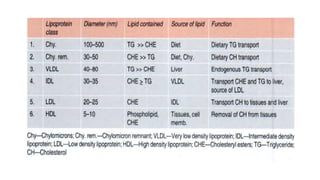
• LIPOPROTEIN
• Macromolecule= Lipid + protein
(apoproteins)
• Lipid – free and esterified
cholesterol, TGs, and
phospholipids
• Divided into 6 classes on the basis
of their particle size and density
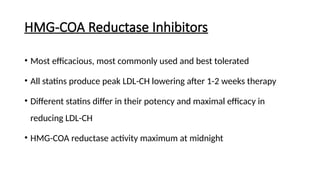
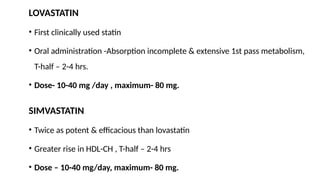
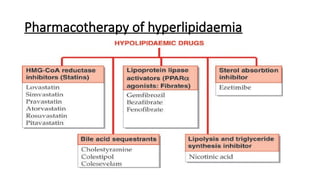
HMG-COA Reductase Inhibitors
•Most efficacious, most commonly used and best tolerated
• All statins produce peak LDL-CH lowering after 1-2 weeks therapy
• Different statins differ in their potency and maximal efficacy in
reducing LDL-CH
• HMG-COA reductase activity maximum at midnight
13.
• MECHANISM OFACTION
Inhibit HMG- Co A reductase competitively
(HMG-Co A to Mevalonic acid)
Inhibit biosynthesis of cholesterol
Depletion of cholesterol in hepatocytes
Increase LDL receptors expression on hepatocytes
Increased hepatic uptake of LDL , IDL & decreased plasma LDL
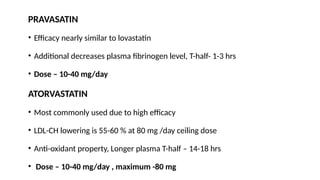
PRAVASATIN
• Efficacy nearlysimilar to lovastatin
• Additional decreases plasma fibrinogen level, T-half- 1-3 hrs
• Dose – 10-40 mg/day
ATORVASTATIN
• Most commonly used due to high efficacy
• LDL-CH lowering is 55-60 % at 80 mg /day ceiling dose
• Anti-oxidant property, Longer plasma T-half – 14-18 hrs
• Dose – 10-40 mg/day , maximum -80 mg
16.
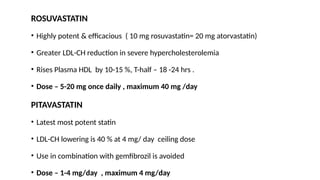
ROSUVASTATIN
• Highly potent& efficacious ( 10 mg rosuvastatin= 20 mg atorvastatin)
• Greater LDL-CH reduction in severe hypercholesterolemia
• Rises Plasma HDL by 10-15 %, T-half – 18 -24 hrs .
• Dose – 5-20 mg once daily , maximum 40 mg /day
PITAVASTATIN
• Latest most potent statin
• LDL-CH lowering is 40 % at 4 mg/ day ceiling dose
• Use in combination with gemfibrozil is avoided
• Dose – 1-4 mg/day , maximum 4 mg/day
17.
Adverse effects
• Myopathy
It is the only serious reaction
Rare < 1 in 1000
Rhabdomyolysis
Myopathy & liver injury are common when given with nicotinic acid/
gemfibrozil or CYP3A4 inhibitors
• GI complaints
• Headache & sleep disturbance
• Rashes
18.
HMG-COA Reductase Inhibitors
USES
•Primary hyperlipidaemia (1st
choice of drugs)
• Secondary hypercholesterolemia
• All types of atherosclerotic cardiovascular disease
-new onset angina
- MI
- Acute coronary syndrome
- Thrombotic stroke
- Peripheral arterial disease
LIPOPROTEIN LIPASE ACTIVATOR( FIBRATES )
MECHANISM OF ACTION
• Increases lipoprotein lipase synthesis – ↑ clearance of triglyceride rich
lipoprotein
• ↑ clearance of VLDL
• ↑ fatty acid oxidation – Lowers triglycerides
• ↑ HDL-Cholesterol by activation of apoA-I & apoA-II activation
22.
GEMFIBROZIL
• ↓ plasmaTG level by ↑ breakdown and ↓ hepatic synthesis of TG
• Completely absorbed orally
• Metabolised by enterohepatic circulation, Excreted in urine.
• T-half is 1 – 2 hours, Dose 300-600 mg per day.
USES
• Hypertriglyceridaemia
• Acute pancreatitis ( for prevention)
• Familial hyperlipemia & Endogenous hypertriglyceridemia.
23.
LIPOPROTEIN LIPASE ACTIVATOR( FIBRATES )………
SIDE EFFECT
• Epigastric distress
• Loose motions
• Skin rash
• Blurred vision and headache
CONTRAINDIACTION
• Children
• Pregnant women
• Renal failure
24.
LIPOPROTEIN LIPASE ACTIVATOR( FIBRATES )………
BEZAFIBRATE
• Greater LDL-CH lowering property than gemfibrozil.
• Circulating fibrinogen and glucose level decrease
• Absorbed orally
• Metabolised by enterohepatic circulation
• Dose 200 mg BD or TDS with meal
25.
LIPOPROTEIN LIPASE ACTIVATOR( FIBRATES )………
Side effects of Bezafibrate
• GI upset
• Myalgia
• Rashes
Contraindications of Bezafibrate
• Renal failure
• Pregnant female
• Children
26.
LIPOPROTEIN LIPASE ACTIVATOR( FIBRATES )………
FENOFIBRATE
• Greater LDL CH lowering action than others fibrates
• Most suitable fibrate for combining with statins
• T-half 20 hours
• Dose -200 mg per day with milk
27.
LIPOPROTEIN LIPASE ACTIVATOR( FIBRATES )………
SIDE EFFECT OF FENOFIBRATE
• Myalgia
• Hepatitis
• Cholelithiasis
• Rhabdomyolysis & Rashes.
CONTRAINDICATION OF FENOFIBRATE
• Chronic kidney disease
• Diabetes
Fibrate therapy should be discontinued after 2 months If an adequate
lowering of TGs level not obtained
28.
LIPOLYSIS AND TRIGLYCERIDESYNTHESIS INHIBITORS
NICOTINIC ACID (Niacin):
• ↑ HDL-CH up to 25-30%, ↓ TGs and LDL cholesterol.
• ↓ lipoprotein levels
MECHANISM OF ACTION
• ↓ intracellular lipolysis by lipase
• Direct inhibition of TGs synthesis in liver
• ↓Apo A1 degradation(HDL)
LIPOLYSIS AND TRIGLYCERIDESYNTHESIS INHIBITORS……….
SIDE EFFECT
• Flushing (MC) Contraindication :
• Pruritis and rashes Diabetes
(cutaneous vasodilation) Pregnancy
• Dyspepsia Childrens
• Skin dryness
• Hyperuricemia
• Other long term effects are : liver dysfunction and Jaundice
31.
LIPOLYSIS AND TRIGLYCERIDESYNTHESIS INHIBITORS……….
• Dose :
• Start with 100 mg TDS
• gradually increase 2-4 gm daily divided dose
• Aspirin taken before niacin substantially attenuate flushing by inhibition
of PG synthesis
• Laropiprant combining with it to reduce flushing
• Use of sustained release (ER/SR) tablet to subdue flushing
32.
STEROL ABSORPTION INHIBITOR
•EZETIMIBE
• MECHANISM OF ACTION
• Inhibition of cholesterol absorption by intestinal mucosa (NPC1L1
transport protein) Niemann Pick C1 – like 1 protein
• Compensatory hepatic CH production ↑
• LDL – CH lower by 15 – 20%
33.
EZETIMIBE…….
• Enhance cholesterolsynthesis block by combining with statins
• t1/2 = 22 hrs
• Low dose statins + ezetimibe effective as high dose of statin alone
• 60% decrease LDL –CH
• No specific adverse effect
• Dose – 10 mg OD
34.
BILE ACID SEQUESTERANT(RESINS)
• MECHANISM OF ACTION
• Highly positively charged molecules that bind negatively charged bile
acids.
• Safest as not absorbed from intestine.
• Due to large size, resins are not absorbed and bound bile acids are
excreted in stool
• Pool of bile acids depleted
35.
BILE ACID SEQUESTERANT………
•Not popular clinically because they SIDE EFFCTS:
• Unpalatable Heart burn
• Inconvenient Flatulence
• Have to be taken in larger dose Dyspepsia
• Interfere with absorption of many drugs Malabsorption of Vit K
• Poor patient acceptability and folic acid
• All the hypolipidemic drugs are absolutely C/I in pregnancy except Resins-
DOC in pregnancy.
36.
PCSK 9 inhibitors(Proprotein convertase
subtilisin/kexin type 9)
• Alirocumab
• Evolocumab
• Inclisiran (mRNA)
• 1st
two are monoclonal antibodies
• Injectable and expensive
37.
• PCSK9, aproduct of hepatocytes
• Secreted into the plasma
• Where it binds to the LDL receptors facilitating lysosomal degradation
of LDL receptors
• ↓the expression of LDL receptors on the cell membrane
• ↓ the clearance of LDL cholesterol.






 Most read