SCIENCE 3
WEEK 8 DAY 1
Science in our
daily life
BEFORE/PRE- LESSON
PROPER
Activating Prior Knowledge
What Objects
Around Us Are
Made of Metals?
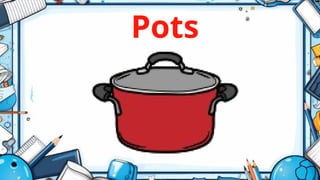
Pots
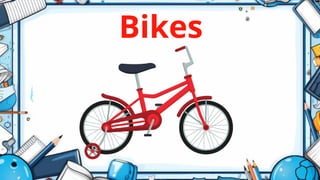
Bikes
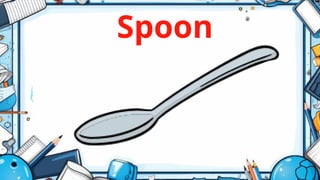
Spoon
Coin
Question:
Have you seen this
object before?
Question:
What do you think it
is made of?
Question:
Why do you think it is
made from that
material?
Lesson Purpose/Intention
Tell the learners that
today’s lesson will answer
the question: “What are
the properties and uses of
iron in my community?”
Abundant
very common and
easy to find;
plentiful
Rare
not common
and difficult to
find.
During/Lesson
Proper
Reading the Key Idea/Stem
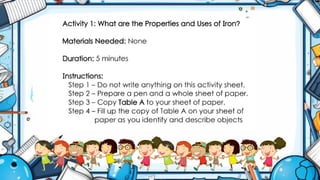
Activity 1: What are
the Properties and
Uses of Iron?
Developing Understanding of the Key Idea/Stem
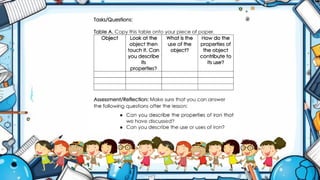
Look at the object then
touch it. Can you describe
its properties?
What is the use of
the object?
How do the properties
of the object contribute
to its use?
After/Post-Lesson
Proper
Making Generalizations and Abstractions
Can you describe the
properties of iron that
we have discussed?
Can you describe
the use or uses of
iron?
Evaluating Learning
Instruction: Have the
learners answer the
following on a piece of
paper for submission:
1. Identify the three (3) properties of iron
discussed today.
2. Identify two (2) uses of iron discussed
today.
3. Identify one (1) use or object you think
should be made of iron that was not
discussed today. Give the reason why you
think it should be made of iron.
SCIENCE 3
WEEK 8 DAY 2
Science in our
daily life
BEFORE/PRE- LESSON
PROPER
Activating Prior Knowledge
What are
Electric
Wires?
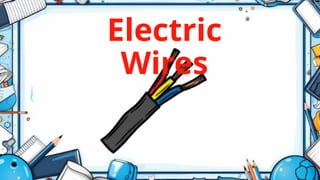
Electric
Wires
Question:
Have you seen this
object before?
Question:
Where do you usually
see this?
Question:
What is it used
for?
Question:
What do you think is
this thing inside the
electric wire?
Question:
Why do you think
there is metal inside?
Lesson Purpose/Intention
Tell the learners that today’s
lesson will answer the
question: “What are the
properties and uses of copper
in my community?”
sheath
plastic wrapping
that surrounds the
metal inside a wire.
unsheathe
to remove the
sheath.
electricity
makes appliances and
devices work (in
Filipino, kuryente)
outlet
provides electricity to
appliances and devices
(in Filipino saksakan)
During/Lesson
Proper
Reading the Key Idea/Stem
Activity 2: What are
the Properties and
Uses of Copper?
Developing Understanding of the Key Idea/Stem
What do you see on this
end of the wire?
Questions:
Where else do
you see sparks?
Questions:
What happens to
appliances when you plug
them into outlets?
Questions:
The sparks we see make our appliances
and devices work. But instead of sparks,
we have a more correct term for it. Can
you guess?
Questions:
Can you recall what the wire
is made of again?
Questions:
After/Post-Lesson
Proper
Making Generalizations and Abstractions
1. Can you describe the
properties of copper that
we have discussed?
Can you describe the use
of copper that we have
discussed?
Evaluating Learning
Instruction: Have the
learners answer the
following on a piece of
paper for submission:
1. Identify the three (3) properties of
copper discussed today.
2. Describe the use of copper discussed
today.
3. Identify one (1) use or object you think
should be made of copper that was not
discussed today. Describe why you think it
should be made of copper.
SCIENCE 3
WEEK 8 DAY 3
Science in our
daily life
BEFORE/PRE- LESSON
PROPER
Activating Prior Knowledge
What are the
Important Properties
of Iron and Copper?
Direction:
Have the learners answer the
following as a review of the previous
two days. Review the concepts
assessed below as needed.
True or False
1. Iron is weak.
False
True or False
2. Iron is hard.
True
True or False
3. Iron is rare.
False
True or False
4. Copper does not allow
electricity to pass through it.
False
True or False
5. Copper is flexible.
True
Lesson Purpose/Intention
Tell the learners that today’s
lesson will answer the
question: “What are the
properties and uses of gold
and silver in my community?”
Lesson Language Practice
Review the learners of the
difference between the words
abundant and rare as
described in Day 1.
During/Lesson
Proper
Reading the Key Idea/Stem
What are the Properties
and Uses of Gold and
Silver?
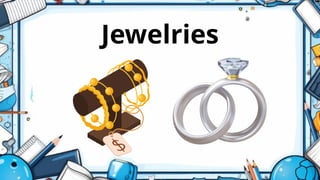
Jewelries
What are these
objects?
Questions:
What do you notice
about all these things?
Questions:
Developing Understanding of the Key Idea/Stem
Explain that gold and silver have a similar
property to mirrors. They are shiny. They reflect
light beautifully, making them sparkle and stand
out. Use your mirror and flashlight on hand to
demonstrate reflection.
2.What colors are gold and silver?
a. Gold is yellow in color.
b. Silver is grey in color.
3. Explain that gold and silver
are popular choices for jewelry
because they are beautiful and
shiny.
4. Do you know how
much gold and silver
jewelry costs?
5. Lead the learners to the
idea that gold and silver
jewelry is expensive or
costs a lot.
After/Post-Lesson
Proper
Making Generalizations and Abstractions
Can you describe the
properties of gold and
silver that we have
discussed?
Can you identify the main
use of gold and silver?
Evaluating Learning
Instruction: Have the
learners answer the
following on a piece of
paper for submission:
1. Identify the three (3) properties of gold and
silver discussed today.
2. Identify two (2) uses of gold and silver
discussed today
3. Identify one (1) object you think should be
made of gold or silver that was not discussed
today. Describe why you think it should be
made of gold or silver. Make sure to gather all
answer sheets.
SCIENCE 3
WEEK 8 DAY 4
Science in our
daily life
BEFORE/PRE- LESSON
PROPER
Activating Prior Knowledge
What is
Recycling?
Ask and discuss the
following learners:
1. What does it mean
to recycle?
2. Show the learners the following objects or
pictures of the following objects. Ask the learners
if the following objects are recyclable or not, and
what can be done to recycle them:
a. paper
b. plastic bottle
c. aluminum can
Lesson Purpose/Intention
Tell the learners that today’s lesson
will answer the question: “What
everyday object can we make out
of recyclable materials?” No need
to answer the question for now.
Lesson Language Practice
Review the learners of the
difference between the words
abundant and rare as
described in Day 1.
During/Lesson
Proper
Reading the Key Idea/Stem
What Everyday Object
Can I Make from
Recyclable Materials?
Do the following before the lesson
begins:
1. Have each group bring the following:
a. a large collection of clean, recyclable nonmetal
materials (cardboard tubes, empty plastic bottles,
paper towel rolls, clean food containers, etc.)
b. clean recyclable metal objects with their sharp
edges dulled (aluminum cans, tin cans (“de lata”), old
wires and cable, old aluminum foil, etc.)