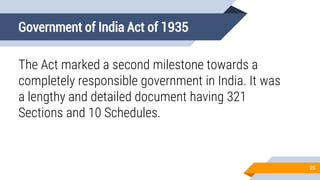
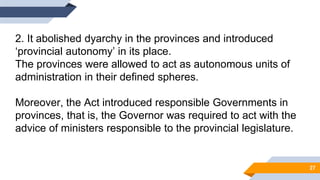
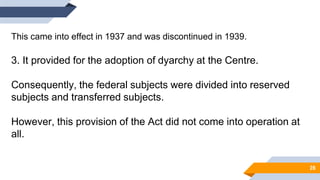
The Government of India Act of 1935 introduced provincial autonomy and increased self-government in India. It divided powers between the central and provincial governments through three lists and established a federation, though the princely states did not join. The Act introduced bicameral legislatures in some provinces and extended voting rights, though it maintained separate electorates. It established institutions like the Reserve Bank of India and public service commissions. However, the federal provisions did not come into effect and the Act was replaced after independence.