Introduction to Visual
GraphicDesign
● Welcome to the world of visual graphic
design!
● In this presentation, we'll explore the
fundamental elements that make designs
visually appealing and effective
● You'll learn how to use these elements to
create impactful designs
● Question: What's your favorite design
you've seen recently? Why did it catch
your eye?
3.
Elements of Design:The Building Blocks
● Elements of design are the basic components used to create
visual compositions
● We'll cover 9 key elements: Line, Shape, Space, Color, Texture,
Typography, Motion, Scale/Size, and Dominance/Emphasis
● Understanding these elements will help you create more
effective and appealing designs
● Question: Can you think of a design where one of these
elements really stood out to you?
4.
Line: The Foundationof
Design
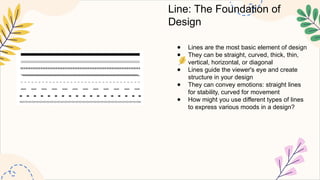
● Lines are the most basic element of design
● They can be straight, curved, thick, thin,
vertical, horizontal, or diagonal
● Lines guide the viewer's eye and create
structure in your design
● They can convey emotions: straight lines
for stability, curved for movement
● How might you use different types of lines
to express various moods in a design?
5.
Shape: Giving Formto Ideas
● Shapes are enclosed areas created by lines, colors, or textures
● Two main categories: geometric (man-made) and organic
(natural)
● Shapes can symbolize concepts or create patterns
● They help organize information and create visual interest
● Question: What shapes do you see most often in logos? Why
do you think they're popular?
6.
Space: The Canvasof Creativity
● Space refers to the area within, around, between, or below
objects in a design
● Positive space is occupied by objects; negative space is the
empty area
● Effective use of space creates balance and helps guide the
viewer's focus
● Can you think of a design that uses negative space creatively?
7.
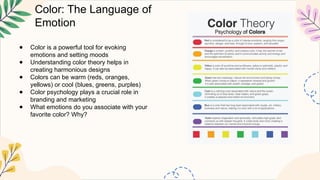
Color: The Languageof
Emotion
● Color is a powerful tool for evoking
emotions and setting moods
● Understanding color theory helps in
creating harmonious designs
● Colors can be warm (reds, oranges,
yellows) or cool (blues, greens, purples)
● Color psychology plays a crucial role in
branding and marketing
● What emotions do you associate with your
favorite color? Why?
8.
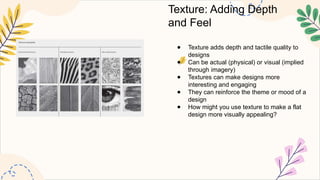
Texture: Adding Depth
andFeel
● Texture adds depth and tactile quality to
designs
● Can be actual (physical) or visual (implied
through imagery)
● Textures can make designs more
interesting and engaging
● They can reinforce the theme or mood of a
design
● How might you use texture to make a flat
design more visually appealing?
9.
Typography: The Artof Text
● Typography is the art of arranging type
● Includes font choice, size, spacing, and layout
● Good typography enhances readability and conveys the tone of
the message
● Different font styles evoke different emotions and associations
● What's your favorite font? Why do you like it?
10.
Motion: Bringing Designsto Life
● Motion in design creates a sense of movement and dynamism
● Can be actual (in animations or videos) or implied (through
static elements)
● Helps guide the viewer's eye and can tell a story
● Adds interest and engagement to designs
● How might you use motion to improve a static poster design?
11.
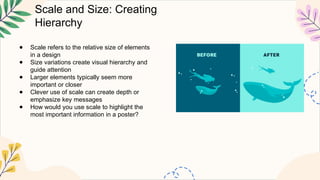
Scale and Size:Creating
Hierarchy
● Scale refers to the relative size of elements
in a design
● Size variations create visual hierarchy and
guide attention
● Larger elements typically seem more
important or closer
● Clever use of scale can create depth or
emphasize key messages
● How would you use scale to highlight the
most important information in a poster?
12.
Dominance and Emphasis:Focal Points
● Dominance is about creating a clear focal point in your design
● Emphasis techniques draw attention to specific elements
● Can be achieved through contrast, color, size, or placement
● Helps convey the main message or purpose of the design
● What element stands out most in your favorite advertisement?
How is it emphasized?
13.
Combining Elements: The
Artof Balance
● Effective designs skillfully combine multiple
elements
● Balance is key: too much of one element
can overwhelm others
● Contrast between elements creates
interest and guides the eye
● The goal is to create a cohesive,
harmonious composition
● How might you combine color, shape, and
typography to create a balanced logo
design?
14.
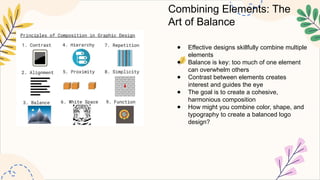
Principles of Design:Putting It All Together
● Elements of design are used according to principles like
balance, contrast, and unity
● These principles guide how elements are arranged and interact
● Understanding both elements and principles is crucial for
effective design
● We'll explore these principles in more depth in future lessons
● Which design principle do you think is most important? Why?
15.
The Design Process:
FromConcept to Creation
● Design typically follows a process:
research, ideation, sketching, refining,
finalizing
● Each stage utilizes different combinations
of design elements
● The process helps ensure the final design
meets its objectives
● Iteration and feedback are crucial for
improvement
● What part of the design process do you
think would be most challenging? Most
fun?
16.
Digital Tools forGraphic Design
● Modern graphic design often relies on digital tools
● Popular software includes Adobe Photoshop, Illustrator, and
InDesign
● Each tool specializes in different aspects of design
● Learning these tools can enhance your ability to manipulate
design elements
● What digital design tools have you used or would like to learn?
17.
Analyzing Designs inthe
Wild
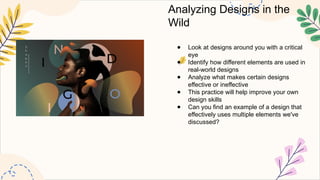
● Look at designs around you with a critical
eye
● Identify how different elements are used in
real-world designs
● Analyze what makes certain designs
effective or ineffective
● This practice will help improve your own
design skills
● Can you find an example of a design that
effectively uses multiple elements we've
discussed?
18.
Ethical Considerations inGraphic Design
● Designers have a responsibility to create honest and inclusive
designs
● Consider the impact of your design choices on different
audiences
● Be aware of cultural sensitivities and avoid stereotypes
● Accessibility in design ensures your work can be appreciated by
all
● How might you make a design more inclusive or accessible?
19.
Your Turn: DesignChallenge
● Create a simple logo using at least 5 of the elements we've
discussed
● Think about the message you want to convey
● Sketch your ideas before moving to digital tools
● Remember to consider your audience and the principles of good
design
● We'll share and discuss your creations in our next class!
20.
Conclusion: The Powerof Visual Communication
● Graphic design is a powerful tool for visual communication
● Understanding the elements of design is the first step to
creating impactful visuals
● Remember, great design balances creativity with clear
communication
● Keep practicing and analyzing designs around you
● What's the most important thing you learned about graphic
design today?
Editor's Notes
#1 Created from: https://app.briskteaching.com/onboarding_try_article
 Most read
 Most read
 Most read


