


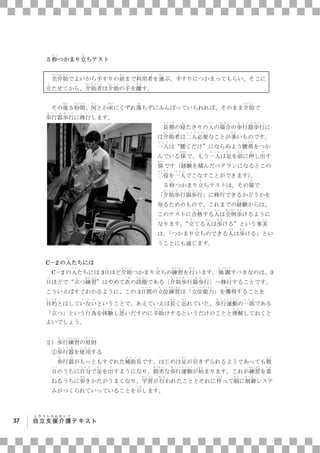
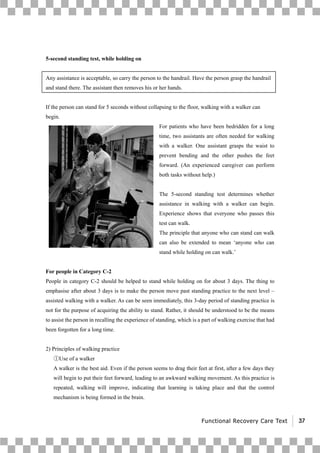
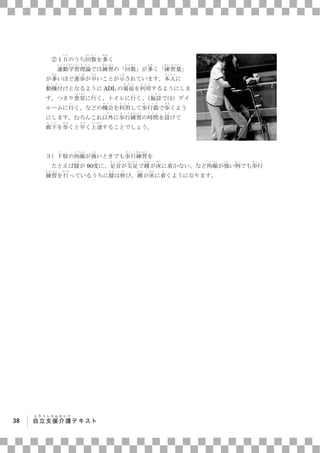
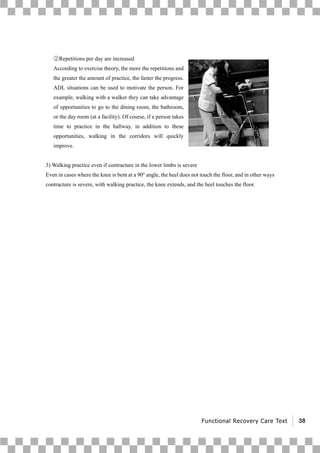
自立
じ り つ
支援
し え ん
介護
か い ご
テキスト
Functional Recovery Care
Text
©Economic Research Institute for ASEAN and East Asia / Japan Society of Functional Recovery Care and
Power Rehabilitation, 2018
All rights reserved. No part of this publication may be reproduced, stored in a retrieval system, or
transmitted in any form by any means electronic or mechanical without prior written notice to and
permission from ERIA.
The findings, interpretations, conclusions, and views expressed in their respective chapters are entirely
those of the author/s and do not reflect the views and policies of the Economic Research Institute for
ASEAN and East Asia, its Governing Board, Academic Advisory Council, or the institutions and
governments they represent. Any error in content or citation in the respective chapters is the sole
responsibility of the author/s.
Material in this publication may be freely quoted or reprinted with proper acknowledgement.
Japanese translation rights arranged with Japan Society of Functional Recovery Care and Power
Rehabilitation.
[目次
も く じ
]
基本
き ほ ん
介護
か い ご
技術
ぎじゅつ
―日 常
にちじょう
生活
せいかつ
動作
ど う さ
の介助
かいじょ
・・・・1
1.食事
しょくじ
の介助
かいじょ
・・・・2
1)姿勢
し せ い
― 座位
ざ い
・・・・2
2)介助
かいじょ
するときの注意
ちゅうい
・・・・5
2.排泄
はいせつ
の介助
かいじょ
・・・・6
3.入 浴
にゅうよく
の介助
かいじょ
・・・・10
1) 歩ける
ある
人
ひと
の介助
かいじょ
・・・・11
2) 歩けない
ある
人
ひと
、歩いて
ある
も非常
ひじょう
にバランスの悪
わる
い人
ひと
の入 浴
にゅうよく
・・・・12
4.移動
い ど う
の介助
かいじょ
・・・・13
1)車椅子
く る ま い す
移動
い ど う
の介助
かいじょ
・・・・13
2)歩行器
ほ こ う き
(歩行車
ほ こ う し ゃ
)と杖
つえ
を使
つか
った移動
い ど う
・・・・18
自立
じ り つ
支援
し え ん
介護
か い ご
・・・・19
自立
じ り つ
支援
し え ん
介護
か い ご
とは? ・・・・20
Ⅰ. 水分
すいぶん
・・・・24
1. 水分
すいぶん
の生理学
せ い り が く
・・・・25
1) 体
からだ
の中
なか
の水分量
すいぶんりょう
・・・・25
2) どこに存在
そんざい
(分布
ぶ ん ぷ
)しているのか ・・・・25
3) 水
みず
の出入
で い
り ・・・・26
4) 水
みず
の作用
さ よ う
・・・・27
5) 水分
すいぶん
の欠乏
けつぼう
・・・・29
2. 水分
すいぶん
ケアの実際
じっさい
・・・・31
1) 「水分
すいぶん
」に含まれる
ふく
もの ・・・・31
2) 心臓病
しんぞうびょう
や腎臓病
じんぞうびょう
のある高齢者
こうれいしゃ
・・・・31
3) 水分
すいぶん
ケアのポイント ・・・・31
Ⅱ. 歩行
ほ こ う
・・・・32
1. 自立
じ り つ
支援
し え ん
介護
か い ご
の基礎
き そ
としての歩行
ほ こ う
・・・・32
2. 人
ひと
はどのように歩いて
ある
いるか-歩行
ほ こ う
の基礎
き そ
知識
ち し き
・・・・33
3. 歩行
ほ こ う
の影 響
えいきょう
・・・・35
Contents
page
Basic Long-Term Techniques – Assistance for Activities of Daily Living ・・・・・1
1.Assisting with Meals ・・・・・2
1) Posture – Sitting position ・・・・・2
2) Precautions when providing assistance ・・・・・5
2.Assisting with Excretion ・・・・・6
3.Assistance with Bathing ・・・・・10
1) Assisting people who can walk ・・・・・11
2) Bathing people who cannot walk and those who are able to
walk but have very poor balance ・・・・・12
4.Assisting with Movement ・・・・・13
1) Assisting wheelchair movement ・・・・・13
2) Movement using a walker (with wheels) or a cane ・・・・・18
Functional Recovery Care ・・・・・19
What is functional recovery care? ・・・・・20
Ⅰ. Fluids ・・・・・24
1. Physiology of Water ・・・・・25
1) Water content in the body ・・・・・25
2) Where is it present? ・・・・・25
3) Water intake and discharge ・・・・・26
4) Function of water ・・・・・27
5) Water deficiency ・・・・・29
2. Practical Water Caregiving ・・・・・31
1) Substances containing water ・・・・・31
2) Elderly people with heart or kidney disease ・・・・・31
3) Water caregiving points ・・・・・31
Ⅱ. Walking ・・・・・32
1. Walking as a foundation for Functional Recovery Care ・・・・・32
2. How People Walk – Basic Knowledge of Walking ・・・・・33
3. Effects of Walking ・・・・・35
1) ADL と生活
せいかつ
空間
くうかん
への影 響
えいきょう
・・・・35
2) 全身
ぜんしん
の代謝
たいしゃ
への刺激
し げ き
・・・・35
3) 排泄
はいせつ
-大 腸
だいちょう
への影 響
えいきょう
・・・・35
4) 認知症
にんちしょう
への影 響
えいきょう
・・・・35
4. 歩行
ほ こ う
ケアの実際
じっさい
-歩けない
ある
人
ひと
を歩かせる
ある
練習
れんしゅう
・・・・36
1) 車椅子
く る ま い す
の使用
し よ う
状 況
じょうきょう
による歩行
ほ こ う
練 習
れんしゅう
の選択
せんたく
・・・・36
2) 歩行
ほ こ う
練 習
れんしゅう
の原則
げんそく
・・・・37
3) 下肢
か し
の拘
こう
縮
しゅく
が強い
つよ
ときでも歩行
ほ こ う
練 習
れんしゅう
を ・・・・38
Ⅲ. 食事
しょくじ
・・・・39
1. 口腔
こうくう
機能
き の う
・・・・40
2. 注 目
ちゅうもく
すべき時期
じ き
・・・・41
3. 咀
そ
しゃく嚥下
え ん げ
・・・・41
4. 誤嚥
ご え ん
・・・・43
1) 高齢者
こうれいしゃ
にみられる不顕性誤嚥
ふ け ん せ い ご え ん
・・・・43
2) 食事
しょくじ
関連
かんれん
の誤嚥
ご え ん
(むせ) ・・・・44
5. 食事
しょくじ
ケアの実際
じっさい
・・・・45
1) 軟 食
なんしょく
に変えない
か
・・・・45
2) 自力
じ り き
摂取
せっしゅ
・・・・46
3) 歯
は
と義歯
ぎ し
の治療
ちりょう
と調 整
ちょうせい
を ・・・・47
6. 胃
い
ろうや経管
けいかん
栄養
えいよう
を経口
けいこう
常 食
じょうしょく
へ ・・・・48
Ⅳ. 排泄
はいせつ
-排便
はいべん
の基礎
き そ
の基礎
き そ
知識
ち し き
とおむつ外し
はず
・・・・50
1. 大 腸
だいちょう
の機能
き の う
・・・・50
1) 大腸内
だいちょうない
の食 物
しょくもつ
の移動
い ど う
・・・・50
2) 腸 内
ちょうない
環 境
かんきょう
-善玉
ぜんだま
菌
きん
と悪玉
あくだま
菌
きん
・・・・51
3) 排便
はいべん
のしくみ ・・・・52
2. 便秘
べ ん ぴ
・・・・54
1) 弛緩性
し か ん せ い
便秘
べ ん ぴ
・・・・54
2) 直 腸 性
ちょくちょうせい
便秘
べ ん ぴ
・・・・54
3. 便
べん
失禁
しっきん
・・・・56
1) 真性便
しんせいべん
失禁
しっきん
・・・・56
2) おむつ性
せい
失禁
しっきん
・・・・56
1) Activities of daily living and the effect on living area ・・・・・35
2) Walking stimulates metabolism in the entire body ・・・・・35
3) Effect on the large intestine – excretion ・・・・・35
4) Effect on dementia ・・・・・35
4. Practical Walking Caregiving
– Practice Getting People to Walk Who Cannot Walk ・・・・・36
1) Selection of walking practice based on extent of wheelchair use ・・・・・36
2) Principles of walking practice ・・・・・37
3) Walking practice even if contracture in the lower limbs is severe ・・・・・38
Ⅲ. Meals ・・・・・39
1. Oral Function ・・・・・40
2. Phases that Require Attention ・・・・・41
3. Chewing and Swallowing ・・・・・41
4. Aspiration ・・・・・43
1) Silent aspiration seen in the elderly ・・・・・43
2) Meal-related aspiration (choking) ・・・・・44
5. Practical Caregiving at Mealtimes ・・・・・45
1) No switching to soft foods ・・・・・45
2) Feeding oneself ・・・・・46
3) Treatment and adjustment of teeth and dentures ・・・・・47
6. From Gastric Fistula and a Feeding Tube to Oral Eating ・・・・・48
Ⅳ. Excretion: Basic Knowledge of Defecation and Removal of Diapers ・・・・・50
1. Function of the Large Intestine ・・・・・50
1) Food movement in the large intestine ・・・・・50
2) Environment of the intestines – good and bad bacteria ・・・・・51
3) Mechanism of bowel movements ・・・・・52
2. Constipation ・・・・・54
1) Atonic constipation ・・・・・54
2) Rectal constipation ・・・・・54
3. Faecal Incontinence ・・・・・56
1) Intrinsic faecal incontinence ・・・・・56
2) Diaper incontinence ・・・・・56
3) ちょびちょび失禁
しっきん
または「便
べん
もれ」 ・・・・56
4. 下剤
げ ざ い
の作用
さ よ う
と弊害
へいがい
・・・・57
5. 自然
し ぜ ん
排便
はいべん
を得る
え
ためのケア ・・・・59
6. 排泄
はいせつ
自立
じ り つ
への実践的
じっせんてき
な考え方
かんが かた
・・・・60
1) おむつの弊害
へいがい
・・・・60
2) おむつ外
はず
しの方法
ほうほう
・・・・61
Ⅴ. 排泄
はいせつ
-排 尿
はいにょう
の基礎
き そ
知識
ち し き
と 尿
にょう
失禁
しっきん
のケア ・・・・62
1. 尿
にょう
失禁
しっきん
の種類
しゅるい
・・・・62
2. 排 尿
はいにょう
の神経
しんけい
機構
き こ う
・・・・62
3. 高齢者
こうれいしゃ
の排 尿
はいにょう
の特 徴
とくちょう
-夜間
や か ん
の排 尿
はいにょう
が多
おお
い ・・・・64
4. 尿
にょう
失禁
しっきん
のケア ・・・・65
1) 考え方
かんが かた
・・・・65
2) 実際
じっさい
のケア-水分
すいぶん
と活動
かつどう
・・・・65
Ⅵ. 健康
けんこう
管理
か ん り
・医療
いりょう
と介護
か い ご
・・・・67
1. 高齢者
こうれいしゃ
の病気
びょうき
・ 症 状
しょうじょう
の特 徴
とくちょう
・・・・67
2. 高齢者
こうれいしゃ
に多い
おお
代表的
だいひょうてき
な病気
びょうき
・・・・68
3. 病気
びょうき
やけがのときの対応
たいおう
・・・・69
認知症
にんちしょう
を治そう
なお
・・・・70
Ⅰ. 認知症
にんちしょう
を治
なお
す基礎
き そ
理論
り ろ ん
・・・・71
1. 認知症
にんちしょう
の「原因
げんいん
」を正しく
ただ
知る
し
・・・・71
2. 「認知
に ん ち
」とは何
なに
か ・・・・71
3. 状 況
じょうきょう
の構成
こうせい
要素
よ う そ
-認知症
にんちしょう
の人
ひと
にいま何
なに
が起こって
お
いるかを理解
り か い
するために ・・・・72
Ⅱ. 認知症
にんちしょう
を治す
なお
・・・・74
1. 症 状
しょうじょう
には 6 つのタイプがある ・・・・74
2. 治
なお
し方
かた
( 症 状
しょうじょう
のとり方
かた
) ・・・・77
1) 認知力
にんちりょく
はどうすれば回復
かいふく
するか(認知
に ん ち
の構成
こうせい
要素
よ う そ
) ・・・・77
2) 水分
すいぶん
、運動
うんどう
、栄養
えいよう
、便通
べんつう
、それに社会
しゃかい
交 流
こうりゅう
・・・・79
3) きっかけの除去
じょきょ
・・・・80
Ⅲ. 家族
か ぞ く
で治
なお
そう認知症
にんちしょう
・・・・82
資料
しりょう
3) Continuous incontinence or ‘faecal leakage’ ・・・・・56
4. Action and Adverse Effects of Laxatives ・・・・・57
5. Caregiving to Achieve Natural Bowel Movements ・・・・・59
6. Practical Concepts for Independent Bowel Movements ・・・・・60
1) Problems with diapers ・・・・・60
2) How to end use of diapers ・・・・・61
Ⅴ. Excretion: Basic Knowledge of Urination and Care of Urinary Incontinence ・・・・・62
1. Types of Urinary Incontinence ・・・・・62
2. Neural Mechanism of Urination ・・・・・62
3. Characteristic of Urination of Elderly People – Frequent Urination at Night ・・・・・64
4. Care for Urinary Incontinence ・・・・・65
1) Concept ・・・・・65
2) Practical caregiving – water and activity ・・・・・65
Ⅵ. Health Care – Medical and Long-Term Care ・・・・・67
1. Characteristics of Diseases and Symptoms of the Elderly ・・・・・67
2. Typical Diseases often Found in Elderly People ・・・・・68
3. Response in the Event of Illness or Injury ・・・・・69
Curing Dementia ・・・・・70
Ⅰ. Basic Theory to Cure Dementia ・・・・・71
1. Correctly Understanding the Cause of Dementia ・・・・・71
2. What is ‘Cognition’? ・・・・・71
3. Elements of the Situation, Understanding what Is Happening to People
with Dementia ・・・・・72
Ⅱ. Curing Dementia ・・・・・74
1. The Six Types of Symptoms ・・・・・74
2. How to Cure Dementia – Elimination of Symptoms ・・・・・77
1) How to restore cognitive ability (components of cognition) ・・・・・77
2) Water intake, exercise, nutrition, bowel movements, social interaction ・・・・・79
3) Elimination of triggers ・・・・・80
Ⅲ. Dementia Therapy by the Family ・・・・・82
Reference Material
Basic Long-Term Care
Techniques – Assistance for
Activities of Daily Living
1
基本
き ほ ん
介護
か い ご
技術
ぎ じ ゅ つ
― 日常
に ち じ ょ う
生活
せ い か つ
動作
ど う さ
の介助
か い じ ょ
2
介護
か い ご
を必要
ひ つ よ う
とする状態
じょうたい
はできるだけ自立
じ り つ
することが理想
り そ う
ですが、体
からだ
の弱
よ わ
まりがひどかっ
たり障害
しょうがい
が重
お も
かったりしたとき、あるいは自立
じ り つ
に到達
と う た つ
するまでの間
あいだ
は「介助
か い じ ょ
」することで
日常
にちじょう
生活
せ い か つ
を安全
あ ん ぜ ん
・清潔
せ い け つ
に送
お く
ってもらう必要
ひ つ よ う
があります。食事
し ょ く じ
・排泄
は い せ つ
・入浴
にゅうよく
・整容
せ い よ う
などの ADL
介助
か い じ ょ
のしかたを基本
き ほ ん
介護
か い ご
技術
ぎ じ ゅ つ
といいます。
1. 食事
し ょ く じ
の介助
か い じ ょ
食事
し ょ く じ
は「おいしく食
た
べる」と同時
ど う じ
に「安全
あ ん ぜ ん
に食
た
べる」ことを考
かんが
えて介助
か い じ ょ
にあたる必要
ひ つ よ う
があ
ります。
おいしく食
た
べるためには①家庭
か て い
にあっては家族
か ぞ く
と、施設
し せ つ
にあっては他
ほ か
の利用者
り よ う し ゃ
と「会食
かいしょく
」
するとよいでしょう。そして②介助
か い じ ょ
は最小限
さいしょうげん
とし、できるだけ本人
ほ ん に ん
自身
じ し ん
の手
て
で食
た
べるとよい
でしょう。私
わたし
たちの食事
し ょ く じ
のとり方
か た
には個人差
こ じ ん さ
があり、それぞれ固有
こ ゆ う
のパターン(例
た と
えば食
た
べ
ものを口
く ち
に運
は こ
ぶ順番
じゅんばん
)をもっていて、そのとおりにいかないとおいしさが失
うしな
われる可能性
か の う せ い
があるからです。
1)姿勢
し せ い
― 座位
ざ い
寝
ね
たままの姿勢
し せ い
で食事
し ょ く じ
をとる(介助
か い じ ょ
する)のは誤嚥
ご え ん
の危険
き け ん
を伴
ともな
うのでやめましょう。どん
なに全身
ぜ ん し ん
状態
じょうたい
が悪
わ る
くても、介助
か い じ ょ
すればベッドで座位
ざ い
姿勢
し せ い
(長座位
ち ょ う ざ い
)をとることができますか
ら、食事
し ょ く じ
姿勢
し せ い
を最低限
さ い て い げ ん
この姿勢
し せ い
から出発
しゅっぱつ
し、順次
じ ゅ ん じ
「端座位
は し ざ い
」次
つ
いでベッドから離
は な
れて(食堂
しょくどう
などでの)「ふつう椅子
い す
での食事
し ょ く じ
」と進
す す
めます。端座位
は し ざ い
とふつう椅子
い す
の座位
ざ い
がすぐれている
のは“足
あ し
の裏
う ら
が床
ゆ か
につく”ことで、このことで食
た
べものの咀
そ
しゃく力
りょく
が大
お お
きくなることと、
嚥下
え ん げ
の動
う ご
きもよくなるからです。施設
し せ つ
でよく見
み
かける車椅子
く る ま い す
に乗
の
ったままの姿勢
し せ い
では、足
あ し
は
フットレストの上
う え
で床
ゆ か
についておらず、しかも背中
せ な か
が丸
ま る
く(円背
え ん ぱ い
)になりがちで、結果的
け っ か て き
に
しっかりした咀
そ
しゃくや円滑
え ん か つ
な嚥下
え ん げ
運動
う ん ど う
を起
お
こしにくいことになります。
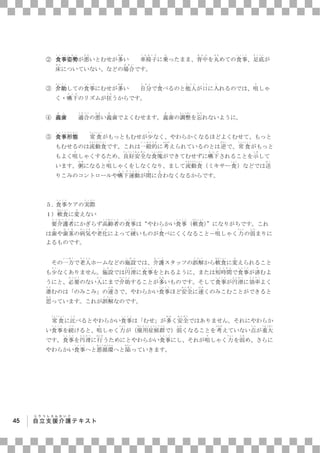
食事
し ょ く じ
の姿勢
し せ い
自
じ り つ し え ん か い ご
立支援介護テキスト2
2
Situations that require long-term care should ideally enable a person to be as self-reliant as possible.
However, in cases of extreme physical weakness, severe disorders, or where assistance is needed until
the person can attain self-reliance, it is essential to provide help to ensure safety and hygiene in daily
activities.Assistance with meals, excretion, bathing, moving, and other activities of daily living (ADL)
is referred to as ‘basic long-term care techniques’.
1. Assisting with Meals
Assisting with meals requires consideration for the enjoyment of eating at the same time as eating
safely.
To enjoy eating it is recommended to (i) eat with other family members if eating at home, or with other
residents if in a facility; and (ii) minimise assistance as much as possible to allow the person to feed
themselves. There are individual differences in the way each person eats, and each person has
particular patterns (for example, the order in which they eat foods). If that pattern is not followed,
enjoyment of the meal may be lost.
1) Posture – Sitting position
Eating (or assistance for eating) while lying down should be avoided because it entails risks of
aspiration. No matter how poor the condition of the body, the person can sit up in bed if assisted (the
‘long sitting position’), so the posture for meals should start with this position at a minimum. It should
then progress to sitting on the edge of the bed, and then to moving off the bed to eat meals seated in
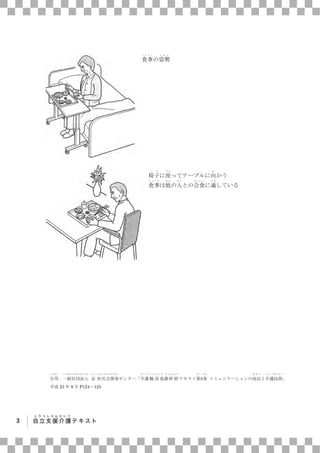
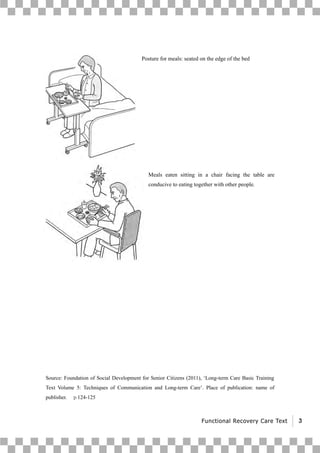
an ordinary chair (e.g., a dining room chair). Sitting on the edge of the bed and the sitting posture in
an ordinary chair are beneficial because the feet rest on the floor, which increases the force for chewing
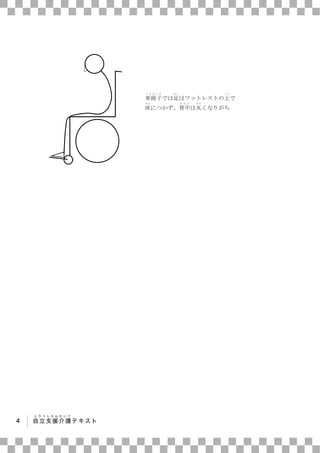
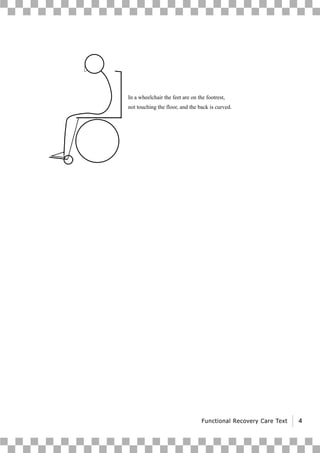
food and improves the swallowing action. When sitting in a wheelchair, which is the posture often
seen at facilities, the feet rest on the footrest, not on the floor, and the back tends to curve (rounded
back), so strong chewing force is reduced and a smooth swallowing action does not occur.
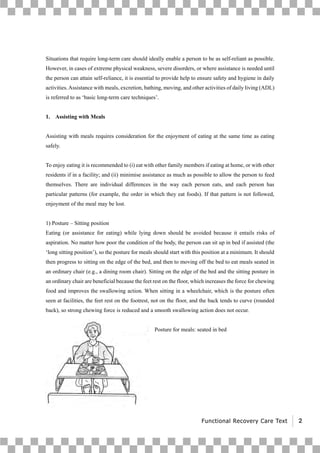
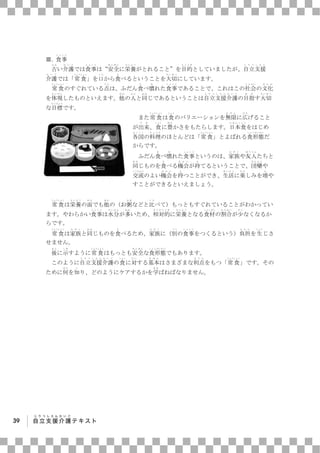
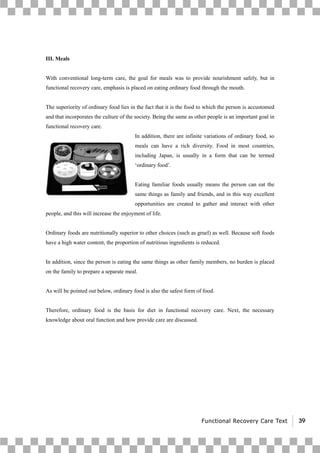
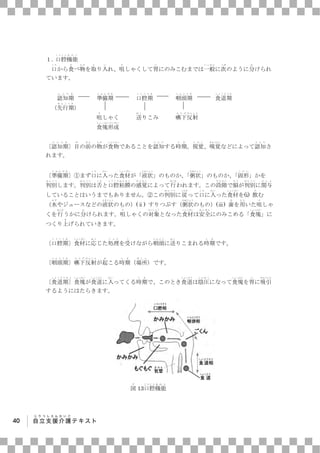
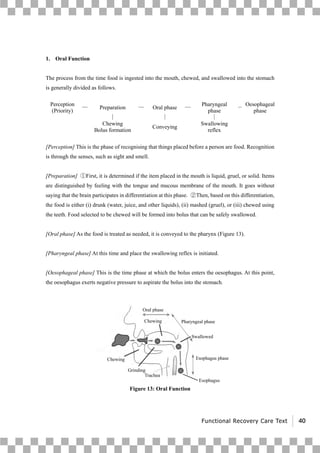
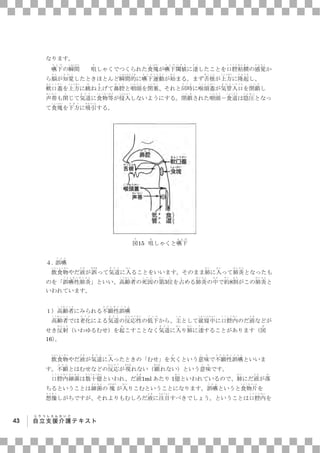
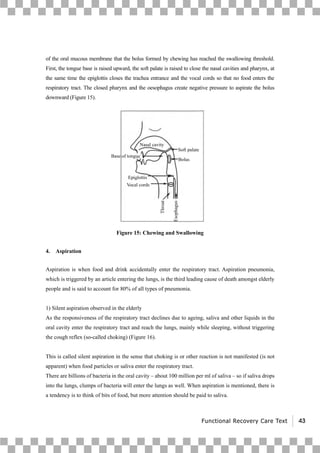
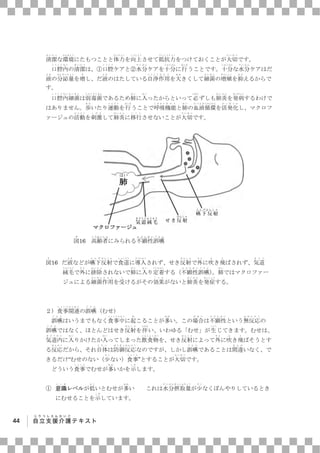
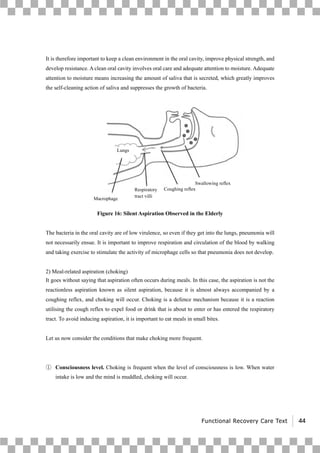
Posture for meals: seated in bed
Functional Recovery Care Text 2
3
食事
し ょ く じ
の姿勢
し せ い
椅子
い す
に座
す わ
ってテーブルに向
む
かう
食事
し ょ く じ
は他
ほ か
の人
ひ と
との会食
かいしょく
に適
て き
している
引用
いんよう
:一般
いっぱん
社団
しゃだん
法人
ほうじん
長 寿
ちょうじゅ
社会
しゃかい
開発
かいはつ
センター「介護
か い ご
職 員
しょくいん
基礎
き そ
研 修
けんしゅう
テキスト第
だい
5巻
かん
コミュニケーションの技法
ぎ ほ う
と介護
か い ご
技術
ぎじゅつ
」
平成 23 年 9 月 P124~125
自
じ り つ し え ん か い ご
立支援介護テキスト3
3
Posture for meals: seated on the edge of the bed
Meals eaten sitting in a chair facing the table are
conducive to eating together with other people.
Source: Foundation of Social Development for Senior Citizens (2011), ‘Long-term Care Basic Training
Text Volume 5: Techniques of Communication and Long-term Care’. Place of publication: name of
publisher. p124-125
Functional Recovery Care Text 3
4
車椅子
く る ま い す
では足
あ し
はフットレストの上
う え
で
床
ゆ か
につかず、背中
せ な か
は丸
ま る
くなりがち
自
じ り つ し え ん か い ご
立支援介護テキスト4
4
In a wheelchair the feet are on the footrest,
not touching the floor, and the back is curved.
Functional Recovery Care Text 4
5
2)介助
か い じ ょ
するときの注意
ち ゅ う い
① 介助者
か い じ ょ し ゃ
も椅子
い す
に腰
こ し
かけて
介助者
か い じ ょ し ゃ
が立
た
ったままの姿勢
し せ い
で介助
か い じ ょ
すると、必
かなら
ず相手
あ い て
が上
う え
を向
む
くようなかたちとなります。
これはスープなど液状
えきじょう
の食物
しょくもつ
がノドに流
な が
れ込
こ
んで反応
は ん の う
が間
ま
に合
あ
わなくなり、気管
き か ん
に入
は い
って
しまう危険
き け ん
があります。また咀
そ
しゃく力
りょく
も弱
よ わ
まってよい食塊
しょっかい
がつくられず誤嚥
ご え ん
の原因
げ ん い ん
とな
って危険
き け ん
です。
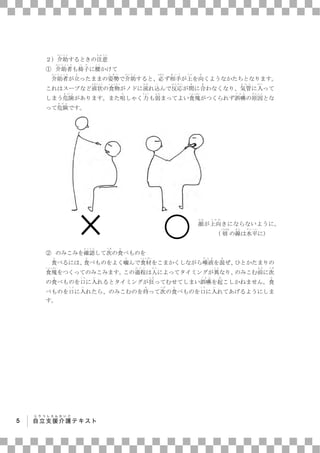
顔
か お
が上向
う わ む
きにならないように。
( 唇
くちびる
の線
せ ん
は水平
す い へ い
に)
② のみこみを確認
か く に ん
して次
つ ぎ
の食
た
べものを
食
た
べるには、食
た
べものをよく噛
か
んで食材
しょくざい
をこまかくしながら唾液
だ え き
を混
ま
ぜ、ひとかたまりの
食塊
しょっかい
をつくってのみこみます。この過程
か て い
は人
ひ と
によってタイミングが異
こ と
なり、のみこむ前
ま え
に次
つ ぎ
の食
た
べものを口
く ち
に入
い
れるとタイミングが狂
く る
ってむせてしまい誤嚥
ご え ん
を起
お
こしかねません。食
た
べものを口
く ち
に入
い
れたら、のみこむのを待
ま
って次
つ ぎ
の食
た
べものを口
く ち
に入
い
れてあげるようにしま
す。
自
じ り つ し え ん か い ご
立支援介護テキスト5
5
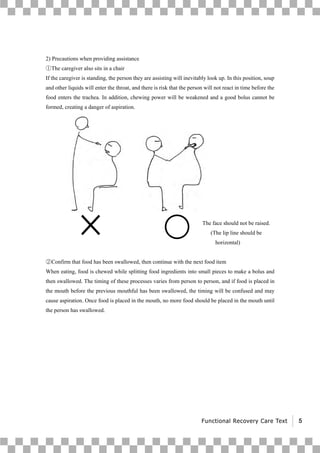
2) Precautions when providing assistance
①The caregiver also sits in a chair
If the caregiver is standing, the person they are assisting will inevitably look up. In this position, soup
and other liquids will enter the throat, and there is risk that the person will not react in time before the
food enters the trachea. In addition, chewing power will be weakened and a good bolus cannot be
formed, creating a danger of aspiration.
The face should not be raised.
(The lip line should be
horizontal)
②Confirm that food has been swallowed, then continue with the next food item
When eating, food is chewed while splitting food ingredients into small pieces to make a bolus and
then swallowed. The timing of these processes varies from person to person, and if food is placed in
the mouth before the previous mouthful has been swallowed, the timing will be confused and may
cause aspiration. Once food is placed in the mouth, no more food should be placed in the mouth until
the person has swallowed.
Functional Recovery Care Text 5
6
2. 排泄
は い せ つ
の介助
か い じ ょ
排泄
は い せ つ
はいくつかの要素
よ う そ
から成
な
り立
た
っている複合
ふ く ご う
行為
こ う い
です。
(ⅰ)ベッド ⇔ トイレの「移動
い ど う
動作
ど う さ
」
(ⅱ)衣服
い ふ く
の上
あ
げ下
さ
げやボタンを外
は ず
したりかけたりの「衣服
い ふ く
操作
そ う さ
」
(ⅲ)排泄後
は い せ つ ご
に陰部
い ん ぶ
を拭
ふ
いたり、水洗
す い せ ん
トイレを流
な が
したりの「後
あ と
しまつ動作
ど う さ
」
これらについて自力
じ り き
で出来
で き
ない部分
ぶ ぶ ん
を介助
か い じ ょ
します。トイレへの移動
い ど う
の介助
か い じ ょ
と衣服
い ふ く
操作
そ う さ
の
介助
か い じ ょ
は後
あ と
の「移動
い ど う
」と「着替
き が
え」の項
こ う
で述
の
べます。ここで排泄
は い せ つ
の介助
か い じ ょ
についての基本的
き ほ ん て き
な考
かんが
え方
か た
を述
の
べます。
① 便意
べ ん い
のある人
ひ と
は座位
ざ い
排便
は い べ ん
座位
ざ い
での排便
は い べ ん
は腹圧
ふ く あ つ
がかかって便
べ ん
の全量
ぜんりょう
を排出
はいしゅつ
することが可能
か の う
です。それだけ排便後
は い べ ん ご
も
すっきりと気分
き ぶ ん
がよいことになります。便意
べ ん い
を訴
うった
えたらトイレか少
す く
なくともベッド脇
わ き
のポ
ータブルトイレを使
つ か
うよう介助
か い じ ょ
しましょう。
恥
は
ずかしさもなく遠慮
え ん り ょ
なく使
つ か
えるのは何
な ん
といってもトイレがすぐれています。ベッド脇
わ き
ポータブルトイレは目
め
かくしをしたとしても音
お と
や臭
に お
いを遮断
し ゃ だ ん
しにくいものです。
差
さ
し込
こ
み便器
べ ん き
での排便
は い べ ん
は腹圧
ふ く あ つ
がかからないので十分
じゅうぶん
な排便
は い べ ん
とならない可能性
か の う せ い
が高
た か
く、つ
ねに宿便
しゅくべん
が残
の こ
ることになりがちです。よほど衰弱
すいじゃく
したターミナルケアの方
か た
に行
おこな
う方法
ほ う ほ う
と思
お も
って下
く だ
さい。
自
じ り つ し え ん か い ご
立支援介護テキスト6
6
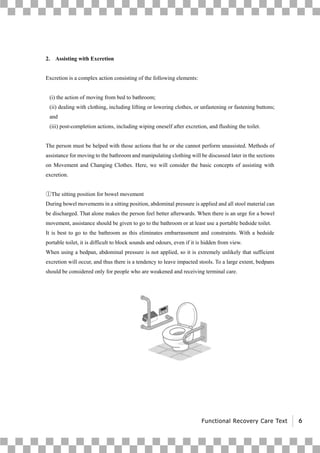
2. Assisting with Excretion
Excretion is a complex action consisting of the following elements:
(i) the action of moving from bed to bathroom;
(ii) dealing with clothing, including lifting or lowering clothes, or unfastening or fastening buttons;
and
(iii) post-completion actions, including wiping oneself after excretion, and flushing the toilet.
The person must be helped with those actions that he or she cannot perform unassisted. Methods of
assistance for moving to the bathroom and manipulating clothing will be discussed later in the sections
on Movement and Changing Clothes. Here, we will consider the basic concepts of assisting with
excretion.
①The sitting position for bowel movement
During bowel movements in a sitting position, abdominal pressure is applied and all stool material can
be discharged. That alone makes the person feel better afterwards. When there is an urge for a bowel
movement, assistance should be given to go to the bathroom or at least use a portable bedside toilet.
It is best to go to the bathroom as this eliminates embarrassment and constraints. With a bedside
portable toilet, it is difficult to block sounds and odours, even if it is hidden from view.
When using a bedpan, abdominal pressure is not applied, so it is extremely unlikely that sufficient
excretion will occur, and thus there is a tendency to leave impacted stools. To a large extent, bedpans
should be considered only for people who are weakened and receiving terminal care.
Functional Recovery Care Text 6
7
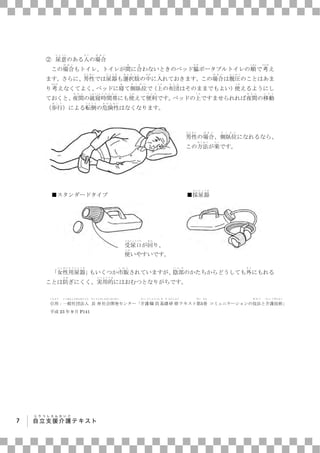
② 尿意
に ょ う い
のある人
ひ と
の場合
ば あ い
この場合
ば あ い
もトイレ、トイレが間
ま
に合
あ
わないときのベッド脇
わ き
ポータブルトイレの順
じゅん
で考
かんが
え
ます。さらに、男性
だ ん せ い
では尿器
に ょ う き
も選択肢
せ ん た く し
の中
な か
に入
い
れておきます。この場合
ば あ い
は腹圧
ふ く あ つ
のことはあま
り考
かんが
えなくてよく、ベッドに寝
ね
て側臥位
そ く が い
で(上
う え
の布団
ふ と ん
はそのままでもよい)使
つ か
えるようにし
ておくと、夜間
や か ん
の就寝
しゅうしん
時間帯
じ か ん た い
にも使
つ か
えて便利
べ ん り
です。ベッドの上
う え
ですませられれば夜間
や か ん
の移動
い ど う
(歩行
ほ こ う
)による転倒
て ん と う
の危険性
き け ん せ い
はなくなります。
男性
だ ん せ い
の場合
ば あ い
、側臥位
そ く が い
になれるなら、
この方法
ほ う ほ う
が楽
ら く
です。
■スタンダードタイプ ■採尿器
さ い に ょ う き
「女性用
じ ょ せ い よ う
尿器
に ょ う き
」もいくつか市販
し は ん
されていますが、陰部
い ん ぶ
のかたちからどうしても外
そ と
にもれる
ことは防
ふ せ
ぎにくく、実用的
じ つ よ う て き
にはおむつとなりがちです。
受尿口
じゅにょうぐち
が回
ま わ
り、
使
つ か
いやすいです。
引用
いんよう
:一般
いっぱん
社団
しゃだん
法人
ほうじん
長 寿
ちょうじゅ
社会
しゃかい
開発
かいはつ
センター「介護
か い ご
職 員
しょくいん
基礎
き そ
研 修
けんしゅう
テキスト第
だい
5巻
かん
コミュニケーションの技法
ぎ ほ う
と介護
か い ご
技術
ぎじゅつ
」
平成 23 年 9 月 P141
自
じ り つ し え ん か い ご
立支援介護テキスト7
7
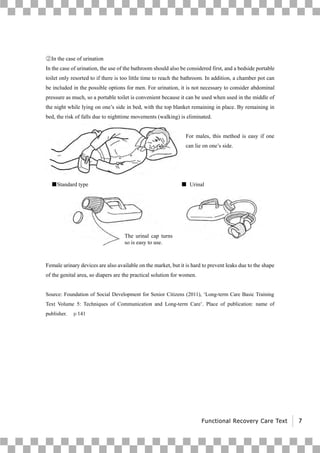
②In the case of urination
In the case of urination, the use of the bathroom should also be considered first, and a bedside portable
toilet only resorted to if there is too little time to reach the bathroom. In addition, a chamber pot can
be included in the possible options for men. For urination, it is not necessary to consider abdominal
pressure as much, so a portable toilet is convenient because it can be used when used in the middle of
the night while lying on one’s side in bed, with the top blanket remaining in place. By remaining in
bed, the risk of falls due to nighttime movements (walking) is eliminated.
For males, this method is easy if one
can lie on one’s side.
■Standard type ■ Urinal
Female urinary devices are also available on the market, but it is hard to prevent leaks due to the shape
of the genital area, so diapers are the practical solution for women.
Source: Foundation of Social Development for Senior Citizens (2011), ‘Long-term Care Basic Training
Text Volume 5: Techniques of Communication and Long-term Care’. Place of publication: name of
publisher. p141
The urinal cap turns
so is easy to use.
Functional Recovery Care Text 7
8
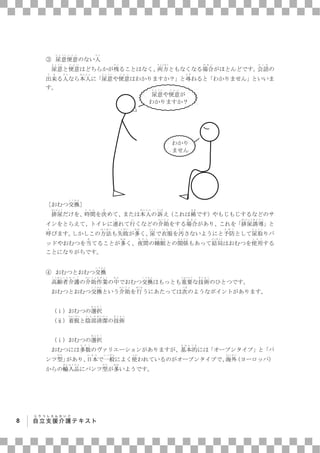
③ 尿意
に ょ う い
便意
べ ん い
のない人
ひ と
尿意
に ょ う い
と便意
べ ん い
はどちらかが残
の こ
ることはなく、両方
りょうほう
ともなくなる場合
ば あ い
がほとんどです。会話
か い わ
の
出来
で き
る人
ひ と
なら本人
ほ ん に ん
に「尿意
に ょ う い
や便意
べ ん い
はわかりますか?」と尋
た ず
ねると「わかりません」といいま
す。
[おむつ交換
こ う か ん
]
排尿
はいにょう
だけを、時間
じ か ん
を決
き
めて、または本人
ほ ん に ん
の訴
うった
え(これは稀
ま れ
です)やもじもじするなどのサ
インをとらえて、トイレに連
つ
れて行
い
くなどの介助
か い じ ょ
をする場合
ば あ い
があり、これを「排尿
はいにょう
誘導
ゆ う ど う
」と
呼
よ
びます。しかしこの方法
ほ う ほ う
も失敗
し っ ぱ い
が多
お お
く、尿
にょう
で衣服
い ふ く
を汚
よ ご
さないようにと予防
よ ぼ う
として尿取
に ょ う と
りパ
ッドやおむつを当
あ
てることが多
お お
く、夜間
や か ん
の睡眠
す い み ん
との関係
か ん け い
もあって結局
けっきょく
はおむつを使用
し よ う
する
ことになりがちです。
④ おむつとおむつ交換
こ う か ん
高齢者
こ う れ い し ゃ
介護
か い ご
の介助
か い じ ょ
作業
さ ぎ ょ う
の中
な か
でおむつ交換
こ う か ん
はもっとも重要
じゅうよう
な技術
ぎ じ ゅ つ
のひとつです。
おむつとおむつ交換
こ う か ん
という介助
か い じ ょ
を行
おこな
うにあたっては次
つ ぎ
のようなポイントがあります。
(ⅰ)おむつの選択
せ ん た く
(ⅱ)着脱
ちゃくだつ
と陰部
い ん ぶ
清潔
せ い け つ
の技術
ぎ じ ゅ つ
(ⅰ)おむつの選択
せ ん た く
おむつには多数
た す う
のヴァリエーションがありますが、基本的
き ほ ん て き
には「オープンタイプ」と「パ
ンツ型
が た
」があり、日本
に ほ ん
で一般
い っ ぱ ん
によく使
つ か
われているのがオープンタイプで、海外
か い が い
(ヨーロッパ)
からの輸入品
ゆ に ゅ う ひ ん
にパンツ型
が た
が多
お お
いようです。
尿意
に ょ う い
や便意
べ ん い
が
わかりますか?
わかり
ません
自
じ り つ し え ん か い ご
立支援介護テキスト8
8
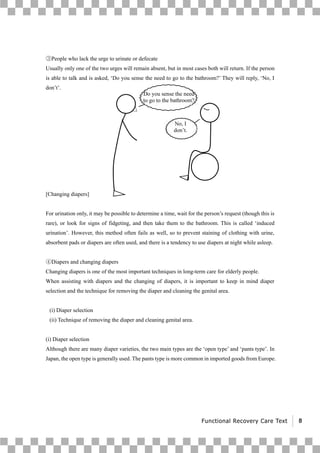
③People who lack the urge to urinate or defecate
Usually only one of the two urges will remain absent, but in most cases both will return. If the person
is able to talk and is asked, ‘Do you sense the need to go to the bathroom?’ They will reply, ‘No, I
don’t’.
[Changing diapers]
For urination only, it may be possible to determine a time, wait for the person’s request (though this is
rare), or look for signs of fidgeting, and then take them to the bathroom. This is called ‘induced
urination’. However, this method often fails as well, so to prevent staining of clothing with urine,
absorbent pads or diapers are often used, and there is a tendency to use diapers at night while asleep.
④Diapers and changing diapers
Changing diapers is one of the most important techniques in long-term care for elderly people.
When assisting with diapers and the changing of diapers, it is important to keep in mind diaper
selection and the technique for removing the diaper and cleaning the genital area.
(i) Diaper selection
(ii) Technique of removing the diaper and cleaning genital area.
(i) Diaper selection
Although there are many diaper varieties, the two main types are the ‘open type’ and ‘pants type’. In
Japan, the open type is generally used. The pants type is more common in imported goods from Europe.
Do you sense the need
to go to the bathroom?
No, I
don’t.
Functional Recovery Care Text 8
9
おむつ交換
こ う か ん
は、以下
い か
の手順
て じ ゅ ん
で行
おこな
います。
①おむつカバーを開
ひ ら
き、膝
ひ ざ
を立
た
て、縦
た て
おむつをは
ずして汚
よ ご
れをふきます。
②汚
よ ご
れをなかにしておむつを丸
ま る
めて側臥位
そ く が い
にし、
おむつをはずしておむつ入
い
れに入
い
れます。
③蒸
む
しタオルで軽
か る
くたたくように拭
ふ
いたあと、乾
か わ
いたタオルで拭
ふ
きます。その際
さ い
、皮膚
ひ ふ
の状態
じょうたい
を
観察
か ん さ つ
します。
④汚
よ ご
れたおむつカバーを押
お
すようにして、セット
したおむつを向
む
こう側半分
が わ は ん ぶ ん
を縦
た て
に丸
ま る
めて、臀部
で ん ぶ
の
下
し た
に差
さ
し込
こ
みます。
⑤側臥位
そ く が い
にして、おむつのセットをきちんと広
ひ ろ
げ
て当
あ
てます。
恥骨
ち こ つ
の上
う え
で折
お
り返
か え
すとよい。
きつすぎず、また、おむつ
がはみ出
だ
さないようにお
むつカバーをします。
注
ちゅう
:交換
こ う か ん
が終
お
わったら寝
ね
まきやシーツのしわをよくのばしておきます。
引用
いんよう
:一般
いっぱん
社団
しゃだん
法人
ほうじん
長 寿
ちょうじゅ
社会
しゃかい
開発
かいはつ
センター「介護
か い ご
職 員
しょくいん
基礎
き そ
研 修
けんしゅう
テキスト第
だい
5巻
かん
コミュニケーションの技法
ぎ ほ う
と介護
か い ご
技術
ぎじゅつ
」
平成 23 年 9 月 P148
自
じ り つ し え ん か い ご
立支援介護テキスト9
9
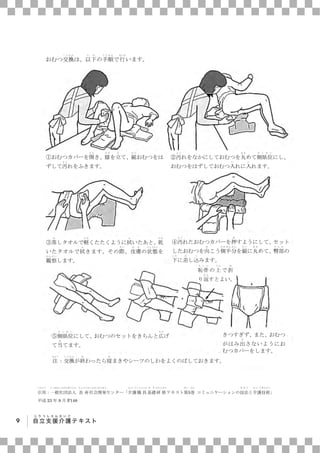
When changing diapers, follow the procedure below.
Source: Foundation of Social Development for Senior Citizens (2011), ‘Long-term Care Basic Training
Text Volume 5: Techniques of Communication and Long-term Care’. Place of publication: name of
publisher. p148
①Open the diaper cover, lift the knees, remove the
vertical diaper, and wipe the refuse.
②Leave the refuse in the diaper and roll it up. Roll the
person so he is lying on his side, remove the diaper, and
put it in a diaper case.
③Wipe gently with a hot, moist towel and dry with a
dry towel. At the same time, observe the condition of
the skin.
④Arrange the cover of the dirty diaper so it can be
pushed. Vertically roll up the far half of the new diaper
and inset it under the buttocks.
⑤Position the person so he is lying on his back, spread
the diaper set completely and apply it.
It is best to fold
it back onto the
pubic bone.
Cover the diapers without
making them too tight or
allowing some of the diaper
to protrude.
Note: When finished changing the diaper, any wrinkles on the nightgown or sheets should be
smoothed out.
Functional Recovery Care Text 9
10
3. 入浴
にゅうよく
の介助
か い じ ょ
日本
に ほ ん
では浴槽
よ く そ う
に体
からだ
を浸
ひ た
す入浴
にゅうよく
が伝統
で ん と う
となっていて、要介護
よ う か い ご
高齢者
こ う れ い し ゃ
であっても、この方式
ほ う し き
の
入浴
にゅうよく
が健康上
けんこうじょう
の危険
き け ん
をともなわないかぎり実行
じ っ こ う
されます。このことはまた転倒
て ん と う
や水没
す い ぼ つ
など
の新
あ ら
たな危険
き け ん
を生
しょう
じることになり、入浴
にゅうよく
の介助
か い じ ょ
とは安全性
あ ん ぜ ん せ い
をめぐる闘
たたか
いであるといえます。
入浴
にゅうよく
の介助
か い じ ょ
にあたっては浴室内
よ く し つ な い
の課口授
か こ う じ ゅ
の各種
か く し ゅ
のてすり、渡
わ た
し板
い た
、浴槽内
よ く そ う な い
のすべり止
ど
めマッ
トなどをフルに活用
か つ よ う
することが大切
た い せ つ
です。
身体
し ん た い
状態
じょうたい
に応
お う
じて
手
て
すりをつける
浴室用
よ く し つ よ う
のいすは浴槽
よ く そ う
と
同
お な
じ高
た か
さのもの
吸盤
きゅうばん
で固定
こ て い
する
滑
す べ
り止
ど
めマット
石
せ っ
けんやシャンプーなど
の小物類
こ も の る い
は床
ゆ か
に転
こ ろ
がして
おくと危険
き け ん
約
やく
40cm
渡
わ た
し板
い た
引用
いんよう
:一般
いっぱん
社団
しゃだん
法人
ほうじん
長 寿
ちょうじゅ
社会
しゃかい
開発
かいはつ
センター「介護
か い ご
職 員
しょくいん
基礎
き そ
研 修
けんしゅう
テキスト第
だい
5巻
かん
コミュニケーションの技法
ぎ ほ う
と介護
か い ご
技術
ぎじゅつ
」
平成 23 年 9 月 P150
自
じ り つ し え ん か い ご
立支援介護テキスト10
10
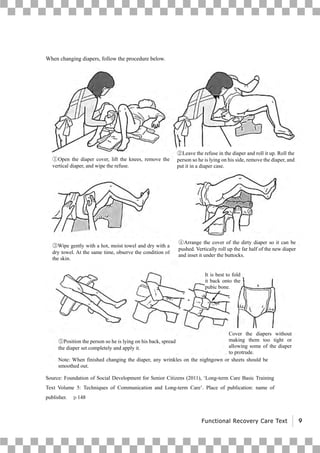
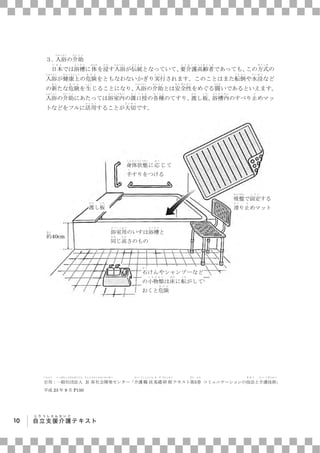
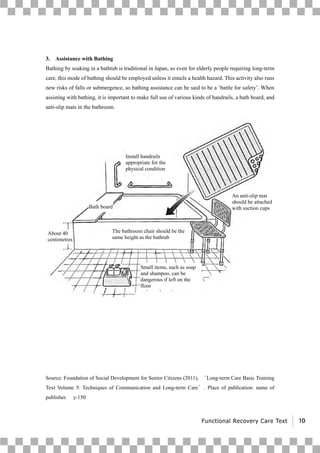
3. Assistance with Bathing
Bathing by soaking in a bathtub is traditional in Japan, so even for elderly people requiring long-term
care, this mode of bathing should be employed unless it entails a health hazard. This activity also runs
new risks of falls or submergence, so bathing assistance can be said to be a ‘battle for safety’. When
assisting with bathing, it is important to make full use of various kinds of handrails, a bath board, and
anti-slip mats in the bathroom.
Source: Foundation of Social Development for Senior Citizens (2011), ‘Long-term Care Basic Training
Text Volume 5: Techniques of Communication and Long-term Care’. Place of publication: name of
publisher. p150
Install handrails
appropriate for the
physical condition
Bath board
An anti-slip mat
should be attached
with suction cups
The bathroom chair should be the
same height as the bathtub
About 40
centimetres
Small items, such as soap
and shampoo, can be
dangerous if left on the
floor
Functional Recovery Care Text 10
11
1)歩
あ る
ける人
ひ と
の介助
か い じ ょ
片
か た
マヒ(脳卒中
のうそっちゅう
による半身
は ん し ん
マヒ)の例
れ い
で介助
か い じ ょ
方法
ほ う ほ う
を学
ま な
びます。
まず片足
か た あ し
(必
かなら
ずマヒ側
が わ
の足
あ し
を先
さ き
に)を浴槽
よ く そ う
に
入
い
れますが、立
た
ったままで行
おこな
うとバランスを
くずして危険
き け ん
なので、浴槽
よ く そ う
の縁
へ り
に腰
こ し
かけ入
い
れ
る。次
つ ぎ
に反対
は ん た い
の足
あ し
を入
い
れる。
そこでいったん渡
わ た
し板
い た
に腰
こ し
かける。
次
つ ぎ
に渡
わ た
し板
い た
の上
う え
を前方
ぜ ん ぽ う
に滑
す べ
らせ、体
からだ
を浴槽
よ く そ う
に
入
い
れる。
浴槽
よ く そ う
を出
で
るときにはこれらの動
う ご
きを逆
ぎゃく
に行
おこな
っ
ていくとよい。
片
か た
マヒのない高齢者
こ う れ い し ゃ
もこの方法
ほ う ほ う
で入浴
にゅうよく
すると
よいでしょう。
浴槽
よ く そ う
に 入
は い
り ま す
(出
で
るときもこ
の 姿勢
し せ い
で 健側
け ん そ く
か
ら出
で
ます)。
引用
いんよう
:一般
いっぱん
社団
しゃだん
法人
ほうじん
長 寿
ちょうじゅ
社会
しゃかい
開発
かいはつ
センター「介護
か い ご
職 員
しょくいん
基礎
き そ
研 修
けんしゅう
テキスト第
だい
5巻
かん
コミュニケーションの技法
ぎ ほ う
と介護
か い ご
技術
ぎじゅつ
」
平成 23 年 9 月 P156~157
自
じ り つ し え ん か い ご
立支援介護テキスト11
11
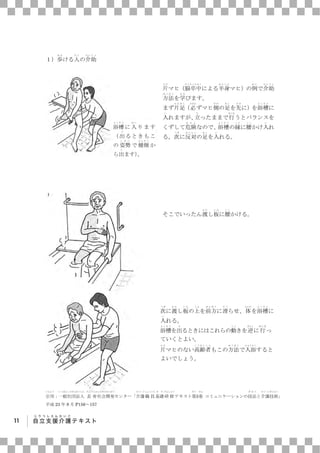
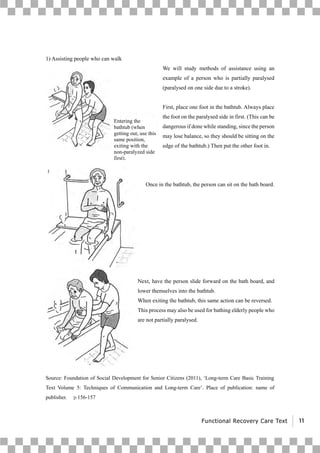
1) Assisting people who can walk
We will study methods of assistance using an
example of a person who is partially paralysed
(paralysed on one side due to a stroke).
First, place one foot in the bathtub. Always place
the foot on the paralysed side in first. (This can be
dangerous if done while standing, since the person
may lose balance, so they should be sitting on the
edge of the bathtub.) Then put the other foot in.
Once in the bathtub, the person can sit on the bath board.
Next, have the person slide forward on the bath board, and
lower themselves into the bathtub.
When exiting the bathtub, this same action can be reversed.
This process may also be used for bathing elderly people who
are not partially paralysed.
Source: Foundation of Social Development for Senior Citizens (2011), ‘Long-term Care Basic Training
Text Volume 5: Techniques of Communication and Long-term Care’. Place of publication: name of
publisher. p156-157
Entering the
bathtub (when
getting out, use this
same position,
exiting with the
non-paralyzed side
first).
Functional Recovery Care Text 11
12
2)歩
あ る
けない人
ひ と
、歩
あ る
いても非常
ひ じ ょ う
にバランスの悪
わ る
い人
ひ と
の入浴
にゅうよく
こういう人
ひ と
びとには、さまざまな機能
き の う
をもった浴槽
よ く そ う
(特殊
と く し ゅ
浴槽
よ く そ う
)を使
つ か
うとよいでしょう。
座
す わ
ったままで入浴
にゅうよく
する装置
そ う ち
寝
ね
たままで入浴
にゅうよく
する装置
そ う ち
一般的
い っ ぱ ん て き
な浴槽
よ く そ う
へ出入
で い
りする装置
そ う ち
自
じ り つ し え ん か い ご
立支援介護テキスト12
12
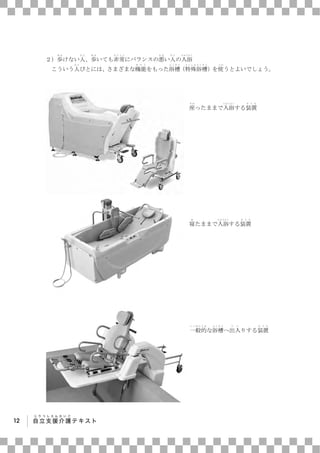
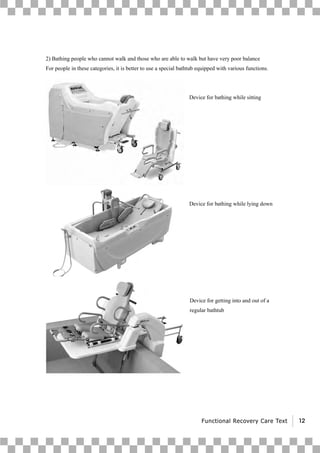
2) Bathing people who cannot walk and those who are able to walk but have very poor balance
For people in these categories, it is better to use a special bathtub equipped with various functions.
Device for bathing while sitting
Device for bathing while lying down
Device for getting into and out of a
regular bathtub
Functional Recovery Care Text 12
13
4. 移動
い ど う
の介助
か い じ ょ
1)車椅子
く る ま い す
移動
い ど う
の介助
か い じ ょ
車椅子
く る ま い す
は歩
あ る
けない人
ひ と
や歩行
ほ こ う
能力
のうりょく
のごく弱
よ わ
い人
ひ と
の移動
い ど う
手段
し ゅ だ ん
として広
ひ ろ
く利用
り よ う
されます。
車椅子
く る ま い す
をどのように使
つ か
えるかによって次
つ ぎ
のように分
わ
けられます。
A:ベッド ⇔ 車椅子
く る ま い す
の乗
の
り移
う つ
り(移乗
い じ ょ う
)が「自力
じ り き
」「一部
い ち ぶ
介助
か い じ ょ
」「全介助
ぜ ん か い じ ょ
」
B:車椅子
く る ま い す
に乗
の
ってそれを進
す す
めること(推進
す い し ん
または操作
そ う さ
)が「自力
じ り き
」「一部
い ち ぶ
介助
か い じ ょ
」「全介助
ぜ ん か い じ ょ
」
上記
じ ょ う き
の A と B の組
く
み合
あ
わせでその人
ひ と
の車椅子
く る ま い す
使用
し よ う
の状態
じょうたい
が表現
ひょうげん
されます。
例
れ い
:移乗
い じ ょ う
は一部
い ち ぶ
介助
か い じ ょ
で推進
す い し ん
は自力
じ り き
自
じ り つ し え ん か い ご
立支援介護テキスト13
バックサポート
(背
せ
もたれ)
リム
(車
しゃりん
輪)
ひ じ あ
ぜんりん
ざ せ き
13
4. Assisting with Movement
1) Assisting wheelchair movement
Wheelchairs are widely used as a means of transporting people who are unable to walk and those
whose walking ability is extremely limited. Wheelchair use can be classified as follows based on how
the wheelchair is used.
A: Transfer. Transfer (movement) between bed and wheelchair may be self-reliant, partially assisted,
or fully assisted.
B: Movement. Once seated in the wheelchair, propelling or manipulating it may be self-reliant,
partially assisted, or fully assisted.
The combination of A and B expresses the state of a person's wheelchair use.
Example: Transfer is partially assisted, movement is self-reliant
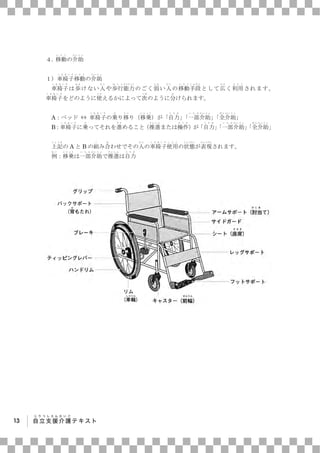
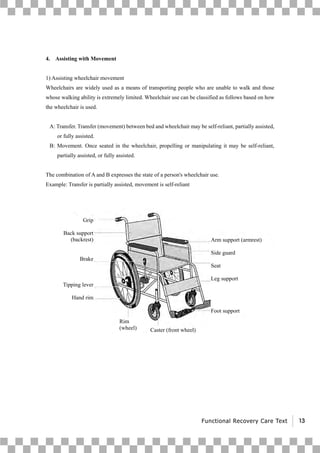
Grip
Back support
(backrest)
Brake
Tipping lever
Hand rim
Arm support (armrest)
Side guard
Seat
Leg support
Foot support
Rim
(wheel) Caster (front wheel)
Functional Recovery Care Text 13
14
ベッドから車椅子
く る ま い す
へ(移乗
い じ ょ う
自立例
じ り つ れ い
)
車椅子
く る ま い す
の位置
い ち
が大切
た い せ つ
です。
① 車
くるま
いすはベッドと約
や く
20°の角度
か く ど
になるよう
健側
け ん そ く
に置
お
き、ブレーキをかけ、フットレストを
上
あ
げておきます。ベッドの端
は し
に座
す わ
ります。
② 健側
け ん そ く
の手
て
をベッドについて立
た
ち上
あ
がります。
③ 健手
け ん し ゅ
で車
くるま
いすの遠位
え ん い
のアームレストをつかみ、
健足
け ん そ く
を一歩
い っ ぽ
踏
ふ
み出
だ
して、それを軸
じ く
にして腰
こ し
を回
ま わ
し
車
くるま
いすに移動
い ど う
します。
④ 車
くるま
いすに腰
こ し
を下
お
ろします。
引用
いんよう
:一般
いっぱん
社団
しゃだん
法人
ほうじん
長 寿
ちょうじゅ
社会
しゃかい
開発
かいはつ
センター「介護
か い ご
職 員
しょくいん
基礎
き そ
研 修
けんしゅう
テキスト第
だい
5巻
かん
コミュニケーションの技法
ぎ ほ う
と介護
か い ご
技術
ぎじゅつ
」
平成 23 年 9 月 P209
自
じ り つ し え ん か い ご
立支援介護テキスト14
14
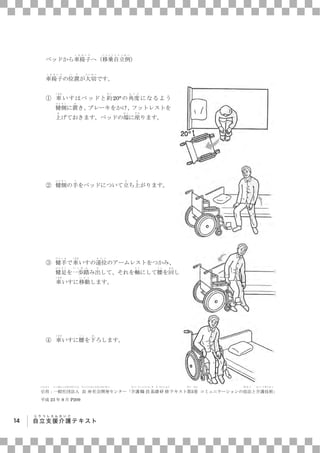
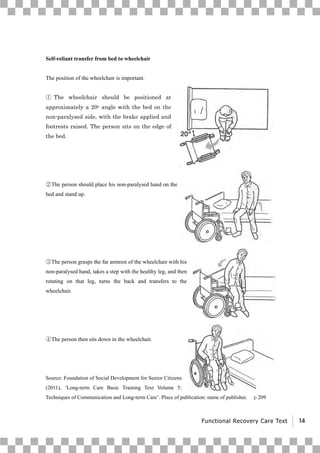
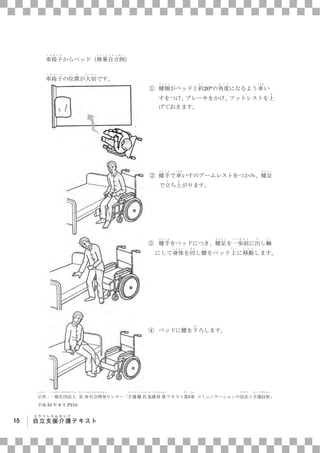
Self-reliant transfer from bed to wheelchair
The position of the wheelchair is important.
① The wheelchair should be positioned at
approximately a 20o angle with the bed on the
non-paralysed side, with the brake applied and
footrests raised. The person sits on the edge of
the bed.
②The person should place his non-paralysed hand on the
bed and stand up.
③The person grasps the far armrest of the wheelchair with his
non-paralysed hand, takes a step with the healthy leg, and then
rotating on that leg, turns the back and transfers to the
wheelchair.
④The person then sits down in the wheelchair.
Source: Foundation of Social Development for Senior Citizens
(2011), ‘Long-term Care Basic Training Text Volume 5:
Techniques of Communication and Long-term Care’. Place of publication: name of publisher. p209
Functional Recovery Care Text 14
15
車椅子
く る ま い す
からベッド(移乗
い じ ょ う
自立例
じ り つ れ い
)
車椅子
く る ま い す
の位置
い ち
が大切
た い せ つ
です。
① 健側
け ん そ く
がベッドと約
や く
20°の角度
か く ど
になるよう車
くるま
い
すをつけ、ブレーキをかけ、フットレストを上
あ
げておきます。
② 健手
け ん し ゅ
で車
くるま
いすのアームレストをつかみ、健足
け ん そ く
で立
た
ち上
あ
がります。
③ 健手
け ん し ゅ
をベッドにつき、健足
け ん そ く
を一歩前
い っ ぽ ま え
に出
だ
し軸
じ く
にして身体
し ん た い
を回
ま わ
し腰
こ し
をベッド上
じょう
に移動
い ど う
します。
④ ベッドに腰
こ し
を下
お
ろします。
引用
いんよう
:一般
いっぱん
社団
しゃだん
法人
ほうじん
長 寿
ちょうじゅ
社会
しゃかい
開発
かいはつ
センター「介護
か い ご
職 員
しょくいん
基礎
き そ
研 修
けんしゅう
テキスト第
だい
5巻
かん
コミュニケーションの技法
ぎ ほ う
と介護
か い ご
技術
ぎじゅつ
」
平成 23 年 9 月 P210
自
じ り つ し え ん か い ご
立支援介護テキスト15
15
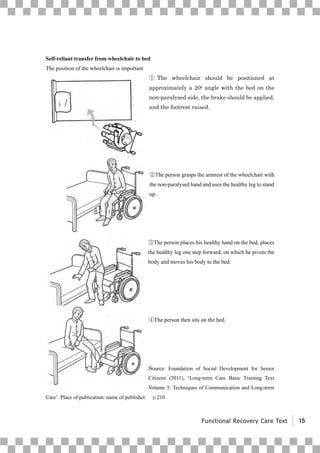
Self-reliant transfer from wheelchair to bed
The position of the wheelchair is important
① The wheelchair should be positioned at
approximately a 20o angle with the bed on the
non-paralysed side, the brake should be applied,
and the footrest raised.
②The person grasps the armrest of the wheelchair with
the non-paralysed hand and uses the healthy leg to stand
up.
③The person places his healthy hand on the bed, places
the healthy leg one step forward, on which he pivots the
body and moves his body to the bed.
④The person then sits on the bed.
Source: Foundation of Social Development for Senior
Citizens (2011), ‘Long-term Care Basic Training Text
Volume 5: Techniques of Communication and Long-term
Care’. Place of publication: name of publisher. p210
Functional Recovery Care Text 15
16
ベッドから車椅子
く る ま い す
(移乗
い じ ょ う
介助例
か い じ ょ れ い
)
① ベッドに対
た い
し約
や く
30°の角度
か く ど
で健測
け ん そ く
に車
くるま
いすを置
お
きます。
ブレーキをかけ、レッグレストをはずしフットレスト
は上
あ
げます。ベッドの端
は し
に浅
あ さ
く腰掛
こ し か
けます。
② 腰
こ し
ベルトをつかみ、上半身
じょうはんしん
を介護者
か い ご し ゃ
の上半身
じょうはんしん
で
支
さ さ
えるようにして腰
こ し
を引
ひ
き上
あ
げます。このと
き、膝折
ひ ざ お
れ(ジャックナイフ折
お
れ)防止
ぼ う し
のため、
利用者
り よ う し ゃ
の膝
ひ ざ
を介護者
か い ご し ゃ
の膝
ひ ざ
で押
お
さえ立位
り つ い
姿勢
し せ い
を
保持
ほ じ
します。健足
け ん そ く
は自由
じ ゆ う
にしておきます。
③ 利用者
り よ う し ゃ
は健手
け ん し ゅ
で車
くるま
いすのアームレストにつかまり、
立
た
ち上
あ
がっている健足
け ん そ く
を軸
じ く
にして身体
し ん た い
を回転
か い て ん
します。
④ 利用者
り よ う し ゃ
の膝
ひ ざ
をつけたまま静
し ず
かに車
くるま
いすに下
お
ろし
ます。健側
け ん そ く
の手足
て あ し
は十分
じゅうぶん
使
つ か
うよう助言
じ ょ げ ん
します。
引用
いんよう
:一般
いっぱん
社団
しゃだん
法人
ほうじん
長 寿
ちょうじゅ
社会
しゃかい
開発
かいはつ
センター「介護
か い ご
職 員
しょくいん
基礎
き そ
研 修
けんしゅう
テキスト第
だい
5巻
かん
コミュニケーションの技法
ぎ ほ う
と介護
か い ご
技術
ぎじゅつ
」
平成 23 年 9 月 P214
自
じ り つ し え ん か い ご
立支援介護テキスト16
16
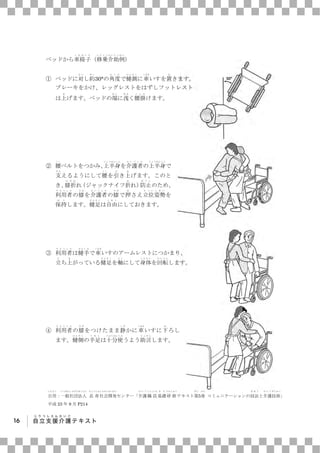
Assisted transfer from bed to wheelchair
①Place the wheelchair on the non-paralysed side at a 30o
angle
with the bed. Apply the brake, remove the leg rests, and raise the
footrests. Have the person sit on the edge of the bed.
②Grasp the waist belt and lift the waist of the person to
support the upper half of the person’s body on the upper
half of the caregiver’s body. At this time, to prevent the
person’s knees from buckling (folding like a jackknife),
the caregiver’s knees should be pressed against the
person’s knees to maintain a standing position. The non-
paralysed leg should be allowed to be free.
③The person grasps the armrest of the wheelchair with
his non-paralysed hand and pivots the healthy leg he is standing on to turn
his body.
④While keeping the caregiver’s knees to contact with the
person’s knees, gently lower the person into the wheelchair.
Encourage him to use make full use of his healthy hand and
leg.
Source: Foundation of Social Development for Senior
Citizens (2011), ‘Long-term Care Basic Training Text
Volume 5: Techniques of Communication and Long-term
Care’. Place of publication: name of publisher. p214
Functional Recovery Care Text 16
17
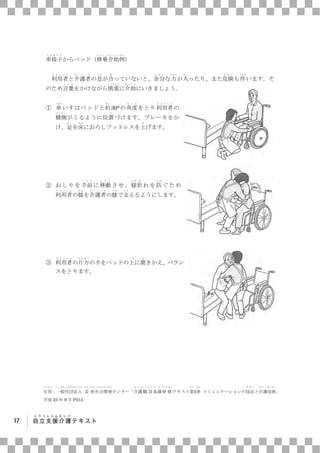
車椅子
く る ま い す
からベッド(移乗
い じ ょ う
介助例
か い じ ょ れ い
)
利用者
り よ う し ゃ
と介護者
か い ご し ゃ
の息
い き
が合
あ
っていないと、余分
よ ぶ ん
な力
ちから
が入
は い
ったり、また危険
き け ん
も伴
ともな
います。そ
のため言葉
こ と ば
をかけながら慎重
しんちょう
に介助
か い じ ょ
にいきましょう。
① 車
くるま
いすはベッドと約
や く
30°の角度
か く ど
をとり利用者
り よ う し ゃ
の
健側
け ん そ く
がくるように位置
い ち
づけます。ブレーキをか
け、足
あ し
を床
ゆ か
におろしフットレスを上
あ
げます。
② おしりを手前
て ま え
に移動
い ど う
させ、膝
ひ ざ
折
お
れを防
ふ せ
ぐため
利用者
り よ う し ゃ
の膝
ひ ざ
を介護者
か い ご し ゃ
の膝
ひ ざ
で支
さ さ
えるようにします。
③ 利用者
り よ う し ゃ
の片方
か た ほ う
の手
て
をベッドの上
う え
に置
お
きかえ、バラン
スをとります。
引用
いんよう
:一般
いっぱん
社団
しゃだん
法人
ほうじん
長 寿
ちょうじゅ
社会
しゃかい
開発
かいはつ
センター「介護
か い ご
職 員
しょくいん
基礎
き そ
研 修
けんしゅう
テキスト第
だい
5巻
かん
コミュニケーションの技法
ぎ ほ う
と介護
か い ご
技術
ぎじゅつ
」
平成 23 年 9 月 P215
自
じ り つ し え ん か い ご
立支援介護テキスト17
17
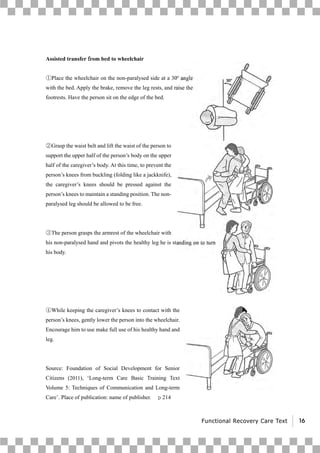
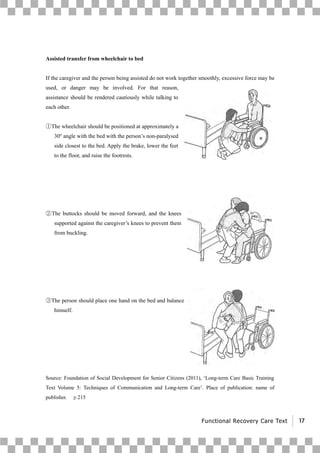
Assisted transfer from wheelchair to bed
If the caregiver and the person being assisted do not work together smoothly, excessive force may be
used, or danger may be involved. For that reason,
assistance should be rendered cautiously while talking to
each other.
①The wheelchair should be positioned at approximately a
30o
angle with the bed with the person’s non-paralysed
side closest to the bed. Apply the brake, lower the feet
to the floor, and raise the footrests.
②The buttocks should be moved forward, and the knees
supported against the caregiver’s knees to prevent them
from buckling.
③The person should place one hand on the bed and balance
himself.
Source: Foundation of Social Development for Senior Citizens (2011), ‘Long-term Care Basic Training
Text Volume 5: Techniques of Communication and Long-term Care’. Place of publication: name of
publisher. p215
Functional Recovery Care Text 17
18
車椅子
く る ま い す
推進
す い し ん
自立例
じ り つ れ い
脳
の う
卒中片
そっちゅうかた
マヒの方
か た
では片手
か た て
片足
か た あ し
で動
う ご
かします。
<車椅子
く る ま い す
利用者
り よ う し ゃ
に対
た い
する注意
ち ゅ う い
>
ブレーキをかけることを忘
わ す
れないようにしてください。
車椅子
く る ま い す
への、また車椅子
く る ま い す
からの乗
の
り降
お
り(移乗
い じ ょ う
)の際
さ い
に車椅子
く る ま い す
が動
う ご
いて転倒
て ん と う
事故
じ こ
につなが
ります。“止
と
まったらブレーキ!”と思
お も
って下
く だ
さい。
2)歩行器
ほ こ う き
(歩行車
ほ こ う し ゃ
)と杖
つ え
を使
つ か
った移動
い ど う
歩行器
ほ こ う き
や杖
つ え
を使
つ か
って移動
い ど う
できるようになると生活
せ い か つ
空間
く う か ん
が大
お お
きく広
ひ ろ
がるようになります。
◆杖
つ え
の種類
し ゅ る い
◆
引用
いんよう
:一般
いっぱん
社団
しゃだん
法人
ほうじん
長 寿
ちょうじゅ
社会
しゃかい
開発
かいはつ
センター「介護
か い ご
職 員
しょくいん
基礎
き そ
研 修
けんしゅう
テキスト第
だい
5巻
かん
コミュニケーションの技法
ぎ ほ う
と介護
か い ご
技術
ぎじゅつ
」
平成 23 年 9 月 P237
①T字杖
じ つ え
②ロフストランド杖
つ え
③四脚杖
よ ん あ し つ え
自
じ り つ し え ん か い ご
立支援介護テキスト18
ど
18
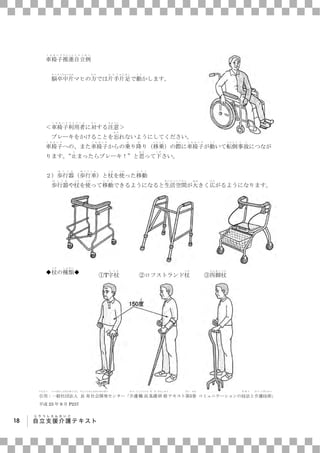
Example of self-reliant wheelchair movement
People who are paralysed on one side due to a stroke can move
using one hand and one leg.
<Warnings for wheelchair users>
Do not forget to apply the brake. When getting into and out of the
wheelchair, the wheelchair may move, causing fall accidents.
Think, ‘When stopped, put the brake on!’
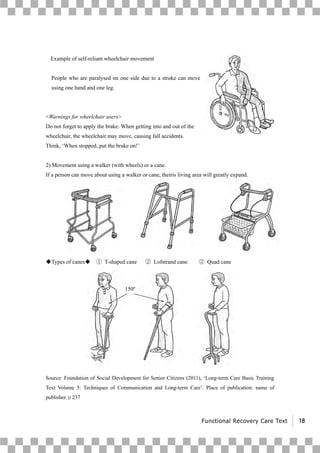
2) Movement using a walker (with wheels) or a cane.
If a person can move about using a walker or cane, theiris living area will greatly expand.
◆Types of canes◆ ① T-shaped cane ② Lofstrand cane ③ Quad cane
Source: Foundation of Social Development for Senior Citizens (2011), ‘Long-term Care Basic Training
Text Volume 5: Techniques of Communication and Long-term Care’. Place of publication: name of
publisher.p237
150o
Functional Recovery Care Text 18
19
自立
じ り つ
支援
し え ん
介護
か い ご
自
じ り つ し え ん か い ご
立支援介護テキスト19
19
Functional Recovery Care
Functional Recovery Care Text 19
20
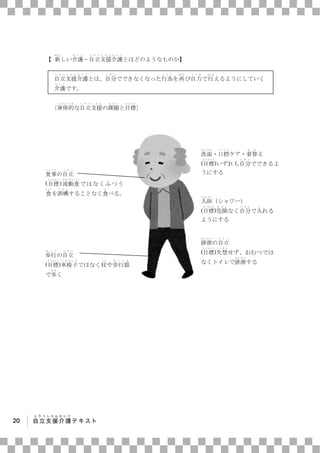
【 新
あたら
しい介護
か い ご
-自立
じ り つ
支援
し え ん
介護
か い ご
とはどのようなものか】
自立
じ り つ
支援
し え ん
介護
か い ご
とは、自分
じ ぶ ん
でできなくなった行為
こ う い
を再
ふたた
び自力
じ り き
で行
おこな
えるようにしていく
介護
か い ご
です。
〔身体的
し ん た い て き
な自立
じ り つ
支援
し え ん
の課題
か だ い
と目標
もくひょう
〕
食事
し ょ く じ
の自立
じ り つ
(目標
もくひょう
)流動食
りゅうどうしょく
ではなくふつう
食
しょく
を誤嚥
ご え ん
することなく食
た
べる。
洗面
せ ん め ん
・口腔
こ う く う
ケア・着替
き が
え
(目標
もくひょう
)いずれも自分
じ ぶ ん
でできるよ
うにする
排泄
は い せ つ
の自立
じ り つ
(目標
もくひょう
)失禁
し っ き ん
せず、おむつでは
なくトイレで排泄
は い せ つ
する
入浴
にゅうよく
(シャワー)
(目標
もくひょう
)危険
き け ん
なく自分
じ ぶ ん
で入
い
れる
ようにする
歩行
ほ こ う
の自立
じ り つ
(目標
もくひょう
)車椅子
く る ま い す
ではなく杖
つ え
や歩行器
ほ こ う き
で歩
あ る
く
自
じ り つ し え ん か い ご
立支援介護テキスト20
20
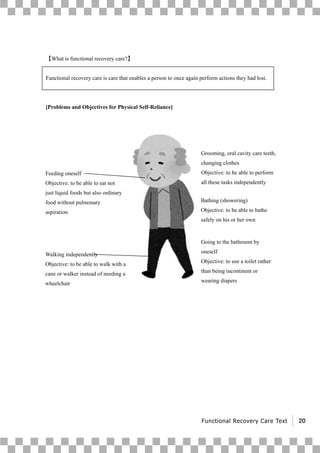
【What is functional recovery care?】
Functional recovery care is care that enables a person to once again perform actions they had lost.
[Problems and Objectives for Physical Self-Reliance]
Bathing (showering)
Objective: to be able to bathe
safely on his or her own
Walking independently
Objective: to be able to walk with a
cane or walker instead of needing a
wheelchair
Feeding oneself
Objective: to be able to eat not
just liquid foods but also ordinary
food without pulmonary
aspiration
Grooming, oral cavity care teeth,
changing clothes
Objective: to be able to perform
all these tasks independently
Going to the bathroom by
oneself
Objective: to use a toilet rather
than being incontinent or
wearing diapers
Functional Recovery Care Text 20
21
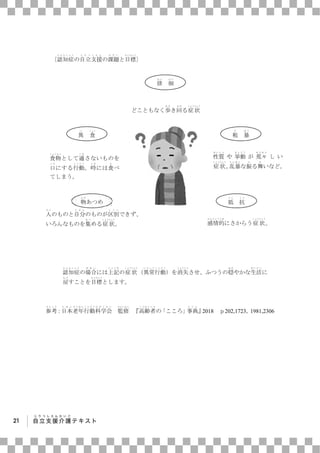
〔認知症
に ん ち し ょ う
の自立
じ り つ
支援
し え ん
の課題
か だ い
と目標
もくひょう
〕
人
ひ と
のものと自分
じ ぶ ん
のものが区別
く べ つ
できず、
いろんなものを集
あ つ
める症状
しょうじょう
。
認知症
に ん ち し ょ う
の場合
ば あ い
には上記
じ ょ う き
の症状
しょうじょう
(異常
い じ ょ う
行動
こ う ど う
)を消失
しょうしつ
させ、ふつうの穏
お だ
やかな生活
せ い か つ
に
戻
も ど
すことを目標
もくひょう
とします。
参考
さ ん こ う
:日本
に ほ ん
老年
ろ う ね ん
行動
こ う ど う
科学会
か が く か い
監修
かんしゅう
『高齢者
こ う れ い し ゃ
の「こころ」事典
じ て ん
』2018 p202,1723,1981,2306
異
い
食
しょく
抵
て い
抗
こ う
徘
は い
徊
か い
粗
そ
暴
ぼ う
物
も の
あつめ
どこともなく歩
あ る
き回
ま わ
る症状
しょうじょう
食物
しょくもつ
として適
て き
さないものを
口
く ち
にする行動
こ う ど う
。時
と き
には食
た
べ
てしまう。
性質
せ い し つ
や 挙動
き ょ ど う
が 荒々
あ ら あ ら
し い
症状
しょうじょう
。乱暴
ら ん ぼ う
な振
ふ
る舞
ま
いなど。
感情的
かんじょうてき
にさからう症状
しょうじょう
。
自
じ り つ し え ん か い ご
立支援介護テキスト21
21
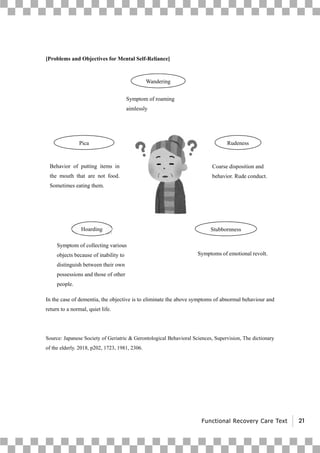
[Problems and Objectives for Mental Self-Reliance]
In the case of dementia, the objective is to eliminate the above symptoms of abnormal behaviour and
return to a normal, quiet life.
Source: Japanese Society of Geriatric & Gerontological Behavioral Sciences, Supervision, The dictionary
of the elderly. 2018, p202, 1723, 1981, 2306.
Pica
Stubbornness
Wandering
Rudeness
Hoarding
Symptom of roaming
aimlessly
Behavior of putting items in
the mouth that are not food.
Sometimes eating them.
Coarse disposition and
behavior. Rude conduct.
Symptom of collecting various
objects because of inability to
distinguish between their own
possessions and those of other
people.
Symptoms of emotional revolt.
Functional Recovery Care Text 21
22
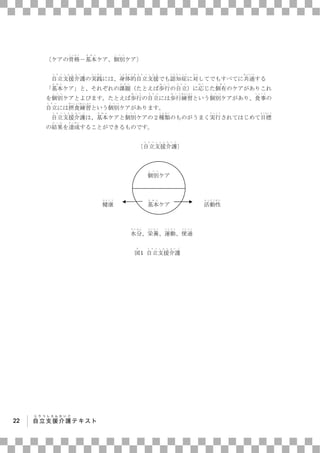
〔ケアの骨格
こ っ か く
-基本
き ほ ん
ケア、個別
こ べ つ
ケア〕
自立
じ り つ
支援
し え ん
介護
か い ご
の実践
じ っ せ ん
には、身体的
し ん た い て き
自立
じ り つ
支援
し え ん
でも認知症
に ん ち し ょ う
に対
た い
してでもすべてに共通
きょうつう
する
「基本
き ほ ん
ケア」と、それぞれの課題
か だ い
(たとえば歩行
ほ こ う
の自立
じ り つ
)に応
お う
じた個有
こ ゆ う
のケアがありこれ
を個別
こ べ つ
ケアとよびます。たとえば歩行
ほ こ う
の自立
じ り つ
には歩行
ほ こ う
練習
れんしゅう
という個別
こ べ つ
ケアがあり、食事
し ょ く じ
の
自立
じ り つ
には摂食
せっしょく
練習
れんしゅう
という個別
こ べ つ
ケアがあります。
自立
じ り つ
支援
し え ん
介護
か い ご
は、基本
き ほ ん
ケアと個別
こ べ つ
ケアの2種類
し ゅ る い
のものがうまく実行
じ っ こ う
されてはじめて目標
もくひょう
の結果
け っ か
を達成
た っ せ い
することができるものです。
〔自立
じ り つ
支援
し え ん
介護
か い ご
〕
個別
こ べ つ
ケア
健康
け ん こ う
基本
き ほ ん
ケア 活動性
か つ ど う せ い
水分
す い ぶ ん
、栄養
え い よ う
、運動
う ん ど う
、便通
べ ん つ う
図1 自立
じ り つ
支援
し え ん
介護
か い ご
自
じ り つ し え ん か い ご
立支援介護テキスト22
ず
22
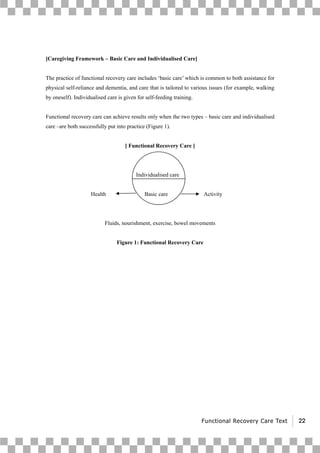
[Caregiving Framework – Basic Care and Individualised Care]
The practice of functional recovery care includes ‘basic care’ which is common to both assistance for
physical self-reliance and dementia, and care that is tailored to various issues (for example, walking
by oneself). Individualised care is given for self-feeding training.
Functional recovery care can achieve results only when the two types – basic care and individualised
care –are both successfully put into practice (Figure 1).
[ Functional Recovery Care ]
Individualised care
Health Basic care Activity
Fluids, nourishment, exercise, bowel movements
Figure 1: Functional Recovery Care
Functional Recovery Care Text 22
23
〔4つの基本
き ほ ん
ケア〕―「水分
す い ぶ ん
」「食事
し ょ く じ
(栄養
え い よ う
)」「運動
う ん ど う
」「排便
は い べ ん
」
4つの基本
き ほ ん
ケアとは次
つ ぎ
のものをいいます。
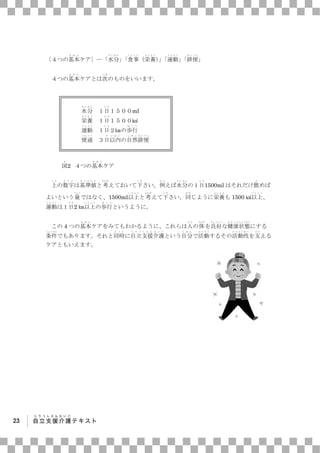
図2 4つの基本
き ほ ん
ケア
上
う え
の数字
す う じ
は基準値
き じ ゅ ん ち
と考
かんが
えておいて下
く だ
さい。例
た と
えば水分
す い ぶ ん
の1日
に ち
1500ml はそれだけ飲
の
めば
よいという量
りょう
ではなく、1500ml以上
い じ ょ う
と考
かんが
えて下
く だ
さい。同
お な
じように栄養
え い よ う
も 1500 ㎉以上
い じ ょ う
、
運動
う ん ど う
は1日
に ち
2 ㎞以上
い じ ょ う
の歩行
ほ こ う
というように。
この 4 つの基本
き ほ ん
ケアをみてもわかるように、これらは人
ひ と
の体
からだ
を良好
りょうこう
な健康
け ん こ う
状態
じょうたい
にする
条件
じょうけん
でもあります。それと同時
ど う じ
に自立
じ り つ
支援
し え ん
介護
か い ご
という自分
じ ぶ ん
で活動
か つ ど う
するその活動性
か つ ど う せ い
を支
さ さ
える
ケアともいえます。
水分
す い ぶ ん
1日
に ち
1500ml
栄養
え い よ う
1日
に ち
1500㎉
運動
う ん ど う
1日
に ち
2㎞の歩行
ほ こ う
便通
べ ん つ う
3日
か
以内
い な い
の自然
し ぜ ん
排便
は い べ ん
自
じ り つ し え ん か い ご
立支援介護テキスト23
ず
23
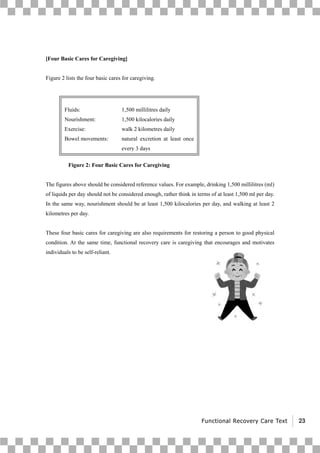
[Four Basic Cares for Caregiving]
Figure 2 lists the four basic cares for caregiving.
Figure 2: Four Basic Cares for Caregiving
The figures above should be considered reference values. For example, drinking 1,500 millilitres (ml)
of liquids per day should not be considered enough, rather think in terms of at least 1,500 ml per day.
In the same way, nourishment should be at least 1,500 kilocalories per day, and walking at least 2
kilometres per day.
These four basic cares for caregiving are also requirements for restoring a person to good physical
condition. At the same time, functional recovery care is caregiving that encourages and motivates
individuals to be self-reliant.
Fluids: 1,500 millilitres daily
Nourishment: 1,500 kilocalories daily
Exercise: walk 2 kilometres daily
Bowel movements: natural excretion at least once
every 3 days
Functional Recovery Care Text 23
24
Ⅰ. 水分
す い ぶ ん
基本
き ほ ん
ケアの中
な か
でももっとも大切
た い せ つ
なのが水分
す い ぶ ん
で、“高齢者
こ う れ い し ゃ
ケアは水
み ず
ではじまり水
み ず
で終
お
わ
る”といわれるほど大切
た い せ つ
なものです。それは“水
み ず
は生命
せ い め い
のもと”といわれているように、
あらゆる生命
せ い め い
現象
げんしょう
に水
み ず
が影響力
えいきょうりょく
をもっているからです。注意
ち ゅ う い
しなければならないのは
「水分
す い ぶ ん
欠乏
け つ ぼ う
」を起
お
こさせないことです。
体内
た い な い
の水分
す い ぶ ん
が欠乏
け つ ぼ う
していくとまず意識
い し き
レベルが低下
て い か
していきます(意識
い し き
障害
しょうがい
)。また体
からだ
の動
う ご
きが鈍
に ぶ
くなり転
こ ろ
びやすくなります。認知症
に ん ち し ょ う
の場合
ば あ い
には症状
しょうじょう
が現
あらわ
れたりひどくなりま
す。
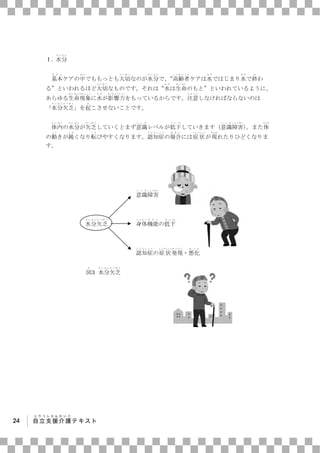
意識
い し き
障害
しょうがい
水分
す い ぶ ん
欠乏
け つ ぼ う
身体
し ん た い
機能
き の う
の低下
て い か
認知症
に ん ち し ょ う
の症状
しょうじょう
発現
は つ げ ん
・悪化
あ っ か
図3 水分
す い ぶ ん
欠乏
け つ ぼ う
自
じ り つ し え ん か い ご
立支援介護テキスト24
ず
24
I. Fluids
The most important aspect of basic care is fluid intake. This is so critical that it fair to say that caring
for elderly people begins and ends with water. As water is the basis of life, water affects every life
function. Care must be taken to ensure that a fluid deficiency does not occur.
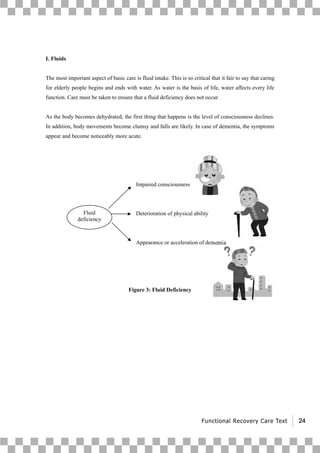
As the body becomes dehydrated, the first thing that happens is the level of consciousness declines.
In addition, body movements become clumsy and falls are likely. In case of dementia, the symptoms
appear and become noticeably more acute.
Impaired consciousness
Deterioration of physical ability
Appearance or acceleration of dementia
Figure 3: Fluid Deficiency
Fluid
deficiency
Functional Recovery Care Text 24
25
1. 水分
す い ぶ ん
の生理学
せ い り が く
1)体
からだ
の中
な か
の水分量
すいぶんりょう
体
からだ
の中
な か
には驚
おどろ
くほどの水分
す い ぶ ん
が存在
そ ん ざ い
しています。年代
ね ん だ い
によって全体量
ぜんたいりょう
(総水
そ う す い
分量
ぶんりょう
)が異
こ と
な
ってきますが、乳幼児
に ゅ う よ う じ
の場合
ば あ い
はなんと体重
たいじゅう
の 80%にも達
た っ
します。
図4 体
からだ
の中
な か
の水分量
すいぶんりょう
乳幼児
に ゅ う よ う じ
に多
お お
く年齢
ね ん れ い
が進
す す
むにつれて少
す く
なくなるというのは体内
た い な い
の新陳代謝
し ん ち ん た い し ゃ
と関係
か ん け い
します。
成長期
せ い ち ょ う き
にある乳幼児
に ゅ う よ う じ
は新陳代謝
し ん ち ん た い し ゃ
が激
は げ
しく、それを円滑
え ん か つ
に進
す す
めていくために大量
たいりょう
の水分
す い ぶ ん
を
必要
ひ つ よ う
とするというわけです。
2)どこに存在
そ ん ざ い
(分布
ぶ ん ぷ
)しているのか
水分
す い ぶ ん
は体
からだ
のすみずみにまで広
ひ ろ
がっていますが、細胞
さ い ぼ う
の中
な か
にある水分
す い ぶ ん
(細胞
さ い ぼ う
内水分
な い す い ぶ ん
)と細胞
さ い ぼ う
の外
そ と
にある水分
す い ぶ ん
(細胞外
さ い ぼ う が い
水分
す い ぶ ん
)とに分
わ
けられて
います。これはそれぞれの役割
や く わ り
が異
こ と
なるからです。
比率
ひ り つ
はたらき
細胞外
さ い ぼ う が い
水分
す い ぶ ん
1 細胞
さ い ぼ う
の快適
か い て き
環境
かんきょう
づくり
(血液
け つ え き
・組織間液
そ し き か ん え き
)
細胞
さ い ぼ う
内水分
な い す い ぶ ん
2 細胞内
さ い ぼ う な い
での代謝
た い し ゃ
に関与
か ん よ
図5 水分
す い ぶ ん
は体
からだ
のどこに存在
そ ん ざ い
(分布
ぶ ん ぷ
)しているのか
乳幼児
に ゅ う よ う じ
体重
たいじゅう
の 80%
成
せ い
人
じ ん
〃 60%
高齢者
こ う れ い し ゃ
〃 50%
自
じ り つ し え ん か い ご
立支援介護テキスト25
ず
ず
25
1. Physiology of Water
1) Water content in the body
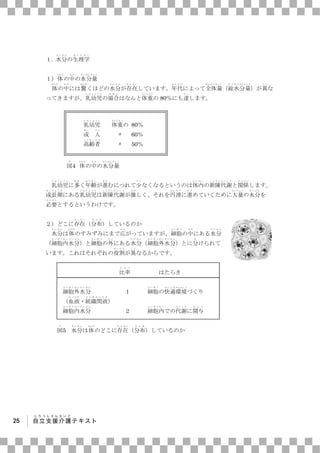
An amazing amount of water is present in the body. The total amount (total moisture content) varies
depending on age. In infants, water makes up 80% of the body weight (Figure 4).
Figure 4: Water Content in the Body
The decline in water content as people age is related to body metabolism. The metabolism of infants
during periods of growth is intense, so large quantities of water are required to develop the metabolism
smoothly.
2) Where is water present?
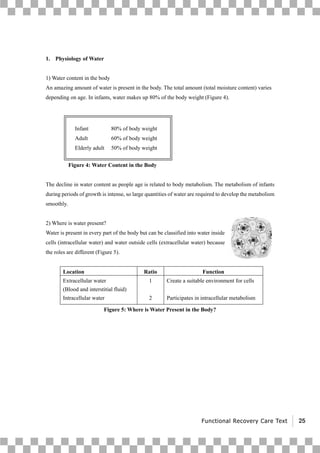
Water is present in every part of the body but can be classified into water inside
cells (intracellular water) and water outside cells (extracellular water) because
the roles are different (Figure 5).
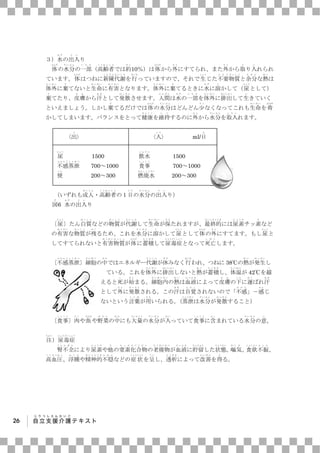
Location Ratio Function
Extracellular water
(Blood and interstitial fluid)
Intracellular water
1
2
Create a suitable environment for cells
Participates in intracellular metabolism
Figure 5: Where is Water Present in the Body?
Infant 80% of body weight
Adult 60% of body weight
Elderly adult 50% of body weight
Functional Recovery Care Text 25
26
3)水
み ず
の出入
で い
り
体
からだ
の水分
す い ぶ ん
の一部
い ち ぶ
(高齢者
こ う れ い し ゃ
では約
や く
10%)は体
からだ
から外
そ と
にすてられ、また外
そ と
から取
と
り入
い
れられ
ています。体
からだ
はつねに新陳代謝
し ん ち ん た い し ゃ
を行
おこな
っていますので、それで生
しょう
じた不要
ふ よ う
物質
ぶ っ し つ
と余分
よ ぶ ん
な熱
ね つ
は
体外
た い が い
に棄
す
てないと生命
せ い め い
に有害
ゆ う が い
となります。体外
た い が い
に棄
す
てるときに水
み ず
に溶
と
かして(尿
にょう
として)
棄
す
てたり、皮膚
ひ ふ
から汗
あ せ
として発散
は っ さ ん
させます。人間
に ん げ ん
は水
み ず
の一部
い ち ぶ
を体外
た い が い
に排出
はいしゅつ
して生
い
きていく
といえましょう。しかし棄
す
てるだけでは体
からだ
の水分
す い ぶ ん
はどんどん少
す く
なくなってこれも生命
せ い め い
を脅
おびや
かしてしまいます。バランスをとって健康
け ん こ う
を維持
い じ
するのに外
そ と
から水分
す い ぶ ん
を取入
と り い
れます。
〈出
で
〉 〈入
い り
〉 ml/日
ひ
尿
にょう
1500 飲水
い ん す い
1500
不感蒸泄
ふ か ん じ ょ う せ つ
700~1000 食事
し ょ く じ
700~1000
便
べ ん
200~300 燃焼水
ねんしょうすい
200~300
(いずれも成人
せ い じ ん
・高齢者
こ う れ い し ゃ
の1日
に ち
の水分
す い ぶ ん
の出入
で い
り)
図6 水
み ず
の出入
で い
り
〔尿
にょう
〕たん白
ぱ く
質
し つ
などの物質
ぶ っ し つ
が代謝
た い し ゃ
して生命
せ い め い
が保
た も
たれますが、最終的
さいしゅうてき
には尿素
に ょ う そ
チッ素
そ
など
の有害
ゆ う が い
な物質
ぶ っ し つ
が残
の こ
るため、これを水分
す い ぶ ん
に溶
と
かして尿
にょう
として体
からだ
の外
そ と
にすてます。もし尿
にょう
と
してすてられないと有害
ゆ う が い
物質
ぶ っ し つ
が体
からだ
に蓄積
ち く せ き
して尿毒症
にょうどくしょう
となって死亡
し ぼ う
します。
〔不感蒸泄
ふ か ん じ ょ う せ つ
〕細胞
さ い ぼ う
の中
な か
ではエネルギー代謝
た い し ゃ
が休
や す
みなく行
おこな
われ、つねに 38℃の熱
ね つ
が発生
は っ せ い
し
ている。これを体外
た い が い
に排出
はいしゅつ
しないと熱
ね つ
が蓄積
ち く せ き
し、体温
た い お ん
が 42℃を越
こ
えると死
し
が始
は じ
まる。細
さ い
胞内
ぼ う な い
の熱
ね つ
は血液
け つ え き
によって皮膚
ひ ふ
の下
し た
に運
は こ
ばれ汗
あ せ
として外
そ と
に発散
は っ さ ん
される。この汗
あ せ
は自覚
じ か く
されないので「不感
ふ か ん
」-感
か ん
じ
ないという言葉
こ と ば
が用
も ち
いられる。(蒸泄
じょうせつ
は水分
す い ぶ ん
が発散
は っ さ ん
すること)
〔食事
し ょ く じ
〕肉
に く
や魚
さかな
や野菜
や さ い
の中
な か
にも大量
たいりょう
の水分
す い ぶ ん
が入
は い
っていて食事
し ょ く じ
に含
ふ く
まれている水分
す い ぶ ん
の意
い
。
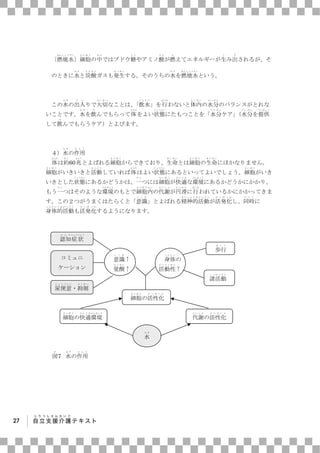
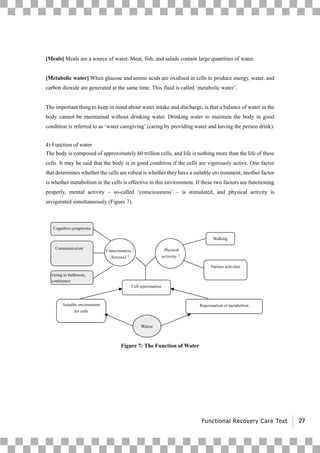
注
ちゅう
)尿毒症
にょうどくしょう
腎
じ ん
不全
ふ ぜ ん
により尿素
に ょ う そ
や他
た
の窒素
ち っ そ
化合物
か ご う ぶ つ
の老廃物
ろ う は い ぶ つ
が血液
け つ え き
に貯留
ちょりゅう
した状態
じょうたい
。嘔
お う
気
き
、食欲
しょくよく
不振
ふ し ん
、
高血圧
こ う け つ あ つ
、浮腫
ふ し ゅ
や精神的
せ い し ん て き
不穏
ふ お ん
などの症状
しょうじょう
を呈
て い
し、透析
と う せ き
によって改善
か い ぜ ん
を得
え
る。
自
じ り つ し え ん か い ご
立支援介護テキスト26
ず
26
3) Water intake and discharge
A portion of water (about 10% in the elderly) is discharged from the body or taken into the body from
outside (Figure 6). The body is always metabolising, and the unnecessary substances and excess heat
continuously generated by metabolism are harmful to life unless discharged from the body. These are
discarded from the body dissolved in water (as urine) or dispersed from the skin as perspiration. It can
be said that humans exist by discharging water from the body. However, if water is only discharged,
the body’s water content rapidly decreases and this is a threat to life as well. To maintain a balance
and preserve health, water must be taken in from outside.
Discharge Intake Millilitres per day
Urine 1,500 Drinking 1,500
Insensible water
loss
700–1,000 Meals 700–1,000
Bowel
movements
200–300 Metabolic
water
200~300
Note: The table shows the daily amount of water discharged and taken by adults or elderly people
Figure 6: Water Intake and Discharge
[Urine] When protein and other substances are metabolised to maintain life, harmful substances such
as urea nitrogen remain. These substances must be dissolved in water and discharged from the body
as urine. If they cannot be discharged as urine, toxic substances will accumulate in the body and the
person will develop uremia1
and die.
[Insensible water loss] Energy metabolism is constantly occurring in the cells, generating heat at 38o
C.
Heat will build up inside the body unless it is dissipated, and a person will begin
to die when body temperature exceeds 42ºC. The heat from the cells is
transported by the blood to the region under the skin and dispersed outside the
body as perspiration. Since this perspiration is not perceptible (insensible), the
term ‘insensible’ is used. (Evaporation causes the perspiration to dissipate.)
1 Uremia is the state where urea and other nitrogenous waste are retained in the blood due
to renal failure. The complex of symptoms such as nausea, anorexia, hypertension, edema,
and mental confusion can be improved by dialysis.
Functional Recovery Care Text 26
27
〔燃焼水
ねんしょうすい
〕細胞
さ い ぼ う
の中
な か
ではブドウ糖
と う
やアミノ酸
さ ん
が燃
も
えてエネルギーが生
う
み出
だ
されるが、そ
のときに水
み ず
と炭酸
た ん さ ん
ガスも発生
は っ せ い
する。そのうちの水
み ず
を燃焼水
ねんしょうすい
という。
この水
み ず
の出入
で い
りで大切
た い せ つ
なことは、「飲水
い ん す い
」を行
おこな
わないと体内
た い な い
の水分
す い ぶ ん
のバランスがとれな
いことです。水
み ず
を飲
の
んでもらって体
からだ
をよい状態
じょうたい
にたもつことを「水分
す い ぶ ん
ケア」(水分
す い ぶ ん
を提供
ていきょう
して飲
の
んでもらうケア)とよびます。
4)水
み ず
の作用
さ よ う
体
からだ
は約
や く
60兆
ちょう
とよばれる細胞
さ い ぼ う
からできており、生命
せ い め い
とは細胞
さ い ぼ う
の生命
せ い め い
にほかなりません。
細胞
さ い ぼ う
がいきいきと活動
か つ ど う
していれば体
からだ
はよい状態
じょうたい
にあるといってよいでしょう。細胞
さ い ぼ う
がいき
いきとした状態
じょうたい
にあるかどうかは、一
ひ と
つには細胞
さ い ぼ う
が快適
か い て き
な環境
かんきょう
にあるかどうかにかかり、
もう一
ひ と
つはそのような環境
かんきょう
のもとで細胞内
さ い ぼ う な い
の代謝
た い し ゃ
が円滑
え ん か つ
に行
おこな
われているかにかかってきま
す。この2つがうまくはたらくと「意識
い し き
」とよばれる精神的
せ い し ん て き
活動
か つ ど う
が活発化
か っ ぱ つ か
し、同時
ど う じ
に
身体的
し ん た い て き
活動
か つ ど う
も活発化
か っ ぱ つ か
するようになります。
歩行
ほ こ う
意識
い し き
↑ 身体
し ん た い
の
覚醒
か く せ い
↑ 活動性
か つ ど う せ い
↑
諸活動
し ょ か つ ど う
細胞
さ い ぼ う
の活性化
か っ せ い か
細胞
さ い ぼ う
の快適
か い て き
環境
かんきょう
代謝
た い し ゃ
の活性化
か っ せ い か
図7 水
み ず
の作用
さ よ う
認知
に ん ち
症状
しょうじょう
コミュニ
ケーション
尿便意
に ょ う べ ん い
・抑制
よ く せ い
水
み ず
自
じ り つ し え ん か い ご
立支援介護テキスト27
ず
27
[Meals] Meals are a source of water. Meat, fish, and salads contain large quantities of water.
[Metabolic water] When glucose and amino acids are oxidised in cells to produce energy, water, and
carbon dioxide are generated at the same time. This fluid is called ‘metabolic water’.
The important thing to keep in mind about water intake and discharge, is that a balance of water in the
body cannot be maintained without drinking water. Drinking water to maintain the body in good
condition is referred to as ‘water caregiving’ (caring by providing water and having the person drink).
4) Function of water
The body is composed of approximately 60 trillion cells, and life is nothing more than the life of these
cells. It may be said that the body is in good condition if the cells are vigorously active. One factor
that determines whether the cells are robust is whether they have a suitable environment; another factor
is whether metabolism in the cells is effective in this environment. If these two factors are functioning
properly, mental activity – so-called ‘consciousness’ – is stimulated, and physical activity is
invigorated simultaneously (Figure 7).
Figure 7: The Function of Water
Cognitive symptoms
Communication
Going to bathroom,
continence
Suitable environment
for cells
Cell rejuvenation
Walking
Various activities
Rejuvenation of metabolism
Water
Consciousness↑
Arousal↑
Physical
activity↑
Functional Recovery Care Text 27
28
① 細胞
さ い ぼ う
の快適
か い て き
環境
かんきょう
づくり
体温
た い お ん
調節
ちょうせつ
細胞
さ い ぼ う
は 42℃以上
い じ ょ う
または 27℃以下
い か
になると死
し
んでしまいます。体温
た い お ん
が
平均的
へ い き ん て き
な 36.5℃を越
こ
えて高温
こ う お ん
になると血液
け つ え き
によって熱
ね つ
が皮膚
ひ ふ
の下
し た
に運
は こ
ばれ水分
す い ぶ ん
ととも
に発散
は っ さ ん
し、体温
た い お ん
は平熱
へ い ね つ
に戻
も ど
り(維持
い じ
され)ます。逆
ぎゃく
に低体温
て い た い お ん
になると筋肉
き ん に く
などでつく
られた熱
ね つ
が血液
け つ え き
によって全身
ぜ ん し ん
に運
は こ
ばれ体温
た い お ん
が平熱
へ い ね つ
に戻
も ど
ります。
塩分
え ん ぶ ん
濃度
の う ど
の調節
ちょうせつ
ナトリウムは細胞
さ い ぼ う
にとって有害
ゆ う が い
である上
う え
に浸透圧
し ん と う あ つ
を変化
へ ん か
させて細胞
さ い ぼ う
内
な い
の水分
す い ぶ ん
に干渉
かんしょう
します。余分
よ ぶ ん
なナトリウムを腎臓
じ ん ぞ う
に運
は こ
び尿
にょう
としてすてるのは血液
け つ え き
とよ
ばれる細胞外
さ い ぼ う が い
水分
す い ぶ ん
の重要
じゅうよう
な役割
や く わ り
です。
酸性
さ ん せ い
・アルカリ性
せ い
の調節
ちょうせつ
体
からだ
は ph7.4 という弱
じゃく
アルカリ性
せ い
にたもたれていることが
細胞
さ い ぼ う
にとって快適
か い て き
で、増
ふ
えすぎた酸
さ ん
やアルカリをすてて調節
ちょうせつ
するのは水分
す い ぶ ん
の役割
や く わ り
です。
② 細胞
さ い ぼ う
の代謝
た い し ゃ
活動
か つ ど う
への参加
さ ん か
細胞
さ い ぼ う
重量
じゅうりょう
の 70%は水
み ず
です。このことは細胞内
さ い ぼ う な い
で行
おこな
われる諸活動
し ょ か つ ど う
にとって水
み ず
の存在
そ ん ざ い
がい
かに大切
た い せ つ
かを示
し め
しています。
食物中
しょくもつちゅう
の栄養物
え い よ う ぶ つ
は小腸
しょうちょう
で分解
ぶ ん か い
吸収
きゅうしゅう
されて細胞
さ い ぼ う
に運
は こ
ばれます。細胞内
さ い ぼ う な い
で合成
ご う せ い
されて体
からだ
の
組織
そ し き
をつくる物質
ぶ っ し つ
になったり、エネルギーを生
う
むサイクルに入
は い
ったりします。これらの
代謝
た い し ゃ
にはすべて水
み ず
が参加
さ ん か
しており、水
み ず
がなければ代謝
た い し ゃ
そのものもうまく動
う ご
きません。
また細胞
さ い ぼ う
の生命
せ い め い
はたん白質
ぱ く し つ
が“生
い
きている”ことでもあり、そのためにたん白質
ぱ く し つ
が「ら
せん構造
こ う ぞ う
」をとっている必要
ひ つ よ う
がありますが、この構造
こ う ぞ う
をとらせているのが周囲
し ゅ う い
の水
み ず
です。
このように細胞
さ い ぼ う
の機能
き の う
そのものが水
み ず
によって営
いとな
まれているといえます。こうした水
み ず
のは
たらきによって細胞
さ い ぼ う
が活性化
か っ せ い か
しているわけです。
自
じ り つ し え ん か い ご
立支援介護テキスト28
28
①Creating a suitable environment for cells
Temperature regulation: Cells die when the temperature rises above 42ºC or drops below 27ºC.
When the body temperature exceeds an average of 36.5ºC, the heat is transported by the blood to under
the skin, is irradiated with water, and the body temperature returns to normal. Conversely, when the
body temperature drops, heat produced by the muscles is transported through the body by the blood
and the body temperature returns to normal.
Adjustment of salt concentration: Sodium is detrimental to cells. It changes osmotic pressure and
interferes with intracellular water. An important role of blood (extracellular water) is to carry excess
sodium to the kidneys, where it can be discharged as urine.
Adjustment of acidity and alkalinity: A weak alkalinity of pH 7.4 in the body is suitable for the cells,
and water plays a regulating role by discarding excess acid and alkali.
②Participation in metabolic activity of cells
Water accounts for 70% of cell weight. This high percentage shows how important the existence of
water is for various activities in cells.
Nutrition in food is digested and absorbed in the small intestine and transported to the cells. It is
synthesised in the cell to constitute body tissue or put into a cycle to generate energy. Water is involved
in all these metabolic processes, and metabolism itself does not function properly without it.
In addition, the life of the cell is dependent on the protein being ‘alive’ and maintaining its helical
structure. It is the surrounding water that makes the protein take this shape.
Thus, it can be said that the function of the cell itself is carried out by water. This action of the water
rejuvenates the cells.
Functional Recovery Care Text 28
29
5)水分
す い ぶ ん
の欠乏
け つ ぼ う
水
み ず
を飲
の
まなかったり、汗
あ せ
で大量
たいりょう
の水
み ず
を失
うしな
ったりして体内
た い な い
の水分
す い ぶ ん
が欠乏
け つ ぼ う
すると、その欠乏
け つ ぼ う
の程度
て い ど
によってさまざまな悪影響
あくえいきょう
が生
う
まれます。水分
す い ぶ ん
欠乏
け つ ぼ う
によって生
しょう
じる病気
び ょ う き
を脱水症
だっすいしょう
と
よび夏
な つ
の暑
あ つ
い時期
じ き
に起
お
こる脱水症
だっすいしょう
を熱中症
ねっちゅうしょう
といいます。
欠乏量
けつぼうりょう
1~2% 意識
い し き
障害
しょうがい
2~3% 発熱
は つ ね つ
、血液
け つ え き
循環
じゅんかん
の障害
しょうがい
(脳梗塞
の う こ う そ く
)
5% 運動
う ん ど う
機能
き の う
の障害
しょうがい
(転
こ ろ
びやすい)
7% 幻覚
げ ん か く
10% 死亡
し ぼ う
図8 水分
す い ぶ ん
の欠乏
け つ ぼ う
※ %は体内
た い な い
総水
そ う す い
分量
ぶんりょう
に対
た い
する百分率
ひゃくぶんりつ
体重
たいじゅう
50 ㎏の高齢者
こ う れ い し ゃ
では体内
た い な い
総水
そ う す い
分量
ぶんりょう
はその 50%つまり 25 ㎏もしくは 25,000ml と
みなされ、その 1%は 250ml となる。500ml入
い
りペットボトルの水
み ず
は 2%に相当
そ う と う
す
る。
自
じ り つ し え ん か い ご
立支援介護テキスト29
ず
29
5) Water deficiency
If a person does not drink enough water, or a large amount of water is lost due to perspiration, this
results in an insufficiency of water in the body. Depending on the extent of the deficiency, various
adverse symptoms occur. One disorder caused by water deficiency is dehydration. Dehydration that
occurs during hot summer periods is called ‘heat stroke’.
Deficiencya
Symptom
1%–2% Disorders of consciousness
2%–3% Fever, blood circulation disorders (cerebral infarction)
5% Motor function disability (prone to falls)
7% Hallucination
10% Death
Figure 8: Water Deficiency
a
Percentage relative to total body water content.
Water accounts for 50% of the weight of an elderly person. If a person weighs 50 kilogrammes, 25,000
millititres (ml) (equivalent to 25 kilogrammes) is water. 1% of that would be 250 ml, so the water in a 500 ml
bottle is equivalent to 2% of the total water content of an elderly person.
Functional Recovery Care Text 29
30
〔意識
い し き
障害
しょうがい
〕水分
す い ぶ ん
欠乏
け つ ぼ う
によってまず最初
さ い し ょ
に現
あらわ
れるのが意識
い し き
障害
しょうがい
です。意識
い し き
障害
しょうがい
は次
つ ぎ
のよ
うに重症化
じゅうしょうか
していきます。
ぼんやりする
→うつらうつらする→すぐ眠
ね む
りこむ(傾眠
け い み ん
)→昏睡
こ ん す い
→死
し
会話
か い わ
の内容
な い よ う
がおかしい
〔発熱
は つ ね つ
〕体温
た い お ん
の上昇
じょうしょう
を調節
ちょうせつ
する不感蒸泄
ふ か ん じ ょ う せ つ
に用
も ち
いる水分
す い ぶ ん
が不足
ふ そ く
するために生
しょう
じる。多
お お
くは
37.0℃程度
て い ど
の「微熱
び ね つ
」。高齢者
こ う れ い し ゃ
の発熱
は つ ね つ
をみたら脱水症
だっすいしょう
を疑
うたが
えといわれている。
〔血液
け つ え き
循環
じゅんかん
の障害
しょうがい
〕血液中
けつえきちゅう
の水分
す い ぶ ん
不足
ぶ そ く
によって血液
け つ え き
の粘稠度
ね ん ち ゅ う ど
が増
ま
し、いわゆるドロドロ
した状態
じょうたい
になることをいいます。こうなると動脈
どうみゃく
硬化
こ う か
を生
しょう
じている血管
け っ か ん
の中
な か
を流
な が
れにく
く、明
あ
け方
が た
などに動脈
どうみゃく
がつまって脳梗塞
の う こ う そ く
となることがあります。高齢者
こ う れ い し ゃ
の脳梗塞
の う こ う そ く
が明
あ
け
方
が た
に多
お お
いのは、夜
よ る
の睡眠中
すいみんちゅう
に水
み ず
を飲
の
むことがなく、その一方
い っ ぽ う
で不感蒸泄
ふ か ん じ ょ う せ つ
は行
おこな
われるので
結果
け っ か
として体内
た い な い
水分
す い ぶ ん
は明
あ
け方
が た
にもっとも欠乏
け つ ぼ う
した状態
じょうたい
になるからです(起床
き し ょ う
すれば水
み ず
を
飲
の
むでしょう)。
〔運動
う ん ど う
機能
き の う
の障害
しょうがい
〕立
た
ったり歩
あ る
いたりすることが困難
こ ん な ん
で“転
こ ろ
びやすい”状態
じょうたい
になるほ
か、歩
あ る
きはじめてもすぐ疲
つ か
れて耐久力
たいきゅうりょく
の低下
て い か
が目立
め だ
ちます。
〔幻覚
げ ん か く
〕現実
げ ん じ つ
にないものが見
み
えたり(幻視
げ ん し
)、話
は な
しかけてもいないのに声
こ え
がきこえたり
(幻聴
げんちょう
)します。
〔死
し
〕水分
す い ぶ ん
欠乏
け つ ぼ う
-脱水症
だっすいしょう
あるいは熱中症
ねっちゅうしょう
による死
し
は、原因
げ ん い ん
は単純
たんじゅん
で治療法
ち り ょ う ほ う
も水分
す い ぶ ん
補給
ほ き ゅ う
と
いう単純
たんじゅん
なものなのですが夏
な つ
(高温期
こ う お ん き
)には多
お お
くの人
ひ と
が亡
な
くなります。それはこの病気
び ょ う き
がまず意識
い し き
障害
しょうがい
から始
は じ
まることに関係
か ん け い
しています。ボンヤリとしうつらうつらするよう
になっても本人
ほ ん に ん
は異常
い じ ょ う
と思
お も
わず、自分
じ ぶ ん
で水
み ず
を飲
の
んだり、他人
た に ん
に助
た す
けを求
も と
めることができ
ません。ほかの人
ひ と
が気付
き づ
いて水
み ず
を飲
の
ませたり病院
びょういん
に運
は こ
ぶことをしなければ病状
びょうじょう
は数時間
す う じ か ん
で進行
し ん こ う
しその日
ひ
のうちに亡
な
くなってしまいます。
自
じ り つ し え ん か い ご
立支援介護テキスト30
30
[Disorders of consciousness] Disorders of consciousness are the first to appear when a person
becomes deficient in water. Symptoms worsen in the following sequence.
Absent-minded
→Keeps dozing off → Suddenly falls asleep (drowsiness) → Coma → Death
Content of conversation
is odd
[Fever] Fevers are caused by a rise in body temperature brought about by a lack of water for insensible
water loss that controls the rise in body temperature. Most are low-grade fevers of around 37o
C. If a
fever is noticed in an elderly person, dehydration can be suspected to be the cause.
[Circulatory disorders] A lack of water increases the viscosity of the blood, resulting in a thickened
state. If this happens, it is difficult for blood to flow through the blood vessels with arteriosclerosis.
This may lead to arterial blockage in the morning or at other times, resulting in cerebral infarction.
Cerebral infarction in an elderly person is more common in the morning because they do not drink
water at night while asleep. Insensible water loss also continues during the night. The water content
of the body is therefore at its lowest level in the morning. (If a person gets up they will probably drink
some water.)
[Motor function disorders] In addition to having difficulty standing or walking and being prone to
falls, when starting to walk, the person tires easily and stamina noticeably declines.
[Hallucinations] The person sees things that are not real (hallucinations) and hears voices when no
one is speaking (auditory hallucinations).
[Death due to water deficiency] The cause of death due to dehydration or heat stroke is simple and
the preventive treatment is merely hydration, but many people die in the summer when temperatures
are high. This condition is related to the fact that symptoms begin with disorders of the consciousness.
Despite being dizzy and dozing off, being absent-minded, the person does not recognise the condition
as abnormal and is unable to drink water themselves or ask someone for help.
If another person does not notice and give the dehydrated person water to drink or take them to
hospital, the symptoms progress in a few hours, and they can die that day.
Functional Recovery Care Text 30
31
2. 水分
す い ぶ ん
ケアの実際
じ っ さ い
1)「水分
す い ぶ ん
」に含
ふ く
まれるもの
「飲
の
む」という動詞
ど う し
が用
も ち
いられるものはすべて該当
が い と う
します。具体的
ぐ た い て き
には次
つ ぎ
のものがあり
ます。
(ⅰ) すべての飲料水
いんりょうすい
(水道水
す い ど う す い
、ミネラルウォーターなど飲料用
いんりょうよう
の水
み ず
)
(ⅱ) すべてのお茶
ち ゃ
(日本茶
に ほ ん ち ゃ
、中国茶
ちゅうごくちゃ
、台湾茶
た い わ ん ち ゃ
、コーヒー、紅茶
こ う ち ゃ
)
(ⅲ) 牛乳
ぎゅうにゅう
などのミルク、オレンジジュースなどのジュース
「食
た
べる」という動詞
ど う し
が用
も ち
いられるものは水分
す い ぶ ん
含有量
がんゆうりょう
が多
お お
くても水分
す い ぶ ん
ケアの水分
す い ぶ ん
には含
ふ く
めません。
例
れ い
:スープ類
る い
スイカなどの果物
く だ も の
や野菜
や さ い
2)心臓病
しんぞうびょう
や腎臓病
じんぞうびょう
のある高齢者
こ う れ い し ゃ
心臓病
しんぞうびょう
をもっている人
ひ と
でも日常
にちじょう
の活動
か つ ど う
で「強
つ よ
い疲労
ひ ろ う
」「動悸
ど う き
」「息切
い き ぎ
れ」「胸
む ね
の痛
い た
み」な
どの心不全
し ん ふ ぜ ん
の症状
しょうじょう
のない
..
人
ひ と
は(ニューヨーク心臓
し ん ぞ う
協会
きょうかい
の分類
ぶ ん る い
でⅠ度
ど
なので)“水分
す い ぶ ん
制限
せ い げ ん
は
不要
ふ よ う
”です。1日
に ち
1500ml は飲
の
ませて下
く だ
さい。
重症
じゅうしょう
の腎臓病
じんぞうびょう
で腎臓病
じんぞうびょう
専門医
せ ん も ん い
より水分
す い ぶ ん
制限
せ い げ ん
を指示
し じ
されている場合
ば あ い
はその指示
し じ
に従
したが
って下
く だ
さい。
3)水分
す い ぶ ん
ケアのポイント
水分
す い ぶ ん
を勧
す す
めてもなかなか飲
の
んでくれない方
か た
がいます。そういう方
か た
への飲
の
ませ方
か た
です。
(ⅰ) 起床
き し ょ う
直後
ち ょ く ご
は飲
の
みやすい これは睡眠中
すいみんちゅう
に体
からだ
が水分
す い ぶ ん
欠乏
け つ ぼ う
を起
お
こしているからです。
(ⅱ) 体
からだ
を動
う ご
かすことと水分
す い ぶ ん
補給
ほ き ゅ う
を一体
い っ た い
として考
かんが
える。
散歩
さ ん ぽ
に出
で
かける前
ま え
、途中
と ち ゅ う
、帰
か え
ったあと
運動
う ん ど う
・体操
た い そ う
の前
ま え
と後
あ と
食事
し ょ く じ
や会合
か い ご う
で食堂
しょくどう
や別
べ つ
の部屋
へ や
に移動
い ど う
したとき
(ⅲ) 若
わ か
い頃
こ ろ
に好
こ の
んで飲
の
んでいたものを勧
す す
める
はじめは水分
す い ぶ ん
を多
お お
くとることに抵抗
て い こ う
した人
ひ と
でも、勧
す す
められて飲
の
むようになり、2-3
ヶ月
か げ つ
その状態
じょうたい
が続
つ づ
くと習慣
しゅうかん
となって自分
じ ぶ ん
から飲
の
むようになります。水
み ず
を飲
の
ませるのは大切
た い せ つ
な介護
か い ご
技術
ぎ じ ゅ つ
です。
自
じ り つ し え ん か い ご
立支援介護テキスト31
31
2. Practical Water Caregiving
1) Substances containing water
Anything for which we use the word ‘drink’ contains water. The following items are included.
(i) All drinking water (drinking water such as tap water and mineral water);
(ii) all teas (Japanese tea, Chinese tea, Taiwanese tea, coffee, and other teas); and
(iii) cow’s milk and other milks, and juice such as orange juice.
Foods for which we use the verb ‘eat’ would not be considered part of water caregiving even if they
have high water content.
Examples include soups, watermelon,
and other fruits and vegetables.
2) Elderly people with heart or kidney disease
There are no restrictions on water intake for people who do not have symptoms of heart problems,
such as extreme fatigue, palpitations, shortness of breath, or chest pain in normal daily activities
(categorised as class I by the New York Heart Association). These people should be drinking at least
1,500 ml a day.
If a kidney disease specialist instructs that water intake should be restricted for individuals with severe
kidney disease, this advice should be followed.
3) Water caregiving points
Some people will not drink water even when told to do so. The following approaches can be used to
encourage these individuals to drink.
(i) Provide water when the person wakes up. It is easy to drink water immediately after waking
because the body creates a water shortage while sleeping.
(ii) Provide water and physical movement together, for example, before and during walks, after
returning home, before and after exercise or calisthenics, at meals or meetings, and when moving
to the dining room or a different room.
(iii) Suggest beverages the person liked when they were younger.
People who at first resisted drinking a lot of water will eventually drink water of their own volition,
because after 2 or 3 months of drinking plenty of water it will have become a habit. Having the person
drink water is an important technique of caregiving.
Functional Recovery Care Text 31
32
Ⅱ. 歩行
ほ こ う
1. 自立
じ り つ
支援
し え ん
介護
か い ご
の基礎
き そ
としての歩行
ほ こ う
自立
じ り つ
支援
し え ん
介護
か い ご
を実践
じ っ せ ん
するうえで歩行
ほ こ う
はもっとも重要
じゅうよう
な課題
か だ い
といわねばなりません。ふつ
うの ADL の場面
ば め ん
には必
かなら
ず移動
い ど う
や歩行
ほ こ う
が含
ふ く
まれています。
・食事
し ょ く じ
は食堂
しょくどう
に行
い
って食事
し ょ く じ
を食
た
べる
・排泄
は い せ つ
はトイレに行
い
って排泄
は い せ つ
する
・洗面
せ ん め ん
は洗面所
せ ん め ん じ ょ
に行
い
って顔
か お
を洗
あ ら
う
食事
し ょ く じ
の自立
じ り つ
というときには「食堂
しょくどう
への移動
い ど う
」と「食事
し ょ く じ
動作
ど う さ
」の両方
りょうほう
が自立
じ り つ
することが
必要
ひ つ よ う
で、どちらかが不可能
ふ か の う
になるとそこに(他人
た に ん
の手
て
による)
「介護
か い ご
」が必要
ひ つ よ う
となってきます。しかし食事
し ょ く じ
では移動
い ど う
に介助
か い じ ょ
が
必要
ひ つ よ う
であっても、その先
さ き
の食堂
しょくどう
での食事
し ょ く じ
を食
た
べるという作業
さ ぎ ょ う
(動作
ど う さ
)は変
か
わりません。これに対
た い
して排泄
は い せ つ
の場合
ば あ い
には、“トイ
レに自力
じ り き
で行
い
けない”ことが「オムツ」という排泄
は い せ つ
の方法
ほ う ほ う
さえ変
か
え、その人
ひ と
の自尊心
じ そ ん し ん
を大
お お
いに傷
き ず
つけてしまうという深刻
し ん こ く
な状態
じょうたい
を
もたらしてしまいます。したがって介護
か い ご
こそ「歩行
ほ こ う
は自立
じ り つ
の
基礎
き そ
」として認識
に ん し き
し、歩行
ほ こ う
能力
のうりょく
の向上
こうじょう
に励
は げ
む必要
ひ つ よ う
があります。
食事
し ょ く じ
排泄
は い せ つ
入浴
にゅうよく
洗面
せ ん め ん
買物
か い も の
調理
ち ょ う り
図9 ADL及
お よ
び買物
か い も の
・調理
ち ょ う り
など日常
にちじょう
行動
こ う ど う
のすべてに移動
い ど う
・歩行
ほ こ う
が関与
か ん よ
している
移動
い ど う
・歩行
ほ こ う
自
じ り つ し え ん か い ご
立支援介護テキスト32
ず
32
II. Walking
1. Walking as a Foundation for Functional Recovery Care
Walking is of equal importance to fluids in the practice of functional recovery care. A typical activities
of daily living (ADL) event always includes movement and walking.
For meals, go to the cafeteria and eat a meal.
For the bathroom, go to the bathroom.
For grooming, go the lavatory and wash one’s face.
To be able to eat meals independently, it is necessary to both go to the dining room and eat a meal
independently. When either activity becomes impossible, caregiving (by
another person) is required. However, even if help is required to be able
to make the trip, the task (action) of eating the meal in the dining room
does not change. In contrast, if a person cannot move to the bathroom
under their own power, the approach will be changed to using diapers,
which will damage the person’s self-esteem severely. Therefore, it is
necessary to recognise that walking is the foundation of independence,
and to encourage the improvement of walking ability (Figure 9).
Meals Bathroom Baths Grooming Shopping Cooking
Figure 9: Activities of Daily Living: Movement for all Activities such as Shopping and Cooking
Involves Walking
Movement / Walking
Functional Recovery Care Text 32
33
2. 人
ひ と
はどのように歩
あ る
いているか-歩行
ほ こ う
の基礎
き そ
知識
ち し き
〔歩行
ほ こ う
は全身
ぜ ん し ん
の協調
きょうちょう
運動
う ん ど う
〕
歩行
ほ こ う
を理解
り か い
するうえでまずこのことを知
し
っておく必要
ひ つ よ う
があります。私
わたし
たちは立
た
っている
ときに体
からだ
のどこかに力
ちから
を入
い
れていると感
か ん
じることはありません。また、ふつうのスピード
で歩
あ る
いているときも、自然
し ぜ ん
に手
て
を振
ふ
り、足
あ し
を振
ふ
り出
だ
して、力
ちから
を入
い
れることなく滑
な め
らかに
前進
ぜ ん し ん
しています。決
け っ
して特定
と く て い
の筋肉
き ん に く
が大
お お
きな力
ちから
を発揮
は っ き
しているわけではありません。この
ことは歩
あ る
けない人
ひ と
を歩
あ る
かせるようとするときに、特定
と く て い
の筋肉
き ん に く
のトレーニングをすることが
無意味
む い み
であることを示
し め
しています。
全身
ぜ ん し ん
の協調
きょうちょう
運動
う ん ど う
はどのようにコントロールされているかを知
し
ることも大切
た い せ つ
です。それは
脳
の う
の全体
ぜ ん た い
が参加
さ ん か
してつくられる「制
せい
御
ぎょ
システム」によって行
おこな
われていることを知
し
っておき
ましょう。
たとえば、尿意
に ょ う い
を感
か ん
じて“トイレに行
い
こう”という歩
あ る
く課題
か だ い
が生
う
まれたとき、その円滑
え ん か つ
な実行
じ っ こ う
に参加
さ ん か
する脳
の う
の部位
ぶ い
と機能
き の う
を図
ず
10 に示
し め
します。
“寝
ね
たきりで歩
あ る
けない”というのは、この脳
の う
の制御
せ い ぎ ょ
システム全体
ぜ ん た い
がはたらかなくなった
のだと理解
り か い
しなくてはなりません。したがって、もう一度
い ち ど
歩
あ る
けるようにするには、この脳
の う
の制御
せ い ぎ ょ
システムを復活
ふ っ か つ
する必要
ひ つ よ う
があるということで、これを運動
う ん ど う
学習
がくしゅう
とよびます。
自
じ り つ し え ん か い ご
立支援介護テキスト33
33
2. How People Walk – Basic Knowledge of Walking
Walking is a co-ordinated activity of the entire body. To understand walking, it is essential to know a
few things first. When standing, a person is not aware of exerting strength on any part of the body. In
addition, when walking at a normal speed, a person’s arms swing naturally, the legs move ahead, and
without exerting effort the person advances. None of the muscles exert tremendous force, so it is
meaningless to try to train certain muscles when trying get a person to walk who is unable to walk.
It is also important to know how co-ordinated movement of the whole body is controlled. It should be
noted that it is performed by a ‘control system’ that involves the entire brain.
Figure 10 illustrates the parts and functions of the brain that participate in the smooth execution of the
desire to walk that arises from the urge to go to the bathroom.
It must be understood that for the person who is bedridden and cannot walk, this entire control system
in the brain has ceased to function. Therefore, for a person to be able to walk again, this brain control
system must be restored. This process is called ‘motor learning’.
Functional Recovery Care Text 33
34
トイレに行
い
こう 行動
こ う ど う
の企画
き か く
外界
が い か い
情報
じょうほう
記憶
き お く
情報
じょうほう
体内
た い な い
情報
じょうほう
“トイレの場所
ば し ょ
”
選択
せ ん た く
・企画
き か く
・構成
こ う せ い
“急
い そ
がなければ
ならないか”
運動
う ん ど う
の選択
せ ん た く
・順序
じゅんじょ
フ 運動
う ん ど う
の調節
ちょうせつ
適切
て き せ つ
な運動
う ん ど う
の促進
そ く し ん
ィ 不適切
ふ て き せ つ
な運動
う ん ど う
の抑制
よ く せ い
|
ド
バ 筋
き ん
肉
に く
ッ
ク
図10 運動
う ん ど う
の制御
せ い ぎ ょ
機構
き こ う
大脳
だ い の う
連合野
れ ん ご う や
尿意
に ょ う い
運動野
う ん ど う や
基底核
き て い か く
小
しょう
脳
の う
中脳
ちゅうのう
・橋
きょう
脳幹
の う か ん
・脊髄
せ き ず い
運
うん
動
どう
感覚
か ん か く
入力
にゅうりょく
大
お お
きさ
方向
ほ う こ う
速度
そ く ど
経過
け い か
自
じ り つ し え ん か い ご
立支援介護テキスト34
ず
34
Figure 10: Control Mechanism for Movement
Mid brain / Pons varolii
Brain stem / spinal cord
Adjustment of
movement
Proceed with appropriate movement
Suppression of inappropriate
movement
FEEDBACK
Cerebral Association Cortex
Urination Go to the toilet
Choose Plan Formulate
Basal gangliaCerebellum
Muscles
Movement
Sensory
input
Size
Direction
Speed
Course
Selection and order of action
Judge urgency
Plan action
External
information
Information in
memory
Information
inside the body
Location of the toilet
Motor
cortex
Functional Recovery Care Text 34
35
3. 歩行
ほ こ う
の影響
えいきょう
1)ADL と生活
せ い か つ
空間
く う か ん
への影響
えいきょう
歩行
ほ こ う
が ADL自立
じ り つ
の基礎
き そ
であることはすでに述
の
べました。移動
い ど う
するだけなら車椅子
く る ま い す
でも
十分
じゅうぶん
なのですが、歩行
ほ こ う
のすぐれた点
て ん
は“もっとも制約
せ い や く
の少
す く
ない方法
ほ う ほ う
”であることです。こ
れは階段
か い だ ん
を考
かんが
えれば容易
よ う い
に理解
り か い
できます。
“もっとも制約
せ い や く
の少
す く
ない移動
い ど う
の手段
し ゅ だ ん
”という歩行
ほ こ う
の特徴
とくちょう
は、それだけ移動
い ど う
に「自由
じ ゆ う
」が
与
あ た
えられることを示
し め
し、生活
せ い か つ
空間
く う か ん
をベッドから住居
じゅうきょ
、屋外
お く が い
へ、さらに遠
と お
い地域
ち い き
へと広
ひ ろ
げや
すいという特徴
とくちょう
を生
う
みます。
2)全身
ぜ ん し ん
の代謝
た い し ゃ
への刺激
し げ き
歩行
ほ こ う
は全身
ぜ ん し ん
運動
う ん ど う
で適度
て き ど
なレベルのものであるため、ほどよいエネルギー消費
し ょ う ひ
が行
おこな
われこ
のことが全身
ぜ ん し ん
に刺激
し げ き
を与
あ た
えて臓器
ぞ う き
の機能
き の う
を良好
りょうこう
にたもっていきます。
日本
に ほ ん
で生活
せ い か つ
習慣病
しゅうかんびょう
(旧成人病
きゅうせいじんびょう
)とよばれる高血圧
こ う け つ あ つ
、心臓病
しんぞうびょう
、糖尿病
とうにょうびょう
、さらには
慢性肺疾患
ま ん せ い は い し っ か ん
などの予防
よ ぼ う
と治療
ち り ょ う
に歩行
ほ こ う
(1日
に ち
1万歩
ま ん ほ
)が勧
す す
められているのはこのためです。
要介護
よ う か い ご
高齢者
こ う れ い し ゃ
や虚弱
きょじゃく
高齢者
こ う れ い し ゃ
にとって歩行
ほ こ う
はもっとも適切
て き せ つ
な運動
う ん ど う
で、これらの人
ひ と
びとへの
運動
う ん ど う
といったらまず歩行
ほ こ う
を考
かんが
えていくとよいでしょう。
3)排泄
は い せ つ
-大腸
だいちょう
への影響
えいきょう
内臓
な い ぞ う
諸器官
し ょ き か ん
(例
れ い
:心臓
し ん ぞ う
や肺
は い
)への影響
えいきょう
とともに介護
か い ご
にとって重視
じ ゅ う し
すべきは大腸
だいちょう
への影響
えいきょう
です。歩行
ほ こ う
は起立
き り つ
大腸
だいちょう
反射
は ん し ゃ
を刺激
し げ き
して、大腸
だいちょう
の動
う ご
きを活発化
か っ ぱ つ か
します。これが生理的
せ い り て き
な排便
は い べ ん
を促
うなが
す要因
よ う い ん
になって
いきます。介護
か い ご
の場面
ば め ん
で、歩行
ほ こ う
練習
れんしゅう
に励
は げ
んでいたら排便
は い べ ん
リズムが
整
ととの
い、いつもほぼ一定
い っ て い
の時間
じ か ん
に排便
は い べ ん
するようになっておむつは要
い
らなくなった、このような例
れ い
はめずらしくありません。
4)認知症
に ん ち し ょ う
への影響
えいきょう
認知症
に ん ち し ょ う
の予防
よ ぼ う
に運動
う ん ど う
(特
と く
に散歩
さ ん ぽ
などの歩行
ほ こ う
)が大切
た い せ つ
であることはよく知
し
られ、認知症
に ん ち し ょ う
に
なった人
ひ と
びとへの治療
ち り ょ う
としても歩行
ほ こ う
が勧
す す
められています(後述
こうじゅつ
)。
ADL=日常生活動作
に ち じ ょ う せ い か つ ど う さ
ADL の基礎
き そ
生活
せ い か つ
空間
く う か ん
の自由
じ ゆ う
な拡大
か く だ い
全身
ぜ ん し ん
の代謝
た い し ゃ
への刺激
し げ き
起立
き り つ
大腸
だいちょう
反射
は ん し ゃ
歩
ほ
行
こう認知症
に ん ち し ょ う
の
予防
よ ぼ う
治療
ち り ょ う
図 11 歩行
ほ こ う
の効果
こ う か
自
じ り つ し え ん か い ご
立支援介護テキスト35
ず
35
3. Effects of Walking
1) Activities of daily living and the effect on living area
It has already been pointed out that walking is the foundation for ADL independence. Wheelchairs are
adequate for merely moving about, but walking is superior because it is the least-restrictive means of
movement. This fact can easily be understood when stairs are considered.
This characteristic of walking by itself indicates an aspect of freedom in moving about, making it easier to
expand living areas from the bed to the rest of the residence, then outdoors, and to even more distant places.
2) Walking stimulates metabolism in the entire body
Since walking is a moderate type of full-body exercise, an appropriate amount of energy is burned,
and this stimulates metabolism in the entire body, and maintains organ functions in good condition.
That is why walking 10,000 steps a day is recommended in Japan for the prevention and treatment
high blood pressure, heart disease, diabetes, chronic lung diseases, and other so-called lifestyle
ailments (formerly called adult diseases).
Walking is the most appropriate exercise for elderly people who need long-term care or who are frail,
and it is a good idea to consider walking as the first form of exercise for such people.
3) Effect on the large intestine – excretion
For health care, along with the effect on internal organs (for example, the heart
and lungs), emphasis must be placed on the effect on the large intestine. Walking
stimulates the reflexes of the upright large intestine and initiates intestine
movement. This will become a factor in promoting physiological excretion. In
health care situations, if a person is enthusiastic about walking practice, the
rhythm of bowel movements will be established, bowel movements will occur at approximately the
same time intervals, and diapers will no longer be needed. This is one of the typical desirable benefits.
4) Effect on dementia
It is well known that exercise (especially walking) is important in the prevention of dementia, and
walking is also recommended as therapy for people suffering from dementia (Figure 11).
ADL = activities of daily living.
Basis of ADL
Freely extending living areas
Stimulation of metabolism in entire body
Upright intestinal reflex
Walking
Therapy and
prevention of
dementia
Figure 11: Effect of Dementia
Functional Recovery Care Text 35
36
4. 歩行
ほ こ う
ケアの実際
じ っ さ い
-歩
あ る
けない人
ひ と
を歩
あ る
かせる練習
れんしゅう
歩
あ る
けない人
ひ と
は車椅子
く る ま い す
を使
つ か
っていることが多
お お
いので、その使
つ か
っているレベルによって歩行
ほ こ う
練習
れんしゅう
を分
わ
けて行
おこな
います。
1)車椅子
く る ま い す
の使用
し よ う
状況
じょうきょう
による歩行
ほ こ う
練習
れんしゅう
の選択
せ ん た く
(解説
か い せ つ
)
A タイプの人
ひ と
は数歩
す う ほ
とはいえ“歩
あ る
いている”のだから、そのまま歩
あ る
く練習
れんしゅう
を行
おこな
います。
安易
あ ん い
な車椅子
く る ま い す
利用
り よ う
は、歩行
ほ こ う
のもつ心身
し ん し ん
へのすぐれた影響
えいきょう
を奪
う ば
うものです。
B タイプの人
ひ と
は、ベッドから車椅子
く る ま い す
などへの移乗
い じ ょ う
に際
さ い
して“立
た
てる”のである。「立
た
てる
人
ひ と
は歩
あ る
ける」ので、そのまま歩行
ほ こ う
練習
れんしゅう
を行
おこな
います。
C タイプは移動
い ど う
に全介助
ぜ ん か い じ ょ
の人
ひ と
で要介護
よ う か い ご
5の人
ひ と
ではもっとも多
お お
くみられます。このタイプ
にはもう1つアセスメントを行
おこな
います(5秒
びょう
つかまり立
だ
ちテスト)。
A. 車椅子
く る ま い す
を使
つ か
っているが、2~3歩
ぽ
はつかまり歩
あ る
きまたは軽介助
け い か い じ ょ
で歩
あ る
ける
(車椅子
く る ま い す
歩行
ほ こ う
併用
へ い よ う
)
ただちに歩行器
ほ こ う き
(キャスター付
つ
き)の歩行
ほ こ う
練習
れんしゅう
生活
せ い か つ
の主体
し ゅ た い
を車椅子
く る ま い す
から歩行
ほ こ う
へ
B. 車椅子
く る ま い す
への移乗
い じ ょ う
は自力
じ り き
で可
か
、自走
じ そ う
することもあるが
歩
あ る
くことはない
ただちに歩行器
ほ こ う き
(キャスター付
つ
き)の歩行
ほ こ う
練習
れんしゅう
、
必要
ひ つ よ う
な介助
か い じ ょ
を行
おこな
う
C. 移乗
い じ ょ う
、車椅子
く る ま い す
走行
そ う こ う
とも介助
か い じ ょ
(全
ぜ ん
車
くるま
椅子
い す
)
C-1 5秒
びょう
つかまり立
だ
ちテスト○+ 介助
か い じ ょ
歩行器
ほ こ う き
歩行
ほ こ う
(キャスター付
つ
き)
C-2 5秒
びょう
つかまり立
だ
ちテスト○- 3日間
か か ん
の立位
り つ い
練習
れんしゅう
介助
か い じ ょ
歩行器
ほ こ う き
歩行
ほ こ う
(キャスター付
つ
き)
図 12 車椅子
く る ま い す
の使用
し よ う
状況
じょうきょう
による歩行
ほ こ う
練習
れんしゅう
の選択
せ ん た く
自
じ り つ し え ん か い ご
立支援介護テキスト36
ず
36
4. Practical Walking Caregiving – Practice Getting People to Walk Who Cannot Walk
Since people who are unable to walk often use wheelchairs, walking practice can be categorised
according to the extent of wheelchair use.
1) Selection of walking practice based on extent of wheelchair use
Figure 12: Selection of Walking Practice Based on Extent of Wheelchair Use
(explanation)
People of type A are walking even though it may only be a few steps, so walking practice is continued
starting from the current degree of walking. Easy use of wheelchairs deprives the person of the
outstanding benefits walking has for the body.
People of type B can stand when transferring from a bed to a wheelchair or the like. Since anyone who
is able to stand is also able to walk, walking practice can begin.
People of type C are the most common. They are most frequently seen amongst those who must be
assisted for all movement and require care level V of the Japanese Kaigo Hoken system. The 5-second
standing test should be performed for this type of person.
A. A wheelchair is used, but the person is able to walk two or three steps, or can
walk with only a little assistance (combined wheelchair and walking).
Immediately begin walking practice with walkers
(wheeled type).
From a wheelchair to walking as a way of life
B. The person can get into the wheelchair by himself or herself
and propel it without help, but never walks.
Immediately begin walking practice with walkers
(wheeled type).
Provide assistance as needed.
C. The person needs assistance both getting into the wheelchair
and moving (all steps with wheelchair).
C-1 5-second standing test while
holding something ○+ Assisted walking with a walker (wheeled type)
C- 2 5-second standing test while
holding something ○-
Practice standing for 3 days
Assisted walking with a walker (wheeled type)
Functional Recovery Care Text 36
37
5秒
びょう
つかまり立
だ
ちテスト
全介助
ぜ ん か い じ ょ
でよいから手
て
すりの前
ま え
まで利用者
り よ う し ゃ
を運
は こ
ぶ。手
て
すりにつかまってもらい、そこに
立
た
たせてから、介助者
か い じ ょ し ゃ
は介助
か い じ ょ
の手
て
を離
は な
す。
その後
あ と
5秒間
びょうかん
、何
な ん
とか床
ゆ か
にくずれ落
お
ちずにふんばっていられれば、そのまま介助
か い じ ょ
で
歩行器
ほ こ う き
歩行
ほ こ う
に移行
い こ う
します。
長期
ち ょ う き
の寝
ね
たきりの人
ひ と
の場合
ば あ い
の歩行器
ほ こ う き
歩行
ほ こ う
に
は介助者
か い じ ょ し ゃ
は二人
ふ た り
必要
ひ つ よ う
なことが多
お お
いものです。
一人
ひ と り
は“腰
こ し
くだけ”にならぬよう腰帯
こ し お び
をつか
んでいる係
かかり
で、もう一人
ひ と り
は足
あ し
を前
ま え
に押
お
し出
だ
す
係
かかり
です(経験
け い け ん
を積
つ
んだベテランになるとこの
二役
ふ た や く
を一人
ひ と り
でこなすことができます)。
5秒
びょう
つかまり立
だ
ちテストは、その場
ば
で
「介助
か い じ ょ
歩行器
ほ こ う き
歩行
ほ こ う
」に移行
い こ う
できるかどうかを
知
し
るためのもので、これまでの経験
け い け ん
からは、
このテストに合格
ご う か く
する人
ひ と
は全例
ぜ ん れ い
歩
あ る
けるように
なります。“立
た
てる人
ひ と
は歩
あ る
ける”という事
じ
実
じ つ
は、「つかまり立
だ
ちのできる人
ひ と
は歩
あ る
ける」とい
うことにも通
つ う
じます。
C-2 の人
ひ と
たちには
C-2 の人
ひ と
たちには 3日
か
ほど介助
か い じ ょ
つかまり立
だ
ちの練習
れんしゅう
を行
おこな
います。強調
きょうちょう
すべきなのは、3
日
か
ほどで“立
た
つ練習
れんしゅう
”はやめて次
つ ぎ
の段階
だ ん か い
である〔介助
か い じ ょ
歩行器
ほ こ う き
歩行
ほ こ う
〕へ移行
い こ う
することです。
こういえばすぐわかるように、この 3日間
か か ん
の立位
り つ い
練習
れんしゅう
は「立位
り つ い
能力
のうりょく
」を獲得
か く と く
することを
目的
も く て き
とはしていない
...
ということで、あえていえば長
な が
く忘
わ す
れていた、歩行
ほ こ う
運動
う ん ど う
の一部
い ち ぶ
である
「立
た
つ」という行為
こ う い
を体験
た い け ん
し思
お も
いだすのに手助
て だ す
けするというだけのことと理解
り か い
しておくと
よいでしょう。
2)歩行
ほ こ う
練習
れんしゅう
の原則
げ ん そ く
①歩行器
ほ こ う き
を使用
し よ う
する
歩行器
ほ こ う き
がもっともすぐれた補助具
ほ じ ょ ぐ
です。はじめは足
あ し
が引
ひ
きずられるようであっても数
す う
日
じ つ
のうちに自分
じ ぶ ん
で足
あ し
を出
だ
すようになり、拙劣
せ つ れ つ
な歩行
ほ こ う
運動
う ん ど う
が始
は じ
まります。これが練習
れんしゅう
を重
か さ
ねるうちに歩
あ る
きかたがうまくなり、学習
がくしゅう
が行
おこな
われたこととそれに伴
ともな
って脳
の う
に制御
せ い ぎ ょ
システ
ムがつくられていっていることを示
し め
します。
自
じ り つ し え ん か い ご
立支援介護テキスト37
37
5-second standing test, while holding on
Any assistance is acceptable, so carry the person to the handrail. Have the person grasp the handrail
and stand there. The assistant then removes his or her hands.
If the person can stand for 5 seconds without collapsing to the floor, walking with a walker can
begin.
For patients who have been bedridden for a long
time, two assistants are often needed for walking
with a walker. One assistant grasps the waist to
prevent bending and the other pushes the feet
forward. (An experienced caregiver can perform
both tasks without help.)
The 5-second standing test determines whether
assistance in walking with a walker can begin.
Experience shows that everyone who passes this
test can walk.
The principle that anyone who can stand can walk
can also be extended to mean ‘anyone who can
stand while holding on can walk.’
For people in Category C-2
People in category C-2 should be helped to stand while holding on for about 3 days. The thing to
emphasise after about 3 days is to make the person move past standing practice to the next level –
assisted walking with a walker. As can be seen immediately, this 3-day period of standing practice is
not for the purpose of acquiring the ability to stand. Rather, it should be understood to be the means
to assist the person in recalling the experience of standing, which is a part of walking exercise that had
been forgotten for a long time.
2) Principles of walking practice
①Use of a walker
A walker is the best aid. Even if the person seems to drag their feet at first, after a few days they
will begin to put their feet forward, leading to an awkward walking movement. As this practice is
repeated, walking will improve, indicating that learning is taking place and that the control
mechanism is being formed in the brain.
Functional Recovery Care Text 37
38
②1日
に ち
のうち回数
か い す う
を多
お お
く
運動
う ん ど う
学習
がくしゅう
理論
り ろ ん
では練習
れんしゅう
の「回数
か い す う
」が多
お お
く「練習量
れんしゅうりょう
」
が多
お お
いほど進歩
し ん ぽ
が早
は や
いことが示
し め
されています。本人
ほ ん に ん
に
動機付
ど う き づ
けとなるように ADL の場面
ば め ん
を利用
り よ う
するようにしま
す。つまり食堂
しょくどう
に行
い
く、トイレに行
い
く、(施設
し せ つ
では)デイ
ルームに行
い
く、などの機会
き か い
を利用
り よ う
して歩行器
ほ こ う き
で歩
あ る
くよう
にします。むろんこれ以外
い が い
に歩行
ほ こ う
練習
れんしゅう
の時間
じ か ん
を設
も う
けて
廊下
ろ う か
を歩
あ る
くと早
は や
く上達
じょうたつ
することでしょう。
3)下肢
か し
の拘縮
こうしゅく
が強
つ よ
いときでも歩行
ほ こ う
練習
れんしゅう
を
たとえば膝
ひ ざ
が 90度
ど
に、足首
あ し く び
が尖足
せ ん そ く
で踵
かかと
が床
ゆ か
に着
つ
かない、など拘縮
こうしゅく
が強
つ よ
い例
れ い
でも歩行
ほ こ う
練習
れんしゅう
を行
おこな
っているうちに膝
ひ ざ
は伸
の
び、踵
かかと
が床
ゆ か
に着
つ
くようになります。
自
じ り つ し え ん か い ご
立支援介護テキスト38
38
②Repetitions per day are increased
According to exercise theory, the more the repetitions and
the greater the amount of practice, the faster the progress.
ADL situations can be used to motivate the person. For
example, walking with a walker they can take advantage
of opportunities to go to the dining room, the bathroom,
or the day room (at a facility). Of course, if a person takes
time to practice in the hallway, in addition to these
opportunities, walking in the corridors will quickly
improve.
3) Walking practice even if contracture in the lower limbs is severe
Even in cases where the knee is bent at a 90o
angle, the heel does not touch the floor, and in other ways
contracture is severe, with walking practice, the knee extends, and the heel touches the floor.
Functional Recovery Care Text 38
39
Ⅲ. 食事
し ょ く じ
古
ふ る
い介護
か い ご
では食事
し ょ く じ
は“安全
あ ん ぜ ん
に栄養
え い よ う
がとれること”を目的
も く て き
としていましたが、自立
じ り つ
支援
し え ん
介護
か い ご
では「常食
じょうしょく
」を口
く ち
から食
た
べるということを大切
た い せ つ
にしています。
常食
じょうしょく
のすぐれている点
て ん
は、ふだん食
た
べ慣
な
れた食事
し ょ く じ
であることで、これはこの社会
し ゃ か い
の文化
ぶ ん か
を体現
た い げ ん
したものといえます。他
ほ か
の人
ひ と
と同
お な
じであるということは自立
じ り つ
支援
し え ん
介護
か い ご
の目指
め ざ
す大切
た い せ つ
な目標
もくひょう
です。
また常食
じょうしょく
は食
しょく
のバリエーションを無限
む げ ん
に広
ひ ろ
げること
が出来
で き
、食
しょく
に豊
ゆ た
かさをもたらします。日本食
に ほ ん し ょ く
をはじめ
各国
か っ こ く
の料理
り ょ う り
のほとんどは「常食
じょうしょく
」とよばれる食形態
しょくけいたい
だ
からです。
ふだん食
た
べ慣
な
れた食事
し ょ く じ
というのは、家族
か ぞ く
や友人
ゆ う じ ん
たちと
同
お な
じものを食
た
べる機会
き か い
が持
も
てるということで、団欒
だ ん ら ん
や
交流
こうりゅう
のよい機会
き か い
を持
も
つことができ、生活
せ い か つ
に楽
た の
しみを増
ふ
や
すことができるといえましょう。
常食
じょうしょく
は栄養
え い よ う
の面
め ん
でも他
ほ か
の(お粥
か ゆ
などと比
く ら
べて)もっともすぐれていることがわかってい
ます。やわらかい食事
し ょ く じ
は水分
す い ぶ ん
が多
お お
いため、相対的
そ う た い て き
に栄養
え い よ う
となる食材
しょくざい
の割合
わ り あ い
が少
す く
なくなるか
らです。
常食
じょうしょく
は家族
か ぞ く
と同
お な
じものを食
た
べるため、家族
か ぞ く
に(別
べ つ
の食事
し ょ く じ
をつくるという)負担
ふ た ん
を生
しょう
じさ
せません。
後
あ と
に示
し め
すように常食
じょうしょく
はもっとも安全
あ ん ぜ ん
な食形態
しょくけいたい
でもあります。
このように自立
じ り つ
支援
し え ん
介護
か い ご
の食
しょく
に対
た い
する基本
き ほ ん
はさまざまな利点
り て ん
をもつ「常食
じょうしょく
」です。その
ために何
な に
を知
し
り、どのようにケアするかを学
ま な
ばねばなりません。
自
じ り つ し え ん か い ご
立支援介護テキスト39
39
III. Meals
With conventional long-term care, the goal for meals was to provide nourishment safely, but in
functional recovery care, emphasis is placed on eating ordinary food through the mouth.
The superiority of ordinary food lies in the fact that it is the food to which the person is accustomed
and that incorporates the culture of the society. Being the same as other people is an important goal in
functional recovery care.
In addition, there are infinite variations of ordinary food, so
meals can have a rich diversity. Food in most countries,
including Japan, is usually in a form that can be termed
‘ordinary food’.
Eating familiar foods usually means the person can eat the
same things as family and friends, and in this way excellent
opportunities are created to gather and interact with other
people, and this will increase the enjoyment of life.
Ordinary foods are nutritionally superior to other choices (such as gruel) as well. Because soft foods
have a high water content, the proportion of nutritious ingredients is reduced.
In addition, since the person is eating the same things as other family members, no burden is placed
on the family to prepare a separate meal.
As will be pointed out below, ordinary food is also the safest form of food.
Therefore, ordinary food is the basis for diet in functional recovery care. Next, the necessary
knowledge about oral function and how provide care are discussed.
Functional Recovery Care Text 39
40
1. 口腔
こ う く う
機能
き の う
口
く ち
から食
た
べ物
も の
を取
と
り入
い
れ、咀
そ
しゃくして胃
い
にのみこむまでは一般
い っ ぱ ん
に次
つ ぎ
のように分
わ
けられ
ています。
認知期
に ん ち き
準備期
じ ゅ ん び き
口腔期
こ う く う き
咽頭期
い ん と う き
食道期
し ょ く ど う き
(先行期
せ ん こ う き
)
咀
そ
しゃく 送
お く
りこみ 嚥下
え ん げ
反射
は ん し ゃ
食塊形成
し ょ っ か い けい せ い
〔認知期
に ん ち き
〕目
め
の前
ま え
の物
も の
が食物
しょくもつ
であることを認知
に ん ち
する時期
じ き
。視覚
し か く
、嗅覚
きゅうかく
などによって認知
に ん ち
さ
れます。
〔準備期
じ ゅ ん び き
〕①まず口
く ち
に入
は い
った食材
しょくざい
が「液状
えきじょう
」のものか、「粥状
かゆじょう
」のものか、「固形
こ け い
」かを
判別
は ん べ つ
します。判別
は ん べ つ
は舌
し た
と口腔
こ う く う
粘膜
ね ん ま く
の感覚
か ん か く
によって行
おこな
われます。この段階
だ ん か い
で脳
の う
が判別
は ん べ つ
に関与
か ん よ
していることはいうまでもありません。②この判別
は ん べ つ
に従
したが
って口
く ち
に入
は い
った食材
しょくざい
を(i) 飲
の
む
(水
み ず
やジュースなどの液状
えきじょう
のもの)(ⅱ) すりつぶす(粥状
かゆじょう
のもの)(ⅲ) 歯
は
を用
も ち
いた咀
そ
しゃ
くを行
おこな
うかに分
わ
けられます。咀
そ
しゃくの対象
たいしょう
となった食材
しょくざい
は安全
あ ん ぜ ん
にのみこめる「食塊
しょっかい
」に
つくり上
あ
げられていきます。
〔口腔期
こ う く う き
〕食材
しょくざい
に応
お う
じた処理
し ょ り
を受
う
けながら咽頭
い ん と う
に送
お く
りこまれる時期
じ き
です。
〔咽頭期
い ん と う き
〕嚥下
え ん げ
反射
は ん し ゃ
が起
お
こる時期
じ き
(場所
ば し ょ
)です。
〔食道期
し ょ く ど う き
〕
)
食塊
しょっかい
が食道
しょくどう
に入
は い
ってくる時期
じ き
で、このとき食道
しょくどう
は陰圧
い ん あ つ
になって食塊
しょっかい
を胃
い
に吸引
きゅういん
するようにはたらきます。
図 13口腔
こうくう
機能
き の う
自
じ り つ し え ん か い ご
立支援介護テキスト40
ず
こうくうそう
いんとうそう
気
き か ん
管
食
しょく
道
どう
相
そう
食
しょく
道
どう
40
1. Oral Function
The process from the time food is ingested into the mouth, chewed, and swallowed into the stomach
is generally divided as follows.
Perception
(Priority)
― Preparation ― Oral phase ―
Pharyngeal
phase
―
Oesophageal
phase
| | |
Chewing
Bolus formation
Conveying
Swallowing
reflex
[Perception] This is the phase of recognising that things placed before a person are food. Recognition
is through the senses, such as sight and smell.
[Preparation] ①First, it is determined if the item placed in the mouth is liquid, gruel, or solid. Items
are distinguished by feeling with the tongue and mucous membrane of the mouth. It goes without
saying that the brain participates in differentiation at this phase. ②Then, based on this differentiation,
the food is either (i) drunk (water, juice, and other liquids), (ii) mashed (gruel), or (iii) chewed using
the teeth. Food selected to be chewed will be formed into bolus that can be safely swallowed.
[Oral phase] As the food is treated as needed, it is conveyed to the pharynx (Figure 13).
[Pharyngeal phase] At this time and place the swallowing reflex is initiated.
[Oesophageal phase] This is the time phase at which the bolus enters the oesophagus. At this point,
the oesophagus exerts negative pressure to aspirate the bolus into the stomach.
Figure 13: Oral Function
Swallowed
Pharyngeal phase
Esophagus
Trachea
Grinding
Chewing
Oral phase
Chewing
Functional Recovery Care Text 40
Pharyngeal phase
Esophagus phase
Esophagus
41
2. 注目
ちゅうもく
すべき時期
じ き
① 認知期
に ん ち き
食物
しょくもつ
としてはっきり認知
に ん ち
することは、それ以降
い こ う
の咀
そ
しゃく嚥下
え ん げ
動作
ど う さ
が正常
せいじょう
に続
つ づ
くかどう
かに影響
えいきょう
します。認知症
に ん ち し ょ う
で認知力
に ん ち り ょ く
が低下
て い か
していれば自発的
じ は つ て き
な咀
そ
しゃく嚥下
え ん げ
動作
ど う さ
へと移行
い こ う
せ
ず誤嚥
ご え ん
(その徴候
ちょうこう
としての「むせ」)することになるでしょう。
② 準備期
じ ゅ ん び き
準備期
じ ゅ ん び き
の大切
た い せ つ
な点
て ん
は次
つ ぎ
の2つにあります。
(ⅰ) 食材
しょくざい
の判別
は ん べ つ
-液状
えきじょう
か粥状
かゆじょう
か固形
こ け い
か
これによって「飲
の
む」「すりつぶす」「咀
そ
しゃくする」という処理
し ょ り
の方法
ほ う ほ う
が決
き
めら
れます。乳幼児期
に ゅ う よ う じ き
にはこの3つの摂食
せっしょく
形式
け い し き
は、まず母乳
ぼ に ゅ う
を飲
の
む、次
つ ぎ
に離乳食
りにゅうしょく
をすり
つぶして食
た
べる、さらに固形食
こ け い し ょ く
を咀
そ
しゃくして食
た
べる、というように発達
は っ た つ
していき
ます。
(ⅱ) 胃
い
ろうの場合
ば あ い
しかし胃
い
ろうの人
ひ と
に、ゼリーから粥
か ゆ
そして米飯
べ い は ん
へと段階的
だ ん か い て き
に進
す す
めようとしてもこ
の3種類
し ゅ る い
の摂食
せっしょく
形式
け い し き
の間
あいだ
には関連
か ん れ ん
(たとえば飲
の
む摂食
せっしょく
を行
おこな
っていればすりつぶし摂
せ つ
食
しょく
に移行
い こ う
できるなど)がなく、このため一般的
い っ ぱ ん て き
な「段階的
だ ん か い て き
摂食
せっしょく
訓練
く ん れ ん
」は失敗
し っ ぱ い
に終
お
わ
ることになります。常食
じょうしょく
に移行
い こ う
したければ、はじめから咀
そ
しゃく嚥下
え ん げ
の訓練
く ん れ ん
を行
おこな
わ
なければなりません。
3. 咀
そ
しゃく嚥下
え ん げ
誤嚥
ご え ん
を起
お
こすことなく安全
あ ん ぜ ん
に食物
しょくもつ
を摂取
せ っ し ゅ
するには、「十分
じゅうぶん
に咀
そ
しゃくしてよい食塊
しょっかい
」を
つくることが大切
た い せ つ
です。
〔咀
そ
しゃくと舌運動
ぜ つ う ん ど う
〕
口腔
こ う く う
機能
き の う
のキーパーソンともいえるのが咀
そ
しゃく運動
う ん ど う
です。咀
そ
しゃく運動
う ん ど う
によって食物
しょくもつ
は噛
か
み砕
く だ
かれ、だ液
え き
が分泌
ぶ ん ぴ つ
され、舌運動
ぜ つ う ん ど う
と一体
い っ た い
となってこね合
あ
わされ、食塊
しょっかい
へとつくられ
ていきます。
ふつうの食事
し ょ く じ
(常食
じょうしょく
)では1口
く ち
あたり 20~30回
か い
の咀
そ
しゃく運動
う ん ど う
がなされ、1日
に ち
3回
か い
の
平均的
へ い き ん て き
な食事
し ょ く じ
ではおよそ 2500回
か い
ほどの咀
そ
しゃく運動
う ん ど う
が行
おこな
われます。
〔歯
は
、義歯
ぎ し
、食事
し ょ く じ
の姿勢
し せ い
〕
咀
そ
しゃくには「歯
は
」の存在
そ ん ざ い
が重要
じゅうよう
であることはいうまでもなく、状態
じょうたい
のよい歯
は
や適合
て き ご う
良好
りょうこう
な義歯
ぎ し
がよい咀
そ
しゃくをもたらします。
咀
そ
しゃくは咬合力
こうごうりょく
の影響
えいきょう
を受
う
け、歯
は
の状態
じょうたい
のほかに食
た
べる姿勢
し せ い
の影響
えいきょう
を受
う
けます。背中
せ な か
が丸
ま る
くなって顔
か お
が上向
う わ む
きになった姿勢
し せ い
、足底
そ く て い
が床
ゆ か
から浮
う
いている姿勢
し せ い
、つまり背中
せ な か
を丸
ま る
め
て車椅子
く る ま い す
に乗
の
り足
あ し
はフットレスト上
じょう
にあるという姿勢
し せ い
は咬合力
こうごうりょく
を弱
よ わ
め良好
りょうこう
な咀
そ
しゃく運動
う ん ど う
自
じ り つ し え ん か い ご
立支援介護テキスト41
41
2. Phases that Require Attention
①Perception phase
Clear recognition of the items as food will affect whether subsequent phases of chewing and
swallowing will proceed normally. If cognition declines due to dementia, spontaneous chewing and
swallowing may not occur, resulting in aspiration (the symptom of which is choking).
②Preparation phase
The important points for the preparation phase are as follows.
(i) Distinguishing food items as liquid, gruel, or solid
This determines whether to drink, mash, or chew. In infancy these three methods are developed
in order, first drinking the mother’s milk, then mashing and eating baby food, and finally
chewing and eating solid food.
(ii) In cases of gastric fistula
In cases of people with gastric fistula, however, even if the person proceeds from jelly to gruel
to rice, there is no transition between these three forms of food (for example, if the person is
able to drink, transitioning to taking ground food), so general training by phasing in forms of
food is bound to fail. If the goal is to transition to ordinary food, training to chew and swallow
must be given from the beginning.
3. Chewing and Swallowing
To ingest food safely without aspiration, it is important to create a food bolus that has been adequately
chewed.
[Chewing and tongue movement]
Chewing can be seen as the key to oral function. Chewing action bites and crushes food, saliva is
secreted, and the food in the mouth is mixed through movement of the tongue to form a bolus. For
ordinary meals (ordinary food), a mouthful is chewed 20 to 30 times, and with an average of three
meals a day, chewing is repeated about 2,500 times.
[Teeth, dentures, posture at meals]
It goes without saying that the existence of teeth is critical for chewing, and teeth that are in good
condition and properly fitted dentures enable appropriate chewing.
Chewing is affected by biting strength, which in addition to the condition of the teeth, is also affected
by posture when eating. A posture where the back is rounded and the face turned upward, or where the
back rounded and the feet are on the wheelchair footrest rather than on the floor, decreases biting
strength and hinders chewing action.
Functional Recovery Care Text 41
42
を妨
さまた
げます。
食事
し ょ く じ
は、普通
ふ つ う
の食卓用
しょくたくよう
椅子
い す
に腰
こ し
かけ、背中
せ な か
を伸
の
ばしたよい姿勢
し せ い
で、両足
りょうあし
は床
ゆ か
につけて食
た
べましょう。
脳幹
の う か ん
・脊髄
せ き ず い
小脳
しょうのう
中脳
ちゅうのう
・橋
きょう
舌運動
ぜ つ う ん ど う
硬
か た
さ
凝集性
ぎょうしゅうせい
一定
い っ て い
→ 嚥下
え ん げ
閾値
い き ち
→ 嚥下
え ん げ
運動
う ん ど う
付着性
ふ ち ゃ く せ い
潤滑性
じゅんかつせい
a食塊
しょっかい
の物性
ぶ っ せ い
がモニター:咀
そ
しゃくの継続
け い ぞ く
と終了
しゅうりょう
、嚥下
え ん げ
運動
う ん ど う
の開始
か い し
b舌
ぜ つ
・口蓋
こ う が い
・頬粘膜
ほ お ね ん ま く
からの感覚
か ん か く
入力
にゅうりょく
による制御
せ い ぎ ょ
図14 咀
そ
しゃくを主役
し ゅ や く
とする口腔
こ う く う
機能
き の う
によって一定
い っ て い
の物性
ぶ っ せ い
(嚥下閾値
え ん げ い き ち
)の食塊
しょっかい
がつくられ
嚥下
え ん げ
が行
おこな
われる。
〔水分
す い ぶ ん
ケア〕
よい食塊
しょっかい
をつくるのに良質
りょうしつ
な「だ液
え き
」が十分
じゅうぶん
に分泌
ぶ ん ぴ つ
されている必要
ひ つ よ う
があります。水分
す い ぶ ん
摂取量
せっしゅりょう
が少
す く
ないとだ液
え き
の分泌量
ぶんぴつりょう
は少
す く
ない上
う え
に、舌
ぜ つ
の動
う ご
きや咬筋
こ う き ん
の活動
か つ ど う
も十分
じゅうぶん
でなくなり、
この結果咀
け っ か そ
しゃくと食塊形成
し ょ っ か い けい せ い
が良好
りょうこう
に行
おこな
えません。
〔嚥下
え ん げ
-嚥下
え ん げ
閾値
い き ち
と嚥下
え ん げ
運動
う ん ど う
〕
良好
りょうこう
な食塊
しょっかい
は、個人差
こ じ ん さ
はあるものの、その硬
か た
さ、凝集性
ぎょうしゅうせい
(まとまりやすさ)、付着性
ふ ち ゃ く せ い
(周囲
し ゅ う い
につかない性質
せ い し つ
)、潤滑性
じゅんかつせい
(表面
ひょうめん
の滑
な め
らかさ)は一定
い っ て い
になり、その食塊
しょっかい
の物理的
ぶ つ り て き
状態
じょうたい
を知覚
ち か く
した脳
の う
によって嚥下
え ん げ
運動
う ん ど う
がひき起
お
こされます。このときの食塊
しょっかい
の物理的
ぶ つ り て き
性質
せ い し つ
を
「嚥下
え ん げ
閾値
い き ち
」とよびます。閾値
い き ち
に達
た っ
した食塊
しょっかい
が脳
の う
を介
か い
して嚥下
え ん げ
運動
う ん ど う
を起
お
こすとみてよいで
しょう。
安全
あ ん ぜ ん
な嚥下
え ん げ
は良好
りょうこう
な食塊
しょっかい
によって生
しょう
じ、良好
りょうこう
な食塊
しょっかい
は咀
そ
しゃくによってつくられる、と
だ液
えき
アクション
ジェネレーター
感
覚
か
ん
か
く
入
力
に
ゅ
う
り
ょ
く
咀
そ
しゃく
パターンジェネレーター
a
b
自
じ り つ し え ん か い ご
立支援介護テキスト42
ず
42
When eating meals, a person should sit in a regular chair, with their back straight in good posture and
both feet on the floor.
Brain stem / spinal cord
a
Physical properties of the bolus are monitored: continuation and termination of chewing, the start of swallowing action
b
Controlled by sensory input from the tongue, palate, and buccal mucous membrane
Figure 14: Formation of a Bolus:
A bolus of fixed physical properties (of a threshold size for swallowing) is formed by oral action with
chewing playing the primary role, and swallowing begins.
[Taking care for water intake]
To create a good bolus, an adequate amount of saliva must be secreted. If water intake is insufficient,
the quantity of the saliva secreted will be insufficient, and the action of the tongue and masseter
muscles will be deficient, so that as a result – chewing and formation of bolus – will be unsatisfactory.
[Swallowing – Swallowing threshold and swallowing motion]
There are individual differences in what constitutes a good bolus, but its hardness, cohesion (ease of
formation), adhesion (property of not sticking to surroundings), lubrication (smoothness of the
surface) become consistent, and a swallowing motion is initiated by the brain, which detects the
properties of the bolus. The physical properties of the bolus at that point are called the ‘swallowing
threshold.’ A bolus that has reached the threshold value triggers the swallowing action through the
brain.
Safe swallowing depends on forming a satisfactory bolus, and a satisfactory bolus is formed by
chewing. The swallowing motion starts almost immediately after the brain perceives from the sensation
Cerebellum
Action generator
Sensoryinput
Mid brain, Pons varolii
Saliva
Pattern generator
Chewing
Fixed → Swallowing threshold → Swallowing
Rigidity
Cohesion
Adhesion
Lubrication
Tongue
movement
a
b
Functional Recovery Care Text 42
43
なります。
嚥下
え ん げ
の瞬間
しゅんかん
咀
そ
しゃくでつくられた食塊
しょっかい
が嚥下
え ん げ
閾値
い き ち
に達
た っ
したことを口腔
こ う く う
粘膜
ね ん ま く
の感覚
か ん か く
か
ら脳
の う
が知覚
ち か く
したときほとんど瞬間的
しゅんかんてき
に嚥下
え ん げ
運動
う ん ど う
が始
は じ
まる。まず舌根
ぜ っ こ ん
が上方
じょうほう
に隆起
り ゅ う き
し、
軟口蓋
な ん こ う が い
を上方
じょうほう
に跳
は
ね上
あ
げて鼻腔
び こ う
と咽頭
い ん と う
を閉塞
へ い そ く
、それと同時
ど う じ
に喉頭蓋
こ う と う が い
が気管
き か ん
入口
い り ぐ ち
を閉鎖
へ い さ
し
声帯
せ い た い
も閉
と
じて気道
き ど う
に食物等
しょくもつなど
が侵入
しんにゅう
しないようにする。閉鎖
へ い さ
された咽頭
い ん と う
-食道
しょくどう
は陰圧
い ん あ つ
となっ
て食塊
しょっかい
を下方
か ほ う
に吸引
きゅういん
する。
図15 咀
そ
しゃくと嚥下
え ん げ
4. 誤嚥
ご え ん
飲食物
いんしょくぶつ
やだ液
え き
が誤
あやま
って気道
き ど う
に入
は い
ることをいいます。そのまま肺
は い
に入
は い
って肺炎
は い え ん
となったも
のを「誤嚥性肺炎
ご え ん せ い は い え ん
」といい、高齢者
こ う れ い し ゃ
の死因
し い ん
の第
だ い
3位
い
を占
し
める肺炎
は い え ん
の中
な か
で約
や く
8割
わ り
がこの肺炎
は い え ん
と
いわれています。
1)高齢者
こ う れ い し ゃ
にみられる不顕性誤嚥
ふ け ん せ い ご え ん
高齢者
こ う れ い し ゃ
では老化
ろ う か
による気道
き ど う
の反応性
は ん の う せ い
の低下
て い か
から、主
し ゅ
として就寝中
しゅうしんちゅう
に口腔内
こ う く う な い
のだ液
え き
などが
せき反射
は ん し ゃ
(いわゆるむせ)を起
お
こすことなく気道
き ど う
に入
は い
り肺
は い
に達
た っ
することがあります(図
ず
16)。
飲食物
いんしょくぶつ
やだ液
え き
が気道
き ど う
に入
は い
ったときの「むせ」を欠
か
くという意味
い み
で不顕性誤嚥
ふ け ん せ い ご え ん
といいま
す。不顕
ふ け ん
とはむせなどの反応
は ん の う
が現
あらわ
れない(顕
あらわ
れない)という意味
い み
です。
口腔内
こ う く う な い
細菌
さ い き ん
は数十億
すうじゅうおく
といわれ、だ液
え き
1ml あたり 1億
お く
といわれているので、肺
は い
にだ液
え き
が落
お
ちるということは細菌
さ い き ん
の 塊
かたまり
が入
は い
りこむということになります。誤嚥
ご え ん
というと食物片
しょくもつへん
を
想像
そ う ぞ う
しがちですが、それよりもむしろだ液
え き
に注目
ちゅうもく
すべきでしょう。ということは口腔内
こ う く う な い
を
自
じ り つ し え ん か い ご
立支援介護テキスト43
ず
舌
ぜっこん
根
喉
こうとうがい
頭蓋
声
せいたい
帯
び こ う
なんこうがい
しょっかい
き
か
ん
し
ょ
く
ど
う
43
of the oral mucous membrane that the bolus formed by chewing has reached the swallowing threshold.
First, the tongue base is raised upward, the soft palate is raised to close the nasal cavities and pharynx, at
the same time the epiglottis closes the trachea entrance and the vocal cords so that no food enters the
respiratory tract. The closed pharynx and the oesophagus create negative pressure to aspirate the bolus
downward (Figure 15).
Figure 15: Chewing and Swallowing
4. Aspiration
Aspiration is when food and drink accidentally enter the respiratory tract. Aspiration pneumonia,
which is triggered by an article entering the lungs, is the third leading cause of death amongst elderly
people and is said to account for 80% of all types of pneumonia.
1) Silent aspiration observed in the elderly
As the responsiveness of the respiratory tract declines due to ageing, saliva and other liquids in the
oral cavity enter the respiratory tract and reach the lungs, mainly while sleeping, without triggering
the cough reflex (so-called choking) (Figure 16).
This is called silent aspiration in the sense that choking is or other reaction is not manifested (is not
apparent) when food particles or saliva enter the respiratory tract.
There are billions of bacteria in the oral cavity – about 100 million per ml of saliva – so if saliva drops
into the lungs, clumps of bacteria will enter the lungs as well. When aspiration is mentioned, there is
a tendency is to think of bits of food, but more attention should be paid to saliva.
Throat
Esophagus
Vocal cords
Epiglottis
Base of tongue
Soft palate
Bolus
Nasal cavity
Functional Recovery Care Text 43
44
清潔
せ い け つ
な環境
かんきょう
にたもつことと体力
たいりょく
を向上
こうじょう
させて抵抗力
ていこうりょく
をつけておくことが大切
た い せ つ
です。
口腔内
こ う く う な い
の清潔
せ い け つ
は、①口腔
こ う く う
ケアと②水分
す い ぶ ん
ケアを十分
じゅうぶん
に行
おこな
うことです。十分
じゅうぶん
な水分
す い ぶ ん
ケアはだ
液
え き
の分泌量
ぶんぴつりょう
を増
ま
し、だ液
え き
のはたしている自浄
じ じ ょ う
作用
さ よ う
を大
お お
きくして細菌
さ い き ん
の増殖
ぞうしょく
を抑
お さ
えるからで
す。
口腔内
こ う く う な い
細菌
さ い き ん
は弱毒菌
じゃくどくきん
であるため肺
は い
に入
は い
ったからといって必
かなら
ずしも肺炎
は い え ん
を発病
はつびょう
するわけで
はありません。歩
あ る
いたり運動
う ん ど う
を行
おこな
うことで呼吸
こ き ゅ う
機能
き の う
と肺
は い
の血液
け つ え き
循環
じゅんかん
を活発化
か っ ぱ つ か
し、マクロフ
ァージュの活動
か つ ど う
を刺激
し げ き
して肺炎
は い え ん
に移行
い こ う
させないことが大切
た い せ つ
です。
図16 だ液
え き
などが嚥下
え ん げ
反射
は ん し ゃ
で食道
しょくどう
に導入
どうにゅう
されず、せき反射
は ん し ゃ
で外
そ と
に吹
ふ
き飛
と
ばされず、気道
き ど う
絨毛
じゅうもう
で外
そ と
に排除
は い じ ょ
されないで肺
は い
に入
は い
り定着
ていちゃく
する(不顕性誤嚥
ふ け ん せ い ご え ん
)。肺
は い
ではマクロファー
ジュによる細菌
さ い き ん
作用
さ よ う
を受
う
けるがその効果
こ う か
がないと肺炎
は い え ん
を発症
はっしょう
する。
2)食事
し ょ く じ
関連
か ん れ ん
の誤嚥
ご え ん
(むせ)
誤嚥
ご え ん
はいうまでもなく食事中
しょくじちゅう
に起
お
こることが多
お お
い。この場合
ば あ い
は不顕性
ふ け ん せ い
という無反応
む は ん の う
の
誤嚥
ご え ん
ではなく、ほとんどはせき反射
は ん し ゃ
を伴
ともな
い、いわゆる「むせ」が生
しょう
じてきます。むせは、
気道内
き ど う な い
に入
は い
りかけたか入
は い
ってしまった飲食物
いんしょくぶつ
を、せき反射
は ん し ゃ
によって外
そ と
に吹
ふ
き飛
と
ばそうとす
る反応
は ん の う
だから、それ自体
じ た い
は防
ぼ う
御
ぎ ょ
反応
は ん の う
なのですが、しかし誤嚥
ご え ん
であることは間違
ま ち が
いなく、で
きるだけ“むせのない(少
す く
ない)食事
し ょ く じ
”とすることが大切
た い せ つ
です。
どういう食事
し ょ く じ
でむせが多
お お
いかを示
し め
します。
① 意識
い し き
レベルが低
ひ く
いとむせが多
お お
い これは水分
す い ぶ ん
摂取量
せっしゅりょう
が少
す く
なくぼんやりしているとき
にむせることを示
し め
しています。
図
ず
16 高齢者
こうれいしゃ
にみられる不顕性誤嚥
ふ け ん せ い ご え ん
自
じ り つ し え ん か い ご
立支援介護テキスト44
ず
はい
気
きどうじゅうもう
道 絨 毛 せ き 反
はんしゃ
射
嚥
え ん げ は ん し ゃ
下 反 射
44
It is therefore important to keep a clean environment in the oral cavity, improve physical strength, and
develop resistance. A clean oral cavity involves oral care and adequate attention to moisture. Adequate
attention to moisture means increasing the amount of saliva that is secreted, which greatly improves
the self-cleaning action of saliva and suppresses the growth of bacteria.
Figure 16: Silent Aspiration Observed in the Elderly
The bacteria in the oral cavity are of low virulence, so even if they get into the lungs, pneumonia will
not necessarily ensue. It is important to improve respiration and circulation of the blood by walking
and taking exercise to stimulate the activity of microphage cells so that pneumonia does not develop.
2) Meal-related aspiration (choking)
It goes without saying that aspiration often occurs during meals. In this case, the aspiration is not the
reactionless aspiration known as silent aspiration, because it is almost always accompanied by a
coughing reflex, and choking will occur. Choking is a defence mechanism because it is a reaction
utilising the cough reflex to expel food or drink that is about to enter or has entered the respiratory
tract. To avoid inducing aspiration, it is important to eat meals in small bites.
Let us now consider the conditions that make choking more frequent.
① Consciousness level. Choking is frequent when the level of consciousness is low. When water
intake is low and the mind is muddled, choking will occur.
Macrophage
Lungs
Respiratory
tract villi
Swallowing reflex
Coughing reflex
Functional Recovery Care Text 44
45
② 食事
し ょ く じ
姿勢
し せ い
が悪
わ る
いとむせが多
お お
い 車椅子
く る ま い す
に乗
の
ったまま、背中
せ な か
を丸
ま る
めての食事
し ょ く じ
、足底
そ く て い
が
床
ゆ か
についていない、などの場合
ば あ い
です。
③ 介助
か い じ ょ
しての食事
し ょ く じ
にむせが多
お お
い 自分
じ ぶ ん
で食
た
べるのと他人
た に ん
が口
く ち
に入
い
れるのでは、咀
そ
しゃ
く・嚥下
え ん げ
のリズムが狂
く る
うからです。
④ 義歯
ぎ し
適合
て き ご う
の悪
わ る
い義歯
ぎ し
でよくむせます。義歯
ぎ し
の調整
ちょうせい
を忘
わ す
れないように。
⑤ 食事
し ょ く じ
形態
け い た い
常食
じょうしょく
がもっともむせが少
す く
なく、やわらかくなるほどよくむせて、もっと
もむせるのは流動食
りゅうどうしょく
です。これは一般的
い っ ぱ ん て き
に考
かんが
えられているのとは逆
ぎゃく
で、常食
じょうしょく
がもっと
もよく咀
そ
しゃくするため、良好
りょうこう
安全
あ ん ぜ ん
な食塊
しょっかい
ができてむせずに嚥下
え ん げ
されることを示
し め
して
います。粥
か ゆ
になると咀
そ
しゃくをしなくなり、まして流動食
りゅうどうしょく
(ミキサー食
しょく
)などでは送
お く
りこみのコントロールや嚥下
え ん げ
運動
う ん ど う
が間
ま
に合
あ
わなくなるからです。
5. 食事
し ょ く じ
ケアの実際
じ っ さ い
1)軟食
なんしょく
に変
か
えない
要介護者
よ う か い ご し ゃ
にかぎらず高齢者
こ う れ い し ゃ
の食事
し ょ く じ
は“やわらかい食事
し ょ く じ
(軟食
なんしょく
)”になりがちです。これ
は歯
は
や歯茎
は ぐ き
の病気
び ょ う き
や老化
ろ う か
によって硬
か た
いものが食
た
べにくくなること-咀
そ
しゃく力
りょく
の弱
よ わ
まりに
よるものです。
その一方
い っ ぽ う
で老人
ろ う じ ん
ホームなどの施設
し せ つ
では、介護
か い ご
スタッフの誤解
ご か い
から軟食
なんしょく
に変
か
えられること
も少
す く
なくありません。施設
し せ つ
では円滑
え ん か つ
に食事
し ょ く じ
をとれるように、または短時間
た ん じ か ん
で食事
し ょ く じ
が済
す
むよ
うにと、必要
ひ つ よ う
のない人
ひ と
にまで介助
か い じ ょ
することが多
お お
いものです。そして食事
し ょ く じ
が円滑
え ん か つ
に効率
こ う り つ
よく
進
す す
むのは「のみこみ」の速
は や
さで、やわらかい食事
し ょ く じ
ほど安全
あ ん ぜ ん
に速
は や
くのみこむことができると
思
お も
っています。これが誤解
ご か い
なのです。
常食
じょうしょく
に比
く ら
べるとやわらかい食事
し ょ く じ
は「むせ」が多
お お
く安全
あ ん ぜ ん
ではありません。それにやわらか
い食事
し ょ く じ
を続
つ づ
けると、咀
そ
しゃく力
りょく
が(廃用症候群
は い よ う し ょ う こ う ぐ ん
で)弱
よ わ
くなることを考
かんが
えていない点
て ん
が重大
じゅうだい
です。食事
し ょ く じ
を円滑
え ん か つ
に行
おこな
うためにとやわらかい食事
し ょ く じ
にし、それが咀
そ
しゃく力
りょく
を弱
よ わ
め、さらに
やわらかい食事
し ょ く じ
へと悪循環
あくじゅんかん
へと陥
おちい
っていきます。
自
じ り つ し え ん か い ご
立支援介護テキスト45