From Lifestyle to Targeted Therapy_ Evolving Treatment Strategies in MASH (RSSDI 2026).pptx
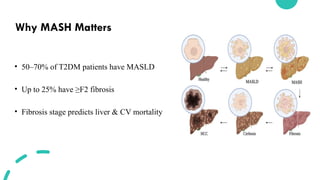
50–70% of T2DM patients have MASLD
Up to 25% have ≥F2 fibrosis
Fibrosis stage predicts liver & CV mortality
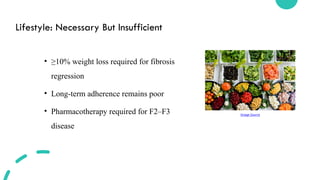
≥10% weight loss required for fibrosis regression
Long-term adherence remains poor
Pharmacotherapy required for F2–F3 disease
Drug name and
chemicalstructure
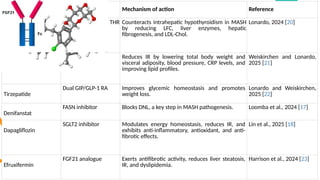
Drug class Mechanism of action Reference
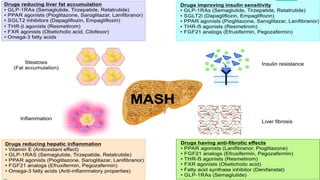
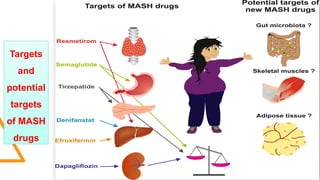
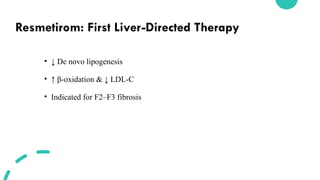
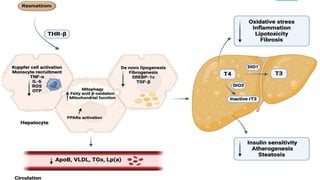
Resmetirom
Liver-selective THR
agonist
Counteracts intrahepatic hypothyroidism in MASH
by reducing LFC, liver enzymes, hepatic
fibrogenesis, and LDL-Chol.
Lonardo, 2024 [20]
Semaglutide
GLP-1 RA Reduces IR by lowering total body weight and
visceral adiposity, blood pressure, CRP levels, and
improving lipid profiles.
Weiskirchen and Lonardo,
2025 [21]
Tirzepatide
Dual GIP/GLP-1 RA Improves glycemic homeostasis and promotes
weight loss.
Lonardo and Weiskirchen,
2025 [22]
Denifanstat
FASN inhibitor Blocks DNL, a key step in MASH pathogenesis. Loomba et al., 2024 [17]
Dapagliflozin
SGLT2 inhibitor Modulates energy homeostasis, reduces IR, and
exhibits anti-inflammatory, antioxidant, and anti-
fibrotic effects.
Lin et al., 2025 [18]
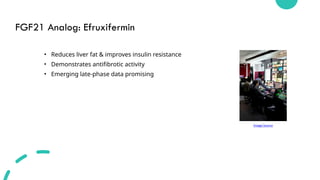
Efruxifermin
FGF21 analogue Exerts antifibrotic activity, reduces liver steatosis,
IR, and dyslipidemia.
Harrison et al., 2024 [23]
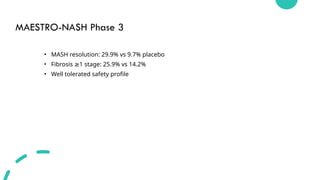
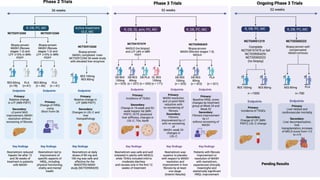
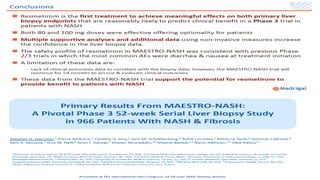
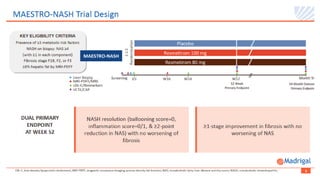
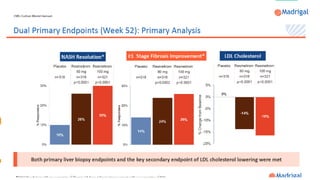
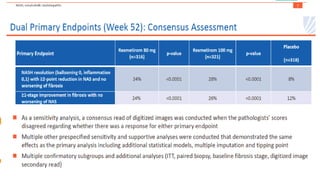
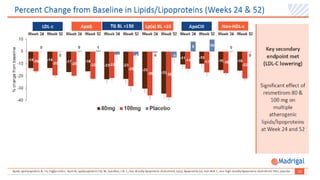
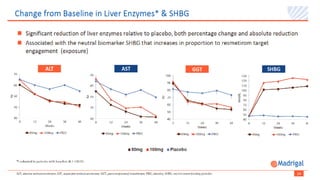
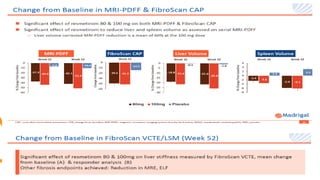
MAESTRO-NASH Phase 3
•MASH resolution: 29.9% vs 9.7% placebo
• Fibrosis 1 stage: 25.9% vs 14.2%
≥
• Well tolerated safety profile
21.
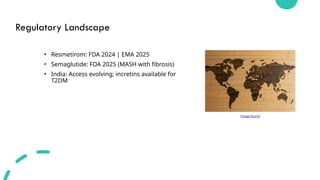
Regulatory Landscape
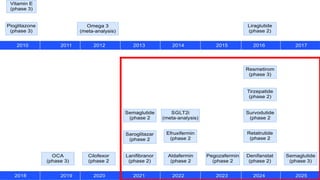
• Resmetirom:FDA 2024 | EMA 2025
• Semaglutide: FDA 2025 (MASH with fibrosis)
• India: Access evolving; incretins available for
T2DM
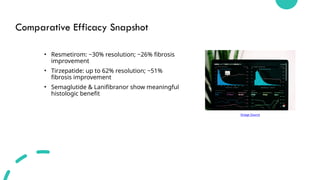
Image Source
Key Take-Home Messages
•Fibrosis stage drives prognosis in MASH
• Resmetirom marks first disease-specific
therapy
• Incretins are transformative for diabetologists
Image Source