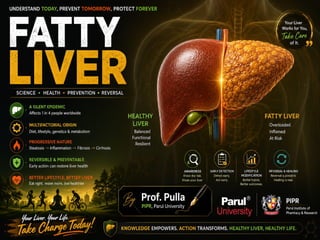
Fatty Liver: Comprehensive Overview of Fatty Liver Disease: Causes, Diagnosis, and Management
Explore fatty liver disease including its types, causes, symptoms, diagnosis, treatment, and prevention through lifestyle changes for better liver health.
Fatty Liver: Comprehensive Overview of Fatty Liver Disease: Causes, Diagnosis, and Management
2.
Learning Objectives
Learning Objectives
•Definefatty liver disease.
•List the common causes of fatty liver.
•Identify the risk factors for fatty liver.
•Describe the signs and symptoms of fatty liver.
•Explain the methods used to diagnose fatty liver.
•Discuss the treatment and lifestyle changes for fatty liver.
•Recognize the complications of untreated fatty liver disease.
3.
Program Outcomes
•PO1: Understandthe basic structure and function of the liver.
•PO2: Explain what fatty liver disease is and identify its different types.
•PO3: Recognize the common causes and risk factors of fatty liver.
•PO4: Identify the signs, symptoms, and possible complications of fatty liver
disease.
•PO5: Describe the methods used to diagnose fatty liver disease.
•PO6: Apply healthy lifestyle changes, including diet and exercise, to prevent
and manage fatty liver.
•PO7: Appreciate the importance of early diagnosis, regular follow-up, and
patient education in preventing disease progression.
4.
Course Outcomes
•After completionof this lecture, students will be able to:
•CO1: Define fatty liver and explain its basic causes.
•CO2: Identify the different types of fatty liver disease.
•CO3: Describe the common signs, symptoms, and risk factors of fatty liver.
•CO4: Explain the methods used to diagnose fatty liver disease.
•CO5: Discuss the complications associated with untreated fatty liver.
•CO6: Describe the treatment options and lifestyle changes for managing fatty
liver.
•CO7: Demonstrate awareness of preventive measures to reduce the risk of
fatty liver disease.
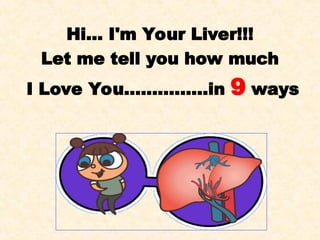
Hi... I'm YourLiver!!!
Let me tell you how much
I Love You……………in 9 ways
9.
1
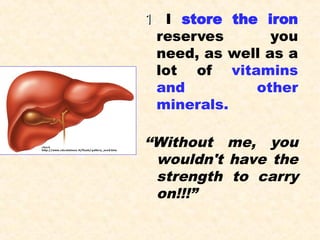
1. I storethe iron
reserves you
need, as well as a
lot of vitamins
and other
minerals.
‘‘Without me, you
wouldn't have the
strength to carry
on!!!”
10.
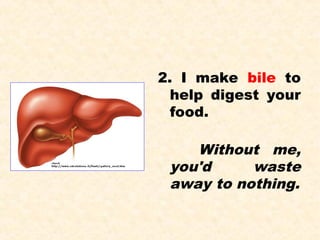
2. I makebile to
help digest your
food.
Without me,
you'd waste
away to nothing.
11.
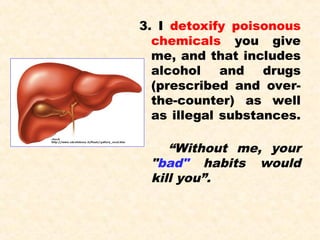
3. I detoxifypoisonous
chemicals you give
me, and that includes
alcohol and drugs
(prescribed and over-
the-counter) as well
as illegal substances.
“Without me, your
"bad" habits would
kill you”.
12.
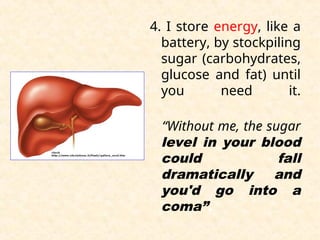
4. I storeenergy, like a
battery, by stockpiling
sugar (carbohydrates,
glucose and fat) until
you need it.
“Without me, the sugar
level in your blood
could fall
dramatically and
you'd go into a
coma”.
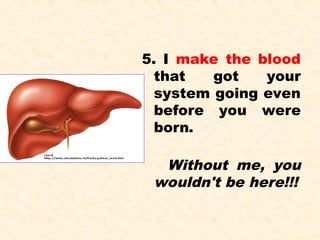
5. I makethe blood
that got your
system going even
before you were
born.
Without me, you
wouldn't be here!!!
15.
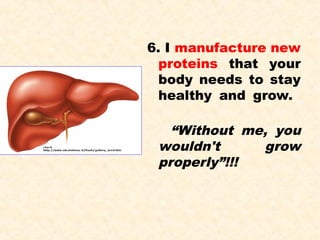
6. I manufacturenew
proteins that your
body needs to stay
healthy and grow.
“Without me, you
wouldn't grow
properly”!!!
16.
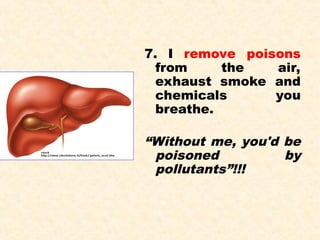
7. I removepoisons
from the air,
exhaust smoke and
chemicals you
breathe.
“Without me, you'd be
poisoned by
pollutants”!!!
17.
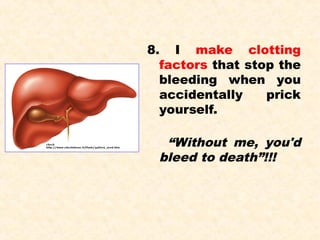
8. I makeclotting
factors that stop the
bleeding when you
accidentally prick
yourself.
“Without me, you'd
bleed to death”!!!
18.
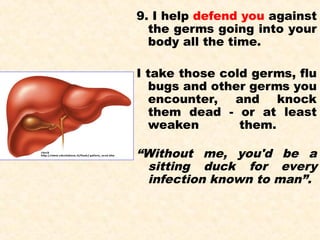
9. I helpdefend you against
the germs going into your
body all the time.
I take those cold germs, flu
bugs and other germs you
encounter, and knock
them dead - or at least
weaken them.
“Without me, you'd be a
sitting duck for every
infection known to man”.
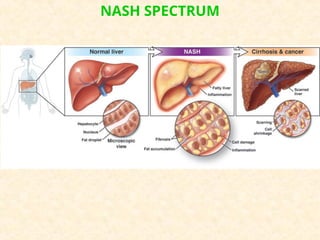
Fatty Liver
What isit?
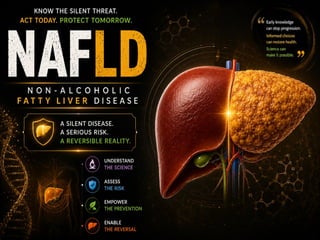
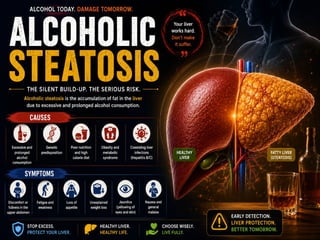
• Fatty liver is the collection of excessive
amounts of fat inside liver cells, also
called steatosis.
• Mostly triglycerides…
22.
Common type ofFatty
Liver
1. Nonalcoholic
fatty liver
disease
(NAFLD) -
affect people
who drink little
or no alcohol.
•simple fatty
liver
(steatosis),
usually
causes
no liver
damage.
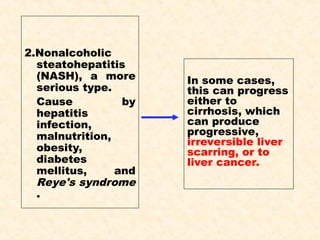
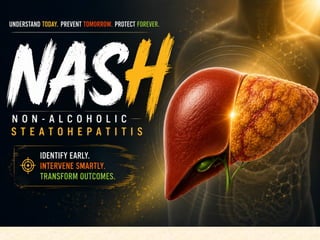
2.Nonalcoholic
steatohepatitis
(NASH), a more
serioustype.
Cause by
hepatitis
infection,
malnutrition,
obesity,
diabetes
mellitus, and
Reye's syndrome
.
In some cases,
this can progress
either to
cirrhosis, which
can produce
progressive,
irreversible liver
scarring, or to
liver cancer.
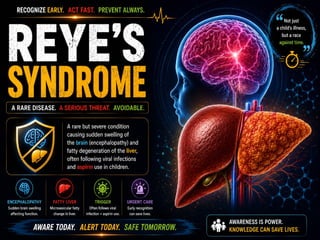
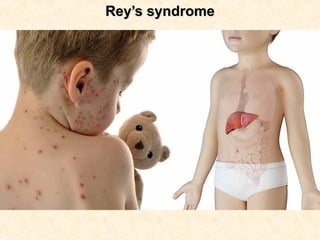
Reye's Syndrome -a deadly
disease, attack any child or
adult without warning...
..
All body organs are affected, with the liver
All body organs are affected, with the liver
and brain suffering most seriously.
and brain suffering most seriously.
Cause and cure remain unknown, research
Cause and cure remain unknown, research
has established a link between Reye's
has established a link between Reye's
Syndrome and the use of aspirin and other
Syndrome and the use of aspirin and other
salicylate-containing medications.
salicylate-containing medications.
3.
3. Alcoholic
Alcoholic
steatosis.
steatosis.
Cause alcohol
Causealcohol
by abuse
by abuse
All body organs are
affected, with the liver
and brain suffering most
seriously.
Cause and cure remain
unknown, research has
established a link
between Reye's
Syndrome and the use of
aspirin and other
salicylate-containing
medications.
33.
Causes:
1.Nonalcoholic fatty liver- It's
unclear exactly what causes
disease.
But many researchers believe the
contributing factors are:
– Obesity
– Hypertension
– Abnormal cholesterol levels
34.
2. It's alsounclear exactly how a liver
becomes fatty. The fat may come from
other parts of the body, or the liver
may absorb an increased amount of
fat from the intestine.
Another possible explanation is that
the liver loses its ability to change fat
into a form that can be eliminated.
35.
What are thesymptoms?
• Fatty liver usually produces no
symptoms.
• Jaundice
• right-side abdominal pain
• abdominal swelling
• fever.
36.
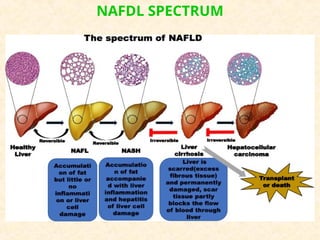
At more advancedstage, liver
becomes cirrhosis
• Cirrhosis refers to scarring of the
liver. It replaces healthy tissue.
• Scar tissue cannot do what healthy
liver tissue does.
• Scar tissue also blocks the normal
flow of blood through the liver.
• Cirrhosis can be life-threatening,
but it can also be controlled if
treated early.
37.
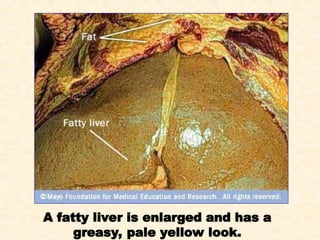
A fatty liveris enlarged and has a
greasy, pale yellow look.
39.
How is itdiagnosed?
• The liver may be tender when the
abdomen is pressed.
• Blood tests - for liver function.
• Ultrasound or abdominal CT scan.
40.
What is thetreatment?
• Treatment for fatty liver is aimed at eliminating or
treating the cause of the condition.
• In some cases, fatty liver is reversible if caught early in
its development.
•
• Pregnancy-related fatty liver is treated by delivering the
baby, if viable.
• Severe liver damage can occur if fatty liver is left
untreated.
• In these cases, the patient may eventually require a
liver transplant
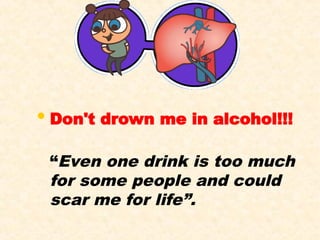
Don't drownme in alcohol!!!
“Even one drink is too much
for some people and could
scar me for life”.
44.
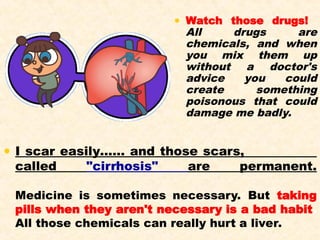
• I scareasily…… and those scars,
called "cirrhosis" are permanent.
Medicine is sometimes necessary. But taking
pills when they aren't necessary is a bad habit.
All those chemicals can really hurt a liver.
• Watch those drugs!
All drugs are
chemicals, and when
you mix them up
without a doctor's
advice you could
create something
poisonous that could
damage me badly.
45.
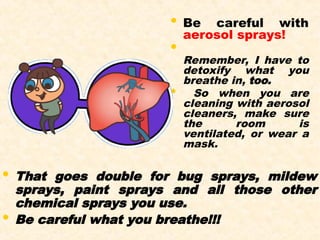
Be carefulwith
aerosol sprays!
Remember, I have to
detoxify what you
breathe in, too.
So when you are
cleaning with aerosol
cleaners, make sure
the room is
ventilated, or wear a
mask.
That goes double for bug sprays, mildew
sprays, paint sprays and all those other
chemical sprays you use.
Be careful what you breathe!!!
46.
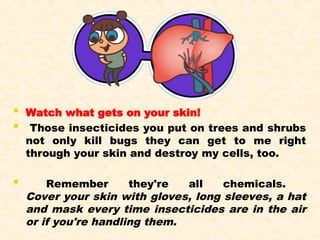
Watch whatgets on your skin!
Those insecticides you put on trees and shrubs
not only kill bugs they can get to me right
through your skin and destroy my cells, too.
Remember they're all chemicals.
Cover your skin with gloves, long sleeves, a hat
and mask every time insecticides are in the air
or if you're handling them.
47.
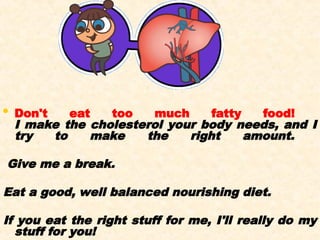
Don't eattoo much fatty food!
I make the cholesterol your body needs, and I
try to make the right amount.
Give me a break.
Eat a good, well balanced nourishing diet.
If you eat the right stuff for me, I'll really do my
stuff for you!
48.
WARNING
I can't andwon't tell you I'm in trouble until I'm
almost at the end of my rope... and yours.
Remember:
I am a non-complainer. Overloading me with drugs,
alcohol and other junk can destroy me!!!
This may be the only warning you will ever get…
49.
Take My Advice,Please!
• Check me out with your
doctor.
• Blood screening tests can
identify some trouble.
• If I'm soft and smooth,
that's good. If I'm hard and
bumpy, that could mean
trouble.
• If your doctor suspects
trouble, ULTRA SOUND and
CT scans can look into it.
• My life, and yours, depends
on how you treat me.
50.
Now you knowhow much I
care for you…
Please treat me with tender
loving care.
Your silent partner and ever-
loving lover….LIVER
51.
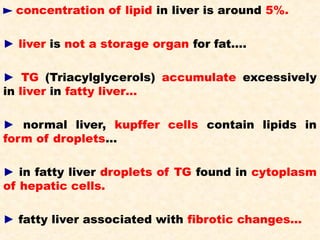
► concentration oflipid in liver is around 5%.
► liver is not a storage organ for fat….
► TG (Triacylglycerols) accumulate excessively
in liver in fatty liver…
► normal liver, kupffer cells contain lipids in
form of droplets…
► in fatty liver droplets of TG found in cytoplasm
of hepatic cells.
► fatty liver associated with fibrotic changes…
52.
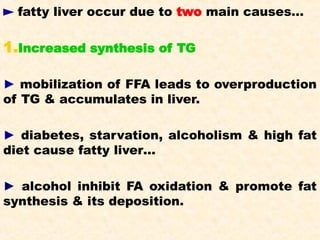
► fatty liveroccur due to two main causes…
1.Increased synthesis of TG
► mobilization of FFA leads to overproduction
of TG & accumulates in liver.
► diabetes, starvation, alcoholism & high fat
diet cause fatty liver…
► alcohol inhibit FA oxidation & promote fat
synthesis & its deposition.
53.
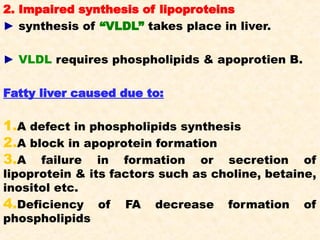
2. Impaired synthesisof lipoproteins
► synthesis of “VLDL” takes place in liver.
► VLDL requires phospholipids & apoprotien B.
Fatty liver caused due to:
1.A defect in phospholipids synthesis
2.A block in apoprotein formation
3.A failure in formation or secretion of
lipoprotein & its factors such as choline, betaine,
inositol etc.
4.Deficiency of FA decrease formation of
phospholipids
54.
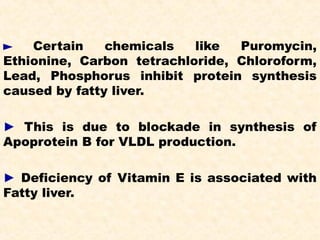
► Certain chemicalslike Puromycin,
Ethionine, Carbon tetrachloride, Chloroform,
Lead, Phosphorus inhibit protein synthesis
caused by fatty liver.
► This is due to blockade in synthesis of
Apoprotein B for VLDL production.
► Deficiency of Vitamin E is associated with
Fatty liver.
55.
QUESTIONS
Short Answer Questions
1.What is fatty liver disease?
2. Differentiate between alcoholic and non-alcoholic fatty liver disease
(NAFLD).
3. List any five risk factors for fatty liver disease.
4. Mention the common signs and symptoms of fatty liver.
5. What investigations are used to diagnose fatty liver disease?
Long Answer Questions
6. Explain the causes, pathophysiology, and classification of fatty liver
disease.
7. Discuss the clinical features, diagnosis, and complications of fatty liver
disease.
8. Describe the treatment and lifestyle modifications recommended for
patients with fatty liver disease.
9. Explain the progression of fatty liver disease from simple steatosis to
cirrhosis.
10. Discuss the preventive measures and the role of diet and exercise in
56.
ASSIGNMENT
1. Explain thepathophysiology of fatty liver disease and discuss the factors
responsible for its development.
2. Differentiate between Alcoholic Fatty Liver Disease (AFLD) and Non-Alcoholic
Fatty Liver Disease (NAFLD) with suitable examples and risk factors.
3. Discuss the role of obesity, diabetes mellitus, dyslipidemia, and metabolic
syndrome in the development of fatty liver disease.
4. Describe the diagnostic approaches for fatty liver disease, including liver function
tests, imaging techniques, and liver biopsy. Highlight the advantages and limitations of
each method.
5. Explain the pharmacological and non-pharmacological management of fatty liver
disease, emphasizing the role of pharmacists in patient counseling and medication
management.
6. Prepare a patient education leaflet on fatty liver disease covering causes, symptoms,
prevention, dietary recommendations, lifestyle modifications, and treatment adherence.
7.Review a recent research article (published within the last 5 years) on fatty liver
disease and summarize its objectives, methodology, key findings, and clinical significance
in 800–1000 words.
57.
FILL IN THEBLANKS
1. The accumulation of excess fat in liver cells is known as __________.
2. __________ is the most common type of fatty liver disease not caused by alcohol
consumption.
3. Obesity and __________ are major risk factors for fatty liver disease.
4. The imaging technique most commonly used to detect fatty liver is __________.
5. The excessive consumption of __________ can lead to alcoholic fatty liver disease.
6. Fatty liver can progress to liver __________ if left untreated.
7. Elevated levels of __________ and AST are commonly observed in patients with
fatty liver disease.
8. eight loss through __________ and regular exercise is the first-line treatment for
non-alcoholic fatty liver disease.
9. The normal liver stores only a small amount of __________.
10.Early stages of fatty liver disease are often _______________________.
58.
MULTIPLE CHOICE QUESTIONS
1.Fatty liver disease is characterized by the accumulation of excessive ________ in liver cells.
A) Protein
B) Glycogen
C) Fat
D) Water
2. Which of the following is a major risk factor for Non-Alcoholic Fatty Liver Disease (NAFLD)?
A) Asthma
B) Hypertension alone
C) Obesity
D) Tuberculosis
3. Which diagnostic imaging technique is commonly used as the first-line investigation for fatty
liver?
A) X-ray
B) CT Scan
C) MRI
D) Ultrasonography (Ultrasound)
4. If left untreated, fatty liver disease may progress to which serious liver condition?
A) Gastritis
B) Cirrhosis
C) Appendicitis
D) Pancreatitis
59.
5.
5. The first-linemanagement of Non-Alcoholic Fatty Liver Disease (NAFLD) primarily includes:
A) Antibiotic therapy
B) Antiviral therapy
C) Chemotherapy
D) Lifestyle modification (diet and regular exercise)
6. Which organ is primarily affected in fatty liver disease?
A) Kidney
B) Heart
C) Liver
D) Pancreas
7. Which liver enzyme is commonly elevated in patients with fatty liver disease?
A) Amylase
B) Lipase
C) Creatine kinase (CK)
D) Alanine aminotransferase (ALT)
8. Which of the following conditions is closely associated with Non-Alcoholic Fatty Liver Disease
(NAFLD)?
A) Hyperthyroidism
B) Metabolic syndrome
C) Anemia
D) Osteoporosis
9. Which of the following is the most effective strategy to prevent fatty liver disease?
A) Smoking regularly
B) Excessive alcohol intake
C) Maintaining a healthy diet and regular physical activity
D) Taking antibiotics regularly
60.
REFERENCES
Textbooks
1. Robbins &Cotran Pathologic Basis of Disease. 11th Edition. Elsevier; 2023.
2. Harrison's Principles of Internal Medicine. 22nd Edition. McGraw-Hill Education;
2024.
3. Kumar and Clark's Clinical Medicine. 11th Edition. Elsevier; 2023.
4. Davidson's Principles and Practice of Medicine. 25th Edition. Elsevier; 2023.
5. Goodman & Gilman's The Pharmacological Basis of Therapeutics. 14th Edition.
McGraw-Hill Education; 2022.
Guidelines and Journals
6. American Association for the Study of Liver Diseases. Practice Guidance on the
Clinical Assessment and Management of Nonalcoholic Fatty Liver Disease.
7. European Association for the Study of the Liver. Clinical Practice Guidelines on
Metabolic Dysfunction-Associated Steatotic Liver Disease (MASLD).
8. World Health Organization. Global reports and resources on liver diseases and
noncommunicable diseases.
9. Journal of Hepatology. Recent review articles on fatty liver disease,
steatohepatitis, and liver fibrosis.
10. Hepatology. Original research articles and clinical practice guidelines on fatty
liver disease.