Gulf of Evaluation?
Don’t Make Me Think
Spoon theory, trauma-informed design, and accessibility
Ted Drake, Intuit
CSUN ATC 2026
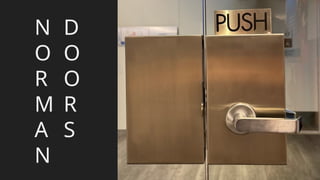
N
O
R
M
A
N
D
O
O
R
S
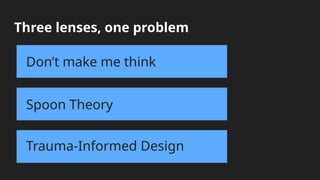
Three lenses, one problem
Don’t make me think
Spoon Theory
Trauma-Informed Design
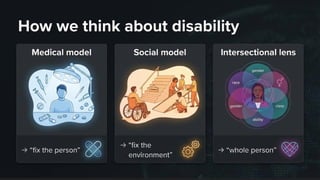
How we think about disability
Medical model “fix the person”
→
Social model “fix the environment”
→
Intersectional lens “whole person”
→
Trauma is not an edge case
50–60% of people experience trauma
Long-term: PTSD, anxiety, toxic stress
Our job is simple: Do no harm
Design to protect mental energy
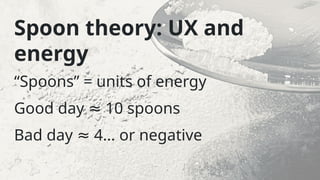
Spoon theory: UX and
energy
“Spoons” = units of energy
Good day 10 spoons
≈
Bad day 4… or negative
≈
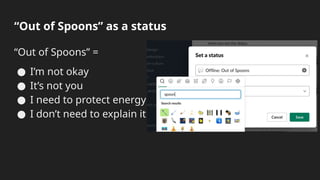
“Out of Spoons” as a status
“Out of Spoons” =
● I’m not okay
● It’s not you
● I need to protect energy
● I don’t need to explain it
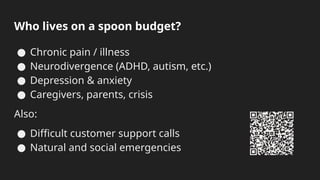
Who lives on a spoon budget?
● Chronic pain / illness
● Neurodivergence (ADHD, autism, etc.)
● Depression & anxiety
● Caregivers, parents, crisis
Also:
● Difficult customer support calls
● Natural and social emergencies
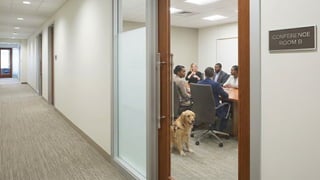
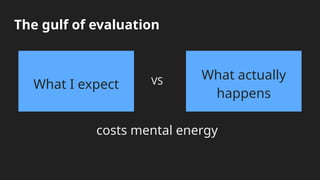
The gulf of evaluation
costs mental energy
What I expect
What actually
happens
VS
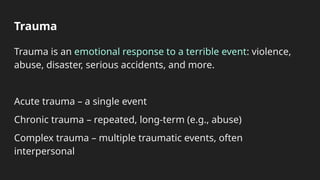
Trauma
Trauma is an emotional response to a terrible event: violence,
abuse, disaster, serious accidents, and more.
Acute trauma – a single event
Chronic trauma – repeated, long-term (e.g., abuse)
Complex trauma – multiple traumatic events, often
interpersonal
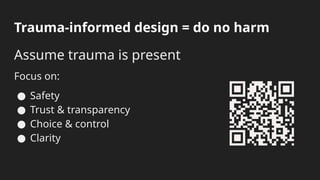
Trauma-informed design = do no harm
Assume trauma is present
Focus on:
● Safety
● Trust & transparency
● Choice & control
● Clarity
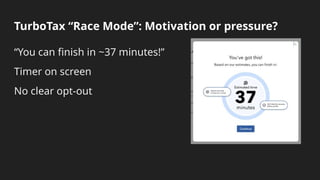
TurboTax “Race Mode”: Motivation or pressure?
“You can finish in ~37 minutes!”
Timer on screen
No clear opt-out
What this feels like on a bad day
“I’m being judged on speed”
“If I’m slow, I’m failing”
“I’m already scared to make a mistake”
Gentle version of the same idea
Ask permission
Optional timer, easy to hide
Explain estimate
QuickBooks migration: honestly hard
Many steps
Real risk
Lots of text
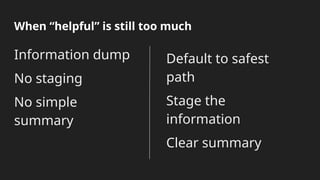
When “helpful” is still too much
Information dump
No staging
No simple
summary
Default to safest
path
Stage the
information
Clear summary
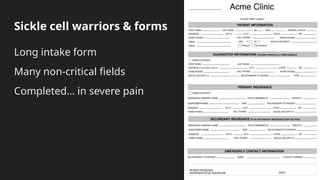
Sickle cell warriors & forms
Long intake form
Many non-critical fields
Completed… in severe pain
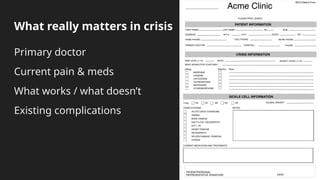
What really matters in crisis
Primary doctor
Current pain & meds
What works / what doesn’t
Existing complications
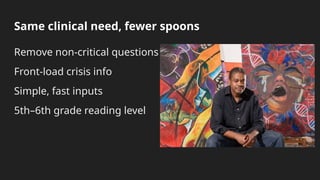
Same clinical need, fewer spoons
Remove non-critical questions
Front-load crisis info
Simple, fast inputs
5th–6th grade reading level
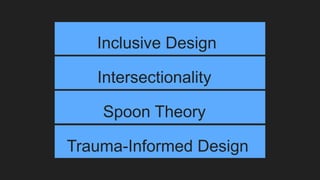
Inclusive Design
Trauma-Informed Design
Spoon Theory
Intersectionality
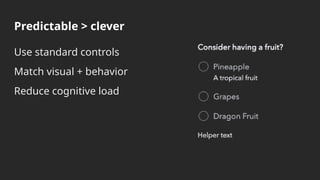
Predictable > clever
Use standard controls
Match visual + behavior
Reduce cognitive load
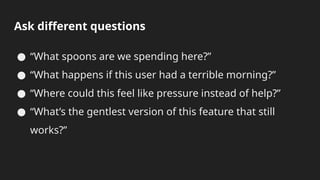
Ask different questions
● “What spoons are we spending here?”
● “What happens if this user had a terrible morning?”
● “Where could this feel like pressure instead of help?”
● “What’s the gentlest version of this feature that still
works?”
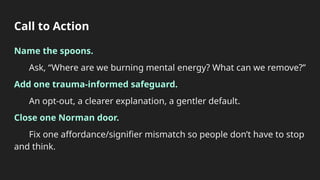
Call to Action
Name the spoons.
Ask, “Where are we burning mental energy? What can we remove?”
Add one trauma-informed safeguard.
An opt-out, a clearer explanation, a gentler default.
Close one Norman door.
Fix one affordance/signifier mismatch so people don’t have to stop
and think.
Questions?
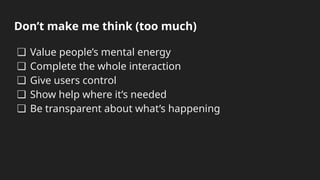
Don’t make me think (too much)
❏ Value people’s mental energy
❏ Complete the whole interaction
❏ Give users control
❏ Show help where it’s needed
❏ Be transparent about what’s happening
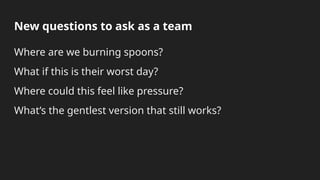
New questions to ask as a team
Where are we burning spoons?
What if this is their worst day?
Where could this feel like pressure?
What’s the gentlest version that still works?
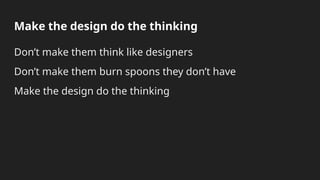
Make the design do the thinking
Don’t make them think like designers
Don’t make them burn spoons they don’t have
Make the design do the thinking