Digital Marketing: The Complete
Guide to Growing Your Business
Online
Introduction
The internet has changed how businesses connect with customers. Traditional advertising
methods still exist, but online platforms now play a larger role in business growth. Companies of
all sizes use Digital Marketing to reach target audiences, build brand awareness, and increase
sales.
Digital Marketing, also known as Online Marketing, Internet Marketing, Digital Advertising,
and Web Marketing, involves promoting products and services through digital channels. These
channels include search engines, social media platforms, websites, email, and mobile
applications.
Today, customers spend significant time online. Businesses must establish a strong digital
presence to remain competitive. Effective Digital Marketing strategies help companies attract
customers, generate leads, and improve revenue.
This guide explains the meaning, importance, types, benefits, strategies, tools, challenges, and
future trends of Digital Marketing.
What is Digital Marketing?
Digital Marketing is the process of promoting products, services, or brands using digital
technologies and online channels. Businesses use internet-based platforms to communicate
with potential customers and encourage engagement.
Unlike traditional marketing, Digital Marketing allows businesses to reach specific audiences
with measurable results. Every click, visit, and conversion can be tracked and analyzed.
The primary goal of Digital Marketing is creating meaningful customer interactions that lead to
business growth. Companies use various techniques to attract, engage, and convert online
users into customers.
Why Digital Marketing is Important
Modern consumers search online before making purchasing decisions. Businesses that ignore
digital channels often miss valuable opportunities.
Wider Audience Reach
Online Marketing enables businesses to reach customers across cities, countries, and
continents. Geographic limitations become less important.
Cost-Effective Promotion
Many Digital Advertising methods cost less than traditional advertising channels. Small
businesses can compete with larger brands using smart strategies.
Better Customer Targeting
Businesses can target audiences based on demographics, interests, behavior, and location.
This improves campaign effectiveness.
Measurable Results
Every marketing activity can be tracked through analytics tools. Businesses can evaluate
performance and make informed decisions.
Increased Brand Awareness
A strong online presence helps businesses become more visible. Customers recognize brands
through repeated digital interactions.
How Digital Marketing Works
Digital Marketing works by connecting businesses with customers through digital platforms.
The process follows several important steps.
Audience Research
Businesses identify their ideal customers and understand their needs.
Content Creation
Marketers develop valuable content that attracts and educates audiences.
Traffic Generation
Businesses drive visitors through search engines, social media, and advertising.
Lead Conversion
Website visitors become leads through forms, downloads, or inquiries.
Customer Retention
Companies maintain relationships through email campaigns and personalized communication.
Each stage contributes to successful Internet Marketing outcomes.
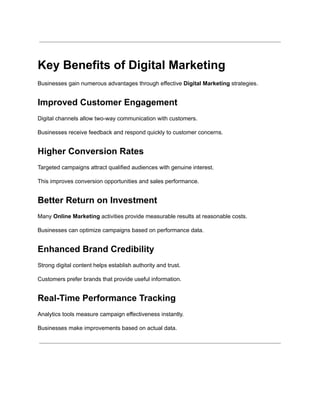
Types of Digital Marketing
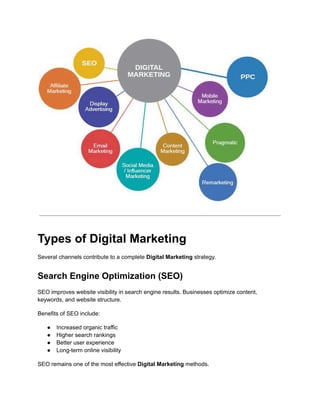
Several channels contribute to a complete Digital Marketing strategy.
Search Engine Optimization (SEO)
SEO improves website visibility in search engine results. Businesses optimize content,
keywords, and website structure.
Benefits of SEO include:
●​ Increased organic traffic
●​ Higher search rankings
●​ Better user experience
●​ Long-term online visibility
SEO remains one of the most effective Digital Marketing methods.
Content Marketing
Content marketing involves creating valuable information for target audiences.
Common content formats include:
●​ Blog posts
●​ Articles
●​ Videos
●​ Infographics
●​ Case studies
●​ E-books
Quality content builds trust and authority. It also supports SEO performance.
Social Media Marketing
Social media platforms help businesses engage directly with customers.
Popular platforms include:
●​ Facebook
●​ Instagram
●​ LinkedIn
●​ X
●​ Pinterest
●​ YouTube
Online Marketing campaigns often rely on social media for brand awareness and customer
interaction.
Pay-Per-Click Advertising (PPC)
PPC advertising allows businesses to display ads on search engines and websites.
Advertisers pay only when users click their ads.
Benefits include:
●​ Immediate visibility
●​ Precise audience targeting
●​ Fast lead generation
●​ Measurable performance
PPC remains an important part of Digital Advertising strategies.
Email Marketing
Email marketing helps businesses communicate directly with subscribers.
Companies use emails to:
●​ Share updates
●​ Promote products
●​ Nurture leads
●​ Increase customer loyalty
Email campaigns often produce strong returns on investment.
Affiliate Marketing
Affiliate marketing involves partnerships with individuals or organizations that promote products
for commissions.
This strategy expands market reach without large advertising expenses.
Influencer Marketing
Influencers promote products to their followers through social platforms.
Businesses collaborate with trusted creators to increase credibility and exposure.
Mobile Marketing
Mobile devices account for a significant share of internet usage.
Mobile marketing includes:
●​ SMS campaigns
●​ Mobile applications
●​ Push notifications
●​ Mobile-friendly websites
A mobile-first approach improves customer engagement.
Key Benefits of Digital Marketing
Businesses gain numerous advantages through effective Digital Marketing strategies.
Improved Customer Engagement
Digital channels allow two-way communication with customers.
Businesses receive feedback and respond quickly to customer concerns.
Higher Conversion Rates
Targeted campaigns attract qualified audiences with genuine interest.
This improves conversion opportunities and sales performance.
Better Return on Investment
Many Online Marketing activities provide measurable results at reasonable costs.
Businesses can optimize campaigns based on performance data.
Enhanced Brand Credibility
Strong digital content helps establish authority and trust.
Customers prefer brands that provide useful information.
Real-Time Performance Tracking
Analytics tools measure campaign effectiveness instantly.
Businesses make improvements based on actual data.
Essential Components of a Successful
Digital Marketing Strategy
A successful Digital Marketing strategy requires planning and consistency.
Define Clear Goals
Businesses should establish measurable objectives before launching campaigns.
Common goals include:
●​ Traffic growth
●​ Lead generation
●​ Sales increases
●​ Brand awareness
Understand Your Audience
Customer research helps businesses create relevant marketing messages.
Audience insights improve campaign performance.
Create High-Quality Content
Useful content attracts visitors and encourages engagement.
Businesses should focus on solving customer problems.
Optimize for Search Engines
SEO improves visibility and attracts organic traffic.
Keyword optimization remains important for search performance.
Use Multiple Channels
Combining SEO, social media, email, and advertising increases reach.
A multi-channel approach improves overall results.
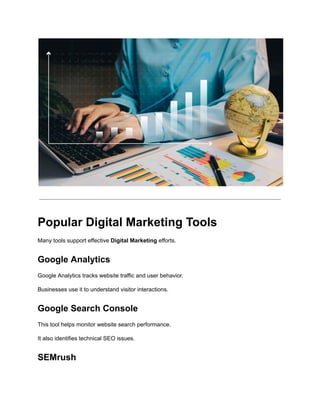
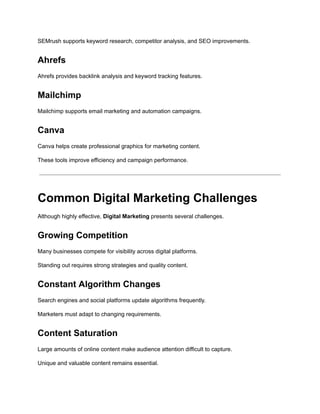
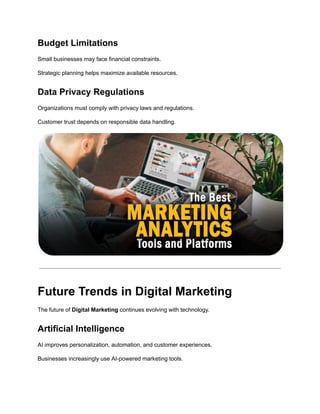
Popular Digital Marketing Tools
Many tools support effective Digital Marketing efforts.
Google Analytics
Google Analytics tracks website traffic and user behavior.
Businesses use it to understand visitor interactions.
Google Search Console
This tool helps monitor website search performance.
It also identifies technical SEO issues.
SEMrush
SEMrush supports keyword research, competitor analysis, and SEO improvements.
Ahrefs
Ahrefs provides backlink analysis and keyword tracking features.
Mailchimp
Mailchimp supports email marketing and automation campaigns.
Canva
Canva helps create professional graphics for marketing content.
These tools improve efficiency and campaign performance.
Common Digital Marketing Challenges
Although highly effective, Digital Marketing presents several challenges.
Growing Competition
Many businesses compete for visibility across digital platforms.
Standing out requires strong strategies and quality content.
Constant Algorithm Changes
Search engines and social platforms update algorithms frequently.
Marketers must adapt to changing requirements.
Content Saturation
Large amounts of online content make audience attention difficult to capture.
Unique and valuable content remains essential.
Budget Limitations
Small businesses may face financial constraints.
Strategic planning helps maximize available resources.
Data Privacy Regulations
Organizations must comply with privacy laws and regulations.
Customer trust depends on responsible data handling.
Future Trends in Digital Marketing
The future of Digital Marketing continues evolving with technology.
Artificial Intelligence
AI improves personalization, automation, and customer experiences.
Businesses increasingly use AI-powered marketing tools.
Voice Search Optimization
More users search through voice assistants.
Content optimization for voice queries is becoming important.
Video Marketing Growth
Video content continues attracting high engagement levels.
Short-form videos remain particularly effective.
Personalized Marketing
Customers expect tailored experiences and relevant recommendations.
Personalization improves customer satisfaction and loyalty.
Marketing Automation
Automation tools streamline repetitive tasks and improve efficiency.
Businesses save time while maintaining consistent communication.
Skills Required for Digital Marketing
Success
Professionals need several important skills to excel in Digital Marketing.
SEO Knowledge
Understanding search engine optimization improves online visibility.
Content Creation
Quality content remains the foundation of successful campaigns.
Data Analysis
Marketers must evaluate performance metrics and campaign results.
Social Media Management
Effective platform management improves engagement and brand awareness.
Communication Skills
Clear messaging helps businesses connect with audiences effectively.
Continuous learning remains essential because digital platforms evolve rapidly.
Best Practices for Digital Marketing
Businesses should follow proven practices to maximize success.
Focus on Customer Needs
Customer-focused content generates stronger engagement.
Publish Consistently
Regular content improves visibility and audience trust.
Monitor Performance
Analytics help identify strengths and improvement opportunities.
Optimize User Experience
Fast-loading websites improve satisfaction and conversions.
Stay Updated
Digital trends change frequently. Businesses should remain informed.
Following these practices supports sustainable growth and better results.
Conclusion
Digital Marketing has transformed how businesses attract, engage, and retain customers.
Through Online Marketing, Internet Marketing, Digital Advertising, and Web Marketing,
organizations can reach wider audiences and achieve measurable growth.
From SEO and content marketing to social media and email campaigns, digital channels offer
powerful opportunities for business success. Companies that invest in effective Digital
Marketing strategies often gain stronger customer relationships, increased visibility, and higher
revenue.
As technology continues advancing, the role of Digital Marketing will become even more
important. Businesses that adapt to new trends and maintain a customer-focused approach will
remain competitive in the evolving digital landscape.