Learning Objectives
After this lecture students should be able to
âś“ Explain the importance of non-clinical studies
âś“ Describe different pharmacology studies
âś“ Understand ADME evaluation
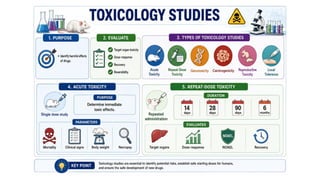
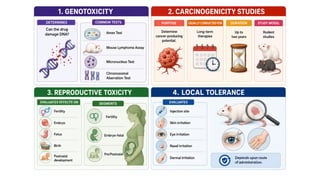
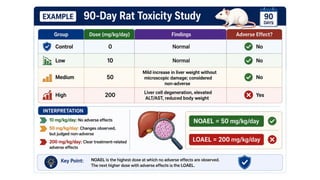
âś“ Explain major toxicology studies
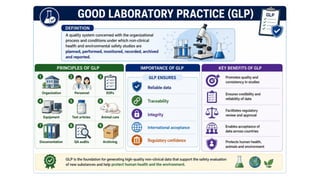
âś“ Understand Good Laboratory Practice (GLP)
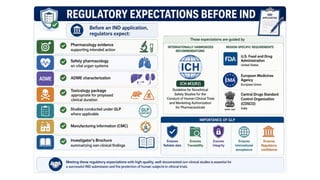
âś“ Explain regulatory expectations before IND submission
Objectives of Non-Clinical Studies
The major objectives are
Demonstrate efficacy
Does the drug produce the desired biological effect?
Evaluate safety
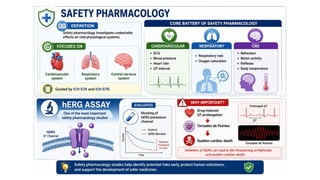
Identify possible adverse effects.
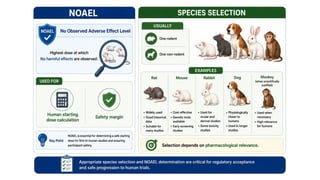
Determine dose
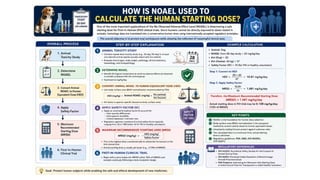
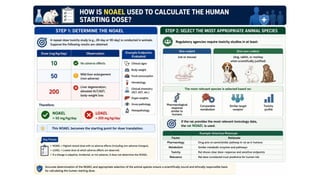
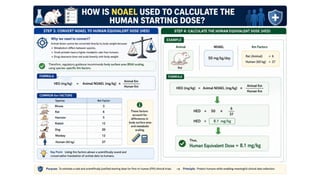
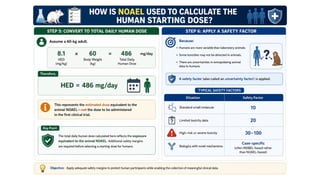
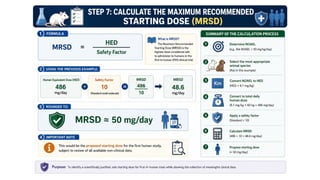
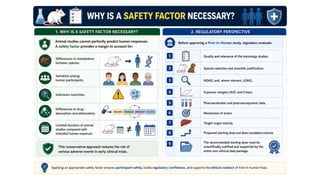
Estimate safe starting dose for first-in-human studies.
Understand pharmacokinetics
How the drug behaves inside the body.
Support IND application
Provide evidence that human exposure is reasonably safe.
Why Are Non-Clinical Studies Important?
They help answer
âś” Does the drug work?
âś” Is it safe?
âś” Which organs are affected?
âś” What dose should be tested?
âś” Can the study proceed to humans?
Without adequate non-clinical evidence, regulatory agencies will
not permit clinical trials.
Summary
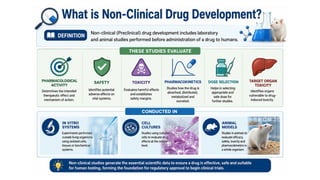
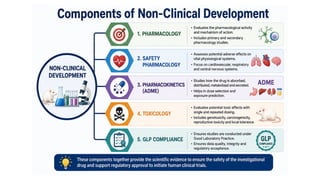
âś“ Non-clinical studies bridge drug discovery and human clinical trials.
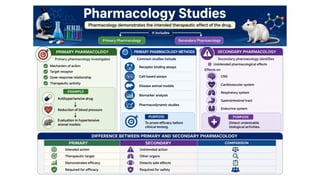
âś“ They establish proof of concept, characterize pharmacology, and
identify potential safety risks.
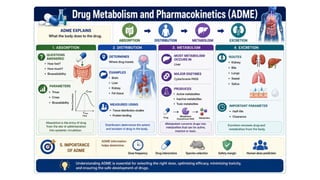
âś“ ADME studies define how the drug is absorbed, distributed,
metabolized, and eliminated.
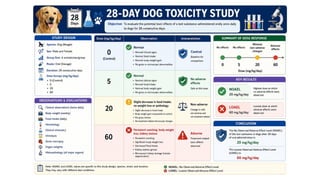
âś“ Toxicology studies determine target-organ toxicity and support safe
dose selection.
âś“ GLP ensures the quality, integrity, and reliability of non-clinical data.
âś“ A comprehensive non-clinical package is essential for regulatory
review and successful IND submission.
Comprehensive Overview of Non-Clinical Studies in Drug Development