Comprehensive Overview of Hematinics: Iron, Vitamin B12, Folic Acid, and Erythropoietin in Anemia Management
Detailed insights into hematinics including iron metabolism, vitamin B12 and folic acid roles, anemia types, treatment options, and erythropoietin therapeutic uses
Comprehensive Overview of Hematinics: Iron, Vitamin B12, Folic Acid, and Erythropoietin in Anemia Management
1.
HEMATINICS
Presenter: Dr. TripthyShetty (JR-2)
King George’s Medical University
Lucknow, Uttar Pradesh, India - 226003
Email: tripthyshettykgmu@gmail.com
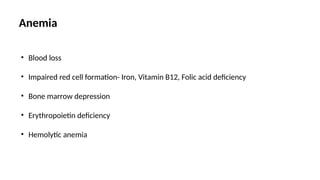
Anemia
• Blood loss
•Impaired red cell formation- Iron, Vitamin B12, Folic acid deficiency
• Bone marrow depression
• Erythropoietin deficiency
• Hemolytic anemia
5.
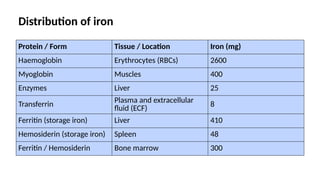
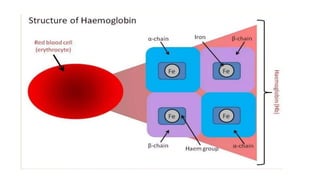
Distribution of iron
Protein/ Form Tissue / Location Iron (mg)
Haemoglobin Erythrocytes (RBCs) 2600
Myoglobin Muscles 400
Enzymes Liver 25
Transferrin Plasma and extracellular
fluid (ECF)
8
Ferritin (storage iron) Liver 410
Hemosiderin (storage iron) Spleen 48
Ferritin / Hemosiderin Bone marrow 300
7.
Iron
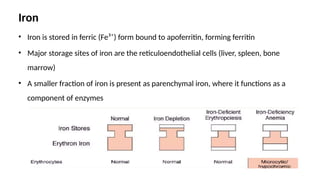
• Iron isstored in ferric (Fe³⁺) form bound to apoferritin, forming ferritin
• Major storage sites of iron are the reticuloendothelial cells (liver, spleen, bone
marrow)
• A smaller fraction of iron is present as parenchymal iron, where it functions as a
component of enzymes
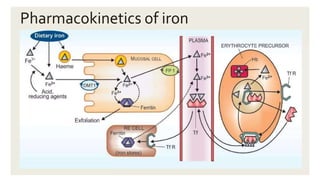
Pharmacokinetics of Iron
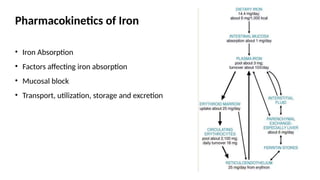
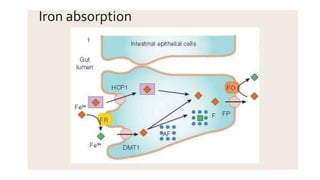
•Iron Absorption
• Factors affecting iron absorption
• Mucosal block
• Transport, utilization, storage and excretion
12.
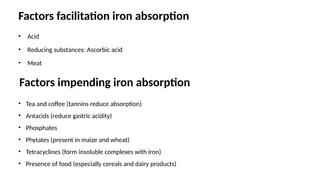
Factors facilitation ironabsorption
• Acid
• Reducing substances: Ascorbic acid
• Meat
Factors impending iron absorption
• Tea and coffee (tannins reduce absorption)
• Antacids (reduce gastric acidity)
• Phosphates
• Phytates (present in maize and wheat)
• Tetracyclines (form insoluble complexes with iron)
• Presence of food (especially cereals and dairy products)
13.
Mucosal Block
• Ferritincurtain
• Erythropoiesis and iron status govern absorption
• Larger % absorbed during deficiency
• In gross excess, mucosal block fails
14.
Transport and Utilizationof Iron
• After absorption, iron enters the plasma in the ferrous (Fe²⁺) form, iron is
immediately oxidized to the ferric (Fe³⁺) form
• Ferric iron binds to a plasma glycoprotein called transferrin (Tf)
• Transferrin–iron complex transports iron through the bloodstream, Iron enters
target cells by binding of transferrin to transferrin receptors on the cell surface
• Inside the cell, iron dissociates from transferrin at acidic pH within endosomes
15.
Storage
• Stored inRE cells of liver, spleen and bone marrow, and in hepatocytes and myocytes
• Apoferritin synthesis is regulated by iron status of the body
• Low iron status → less apoferritin synthesis and more transferrin production
• High iron status → increased apoferritin synthesis
16.
Excretion
• Highly conserved(one-way substance)
• Excreted by shedding of mucosal cells, bile, desquamated skin, urine and sweat
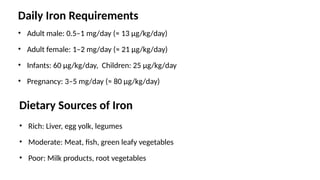
• Menstruation: 0.5–1 mg/day
• Excess iron requirement in pregnancy
Oral Iron
• Preferredroute
• Ferrous salts preferred – cheap, high iron content, better absorption
• Gastric irritation and constipation depends on quantity of iron
• Elemental iron
Oral Iron preparations
• Ferrous sulphate – 20% in hydrated form, 32% in dried salt
• Ferrous gluconate – 12% elemental iron
• Ferrous fumarate – 33% elemental iron, tasteless
• Carbonyl iron – Powder form, better gastric tolerance
19.
Adverse effects
• Epigastricpain, Heartburn, Nausea, Vomiting
• Bloating, staining of teeth, metallic taste
• Start with low dose and gradually increase the dose
• Constipation is more common than diarrhoea
Calculations
• Iron requirement = 4.4 × Body Weight (kg) × Hb deficit (%) (mg)
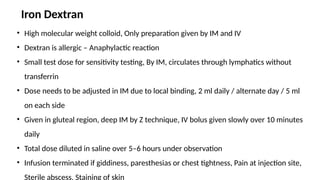
Iron Dextran
• Highmolecular weight colloid, Only preparation given by IM and IV
• Dextran is allergic – Anaphylactic reaction
• Small test dose for sensitivity testing, By IM, circulates through lymphatics without
transferrin
• Dose needs to be adjusted in IM due to local binding, 2 ml daily / alternate day / 5 ml
on each side
• Given in gluteal region, deep IM by Z technique, IV bolus given slowly over 10 minutes
daily
• Total dose diluted in saline over 5–6 hours under observation
• Infusion terminated if giddiness, paresthesias or chest tightness, Pain at injection site,
Sterile abscess, Staining of skin
22.
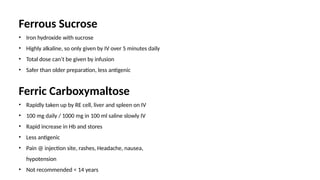
Ferrous Sucrose
• Ironhydroxide with sucrose
• Highly alkaline, so only given by IV over 5 minutes daily
• Total dose can’t be given by infusion
• Safer than older preparation, less antigenic
Ferric Carboxymaltose
• Rapidly taken up by RE cell, liver and spleen on IV
• 100 mg daily / 1000 mg in 100 ml saline slowly IV
• Rapid increase in Hb and stores
• Less antigenic
• Pain @ injection site, rashes, Headache, nausea,
hypotension
• Not recommended < 14 years
23.
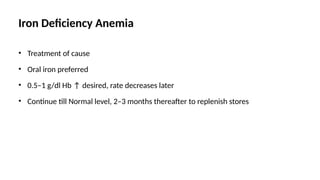
Iron Deficiency Anemia
•Treatment of cause
• Oral iron preferred
• 0.5–1 g/dl Hb ↑ desired, rate decreases later
• Continue till Normal level, 2–3 months thereafter to replenish stores
24.
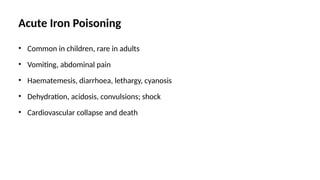
Acute Iron Poisoning
•Common in children, rare in adults
• Vomiting, abdominal pain
• Haematemesis, diarrhoea, lethargy, cyanosis
• Dehydration, acidosis, convulsions; shock
• Cardiovascular collapse and death
25.
Iron Poisoning: Treatment
•Induction of vomiting / Gastric lavage with bicarbonate
• Egg yolk / milk orally
• Desferioxamine
• DTPA and Calcium Edetate – alternate
• Supportive measures
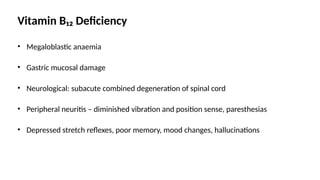
Vitamin B₁₂ (Cobalamin)
•Synthesised by microorganism
• Dietary sources – Liver, kidney, sea fish, egg yolk, meat
• Vegetables and fruits lack cobalamin unless contaminated by microorganism
• Daily 1–3 µg; pregnancy and lactation: 3–5 µg/day
• Present in food as protein conjugates; is released by cooking or by proteolysis
• Intrinsic factor (a glycoprotein) secreted by stomach forms a complex with B₁₂
• Attach to specific receptors present on intestinal mucosal cells at the ileum
• Absorbed by active carrier mediated transport
• Transported in blood in combination with a β globulin, transcobalamin II (TCII)
28.
Vitamin B₁₂ :Functions
• Essential for cell growth and replication
• Re-arrangement of methylmalonyl CoA to Succinyl CoA
(for fatty acid synthesis in neural tissue)
• Conversion of homocysteine to methionine
• Essential to support folate metabolism
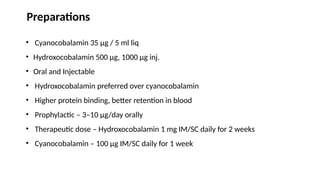
• Cyanocobalamin 35µg / 5 ml liq
• Hydroxocobalamin 500 µg, 1000 µg inj.
• Oral and Injectable
• Hydroxocobalamin preferred over cyanocobalamin
• Higher protein binding, better retention in blood
• Prophylactic – 3–10 µg/day orally
• Therapeutic dose – Hydroxocobalamin 1 mg IM/SC daily for 2 weeks
• Cyanocobalamin – 100 µg IM/SC daily for 1 week
Preparations
31.
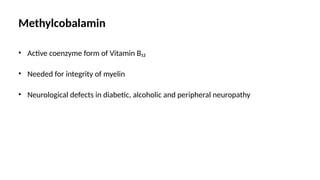
Methylcobalamin
• Active coenzymeform of Vitamin B₁₂
• Needed for integrity of myelin
• Neurological defects in diabetic, alcoholic and peripheral neuropathy
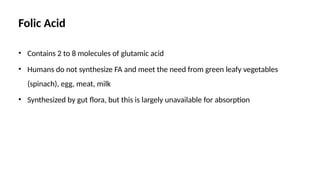
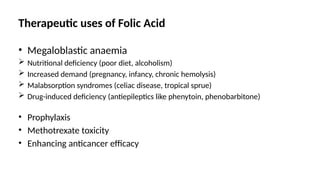
Folic Acid
• Contains2 to 8 molecules of glutamic acid
• Humans do not synthesize FA and meet the need from green leafy vegetables
(spinach), egg, meat, milk
• Synthesized by gut flora, but this is largely unavailable for absorption
34.
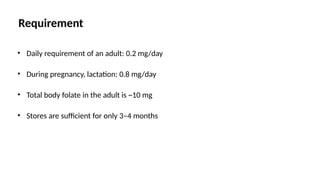
Requirement
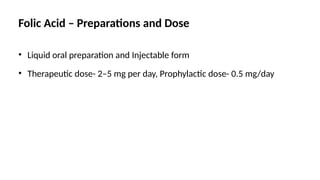
• Daily requirementof an adult: 0.2 mg/day
• During pregnancy, lactation: 0.8 mg/day
• Total body folate in the adult is ~10 mg
• Stores are sufficient for only 3–4 months
35.
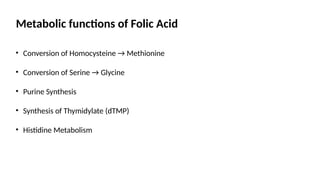
Metabolic functions ofFolic Acid
• Conversion of Homocysteine → Methionine
• Conversion of Serine → Glycine
• Purine Synthesis
• Synthesis of Thymidylate (dTMP)
• Histidine Metabolism
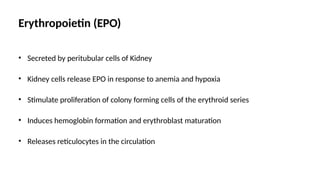
Erythropoietin (EPO)
• Secretedby peritubular cells of Kidney
• Kidney cells release EPO in response to anemia and hypoxia
• Stimulate proliferation of colony forming cells of the erythroid series
• Induces hemoglobin formation and erythroblast maturation
• Releases reticulocytes in the circulation
40.
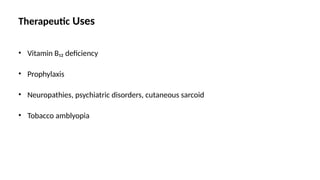
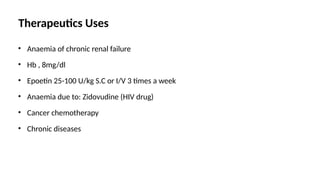
Therapeutics Uses
• Anaemiaof chronic renal failure
• Hb , 8mg/dl
• Epoetin 25-100 U/kg S.C or I/V 3 times a week
• Anaemia due to: Zidovudine (HIV drug)
• Cancer chemotherapy
• Chronic diseases
41.
Adverse Effects
• Increasedclot formation in the A-V shunts
• Hypertensive episodes
• Serious thromboembolic events
• Seizures
• Flu like symptoms
42.
Summary
• Haematinics includeiron, vitamin B₁₂, folic acid, and erythropoietin, which are essential for normal
erythropoiesis and haemoglobin synthesis
• Iron deficiency anaemia is the most common anaemia and results from inadequate intake, impaired
absorption, increased demand (pregnancy), or chronic blood loss; oral iron is the preferred
treatment, with parenteral iron reserved for selected cases
• Vitamin B₁₂ is required for DNA synthesis and neurological function; deficiency causes megaloblastic
anaemia and neurological manifestations, and treatment is mainly parenteral, especially in
malabsorption states
43.
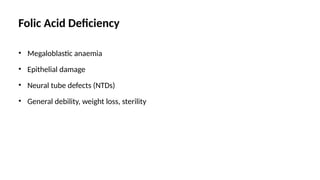
• Folic acidis crucial for nucleotide synthesis and cell division; deficiency leads to megaloblastic
anaemia and neural tube defects, and supplementation is essential during pregnancy
• Erythropoietin, produced by the kidney, stimulates red cell production and is used
therapeutically in anaemia of chronic kidney disease, chemotherapy-induced anaemia, and
zidovudine-related anaemia
• Rational use of haematinics requires identifying the underlying cause of anaemia, correcting
deficiencies, monitoring response to therapy, and preventing complications such as iron
overload or thromboembolic events
 Most read
 Most read