Comprehensive Overview of Alcohol Metabolism and Its Clinical Implications
Explores alcohol metabolism, enzymatic pathways, health impacts, diagnosis, and treatment of alcohol and methanol poisoning, emphasizing medical biochemistry and public health concerns.
Brief history
Vedic scriptures-Somarasa, Sura, Madhu, Sidhu (sugarcane-based fermented drink)
Varuni- out of Samudra Manthan- the goddess of wine or divine liquor
Ayurveda- Charaka Samhita and Sushruta Samhita describe medicinal fermented
preparations (Asava- (आसव) and Arishta-(अरिष्ट) ).
Description in Puranas and Jataka tales
Regulated intake
Modern History- 10,000–7000 BCE- accidentally discovered
16th–18th centuries, alcohol production became more organized with commercial
brewing and distilling
Louis Pasteur (1857)- demonstrated that fermentation is a biological process
caused by living microorganisms, particularly yeast.
3.
Colonial India andAlcoholism
The colonial administration:
Introduced organized distilleries and breweries
Imposed excise taxes on alcohol
Encouraged alcohol sales as a major revenue source
4.
Prevalence of alcoholism
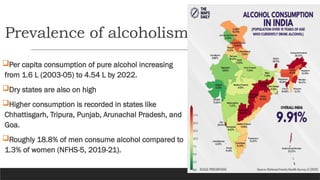
Percapita consumption of pure alcohol increasing
from 1.6 L (2003-05) to 4.54 L by 2022.
Dry states are also on high
Higher consumption is recorded in states like
Chhattisgarh, Tripura, Punjab, Arunachal Pradesh, and
Goa.
Roughly 18.8% of men consume alcohol compared to
1.3% of women (NFHS-5, 2019-21).
5.
Why a doctorshould know about alcohol metabolism??
20–30% of hospital admissions may be directly or indirectly related to alcohol use
Major alcohol-related diseases include:
Alcoholic Liver Disease
Liver Cirrhosis
Pancreatitis
Alcohol Use Disorder
Injuries and accidents.
Mental health disorders
Socio-cultural issues
Deaths attributed to alcohol- ~5.4% of all deaths
Cirrhosis deaths due to alcohol- ~63%
increasing incidence of alcoholic fatty liver, alcoholic hepatitis, and cirrhosis.
6.
Ray of hope!!!
Ban on New Shops & Alcohol-Free
Zones
De-addiction Cess
Restriction in Rural Areas
Raising Excise Duty
Ban on Liquor Near Sacred Sites
Tetra Pack Introduction
Reduced Purchase Limits
7.
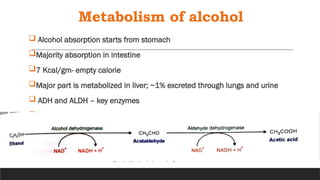
Metabolism of alcohol
Alcohol absorption starts from stomach
Majority absorption in intestine
7 Kcal/gm- empty calorie
Major part is metabolized in liver; ~1% excreted through lungs and urine
ADH and ALDH – key enzymes
8.
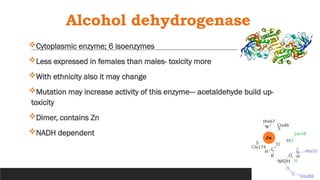
Alcohol dehydrogenase
Cytoplasmic enzyme;6 isoenzymes
Less expressed in females than males- toxicity more
With ethnicity also it may change
Mutation may increase activity of this enzyme--- acetaldehyde build up-
toxicity
Dimer, contains Zn
NADH dependent
9.
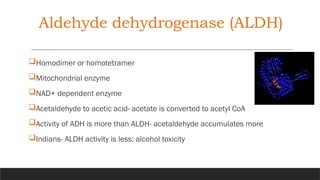
Aldehyde dehydrogenase (ALDH)
Homodimeror homotetramer
Mitochondrial enzyme
NAD+ dependent enzyme
Acetaldehyde to acetic acid- acetate is converted to acetyl CoA
Activity of ADH is more than ALDH- acetaldehyde accumulates more
Indians- ALDH activity is less; alcohol toxicity
10.
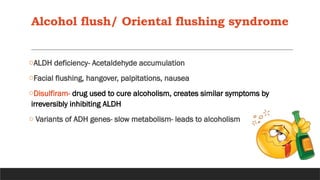
Alcohol flush/ Orientalflushing syndrome
oALDH deficiency- Acetaldehyde accumulation
oFacial flushing, hangover, palpitations, nausea
oDisulfiram- drug used to cure alcoholism, creates similar symptoms by
irreversibly inhibiting ALDH
o Variants of ADH genes- slow metabolism- leads to alcoholism
11.
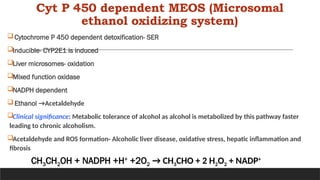
Cyt P 450dependent MEOS (Microsomal
ethanol oxidizing system)
Cytochrome P 450 dependent detoxification- SER
Inducible- CYP2E1 is induced
Liver microsomes- oxidation
Mixed function oxidase
NADPH dependent
Ethanol →Acetaldehyde
Clinical significance: Metabolic tolerance of alcohol as alcohol is metabolized by this pathway faster
leading to chronic alcoholism.
Acetaldehyde and ROS formation- Alcoholic liver disease, oxidative stress, hepatic inflammation and
fibrosis
CH3CH2OH + NADPH +H+
+2O2 → CH3CHO + 2 H2O2 + NADP+
12.
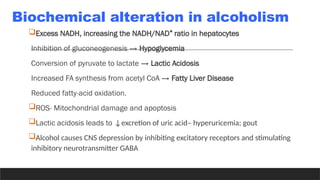
Biochemical alteration inalcoholism
Excess NADH, increasing the NADH/NAD ratio in hepatocytes
⁺
Inhibition of gluconeogenesis → Hypoglycemia
Conversion of pyruvate to lactate → Lactic Acidosis
Increased FA synthesis from acetyl CoA → Fatty Liver Disease
Reduced fatty-acid oxidation.
ROS- Mitochondrial damage and apoptosis
Lactic acidosis leads to ↓excretion of uric acid– hyperuricemia; gout
Alcohol causes CNS depression by inhibiting excitatory receptors and stimulating
inhibitory neurotransmitter GABA
14.
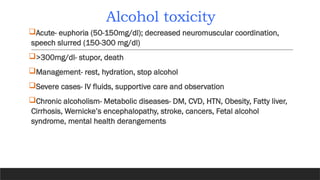
Alcohol toxicity
Acute- euphoria(50-150mg/dl); decreased neuromuscular coordination,
speech slurred (150-300 mg/dl)
>300mg/dl- stupor, death
Management- rest, hydration, stop alcohol
Severe cases- IV fluids, supportive care and observation
Chronic alcoholism- Metabolic diseases- DM, CVD, HTN, Obesity, Fatty liver,
Cirrhosis, Wernicke’s encephalopathy, stroke, cancers, Fetal alcohol
syndrome, mental health derangements
15.
Diagnosis
GGT, AST, AST/ALTratio
Late stage- deranged LFT, decreased albumin
Alcohol abuse- Decreased ALDH activity in RBCs
Chronic alcohol abuse- Desialylated transferrin level
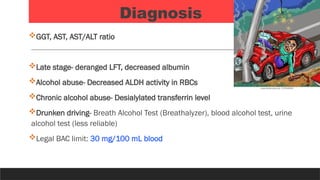
Drunken driving- Breath Alcohol Test (Breathalyzer), blood alcohol test, urine
alcohol test (less reliable)
Legal BAC limit: 30 mg/100 mL blood
16.
Methanol (MeOH)
Adulteration
Only 10mlpure methanol can lead to blindness
Same enzymes ADH and ALDH act upon it
MeOH- Formaldehyde- Formic acid
Formate is toxic
Loss of vision, vomiting, abdominal pain, death
Antidote- ethanol (competitive inhibition), Fomepizole (drug of choice)
17.
Assignment
1. Metabolism ofalcohol
2. Acute and chronic effects of ethanol poisoning
3. Give reasons- In methanol poisoning ethanol is administered
4. Clinical case- Methanol poisoning,
18.
For more PPTon Medical Biochemistry
www.drvpacharya.com