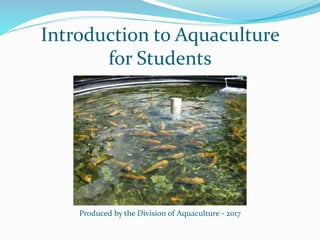
Comprehensive Introduction to Aquaculture: Science, Practices, and Careers
Explore aquaculture fundamentals, production methods, species, global importance, sustainability, Florida's industry, and career opportunities in this educational presentation.
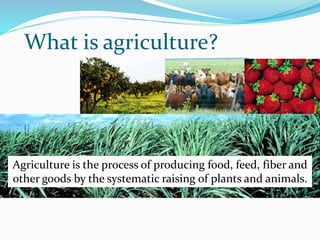
What is agriculture?
Agricultureis the process of producing food, feed, fiber and
other goods by the systematic raising of plants and animals.
3.
What is aquaculture?
Culturing aquatic plants and animals
Agriculture in water
Production science
Monoculture (sometimes polyculture)
Conservation and recreational fisheries management
Restoring depleted species
Supplemental stocking to increase population
4.
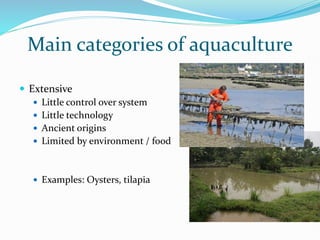
Main categories ofaquaculture
Extensive
Little control over system
Little technology
Ancient origins
Limited by environment / food
Examples: Oysters, tilapia
5.
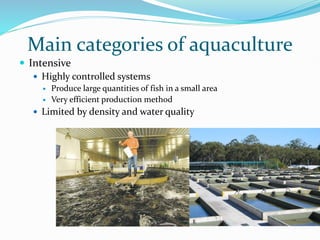
Main categories ofaquaculture
Intensive
Highly controlled systems
Produce large quantities of fish in a small area
Very efficient production method
Limited by density and water quality
6.
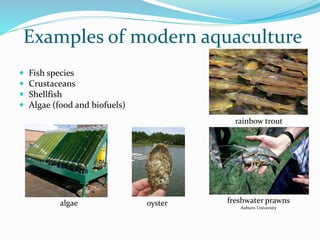
Examples of modernaquaculture
Fish species
Crustaceans
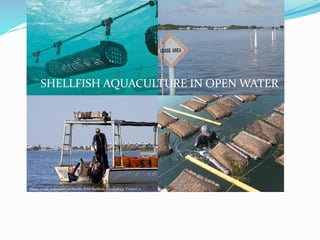
Shellfish
Algae (food and biofuels)
rainbow trout
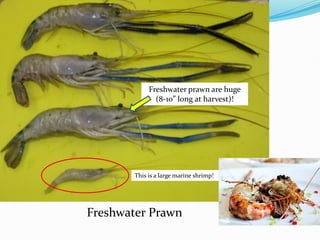
freshwater prawns
Auburn University
oyster
algae
7.
Why is aquacultureneeded?
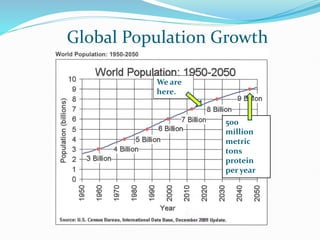
Increasing human population = increasing protein demand
Wild fisheries limited/declining
Increasing societal demands for seafood (health benefits)
Growth efficiency: fish vs. terrestrial animals
Conservation
Fisheries enhancement
Wild fisheries:
yield maximized
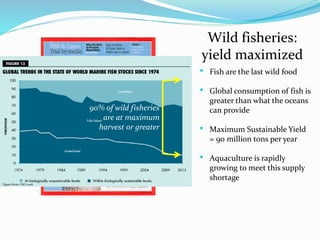
•Fish are the last wild food
• Global consumption of fish is
greater than what the oceans
can provide
• Maximum Sustainable Yield
= 90 million tons per year
• Aquaculture is rapidly
growing to meet this supply
shortage
Figure from: FAO 2016
90% of wild fisheries
are at maximum
harvest or greater
10.
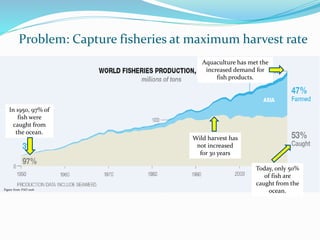
Problem: Capture fisheriesat maximum harvest rate
Wild harvest has
not increased
for 30 years
Aquaculture has met the
increased demand for
fish products.
In 1950, 97% of
fish were
caught from
the ocean.
Today, only 50%
of fish are
caught from the
ocean.
Figure from: FAO 2016
11.
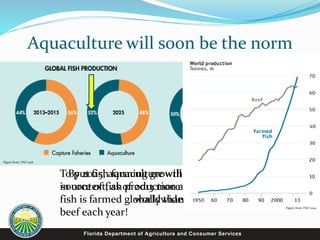
Aquaculture will soonbe the norm
Figure from: FAO 2016
By 2025, aquaculture will be the primary
source of fish production and consumption
worldwide!
Figure from: FAO 2014
To put fish farming growth
in context, as of 2013 more
fish is farmed globally than
beef each year!
12.
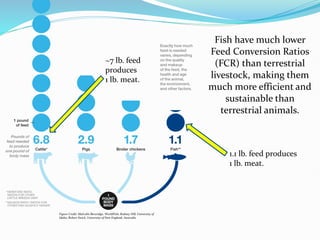
Fish have muchlower
Feed Conversion Ratios
(FCR) than terrestrial
livestock, making them
much more efficient and
sustainable than
terrestrial animals.
~7 lb. feed
produces
1 lb. meat.
1.1 lb. feed produces
1 lb. meat.
Figure Credit: Malcolm Beveridge, WorldFish; Rodney Hill, University of
Idaho; Robert Swick, University of New England, Australia
13.
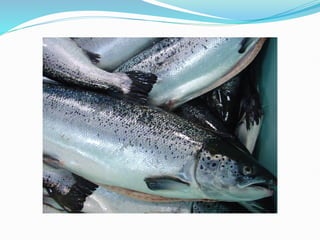
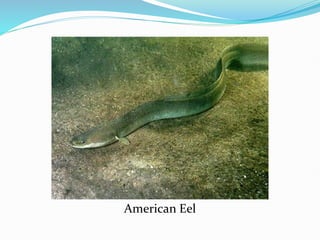
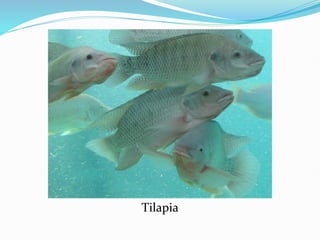
Do you knowyour cultured
fishes?
(Half time quiz!)
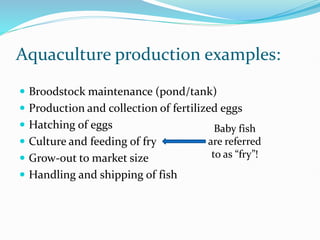
Aquaculture production examples:
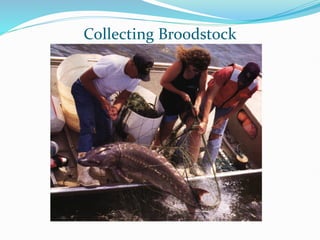
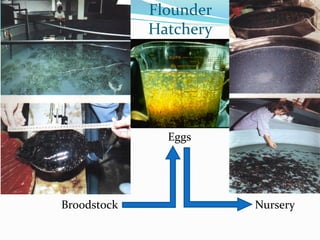
Broodstock maintenance (pond/tank)
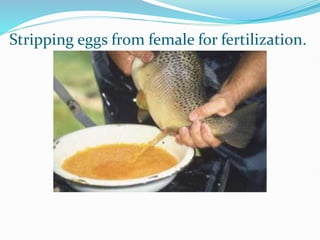
Production and collection of fertilized eggs
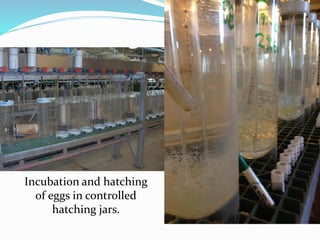
Hatching of eggs
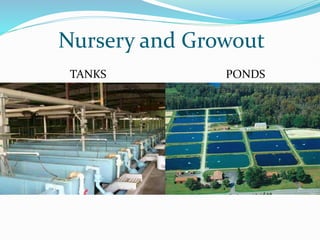
Culture and feeding of fry
Grow-out to market size
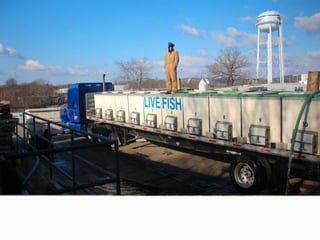
Handling and shipping of fish
Baby fish
are referred
to as “fry”!
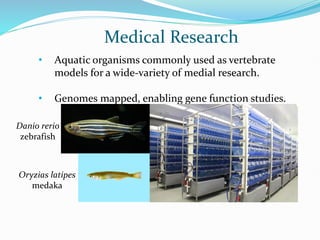
• Aquatic organismscommonly used as vertebrate
models for a wide-variety of medial research.
• Genomes mapped, enabling gene function studies.
Medical Research
Danio rerio
zebrafish
Oryzias latipes
medaka
Harvest and Transportto Market
Photo credit: Brain Skerry, National Geographic Photo credit: USDA
35.
Careers in Aquaculture
Current and Continued High Demand for College Graduates (B.S. and M.S.
levels)
Hatcheries for stocking (public and private)
Commercial production for food or pond stocking
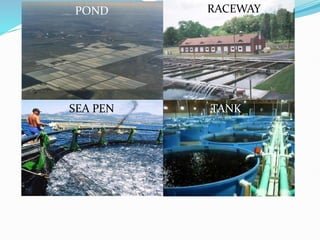
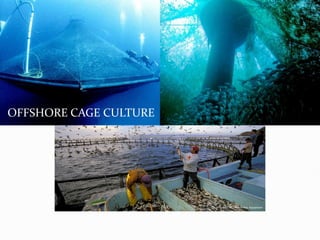
Tanks/Ponds/Raceways/Cages
Endless diversity and production techniques
Consulting
Water quality
Engineering
Nutrition and Disease
Product sales
Public aquariums
Research
Teaching
Administration (federal and state positions)
36.
Aquaculture in Florida
Let’stake a look at the many different
aquaculture products that come from Florida.
~750 commercial farms
2013 sales: $77.9 million
Products with the highest value of
sales.
1) Ornamental fish (#1 in the nation!)
2) Shellfish (clams and oysters)
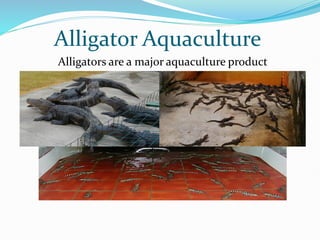
3) Alligators
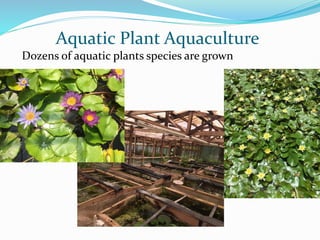
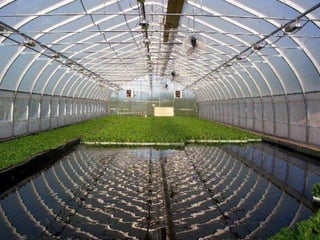
4) Aquatic plants
37.
Aquaculture in Florida
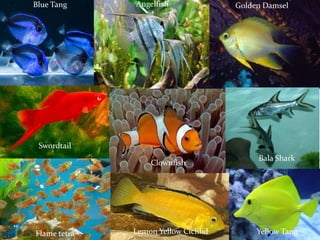
Ornamentalfish produced in Florida...hundreds of marine
and freshwater species! Too many to name them all!
Blue Tang Golden Damsel
Yellow Tang
Angelfish
Swordtail
Clownfish
Lemon Yellow Cichlid
Bala Shark
Flame tetra
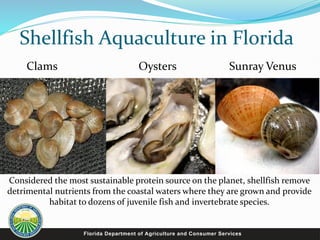
Shellfish Aquaculture inFlorida
Clams Oysters Sunray Venus
Considered the most sustainable protein source on the planet, shellfish remove
detrimental nutrients from the coastal waters where they are grown and provide
habitat to dozens of juvenile fish and invertebrate species.
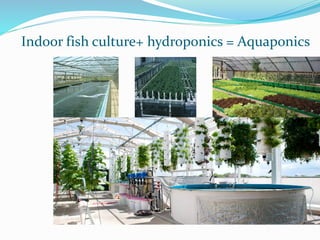
Aquaponics in Florida
Aquaponics is the symbiotic cultivation of plants and aquatic animals.
Plants can be grown using the nutrient rich water from aquatic animal waste.
In turn, the plants return much needed oxygen to the water, allowing the
animals to thrive.
44.
Aquaculture Education
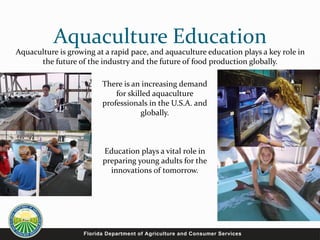
Aquaculture isgrowing at a rapid pace, and aquaculture education plays a key role in
the future of the industry and the future of food production globally.
There is an increasing demand
for skilled aquaculture
professionals in the U.S.A. and
globally.
Education plays a vital role in
preparing young adults for the
innovations of tomorrow.