Explore principles of balanced diet, meal planning, infant feeding practices, and diet plans for different age groups to promote health, growth, and disease prevention.
DEFINITION
• A balanceddiet is one which provides all essential nutrient—
carbohydrates, proteins, fats, vitamins, minerals, water and dietary
fibre,in adequate amounts and proper proportions to maintain health,
growth, reproduction and normal body functioning.
A balanced diet must:
• Meet energy requirements
• Maintain ideal body weight
• Prevent deficiency diseases
• Promote immunity
3.
Principles of BalancedDiet
•Adequacy
•Diet should provide sufficient amounts of all essential nutrients.
•Balance
•Nutrients must be in correct proportion.
•Example: Excess carbohydrates with low protein leads to malnutrition.
•Calorie Control
•Energy intake must equal energy expenditure.
•Nutrient Density
•Choose foods rich in nutrients rather than empty calories.
•Moderation
•Limit sugar, salt and saturated fat.
•Variety
•Include foods from all food groups daily.
•Acceptability & Economy
•Diet should suit cultural habits and be affordable.
4.
Steps in Planninga Balanced Diet
.Assess individual factors:
•Age
•Sex
•Occupation
•Physiological condition (pregnancy, lactation)
•Refer to RDA (Recommended Dietary Allowances).
•Select foods from all food groups.
•Calculate energy and nutrient needs.
•Distribute food into meals (breakfast, lunch, dinner, snacks).
•Consider economic status and food availability.
•Evaluate and modify if needed.
5.
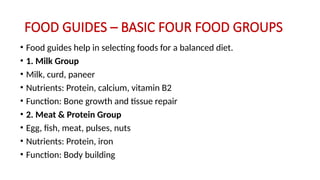
FOOD GUIDES –BASIC FOUR FOOD GROUPS
• Food guides help in selecting foods for a balanced diet.
• 1. Milk Group
• Milk, curd, paneer
• Nutrients: Protein, calcium, vitamin B2
• Function: Bone growth and tissue repair
• 2. Meat & Protein Group
• Egg, fish, meat, pulses, nuts
• Nutrients: Protein, iron
• Function: Body building
6.
• Cereal &Grain Group
• Rice, wheat, maize, millets
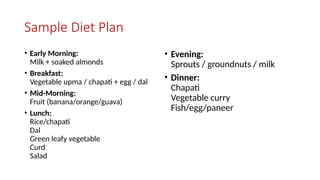
• Nutrients: Carbohydrates
• Function: Energy supply
7.
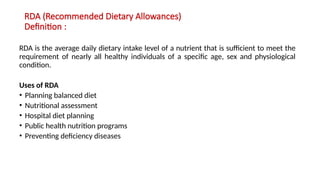
RDA (Recommended DietaryAllowances)
Definition :
RDA is the average daily dietary intake level of a nutrient that is sufficient to meet the
requirement of nearly all healthy individuals of a specific age, sex and physiological
condition.
Uses of RDA
• Planning balanced diet
• Nutritional assessment
• Hospital diet planning
• Public health nutrition programs
• Preventing deficiency diseases
8.
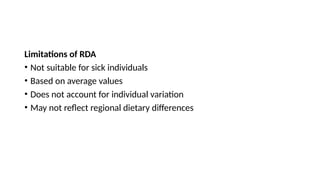
Limitations of RDA
•Not suitable for sick individuals
• Based on average values
• Does not account for individual variation
• May not reflect regional dietary differences
9.
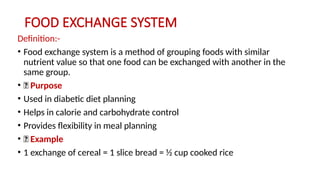
FOOD EXCHANGE SYSTEM
Definition:-
•Food exchange system is a method of grouping foods with similar
nutrient value so that one food can be exchanged with another in the
same group.
• 🔹 Purpose
• Used in diabetic diet planning
• Helps in calorie and carbohydrate control
• Provides flexibility in meal planning
• 🔹 Example
• 1 exchange of cereal = 1 slice bread = ½ cup cooked rice
10.
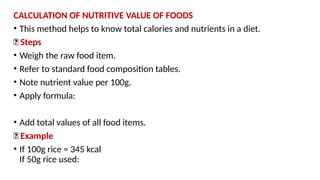
CALCULATION OF NUTRITIVEVALUE OF FOODS
• This method helps to know total calories and nutrients in a diet.
🔹 Steps
• Weigh the raw food item.
• Refer to standard food composition tables.
• Note nutrient value per 100g.
• Apply formula:
• Add total values of all food items.
🔹 Example
• If 100g rice = 345 kcal
If 50g rice used:
11.
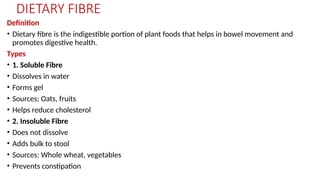
DIETARY FIBRE
Definition
• Dietaryfibre is the indigestible portion of plant foods that helps in bowel movement and
promotes digestive health.
Types
• 1. Soluble Fibre
• Dissolves in water
• Forms gel
• Sources: Oats, fruits
• Helps reduce cholesterol
• 2. Insoluble Fibre
• Does not dissolve
• Adds bulk to stool
• Sources: Whole wheat, vegetables
• Prevents constipation
12.
• Functions
• Preventsconstipation
• Reduces cholesterol level
• Controls blood sugar
• Prevents colon cancer
• Maintains gut health
13.
• Definition
• MealPlanning (Menu Planning) is the process of planning meals in advance
to ensure that the diet is nutritionally adequate, balanced, economical, and
suitable according to the individual’s age, health status, and food habits.
It helps to:
• Meet nutritional requirements
• Maintain health
• Prevent deficiency diseases
• Promote proper growth and development
14.
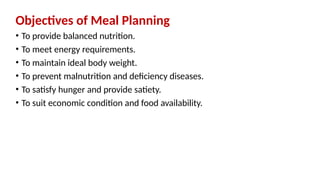
Objectives of MealPlanning
• To provide balanced nutrition.
• To meet energy requirements.
• To maintain ideal body weight.
• To prevent malnutrition and deficiency diseases.
• To satisfy hunger and provide satiety.
• To suit economic condition and food availability.
15.
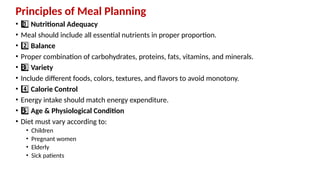
Principles of MealPlanning
• 1 ️
1️⃣Nutritional Adequacy
• Meal should include all essential nutrients in proper proportion.
• 2️⃣Balance
• Proper combination of carbohydrates, proteins, fats, vitamins, and minerals.
• 3 ️
3️⃣Variety
• Include different foods, colors, textures, and flavors to avoid monotony.
• 4️⃣Calorie Control
• Energy intake should match energy expenditure.
• 5 ️
5️⃣Age & Physiological Condition
• Diet must vary according to:
• Children
• Pregnant women
• Elderly
• Sick patients
16.
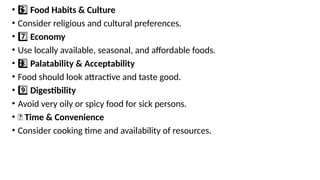
• 6 ️
6️⃣FoodHabits & Culture
• Consider religious and cultural preferences.
• 7️⃣Economy
• Use locally available, seasonal, and affordable foods.
• 8 ️
8️⃣Palatability & Acceptability
• Food should look attractive and taste good.
• 9️⃣Digestibility
• Avoid very oily or spicy food for sick persons.
• 🔟 Time & Convenience
• Consider cooking time and availability of resources.
17.
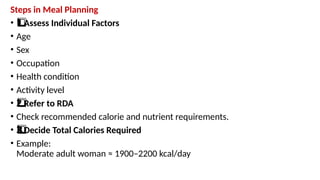
Steps in MealPlanning
• Assess Individual Factors
1️
1️
⃣
• Age
• Sex
• Occupation
• Health condition
• Activity level
• Refer to RDA
2️
⃣
• Check recommended calorie and nutrient requirements.
• Decide Total Calories Required
3️
3️
⃣
• Example:
Moderate adult woman ≈ 1900–2200 kcal/day
18.
• select Foodsfrom All Food Groups
4️
4️
⃣
• Cereals
• Pulses
• Milk
• Fruits
• Vegetables
• Fats
• Distribute Meals Throughout the Day
5️
⃣
• Breakfast
• Mid-morning snack
• Lunch
• Evening snack
• Dinner
• Check Nutrient Content
6️
6️
⃣
• Calculate nutritive value if necessary.
• Evaluate and Modify
7️
⃣
• Ensure the diet is balanced and practical.
19.
• Example ofSimple Meal Plan (Adult)
• Breakfast
• Milk + Boiled egg + Chapati
• Lunch
• Rice + Dal + Green leafy vegetable + Curd
• Evening Snack
• Fruit + Tea
• Dinner
• Chapati + Vegetable curry + Fish
20.
Importance of MealPlanning for Nurses
• Essential in hospital diet therapy
• Helps in diabetic and hypertensive diet planning
• Prevents hospital malnutrition
• Promotes patient recovery
21.
Definition of IYCF
•Infant and Young Child Feeding (IYCF) refers to appropriate feeding
practices for infants and children from birth up to 2 years of age to
ensure optimal growth, development, and survival.
• IYCF is recommended by World Health Organization (WHO) and UNICEF.
• Objectives of IYCF
• Reduce infant and child mortality
• Prevent malnutrition
• Promote proper growth and development
• Improve immunity
• Strengthen mother–child bonding
22.
• BREASTFEEDING GUIDELINES
•Early Initiation
1️
1️
⃣
• Start breastfeeding within 1 hour of birth.
• First milk (colostrum) must be given.
• Importance of Colostrum
• Rich in antibodies (IgA)
• Acts as first immunization
• Prevents infection
• Easy to digest
23.
• Exclusive Breastfeeding(0–6 Months)
2️
2️
⃣
• Give only breast milk for first 6 months.
• No water, honey, gripe water, or animal milk.
• Benefits to Baby
• Provides complete nutrition
• Prevents diarrhea and respiratory infection
• Improves brain development
• Reduces allergy risk
• Benefits to Mother
• Prevents postpartum hemorrhage
• Delays next pregnancy (Lactational Amenorrhea Method)
• Reduces breast and ovarian cancer risk
24.
Continued Breastfeeding
3️
3️
⃣
• Continuebreastfeeding up to 2 years or beyond.
• Start complementary feeding after 6 months.
Correct Position & Attachment
4️
⃣
• Signs of Good Attachment:
• Baby’s mouth wide open
• Chin touching breast
• More areola visible above mouth
• No pain to mother
25.
COMPLEMENTARY FEEDING (InfantFoods) Definition:
• Complementary feeding means giving other foods along with breast milk
after 6 months of age.
• When to Start?
• At 6 completed months
Principles of Complementary Feeding
• Timely introduction (at 6 months)
• Adequate quantity
• Proper consistency
• Safe and hygienic preparation
• Age-appropriate feeding frequency
•Types of InfantFoods
• Homemade Complementary Foods
1️
1️
⃣
• Rice porridge
• Khichdi
• Mashed fruits
• Boiled vegetables
• Advantages:
• Economical
• Fresh
• No preservatives
• Commercial Infant Foods
2️
⃣
• Fortified cereals
• Instant mixes
• Should be used carefully and hygienically.
28.
• Harmful FeedingPractices to Avoid
• Pre-lacteal feeds (honey, sugar water)
• Bottle feeding
• Diluted animal milk before 1 year
• Force feeding
• 🩺 Role of Nurse in IYCF
• Educate mothers about exclusive breastfeeding
• Demonstrate proper positioning
• Counsel about complementary feeding
• Monitor child growth
• Prevent malnutrition
29.
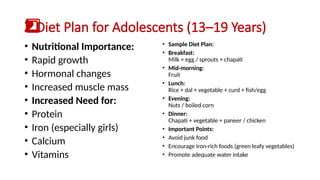
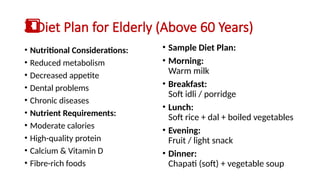
DIET PLAN FORDIFFERENT AGE GROUPS
👶 Diet Plan for Children
1️
1️
⃣
• A) Infants (0–1 Year)
🔹 0–6 Months
• Exclusive breastfeeding
• No water or other foods
🔹 6–12 Months
• Continue breastfeeding
• Start complementary feeding
• Sample Diet (8–12 months):
• Morning: Breast milk
• Breakfast: Mashed banana / rice porridge
• Lunch: Khichdi (rice + dal)
• Evening: Fruit puree
• Dinner: Mashed vegetables
• Nutritional Focus:
• High energy
• Adequate protein
• Iron-rich foods
B) Preschool Children (1–5 Years)
• Nutritional Needs:
• Energy for growth and activity
• Protein for tissue building
• Calcium for bone development
• Iron to prevent anemia
• Sample Diet Plan:
• Breakfast: Milk + boiled egg / idli
• Mid-morning: Fruit
• Lunch: Rice + dal + vegetables + curd
• Evening: Groundnuts / banana
• Dinner: Chapati + vegetable curry
30.
• C) School-ageChildren (6–12 Years)
• Nutritional Needs:
• Increased calories
• More protein
• Iron and calcium
• Sample Diet Plan:
• Breakfast: Milk + chapati / dosa
• Lunch: Rice + dal + green leafy vegetables + egg
• Evening: Sprouts / fruit
• Dinner: Chapati + vegetable + curd
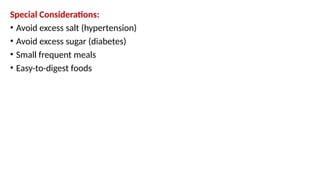
Special Considerations:
• Avoidexcess salt (hypertension)
• Avoid excess sugar (diabetes)
• Small frequent meals
• Easy-to-digest foods
34.
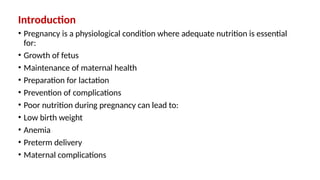
Introduction
• Pregnancy isa physiological condition where adequate nutrition is essential
for:
• Growth of fetus
• Maintenance of maternal health
• Preparation for lactation
• Prevention of complications
• Poor nutrition during pregnancy can lead to:
• Low birth weight
• Anemia
• Preterm delivery
• Maternal complications
35.
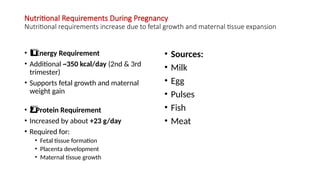
Nutritional Requirements DuringPregnancy
Nutritional requirements increase due to fetal growth and maternal tissue expansion
• Energy Requirement
1️
1️
⃣
• Additional ~350 kcal/day (2nd & 3rd
trimester)
• Supports fetal growth and maternal
weight gain
• Protein Requirement
2️
⃣
• Increased by about +23 g/day
• Required for:
• Fetal tissue formation
• Placenta development
• Maternal tissue growth
• Sources:
• Milk
• Egg
• Pulses
• Fish
• Meat
36.
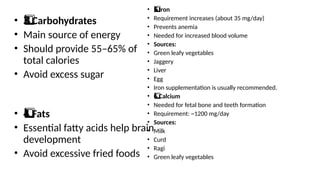
• Carbohydrates
3️
3️
⃣
• Mainsource of energy
• Should provide 55–65% of
total calories
• Avoid excess sugar
• Fats
4️
⃣
• Essential fatty acids help brain
development
• Avoid excessive fried foods
• Iron
5️
5️
⃣
• Requirement increases (about 35 mg/day)
• Prevents anemia
• Needed for increased blood volume
• Sources:
• Green leafy vegetables
• Jaggery
• Liver
• Egg
• Iron supplementation is usually recommended.
• Calcium
6️
⃣
• Needed for fetal bone and teeth formation
• Requirement: ~1200 mg/day
• Sources:
• Milk
• Curd
• Ragi
• Green leafy vegetables
37.
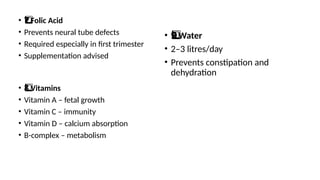
• Folic Acid
7️
7️
⃣
•Prevents neural tube defects
• Required especially in first trimester
• Supplementation advised
• Vitamins
8️
⃣
• Vitamin A – fetal growth
• Vitamin C – immunity
• Vitamin D – calcium absorption
• B-complex – metabolism
• Water
9️
9️
⃣
• 2–3 litres/day
• Prevents constipation and
dehydration
38.
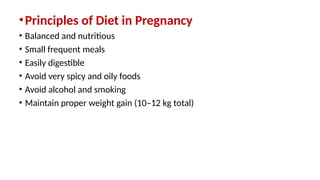
•Principles of Dietin Pregnancy
• Balanced and nutritious
• Small frequent meals
• Easily digestible
• Avoid very spicy and oily foods
• Avoid alcohol and smoking
• Maintain proper weight gain (10–12 kg total)
39.
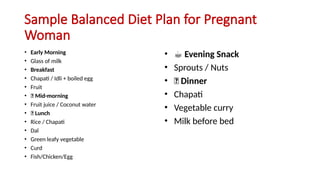
Sample Balanced DietPlan for Pregnant
Woman
• Early Morning
• Glass of milk
• Breakfast
• Chapati / Idli + boiled egg
• Fruit
• 🥗 Mid-morning
• Fruit juice / Coconut water
• 🍛 Lunch
• Rice / Chapati
• Dal
• Green leafy vegetable
• Curd
• Fish/Chicken/Egg
• ☕ Evening Snack
• Sprouts / Nuts
• 🌙 Dinner
• Chapati
• Vegetable curry
• Milk before bed
40.
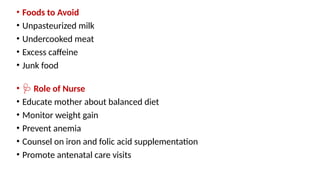
• Foods toAvoid
• Unpasteurized milk
• Undercooked meat
• Excess caffeine
• Junk food
• 🩺 Role of Nurse
• Educate mother about balanced diet
• Monitor weight gain
• Prevent anemia
• Counsel on iron and folic acid supplementation
• Promote antenatal care visits
41.
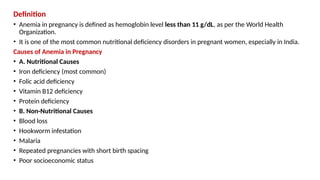
Definition
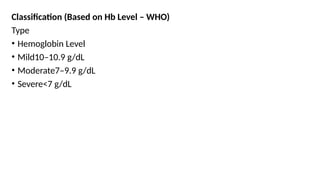
• Anemia inpregnancy is defined as hemoglobin level less than 11 g/dL, as per the World Health
Organization.
• It is one of the most common nutritional deficiency disorders in pregnant women, especially in India.
Causes of Anemia in Pregnancy
• A. Nutritional Causes
• Iron deficiency (most common)
• Folic acid deficiency
• Vitamin B12 deficiency
• Protein deficiency
• B. Non-Nutritional Causes
• Blood loss
• Hookworm infestation
• Malaria
• Repeated pregnancies with short birth spacing
• Poor socioeconomic status
Signs and Symptoms
•Pallor (conjunctiva, nail beds)
• Fatigue and weakness
• Breathlessness
• Dizziness
• Headache
• Palpitations
• Swelling (in severe cases)
Nutritional Management ofAnemia in Pregnancy
• A. Iron Requirement in Pregnancy
• Normal woman: 21 mg/day
• Pregnant woman: 35 mg/day
(Due to increased blood volume and fetal needs)
• B. Iron-Rich Foods**
• 1. Heme Iron (High Absorption – 15–35%)
• Liver
• Red meat
• Egg yolk
• Fish
Iron and FolicAcid (IFA) Supplementation
• As per Ministry of Health and Family Welfare guidelines:
• Prophylactic Dose (Non-anemic Pregnant Woman)
• 100 mg elemental iron
• 500 mcg folic acid
• Once daily
• From 14 weeks of pregnancy
• Continue for 180 days in pregnancy + 180 days postpartum
• Therapeutic Dose (Anemic Woman)
• 100 mg iron + 500 mcg folic acid
• Twice daily for 3 months
48.
Side Effects ofIron Tablets
• Nausea
• Vomiting
• Constipation
• Black stools (normal)
• Gastric irritation
• Reassure mother that black stool is normal.
Counselling Points for Pregnant Woman
• Importance of hemoglobin for mother and baby
• Take IFA tablets regularly
• Do not skip doses
• Take tablets after meals (if gastric irritation occurs)
• Eat iron-rich diet daily
• Add vitamin C with meals
• Regular ANC visits
• Deworming after 2nd trimester if prescribed
• Maintain spacing between pregnancies
49.
• Role ofNurse
• Screening and Hb testing
• Nutritional assessment
• Health education
• Ensuring compliance
• Monitoring side effects
• Referral in severe anemia
50.
Introduction
• Lactation isthe period after childbirth during which the mother
produces milk to feed her baby. Proper nutrition during lactation is
essential for:
• Adequate breast milk production
• Maintaining maternal health
• Preventing nutritional deficiencies
51.
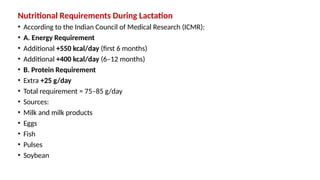
Nutritional Requirements DuringLactation
• According to the Indian Council of Medical Research (ICMR):
• A. Energy Requirement
• Additional +550 kcal/day (first 6 months)
• Additional +400 kcal/day (6–12 months)
• B. Protein Requirement
• Extra +25 g/day
• Total requirement ≈ 75–85 g/day
• Sources:
• Milk and milk products
• Eggs
• Fish
• Pulses
• Soybean
52.
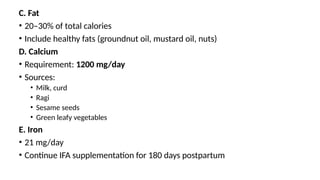
C. Fat
• 20–30%of total calories
• Include healthy fats (groundnut oil, mustard oil, nuts)
D. Calcium
• Requirement: 1200 mg/day
• Sources:
• Milk, curd
• Ragi
• Sesame seeds
• Green leafy vegetables
E. Iron
• 21 mg/day
• Continue IFA supplementation for 180 days postpartum
53.
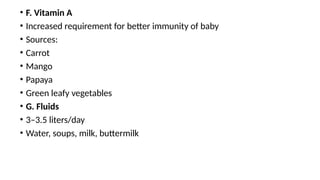
• F. VitaminA
• Increased requirement for better immunity of baby
• Sources:
• Carrot
• Mango
• Papaya
• Green leafy vegetables
• G. Fluids
• 3–3.5 liters/day
• Water, soups, milk, buttermilk
54.
• F. VitaminA
• Increased requirement for better immunity of baby
• Sources:
• Carrot
• Mango
• Papaya
• Green leafy vegetables
• G. Fluids
• 3–3.5 liters/day
• Water, soups, milk, buttermilk
55.
Sample Diet Plan
•Early Morning:
Milk + soaked almonds
• Breakfast:
Vegetable upma / chapati + egg / dal
• Mid-Morning:
Fruit (banana/orange/guava)
• Lunch:
Rice/chapati
Dal
Green leafy vegetable
Curd
Salad
• Evening:
Sprouts / groundnuts / milk
• Dinner:
Chapati
Vegetable curry
Fish/egg/paneer
56.
• Complementary Feeding
•Complementary feeding means giving solid or semi-solid foods along
with breast milk after 6 months of age.
• Recommended by the World Health Organization.
• Why Complementary Feeding is Needed?
• Breast milk alone is insufficient after 6 months
• Baby needs more energy, protein, iron
57.
• Principles ofComplementary Feeding
• Start at 6 months completed
• Continue breastfeeding up to 2 years
• Start with semi-solid foods
• Increase quantity and frequency gradually
• Maintain hygiene
• Use locally available foods
• Types of Complementary Foods
• Rice porridge
• Dal water
• Mashed banana
• Mashed potato
• Khichdi
• Egg yolk
• Suji porridge
58.
• Weaning
• Weaningis the gradual process of introducing complementary foods and
reducing breastfeeding.
• Signs Baby is Ready for Weaning
• Sits with support
• Loss of tongue-thrust reflex
• Shows interest in food
• Doubled birth weight
59.
• Rules forWeaning
• Introduce one new food at a time
• Start with soft consistency
• Avoid sugar and salt
• Avoid honey (risk of botulism)
• Avoid bottle feeding (infection risk)
• 6. Problems During Weaning
• Diarrhea (poor hygiene)
• Malnutrition
• Food allergy
• Refusal of food
60.
• Role ofNurse
• Educate mother on balanced diet
• Demonstrate preparation of complementary foods
• Monitor child growth
• Counsel on exclusive breastfeeding for 6 months
• Prevent malnutrition