Comprehensive Concepts, Principles, and Theories in the Care of Older Adults
Explore key terms, biological, psychological, and social changes in aging, ageism impact, and geriatric nursing principles for optimal care of older adults.
LEARNING OBJECTIVES:
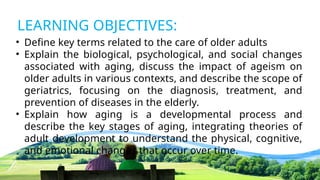
• Definekey terms related to the care of older adults
• Explain the biological, psychological, and social changes
associated with aging, discuss the impact of ageism on
older adults in various contexts, and describe the scope of
geriatrics, focusing on the diagnosis, treatment, and
prevention of diseases in the elderly.
• Explain how aging is a developmental process and
describe the key stages of aging, integrating theories of
adult development to understand the physical, cognitive,
and emotional changes that occur over time.
DEFINITION OF TERMS
refersto the inevitable,
irreversible decline in organ
function that occurs over time
even in the absence of injury,
illness, environmental risks, or
poor lifestyle choices.
AGING
DEFINITION OF TERMS
-The specialty of nursing pertaining to
older adults. It is an evidence-based
nursing specialty that addresses the
unique physiological, social,
psychological, developmental,
economic, cultural, spiritual, and
advocacy needs of older adults. (Vetter,
GERONTOLOGICAL
NURSING
10.
DEFINITION OF TERMS
Gerontologicalnurses collaborate
with older adults, their families,
and communities to support
healthy aging, maximum
functioning, and quality of life.
GERONTOLOGICAL
NURSING
11.
DEFINITION OF TERMS
•form of prejudice or discrimination
against individuals based on their
age, particularly targeting older
adults.
• It is pervasive in many societies and
can significantly impact the health
and well-being of older people,
AGEIS
M
12.
DEFINITION OF TERMS
•prejudice against people of older
age. Ageism
• Based on negative misconception
and stereotypes
• Leads to discrimination, lower quality
care, and preventable illness and
disability.
AGEIS
M
13.
The Nursing PracticeFocuses (Bickford, 2018):
• The process of aging and the protection;
• Promotion and prevention of illness and injury;
• Facilitation of healing;
• Alleviation ofsuffering through thediagnosis and
treatment of human responses;
• Optimization of health and generalized functions;
• Restoration;
• Advocacy in the care of older adults, caregivers, families,
groups, communities, and populations;
14.
The Nursing PracticeFocuses (Bickford,
2018):
• The process of aging and
the protection;
15.
The Nursing PracticeFocuses (Bickford,
2018):
• Promotion and prevention
of illness and injury;
The Nursing PracticeFocuses (Bickford,
2018):
• Advocacy in the care of
older adults, caregivers,
families, groups,
communities, and
populations;
21.
a) Aging
2. Agingis a Developmental
Process
• Aging is a natural process
common to all living organisms
• Various factors influence the
aging process
• Unique data and knowledge are
used in applying the nursing
process to the older populations
22.
a) Aging
2. Agingis a Developmental
Process
• The elderly share the similar
self-care and human needs with
all other human beings
• Gerontological Nursing strives
to help older adults achieve
optimum levels of physical,
psychological, social and
spiritual health so that they can
23.
B) Understanding Agingas a Developmental
Process
2. Aging is a Developmental
Process
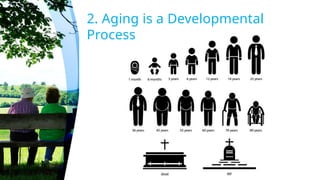
• According to the American
Journal of Clinical Nutrition,
the human life span, or the
maximum length of time
possible for human life, is
130 years.
24.
B) Understanding Agingas a Developmental
Process
2. Aging is a Developmental
Process
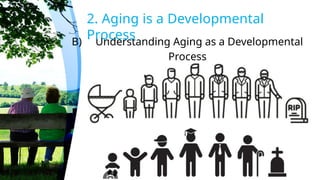
Aging or ageing is a
development process. It is a
universal phenomenon with the
manifestation of:
• Increased risk of debility
• Disease
• Death
#7 Geriatric nursing - focuses on the care of
the sick elderly
#8 Geriatric nursing - focuses on the care of
the sick elderly
#9 Gerontologic Nursing – includes not only
the care of a sick elderly but also health
maintenance, prevention of illness and the
promotion of quality life to assist the person
to grow to an ideal state of life and well?being.
#10 The term Gerontological Nursing, which replaced the term Geriatric Nursing in 1970's, is seen as being more consistent with the specialty's broader focus on health and wellness, in addition to illness.
#11 Negative Misconceptions and Stereotypes. Ageism is often rooted in negative misconceptions and stereotypes about aging and older adults. These stereotypes may include the beliefs that older people are:
• Less capable or competent than younger individuals.
• Resistant to change and unable to learn new things.
• Frail, sickly, and dependent.
• Socially disengaged or isolated.
These misconceptions can shape the attitudes of healthcare providers, leading to biased care. For instance, a nurse might unconsciously assume that an older patient is unable to participate in decision-making about their care due to stereotypes about cognitive decline, even when the patient is fully capable.
Discrimination in Healthcare
Ageism in healthcare can lead to discrimination in the treatment of older adults. This can manifest in various ways, such as:
• Under-treatment or misdiagnosis: Healthcare providers might dismiss certain symptoms as "just old age," leading to under-treatment of conditions that could be effectively managed.
• Inadequate pain management: Older adults may receive less aggressive pain management due to the misconception that they can tolerate pain better or that it's a normal part of aging.
• Lack of preventive care: Older adults might not be offered preventive measures like screenings or vaccinations, based on the false belief that they will not benefit as much as younger individuals.
Impact on Quality of Care
Ageism can directly result in lower quality of care for older adults. When healthcare providers operate under ageist assumptions, they may:
• Spend less time with older patients, believing their issues are less urgent.
• Communicate less effectively, using patronizing language or excluding them from important discussions about their health.
• Be less likely to involve older patients in care planning or to respect their autonomy and preferences.
Preventable Illness and Disability
The consequences of ageism can extend to preventable illness and disability among older adults. When ageism leads to inadequate care or neglect, older adults may experience:
• Unmanaged chronic conditions: Conditions like hypertension or diabetes may worsen without proper management, leading to complications that could have been avoided.
• Increased morbidity and mortality: Lack of appropriate care can lead to preventable deaths. For example, not offering surgery or other treatments to older adults based on age alone can result in unnecessary mortality.
• Mental health issues: Persistent exposure to ageism can lead to mental health issues such as depression or anxiety, which can further diminish overall health and well-being.
#12 Coined by Robert Neil Butler to describe discrimination
against older person.
#14 Explanation: This focus involves understanding the biological, psychological, and social aspects of aging to protect older adults from harm. Nurses must be aware of the normal aging process and the increased risks associated with it, (ASK THE STUDENTS ABOUT THE RISKS THEY KNOW) such as falls, infections, and chronic diseases, to provide appropriate care and interventions.
Example: A nurse might conduct regular fall risk assessments and implement safety measures, such as installing grab bars and encouraging the use of mobility aids, to protect an elderly patient from injury.
#15 Explanation: This focus emphasizes promoting health and preventing illness and injury in older adults (ASK THE STUDENTS ABOUT THE PROMOTION AND PREVENTION ACTIVITIES DONE FOR ELDERLY) through education, vaccinations, screenings, and lifestyle interventions. The goal is to maintain health and prevent conditions that could lead to disability or decreased quality of life.
Example: A nurse might provide education on a balanced diet, exercise, and regular health check-ups to prevent conditions like heart disease or diabetes in older adults.
#16 Explanation: Nurses play a crucial role in supporting the healing process in older adults by providing care that promotes physical, emotional, and psychological recovery. This includes managing chronic conditions, aiding in post-operative recovery, and providing holistic care.
Example: After an elderly patient undergoes surgery, the nurse might facilitate healing by ensuring proper wound care, monitoring for complications, and providing pain management.
#17 Explanation: This focus involves identifying and addressing the physical and emotional responses of older adults to illness, injury, or life changes. Nurses assess and treat symptoms such as pain, anxiety, and depression to alleviate suffering.
OKAY SO AS A NURSE, HOW ARE YOU GOING TO ALLEVIATE THE SUFFERING OF AN ELDERLY WHO IS IN CHRONIC PAIN DUE TO ARTHRITIS?
Example: A nurse might administer pain medication, provide comfort measures, and offer emotional support to an elderly patient experiencing chronic pain due to arthritis.
#18 Explanation: This focus is about helping older adults achieve the highest possible level of health and functioning, considering their individual abilities and limitations. It involves promoting independence and enhancing the quality of life.
Example: A nurse might work with a physical therapist to develop an exercise plan that helps an older adult regain strength and mobility after a stroke, thereby optimizing their functional abilities.
#19 Explanation: Restoration in nursing focuses on helping older adults recover their health and functionality after illness or injury. It involves rehabilitative care and interventions aimed at returning patients to their previous level of functioning or improving their current state.
Example: A nurse might assist in a rehabilitation program for an elderly patient recovering from a hip fracture, focusing on restoring their ability to walk and perform daily activities.
#20 Explanation: Advocacy involves supporting and representing the interests and rights of older adults and their caregivers. Nurses advocate for appropriate care, resources, and policies that address the unique needs of older adults at individual, family, and community levels.
Example: A nurse might advocate for an older adult who is experiencing neglect in a care facility by reporting the situation to the appropriate authorities and ensuring the patient receives the care they need. Additionally, the nurse might work with community organizations to secure resources for elderly patients and their caregivers.
#21 characterized by gradual changes at the cellular, tissue, and organ levels over time. These changes lead to a decline in physiological functions, making organisms more susceptible to diseases, disabilities, and eventually death. In humans, aging involves a combination of genetic, environmental, and lifestyle factors that influence how quickly or slowly these changes occur.
Brief Explanation:
Aging is inherent to all living beings and is driven by complex biological processes. Over time, cells accumulate damage due to factors like oxidative stress, DNA mutations, and protein misfolding. These damages impair cellular function and reduce the body's ability to repair and regenerate tissues. Additionally, aging is marked by changes in hormone levels, immune system decline, and the gradual deterioration of bodily functions, which together contribute to the aging phenotype.
#22 The elderly share similar self-care and human needs with all other human beings, meaning that, like younger individuals, older adults require basic essentials such as nutrition, hydration, shelter, and safety to maintain their well-being. They also have psychological and emotional needs, including love, belonging, self-esteem, and the need for purpose and meaning in life.
Brief Explanation:
While the elderly may experience physical and cognitive changes due to aging, their fundamental human needs remain consistent with those of other age groups. These needs include the desire for independence, the ability to care for oneself, and the pursuit of social connections and fulfillment. Older adults, like everyone else, benefit from opportunities for personal growth, social interaction, and the ability to make choices about their care and lifestyle. Addressing these needs is crucial for promoting their overall quality of life and well-being.
#23 The elderly share similar self-care and human needs with all other human beings, meaning that, like younger individuals, older adults require basic essentials such as nutrition, hydration, shelter, and safety to maintain their well-being. They also have psychological and emotional needs, including love, belonging, self-esteem, and the need for purpose and meaning in life.
Brief Explanation:
While the elderly may experience physical and cognitive changes due to aging, their fundamental human needs remain consistent with those of other age groups. These needs include the desire for independence, the ability to care for oneself, and the pursuit of social connections and fulfillment. Older adults, like everyone else, benefit from opportunities for personal growth, social interaction, and the ability to make choices about their care and lifestyle. Addressing these needs is crucial for promoting their overall quality of life and well-being.
#24 The elderly share similar self-care and human needs with all other human beings, meaning that, like younger individuals, older adults require basic essentials such as nutrition, hydration, shelter, and safety to maintain their well-being. They also have psychological and emotional needs, including love, belonging, self-esteem, and the need for purpose and meaning in life.
Brief Explanation:
While the elderly may experience physical and cognitive changes due to aging, their fundamental human needs remain consistent with those of other age groups. These needs include the desire for independence, the ability to care for oneself, and the pursuit of social connections and fulfillment. Older adults, like everyone else, benefit from opportunities for personal growth, social interaction, and the ability to make choices about their care and lifestyle. Addressing these needs is crucial for promoting their overall quality of life and well-being.
#25 The elderly share similar self-care and human needs with all other human beings, meaning that, like younger individuals, older adults require basic essentials such as nutrition, hydration, shelter, and safety to maintain their well-being. They also have psychological and emotional needs, including love, belonging, self-esteem, and the need for purpose and meaning in life.
Brief Explanation:
While the elderly may experience physical and cognitive changes due to aging, their fundamental human needs remain consistent with those of other age groups. These needs include the desire for independence, the ability to care for oneself, and the pursuit of social connections and fulfillment. Older adults, like everyone else, benefit from opportunities for personal growth, social interaction, and the ability to make choices about their care and lifestyle. Addressing these needs is crucial for promoting their overall quality of life and well-being.
#26 The elderly share similar self-care and human needs with all other human beings, meaning that, like younger individuals, older adults require basic essentials such as nutrition, hydration, shelter, and safety to maintain their well-being. They also have psychological and emotional needs, including love, belonging, self-esteem, and the need for purpose and meaning in life.
Brief Explanation:
While the elderly may experience physical and cognitive changes due to aging, their fundamental human needs remain consistent with those of other age groups. These needs include the desire for independence, the ability to care for oneself, and the pursuit of social connections and fulfillment. Older adults, like everyone else, benefit from opportunities for personal growth, social interaction, and the ability to make choices about their care and lifestyle. Addressing these needs is crucial for promoting their overall quality of life and well-being.
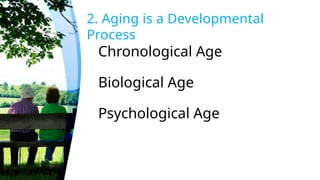
#27 People do not become old or elderly at any specific age. When a person becomes old can be answered in different ways.
CHRONOLOGICAL AGE This is the actual age of a person measured in years from their birth date. It's the most commonly used way to describe how old someone is.
Biological Age: This refers to the physical changes that happen in the body as a person gets older. It reflects how well or poorly your body is functioning relative to your actual (chronological) age. For instance, someone might be 50 years old but have the biological age of a 40-year-old due to good health.
Psychological Age: This is based on how a person feels and behaves rather than their actual age. It considers a person’s mental and emotional state. For example, someone might be 70 years old but feel and act like they’re much younger.
 Most read