Comprehensive Bioeconomic Modelling of Recirculating Aquaculture Systems for Sustainable Fish Production
An in-depth review of bioeconomic models integrating biological and economic factors in Recirculating Aquaculture Systems (RAS), addressing system design, cost structures, profitability, environmental impact, and future research directions.
Comprehensive Bioeconomic Modelling of Recirculating Aquaculture Systems for Sustainable Fish Production
1.
BIOECONOMIC MODELLING OFRECIRCULATING AQUACULTURE SYSTEMS
SEMINAR REVIEW
By
DANIEL KABUIN
PG/MSC/FAQ/24/006
A SEMENAR REVIEW SUBMITED IN PARTIAL FULFILLMENT OF THE
REQUIREMENTS FOR THE AWARD OF MASTER OF SCIENCE (M.SC) DEGREE
DEPARTMENT OF FISHERIES AND AQUACULTURE
SUPERVISOR: DR. S.B UMMA
MAY, 2026
2.
CERTIFICATION
This seminar title:Bioeconomic modeling of recirculating aquaculture systems(RAS). The
seminar was conducted in partial fulfillment of the requirements for the award of master of
science (M.Sc.) in Fisheries and Aquaculture, Faculty of Agriculture of the Federal University
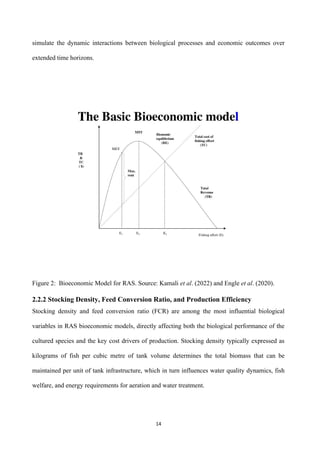
Wukari.
Dr. S. B. Umma ____________________
(Supervisor name) Signature/Date
Prof. J. B. Ogunremi ____________________
(P. G. Co-ordinator) Signature/Date
Dr. N. M. Uruku _____________________
(Head of Department) Signature/Date
i
3.
TABLE OF CONTENTS
Certification.......................................................................................................................................i
TABLEOF CONTENTS.................................................................................................................ii
SUMMARY....................................................................................................................................iii
CHAPTER ONE...............................................................................................................................1
1.1 INTRODUCTION..................................................................................................................1
1.2 Global Aquaculture Production and the Rise of RAS.............................................................2
1.3 The Concept of Bioeconomic Modelling................................................................................3
1.4 Rationale for Bioeconomic Modelling in RAS.......................................................................4
1.5 Aim and Objectives of the Review.........................................................................................5
2.1 BIOLOGICAL AND TECHNICAL FOUNDATIONS OF RAS..............................................6
2.1.1 Definition and Classification of Recirculating Aquaculture Systems.................................6
2.1.2 Core Components and Engineering Design of RAS............................................................7
2.1.3 Water Quality Parameters and Management in RAS...........................................................9
2.1.4 Biofiltration: Nitrification and Denitrification Processes..................................................10
2.1.5 Fish Species Suitability and Biological Performance in RAS...........................................11
2.2 ECONOMIC STRUCTURE OF BIOECONOMIC MODELS APPLIED TO RAS...............12
2.2.1 Growth Modelling Frameworks in RAS............................................................................12
2.2.2 Stocking Density, Feed Conversion Ratio, and Production Efficiency.............................14
2.2.3 Disease Management and Biosecurity in Closed Systems.................................................15
2.2.4 Capital and Infrastructure Costs of RAS............................................................................16
2.2.5 Operational Cost Drivers in RAS Production....................................................................17
2.2.6 Revenue Structures and Market Considerations................................................................18
2.2.7 Profitability Analysis and Financial Metrics in RAS Bioeconomic Models.....................19
2.2.8 Sensitivity Analysis and Risk Assessment in Bioeconomic Models.................................20
2.3 ENVIRONMENTAL ECONOMICS OF RAS........................................................................21
2.3.1 Life Cycle Assessment (LCA) and Environmental Economics of RAS............................21
2.4 BIOECONOMIC PERFORMANCE OF RAS WITH ALTERNATIVE AQUACULTURE
PRODUCTION SYSTEMS...........................................................................................................22
2.4.1 Comparative Bioeconomic Performance: RAS Versus Traditional Aquaculture Systems22
2.4.2 Emerging Integrations: Aquaponics, IMTA, and Circular Economy Applications...........24
CONCLUSION..............................................................................................................................26
REFERENCES...............................................................................................................................27
ii
SUMMARY
Recirculating Aquaculture Systems(RAS) represent a paradigm shift in modern aquaculture,
offering a highly controlled, land-based production environment that recycles and treats water
continuously. As global seafood demand intensifies and natural aquatic resources face
unprecedented pressure, RAS has gained significant attention as a sustainable and intensified fish
production technology. Bioeconomic modelling serves as an indispensable analytical framework
that integrates biological processes such as fish growth, feed conversion, water quality dynamics,
and mortality with economic parameters including capital investment, operational costs, revenue
streams, and profitability metrics. This seminar review provides a comprehensive, multi-
dimensional analysis of bioeconomic modelling as applied to RAS. Chapter One introduces the
concept of RAS, the rationale for bioeconomic integration, and defines the aims and objectives of
the review. Chapter Two presents an extensive literature review of the biological and technical
foundations of RAS, encompassing system components, water quality management, fish species
suitability, biofiltration processes, and growth modelling frameworks. Chapter Three examines
the economic dimensions of RAS bioeconomic models, including capital and operational cost
structures, profitability analysis, sensitivity and risk assessment, life cycle assessment (LCA), and
environmental trade-offs. Chapter Four synthesizes the major findings, identifies existing
knowledge gaps, and presents forward-looking recommendations for researchers, policymakers,
and commercial operators. This review reveals that while bioeconomic models have substantially
advanced the scientific understanding of RAS performance and profitability, significant
challenges remain, including high capital costs, energy intensity, limited species-specific data,
and the need for more sophisticated stochastic and dynamic modelling approaches. Future
research should prioritize the development of species-specific, integrated bioeconomic models
that incorporate real-time data streams, machine learning algorithms, and circular economy
principles.
iii
6.
CHAPTER ONE
1.1 INTRODUCTION
Theglobal demand for fish and fisheries products has risen dramatically over the past three
decades, driven by population growth, increasing per capita income, urbanization, and a growing
awareness of the nutritional benefits of seafood. According to the Food and Agriculture
Organization of the United Nations (FAO, 2022), global fisheries and aquaculture production
reached a record 214 million tons in 2020, with aquaculture contributing approximately 87.5
million metric tons a 569% increase from 1990 levels (Engle et al., 2024). Wild capture fisheries,
however, have remained essentially stagnant since the 1990s, with most major marine stocks
exploited at or beyond their maximum sustainable yield. This structural gap between wild catch
capacity and global seafood demand has positioned aquaculture as the principal mechanism for
future fish supply growth.
Within this context, the emergence of Recirculating Aquaculture Systems (RAS) represents one
of the most significant technological advances in modern aquaculture. Unlike traditional pond-
based, cage, or flow-through raceway systems, RAS are land-based, closed or semi-closed
facilities in which water is continuously treated and reused through a series of physical, chemical,
and biological treatment processes. These systems maintain water quality within precise bounds,
thereby creating optimal conditions for fish health, growth, and welfare at stocking densities that
would be impossible in conventional systems. Compared with pond or cage systems, RAS can
recycle 90–99% of production water, dramatically reducing both water consumption and the
discharge of nutrient-laden effluents into receiving water bodies (Badiola et al., 2017).
Despite these compelling technical attributes, the commercial and financial viability of RAS
remains a subject of intense scientific debate. The high capital and operational costs associated
with RAS infrastructure, energy consumption, and specialized management requirements present
formidable economic barriers, particularly for small and medium-scale producers. It is within this
1
7.
complex interplay ofbiological opportunity and economic challenge that bioeconomic modelling
emerges as an indispensable analytical tool. By formally integrating biological and economic
variables within a unified mathematical framework, bioeconomic models allow researchers,
managers, and investors to evaluate trade-offs, optimise management strategies, and assess the
long-term viability of RAS enterprises under varying production scenarios and market conditions.
1.2 Global Aquaculture Production and the Rise of RAS
Aquaculture has undergone a remarkable transformation since its large-scale commercialization
in the latter half of the twentieth century. FAO data indicate that between 1990 and 2020, annual
global aquaculture production, excluding algae, increased by an average of 6.5% per year,
reaching 87.5 million metric tonnes in 2020 (Engle et al., 2024). This trajectory is expected to
continue, with projections suggesting that aquaculture will need to produce an additional 40
million tonnes annually by 2030 to meet projected global seafood demand (FAO, 2022).
Concurrently, rising consumer expectations regarding food safety, traceability, and
environmental sustainability have shifted interest toward closed and controlled production
systems.
Recirculating Aquaculture Systems have emerged at the forefront of this transformation. RAS
technology was initially driven by the need for environmental sustainability, particularly the
reduction of water use and the minimization of waste discharge (Brown et al., 2024). With
expanding adoption, the scope of RAS application has broadened to encompass high-value
species such as Atlantic salmon (Salmo salar), rainbow trout (Oncorhynchus mykiss), tilapia
(Oreochromis niloticus), African catfish (Clarias gariepinus), and a growing array of marine
species including turbot and sea bass. Recent innovations in biofilter design, oxygenation
technology, automation, and real-time data monitoring have substantially improved the efficiency
and reliability of commercial-scale RAS operations (Ende et al., 2024; Frontiers in Aquaculture,
2026).
2
8.
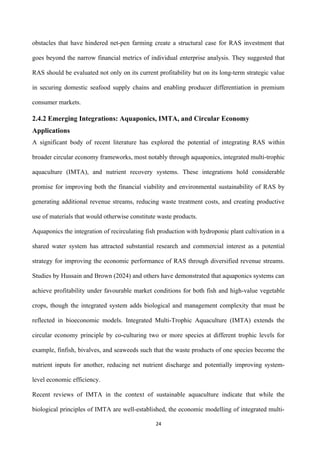
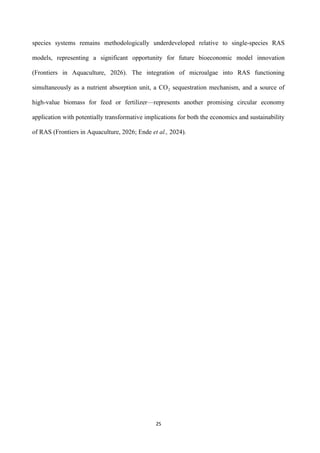
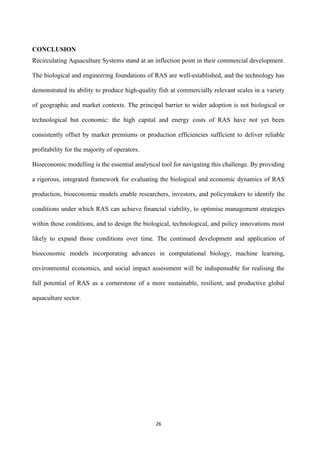
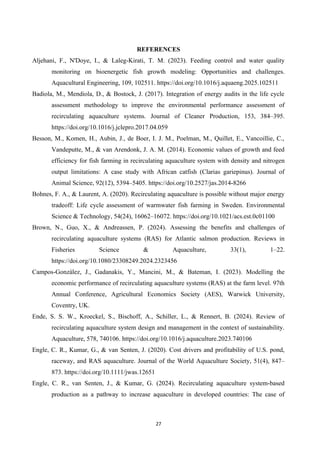
Fish Tank →Mechanical Filter → Biofilter → UV Steriliser → Oxygenation → Temperature
Control → Fish Tank]
The pace of RAS adoption varies considerably across geographic regions. In Europe particularly
in Norway, Denmark, the Netherlands, and Germany RAS has been widely adopted for salmon,
trout, and eel production, supported by a favourable regulatory environment and substantial
research infrastructure. In the United States, RAS-based production of tilapia, Atlantic salmon,
and rainbow trout has grown, though profitability constraints continue to limit broader
commercial uptake (Engle et al., 2020). In Asia, particularly in China, Vietnam, and Bangladesh,
interest in RAS has grown steadily, driven by aquaculture intensification programmes and
concerns about antibiotic use and water pollution in conventional pond systems (Roy et al., 2025;
Islam et al., 2021).
1.3 The Concept of Bioeconomic Modelling
Bioeconomic modelling is a quantitative analytical methodology that uses biological production
functions with economic performance metrics to evaluate the efficiency, profitability, and
sustainability of natural resource utilisation systems. The origins of bioeconomic modelling in
fisheries science can be traced to Gordon (1954) and Schaefer (1954), who pioneered the
integration of population dynamics with profit maximisation objectives in marine fisheries
management. The extension of this framework to aquaculture systems, and specifically to RAS,
represents a methodologically rich frontier that has attracted growing scholarly attention since the
mid-1990s.
In the context of RAS, a bioeconomic model typically consists of several interacting sub-models.
The biological sub-model describes the growth dynamics of the cultured species as a function of
biotic and abiotic variables, including water temperature, dissolved oxygen, feed ration, stocking
density, and the concentration of metabolic waste products such as total ammonia nitrogen
(TAN) and nitrite. The economic sub-model translates these biological outputs primarily fish
3
9.
biomass, feed consumption,and water quality treatment loads into financial terms, encompassing
capital expenditure, variable and fixed operating costs, revenue from fish sales, and measures of
profitability such as net present value (NPV), internal rate of return (IRR), and payback period.
The integration of biological and economic components allows bioeconomic models to serve
multiple analytical purposes: optimising feeding strategies and stocking densities to maximise
profit; identifying the most sensitive cost and production parameters; assessing the financial risk
of investment under biological and market uncertainty; evaluating the trade-offs between
production intensity and environmental sustainability; and comparing the economic performance
of RAS against alternative production systems such as pond aquaculture and net-pen cage
farming. As computational tools have advanced, bioeconomic models have increasingly
incorporated dynamic optimisation techniques, stochastic simulation, and machine learning
algorithms to handle the complexity and uncertainty inherent in real-world RAS operations
(Kamali et al., 2022; Aljehani et al., 2023).
1.4 Rationale for Bioeconomic Modelling in RAS
The application of bioeconomic modelling to RAS is justified on several grounds. First, the high
capital intensity of RAS investment costs for commercial facilities typically range from USD
500,000 to several million dollars depending on scale and species makes rigorous financial
planning and sensitivity analysis essential prior to investment. Poor ex ante economic assessment
has been identified as a primary cause of RAS business failures (Engle et al., 2020; Golfand,
2023). Second, the tight coupling between biological performance and operational costs in RAS
creates conditions under which marginal improvements in fish growth rate, feed conversion ratio,
or water quality management can translate into substantial changes in overall profitability.
Bioeconomic models provide the analytical mechanism to identify and quantify these
relationships.
4
10.
Third, the environmentalsustainability of RAS is a subject of genuine scientific complexity.
While RAS substantially reduces water use and nutrient discharge relative to conventional
systems, its high energy requirements driven by aeration, heating, pumping, and water treatment
create a significant carbon footprint and operational cost burden (Badiola et al., 2017; Liu et al.,
2016). Life cycle assessment (LCA) integrated within bioeconomic frameworks allows decision-
makers to evaluate both the financial and ecological performance of RAS, supporting evidence-
based decisions about system design, energy sourcing, and operational management. Fourth,
advancing the understanding of optimal harvesting strategies, batch sequencing, and stocking
rotation within RAS requires dynamic modelling approaches that simultaneously account for
biological production dynamics and economic objectives, an endeavor for which bioeconomic
frameworks are uniquely suited.
1.5 Aim and Objectives of the Review
This seminar review aim to provide a comprehensive analysis of the current state of knowledge
regarding bioeconomic modelling of Recirculating Aquaculture Systems.
The specific objectives of this review are:
i.To examine the biological and technical foundations of RAS, including system design, water
quality management, biofiltration, and species-specific growth modelling.
ii.To review the economic structure of bioeconomic models applied to RAS, including capital
cost analysis, operational cost drivers, profitability indicators, and financial risk assessment.
iii.To evaluate the environmental economics of RAS through a review of life cycle assessment
studies and carbon footprint analyses.
iv.To compare the bioeconomic performance of RAS with alternative aquaculture production
systems.
5
11.
CHAPTER TWO
2.1 BIOLOGICALAND TECHNICAL FOUNDATIONS OF RAS
2.1.1 Definition and Classification of Recirculating Aquaculture Systems
Recirculating Aquaculture Systems are defined as land-based fish production systems in which
water is treated and reused through one or more treatment processes, enabling the continuous
culture of aquatic organisms at high stocking densities with minimal water exchange. The
defining characteristic of RAS, as distinguished from flow-through or pond systems, is the degree
to which production water is recycled. In conventional RAS, daily water exchange rates are
maintained at 0.1–3.0 m³ per kilogram of feed administered, compared to 50+ m³ per kilogram of
feed in flow-through systems (Badiola et al., 2017; Frontiers in Aquaculture, 2026). This radical
reduction in water consumption is achieved through the integration of multiple water treatment
unit processes operating in a continuous recirculation loop.
RAS can be classified along several dimensions. By degree of recirculation, systems may be
categorised as partial recirculating systems (recycling 50–80% of water), conventional RAS (80–
95% water reuse), and advanced or zero-discharge RAS (>98% water reuse) (Verdegem et al.,
2023). By production environment, RAS may be classified as freshwater, brackish water, or
marine systems, each presenting distinct water chemistry management challenges. By operational
scale, systems range from small research and pilot-scale units of a few cubic metres to
commercial facilities housing thousands of cubic metres of tank volume, with corresponding
capital investments in the millions of USD. By species focus, RAS have been developed for
finfish, crustaceans, molluscs, and increasingly, multi-species integrated systems.
6
12.
Table 1: KeyWater Quality Parameters and Acceptable Ranges in Recirculating Aquaculture
Systems
Parameter Optimal Range Critical Threshold Significance
Dissolved Oxygen
(DO)
6–12 mg/L < 5 mg/L (stress)
Essential for fish respiration and aerobic
nitrification
Total Ammonia
Nitrogen (TAN)
< 1.0 mg/L > 2.0 mg/L (toxic)
Primary metabolic waste; toxic in un-ionised form
(NH )
₃
Nitrite-Nitrogen
(NO -N)
₂
< 0.1 mg/L
> 0.5 mg/L
(harmful)
Intermediate product of nitrification; inhibits
oxygen transport
Nitrate-Nitrogen
(NO -N)
₃
< 200 mg/L
> 400 mg/L (sub-
lethal)
End product; accumulates without denitrification
pH 7.0–8.0 < 6.5 or > 9.0
Affects ammonia toxicity, nitrifier activity, and
fish physiology
Carbon Dioxide
(CO )
₂
< 20 mg/L > 30 mg/L (stress) Byproduct of respiration; removed via degassing
Temperature Species-specific Species-dependent
Controls growth rate, metabolism, and disease
susceptibility
Alkalinity
100–200 mg/L
CaCO₃
< 50 mg/L CaCO₃ Buffers pH and supports nitrification
Turbidity / TSS < 50 mg/L > 100 mg/L
Suspended solids; removed by mechanical
filtration
2.1.2 Core Components and Engineering Design of RAS
The functional architecture of a RAS is defined by the integration of multiple interacting unit
processes, each serving a specific role in maintaining water quality and fish welfare.
Understanding the engineering design of these components is essential for constructing accurate
and reliable bioeconomic models, as the efficiency and energy consumption of each component
directly determines operational costs. The core components of a standard RAS include the culture
tanks, mechanical filtration systems, biological filtration units, degassing and aeration systems,
ultraviolet (UV) or ozone disinfection units, temperature regulation systems, and monitoring and
control infrastructure (Summerfelt et al., 2015; Sarosh & Ramaswami, 2023).
Culture tanks are typically circular or octagonal in design, enabling rotational water flow (swirl
separation) that facilitates passive removal of settleable solids toward a central drain. Tank sizes
range from a few hundred litres in research settings to several thousand cubic metres in
7
13.
commercial facilities. Mechanicalfiltration is achieved via drum filters, belt filters, or
sedimentation basins—removes suspended solids generated by fish faeces, unconsumed feed, and
microbial biomass. Efficient solids removal is critical because accumulated organic matter
creates a biochemical oxygen demand (BOD) that competes with nitrifying bacteria for oxygen
and carbon, thereby destabilising the biofilter (Badiola et al., 2017; Verdegem et al., 2023).
Biological filtration constitutes the most biologically complex and operationally critical
component of any RAS. Moving Bed Biofilm Reactors (MBBR), trickling filters, fluidised sand
biofilters, and submerged fixed-bed biofilters are among the most widely deployed biofilter
technologies in commercial RAS. Each technology type exhibits distinct nitrification kinetics,
space requirements, energy demands, and resilience to operational disruptions. Degassing
columns remove supersaturated carbon dioxide and nitrogen gas from process water, while
aeration or pure oxygen injection systems restore dissolved oxygen to safe levels prior to the
water returning to the fish tanks. The energy required to maintain adequate dissolved oxygen
concentration represents one of the largest single operational cost items in RAS energy budgets
(Badiola et al., 2017; Liu et al., 2016).
Figure 1. Recirculating aquaculture system design
8
14.
2.1.3 Water QualityParameters and Management in RAS
Effective water quality management is the cornerstone of successful RAS operation and a
fundamental driver of both biological performance and economic efficiency. The water quality
parameters of greatest concern in RAS can be grouped into three broad categories: metabolic
waste products (primarily ammonia and carbon dioxide), dissolved gases (oxygen and nitrogen),
and physicochemical indicators (pH, alkalinity, temperature, turbidity, and salinity in marine
systems) (Roy et al., 2025; Sarosh & Ramaswami, 2023).
Total ammonia nitrogen (TAN), comprising both the ionised ammonium ion (NH ) and the
₄⁺
highly toxic un-ionised ammonia (NH ), is the primary metabolic waste product of protein
₃
catabolism in fish. Fish feed typically contains 25–60% protein, and fish assimilate only 20–30%
of applied feed nitrogen as body biomass; the remainder is excreted predominantly as ammonia
(Badiola et al., 2017). The fraction of TAN existing as un-ionised NH is strongly pH and
₃
temperature-dependent, with higher pH and temperature values increasing the proportion of the
toxic form. Safe TAN concentrations are generally maintained below 1.0 mg/L in most RAS,
though species-specific tolerances vary considerably.
The management of pH and alkalinity presents a particularly intricate challenge in RAS because
the biological nitrification process itself consumes alkalinity (approximately 7.1 mg of alkalinity
as CaCO per mg of TAN oxidised), progressively driving pH downward unless compensatory
₃
alkalinity is supplemented (Optimising Alkalinity in RAS, bioRxiv, 2024). Dynamic
mathematical models that couple the slow biological process of nitrification with the rapid
chemical equilibria of the carbonate system have been developed to evaluate alkalinity
management strategies and simulate pH dynamics in operational RAS (Optimising Alkalinity in
RAS, bioRxiv, 2024). Such mechanistic models are increasingly integrated into bioeconomic
frameworks to quantify the cost implications of pH management on fish growth performance and
biofilter efficiency.
9
15.
Temperature regulation isspecies-specific and represents a significant energy cost in RAS,
particularly for cold-water species such as Atlantic salmon and rainbow trout cultured in regions
with warm ambient climates. For warm-water species such as tilapia and African catfish, heating
costs may be minimal, but cooling may be required in tropical climates. The economic
implications of temperature management are substantial and must be included in any
comprehensive bioeconomic model. Studies by Campos-González et al. (2023) and Liu et al.
(2016) have demonstrated that the choice of energy source for temperature control and aeration
whether from renewable or fossil fuel-based sources dramatically affects both the operational
cost structure and the carbon footprint of RAS facilities.
2.1.4 Biofiltration: Nitrification and Denitrification Processes
Biological filtration, or biofiltration, is the process by which populations of
chemolithoautotrophic bacteria convert biologically toxic ammonia and nitrite to the far less toxic
nitrate through the two-step process of nitrification. In the first step, ammonia-oxidising bacteria
(AOB) such as Nitrosomonas europaea and, in some RAS systems, ammonia-oxidising archaea
(AOA) such as Candidatus Nitrosopumilus, convert ammonium (NH ) to nitrite (NO ). In the
₄⁺ ₂⁻
second step, nitrite-oxidising bacteria (NOB) such as Nitrospira spp. convert nitrite to nitrate
(NO ). The overall nitrification process is aerobic, requiring dissolved oxygen concentrations
₃⁻
above 2 mg/L in the biofilm environment, and is highly sensitive to pH, temperature, salinity, and
the presence of inhibitory substances (Sarosh & Ramaswami, 2023; Verdegem et al., 2023).
The accumulation of nitrate in RAS process water represents the terminal product of nitrification.
Without active nitrate removal, nitrate concentrations will continue to rise over the production
cycle, necessitating either partial water exchanges or the implementation of denitrification
systems. Denitrification is the anaerobic microbial reduction of nitrate to nitrogen gas which can
be achieved in dedicated anoxic reactors using external carbon sources such as methanol, acetic
acid, or aquaculture sludge as electron donors. While denitrification significantly reduces the
10
16.
water exchange requirementand therefore lowers water heating costs, the capital and operational
costs of the denitrification unit represent an additional economic burden that must be weighed
within a bioeconomic model (Badiola et al., 2017).
Recent advances in biofiltration technology include the development of simultaneous nitrification
and denitrification (SND) processes using biofloc technology (BFT) combined with
ultrafiltration. Studies employing marine RAS have demonstrated that high carbon-to-nitrogen
ratios can promote heterotrophic nitrification-aerobic denitrification bacteria such as Halomonas,
achieving greater than 89% TAN removal alongside effective nitrate management without the
need for a separate anoxic reactor (Badiola et al. 2017;0 Sarosh & Ramaswami 2023).These
emerging approaches present new opportunities for bioeconomic model development that
integrates complex microbial community dynamics into cost-benefit analyses.
2.1.5 Fish Species Suitability and Biological Performance in RAS
The selection of species for RAS production is a critical determinant of both biological
performance and economic viability. Suitable RAS species must exhibit characteristics that
facilitate high-density culture: tolerance of crowding and confinement without excessive stress-
related growth depression; an ability to thrive on commercially available, nutritionally complete
artificial diets; a commercially attractive growth rate and market value; and reasonable tolerance
of the water quality fluctuations inherent in recirculating systems. Species that have been most
extensively investigated and commercially deployed in RAS include Atlantic salmon, rainbow
trout, Nile tilapia, African catfish, turbot, European eel, pangasius, and various shrimp species
(Golfand, 2023; Islam et al., 2021; Campos-González et al., 2023).
Atlantic salmon (Salmo salar) has attracted the largest commercial and research investment in
RAS production globally, driven by its high market value and the environmental controversy
surrounding open net-pen salmon farming. Studies by Golfand (2023) indicate that under optimal
RAS conditions, salmon can achieve internal rates of return of up to 30%, though this figure is
11
17.
highly sensitive togrowth rates, mortality rates, and feed conversion efficiency. Rainbow trout
(Oncorhynchus mykiss) in RAS has been the subject of extensive dynamic modelling research,
with validated mechanistic models developed by Kamali et al. (2022) demonstrating good
agreement between model predictions and experimental growth data across a range of water
quality and feeding scenarios.
Nile tilapia (Oreochromis niloticus) represents perhaps the most widely studied warm-water
species in RAS bioeconomic research. Studies conducted in Sweden (Bohnes & Laurent, 2020)
using life cycle assessment methodology found that tilapia RAS production with an economic
feed conversion ratio of 1.1 is environmentally competitive with conventional cage farming when
powered by renewable electricity. In Bangladesh, research on Pabda (Ompok pabda) and Shing
catfish (Heteropneustes fossilis) in RAS revealed internal rates of return of 4% and 16%,
respectively, with payback periods of 15 years and 6 years, highlighting the importance of
species selection in determining financial performance (Islam et al., 2021). African catfish in
RAS has been the focus of a landmark bioeconomic model by Besson et al. (2014), which
estimated economic values of the thermal growth coefficient and feed conversion ratio under two
distinct production-limiting scenarios: nitrogen biofilter capacity and tank stocking density.
2.2 ECONOMIC STRUCTURE OF BIOECONOMIC MODELS APPLIED TO RAS
2.2.1 Growth Modelling Frameworks in RAS
Fish growth modelling is the biological engine of any RAS bioeconomic model. Growth models
in aquaculture can be broadly classified into empirical (statistical), bioenergetic (mechanistic),
and hybrid approaches. Each category presents distinct advantages and limitations in terms of
predictive accuracy, data requirements, computational complexity, and applicability across
species and environmental conditions.
Empirical growth models, such as the thermal growth coefficient (TGC) model and the specific
growth rate (SGR) model, relate growth performance to a small number of measurable
12
18.
environmental variables mostcommonly temperature and are widely used in industry due to their
simplicity and low data requirements. The TGC model, which assumes that growth in body
weight is proportional to the product of time and water temperature, has been successfully
applied to salmonid species in RAS and validated against commercial production data. However,
empirical models lack mechanistic insight into the biological processes driving growth and may
not accurately predict performance across the wide range of environmental conditions
encountered in RAS.
Bioenergetic or mechanistic growth models, by contrast, simulate the energy budget of the fish,
partitioning consumed energy among metabolic maintenance, growth, reproduction, and
excretion. Kamali et al. (2022) developed and validated a dynamic mechanistic RAS model for
rainbow trout that integrates fish growth with water quality dynamics including dissolved
oxygen, TAN, and CO which demonstrates the utility of mechanistic modelling for operational
₂
optimisation. A recent work by Aljehani et al. (2023) has extended this framework to incorporate
model predictive control and reinforcement learning algorithms for real-time feeding
optimisation in RAS, demonstrating that optimal control approaches can reduce feed
consumption by significant margins while preventing fish mortality under varying ammonia
exposure scenarios.
Hybrid modelling approaches that combine empirical and mechanistic elements are increasingly
used in commercial RAS settings, offering a practical balance between predictive accuracy and
data tractability. System dynamics (SD) models represent a class of hybrid approaches that use
stock-and-flow structures to simulate the accumulation and depletion of key water quality
indicators such as TAN, nitrite, nitrate, dissolved oxygen, and carbon dioxide in response to fish
metabolism, feed inputs, and biofilter activity (System Dynamics Model for RAS, Dergipark,
2024). SD models are particularly well-suited for bioeconomic integration because they can
13
19.
simulate the dynamicinteractions between biological processes and economic outcomes over
extended time horizons.
Figure 2: Bioeconomic Model for RAS. Source: Kamali et al. (2022) and Engle et al. (2020).
2.2.2 Stocking Density, Feed Conversion Ratio, and Production Efficiency
Stocking density and feed conversion ratio (FCR) are among the most influential biological
variables in RAS bioeconomic models, directly affecting both the biological performance of the
cultured species and the key cost drivers of production. Stocking density typically expressed as
kilograms of fish per cubic metre of tank volume determines the total biomass that can be
maintained per unit of tank infrastructure, which in turn influences water quality dynamics, fish
welfare, and energy requirements for aeration and water treatment.
14
20.
Studies on gibelcarp (Carassius gibelio) in land-based RAS by Zhang et al. (2024) demonstrated
that fish cultured at low stocking density (0.15 kg/m³) achieved significantly higher weight gain
rates, superior condition factors, and better feed conversion efficiency compared to fish at high
stocking density (0.3 kg/m³). Importantly, despite lower per-fish growth performance, the high-
density group exhibited a 13.37-fold increase in body mass over 160 days compared to a 24.53-
fold increase in the low-density group illustrating the complex trade-off between per-fish
performance and total biomass production per unit tank volume that lies at the heart of stocking
density optimisation in RAS bioeconomic models (Zhang et al., 2024).
The feed conversion ratio represents the mass of feed consumed per unit mass of fish biomass
produced and is a composite indicator of feed quality, feeding management, fish health, and
environmental conditions. In well-managed RAS, FCR values for salmonids typically range from
0.9 to 1.3, while for tilapia and catfish, values of 1.0 to 1.5 are commonly reported (Bohnes &
Laurent, 2020). Besson et al. (2014) constructed a bioeconomic model for African catfish RAS to
estimate the economic value of breeding goal traits, finding that under a nitrogen-limited
production scenario, a 7.6% improvement per generation in FCR through selective breeding
resulted in a 10% improvement in profit per kilogram of fish produced. This finding underscores
the substantial potential of genetic improvement programmes to enhance the economic
performance of RAS operations.
2.2.3 Disease Management and Biosecurity in Closed Systems
One of the most frequently cited advantages of RAS is the enhanced biosecurity afforded by the
physical separation of the production environment from open water bodies, substantially reducing
the risk of pathogen introduction from wild fish or aquatic organisms. The closed nature of RAS
allows for the effective implementation of prophylactic health management programmes, targeted
vaccination strategies, and rapid outbreak containment through system isolation. Disease-related
mortality and treatment costs represent significant but often underestimated components of RAS
15
21.
operational budgets andmust be included in comprehensive bioeconomic models (Golfand,
2023).
Ultraviolet (UV) sterilisation and ozonation are the most widely applied disinfection technologies
in RAS, both functioning to inactivate bacterial, viral, and parasitic pathogens in recirculating
water. UV sterilisation is cost-effective and easy to operate but requires regular lamp replacement
and provides only in-line (not residual) disinfection. Ozone is more powerful and provides
additional benefits including the oxidation of refractory organic compounds and the reduction of
water colour and turbidity, but requires careful management to avoid ozone toxicity to fish
(Moreno-Andrés et al., 2020; Sarosh & Ramaswami, 2023). Recent investigations into cold
atmospheric plasma (CAP) as an emerging disinfection technology in RAS have demonstrated
pathogen reduction of greater than 90%, with the potential to further reduce biosecurity-related
costs in future commercial systems (Frontiers in Aquaculture, 2026).
2.2.4 Capital and Infrastructure Costs of RAS
The capital cost of constructing a commercial RAS facility represents the most formidable
financial barrier to entry and is invariably the dominant consideration in investment feasibility
analysis. Capital expenditure (CAPEX) in RAS encompasses land acquisition, civil construction,
tank installation, plumbing and pipework, mechanical and biological filtration systems,
oxygenation and aeration equipment, heating and cooling infrastructure, electrical systems and
backup generation, control and monitoring systems, and facilities for fish handling, processing,
and logistics. For small to medium-scale RAS, capital costs typically range from USD 300 to
USD 2,000 per kilogram of annual production capacity, depending on species, technology level,
and geographic location (Engle et al., 2020; Golfand, 2023).
The scale of capital investment in RAS is strongly correlated with system complexity and
technological ambition. A study by Campos-González et al. (2023) modelling the economic
performance of RAS combined with anaerobic digestion (AD) units on medium and large arable
16
22.
farms in theUnited Kingdom found that a combined AD unit generating up to 500 kW of
renewable energy with six to twelve RAS units (157 m³ each) for high-value shrimp production
was economically viable at 2022 price levels, demonstrating the potential for farm-scale
diversification to underwrite RAS investment. However, the authors noted that economic
viability was highly sensitive to shrimp market prices and energy costs—two variables subject to
significant market volatility.
2.2.5 Operational Cost Drivers in RAS Production
Operational expenditure (OPEX) in RAS is dominated by feed costs, energy costs, and labour
costs, which together typically account for 60–80% of total variable costs in intensive RAS
production (Engle et al., 2020; Golfand, 2023). Feed costs alone may represent 40–60% of total
production costs, making feed price and feed efficiency (FCR) the most strategically important
variables in RAS financial planning. Energy costs constitute the second largest operational
expense, driven primarily by the energy requirements for water pumping, aeration or
oxygenation, heating or cooling, UV or ozone disinfection, and associated control systems.
In a comprehensive analysis of U.S. pond, raceway, and RAS aquaculture, Engle et al. (2020)
found that RAS enterprises producing Atlantic salmon, trout, and tilapia generally failed to
achieve profitability, primarily because the elevated capital and energy costs of RAS were not
adequately offset by either premium market pricing or enhanced production efficiency. The
authors identified labour productivity and capital productivity as the two most critical leverage
points for improving RAS financial performance beyond upscaling. This finding has been
corroborated by studies in other geographic contexts, including Vietnam (Tran et al., 2016),
Bangladesh (Islam et al., 2021), and Europe (Bohnes & Laurent, 2020).
Energy consumption in RAS is particularly variable across system configurations, species, and
geographic locations. Fiso (2025), in a comparative life cycle assessment of intensive RAS
configurations, reported that intensive recirculation systems exhibited the highest energy
17
23.
intensity at 20.4kWh per kilogram of fish produced. By contrast, a Swedish commercial RAS
producing tilapia and Clarias catfish demonstrated substantially lower energy intensity due to the
availability of renewable hydropower electricity, illustrating the transformative potential of
energy source substitution for both the cost structure and the carbon footprint of RAS operations
(Bohnes & Laurent, 2020). The integration of farm-based renewable energy sources including
anaerobic digestors, photovoltaic solar panels, and wind turbines into RAS energy supply chains
is increasingly recognised as a pathway toward both cost reduction and carbon neutrality
(AQUADAPT, 2025).
2.2.6 Revenue Structures and Market Considerations
Revenue generation in RAS is principally derived from the sale of fish biomass, with secondary
revenue streams potentially arising from the sale of aquaculture sludge as organic fertiliser, heat
recovery for adjacent greenhouse production, production of microalgal biomass from integrated
algal treatment units, and premium market positioning as locally produced, antibiotic-free,
sustainably certified seafood. The ability of RAS producers to capture market premiums relative
to conventionally farmed or imported seafood is a critical determinant of financial viability, given
the higher production costs inherent in most RAS enterprises.
Engle et al. (2024) analysed the potential of RAS-based production to support developed country
aquaculture growth, using the United States as a case study. The authors identified significant
marketing advantages associated with RAS, including proximity-to-market benefits that reduce
cold chain logistics costs, enhanced ability to comply with traceability and food safety
regulations, and the growing consumer willingness to pay for domestically produced, sustainably
certified seafood. These market positioning advantages are particularly important for high-value
species such as Atlantic salmon, where imported product from Norway and Chile dominates
retail markets at price points that RAS producers must match or exceed through marketing
differentiation.
18
24.
Price volatility representsa major source of financial risk for RAS enterprises. Tran et al. (2016),
in their stochastic bioeconomic simulation of pangasius RAS in Vietnam, identified market price
as the single most important parameter determining the probability of profitable investment, with
a simulated 99% probability of profitability for both medium and large farms operating under
prevailing market conditions. The stochastic approach—which explicitly models the probability
distribution of key parameters rather than relying on single point estimates—represents best
practice in RAS investment analysis and should be standard methodology in future bioeconomic
model development.
2.2.7 Profitability Analysis and Financial Metrics in RAS Bioeconomic Models
Profitability analysis in RAS bioeconomic models employs a suite of financial metrics, each
providing a distinct perspective on the economic performance of the enterprise. The most
commonly used metrics include net present value (NPV), internal rate of return (IRR), payback
period, discounted payback period, profitability index (PI), and benefit-cost ratio (BCR). These
metrics are embedded within capital budgeting frameworks that discount future cash flows to
their present value using an appropriate discount rate reflecting the cost of capital and the risk
profile of the investment.
Net present value is the most theoretically robust measure of investment profitability,
representing the difference between the present value of expected future cash inflows and
outflows over the project lifetime. A positive NPV indicates that the investment is expected to
generate returns in excess of the opportunity cost of capital, while a negative NPV indicates the
opposite. In a study of pangasius RAS in Vietnam, Tran et al. (2016) reported that NPV for large
farms implementing RAS increased from an average of USD 589,000 per hectare under the
traditional system to USD 916,000 per hectare with RAS implementation—a substantial increase
that nonetheless depended on optimistic assumptions regarding price trends and yield
improvements.
19
25.
Internal rate ofreturn—the discount rate at which the NPV of the investment equals zero—
provides a measure of the maximum cost of capital that the investment can sustain and remain
profitable. Golfand (2023) reported that salmon RAS projects under optimal growth conditions
can achieve IRR values of up to 30%, while Islam et al. (2021) found IRR values of 4% and 16%
for Pabda catfish and Shing catfish RAS in Bangladesh, respectively. The wide range of reported
IRR values across studies reflects the profound influence of species selection, system scale,
energy costs, labour costs, and market conditions on RAS financial performance.
2.2.8 Sensitivity Analysis and Risk Assessment in Bioeconomic Models
Sensitivity analysis is a fundamental component of rigorous bioeconomic modelling, designed to
identify which model parameters most significantly influence the output variables of interest
typically NPV, IRR, or profit margin. By systematically varying individual parameters such as
fish market price, FCR, mortality rate, energy cost, or fingerling price within their plausible range
while holding all other variables constant, sensitivity analysis reveals the financial leverage
points of an RAS enterprise and provides decision-makers with a clear understanding of the
primary sources of financial risk.
Tran et al. (2016) conducted a comprehensive sensitivity analysis for pangasius RAS in Vietnam,
identifying market price, yield, fingerling cost, feed cost, and initial investment as the five most
critical parameters for profitability. The application of stochastic Monte Carlo simulation in
which all uncertain parameters are sampled from probability distributions simultaneously enabled
the estimation of a full probability distribution for NPV, yielding the headline finding that the
probability of profitable investment was 99% for both farm sizes under prevailing market
conditions. This methodological approach, which moves beyond deterministic single-point
estimates to probabilistic risk characterization, represents best practice in RAS bioeconomic
modelling.
20
26.
Besson et al.(2014) employed a deterministic bioeconomic model for African catfish RAS that
explicitly modelled two production-limiting scenarios nitrogen biofilter capacity limitation and
stocking density limitation and derived economic values for breeding goal traits (TGC and FCR)
under each scenario. The analysis revealed that the economic value of a given trait depends
fundamentally on which biological factor is limiting production, providing a nuanced perspective
on the context-dependency of breeding objectives in RAS species improvement programmes.
This finding has important implications for the design of selective breeding programmes aimed at
improving RAS economic performance, and illustrates the power of bioeconomic models to
generate actionable insights for both biological management and commercial strategy.
2.3 ENVIRONMENTAL ECONOMICS OF RAS
2.3.1 Life Cycle Assessment (LCA) and Environmental Economics of RAS
Life Cycle Assessment (LCA) is an internationally standardised methodology (ISO 14040/14044)
for quantifying the environmental impacts of products or processes across their entire life cycle,
from raw material extraction to end-of-life disposal. In the context of RAS, LCA has been
applied to evaluate environmental trade-offs between the water conservation benefits of RAS and
the energy-intensive nature of closed-system water treatment, providing a comprehensive
environmental economics perspective that complements the financial analysis of bioeconomic
models.
A landmark LCA study by Bohnes and Laurent (2020) of a commercial freshwater RAS in
Sweden producing tilapia and Clarias catfish found that feed production contributed most to all
environmental impact categories examined (67–98% of impacts), including freshwater
eutrophication, climate change, land use, and energy demand. Notably, this study challenged the
commonly held assumption that on-farm energy use is the dominant driver of environmental
pressure in RAS, finding that the use of renewable hydropower electricity in the Swedish context
reduced the farm's energy-related contribution to global warming potential to levels comparable
21
27.
with conventional aquaculturesystems. The authors concluded that RAS can be competitive in
terms of environmental sustainability when powered by renewable energy and when feed
sourcing is optimised to reduce the use of fishmeal and improve by-product utilisation.
Carbon footprint estimates for RAS vary widely across studies and geographic contexts. Badiola
et al. (2017) reported carbon footprints of up to 27 kg CO -equivalent per kilogram of live weight
₂
cod in Spain, while Liu et al. (2016) estimated 7.01 kg CO -equivalent per kilogram of salmon in
₂
U.S. RAS—reducible to 3.73 kg CO -equivalent when hydropower electricity was used. Fiso
₂
(2025), in a comparative analysis of RAS energy efficiency across configurations, reported that
intensive recirculation systems generate approximately 6.4 kg CO -equivalent per kilogram of
₂
fish produced, with significant variation based on system design and energy mix. These findings
underscore the critical role of energy policy and renewable energy integration in determining the
environmental footprint of RAS, and highlight the need for LCA to be routinely integrated into
RAS bioeconomic model frameworks.
Emerging work on the integration of biochar filters into RAS has suggested an additional
pathway toward carbon neutrality. Lebrun et al. (2025) conducted an LCA of an innovative RAS
incorporating biochar filtration and found that the use of biochar facilitates long-term carbon
storage, potentially positioning the technology as a means to achieve net carbon-negative
aquaculture production. While currently at pre-commercial scale, this approach illustrates the
dynamic landscape of RAS environmental technology innovation and the need for bioeconomic
models to remain adaptive to emerging system configurations.
2.4 BIOECONOMIC PERFORMANCE OF RAS WITH ALTERNATIVE
AQUACULTURE PRODUCTION SYSTEMS
2.4.1 Comparative Bioeconomic Performance: RAS Versus Traditional Aquaculture
Systems
A recurring theme in the RAS bioeconomic literature is the comparative economic performance
of RAS relative to traditional aquaculture production systems. This comparison is complicated by
22
28.
the substantial diversityof species, geographic contexts, regulatory environments, and
technological approaches across studies, but several broad conclusions can be drawn from the
available evidence.
Table 4: Comparative Economic Performance of RAS Versus Conventional Aquaculture Systems
Criterion RAS (Closed System) Pond Aquaculture Net-Pen Cage Farming
Capital Cost Very High (USD/kg) Low to Medium Medium to High
Operational Cost High (energy, labour) Low to Medium Medium
Water Use Efficiency Excellent (90–99%
recycled)
Poor to Moderate Not applicable (open water)
Environmental Control Excellent (precision control) Limited Poor (weather, currents)
Biosecurity High (closed system) Moderate to Low Low (open water)
Stocking Density High (20–250 kg/m³) Low (1–5 kg/m³) Moderate (15–25 kg/m³)
Profitability (typical) Variable (often marginal) Moderate to Good Good (established species)
Carbon Footprint High to Moderate (energy-
dependent)
Moderate (land-use
impacts)
Moderate
Market Positioning Premium potential (local,
traceable)
Commodity (price-taker) Commodity
Regulatory Compliance High (closed, contained) Moderate Low to Moderate
Disease Risk Low (biosecure) High (open environment) High (sea lice, viruses)
Engle et al. (2020) found that in the United States context, scaling up RAS enterprises helped to
reduce per-unit production losses through economies of scale, but all RAS remained unprofitable
at the market prices and production costs prevailing during the study period. In contrast, pond
aquaculture was found to provide tilapia producers with better control of variable costs and
greater profitability due to lower capital and energy requirements per kilogram of fish produced.
This stark finding has been partially contested by more optimistic analyses from regions with
different energy cost structures and market conditions, highlighting the context-dependency of
RAS economic performance.
Engle et al. (2024), examining the potential of RAS for developed country aquaculture growth,
argued that the marketing and regulatory advantages of RAS including proximity-to-market
benefits, enhanced food safety compliance, and the avoidance of environmental regulatory
23
29.
obstacles that havehindered net-pen farming create a structural case for RAS investment that
goes beyond the narrow financial metrics of individual enterprise analysis. They suggested that
RAS should be evaluated not only on its current profitability but on its long-term strategic value
in securing domestic seafood supply chains and enabling producer differentiation in premium
consumer markets.
2.4.2 Emerging Integrations: Aquaponics, IMTA, and Circular Economy
Applications
A significant body of recent literature has explored the potential of integrating RAS within
broader circular economy frameworks, most notably through aquaponics, integrated multi-trophic
aquaculture (IMTA), and nutrient recovery systems. These integrations hold considerable
promise for improving both the financial viability and environmental sustainability of RAS by
generating additional revenue streams, reducing waste treatment costs, and creating productive
use of materials that would otherwise constitute waste products.
Aquaponics the integration of recirculating fish production with hydroponic plant cultivation in a
shared water system has attracted substantial research and commercial interest as a potential
strategy for improving the economic performance of RAS through diversified revenue streams.
Studies by Hussain and Brown (2024) and others have demonstrated that aquaponics systems can
achieve profitability under favourable market conditions for both fish and high-value vegetable
crops, though the integrated system adds biological and management complexity that must be
reflected in bioeconomic models. Integrated Multi-Trophic Aquaculture (IMTA) extends the
circular economy principle by co-culturing two or more species at different trophic levels for
example, finfish, bivalves, and seaweeds such that the waste products of one species become the
nutrient inputs for another, reducing net nutrient discharge and potentially improving system-
level economic efficiency.
Recent reviews of IMTA in the context of sustainable aquaculture indicate that while the
biological principles of IMTA are well-established, the economic modelling of integrated multi-
24
30.
species systems remainsmethodologically underdeveloped relative to single-species RAS
models, representing a significant opportunity for future bioeconomic model innovation
(Frontiers in Aquaculture, 2026). The integration of microalgae into RAS functioning
simultaneously as a nutrient absorption unit, a CO sequestration mechanism, and a source of
₂
high-value biomass for feed or fertilizer—represents another promising circular economy
application with potentially transformative implications for both the economics and sustainability
of RAS (Frontiers in Aquaculture, 2026; Ende et al., 2024).
25
31.
CONCLUSION
Recirculating Aquaculture Systemsstand at an inflection point in their commercial development.
The biological and engineering foundations of RAS are well-established, and the technology has
demonstrated its ability to produce high-quality fish at commercially relevant scales in a variety
of geographic and market contexts. The principal barrier to wider adoption is not biological or
technological but economic: the high capital and energy costs of RAS have not yet been
consistently offset by market premiums or production efficiencies sufficient to deliver reliable
profitability for the majority of operators.
Bioeconomic modelling is the essential analytical tool for navigating this challenge. By providing
a rigorous, integrated framework for evaluating the biological and economic dynamics of RAS
production, bioeconomic models enable researchers, investors, and policymakers to identify the
conditions under which RAS can achieve financial viability, to optimise management strategies
within those conditions, and to design the biological, technological, and policy innovations most
likely to expand those conditions over time. The continued development and application of
bioeconomic models incorporating advances in computational biology, machine learning,
environmental economics, and social impact assessment will be indispensable for realising the
full potential of RAS as a cornerstone of a more sustainable, resilient, and productive global
aquaculture sector.
26
32.
REFERENCES
Aljehani, F., N'Doye,I., & Laleg-Kirati, T. M. (2023). Feeding control and water quality
monitoring on bioenergetic fish growth modeling: Opportunities and challenges.
Aquacultural Engineering, 109, 102511. https://doi.org/10.1016/j.aquaeng.2025.102511
Badiola, M., Mendiola, D., & Bostock, J. (2017). Integration of energy audits in the life cycle
assessment methodology to improve the environmental performance assessment of
recirculating aquaculture systems. Journal of Cleaner Production, 153, 384–395.
https://doi.org/10.1016/j.jclepro.2017.04.059
Besson, M., Komen, H., Aubin, J., de Boer, I. J. M., Poelman, M., Quillet, E., Vancoillie, C.,
Vandeputte, M., & van Arendonk, J. A. M. (2014). Economic values of growth and feed
efficiency for fish farming in recirculating aquaculture system with density and nitrogen
output limitations: A case study with African catfish (Clarias gariepinus). Journal of
Animal Science, 92(12), 5394–5405. https://doi.org/10.2527/jas.2014-8266
Bohnes, F. A., & Laurent, A. (2020). Recirculating aquaculture is possible without major energy
tradeoff: Life cycle assessment of warmwater fish farming in Sweden. Environmental
Science & Technology, 54(24), 16062–16072. https://doi.org/10.1021/acs.est.0c01100
Brown, N., Guo, X., & Andreassen, P. (2024). Assessing the benefits and challenges of
recirculating aquaculture systems (RAS) for Atlantic salmon production. Reviews in
Fisheries Science & Aquaculture, 33(1), 1–22.
https://doi.org/10.1080/23308249.2024.2323456
Campos-González, J., Gadanakis, Y., Mancini, M., & Bateman, I. (2023). Modelling the
economic performance of recirculating aquaculture systems (RAS) at the farm level. 97th
Annual Conference, Agricultural Economics Society (AES), Warwick University,
Coventry, UK.
Ende, S. S. W., Kroeckel, S., Bischoff, A., Schiller, L., & Rennert, B. (2024). Review of
recirculating aquaculture system design and management in the context of sustainability.
Aquaculture, 578, 740106. https://doi.org/10.1016/j.aquaculture.2023.740106
Engle, C. R., Kumar, G., & van Senten, J. (2020). Cost drivers and profitability of U.S. pond,
raceway, and RAS aquaculture. Journal of the World Aquaculture Society, 51(4), 847–
873. https://doi.org/10.1111/jwas.12651
Engle, C. R., van Senten, J., & Kumar, G. (2024). Recirculating aquaculture system-based
production as a pathway to increase aquaculture in developed countries: The case of
27
33.
United States aquaculture.Aquaculture Economics & Management, 28(3), 1–22.
https://doi.org/10.1080/13657305.2024.2330051
FAO. (2022). The state of world fisheries and aquaculture 2022. Food and Agriculture
Organization of the United Nations, Rome.
Fiso, M. (2025). Energy efficiency optimization and carbon neutral pathways in recirculating
aquaculture systems (RAS). Aquaculture Systems Review. Wisdom Academic Press.
https://system.wisacad-pub.com/index.php/asr/article/view/30
Frontiers in Aquaculture. (2026). Recent advancements in sustainable aquaculture: Innovative
techniques and future prospects. Frontiers in Aquaculture, 4, 1770106.
https://doi.org/10.3389/faquc.2026.1770106
Golfand, I. (2023). Economics of growing salmon in recirculating aquaculture systems (RAS).
Journal of Aquaculture and Marine Biology, 12(2), 99–102.
https://doi.org/10.15406/jamb.2023.12.00362
Hussain, T., & Brown, C. L. (2024). Aquaponics and the crossroads of profitability and
sustainability viewed through sensitivity and risk modelling. Journal of Cleaner
Production, 482, 144592. https://doi.org/10.1016/j.jclepro.2025.144592
Islam, M. N., Arifa, N., Parves, M. A., & Zavyalov, A. P. (2021). Economic feasibility of Pabda
and stinging catfish culture in recirculating aquaculture systems (RAS) in Bangladesh.
Aquaculture International, 30(1), 289–310. https://doi.org/10.1007/s10499-021-00807-1
Kamali, M., Suresh, A., & Eskandarian, M. (2022). Dynamic modeling of recirculating
aquaculture systems: Effect of management strategies and water quality parameters on
fish performance. Aquacultural Engineering, 98, 102261.
https://doi.org/10.1016/j.aquaeng.2022.102261
Lebrun, J., Hansen, M., & Krogh, T. (2025). Life cycle assessment of recirculating aquaculture
systems with innovative biochar filter for enhanced nutrient recirculation. Aquaculture
and Fisheries, 10, 100265. https://doi.org/10.1016/j.aaf.2025.100265
Liu, Y., Rosten, T. W., Henriksen, K., Hognes, E. S., Summerfelt, S., & Vinci, B. (2016).
Comparative economic performance and carbon footprint of two farming models for
producing Atlantic salmon (Salmo salar): Land-based closed containment system in
freshwater and open net pen in seawater. Aquacultural Engineering, 71, 1–12.
https://doi.org/10.1016/j.aquaeng.2016.01.001
Moreno-Andrés, J., Rueda-Márquez, J. J., Homola, T., Vielma, J., Moríñigo, M. Á., Mikola, A.,
& Levchuk, I. (2020). A comparison of photolytic, photochemical and photocatalytic
28
34.
processes for disinfectionof recirculation aquaculture systems (RAS) streams. Water
Research, 181, 115928. https://doi.org/10.1016/j.watres.2020.115928
Optimising Alkalinity in RAS Research Group. (2024). Optimizing alkalinity control in
recirculating aquaculture systems (RAS): A dynamic modelling approach. bioRxiv.
https://doi.org/10.1101/2024.06.28.600787
Roy, D., Saha, P. K., Sarker, S., Parves, M. A., Zavyalov, A. P., & Latifa, G. A. (2025). Culture
practice of Oreochromis niloticus through recirculating aquaculture system (RAS): A
modern and growth-optimised approach. Environmental Science and Pollution Research,
32(18), 11749–11766. https://doi.org/10.1007/s11356-025-36781-z
Sarosh, S., & Ramaswami, S. (2023). Recirculating aquaculture system and nitrification: A
review. Journal of the Indian Institute of Science. https://doi.org/10.1007/s41745-024-
00443-7
Summerfelt, S. T., Sharrer, M. J., Tsukuda, S. M., & Gearheart, M. (2015). Process requirements
for achieving full-flow disinfection of recirculating water using ozonation and UV
irradiation at a land-based Atlantic salmon smolt producer. Aquacultural Engineering,
38(2), 77–84. https://doi.org/10.1016/j.aquaeng.2007.11.006
Tran, N., Shikuku, K. M., Rossignoli, C. M., Barman, B. K., Cheein, R., Rodriguez, U. P., &
Nguyen, T. T. (2016). Economic feasibility of recirculating aquaculture systems in
pangasius farming. Aquaculture Economics & Management, 21(1), 1–19.
https://doi.org/10.1080/13657305.2016.1156190
Verdegem, M. C. J., & Nava, D. E. (2023). Advances in recirculating aquaculture systems and
water treatment. Reviews in Aquaculture, 15(3), 1021–1038.
https://doi.org/10.1111/raq.12768
Zhang, L., Chen, X., Zhao, Y., Guo, H., Liao, M., & Hou, J. (2024). Effect of stocking density on
growth performance of juvenile gibel carp (Carassius gibelio) and economic profit of
land-based recirculating aquaculture system. Water, 16(17), 2367.
https://doi.org/10.3390/w16172367
29

![Fish Tank → Mechanical Filter → Biofilter → UV Steriliser → Oxygenation → Temperature
Control → Fish Tank]
The pace of RAS adoption varies considerably across geographic regions. In Europe particularly
in Norway, Denmark, the Netherlands, and Germany RAS has been widely adopted for salmon,
trout, and eel production, supported by a favourable regulatory environment and substantial
research infrastructure. In the United States, RAS-based production of tilapia, Atlantic salmon,
and rainbow trout has grown, though profitability constraints continue to limit broader
commercial uptake (Engle et al., 2020). In Asia, particularly in China, Vietnam, and Bangladesh,
interest in RAS has grown steadily, driven by aquaculture intensification programmes and
concerns about antibiotic use and water pollution in conventional pond systems (Roy et al., 2025;
Islam et al., 2021).
1.3 The Concept of Bioeconomic Modelling
Bioeconomic modelling is a quantitative analytical methodology that uses biological production
functions with economic performance metrics to evaluate the efficiency, profitability, and
sustainability of natural resource utilisation systems. The origins of bioeconomic modelling in
fisheries science can be traced to Gordon (1954) and Schaefer (1954), who pioneered the
integration of population dynamics with profit maximisation objectives in marine fisheries
management. The extension of this framework to aquaculture systems, and specifically to RAS,
represents a methodologically rich frontier that has attracted growing scholarly attention since the
mid-1990s.
In the context of RAS, a bioeconomic model typically consists of several interacting sub-models.
The biological sub-model describes the growth dynamics of the cultured species as a function of
biotic and abiotic variables, including water temperature, dissolved oxygen, feed ration, stocking
density, and the concentration of metabolic waste products such as total ammonia nitrogen
(TAN) and nitrite. The economic sub-model translates these biological outputs primarily fish
3](https://image.slidesharecdn.com/danbioeconomicmodellingofrecirculatingaquaculture-260511011504-d515ef63/85/Comprehensive-Bioeconomic-Modelling-of-Recirculating-Aquaculture-Systems-for-Sustainable-Fish-Production-8-320.jpg)