ComponentSectors of
theTravel andTourism
Industry (part2)
HPRINTOUR
Presented by: Mervyn Maico D. Aldana, Faculty SHTM
From:
Principles and Scopes of
Tourism by Dr. R. Lim
&Principles ofTourism by
R. Manzano & B. Santos
Attraction
Sector
 All destinations require features that will attract tourist to come
and see and experience these activities and attractions.
 These can range from physical features (mountains, beaches, etc.)
to activities (boating, shopping, entertainment, etc.).
 Attractions can be categorized as either natural or constructed.
 Natural – mountains, forests, geothermal areas, which must be
maintained.
 Constructed (man-made) – amusement parks, museums, art
galleries, wildlife parks, events, staged entertainment, cultural
exhibitions, gardens, and historical buildings.
Transport
Sector
TheTravel and
TourSector
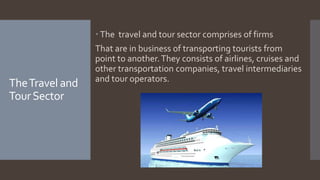
 The travel and tour sector comprises of firms
That are in business of transporting tourists from
point to another.They consists of airlines, cruises and
other transportation companies, travel intermediaries
and tour operators.
Airlines
Airlines
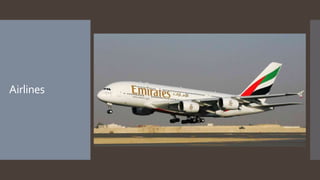
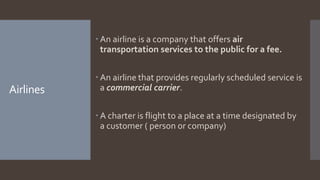
 An airline is a company that offers air
transportation services to the public for a fee.
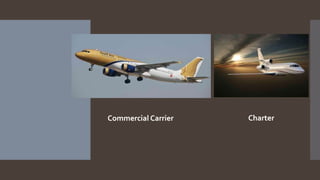
 An airline that provides regularly scheduled service is
a commercial carrier.
 A charter is flight to a place at a time designated by
a customer ( person or company)
Commercial Carrier Charter
Airlines
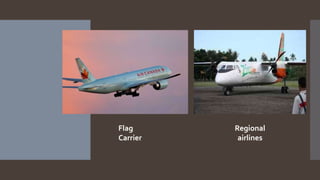
 A Flag carrier or national airline is an airline designated by it’s
government to operate international services.
 Regional airlines or feeder airlines bring passengers from smaller
cities to major airports where passenger coming from several
points board a larger aircraft to another destination.
Flag
Carrier
Regional
airlines
Aspects of
AirlineService
“When choosing an airline, the customers make decisions based on
several airline attributes except for the price itself. “
1. Previous experience
2. Friend’s recommendation
3. Choices of airline available
Aspects of
AirlineService
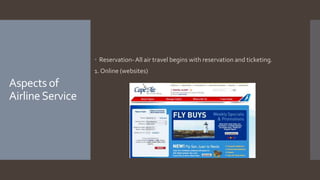
 Reservation-All air travel begins with reservation and ticketing.
1. Online (websites)
2.Travel intermediary
“An airline’s ability to accommodate reservation and
ticket depends on seat capacity and flight frequency.”
 Ground Service- this refers to services rendered by the airline to
passengers at the airport before and after a flight.
1. Check-in, check-out
2. Boarding
3. Deplaning
4. Baggage Handling
Types of
Boarding
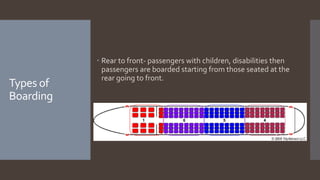
 Rear to front- passengers with children, disabilities then
passengers are boarded starting from those seated at the
rear going to front.
 Random or free for all seating- passengers can sit anywhere.
 Rotating Zone- business and first class first, followed by
passengers at the back five rows, then passengers at the five
font rows and so on until everyone has boarded.
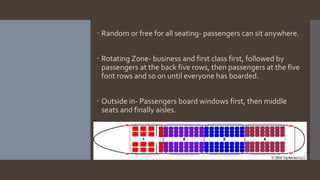
 Outside in- Passengers board windows first, then middle
seats and finally aisles.
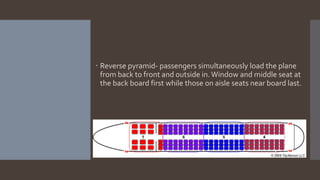
 Reverse pyramid- passengers simultaneously load the plane
from back to front and outside in. Window and middle seat at
the back board first while those on aisle seats near board last.
 In-flight service- once the doors of the aircraft is closed, in-flight service
starts.The cabin crew go through his/her usual routine.
1. Luggages
2. Seatbelts
3. Lights
4. Emergency procedures
5. Preparation for take off
“Cabin crews are central to the quality of in flight-service.”
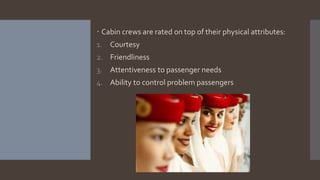
 Cabin crews are rated on top of their physical attributes:
1. Courtesy
2. Friendliness
3. Attentiveness to passenger needs
4. Ability to control problem passengers
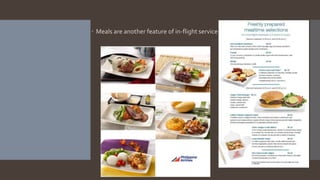
 Meals are another feature of in-flight service
 On time performance-15 minutes of scheduled arrival or departure times.
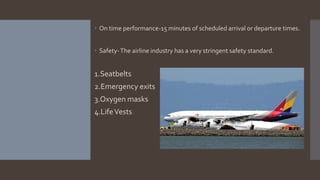
 Safety-The airline industry has a very stringent safety standard.
1.Seatbelts
2.Emergency exits
3.Oxygen masks
4.LifeVests
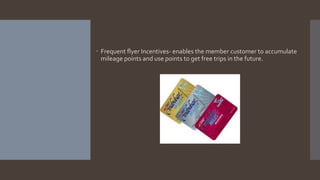
 Frequent flyer Incentives- enables the member customer to accumulate
mileage points and use points to get free trips in the future.
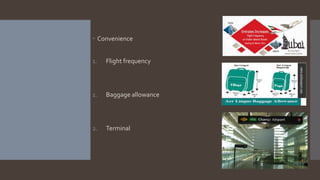
 Convenience
1. Flight frequency
1. Baggage allowance
2. Terminal
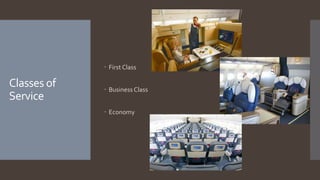
Classes of
Service
 First Class
 Business Class
 Economy
Trends in the
Airline Industry
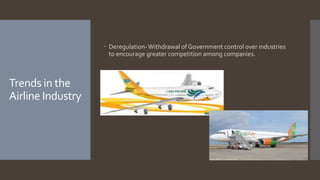
 Deregulation-Withdrawal of Government control over industries
to encourage greater competition among companies.
 Alliances- collaborative pooling of resources between carriers designed to
make capacity more efficient and extend their market reach
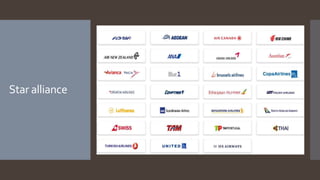
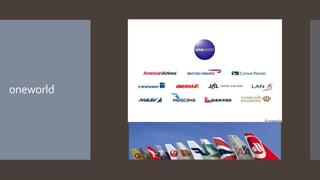
 Star alliance
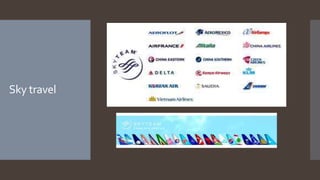
 Skyteam
 oneworld
Star alliance
Sky travel
oneworld
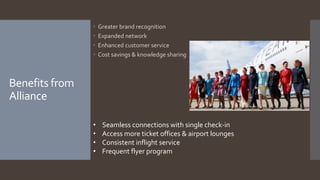
Benefits from
Alliance
 Greater brand recognition
 Expanded network
 Enhanced customer service
 Cost savings & knowledge sharing
• Seamless connections with single check-in
• Access more ticket offices & airport lounges
• Consistent inflight service
• Frequent flyer program
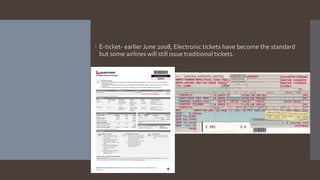
 E-ticket- earlier June 2008, Electronic tickets have become the standard
but some airlines will still issue traditional tickets.
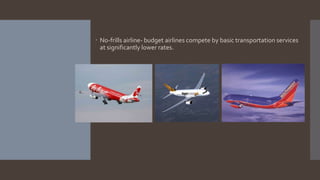
 No-frills airline- budget airlines compete by basic transportation services
at significantly lower rates.
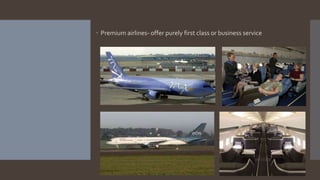
 Premium airlines- offer purely first class or business service
Other tourist
transport
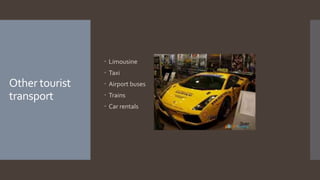
 Limousine
 Taxi
 Airport buses
 Trains
 Car rentals
Traditional
transport
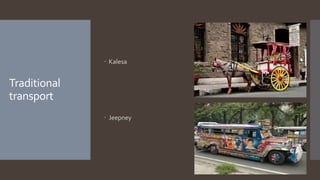
 Kalesa
 Jeepney
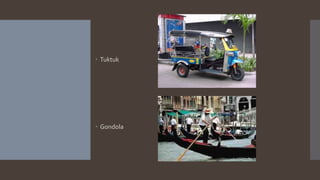
 Tuktuk
 Gondola
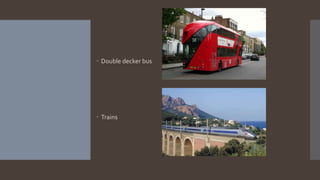
 Double decker bus
 Trains
Travel
Organizer’s
Sector
Travel
Intermediaries
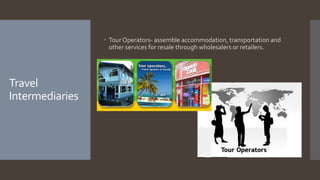
 Tour Operators- assemble accommodation, transportation and
other services for resale through wholesalers or retailers.
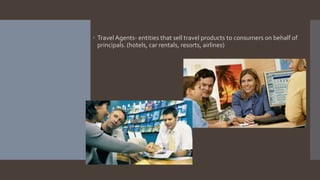
 Travel Agents- entities that sell travel products to consumers on behalf of
principals. (hotels, car rentals, resorts, airlines)
 OnlineTravel Companies- maybe described as the selling and buying of
travel services through the internet.
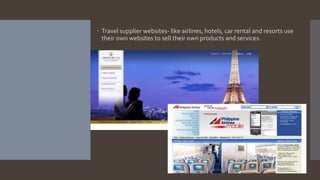
 Travel supplier websites- like airlines, hotels, car rental and resorts use
their own websites to sell their own products and services.
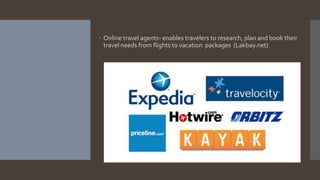
 Online travel agents- enables travelers to research, plan and book their
travel needs from flights to vacation packages (Lakbay.net)
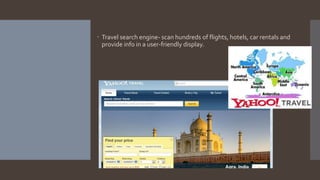
 Travel search engine- scan hundreds of flights, hotels, car rentals and
provide info in a user-friendly display.
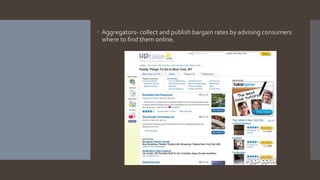
 Aggregators- collect and publish bargain rates by advising consumers
where to find them online.
 DestinationWebsites- maintained by a national or local tourism
organization with the goal of marketing the destination by giving info
about place’s attraction, accommodations dining and local cultural
events.
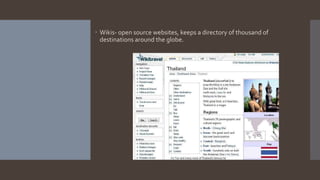
 Wikis- open source websites, keeps a directory of thousand of
destinations around the globe.
 Computer reservation system- information system connecting travel
principals and distributors through a central computer for inquiries. CRS
are used to:
 Find the best fares
 Check the availability of seats
 Book flights and seat assignments
 Issue tickets and prepare itineraries
 Book cars,rooms and train seats
 Access travel related info.
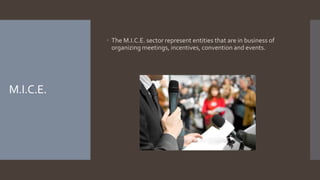
M.I.C.E.
 The M.I.C.E. sector represent entities that are in business of
organizing meetings, incentives, convention and events.
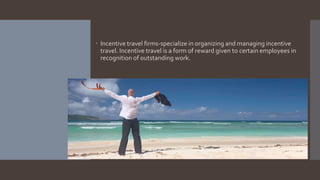
 Incentive travel firms-specialize in organizing and managing incentive
travel. Incentive travel is a form of reward given to certain employees in
recognition of outstanding work.
 Meeting and Convention Planners- assist their clients in conceptualizing ,
organizing and managing meetings and exhibitions.
 Destination Planners- work as independent support professionals for
event organizers.They organize support activities like city tours,
limousine service etc.