3
INTRODUCTION
• Haemostasis- Theprocess of arrest of blood loss and blood
coagulation.
• There is a complex interaction between injured vessels, platelets and
coagulation factors.
• There is a cascade of proteolytic reactions responsible for blood
coagulation.
4.
4
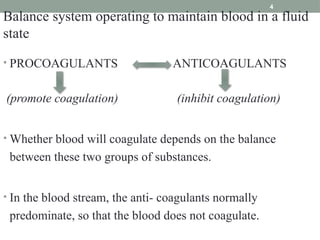
Balance system operatingto maintain blood in a fluid
state
• PROCOAGULANTS ANTICOAGULANTS
(promote coagulation) (inhibit coagulation)
• Whether blood will coagulate depends on the balance
between these two groups of substances.
• In the blood stream, the anti- coagulants normally
predominate, so that the blood does not coagulate.
6
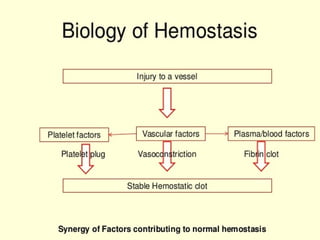
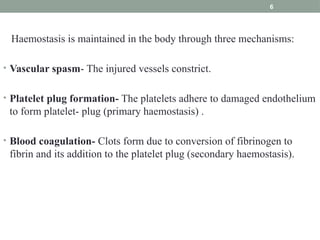
Haemostasis is maintainedin the body through three mechanisms:
• Vascular spasm- The injured vessels constrict.
• Platelet plug formation- The platelets adhere to damaged endothelium
to form platelet- plug (primary haemostasis) .
• Blood coagulation- Clots form due to conversion of fibrinogen to
fibrin and its addition to the platelet plug (secondary haemostasis).
7.
8
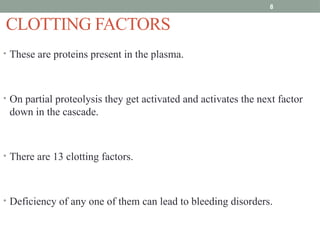
CLOTTING FACTORS
• Theseare proteins present in the plasma.
• On partial proteolysis they get activated and activates the next factor
down in the cascade.
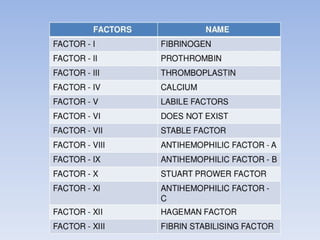
• There are 13 clotting factors.
• Deficiency of any one of them can lead to bleeding disorders.
11
Laboratory Tests
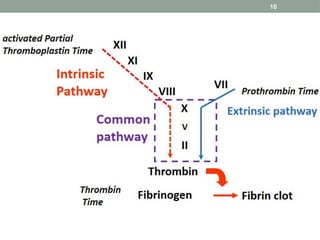
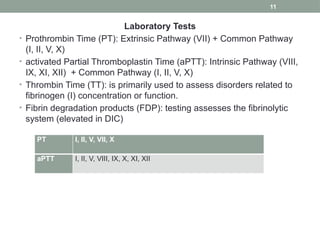
• ProthrombinTime (PT): Extrinsic Pathway (VII) + Common Pathway
(I, II, V, X)
• activated Partial Thromboplastin Time (aPTT): Intrinsic Pathway (VIII,
IX, XI, XII) + Common Pathway (I, II, V, X)
• Thrombin Time (TT): is primarily used to assess disorders related to
fibrinogen (I) concentration or function.
• Fibrin degradation products (FDP): testing assesses the fibrinolytic
system (elevated in DIC)
PT I, II, V, VII, X
aPTT I, II, V, VIII, IX, X, XI, XII
11.
12
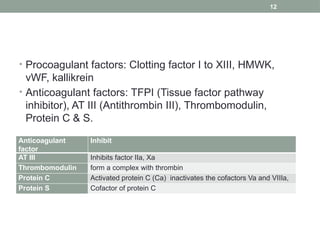
• Procoagulant factors:Clotting factor I to XIII, HMWK,
vWF, kallikrein
• Anticoagulant factors: TFPI (Tissue factor pathway
inhibitor), AT III (Antithrombin III), Thrombomodulin,
Protein C & S.
Anticoagulant
factor
Inhibit
AT III Inhibits factor IIa, Xa
Thrombomodulin form a complex with thrombin
Protein C Activated protein C (Ca) inactivates the cofactors Va and VIIIa,
Protein S Cofactor of protein C
12.
13
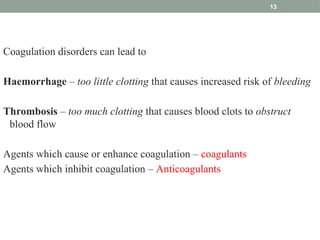
Coagulation disorders canlead to
Haemorrhage – too little clotting that causes increased risk of bleeding
Thrombosis – too much clotting that causes blood clots to obstruct
blood flow
Agents which cause or enhance coagulation – coagulants
Agents which inhibit coagulation – Anticoagulants
13.
14
COAGULANTS
• These aresubstances which promote coagulation.
• They are indicated in hemorrhagic states.
• Fresh whole blood or plasma provide all the factors
needed for coagulation and are the best therapy for
deficiency of any clotting factor.
• They also act immediately.
16
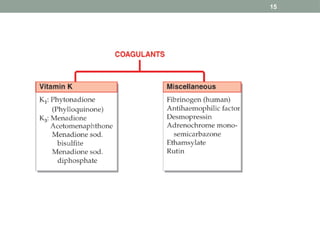
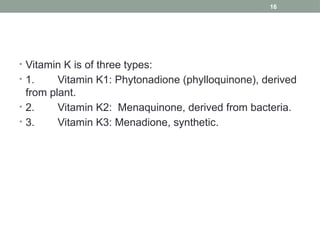
• Vitamin Kis of three types:
• 1. Vitamin K1: Phytonadione (phylloquinone), derived
from plant.
• 2. Vitamin K2: Menaquinone, derived from bacteria.
• 3. Vitamin K3: Menadione, synthetic.
16.
17
Vitamin K
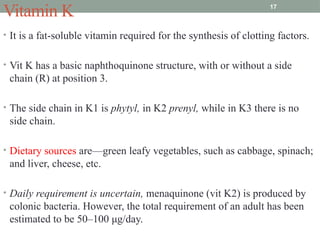
• Itis a fat-soluble vitamin required for the synthesis of clotting factors.
• Vit K has a basic naphthoquinone structure, with or without a side
chain (R) at position 3.
• The side chain in K1 is phytyl, in K2 prenyl, while in K3 there is no
side chain.
• Dietary sources are—green leafy vegetables, such as cabbage, spinach;
and liver, cheese, etc.
• Daily requirement is uncertain, menaquinone (vit K2) is produced by
colonic bacteria. However, the total requirement of an adult has been
estimated to be 50–100 μg/day.
17.
18
Action
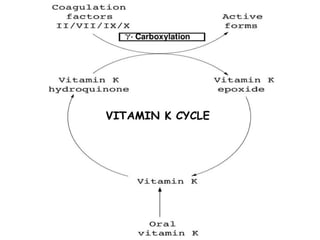
• Vitamin Kfunctions as a coenzyme in the gamma-carboxylation of
glutamate residues during the post-translational modification of
calcium-binding proteins (glutamate to γ-carboxyglutamate).
• Vitamin K is essential for facilitating the synthesis of procoagulant
proteins (clotting factor II, VII, IX, and X) and anticoagulant proteins
(protein C, S, and Z).
• Furthermore, it plays a key role in the production of osteocalcin in
bone and nephrocalcin in the kidney.
20
Deficiency
• Deficiency ofvit K occurs due to liver disease, obstructive
jaundice, malabsorption, long-term antimicrobial therapy
which alters intestinal flora.
• Deficient diet is rarely responsible.
• The most important manifestation is bleeding tendency due
to lowering of the levels of prothrombin and other clotting
factors in blood.
• Haematuria is usually first to occur; other common sites of
bleeding are g.i.t., nose and under the skin—ecchymoses.
20.
21
Use
The only useof vit K is in prophylaxis and treatment of bleeding due
to deficiency of clotting factors in the following situations:
a) Dietary deficiency: very rare in adults; give 5–10 mg/day oral or
parenteral vit K rapidly corrects the defects.
b) Prolonged antimicrobial therapy: treat same as dietary deficiency.
c) Obstructive jaundice or malabsorption syndromes : vit K- 10 mg
i.m./day, or orally along with bile salts.
d)Liver disease (cirrhosis, viral hepatitis): synthesis of clotting
factors is inadequate despite the presence of vit K.
21.
22
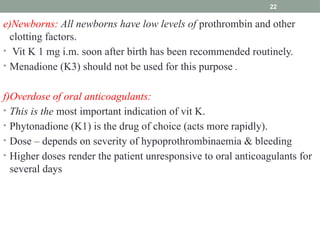
e)Newborns: All newbornshave low levels of prothrombin and other
clotting factors.
• Vit K 1 mg i.m. soon after birth has been recommended routinely.
• Menadione (K3) should not be used for this purpose .
f)Overdose of oral anticoagulants:
• This is the most important indication of vit K.
• Phytonadione (K1) is the drug of choice (acts more rapidly).
• Dose – depends on severity of hypoprothrombinaemia & bleeding
• Higher doses render the patient unresponsive to oral anticoagulants for
several days
22.
23
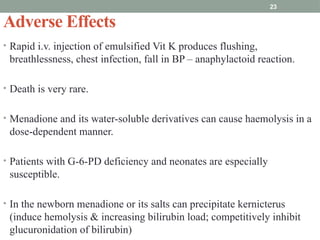
Adverse Effects
• Rapidi.v. injection of emulsified Vit K produces flushing,
breathlessness, chest infection, fall in BP – anaphylactoid reaction.
• Death is very rare.
• Menadione and its water-soluble derivatives can cause haemolysis in a
dose-dependent manner.
• Patients with G-6-PD deficiency and neonates are especially
susceptible.
• In the newborn menadione or its salts can precipitate kernicterus
(induce hemolysis & increasing bilirubin load; competitively inhibit
glucuronidation of bilirubin)
23.
24
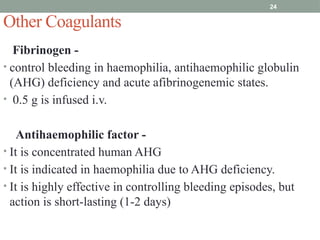
Other Coagulants
Fibrinogen -
•control bleeding in haemophilia, antihaemophilic globulin
(AHG) deficiency and acute afibrinogenemic states.
• 0.5 g is infused i.v.
Antihaemophilic factor -
• It is concentrated human AHG
• It is indicated in haemophilia due to AHG deficiency.
• It is highly effective in controlling bleeding episodes, but
action is short-lasting (1-2 days)
24.
25
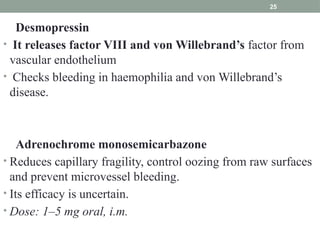
Desmopressin
• It releasesfactor VIII and von Willebrand’s factor from
vascular endothelium
• Checks bleeding in haemophilia and von Willebrand’s
disease.
Adrenochrome monosemicarbazone
• Reduces capillary fragility, control oozing from raw surfaces
and prevent microvessel bleeding.
• Its efficacy is uncertain.
• Dose: 1–5 mg oral, i.m.
25.
26
Rutin –
• Itis a plant glycoside to reduce capillary bleeding.
• Used in a along with vit C which is believed to facilitate its
action.
• Its efficacy is uncertain.
• dose of 60 mg oral BD– TDS
Ethamsylate-
• It reduces capillary bleeding when platelets are adequate and
does not stabilize fibrin
• Used in the prevention and treatment of capillary bleeding in
menorrhagia, after abortion, PPH, epistaxis, malena etc.
• Dose: 250–500 mg TDS oral/i.v.;
26.
27
Styptics (Local Haemostatics)
•Substances used to control bleeding from a local and approachable site.
• They are particularly effective on oozing surfaces, e.g. tooth socket,
abrasions, etc.
• Absorbable materials like fibrin (prepared from human plasma and
dried as sheet or foam),
• Gelatin foam,
• Oxidized cellulose (as strips ).
• Thrombin from bovine plasma may be applied as dry powder or fresh
solution.
• Vasoconstrictors like 0.1% Adr solution may be soaked in sterile cotton
gauze.
• Astringents such as tannic acid or metallic salts are occasionally
applied for bleeding gums, bleeding piles etc
27.
28
Sclerosing agents
• Theseare irritants, cause inflammation, coagulation
and ultimately fibrosis,
• Injected into haemorrhoids (piles) or varicose vein
mass. They are used only for local injection.
• The substances include-
• 1. Sod. tetradecyl sulfate (3% with benzyl alcohol
2%):0.5–2 ml at each site.
• 2. Polidocanol (3% inj): 2 ml
• 3. Ethanolamine oleate.
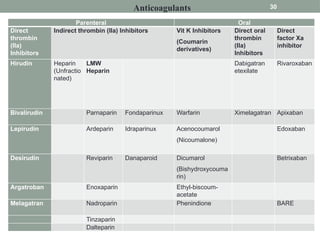
30
Parenteral Oral
Direct
thrombin
(IIa)
Inhibitors
Indirect thrombin(IIa) Inhibitors Vit K Inhibitors
(Coumarin
derivatives)
Direct oral
thrombin
(IIa)
Inhibitors
Direct
factor Xa
inhibitor
Hirudin Heparin
(Unfractio
nated)
LMW
Heparin
Dabigatran
etexilate
Rivaroxaban
Bivalirudin Parnaparin Fondaparinux Warfarin Ximelagatran Apixaban
Lepirudin Ardeparin Idraparinux Acenocoumarol
(Nicoumalone)
Edoxaban
Desirudin Reviparin Danaparoid Dicumarol
(Bishydroxycouma
rin)
Betrixaban
Argatroban Enoxaparin Ethyl-biscoum-
acetate
Melagatran Nadroparin Phenindione BARE
Tinzaparin
Dalteparin
Anticoagulants
30.
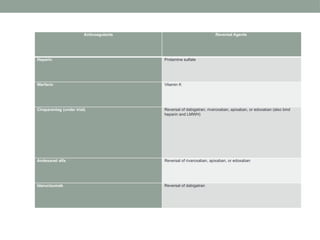
Anticoagulants Reversal Agents
HeparinProtamine sulfate
Warfarin Vitamin K
Ciraparantag (under trial) Reversal of dabigatran, rivaroxaban, apixaban, or edoxaban (also bind
heparin and LMWH)
Andexanet alfa Reversal of rivaroxaban, apixaban, or edoxaban
Idarucizumab Reversal of dabigatran
31.
32
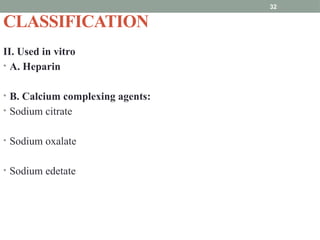
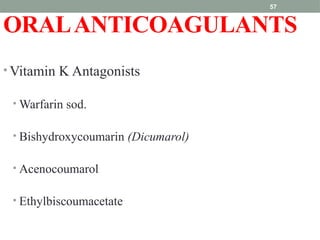
CLASSIFICATION
II. Used invitro
• A. Heparin
• B. Calcium complexing agents:
• Sodium citrate
• Sodium oxalate
• Sodium edetate
32.
33
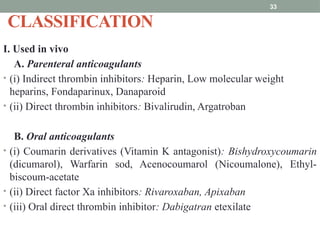
CLASSIFICATION
I. Used invivo
A. Parenteral anticoagulants
• (i) Indirect thrombin inhibitors: Heparin, Low molecular weight
heparins, Fondaparinux, Danaparoid
• (ii) Direct thrombin inhibitors: Bivalirudin, Argatroban
B. Oral anticoagulants
• (i) Coumarin derivatives (Vitamin K antagonist): Bishydroxycoumarin
(dicumarol), Warfarin sod, Acenocoumarol (Nicoumalone), Ethyl-
biscoum-acetate
• (ii) Direct factor Xa inhibitors: Rivaroxaban, Apixaban
• (iii) Oral direct thrombin inhibitor: Dabigatran etexilate
35
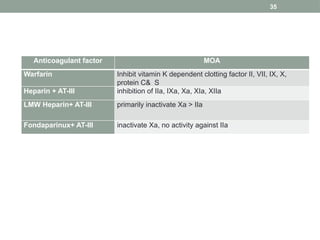
Anticoagulant factor MOA
WarfarinInhibit vitamin K dependent clotting factor II, VII, IX, X,
protein C& S
Heparin + AT-III inhibition of IIa, IXa, Xa, XIa, XIIa
LMW Heparin+ AT-III primarily inactivate Xa > IIa
Fondaparinux+ AT-III inactivate Xa, no activity against IIa
35.
36
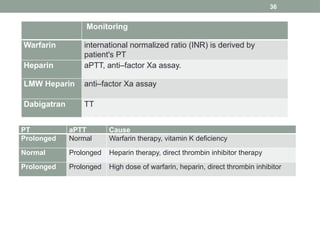
Monitoring
Warfarin international normalizedratio (INR) is derived by
patient's PT
Heparin aPTT, anti–factor Xa assay.
LMW Heparin anti–factor Xa assay
Dabigatran TT
PT aPTT Cause
Prolonged Normal Warfarin therapy, vitamin K deficiency
Normal Prolonged Heparin therapy, direct thrombin inhibitor therapy
Prolonged Prolonged High dose of warfarin, heparin, direct thrombin inhibitor
36.
37
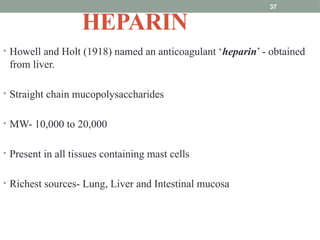
HEPARIN
• Howell andHolt (1918) named an anticoagulant ‘heparin’ - obtained
from liver.
• Straight chain mucopolysaccharides
• MW- 10,000 to 20,000
• Present in all tissues containing mast cells
• Richest sources- Lung, Liver and Intestinal mucosa
37.
38
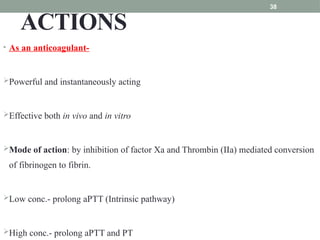
ACTIONS
• As ananticoagulant-
Powerful and instantaneously acting
Effective both in vivo and in vitro
Mode of action: by inhibition of factor Xa and Thrombin (IIa) mediated conversion
of fibrinogen to fibrin.
Low conc.- prolong aPTT (Intrinsic pathway)
High conc.- prolong aPTT and PT
40
• Heparin, low-molecular-weightheparin (LMWH), and
fondaparinux do not have direct anticoagulant effects.
• Instead, they work by binding to antithrombin (AT), which
enhances its ability to block certain clotting factors.
• These drugs are called indirect thrombin inhibitors
because they rely on their interaction with another protein
(antithrombin) to prevent blood clots.
• AT inactivates IIa, IXa, Xa, XIa, and XIIa but has no effect
on factor VIIa or activated protein C.
• AT is stimulated by heparin (from mast cells) or heparan
sulfate (present on vascular endothelium).
40.
41
• Unfractionated heparin(UFH) is sulfated
glycosaminoglycans (heteropolysaccharidesQ
) and
commercially obtained from porcine intestinal mucosaQ
.
• Heparin is heavily negatively chargedQ
, making it the most
strongly acidicQ
organic molecule found naturally in the
body.
• Positively charged strong basic proteins—protamine
sulphateQ
is its antidote—can neutralise its anticoagulant
effect (chemical antagonismQ
). They do this by binding
tightly to heparin, blocking its ability to attach to
antithrombin.
• UFH has anticoagulant activity both in vivo and in vitroQ
.
41.
42
ACTIONS
• As Antiplatelet:
Highdoses- inhibit platelet aggregation; prolongs
bleeding time (BT)
• As Lipaemia clearing Agent:
Injection of low conc. heparin clears post-prandial
lipaemia by releasing lipoprotein lipase from vessel wall
and tissues hydrolyses TGs & VLDL to free fatty
acids
42.
43
PHARMACOKINETICS:
Not absorbed orally.
DoesNOT cross B.B.B. or Placenta.
Metabolized in liver by heparinase- fragments excreted in
urine.
Released from mast cells- degraded by tissue macrophages.
43.
44
DOSAGE:
• i.v. bolus-5,000 to 10,000 U (children 50 to 100 U/kg) every
4- 6 hrs.
• Initial bolus followed by continuous infusion of 750-1000
U/hr.
• Deep s.c. injection- 10,000 to 20,000 U every 8- 12 hrs.
• Low dose s.c. regimen- 5000 U every 8- 12 hrs.
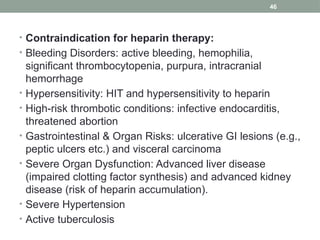
46
• Contraindication forheparin therapy:
• Bleeding Disorders: active bleeding, hemophilia,
significant thrombocytopenia, purpura, intracranial
hemorrhage
• Hypersensitivity: HIT and hypersensitivity to heparin
• High-risk thrombotic conditions: infective endocarditis,
threatened abortion
• Gastrointestinal & Organ Risks: ulcerative GI lesions (e.g.,
peptic ulcers etc.) and visceral carcinoma
• Severe Organ Dysfunction: Advanced liver disease
(impaired clotting factor synthesis) and advanced kidney
disease (risk of heparin accumulation).
• Severe Hypertension
• Active tuberculosis
46.
47
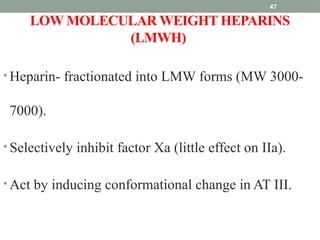
LOW MOLECULAR WEIGHTHEPARINS
(LMWH)
• Heparin- fractionated into LMW forms (MW 3000-
7000).
• Selectively inhibit factor Xa (little effect on IIa).
• Act by inducing conformational change in AT III.
47.
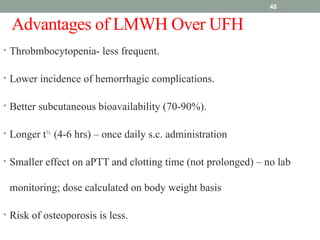
48
Advantages of LMWHOver UFH
• Throbmbocytopenia- less frequent.
• Lower incidence of hemorrhagic complications.
• Better subcutaneous bioavailability (70-90%).
• Longer t½
(4-6 hrs) – once daily s.c. administration
• Smaller effect on aPTT and clotting time (not prolonged) – no lab
monitoring; dose calculated on body weight basis
• Risk of osteoporosis is less.
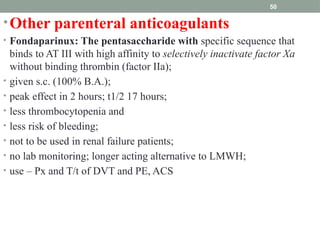
50
•Other parenteral anticoagulants
•Fondaparinux: The pentasaccharide with specific sequence that
binds to AT III with high affinity to selectively inactivate factor Xa
without binding thrombin (factor IIa);
• given s.c. (100% B.A.);
• peak effect in 2 hours; t1/2 17 hours;
• less thrombocytopenia and
• less risk of bleeding;
• not to be used in renal failure patients;
• no lab monitoring; longer acting alternative to LMWH;
• use – Px and T/t of DVT and PE, ACS
50.
51
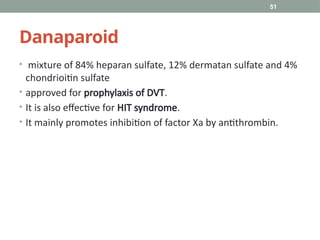
Danaparoid
• mixture of84% heparan sulfate, 12% dermatan sulfate and 4%
chondrioitin sulfate
• approved for prophylaxis of DVT.
• It is also effective for HIT syndrome.
• It mainly promotes inhibition of factor Xa by antithrombin.
51.
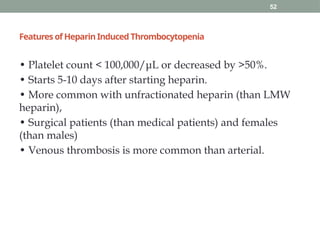
52
Features of HeparinInduced Thrombocytopenia
• Platelet count < 100,000/μL or decreased by >50%.
• Starts 5-10 days after starting heparin.
• More common with unfractionated heparin (than LMW
heparin),
• Surgical patients (than medical patients) and females
(than males)
• Venous thrombosis is more common than arterial.
52.
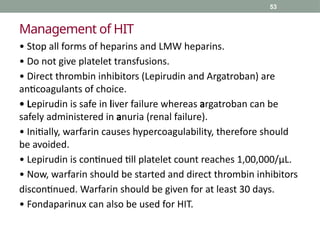
53
Management of HIT
•Stop all forms of heparins and LMW heparins.
• Do not give platelet transfusions.
• Direct thrombin inhibitors (Lepirudin and Argatroban) are
anticoagulants of choice.
• Lepirudin is safe in liver failure whereas argatroban can be
safely administered in anuria (renal failure).
• Initially, warfarin causes hypercoagulability, therefore should
be avoided.
• Lepirudin is continued till platelet count reaches 1,00,000/μL.
• Now, warfarin should be started and direct thrombin inhibitors
discontinued. Warfarin should be given for at least 30 days.
• Fondaparinux can also be used for HIT.
53.
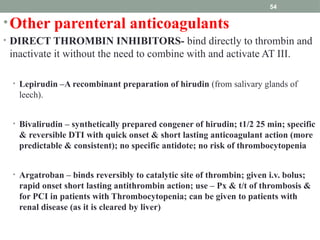
54
•Other parenteral anticoagulants
•DIRECT THROMBIN INHIBITORS- bind directly to thrombin and
inactivate it without the need to combine with and activate AT III.
• Lepirudin –A recombinant preparation of hirudin (from salivary glands of
leech).
• Bivalirudin – synthetically prepared congener of hirudin; t1/2 25 min; specific
& reversible DTI with quick onset & short lasting anticoagulant action (more
predictable & consistent); no specific antidote; no risk of thrombocytopenia
• Argatroban – binds reversibly to catalytic site of thrombin; given i.v. bolus;
rapid onset short lasting antithrombin action; use – Px & t/t of thrombosis &
for PCI in patients with Thrombocytopenia; can be given to patients with
renal disease (as it is cleared by liver)
54.
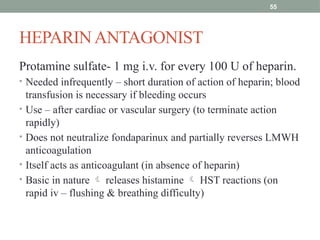
55
HEPARINANTAGONIST
Protamine sulfate- 1mg i.v. for every 100 U of heparin.
• Needed infrequently – short duration of action of heparin; blood
transfusion is necessary if bleeding occurs
• Use – after cardiac or vascular surgery (to terminate action
rapidly)
• Does not neutralize fondaparinux and partially reverses LMWH
anticoagulation
• Itself acts as anticoagulant (in absence of heparin)
• Basic in nature releases histamine HST reactions (on
rapid iv – flushing & breathing difficulty)
55.
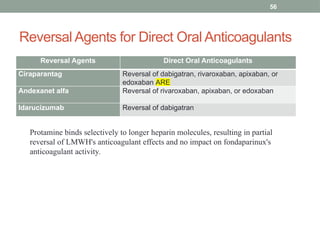
56
Reversal Agents forDirect Oral Anticoagulants
Reversal Agents Direct Oral Anticoagulants
Ciraparantag Reversal of dabigatran, rivaroxaban, apixaban, or
edoxaban ARE
Andexanet alfa Reversal of rivaroxaban, apixaban, or edoxaban
Idarucizumab Reversal of dabigatran
Protamine binds selectively to longer heparin molecules, resulting in partial
reversal of LMWH's anticoagulant effects and no impact on fondaparinux's
anticoagulant activity.
58
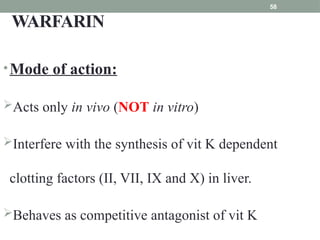
WARFARIN
•Mode of action:
Actsonly in vivo (NOT in vitro)
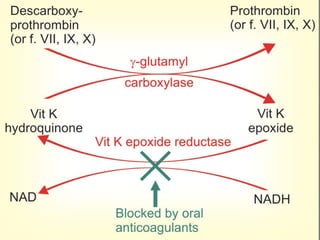
Interfere with the synthesis of vit K dependent
clotting factors (II, VII, IX and X) in liver.
Behaves as competitive antagonist of vit K
60
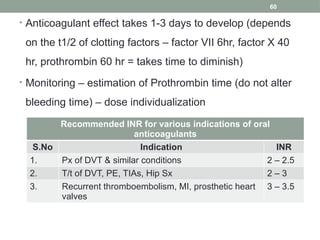
• Anticoagulant effecttakes 1-3 days to develop (depends
on the t1/2 of clotting factors – factor VII 6hr, factor X 40
hr, prothrombin 60 hr = takes time to diminish)
• Monitoring – estimation of Prothrombin time (do not alter
bleeding time) – dose individualization
Recommended INR for various indications of oral
anticoagulants
S.No Indication INR
1. Px of DVT & similar conditions 2 – 2.5
2. T/t of DVT, PE, TIAs, Hip Sx 2 – 3
3. Recurrent thromboembolism, MI, prosthetic heart
valves
3 – 3.5
60.
61
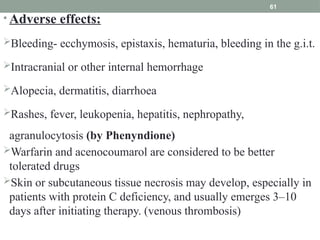
• Adverse effects:
Bleeding-ecchymosis, epistaxis, hematuria, bleeding in the g.i.t.
Intracranial or other internal hemorrhage
Alopecia, dermatitis, diarrhoea
Rashes, fever, leukopenia, hepatitis, nephropathy,
agranulocytosis (by Phenyndione)
Warfarin and acenocoumarol are considered to be better
tolerated drugs
Skin or subcutaneous tissue necrosis may develop, especially in
patients with protein C deficiency, and usually emerges 3–10
days after initiating therapy. (venous thrombosis)
61.
62
• Treatment ofbleeding due to Vitamin K Antagonists –
• Withhold the anticoagulant
• Given fresh blood transfusion – replenish blood loss & supply
clotting factors or Fresh frozen plasma
• Vitamin K1 – specific antidote
62.
63
Factors enhancing effectof oral anticoagulants are:
• Malnutrition, malabsorption and prolonged antibiotic therapy
• Liver disease, chronic alcoholism – synthesis of clotting
factors deficient
• Hyperthyroidism:- the clotting factors are degraded faster.
• Newborns – low levels of vit K & clotting factors
Factors decreasing effect of oral anticoagulants are:
• Pregnancy: plasma level of clotting factors is higher.
• Nephrotic syndrome.
• Genetic warfarin resistance.
63.
64
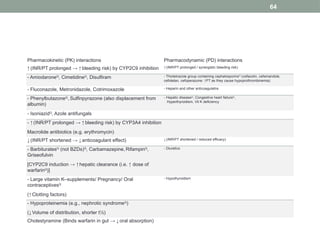
Pharmacokinetic (PK) interactionsPharmacodynamic (PD) interactions
↑(INR/PT prolonged → ↑ bleeding risk) by CYP2C9 inhibition ↑(INR/PT prolonged / synergistic bleeding risk)
- AmiodaroneQ
, CimetidineQ
, Disulfiram - Thiotetrazole group containing cephalosporinsQ
(cefazolin, cefamandole,
cefotetan, cefoperazone: ↑PT as they cause hypoprothrombinemia)
- Fluconazole, Metronidazole, Cotrimoxazole - Heparin and other anticoagulatns
- PhenylbutazoneQ
,Sulfinpyrazone (also displacement from
albumin)
- Hepatic diseaseQ
, Congestive heart failureQ
,
Hyperthyroidism, Vit K deficiency
- IsoniazidQ, Azole antifungals
- ↑(INR/PT prolonged → ↑ bleeding risk) by CYP3A4 inhibition
Macrolide antibiotics (e.g. erythromycin)
↓(INR/PT shortened → ↓anticoagulant effect) ↓(INR/PT shortened / reduced efficacy)
- BarbituratesQ
(not BZDs)Q
, Carbamazepine, RifampinQ
,
Griseofulvin
[CYP2C9 induction → ↑hepatic clearance (i.e. ↑ dose of
warfarinQ
)]
- Diuretics
- Large vitamin K–supplements/ Pregnancy/ Oral
contraceptivesQ
(↑Clotting factors)
- Hypothyroidism
- Hypoproteinemia (e.g., nephrotic syndromeQ
)
(↓Volume of distribution, shorter t½)
Cholestyramine (Binds warfarin in gut → ↓ oral absorption)
64.
65
• Contraindications
• Sameas heparin
• In pregnancy = foetal warfarin syndrome – hypoplasia of nose, eye
socket, hand bones, growth retardation
65.
66
• Drug interactions:
I.Enhanced anticoagulant action:
Broad spectrum antibiotics (inhibit gut flora- reduce vit K production).
Newer cephalosporins- eg.ceftriaxone, cefoperazone (hypothrombinemia).
Aspirin (inhibits platelet aggregation - g.i. bleed)
Long acting sulfonamides, indomethacin, phenytoin and probenecid
(displace warfarin from protein binding site).
Chloramphenicol, erythromycin, celecoxib, cimetidine, allopurinol,
amiodarone and metronidazole (inhibit warfarin metabolism).
Tolbutamide and phenytoin (inhibit warfarin metabolism and vice versa)
66.
67
II. Reduced anticoagulantaction:
Barbiturates, rifampin and griseofulvin (induce metabolism).
Oral contraceptives (increase blood levels of clotting factors).
67.
68
Direct Factor XaInhibitors
• Problems with warfarin – delayed onset, slow recovery on
stoppage, narrow therapeutic range, need for laboratory
monitoring & dose adjustment & drug interaction
• Advantages
• Rapid onset & offset of therapeutic effects
• Short half life
• No lab monitoring req
• Fixed dose guidelines depending on indication
• Antithrombotic efficacy equal or better than warfarin
• Lower risk of bleeding compared to warfarin
• Fewer drug interactions
68.
69
Rivaroxaban
• Orally activedirect inhibitor of activated factor Xa
• Px & t/t of DVT
• Anticoagulant action starts within 3-4 hrs & lasts for 24 hrs
• No lab monitoring
• Use –
• For Px of venous thromboembolism following total knee/hip
replacement
• Prevent stroke in patients with Atrial fibrillation
• t/t of DVT & PE
69.
70
Apixaban
• Similar toRivaroxaban
• Metabolized by CYP3A4 (drug interactions possible)
• Not used in patients with hepatic or renal impairment
• Use –
• Px of VTE following knee/hip replacement
• Px of stroke in AF patients
• T/t of DVT and PE
70.
71
Oral Direct ThrombinInhibitor
DABIGATRAN ETEXILATE
• Prodrug – hydrolysed to dabigatran
• Reversibly blocks catalytic site of thrombin
• Anticoagulant effect within 2 hours
• No lab monitoring
• B.A. increased by P-gp inhibitors (verapamil, amiodarone)
• Use – prevention of VTE following knee/hip replacement
surgery
• Adverse effect – bleeding, dyspepsia, hepatobiliary
disorder
76
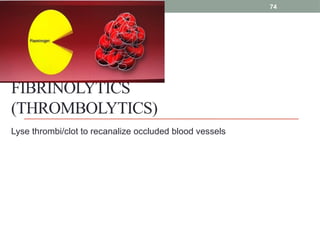
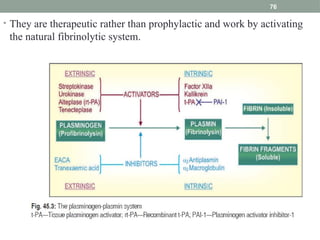
• They aretherapeutic rather than prophylactic and work by activating
the natural fibrinolytic system.
76.
77
• Venous thrombiare lysed more easily by fibrinolytics than
arterial
• Recent thrombi respond better.
• They have little effect on thrombi > 3 days old
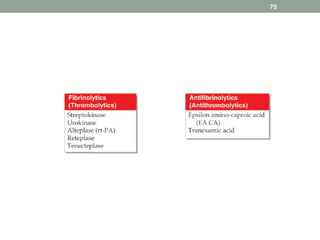
• The clinically important fibrinolytics are:
Streptokinase
Urokinase
Alteplase (rt-PA)
Reteplase
Tenecteplase
77.
78
Streptokinase - fromβ haemolytic Streptococci group C
• activates both circulating as well as fibrin bound
plasminogen depletes circulating fibrinogen and
predisposes to bleeding
• need loading dose; t1/2 – 60-80 min
• antigenic—can cause hypersensitivity reactions
• cannot be used second time due to neutralization by
antibodies generated in response to the earlier dose
78.
79
• Urokinase -enzyme isolated from human urine; but
commercially prepared from cultured human kidney cells.
• Direct plasminogen activator & degrade both fibrin &
fibrinogen
• Nonallergic, nonpyrogenic & no hypotension
• More fibrin specificity
• T1/2 – 20 min
• Cheaper; used where streptokinase cannot be used
79.
80
• Alteplase (recombinanttissue plasminogen activator (rt-
PA) - catalyses the cleavage of endogenous plasminogen
to generate plasmin; specific for fibrin bound plasminogen
• Hydrolyses only fibrin (not fibrinogen)
• Dissolves old clots
• inactivated by plasminogen activator inhibitor-1 (PAI-1);
plasma t½ is 4–8 min slow i.v. infusion and requires
heparin coadministration (because of higher incidence of
reocclusion).
• Adverse effects – bleeding, nausea, mild hypotension,
fever but non-antigenic
• expensive
80.
81
• Reteplase -deletion mutant of rt.PA
• longer acting, less selective for fibrin bound plasminogen
• T1/2 - 13–16 min double bolus i.v. administration of 18
mg (10U) over 2 min each 30 min apart in cases of
STEMI and in PE.
• Dose adjustment - in liver and kidney damage.
81.
82
• Tenecteplase -higher fibrin selectivity, slower plasma
clearance (longer duration of action) and resistance to
inhibition by PAI-1
• injected i.v. as a single bolus dose over 10 sec, while
alteplase requires 90 min infusion and reteplase needs 2
injections at 30 min interval
• Very expensive
84
Contraindications of thrombolytictherapy
1. H/o intracranial haemorrhage
2. H/o ischaemic stroke in past 3 months
3. H/o head injury in past 3 months
4. Intracranial tumor/vascular abnormality/ aneurysms
5. Active bleeding/bleeding disorders
6. Patients receiving anticoagulants
7. Peptic ulcer, esophageal varices
8. Any wound or a recent fracture or tooth extraction
9. H/o major surgery within 3 weeks
10. Uncontrolled hypertension
11. Pregnancy
84.
85
ANTIFIBRINOLYTIC DRUGS
• inhibitplasminogen activation and dissolution of clot, and are
used to check fibrinolysis associated bleeding.
Epsilon amino-caproic acid (EACA)
Tranexamic acid
85.
86
Epsilon amino-caproic acid(EACA)
• combines with the lysine-binding sites of plasminogen and
plasmin so that the latter is not able to bind to fibrin and
lyse it
• specific antidote for fibrinolytic agents
• Use - counteract the effect of fibrinolytic drugs and
bleeding
• orally and i.v.
• can cause intravascular thrombosis
• Rapid i.v. injection results in hypotension, bradycardia and
may be arrhythmias
• used cautiously when renal function is impaired
86.
87
Tranexamic acid
• Mechanismsimilar to EACA
• 7 times more potent
• preferred for prevention/control of excessive bleeding due
to:
• Fibrinolytic drugs.
• Cardio-pulmonary bypass surgery.
• Tonsillectomy, prostatic surgery, tooth extraction in haemophiliacs.
• Menorrhagia, especially due to IUCD.
• Recurrent epistaxis, hyphema due to ocular trauma, peptic ulcer.
87.
88
• Side effects- nausea and diarrhoea.
• Thromboembolic events, disturbed colour vision and
allergic reactions – infrequent
• Thrombophlebitis of injected vein
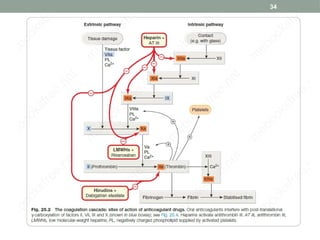
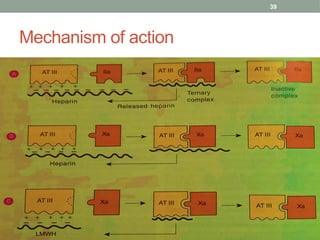
#39 AT III plays a crucial role in natural endogenous anticoagulant mechanism in body by blocking activity of activated factors 12,11,10,9 and 2 but slow and work on demand and supply
Heparin accelerates AT-II activity by 1000 folds especially against IIa and Xa
IIa & Xa sensitive to inhibitory effects of high molecular weight heparin-AT-III complex but IIa inhibition is more than Xa
Long chain heparin molecule serves as template to which both positively charged AT-III as well as thrombin (IIa) bind heparin induces conformational change in AT-III to expose and make its reactive site more accessible for IIa/Xa binding.
The difference between IIa and Xa binding is that Xa needs only to interact with AT-III portion of long chain heparin-AT-III complex . Once heparin - AT-III clotting factor ternary complex is formed, heparin is released for renewed interaction with another AT-III molecule/
ON the contrary, ONLY Xa is sensitive to inhibitory effects of LMWH – AT-III complex, Thrombin is not. (Because LMWH is too small a molecule to bind At-III as well as thrombin simultaneously)
#44 1 U is the amount of heparin that will prevent 1 ml of citrated sheep plasma from clotting for 1 hour after the addition of 0.2 ml of 1% Ca Cl2 solution. Heparin sod 1mg has 120-140 U of activity
 Most read
 Most read