Download to read offline
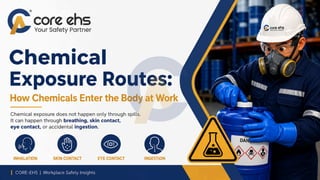
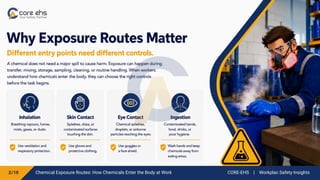
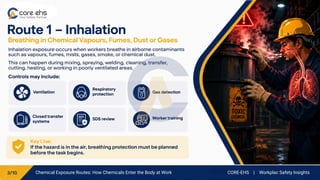
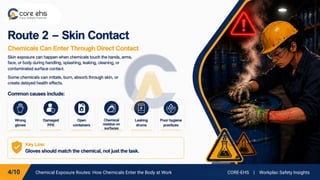
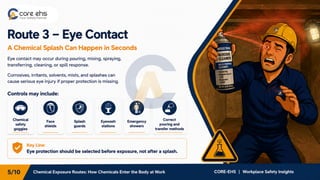
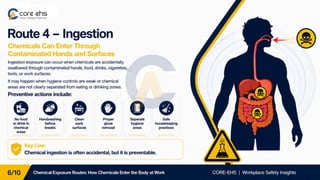
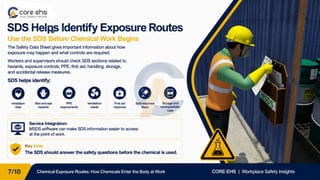
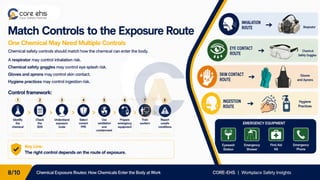
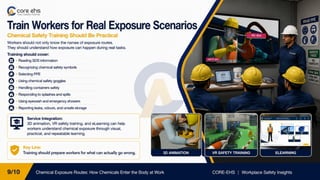
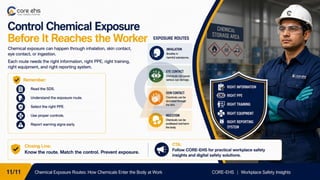

Chemical exposure does not happen only through spills. A worker may breathe in vapours. A splash may reach the eyes. A chemical may touch the skin. Contaminated gloves may spread residue. Dust, mist, fumes, or gases may enter the body without being noticed immediately. That is why chemical safety starts with understanding how chemicals enter the body. The four common chemical exposure routes are: Inhalation Skin contact Eye contact Ingestion Each route needs different controls. Respirators may be needed for inhalation hazards. Chemical safety goggles and face shields may be needed for splash risk. Gloves and protective clothing must match the chemical. Good hygiene, safe handling, and no food or drink in chemical areas help prevent ingestion exposure. Our latest SlideShare explains chemical exposure routes and how SDS review, PPE selection, ventilation, training, emergency equipment, and hazard reporting can reduce exposure risks at work. Because if workers understand the exposure route, they can understand the right control. #ChemicalExposure #ChemicalSafety #ChemicalExposureRoutes #ChemicalSafetyRules #ChemicalSafetyTraining #ChemicalSafetyGoggles #PPE #RespiratoryProtection #SDS #SafetyDataSheet #ChemicalHandling #HazardCommunication #WorkplaceSafety #IndustrialSafety #EHS #HSE #OccupationalHealth #WorkerSafety #HazardReporting #COREEHS


