Nindie et al. Int. J. Agron. Agri. Res.
International Journal of Agronomy and Agricultural Research
ISSN: 2223-7054 (Print); 2225-3610 (Online) | IJAAR |
Website: https://www.innspub.net
Email: info@innspub.net
RESEARCH PAPER
Vol. 28, Issue: 6, 2026
OPEN ACCESS
Characterisation of Trichoderma spp. and rhizobacteria strains isolated from the
rhizosphere of strawberry (Fragaria × ananassa Duch.) in the Menoua Division,
Western Cameroon
Francine Tchinda Nindie*1,2, Asafor Henry Chotangui2, Kouam Idriss Djoko Frank3,
Mvondo Awono Jean Pierre2
1
Institute of Agricultural Research for Development (IRAD), Multiple Purpose Station,
Dschang, Cameroon
2
Genetic, Biotechnology, Agriculture and Plant Production Research Unit, Department of Biological Sciences,
Faculty of Agronomy and Agricultural Sciences, University of Dschang, Dschang, Cameroon
3
Agriculture and Zoological Research Unit, Department of Biological Sciences,
Faculty of Agronomy and Agricultural Sciences, University of Dschang, Dschang, Cameroon
DOI: https://dx.doi.org/10.12692/ijaar/28.6.19-27
ARTICLE INFORMATION ABSTRACT
RESEARCH PAPER
Vol. 28, Issue: 6, p. 19-27, 2026
Int. J. Agron. Agri. Res.
Nindie et al.
ACCEPTED: 14 June, 2026
PUBLISHED: 20 June, 2026
Corresponding author:
Francine Tchinda Nindie
Email: nindiefrancine@gmail.com
Copyright © by the Authors. This article is
an open access article and distributed
under the terms and conditions of the
Creative Commons Attribution 4.0
(CC BY 4.0) license.
Grey mould, caused by Botrytis cinerea Pers., is the most devastating fungal disease of
strawberry (Fragaria × ananassa Duch.), causing yield losses of 50–80% under
favourable conditions. Chemical fungicides remain the predominant control strategy,
however, they drive the emergence of resistant strains and raise serious
environmental, and food safety concerns. Biological alternatives based on plant
growth-promoting rhizobacteria (PGPR) and Trichoderma spp. represent ecologically
sound options with proven efficacy. This study aimed to isolate and biochemically
characterizes indigenous microbial strains from the strawberry rhizosphere. To
evaluate their plant growth-promoting (PGP) traits, namely indole-3-acetic acid (IAA)
production and inorganic phosphate solubilization. Rhizospheric soil samples were
collected from four strawberry farms in the Dschang, Western Region of Cameroon,
micro orgarnisms were isolated and analysed. A total of 14 fungal and 37 bacterial
isolates were obtained. All strains produced IAA and solubilized inorganic phosphate
in liquid NBRIP medium. Among fungal isolates, strain D3 (Trichoderma spp) was the
highest IAA producer (431.6 ± 34.5 µg/mL), while D2 (Trichoderma spp) exhibited the
greatest phosphate solubilization capacity (1523.13 ± 34.7 mg/L). Within the bacterial
collection, strain A6 (Coccis gram+ purple coloring) produced the highest IAA
concentration (172.6 ± 51.3 µg/mL), and A5 (Coccis gram+ purple coloring) displayed
the greatest phosphate-solubilizing activity (1612.49 ± 106.2 mg/L). The remarkably
high phosphate solubilization values recorded across both collections reflects selective
pressure exerted by ferrallitic, iron and aluminium-oxide-rich soils. These findings
identify promising biofertilizer candidates, particularly strains of D3, D2,
(Trichoderma sp) A6, A5, (Coccis gram+) for integration into sustainable strawberry
production systems in Cameroon.
Key words: Botrytis cinerea, Plant growth-promoting rhizobacteria, Trichoderma, Phosphate solubilization, IAA,
Biofertilizer, Strawberry
International Journal of Agronomy and Agricultural Research
ISSN: 2223-7054 (Print); 2225-3610 (Online) | IJAAR |
Vol. 28, Issue: 6, p. 19-27, 2026
Website: https://innspub.net
20 Nindie et al. Int. J. Agron. Agri. Res.
INTRODUCTION
Strawberry (Fragaria × ananassa Duch.) is one of the
most economically important fruit crops worldwide,
prized for its nutritional quality, sensory attributes, and
significant market value.
The crop is a rich source of natural antioxidants,
bioactive compounds (flavonoids, carotenoids, and
phenolic acids), vitamins, and essential minerals
(Giampieri et al., 2012; Gramza-Michałowska et al.,
2019). Regular consumption of strawberries has been
associated with reduced risk of non- communicable
diseases, such as cancer, type 2 diabetes, cardiovascular
and neurological disorders (Giampieri et al., 2012).
Global production of strawberries was estimated at
approximately 10.49 million tonnes in 2023, with China,
the United States, and Egypt as the leading producers.
African production reached approximately 793,928 t,
predominantly contributed by Egypt, Morocco, and
South Africa (FAOSTAT, 2025).
In Cameroon, consumers demand for strawberry has
increased substantially in recent years, yet local
production remains insufficient to satisfy market needs.
Cultivation occurs primarily in the Centre, South, and
Western regions of the country. The Western and North-
Western regions are characterized by temperatures
ranging from 12 to 27 °C, offering the most favourable
agro-climatic conditions for the developement of
strawberries (Ngouana et al., 2023). The crop is currently
dominated by older European cultivars (Charlotte,
Gariguette, Camarossa, Mara des Bois) introduced
decades ago, day-neutral varieties, which extends the
production season and are increasingly but unevenly
adopted (Chawla and Singh, 2020; Ngouana et al., 2023).
Strawberry production in Cameroon is severely
constrained by both abiotic and biotic factors.
Abiotic constraints include progressive soil fertility
decline, resulting from erosion and organic matter
depletion, which leads to excessive reliance on synthetic
fertilizers. The overuse of chemical fertilizers contributes
to soil acidification, nutrient imbalances, degradation of
the soil microbiome, environmental pollution, and
adverse effects on human health (Krasilnikov et al.,
2022). A particularly relevant limitation is the strong
fixation of phosphorus by iron and aluminium oxides in
the ferrallitic soils prevalent in the region, rendering this
essential macronutrient largely unavailable to plants
despite high total soil Phosphorus concentrations
(Mwende, 2019; Osman, 2013).
Among biotic constraints, grey mould, caused by the
necrotrophic fungus Botrytis cinerea Pers. represents the
most devastating disease of strawberry. The pathogen
infects flowers and fruits both in the field and during
post-harvest storage, causing yield losses of up to 50–
80% under conditions of high humidity, moderate
temperatures, and limited air circulation (Petrasch et al.,
2019; Maghsoodi et al., 2025). Management currently
relies predominantly on repeated applications of
synthetic fungicides; however, this approach has
promoted the emergence of multi-fungicide-resistant B.
cinerea strains, contributes to soil and water pollution,
reduces non-target biodiversity, and leaves pesticide
residues on fruits (Islam et al., 2024).
In this context, the development of sustainable biological
alternatives is a global research priority. Plant growth-
promoting rhizobacteria (PGPR) and Trichoderma spp.
have gained considerable attention as dual-function
microbial agents capable of both enhancing plant growth
and suppressing soil-borne and foliar pathogens. PGPR
promotes plant growth through direct and indirect
mechanisms. Direct mechanisms include biological
nitrogen fixation, phosphate and potassium
solubilization, phytohormone synthesis (for example,
IAA, cytokinins, gibberellins) and production of
siderophores. Indirect mechanisms, includes induced
systemic resistance (ISR), competitive exclusion, and
secretion of cell-wall-degrading enzymes (Bhattacharyya
and Jha, 2012; Mohanty et al., 2021). Similarly,
Trichoderma spp. act as biostimulants and biocontrol
agents through mycoparasitism, antibiosis, ISR, and
solubilization of soil-bound nutrients (Contreras-Cornejo
et al., 2009; Geng et al., 2022).
The integration of indigenous PGPR and Trichoderma
strains, adapted to local pedoclimatic conditions into
International Journal of Agronomy and Agricultural Research
ISSN: 2223-7054 (Print); 2225-3610 (Online) | IJAAR |
Vol. 28, Issue: 6, p. 19-27, 2026
Website: https://innspub.net
21 Nindie et al. Int. J. Agron. Agri. Res.
strawberry production systems could substantially
reduce dependence on synthetic inputs while
maintaining or improving crop yields. However, no
study has characterized the plant growth-promoting
potential of microbial strains isolated from the
strawberry rhizosphere under the agro-ecological
conditions of Cameroon.
The present study therefore aimed to: isolate and
characterise fungal and bacterial strains from the
rhizospheric soil of strawberry farms to identify plant
growth-promoting traits, specifically IAA production
and inorganic phosphate solubilization, as a basis for
the selection of biofertilizer candidates for sustainable
strawberry production.
MATERIALS AND METHODS
Study site and rhizospheric soil sampling
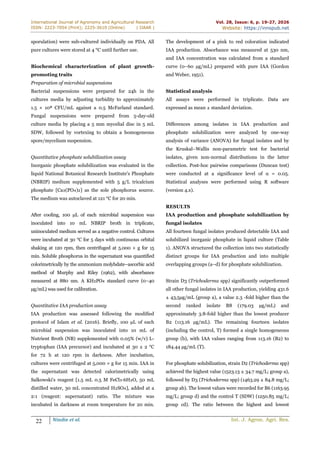
Rhizospheric soil samples were collected in June 2025
from four strawberry farms located in the Menoua
Division, Western Region of Cameroon. The
geographical coordinates of each sampling site were
recorded using a GPS within each farm, strawberry
plants were selected at random. Plants were carefully
uprooted, and the tightly adhering rhizospheric soil
fraction was aseptically collected into sterile
polyethylene bags. Composite soil samples were
prepared by pooling material from five individual
plants. All samples were transported to the Research
Unit for Phytopathology and Agricultural Zoology
(URPHYZA) at the University of Dschang and stored at
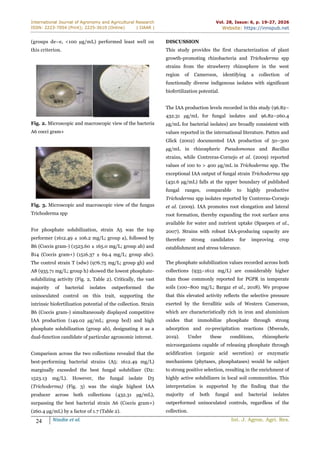
4 °C until processing (within 48 h of collection) (Fig. 1).
Isolation and purification of microbial strains
Culture media preparation
In the laboratory, two non-selective culture media
were used, Nutrient Agar (NA; 8 g/L nutrient broth, 15
g/L agar) for bacterial isolation, and Potato Dextrose
Agar (PDA; 200 g/L boiled potato filtrate, 20 g/L
dextrose, 15 g/L agar, supplemented with
chloramphenicol at 50 mg/L to suppress bacterial
growth) for fungal isolation. All these culture media
were sterilized by autoclaving at 121 °C for 20 min and
dispensed aseptically (~15 mL per Petri dish) after
cooling to 45–55 °C.
Fig. 1. Location of Dschang
Serial dilution and pour-plate isolation
Ten grams of rhizospheric soil per site were suspended in
90 mL of sterile distilled water (SDW), vortexed for 5 min
to detach microorganisms from soil particles, and
subjected to serial tenfold dilution up to 10⁻⁷.
For bacterial isolation, 1 mL aliquots from dilutions 10⁻5
to 10⁻⁷ were mixed with molten NA (45–55 °C) in Petri
dishes (pour-plate method) and incubated at 30 °C for 48
h. Morphologically distinct colonies (differing in size,
colour, texture, and margin characteristics) were re-
streaked on fresh NA plates to obtain pure cultures (Fan
et al., 2018).
For fungal isolation, dilutions 10⁻² to 10⁻⁴ were used with
PDA, following the procedure described by Bedine et al.
(2020). Plates were incubated at 28 °C and examined
daily for five to seven days. Colonies exhibiting
morphological characteristics consistent with
Trichoderma spp. (rapid growth, green to yellow-green
International Journal of Agronomy and Agricultural Research
ISSN: 2223-7054 (Print); 2225-3610 (Online) | IJAAR |
Vol. 28, Issue: 6, p. 19-27, 2026
Website: https://innspub.net
22 Nindie et al. Int. J. Agron. Agri. Res.
sporulation) were sub-cultured individually on PDA. All
pure cultures were stored at 4 °C until further use.
Biochemical characterization of plant growth-
promoting traits
Preparation of microbial suspensions
Bacterial suspensions were prepared for 24h in the
cultures media by adjusting turbidity to approximately
1.5 × 10⁸ CFU/mL against a 0.5 McFarland standard.
Fungal suspensions were prepared from 5-day-old
culture media by placing a 5 mm mycelial disc in 5 mL
SDW, followed by vortexing to obtain a homogeneous
spore/mycelium suspension.
Quantitative phosphate solubilization assay
Inorganic phosphate solubilization was evaluated in the
liquid National Botanical Research Institute's Phosphate
(NBRIP) medium supplemented with 5 g/L tricalcium
phosphate [Ca₃(PO₄)₂] as the sole phosphorus source.
The medium was autoclaved at 121 °C for 20 min.
After cooling, 100 µL of each microbial suspension was
inoculated into 10 mL NBRIP broth in triplicate,
uninoculated medium served as a negative control. Cultures
were incubated at 30 °C for 5 days with continuous orbital
shaking at 120 rpm, then centrifuged at 5.000 × g for 15
min. Soluble phosphorus in the supernatant was quantified
colorimetrically by the ammonium molybdate–ascorbic acid
method of Murphy and Riley (1962), with absorbance
measured at 880 nm. A KH₂PO₄ standard curve (0–40
µg/mL) was used for calibration.
Quantitative IAA production assay
IAA production was assessed following the modified
protocol of Islam et al. (2016). Briefly, 100 µL of each
microbial suspension was inoculated into 10 mL of
Nutrient Broth (NB) supplemented with 0.05% (w/v) L-
tryptophan (IAA precursor) and incubated at 30 ± 2 °C
for 72 h at 120 rpm in darkness. After incubation,
cultures were centrifuged at 5,000 × g for 15 min. IAA in
the supernatant was detected calorimetrically using
Salkowski's reagent [1.5 mL 0.5 M FeCl₃·6H₂O, 50 mL
distilled water, 30 mL concentrated H₂SO₄], added at a
2:1 (reagent: supernatant) ratio. The mixture was
incubated in darkness at room temperature for 20 min.
The development of a pink to red coloration indicated
IAA production. Absorbance was measured at 530 nm,
and IAA concentration was calculated from a standard
curve (0–60 µg/mL) prepared with pure IAA (Gordon
and Weber, 1951).
Statistical analysis
All assays were performed in triplicate. Data are
expressed as mean ± standard deviation.
Differences among isolates in IAA production and
phosphate solubilization were analyzed by one-way
analysis of variance (ANOVA) for fungal isolates and by
the Kruskal–Wallis non-parametric test for bacterial
isolates, given non-normal distributions in the latter
collection. Post-hoc pairwise comparisons (Duncan test)
were conducted at a significance level of α = 0.05.
Statistical analyses were performed using R software
(version 4.x).
RESULTS
IAA production and phosphate solubilization by
fungal isolates
All fourteen fungal isolates produced detectable IAA and
solubilized inorganic phosphate in liquid culture (Table
1). ANOVA structured the collection into two statistically
distinct groups for IAA production and into multiple
overlapping groups (a–d) for phosphate solubilization.
Strain D3 (Trichoderma spp) significantly outperformed
all other fungal isolates in IAA production, yielding 431.6
± 43,5µg/mL (group a), a value 2.3 -fold higher than the
second ranked isolate B8 (179.03 µg/mL) and
approximately 3.8-fold higher than the lowest producer
B2 (113.16 µg/mL). The remaining fourteen isolates
(including the control, T) formed a single homogeneous
group (b), with IAA values ranging from 113.16 (B2) to
184.44 µg/mL (T).
For phosphate solubilization, strain D2 (Trichoderma spp)
achieved the highest value (1523.13 ± 34.7 mg/L; group a),
followed by D3 (Trichoderma spp) (1463.29 ± 84.8 mg/L;
group ab). The lowest values were recorded for B6 (1163.95
mg/L; group d) and the control T (SDW) (1250.85 mg/L;
group cd). The ratio between the highest and lowest
International Journal of Agronomy and Agricultural Research
ISSN: 2223-7054 (Print); 2225-3610 (Online) | IJAAR |
Vol. 28, Issue: 6, p. 19-27, 2026
Website: https://innspub.net
23 Nindie et al. Int. J. Agron. Agri. Res.
performer was approximately 1.31. Notably, D3 combined
the highest IAA production with competitive phosphate
solubilization (group ab), identifying it as the most
functionally versatile fungal isolate.
Table 1. IAA production (µg/mL) and phosphate solubilization (mg/L) by fungal isolates from strawberry rhizosphere
Strain code IAA production (µg.mL-1) P solubilization (mg.L-1)
D3 431.60±43.50a 1463.29±84.80ab
D2 133.61±64.50b 1523.13±34.70a
B8 179.03± 6.09b 1428.74±79.40abc
A1 146.39±71.60b 1419.94±59.80abc
B9 164.76±44.50b 1341.10±75.60bcd
A2 133.16±8.99b 1336.24±105.50bcd
B7 156.78±28.70b 1308.91±48.40bcd
B5 138.07±2.14b 1317.55±178.60bcd
B4 146.28±7.12b 1258.65±45.20cd
D1 131.79±8.26b 1282.37±87.50cd
A3 129.51±32.80b 1280.80±102.90cd
B1 117.53±11.85b 1302.78±69.70bcd
B2 113.16±17.89b 1300.70±140.70bcd
B6 139.43±14.15b 1163.95±42.90d
Control (T) 184.44±47.20b 1250.85±206.00cd
Values followed by the same letter within a column are not significantly different at α = 0.05 (one-way ANOVA). Data are
expressed as mean ± SD of three independent replicates.
Table 2. IAA production (µg/mL) and phosphate solubilization (mg/L) by selected bacterial isolates from strawberry
rhizosphere
Strain code IAA production (µg.mL-1) P solubilization (mg.L-1)
A6 172.60±51.30a 1514.70±383.00abc
A5 111.30±5.99cde 1612.49±106.2a
B6 149.02±35.80bcd 1523.60±165.00ab
B14 112.90±8.91cde 1516.37±69.40abc
A10 99.22±10.69de 1472.71±286.00abcd
B5 160.57±19.07b 1405.81±265.00abcdefg
A1 120.20±13.16bcde 1415.70±422.00abcdef
A4 111.40±11.11cde 1436.80±218.00abcde
B7 144.70±15.27bcd 1147.20 ± 220bcdefgh
B8 123.70±8.57bcde 1357.66±85.70abcdefgh
A9 116.80±3.47cde 1333.88±380.00abcdefgh
T9 103.10±10.37cde 1376.91±62.60abcdefg
B15 99.93±8.20de 1375.18±140.20abcdefg
D8 109.10±5.78cde 993.92±87.30fgh
A8 107.20± 6.65cde 935.71±265.00h
Control (T) 105.90±17.65cde 976.75±98.90gh
Values followed by the same letter within a column are not significantly different at α = 0.05 (Kruskal–Wallis test). Data
are expressed as mean ± SD of three independent replicates.
IAA production and phosphate solubilization by
bacterial isolates
Among the 37 bacterial isolates evaluated, IAA
production ranged from 96.82 µg/mL (B1) to 260.4
µg/mL (A6) and was structured into five homogeneous
groups (a-e) by the Kruskal-Wallis test. Phosphate
solubilization ranged from 935.71 mg/L (A8) to
1612.49 mg/L (A5) and was structured into eight
groups (a–h), reflecting greater functional diversity
within the bacterial collection than within the fungal
collection (Table 2).
Strain A6 (Coccis gram+) was the outstanding IAA
producer (260.4 ± 241.0 µg/mL; group a), 1.6-fold
higher than the second-ranked strain B5 (160.57
µg/mL; group b). The majority of isolates (groups
bcd–cde) produced IAA in the moderate range of 100–
150 µg/mL, while strains B13, A10, B15, D6, and B1
International Journal of Agronomy and Agricultural Research
ISSN: 2223-7054 (Print); 2225-3610 (Online) | IJAAR |
Vol. 28, Issue: 6, p. 19-27, 2026
Website: https://innspub.net
24 Nindie et al. Int. J. Agron. Agri. Res.
(groups de–e, <100 µg/mL) performed least well on
this criterion.
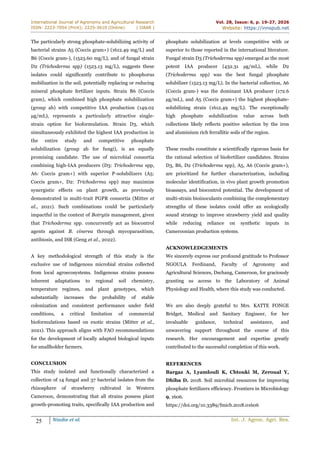
Fig. 2. Microscopic and macroscopic view of the bacteria
A6 cocci gram+
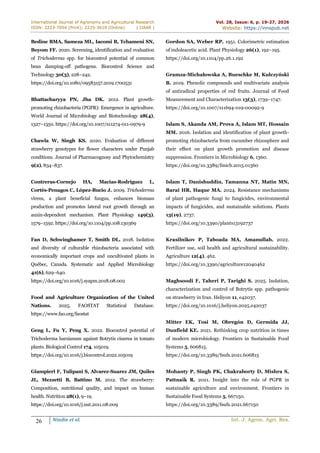
Fig. 3. Microscopic and macroscopic view of the fungus
Trichoderma spp
For phosphate solubilization, strain A5 was the top
performer (1612.49 ± 106.2 mg/L; group a), followed by
B6 (Coccis gram-) (1523.60 ± 165.0 mg/L; group ab) and
B14 (Coccis gram+) (1516.37 ± 69.4 mg/L; group abc).
The control strain T (sdw) (976.75 mg/L; group gh) and
A8 (935.71 mg/L; group h) showed the lowest phosphate-
solubilizing activity (Fig. 2, Table 2). Critically, the vast
majority of bacterial isolates outperformed the
uninoculated control on this trait, supporting the
intrinsic biofertilization potential of the collection. Strain
B6 (Coccis gram-) simultaneously displayed competitive
IAA production (149.02 µg/mL; group bcd) and high
phosphate solubilization (group ab), designating it as a
dual-function candidate of particular agronomic interest.
Comparison across the two collections revealed that the
best-performing bacterial strains (A5: 1612.49 mg/L)
marginally exceeded the best fungal solubilizer (D2:
1523.13 mg/L). However, the fungal isolate D3
(Trichoderma) (Fig. 3) was the single highest IAA
producer across both collections (432.31 µg/mL),
surpassing the best bacterial strain A6 (Coccis gram+)
(260.4 µg/mL) by a factor of 1.7 (Table 2).
DISCUSSION
This study provides the first characterization of plant
growth-promoting rhizobacteria and Trichoderma spp
strains from the strawberry rhizosphere in the west
region of Cameroon, identifying a collection of
functionally diverse indigenous isolates with significant
biofertilization potential.
The IAA production levels recorded in this study (96.82–
432.31 µg/mL for fungal isolates and 96.82–260.4
µg/mL for bacterial isolates) are broadly consistent with
values reported in the international literature. Patten and
Glick (2002) documented IAA production of 50–300
µg/mL in rhizospheric Pseudomonas and Bacillus
strains, while Contreras-Cornejo et al. (2009) reported
values of 100 to > 400 µg/mL in Trichoderma spp. The
exceptional IAA output of fungal strain Trichoderma spp
(431.6 µg/mL) falls at the upper boundary of published
fungal ranges, comparable to highly productive
Trichoderma spp isolates reported by Contreras-Cornejo
et al. (2009). IAA promotes root elongation and lateral
root formation, thereby expanding the root surface area
available for water and nutrient uptake (Spaepen et al.,
2007). Strains with robust IAA-producing capacity are
therefore strong candidates for improving crop
establishment and stress tolerance.
The phosphate solubilization values recorded across both
collections (935–1612 mg/L) are considerably higher
than those commonly reported for PGPR in temperate
soils (100–800 mg/L; Bargaz et al., 2018). We propose
that this elevated activity reflects the selective pressure
exerted by the ferrallitic soils of Western Cameroon,
which are characteristically rich in iron and aluminium
oxides that immobilize phosphate through strong
adsorption and co-precipitation reactions (Mwende,
2019). Under these conditions, rhizospheric
microorganisms capable of releasing phosphate through
acidification (organic acid secretion) or enzymatic
mechanisms (phytases, phosphatases) would be subject
to strong positive selection, resulting in the enrichment of
highly active solubilizers in local soil communities. This
interpretation is supported by the finding that the
majority of both fungal and bacterial isolates
outperformed uninoculated controls, regardless of the
collection.
International Journal of Agronomy and Agricultural Research
ISSN: 2223-7054 (Print); 2225-3610 (Online) | IJAAR |
Vol. 28, Issue: 6, p. 19-27, 2026
Website: https://innspub.net
25 Nindie et al. Int. J. Agron. Agri. Res.
The particularly strong phosphate-solubilizing activity of
bacterial strains A5 (Coccis gram+) (1612.49 mg/L) and
B6 (Coccis gram-), (1523.60 mg/L), and of fungal strain
D2 (Trichoderma spp) (1523.13 mg/L), suggests these
isolates could significantly contribute to phosphorus
mobilization in the soil, potentially replacing or reducing
mineral phosphate fertilizer inputs. Strain B6 (Coccis
gram), which combined high phosphate solubilization
(group ab) with competitive IAA production (149.02
µg/mL), represents a particularly attractive single-
strain option for bioformulation. Strain D3, which
simultaneously exhibited the highest IAA production in
the entire study and competitive phosphate
solubilization (group ab for fungi), is an equally
promising candidate. The use of microbial consortia
combining high-IAA producers (D3: Trichoderma spp,
A6: Coccis gram+) with superior P-solubilizers (A5:
Coccis gram+, D2: Trichoderma spp) may maximize
synergistic effects on plant growth, as previously
demonstrated in multi-trait PGPR consortia (Mitter et
al., 2021). Such combinations could be particularly
impactful in the context of Botrytis management, given
that Trichoderma spp. concurrently act as biocontrol
agents against B. cinerea through mycoparasitism,
antibiosis, and ISR (Geng et al., 2022).
A key methodological strength of this study is the
exclusive use of indigenous microbial strains collected
from local agroecosystems. Indigenous strains possess
inherent adaptations to regional soil chemistry,
temperature regimes, and plant genotypes, which
substantially increases the probability of stable
colonization and consistent performance under field
conditions, a critical limitation of commercial
bioformulations based on exotic strains (Mitter et al.,
2021). This approach aligns with FAO recommendations
for the development of locally adapted biological inputs
for smallholder farmers.
CONCLUSION
This study isolated and functionally characterized a
collection of 14 fungal and 37 bacterial isolates from the
rhizosphere of strawberry cultivated in Western
Cameroon, demonstrating that all strains possess plant
growth-promoting traits, specifically IAA production and
phosphate solubilization at levels competitive with or
superior to those reported in the international literature.
Fungal strain D3 (Trichoderma spp) emerged as the most
potent IAA producer (432.31 µg/mL), while D2
(Trichoderma spp) was the best fungal phosphate
solubilizer (1523.13 mg/L). In the bacterial collection, A6
(Coccis gram-) was the dominant IAA producer (172.6
µg/mL), and A5 (Coccis gram+) the highest phosphate-
solubilizing strain (1612.49 mg/L). The exceptionally
high phosphate solubilization value across both
collections likely reflects positive selection by the iron
and aluminium rich ferrallitic soils of the region.
These results constitute a scientifically rigorous basis for
the rational selection of biofertilizer candidates. Strains
D3, B6, D2 (Trichoderma spp), A5, A6 (Coccis gram+),
are prioritized for further characterization, including
molecular identification, in vivo plant growth promotion
bioassays, and biocontrol potential. The development of
multi-strain bioinoculants combining the complementary
strengths of these isolates could offer an ecologically
sound strategy to improve strawberry yield and quality
while reducing reliance on synthetic inputs in
Cameroonian production systems.
ACKNOWLEDGEMENTS
We sincerely express our profound gratitude to Professor
NGOULA Ferdinand, Faculty of Agronomy and
Agricultural Sciences, Dschang, Cameroon, for graciously
granting us access to the Laboratory of Animal
Physiology and Health, where this study was conducted.
We are also deeply grateful to Mrs. KATTE FONGE
Bridget, Medical and Sanitary Engineer, for her
invaluable guidance, technical assistance, and
unwavering support throughout the course of this
research. Her encouragement and expertise greatly
contributed to the successful completion of this work.
REFERENCES
Bargaz A, Lyamlouli K, Chtouki M, Zeroual Y,
Dhiba D. 2018. Soil microbial resources for improving
phosphate fertilizers efficiency. Frontiers in Microbiology
9, 1606.
https://doi.org/10.3389/fmicb.2018.01606
International Journal of Agronomy and Agricultural Research
ISSN: 2223-7054 (Print); 2225-3610 (Online) | IJAAR |
Vol. 28, Issue: 6, p. 19-27, 2026
Website: https://innspub.net
26 Nindie et al. Int. J. Agron. Agri. Res.
Bedine BMA, Sameza ML, Iacomi B, Tchameni SN,
Boyom FF. 2020. Screening, identification and evaluation
of Trichoderma spp. for biocontrol potential of common
bean damping-off pathogens. Biocontrol Science and
Technology 30(3), 228–242.
https://doi.org/10.1080/09583157.2019.1700531
Bhattacharyya PN, Jha DK. 2012. Plant growth-
promoting rhizobacteria (PGPR): Emergence in agriculture.
World Journal of Microbiology and Biotechnology 28(4),
1327–1350. https://doi.org/10.1007/s11274-011-0979-9
Chawla W, Singh KS. 2020. Evaluation of different
strawberry genotypes for flower characters under Punjab
conditions. Journal of Pharmacognosy and Phytochemistry
9(2), 834–837.
Contreras-Cornejo HA, Macías-Rodríguez L,
Cortés-Penagos C, López-Bucio J. 2009. Trichoderma
virens, a plant beneficial fungus, enhances biomass
production and promotes lateral root growth through an
auxin-dependent mechanism. Plant Physiology 149(3),
1579–1592. https://doi.org/10.1104/pp.108.130369
Fan D, Schwinghamer T, Smith DL. 2018. Isolation
and diversity of culturable rhizobacteria associated with
economically important crops and uncultivated plants in
Québec, Canada. Systematic and Applied Microbiology
41(6), 629–640.
https://doi.org/10.1016/j.syapm.2018.08.002
Food and Agriculture Organization of the United
Nations. 2025. FAOSTAT Statistical Database.
https://www.fao.org/faostat
Geng L, Fu Y, Peng X. 2022. Biocontrol potential of
Trichoderma harzianum against Botrytis cinerea in tomato
plants. Biological Control 174, 105019.
https://doi.org/10.1016/j.biocontrol.2022.105019
Giampieri F, Tulipani S, Alvarez-Suarez JM, Quiles
JL, Mezzetti B, Battino M. 2012. The strawberry:
Composition, nutritional quality, and impact on human
health. Nutrition 28(1), 9–19.
https://doi.org/10.1016/j.nut.2011.08.009
Gordon SA, Weber RP. 1951. Colorimetric estimation
of indoleacetic acid. Plant Physiology 26(1), 192–195.
https://doi.org/10.1104/pp.26.1.192
Gramza-Michałowska A, Bueschke M, Kulczyński
B. 2019. Phenolic compounds and multivariate analysis
of antiradical properties of red fruits. Journal of Food
Measurement and Characterization 13(3), 1739–1747.
https://doi.org/10.1007/s11694-019-00092-9
Islam S, Akanda AM, Prova A, Islam MT, Hossain
MM. 2016. Isolation and identification of plant growth-
promoting rhizobacteria from cucumber rhizosphere and
their effect on plant growth promotion and disease
suppression. Frontiers in Microbiology 6, 1360.
https://doi.org/10.3389/fmicb.2015.01360
Islam T, Danishuddin, Tamanna NT, Matin MN,
Barai HR, Haque MA. 2024. Resistance mechanisms
of plant pathogenic fungi to fungicides, environmental
impacts of fungicides, and sustainable solutions. Plants
13(19), 2737.
https://doi.org/10.3390/plants13192737
Krasilnikov P, Taboada MA, Amanullah. 2022.
Fertilizer use, soil health and agricultural sustainability.
Agriculture 12(4), 462.
https://doi.org/10.3390/agriculture12040462
Maghsoodi F, Taheri P, Tarighi S. 2025. Isolation,
characterization and control of Botrytis spp. pathogenic
on strawberry in Iran. Heliyon 11, e42037.
https://doi.org/10.1016/j.heliyon.2025.e42037
Mitter EK, Tosi M, Obregón D, Germida JJ,
Dunfield KE. 2021. Rethinking crop nutrition in times
of modern microbiology. Frontiers in Sustainable Food
Systems 5, 606815.
https://doi.org/10.3389/fsufs.2021.606815
Mohanty P, Singh PK, Chakraborty D, Mishra S,
Pattnaik R. 2021. Insight into the role of PGPR in
sustainable agriculture and environment. Frontiers in
Sustainable Food Systems 5, 667150.
https://doi.org/10.3389/fsufs.2021.667150
International Journal of Agronomy and Agricultural Research
ISSN: 2223-7054 (Print); 2225-3610 (Online) | IJAAR |
Vol. 28, Issue: 6, p. 19-27, 2026
Website: https://innspub.net
27 Nindie et al. Int. J. Agron. Agri. Res.
Murphy J, Riley JP. 1962. A modified single solution
method for the determination of phosphate in natural
waters. Analytica Chimica Acta 27, 31–36.
https://doi.org/10.1016/S0003-2670(00)88444-5
Mwende ME. 2019. Understanding soil phosphorus.
International Journal of Plant and Soil Science 31(3), 1–18.
https://doi.org/10.9734/ijpss/2019/v31i330209
Ngouana LST, Tonfack LB, Temegne CN, Agendia
AP, Youmbi E. 2023. Current status of strawberry
(Fragaria spp.) cultivation and marketing in Cameroon.
Journal of Agriculture and Food Research 14, 100761.
https://doi.org/10.1016/j.jafr.2023.100761
Osman KT. 2013. Plant nutrients and soil fertility
management. In: Osman KT (ed.). Soils. Springer. pp. 129–
159. https://doi.org/10.1007/978-94-007-5663-2_10
Patten CL, Glick BR. 2002. Role of Pseudomonas
putida indoleacetic acid in development of the host plant
root system. Applied and Environmental Microbiology
68(8), 3795–3801.
https://doi.org/10.1128/AEM.68.8.3795-3801.2002
Petrasch S, Knapp SJ, Van Kan JAL, Blanco-
Ulate B. 2019. Grey mould of strawberry, a devastating
disease caused by the ubiquitous necrotrophic fungal
pathogen Botrytis cinerea. Molecular Plant Pathology
20(6), 877–892.
https://doi.org/10.1111/mpp.12794
Spaepen S, Vanderleyden J, Remans R. 2007.
Indole-3-acetic acid in microbial and microorganism–
plant signaling. FEMS Microbiology Reviews 31(4), 425–
448.
https://doi.org/10.1111/j.1574-6976.2007.00072.x