The Age ofReorganisation
• Grade 7 – Exploring Society: India and Beyond
• “By continuous living tradition and a vital
power of rejuvenescence, this land has
readjusted itself through unnumbered
transformations.”
• — Jagdish Chandra Bose (1917)
2.
Introduction
• • Periodafter the Mauryan Empire’s decline
(185 BCE onward)
• • Known as the Age of Reorganisation due to
emergence of many new kingdoms
• • Political instability + cultural growth =
dynamic transformation
3.
Major Dynasties
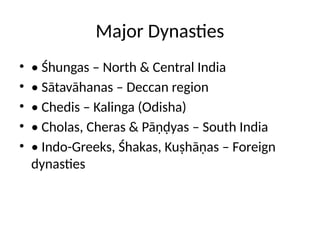
• •Śhungas – North & Central India
• • Sātavāhanas – Deccan region
• • Chedis – Kalinga (Odisha)
• • Cholas, Cheras & Pāṇḍyas – South India
• • Indo-Greeks, Śhakas, Kuṣhāṇas – Foreign
dynasties
4.
Śhunga Dynasty
• •Founder: Puṣhyamitra Śhunga
• • Revival of Vedic rituals (Aśhvamedha Yajña)
• • Patronised Sanskrit literature & art –
Bharhut Stūpa
• • Period of religious coexistence
5.
Sātavāhanas
• • PowerfulDeccan dynasty (2nd cent. BCE –
3rd cent. CE)
• • Capitals: Amrāvati & Pratiṣṭhāna (Paithan)
• • Prosperity from trade with Rome; coins
show ships
• • Queens like Gautamī Balaśhrī played key
roles
• • Supported Hindu, Buddhist & Jain traditions
6.
Chedis of Kalinga
•• Prominent ruler: King Khāravela (monarch &
Jain devotee)
• • Udayagiri–Khandagiri Caves – rock-cut
architecture
• • Hāthīgumphā inscription records his deeds &
religious tolerance
7.
Southern Kingdoms
• •Cholas – King Karikāla; built Kallaṇai (Grand
Anicut)
• • Cheras – Traders with Rome and West Asia;
spice exporters
• • Pāṇḍyas – Based at Madurai; known for
pearls and naval power
• • Sangam Literature – poems on love, valor &
justice
8.
Indo-Greeks & Śhakas
•• Indo-Greeks settled in north-west India post-
Alexander
• • Coins show mix of Greek and Indian deities
(Vāsudeva, Lakṣhmī)
• • Śhakas (Indo-Scythians) followed them;
introduced Śhaka Samvat calendar (used even
today)
9.
Kuṣhāṇas
• • Origin:Central Asia; most famous ruler
Kaṇiṣhka (2nd cent. CE)
• • Patron of Buddhism & art
• • Controlled Silk Route → flourishing trade
• • Art styles:
• - Gāndhāra – Greek influence (gray stone,
realistic figures)
• - Mathurā – Indian style (red sandstone,
round figures)
10.
Cultural Highlights
• •Rise of Sanskrit literature – Mahābhārata &
Rāmāyaṇa
• • Fusion of Greek and Indian artistic traditions
• • Spread of religious tolerance and
multiculturalism
11.
Summary
• • Post-Mauryaperiod = fragmentation &
reorganisation
• • Rise of regional powers & foreign dynasties
• • Flourishing trade, art, literature, and
religious thought
• • Integration of cultures created a unique
Indian identity