Championing
Diversity,
Equity, and
Inclusion in the
Workplace
An overview of strategies and best practices for fostering a
diverse, equitable, and inclusive workplace culture.
Title Slide
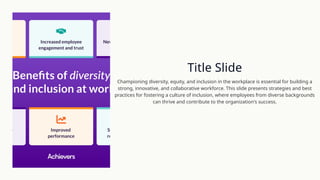
Championing diversity, equity, and inclusion in the workplace is essential for building a
strong, innovative, and collaborative workforce. This slide presents strategies and best
practices for fostering a culture of inclusion, where employees from diverse backgrounds
can thrive and contribute to the organization's success.
The Importance of DEI in Today's Workplace
Demographic Shifts in the
Workforce
The modern workforce is becoming
increasingly diverse, with employees
from different backgrounds, cultures,
and experiences. Embracing DEI helps
organizations attract and retain top
talent from this diverse talent pool.
Enhanced Innovation and
Creativity
Diverse teams bring different
perspectives and ideas, leading to
more creative problem-solving and
innovative solutions. Inclusive work
environments foster an exchange of
diverse viewpoints, driving business
success.
Improved Financial
Performance
Studies show that companies with
diverse leadership and inclusive
cultures tend to outperform their less
diverse peers. DEI initiatives can
positively impact the bottom line by
improving decision-making, customer
relations, and employee engagement.
Increased Employee
Engagement and Satisfaction
Diverse, equitable, and inclusive
workplaces foster a sense of
belonging and appreciation, leading
to higher employee satisfaction,
In today's rapidly evolving business landscape, embracing diversity, equity, and inclusion is not
just a moral imperative, but a strategic necessity. Organizations that prioritize DEI are better
positioned to attract top talent, drive innovation, improve financial performance, and foster a
positive, engaged workplace culture.
The Business Case for Diversity,
Equity, and Inclusion
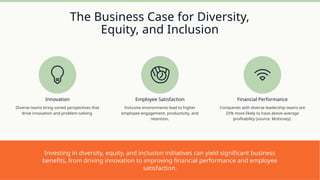
Innovation
Diverse teams bring varied perspectives that
drive innovation and problem-solving.
Employee Satisfaction
Inclusive environments lead to higher
employee engagement, productivity, and
retention.
Financial Performance
Companies with diverse leadership teams are
25% more likely to have above-average
profitability (source: McKinsey).
Investing in diversity, equity, and inclusion initiatives can yield significant business
benefits, from driving innovation to improving financial performance and employee
satisfaction.
Practical Steps to Foster DEI in the Workplace
Unconscious Bias Training
Educate employees on recognizing and mitigating
unconscious biases that can impact decision-
making and hiring processes.
Allyship Programs
Encourage employees to actively support and
advocate for underrepresented groups within
the workplace.
Inclusive Hiring Practices
Implement equitable recruitment and
advancement opportunities to ensure a diverse
and representative workforce.
By implementing these practical steps, organizations can foster a more diverse,
equitable, and inclusive workplace culture that empowers all employees to thrive.
How Leaders Can Drive Lasting Change
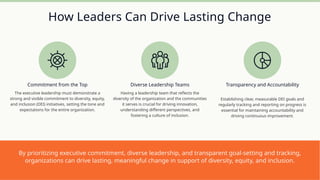
Commitment from the Top
The executive leadership must demonstrate a
strong and visible commitment to diversity, equity,
and inclusion (DEI) initiatives, setting the tone and
expectations for the entire organization.
Diverse Leadership Teams
Having a leadership team that reflects the
diversity of the organization and the communities
it serves is crucial for driving innovation,
understanding different perspectives, and
fostering a culture of inclusion.
Transparency and Accountability
Establishing clear, measurable DEI goals and
regularly tracking and reporting on progress is
essential for maintaining accountability and
driving continuous improvement.
By prioritizing executive commitment, diverse leadership, and transparent goal-setting and tracking,
organizations can drive lasting, meaningful change in support of diversity, equity, and inclusion.
The Path Forward for DEI
Recap the key benefits of
implementing DEI in the
workplace
Diverse and inclusive teams have been
shown to drive innovation, improve
decision-making, and increase
employee engagement and retention.
Outline the steps to implement
DEI initiatives
Assess current diversity and inclusion
efforts, set measurable goals, provide
training and education, hold
leadership accountable, and
continuously review and improve the
process.
Encourage businesses to make
DEI a core part of their culture
Embedding diversity, equity, and
inclusion into the organization's
mission, values, and everyday
practices creates a more welcoming
and supportive work environment for
all employees.
By making diversity, equity, and inclusion a top priority, organizations can foster a
more diverse, inclusive, and high-performing workforce that drives long-term
success.