CEIS REVIEW QUARTERLY
REPORT Q2-2015
ON MY MIND – CEIS PRESIDENT, JOE
HILL
 Community banks in our client base are nearly all showing
growth
 While the growth of loans have increased, the qualities of our
clients’ portfolios have not deteriorated
 This is important to highlight because this across-the-board
loan growth has been caused by an easing in the underwriting process which
brings with it a potential rise in credit risk within portfolios. This is not the case
for CEIS’s clients.
IN THE SPOTLIGHT – JOHN P. MACUKAS
 Managing Director
 Overseas Leveraged Lending and Structured Finance
engagements
 Manages a team that overseas the due diligence process for
these engagements
 Full bio available: http://www.ceisreview.com/biographies/CEIS-
Management
REGULATORY RELEASES
 Recent releases which pertain to our clients
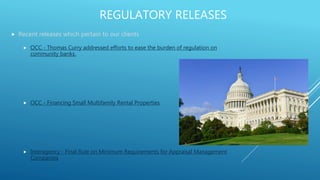
 OCC - Thomas Curry addressed efforts to ease the burden of regulation on
community banks.
 OCC - Financing Small Multifamily Rental Properties
 Interagency - Final Rule on Minimum Requirements for Appraisal Management
Companies
CREATING A EFFECTIVE CREDIT POLICY
 A credit policy is the main way in which a Board of Directors can
establishes the culture of the bank
 What the bank identifies as its appetite for risk
 What levels decision-making discretion is delegated
 How the bank will measure, monitor, control and report
inherent risks in its loan portfolio
 Credit Policies must be comprehensive, strictly enforced
and kept up to date with modern times.
 Without these objectives the Policy will almost always fail
LEGISLATE A POLICY WITH CLARITY
1. Policy, Not Procedure
 Each credit policy is generally unique per institution
 It should not focus so closely on “how to” guidelines and more so
on what the rules should be when defining the needs of the bank
2. Clarity
 Policies must contain clear language so that its law is not just lines
drawn in the sand
 This facilitates the enforceability of the policy
 Resist the temptation to adopt softer regulations so to attract
better business
 Trade flexibility for an exception clause instead
KEEPING YOUR CREDIT POLICY CURRENT
AND ORGANIZED
3. Keeping it Current
 Make sure that the policies are kept up to date with the latest
regulatory guidelines
 Remove dated material from you policies
 If clauses in the policy are obsolete or inaccurate, it makes the entire
policy harder to enforce or simply to be used as a guide
4. Organization
 Keep a living copy on your network that is constantly updated with the
contemporary changes
 Have every page of the policy carry the date of the last update, to
show when changes have been implemented
 Pay attention to the pagination of your document, as pages are
removed and added there can be inconsistencies in the document
MAKE YOUR POLICY ACCESSIBLE AND BE
WARY OF AMENDMENTS
5. Access
 Minimal access will discourage staff from regularly using the Credit
Policy
 Allow privileges to people with jobs that require consulting the policy
while still keeping its contents private to the majority
 Make your document searchable on the computer so time won’t be
wasted navigating the multi-hundred page document
 An index is also incredibly helpful for the above objective
6. Amendments
 Limit their frequencies, there are only rare cases in which Amendments
are necessary
 Frequent changes can bring integrity and direction into question
 It is a time consuming procedure for the Board of Directors
EXCEPTIONS AND WRITING YOUR
POLICY
7. Exceptions
 A much better option than amendments
 Exceptions can test the quality of the Credit Policy, if the same exceptions
continually need to be made, maybe a change should be considered
 Minimal exceptions may indicate a bank’s policies are tight enough
 Allow insight into the current state of the market, and the bank’s position
8. Writing your policy
 Consider the pros and cons of looking for an independent writer to draft your
policy
 The more complex your operations, the more necessary a consultant will
become
 A consultant’s policy may not be unique and be a “one size fits all policy”
CONCLUSION
 As Banking becomes more competitive, effective
management increases in difficulty
 It is important that the BoD and Management are
upfront and provide clear guidelines for their staff
 The Credit Policy is a key factor in communicating these
guidelines
 A well written Credit Policy means a well-run, and
successful bank
 A unsatisfactory Credit Policy can have a direct impact on
a banks ability to thrive.